Snowboard Boots
Nidecker Kita Eric Jackson Snowboard Boots Review: A Stiffer Freeride Boot With Smart Details
The Nidecker Kita Eric Jackson pro model is a responsive double BOA boot with a burrito-wrap liner, asymmetric lacing, and a Vibram sole. Here is what to expect before you buy.
Introduction
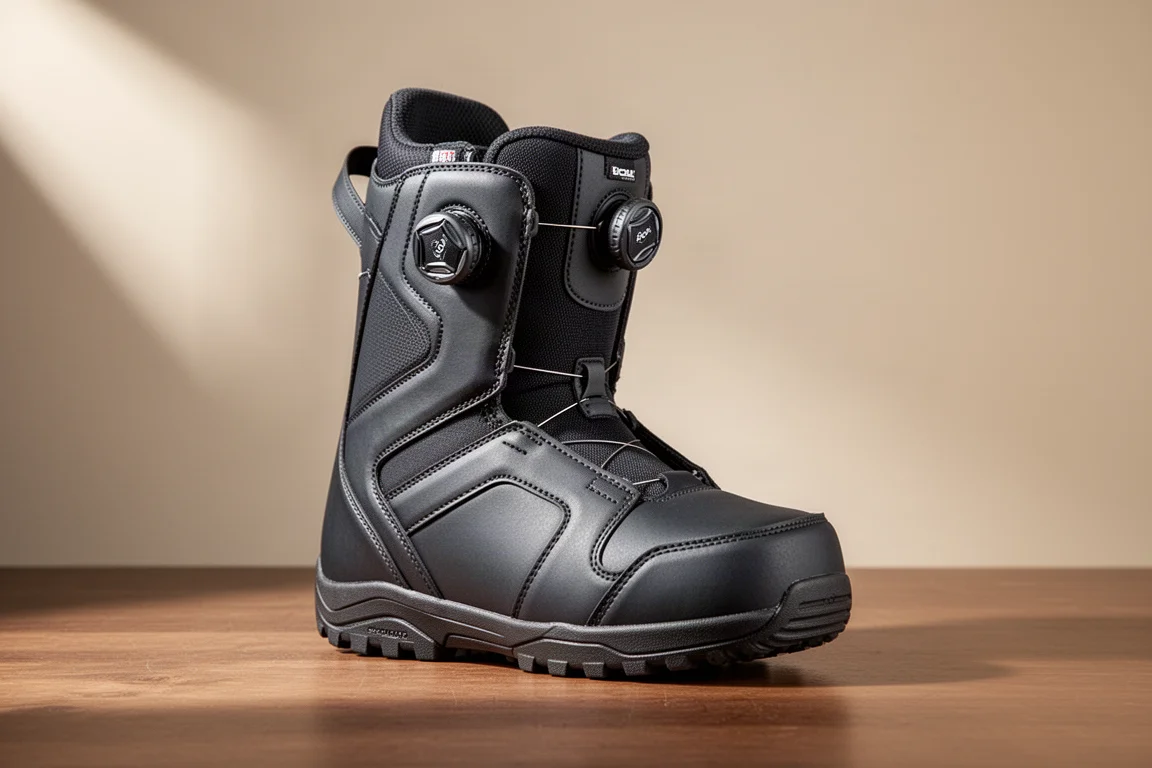
The Nidecker Kita Eric Jackson is a pro model snowboard boot that lands in the stiffer half of Nidecker’s lineup. It is a step down from the ultra-stiff Kita Apex, but it still leans firmly toward the responsive end of the spectrum. With a double BOA closure, a burrito-wrap heat moldable liner, asymmetrical lacing, and a Vibram outsole, it packs a lot of thoughtful construction into one package.
One honest note up front: this is a boot, and boots are the single piece of snowboard gear most worth buying in person. Fit beats everything. The best boot is the one that fits your foot and your needs, and no amount of online research changes what your foot says when you lace up.
Who This Boot Is For
The Kita Eric Jackson suits riders who want a genuinely responsive boot without committing to something as unforgiving as a full super-stiff freeride or racing boot. It is a stiffer-flexing model, and that shows up immediately in how it rides.
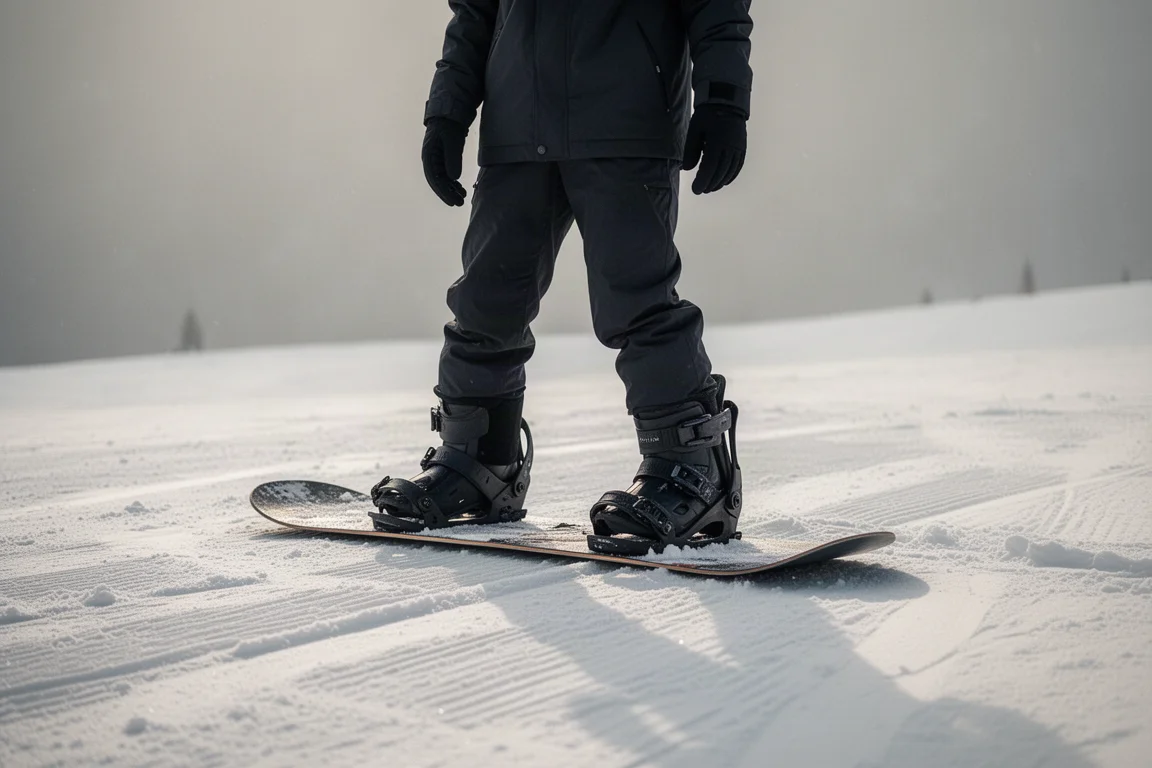
It is also a good match for riders who care about the small stuff: how a shell holds up over seasons, how heel hold behaves on heel edges, and how a liner wraps the foot. If your priority is a soft, broken-in-from-day-one park boot, this is not that. If you want a boot that drives power through turns and dampens chatter, keep reading.
Main Strengths
Shell and Back Spine: Built for Rebound and Durability
The shell uses welded seams, which reduces wear points. There are no flappy edges to get hacked up when you rest your edge against the board or when you crank your toe strap, and that translates into better long-term durability.
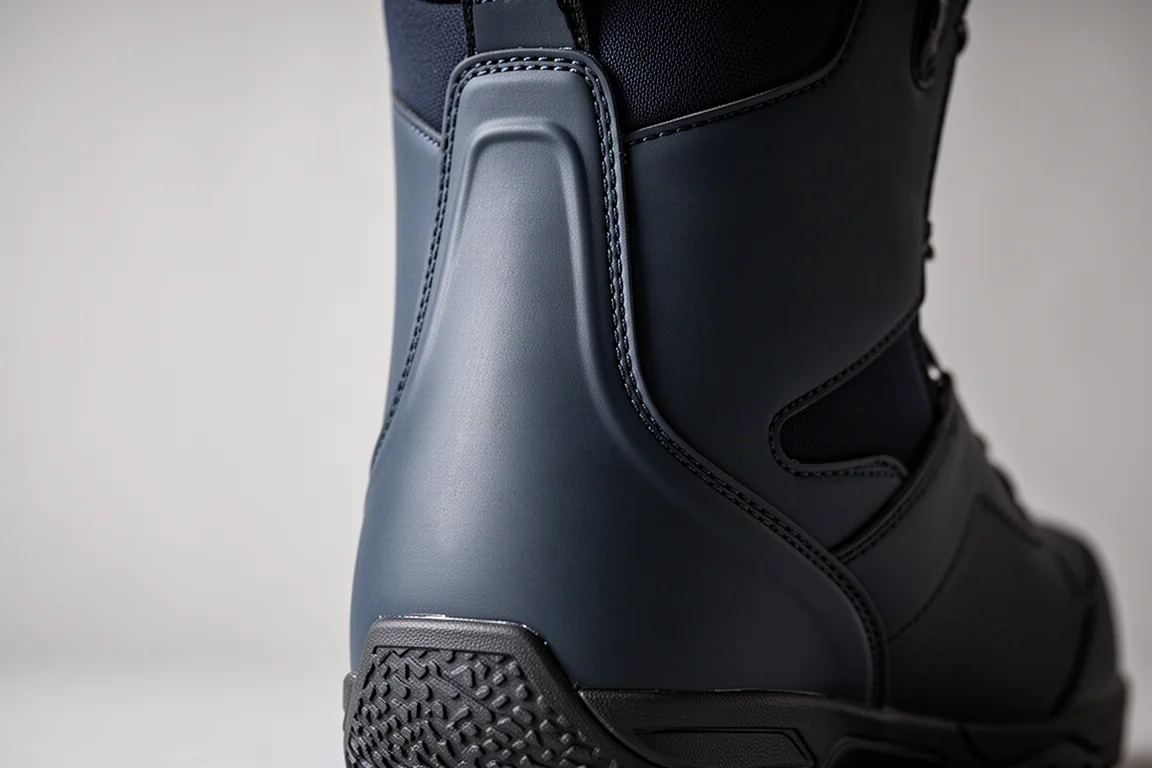
The back spine is a multi-piece design with rubber that rises about halfway up. That rubber adds rebound and stiffens the back of the boot, changing the power dynamic when you drive into your heel edge. Notably, the back spine is asymmetrical: it comes up higher on the outside of the boot, reinforcing that drive from heel through a turn. It also attaches down at the base of the heel, which adds rebound while providing dampening underfoot. When your heel edge starts chattering, that structure helps slow the wobble before it reaches your ankle.
Double BOA and Asymmetrical Lacing
This is a double BOA boot. The front dial at the top of the tongue controls the upper zone and your heel, while the side dial handles the lower lacing zone. That split changes how the boot locks you in and how you can drive into it.
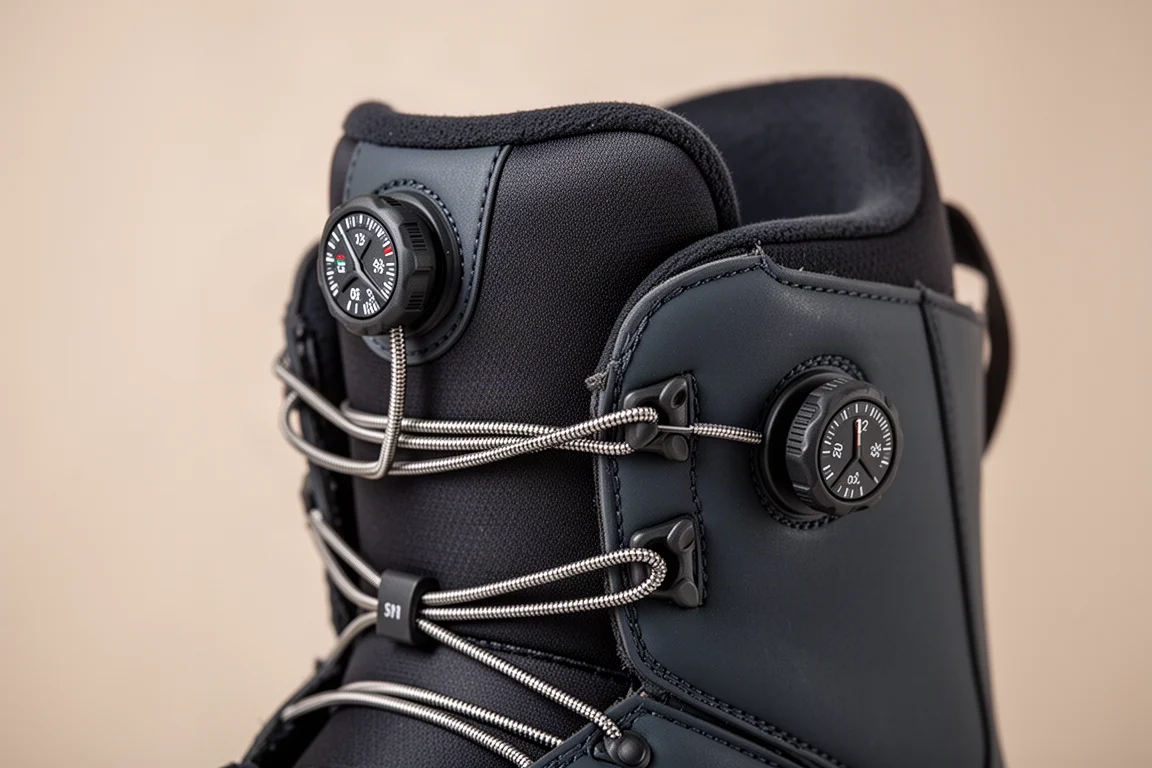
The asymmetrical lacing is the standout idea here. Anyone who has ridden BOA boots knows they tend to favor one side as you tighten them over time. Nidecker’s asymmetrical layout compensates for that, working with your body’s natural anatomy and how you drive forward onto the outside of your front foot. It protects that zone and keeps the power transfer where you want it.
Liner, Heel Hold, and Fit Shape
The liner is Nidecker’s gold heat moldable liner, and heat molding is recommended. It uses a burrito wrap, meaning it wraps around the front rather than opening from the front, which changes the power dynamic when you drive down into it. The internal harness is sewn into the shell, so the liner free-floats and tightening the harness pulls the shell snug around you, deep and high, for a secure fit.
The heel pocket is more of a U shape than a V shape, which is good news for riders with slightly wider heels. On the inside, a rigid material grips your sock to prevent heel lift, and J bars are described as aggressive. With the burrito wrap pulling more from the inside, some riders may feel the J bar depending on foot shape. A more rigid, carbon-fiber-look panel at the rear of the liner keeps your heel locked down and powers the back spine.
Things to Consider Before Buying
There are real trade-offs. Ankle articulation starts out rigid and needs a proper break-in. Because of how the lacing sits over the ankle, forward flex is limited at first until crease points form and the boot starts flexing more naturally. The tongue is rigid to a point: it gives you something to drive into and offers noticeable rebound, but it does soften and break in over time.
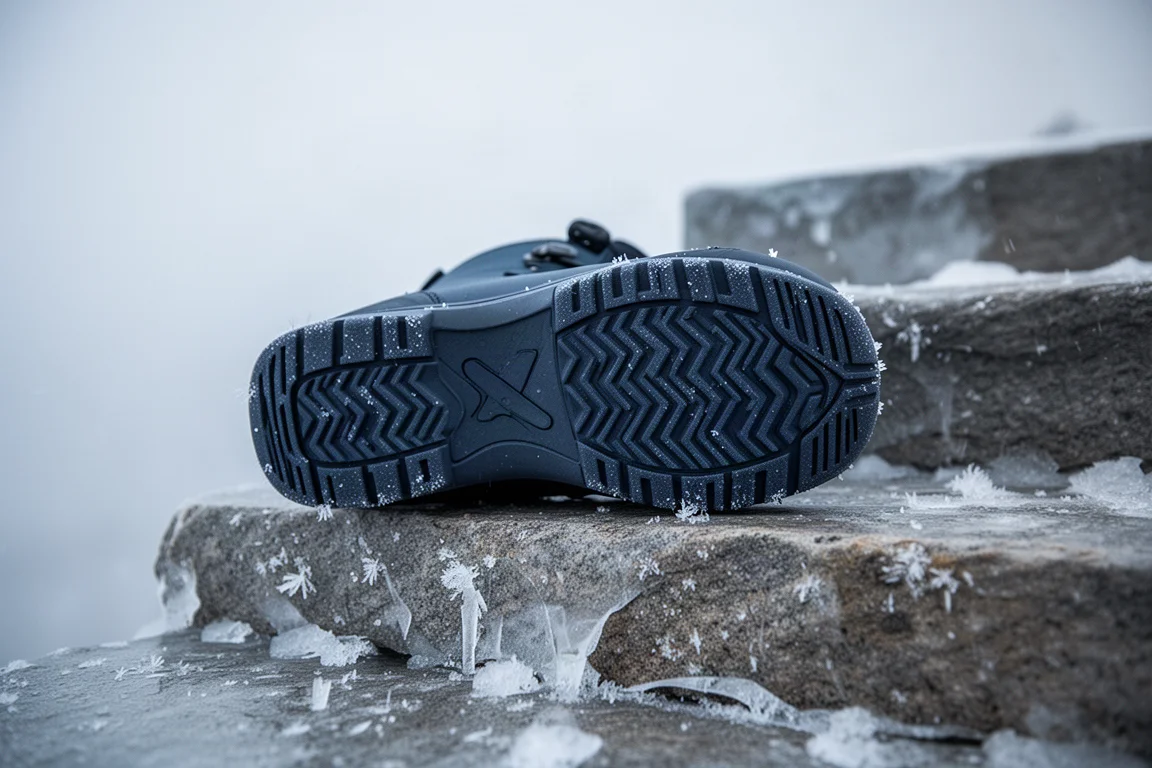
The Vibram sole adds grip in cold temperatures and, being a touch more rigid, helps dampen impacts and kinetic energy along with the foam in the sole. The tread pattern, however, is not the most aggressive. If you walk a lot on cobblestone and shuffle your feet, expect to wear it down.
Two fit details worth knowing: the cutout area at the front of the burrito-wrap liner can push on your instep when you flex forward, which is hit or miss depending on how sensitive your feet are. And the stock insole is not worth keeping. Plan to replace it with a proper aftermarket insole.
On sizing, a Mondo 27 (US 9) shell measures just under 11.5 inches at the back and just under 11 inches at the front without the liner, and just shy of 12 inches at the back and about 11.5 inches at the front with the liner in. The liner forefoot is about 4 inches wide at the widest point, roughly standard for snowboard boots, and the shell forefoot measures about 4.25 inches wide.
Buying Advice
If you want a stiffer, responsive boot but not something as aggressive as a full super-stiff race or big-mountain boot, the Kita Eric Jackson is a serious contender. The burrito-wrap liner, asymmetrical lacing, solid back spine, and Vibram sole add up to a well-engineered package, and Nidecker’s boot program deserves more attention than it often gets.
Above all, try boots on before buying if you possibly can. A visit to your local snowboard shop beats a blind online order every time, especially for a stiff boot like this where break-in and fit details matter so much.
Conclusion
The Nidecker Kita Eric Jackson is a really solid boot: responsive, thoughtfully built, and more forgiving than the stiffest boots on the market while still delivering plenty of power. It rewards riders who are willing to break it in and dial in their fit. If it fits your foot and your riding style, it deserves a spot on your shortlist.
Product link
View more details for Nidecker Kita Eric Jackson
This product is mentioned in the review. Check the specifications, options, and compatibility before buying.
View more details for Nidecker Kita Eric JacksonFurther reading
Related Reviews

Snowboard Boots
32 Team Two Double Boa Review: 32's Highest-End Women's Snowboard Boot
A closer look at 32's top-tier women's snowboard boot, from the 3D molded toe box and double Boa lacing to the Performance Fit liner and heat-reflective footbed.

Snowboard Boots
Bataleon Acid BOA Snowboard Boot Review: A Serious First Entry from a Board Brand
Bataleon's first snowboard boot, designed by a former Burton boot designer, brings a stiff flex, dual BOA closure, and a heel hold system worth a closer look.

Snowboard Boots
Battalion Acid Boot Review: A Stiff, Aggressive Boot Built to Last
The Battalion Acid Boot is the brand's highest-end offering, built with seamless construction, TPU reinforcement, dual BOA lacing, and a heat-moldable liner. Here is what to know before buying.