Snowboards
Nidecker Escape Plus Review: Traditional Camber for All-Mountain Freestyle Riders
A traditional camber all-mountain freestyle snowboard with real pop, easy butters, and a clear ceiling on hard carves and big jump lines.
Introduction
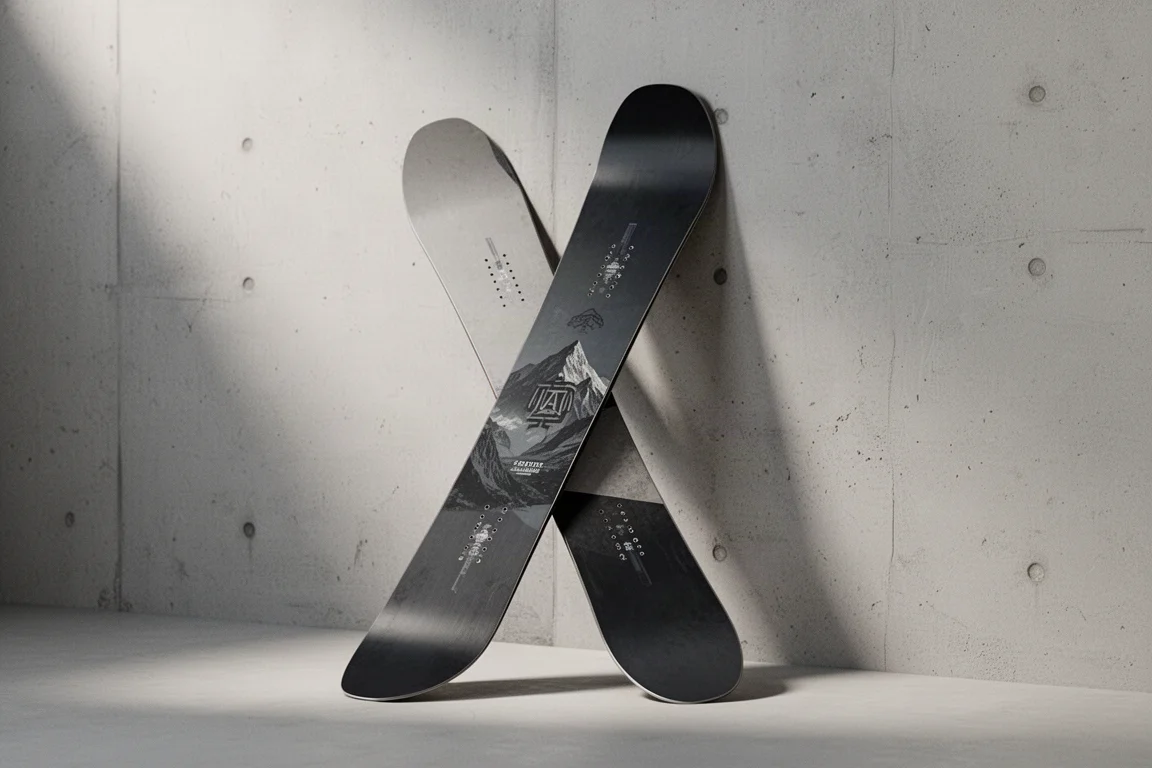
The Nidecker Escape Plus sits above the regular Escape in the lineup, and the difference is written into its profile. This board runs traditional camber from contact point to contact point, so the full arc of the base presses into the snow between the inserts and the tips. That single design decision shapes almost everything about how it loads, how it pops, and how it behaves when the terrain gets rough.
Nidecker builds it as an all-mountain freestyle board, and it is offered in a wide spread of lengths: 152, 156, 159, 159 wide, 162 wide, 162 extra wide, 165 wide, and 169 extra wide. That range covers smaller riders, taller riders, and anyone who needs a wider platform for larger boots.
Who the Nidecker Escape Plus Is For
The clearest fit here is the rider who already likes camber and wants a board that can be ridden everywhere on the mountain without feeling like a dedicated freestyle deck or a stiff carving tool. It is mildly stiffer than the regular Escape, and mildly is the operative word. Most riders stepping from the standard Escape onto the Plus would need to pay close attention to notice the difference in flex.
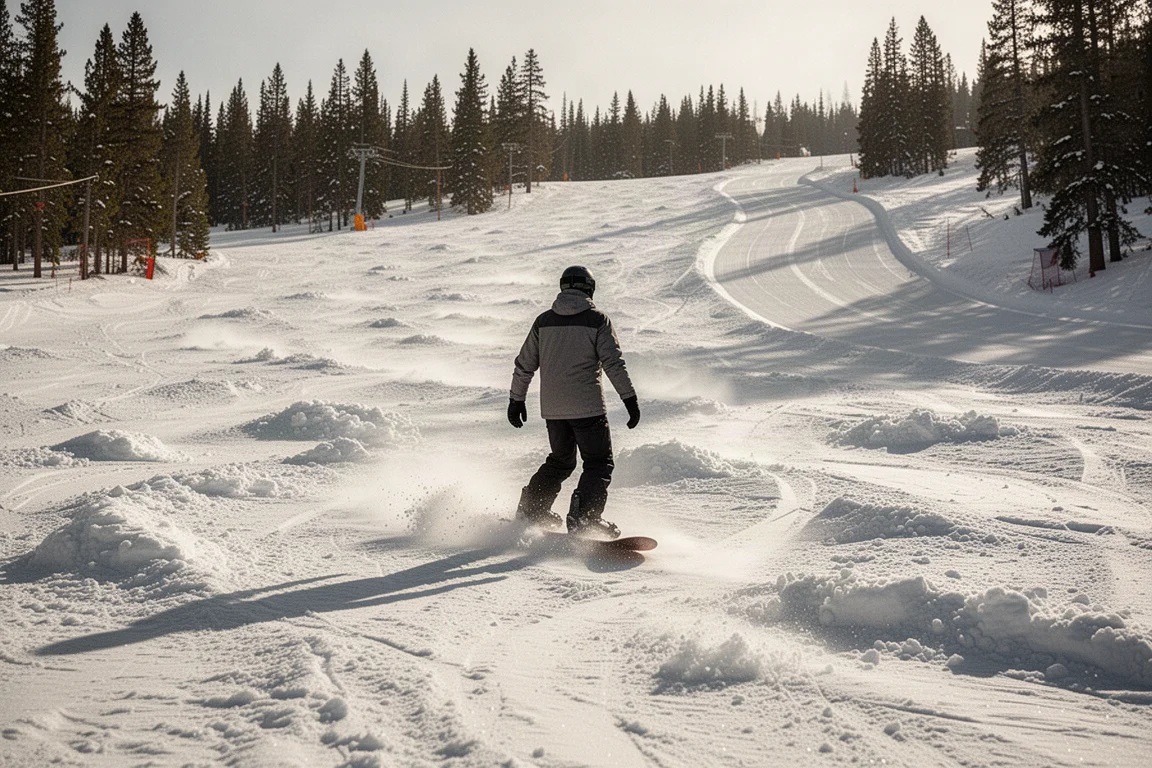
That makes it a reasonable choice for someone who wants a predictable, camber-driven board for groomers, side hits, and park laps in the same session. It also suits riders who are just starting to work on park skills and want something that will not punish them while they figure out timing and technique.
It is a less obvious fit for riders chasing the stiffest, most damped freestyle board they can find, or for anyone whose day is built around laying over high-speed carves.
Camber, Flex, and Ride Feel
The flex pattern is softer in the tips and stiffens as it moves back toward the inserts, and there is a generous amount of torsional flex through the middle. In practice, that combination gives the board a lively, slightly loose character that is easy to initiate and easy to manipulate.
Stability is where the trade-offs show up. The tips carry a fair amount of chatter at speed, and that vibration resonates back underfoot. It is not an overly damp board, and it is not an overly lively one either. The honest description is that it sits in the middle, which means choppy terrain and tracked-out snow will move it around and you will feel it.
The board was ridden across a genuinely mixed day at Copper Mountain, with warm temperatures, sunny bluebird light, and a surface that shifted between ice, slush, chunder, chop, and hero snow. That spread is useful context, because it shows the board handling a wide range of conditions competently rather than excelling in any single one.
Pop, Jumps, and Freestyle Performance
Full camber combined with Nidecker’s Pop Carbon Plus gives the Escape Plus real snap when you load it. It is not the snappiest board on the market, but it is noticeably more reactive than the regular Escape, and loading the camber takes only a little more effort than its softer sibling.
That translates into a straightforward rhythm for side hits, rollers, and small to medium features. You load the tail, roll back onto it, and the board springs you into the air. It is predictable enough to be relaxed about, but not so soft that it feels vague underfoot.
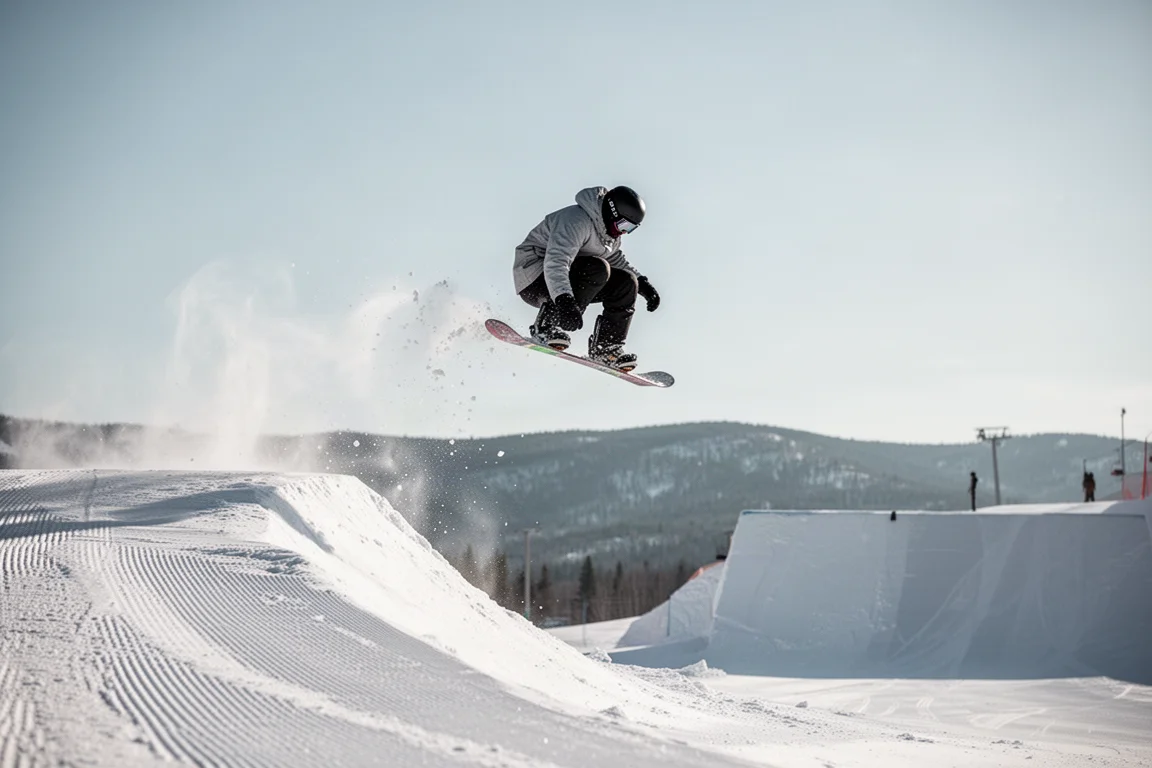
On jumps, the useful range is small to medium features. It will throw itself off a lip or accept a loaded pop without drama. What it does not have is the tip stability for the biggest lines, because the softer tips tend to wash out when you really set weight down on the tail.
Butters, Jibs, and Presses
This is one of the more surprising parts of the ride. Even with full camber and carbon in the construction, the Escape Plus is highly butterable. It does not fight the rider. You can push out over the nose or the tail, get sideways, and spin, and the board lets you know it is loaded without locking you into the position.
That means pressing into the nose on a 180 holds, and the board springs you back out when you release. The same quality carries over to jibbing. It locks into presses and keeps enough snap to pop out at the end of a feature, which is genuinely useful on resorts with rutted, chewed-up landings. When you go sideways, the board sets down, hugs the feature, and slides without clapping out or turning the trick into a balancing act.
Carving and Edge Grip
Nidecker markets this board as a carving machine, and that is the one claim that does not survive contact with snow. The Escape Plus kicks out on edge. It simply does not carry the edge bite needed for hard, committed carves, and the moment you try to lay it over, the limits become obvious and the board wants to wash out.
Setup turns are fine. Medium and mellow carves are fine. It turns well enough to ride the whole mountain, and that is exactly what it is designed to do. What it will not do is rail a hard carve at speed. Riders who spend their day hunting edge grip should treat that as a firm boundary rather than a small compromise.
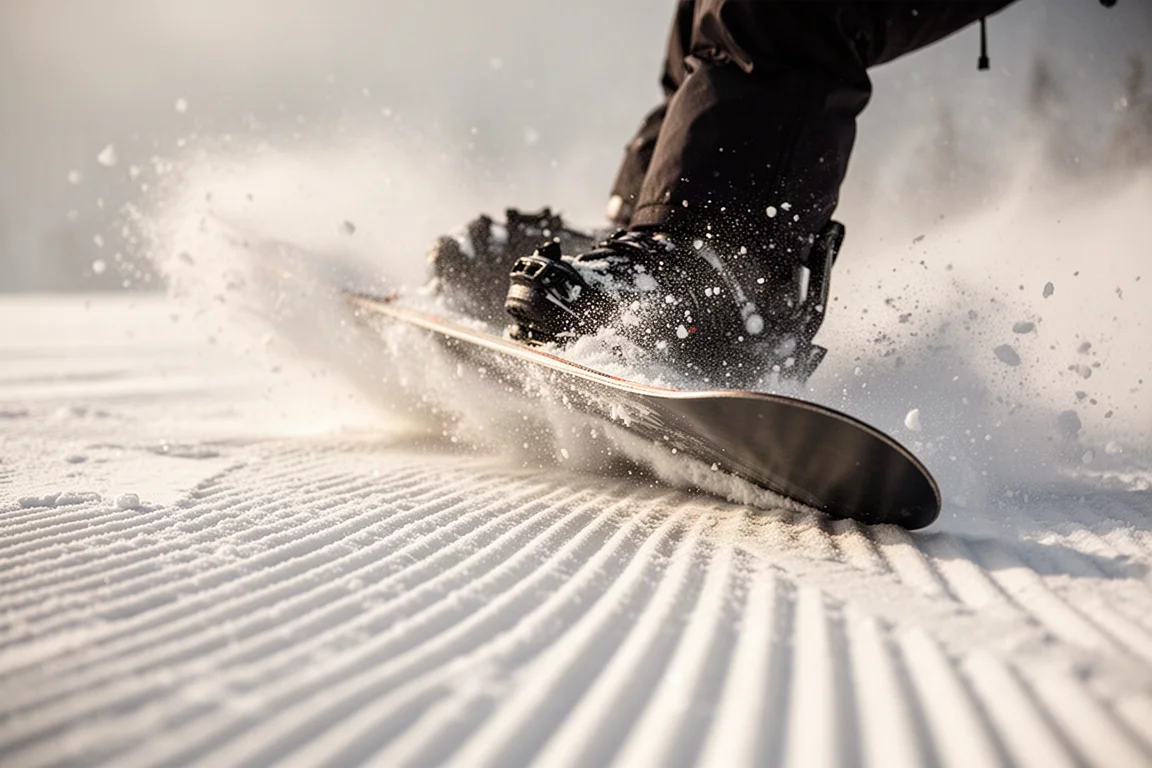
For a camber board, that is worth understanding clearly. The camber gives pop and snap, not a locked-in carving platform, and the torsional flex through the middle is part of why the edge releases early.
Things to Consider Before Buying
The chatter in the tips at high speed is the first thing to accept. On smooth groomers it is manageable, but on chop and chunder the board moves around and transmits that movement back underfoot.
Tip washout on large jumps is the second. If your progression is pointed at the biggest features in the park, the softer tips will limit how confidently you can set down on the tail.
The third is the carving ceiling described above. If a hard-carving board is what you are shopping for, this is not it, regardless of how the model is positioned.
Finally, the step up from the regular Escape is subtle. Riders expecting a meaningfully stiffer, more aggressive board may not find enough separation to justify the change on feel alone.
Comparable Boards
If the Escape Plus sounds close but not quite right, a few boards sit in the same conversation. The Ride Shadowban, the Salomon Assassin, the Nidecker KonX, the Rome DOD, and the Ride C6 all occupy similar all-mountain freestyle territory and are worth cross-shopping against this one.
Buying Advice
Buy the Nidecker Escape Plus if you want traditional camber for its pop and snap, you split your time between groomers, side hits, and small to medium park features, and you value a board that butters and presses easily. It is also a sensible pick for a rider learning park who wants something forgiving enough to build confidence on while still rewarding good technique.
Look elsewhere if hard carving is central to your riding, if you are chasing the biggest jump lines, or if you want a damp, planted deck for rough snow at speed. For everyone else, this is a competent middle-of-the-pack board that does snowboard things without fuss, and it will serve a mixed all-mountain freestyle day honestly.
Conclusion
The Nidecker Escape Plus is not a revolutionary board, and it does not pretend to be. It is a traditional camber all-mountain freestyle deck with genuine pop, easy butters, confident presses, and a clear set of limits around high-speed stability and edge hold. If that description matches how you ride, it is a straightforward and dependable choice. If you want a carving weapon or a big-air platform, the honest answer is to keep looking.
Product link
View more details for Nidecker Escape Plus
This product is mentioned in the review. Check the specifications, options, and compatibility before buying.
View more details for Nidecker Escape PlusFurther reading
Related Reviews

Snowboards
32 Middle Earth Scott Stevens Pro Model Snowboard Review: A Park Board With a Reversed Flex
A medium traditional camber park board with carbon V reinforcement that is stiffer in the tips and more playful between the feet. Here is how it rides and who it suits.

Snowboards
32 Snafu Review: A Directional All-Mountain Freestyle Board with Serious Pop
The 32 Snafu pairs a directional camber-rocker profile with a stiffening tail for powerful carves, big ollies, and a surprisingly damp ride.

Snowboards
32 XXX Pat Fava Pro Snowboard Review: A Stiff Camber Beast for Hard-Charging Riders
A full-width traditional camber deck that rewards aggression with stability and edge power, but demands effort everywhere else.