Snowboard Boots
Nidecker Altai Snowboard Boot Review: An All-Mountain Boa Boot That Earns a Second Look
A closer look at the Nidecker Altai: dual Boa lacing, a seam-free toe box, a heat moldable silver liner, and one notable weakness in the sole.
Introduction
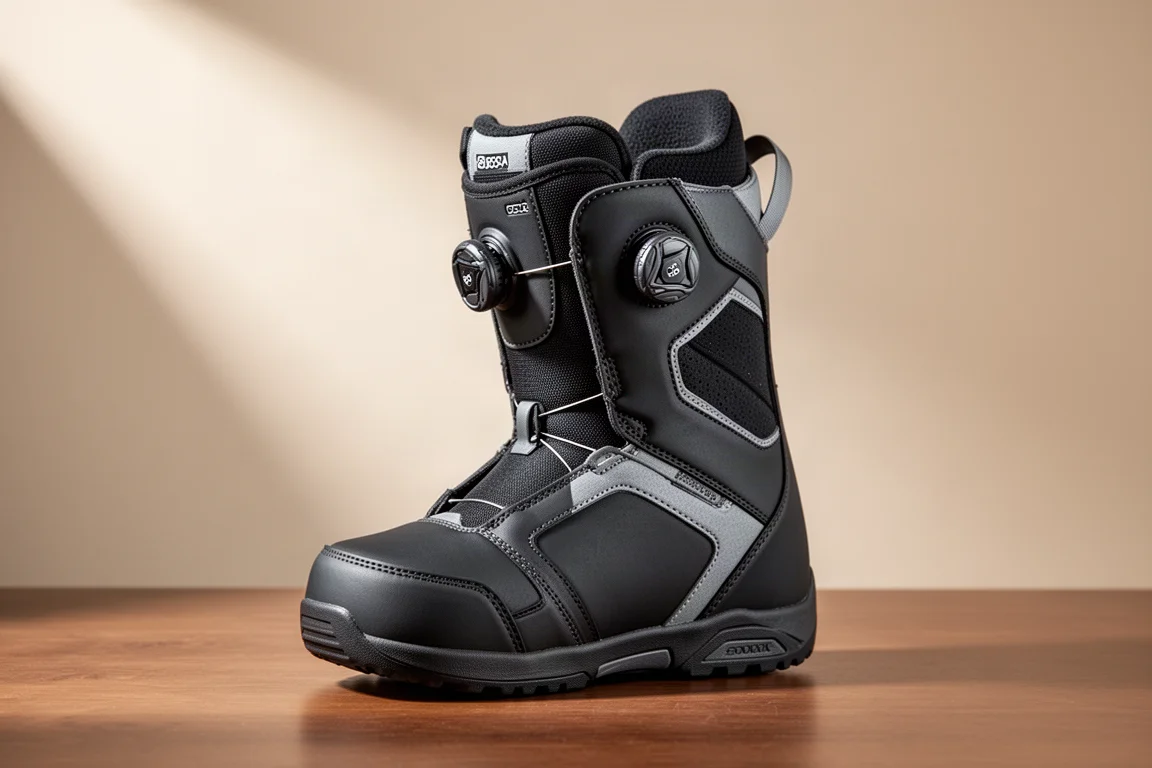
Nidecker is a brand that tends to fly under the radar when people shop for snowboard boots, and that is a shame, because the Altai shows how far the company has come. This is an all-mountain versatile boot that is stiff to a point in spots but still keeps plenty of play, built around dual Boa lacing and a thoughtfully engineered shell.
One caveat up front: sizing matters more with boots than with almost any other gear. If you are going to pick these up online, be honest with yourself about your sizing. If you can, visit a local shop and get sized properly. And remember, the best boot is the one that fits your foot and fits your needs. If it does not fit your foot or fit your needs, it is not the boot for you.
Shell Design and Toe Box
The Altai uses a big universal piece over the toe that reduces the number of seams on the shell. The shell material is synthetic rather than TPU, which means it breaks down over time and develops a natural flex point. Importantly, Nidecker moved the seam further back on the shell, so there is no seam right at the pinky toe area. When you crank a toe strap over the boot, you do not have to worry about pinch points up front.
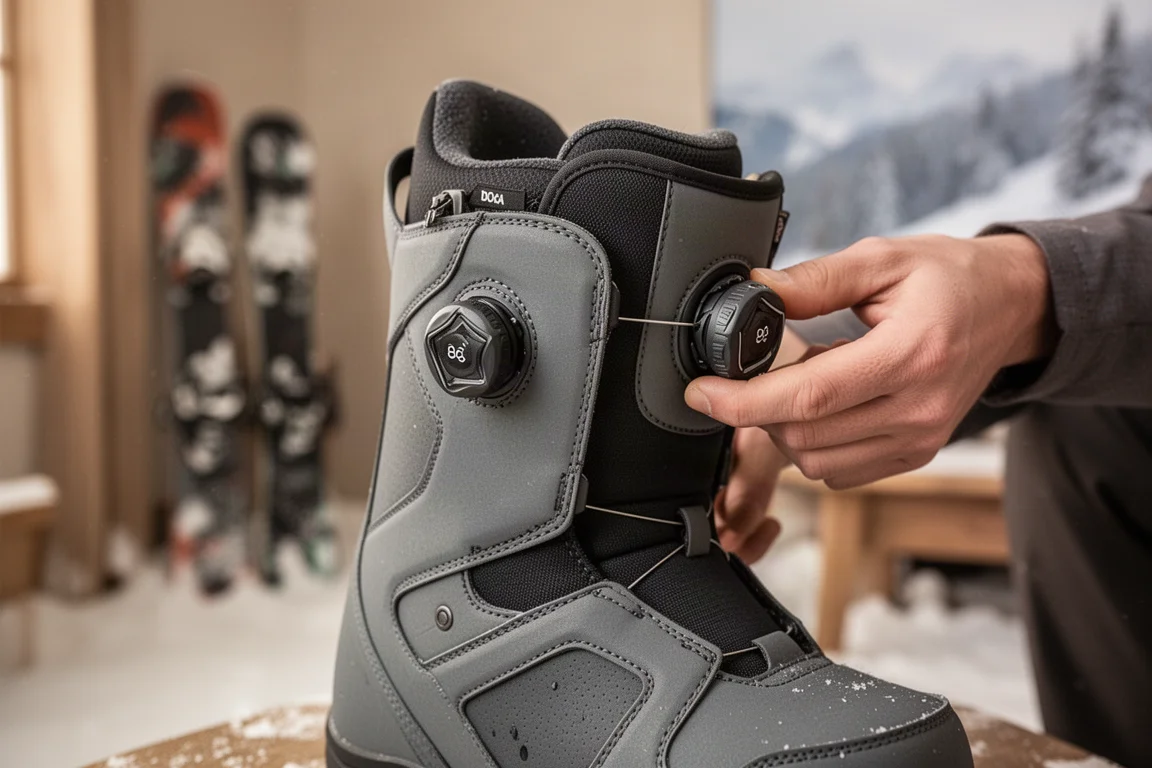
The only real pressure concern in the toe area is a double stitch where the tongue meets the toe box. If you rest the edge of your board against that spot and really hack at it, you may feel it. Moving rearward, the boot is dual Boa, and the shell includes a dedicated heel hold piece that changes how ankle articulation works. Because it sits lower, the ankle articulates a little lower and you get a different flex point there, which some riders will notice depending on the size of their instep.
The back of the boot features a multi-piece design. Rubber at the bottom delivers the most rebound directly from the bottom of your foot, so when you drive into the heel edge, you can feel it and the response changes. The upper section is not quite as stiff but still provides nice rebound. There is also a cutout at the calf with neoprene behind it, which stretches to accommodate riders with bigger calves.
Lacing: Dual Boa with a Twist
The Altai runs dual Boa lacing, and the layout is unusual. The upper dial on the tongue tightens the top of the boot, and it also controls your heel on the side. The lower dial handles the bottom section of the boot. That means you can play around with customization, but the heel being tied so closely to the upper dial is genuinely unique.
One practical tip that comes out of this design: you basically want to be flexing into the boot when you do up the knob, so the heel locks down properly. It is a small technique difference that makes a noticeable difference in fit.
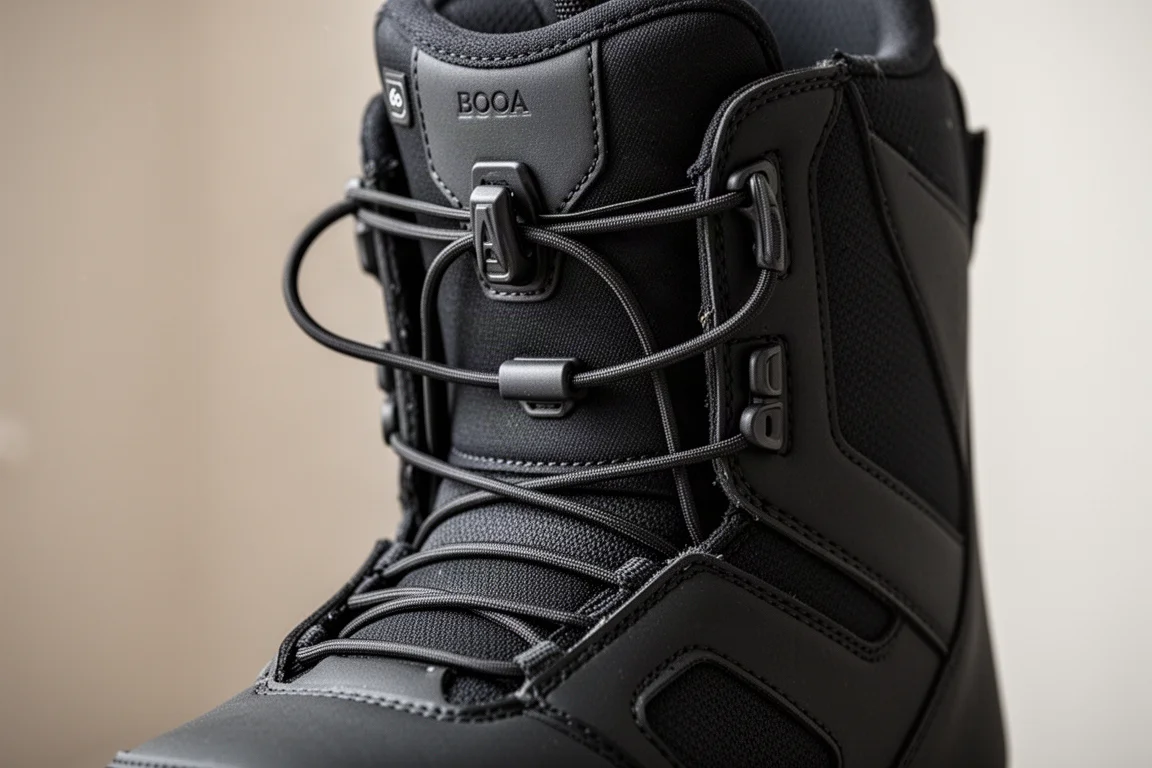
The boot also features Nidecker’s ASYM lacing, designed around the anatomy of the leg. Anyone who has ridden Boa boots knows the tongue tends to shift over time so one side of the cable runs a little longer than the other. The ASYM approach is Nidecker’s way of compensating for that, and it uses nylon cable in the system.
An internal harness is sewn into the shell, letting it pull more snugly around the liner and lock you in. That harness runs very low in the boot as well as very high, so it locks you down almost like a cast.
Sole and Dampening
This is where the Altai splits opinion. The boot features Nidecker’s Gravity Plus sole, with rubber at the toe and foam everywhere else. Foam soles are divisive. They absorb kinetic energy well, which helps with chatter, but they do not grip as well on ice, and they have more give if you are aggressive with them. Step hard on a rock in the middle of the sole and you are going to feel it.
There is a fair amount of foam in the construction to absorb excess chatter, so the boot is comfortable in that respect. But if you come down hard, you will likely feel it a little more than with a full rubber sole. Extending the rubber from the toe further through the sole would have improved it.
Liner and Fit Details
Inside, the Altai comes with Nidecker’s silver heat moldable liner, and heat molding is worth doing. It expedites the break-in process, and it is especially recommended if you ride more than 10 days a year. The liner uses dual density foam: the foam at the top is more malleable and pushes out more easily during heat molding.
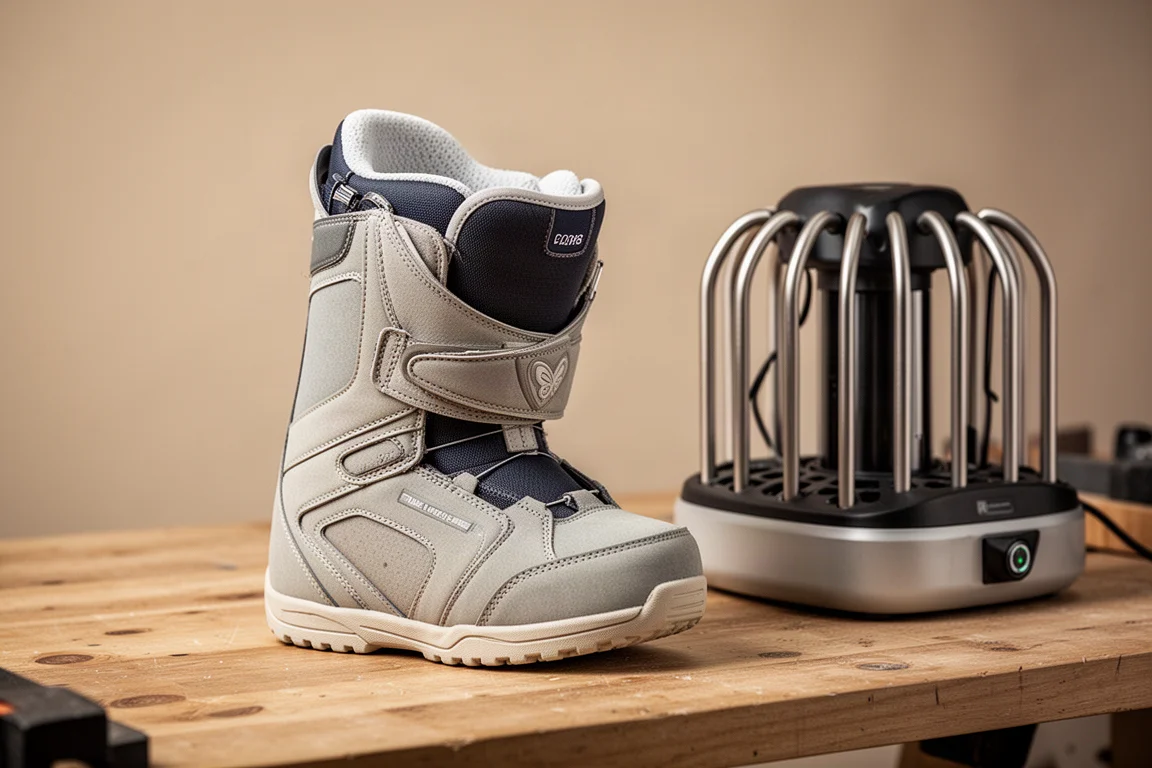
On the back of the liner there is a butterfly wrap that helps with ankle support and adds a little extra stiffness. Around the toe you get softer foam. One thing to be aware of: there are two seams near the pinky toe in the liner, so riders with a sensitive pinky toe may feel them, though many will not.
The tongue has aggressive Velcro that hugs the front of your shin, which is a nice touch for riders with a smaller shin. Inside the boot there is a fairly aggressive J-bar with more of a V shape in the heel, which grips a slightly smaller heel better than a bulkier design would.
One genuine weak point: the stock footbed. There is no arch support. If you ride more than five times a year, replace it with an aftermarket footbed. You will thank yourself.
Sizing and Measurements
Measured on a US men’s 9, or 27 Mondo point, with the liner removed, the boot came in at just under 11.5 inches at the back and about 10.5 inches at the front. At the 4T mark it measures 5.5 inches across, giving roughly 4.5 inches of width. Toe to heel it is just shy of 12 inches.
At the forefoot, measured at the widest section from the 1 inch mark, it comes to 5 inches across, or 4 inches wide, which is about standard width for most boots on the market. That makes the Altai a fairly predictable fit for riders who know their size in mainstream boots.
Overall Verdict
The Altai is a solid boot for what it is. The seam-free toe box is a smart touch, the heel hold design in the shell is unique, and the lacing system genuinely changes the power dynamic of the boot. The main downside is the foam sole, which is why extending the rubber would have gone a long way.
If it fits your foot and fits your needs, this is a good boot, and it is a sensible option for riders looking for something all-mountain versatile: stiff enough in the right places, playful enough everywhere else. The bigger takeaway is that Nidecker boots deserve more attention than they get. The brand has come a long way, and for the right rider, this is a viable option worth serious consideration.
Conclusion
The Nidecker Altai brings dual Boa lacing with a clever heel lockout, a seam-free toe area, a heat moldable silver liner, and a multi-piece rear spine with real rebound. Its main compromise is the mostly foam Gravity Plus sole, along with a stock footbed that should be swapped early. For all-mountain riders who prioritize fit, heel hold, and customizable lacing, it is a boot well worth trying on at a shop before you buy.
Product link
View more details for Nidecker Altai
This product is mentioned in the review. Check the specifications, options, and compatibility before buying.
View more details for Nidecker AltaiFurther reading
Related Reviews

Snowboard Boots
32 Team Two Double Boa Review: 32's Highest-End Women's Snowboard Boot
A closer look at 32's top-tier women's snowboard boot, from the 3D molded toe box and double Boa lacing to the Performance Fit liner and heat-reflective footbed.

Snowboard Boots
Bataleon Acid BOA Snowboard Boot Review: A Serious First Entry from a Board Brand
Bataleon's first snowboard boot, designed by a former Burton boot designer, brings a stiff flex, dual BOA closure, and a heel hold system worth a closer look.

Snowboard Boots
Battalion Acid Boot Review: A Stiff, Aggressive Boot Built to Last
The Battalion Acid Boot is the brand's highest-end offering, built with seamless construction, TPU reinforcement, dual BOA lacing, and a heat-moldable liner. Here is what to know before buying.