Triathlon Gear
New Triathlon Gear From the Ironman 70.3 World Championships: 10 Standout Finds
Cooling, aero, recovery and nutrition gear that stood out at the Ironman 70.3 World Championships expo in Nice, with honest notes on what is worth buying.
Introduction
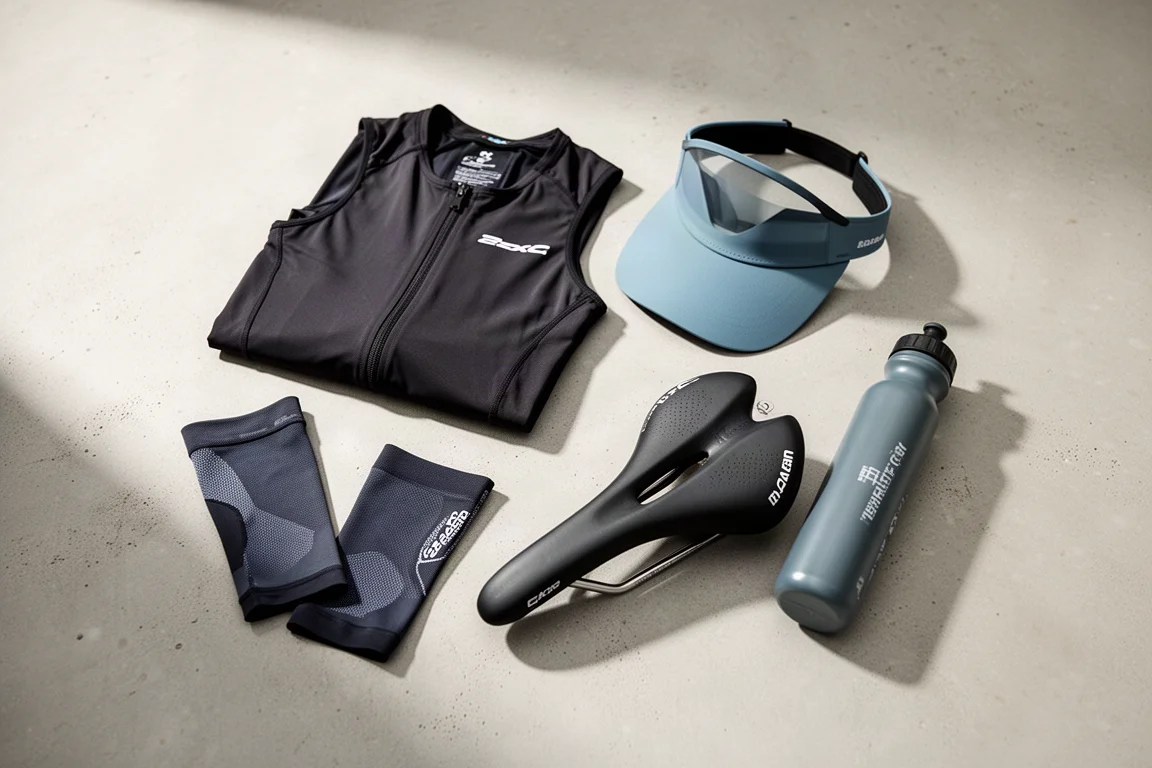
The Ironman 70.3 World Championships brought the triathlon industry to Nice, and the expo floor turned into a showcase of what the sport is currently obsessed with: cooling, aerodynamics and recovery. The dress code leaned heavily retro. The hardware did not. What follows is a rundown of the pieces that stood out, from a visor that weighs barely more than a gel packet to a wetsuit that will not reach shelves until early 2027.
One piece of industry news is worth flagging before the gear. Salomon is set to become the Ironman title footwear sponsor, covering footwear, apparel and bags from 2027 under a five year deal. The brand takes over from Hoka and will also hold the title sponsor position for the world championships in Kona from next year. It is a notable shift for a company long associated with trail footwear, following recent moves into road running and now into triathlon.
How We Picked These Products
Not every object on an expo stand deserves a place in your race kit. The gear below earned its spot for one of three reasons: it solves a specific race day problem, the claimed benefit is backed by testing or a clear design change, or it offers the same job as an existing product at a meaningfully lower cost.
Availability matters just as much as performance. Some of what follows is on sale now, some arrives at the end of 2026, and a few items are prototypes or 2027 launches that you cannot buy yet. Where a product is not yet available, that is stated plainly rather than dressed up.

Fit also runs through this entire list more than most athletes expect. Aero calf sleeves, trisuits and wetsuits all deliver their gains only when the size is right, and an overstretched panel can quietly undo the benefit you paid for. If there is one theme across the whole expo, it is that sizing has become a performance variable rather than a comfort preference.
Ombra Airflow Visor: Cooling That Does Not Sit on Your Skin
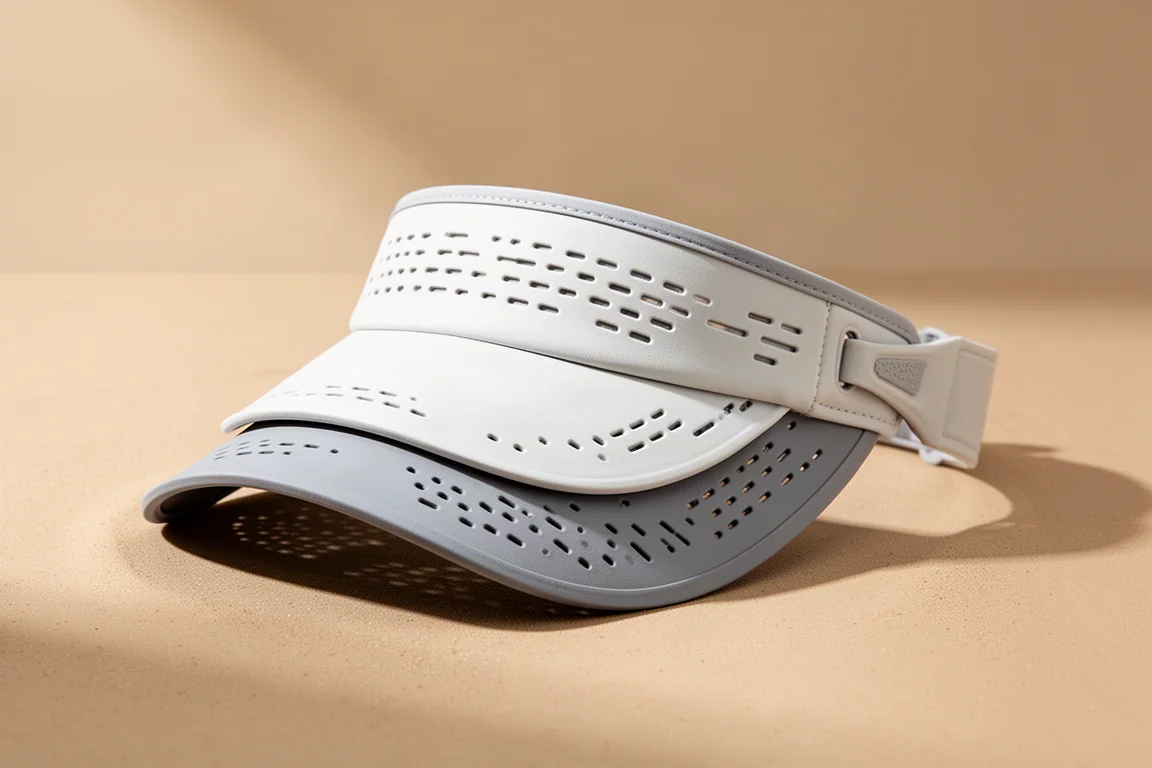
Ombra became a familiar name through cooling headbands that were widely adopted a couple of seasons ago. The Airflow Visor applies the same thinking in a different shape. A standard visor absorbs heat and presses flat against the forehead, which limits how much heat the skin can actually shed. This design instead pushes air through vents and reflects sunlight away rather than soaking it up.
The whole assembly weighs around 50 g even with its double layer construction, and it attaches to whatever sunglasses you already own. The two layers can be used independently: run the bottom layer with a backwards cap, or the top layer alone when you want something lighter. Throughout, the aim is to keep sweat evaporating off the skin rather than trapping it.
Surpass Aero Calf Sleeves: Fewer Dots, More Data
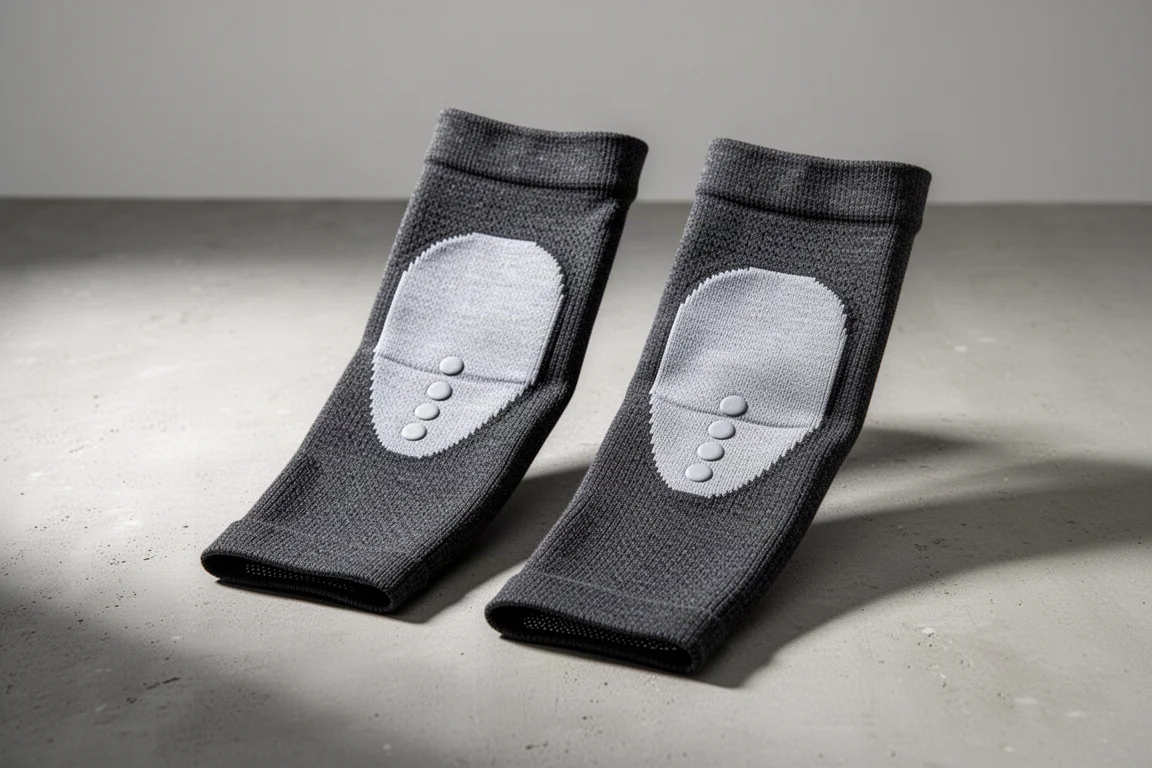
Aero calf sleeves have always carried a whiff of gamble, and Surpass has revised its design in a way that shows how much of this category is still being worked out. The previous version used more dots on larger sleeves, on the theory that bigger calves needed more of them to see an aero gain. Testing overturned that assumption. The new design uses a simple line of two dots on every sleeve, regardless of size.
The brand is refreshingly direct that these will make a significant difference for some athletes and very little for others, which is worth knowing before you spend. It has also removed the seam at the top and replaced it with an anti-slip interior for a smoother feel against the skin.
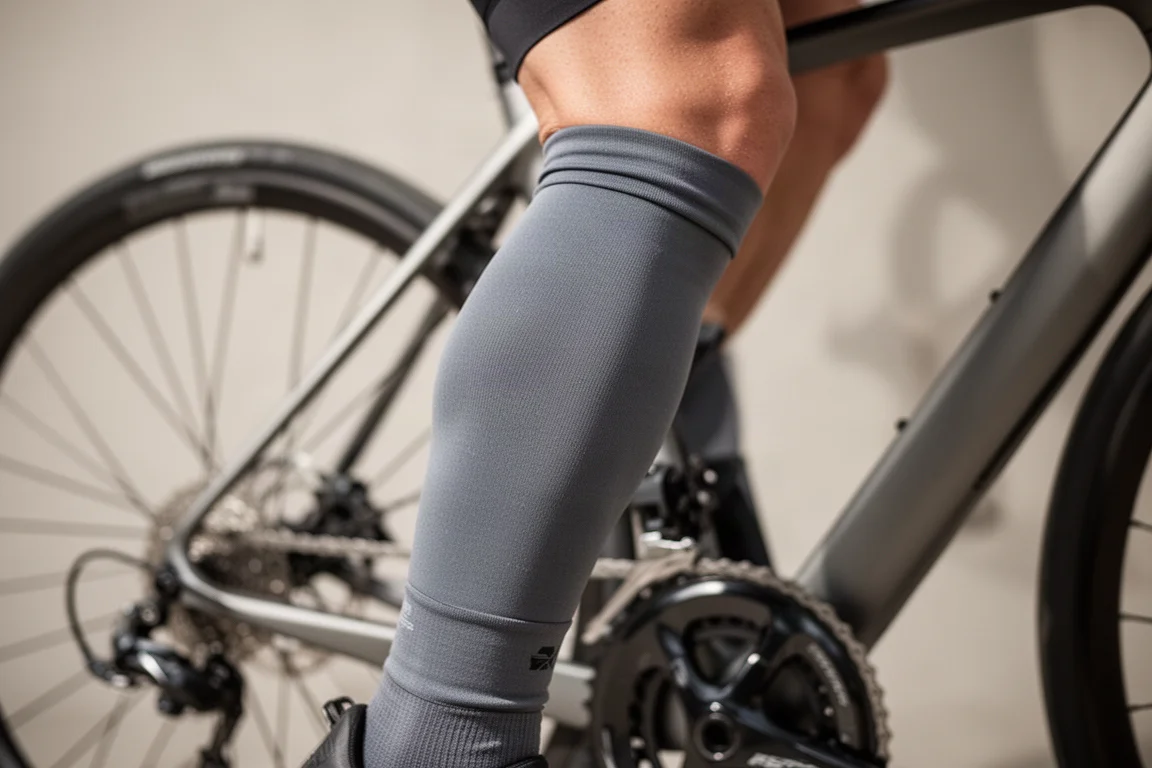
Fit is the part to take seriously. The panels and lines on the sleeve only work as intended when the sleeve is not overstretched, so a pair that is too tight quietly reduces the aerodynamic benefit you are paying for. A calf measurer is available, and it is worth using one. The updated sleeves are due at the end of this year, ready for the 2027 season.
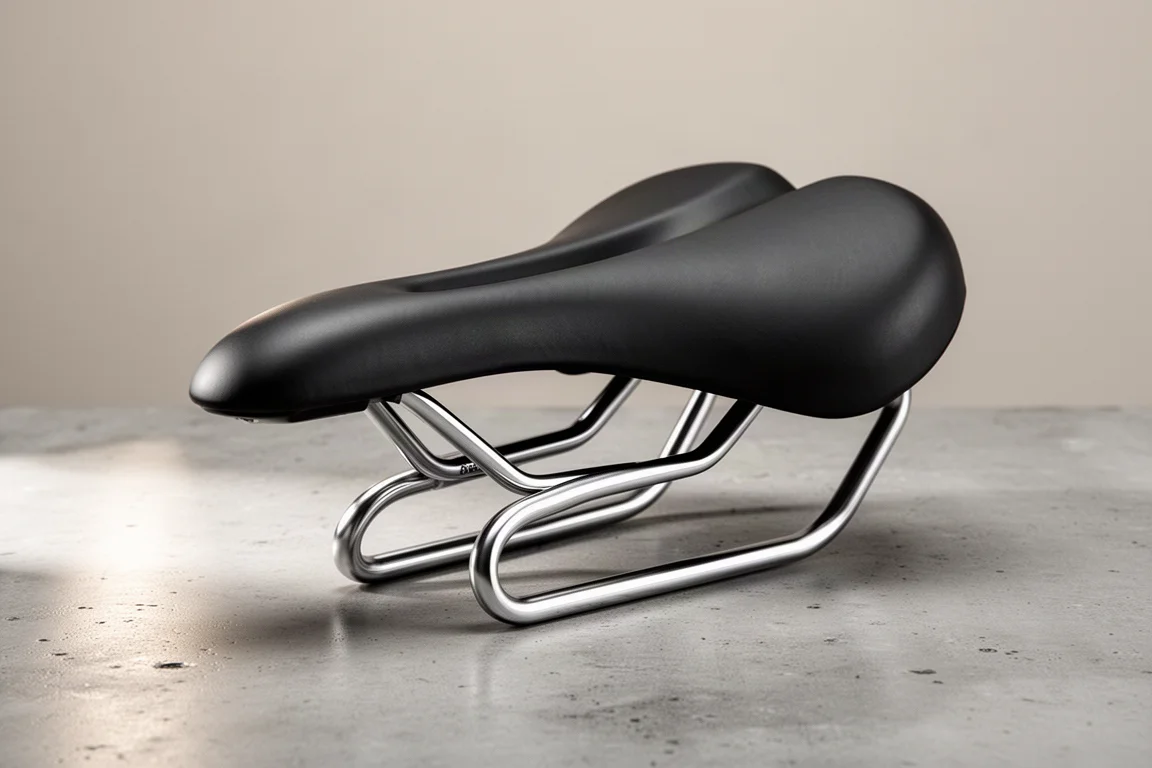
Wave AM8 Metal: The Robust Saddle Option
The Wave AM8 has become a recognisable shape on the triathlon circuit, but until now it was only offered with carbon rails. That version is extremely light and priced above $500, which puts it firmly at the top of the market and makes it a less appealing choice for anyone who is hard on their equipment or travels frequently with a bike bag.
The AM8 Metal answers that directly. It uses solid steel rails, a hard wearing material that makes the saddle considerably more robust, and it comes in roughly $200 cheaper than the carbon railed version. You give up some weight, and in exchange you get a saddle that stands up better to repeated packing, transport and everyday training abuse.
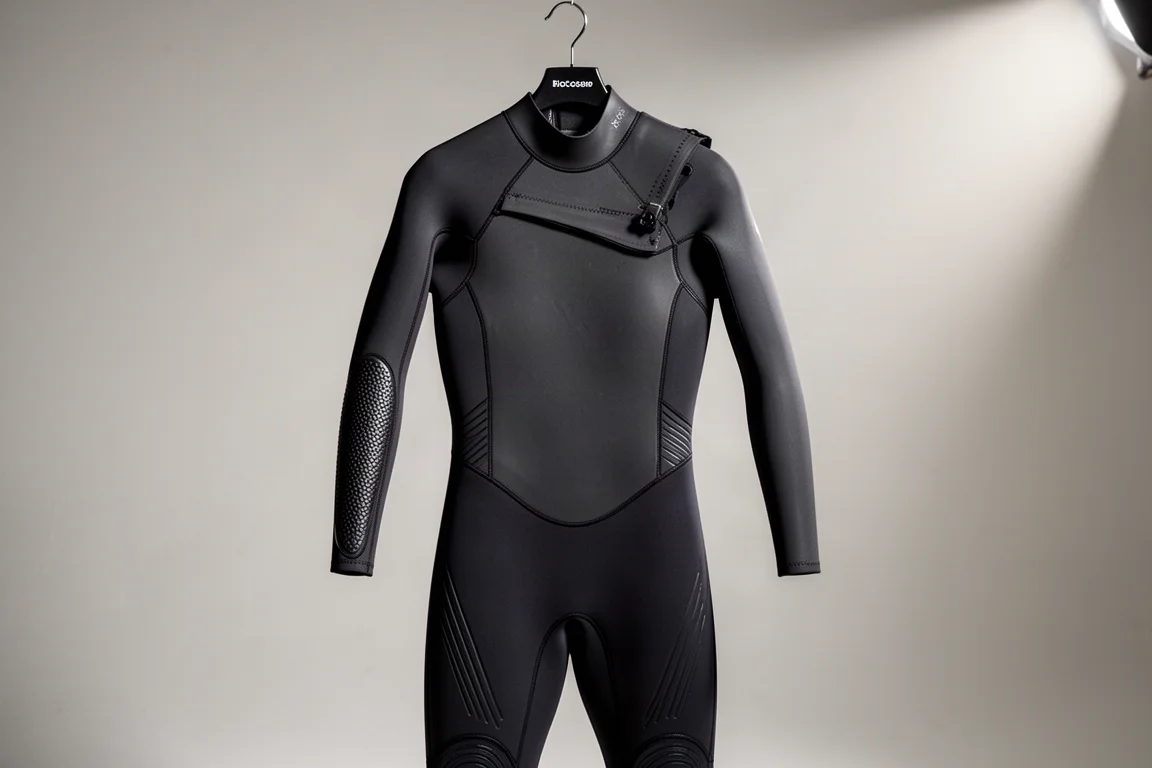
Zone 3 Vanquish X: A Wetsuit Built Around Shoulder Freedom
The Vanquish X is an unreleased wetsuit scheduled for February 2027, and the sample on display belonged to the reigning Ironman world champion. The custom elements are not coming to retail, but a lot of the updates are. There is a graphene catch panel, and behind the knee there are grooves designed to prevent bunching and pinching both during the swim and on the run into T1.
The rear closure has been redesigned as well, with a Velcro panel that rips open more easily when you are stripping the suit in a hurry. Around the shoulders and arms, the neoprene mix now includes more Yamamoto 40, which makes that area noticeably less restrictive for the catch and pull.
The champion’s own suit carries his measurements, a personal colourway and his race splits printed on the fabric. Interestingly, he chose not to include the graphene catch panel, a design that came out of feedback from the brand’s professional athletes. Almost everyone else wanted it. He did not.
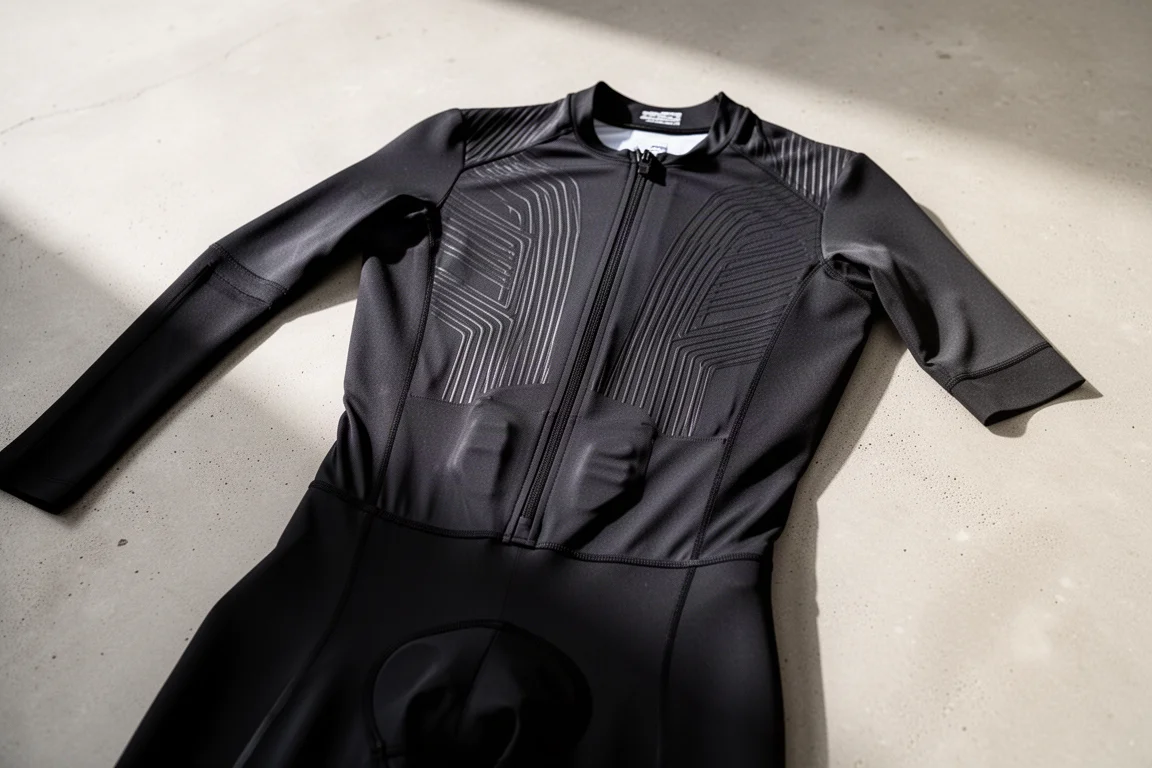
Zone 3 Aeroforce X G: A Redesigned Trisuit
Alongside the wetsuit, Zone 3 showed a completely redesigned trisuit in the Aeroforce X G. The paneling is new throughout, with more aerodynamic shaping across the shoulders and the back, which is where most of the wind actually meets a rider in a race position.
The storage design is the more interesting change for long course racing. There are gel pockets on the rear that stay sleek while you are riding, so they do not balloon out or catch the wind. There are also two gel compartments on the inside front of the suit, which puts nutrition within easy reach without breaking position or fumbling behind your back.
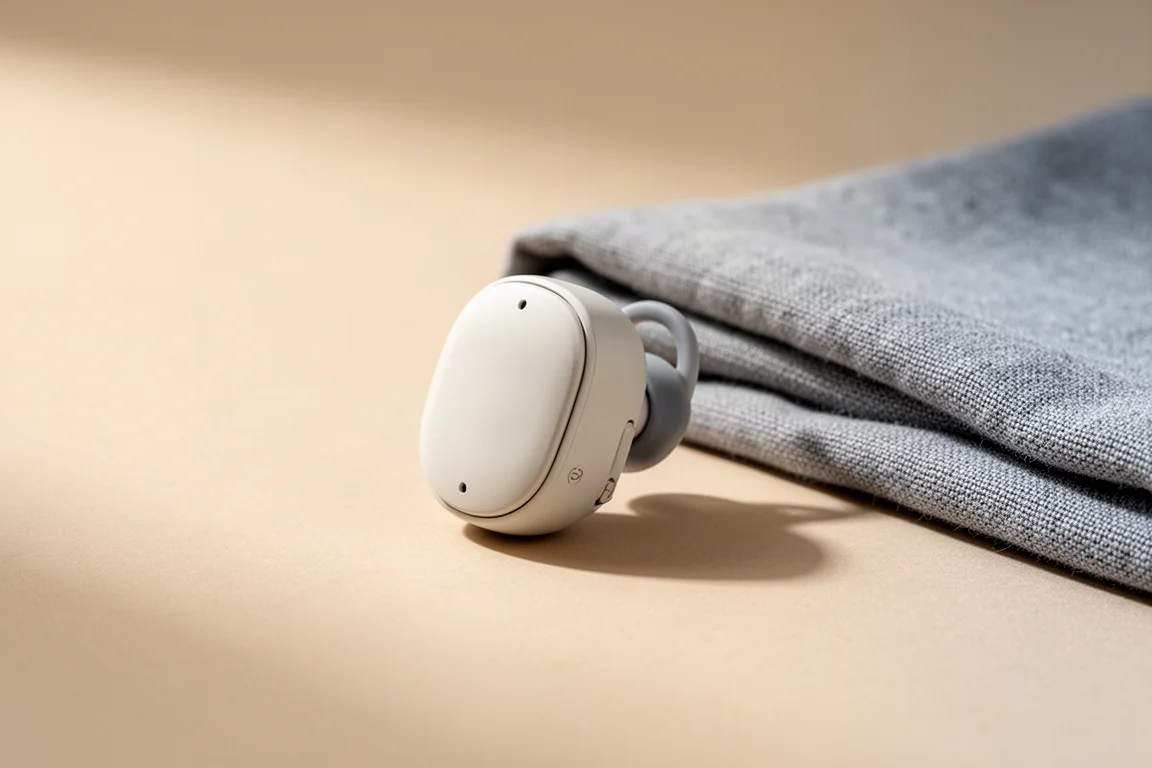
Parasym Neurostim: A Four-Minute Recovery Reset
Recovery tools rarely look this small. The Neurostim is a device worn on the ear that delivers a mild tingling sensation, and it works by stimulating the vagus nerve with the aim of nudging the body toward a calm, recovery oriented state. The thinking is straightforward: most athletes track training and sleep carefully but pay almost no attention to switching off.
The brand points to around 60 research papers behind the approach, and says a minimum of four minutes is enough to begin that reset. That short window is the appeal. It is not another training stimulus or another hour of your day, it is a few minutes on a bench between sessions. Whether you feel a meaningful effect will vary from person to person, but the concept of deliberately downshifting is one most triathletes neglect.

For anyone juggling a full time job with a race schedule, the practical case is easy to follow. Stress accumulates quietly, and a device that gives you a defined four minute pause is a simpler habit to keep than an open ended instruction to relax more.
Win CDA Evo: Chasing Three Percent
The CDA Evo is the evolution of a suit first launched two years ago in Kona, and the headline claim is a three percent aerodynamic improvement in the wind tunnel. That figure was cross referenced across two separate wind tunnels, one in the UK and one in Australia, which is a more careful approach than a single test session.
The suit is also 20 percent lighter than its predecessor. Weight is not a number often discussed in trisuits, but over a marathon the difference is real. At the front, a Swiss made Code Black fabric is used for cooling. The back and sleeves carry the aerodynamic lines that have become standard in the category, and there are subtle hidden pockets at the rear.
The legs use a new warp fabric, and on close inspection it carries horizontal lines. That is unusual, since most aero suits run their texture vertically, and the brand attributes part of the drag saving to this change. Ten professional athletes were set to race in the suit across the championship weekend, which is a decent real world test.
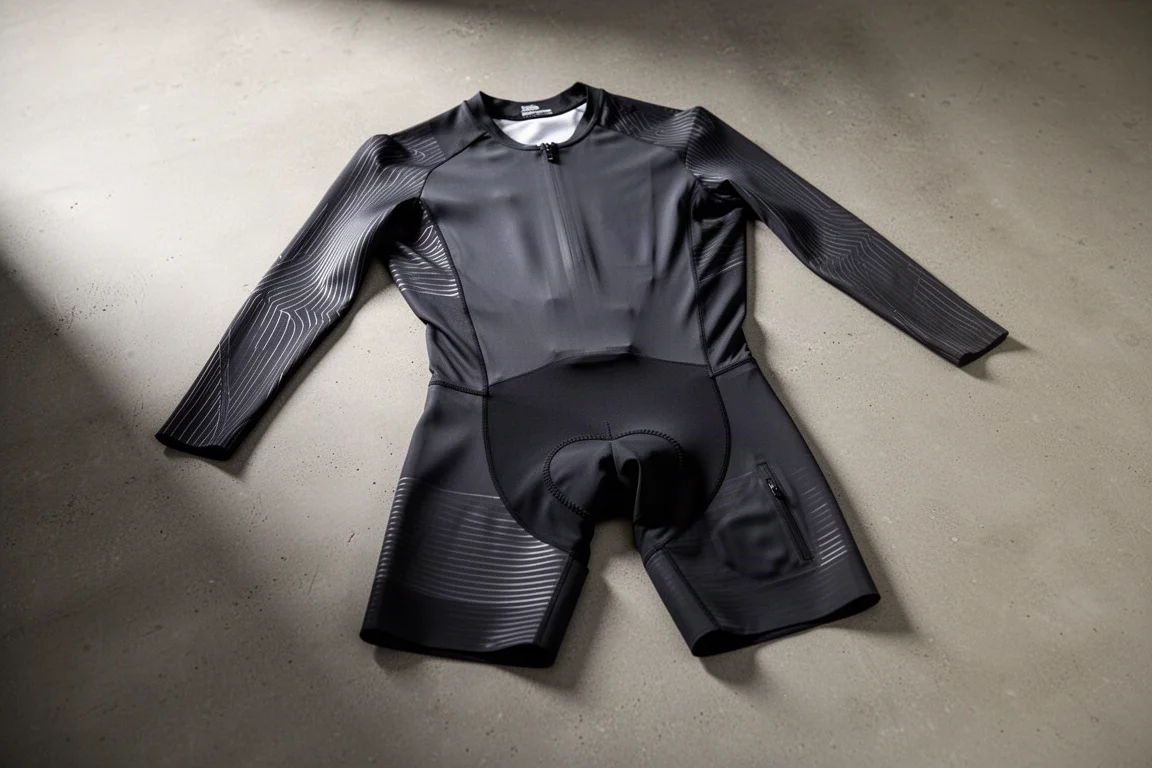
Surf House CRC: A Suit Tuned for Hot, Upright Racing
The CRC stands for Core Racing Concept, and it joins the existing ARC, or Aero Racing Concept, in the range. The two are not meant to replace one another. The CRC is course specific, built for races where athletes spend meaningful time out of the aero position.
That is where the much thinner mesh at the front comes in. On a long descent, riders sit up and the airflow over the chest is different, so a panel designed to dump heat can do far more work than it would in a full tuck. It suits hot races with long climbs and long descents rather than flat, fully aero courses.
Fit has been refined too. Look closely at the arms and you will see thin lines running along them. If a suit is too tight, those panels stretch and the gap between the lines widens, which makes the suit less aerodynamic than intended. It is a useful reminder for anyone shopping for a trisuit: the right size is a performance decision, not just a comfort one. The brand has also been using small telltales on the suit in the wind tunnel to trace airflow, and has been retesting older designs with newer, wider helmets, since helmet shape changes how air moves over the body.
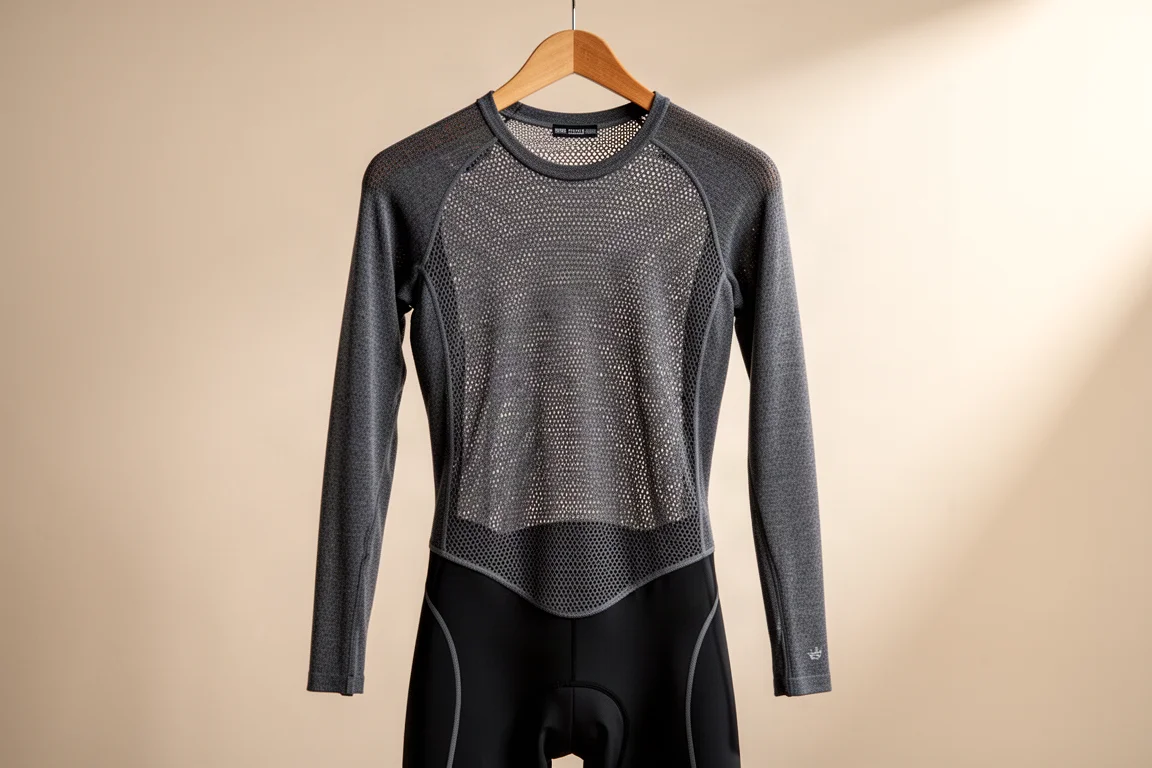
Easy Gains Hydroglide: Cooling for Non-Wetsuit Swims
The Hydroglide looks hydrodynamic, and there are hydrodynamic benefits, but cooling is the main job. Core body temperature has become one of the most talked about topics in triathlon, and the swim is often where athletes start overheating before the race has really begun. On a non-wetsuit swim, that matters even more.
The system uses a special ice pack that sits between 5 and 10 degrees, cold enough to cool you down without freezing your head. The whole unit goes in the freezer, and you take the ice pack out just before you start, so it is still at the right temperature when you line up. Take it out several hours before your race and it will still be at the intended temperature at the start line, which makes it practical for early morning transitions.
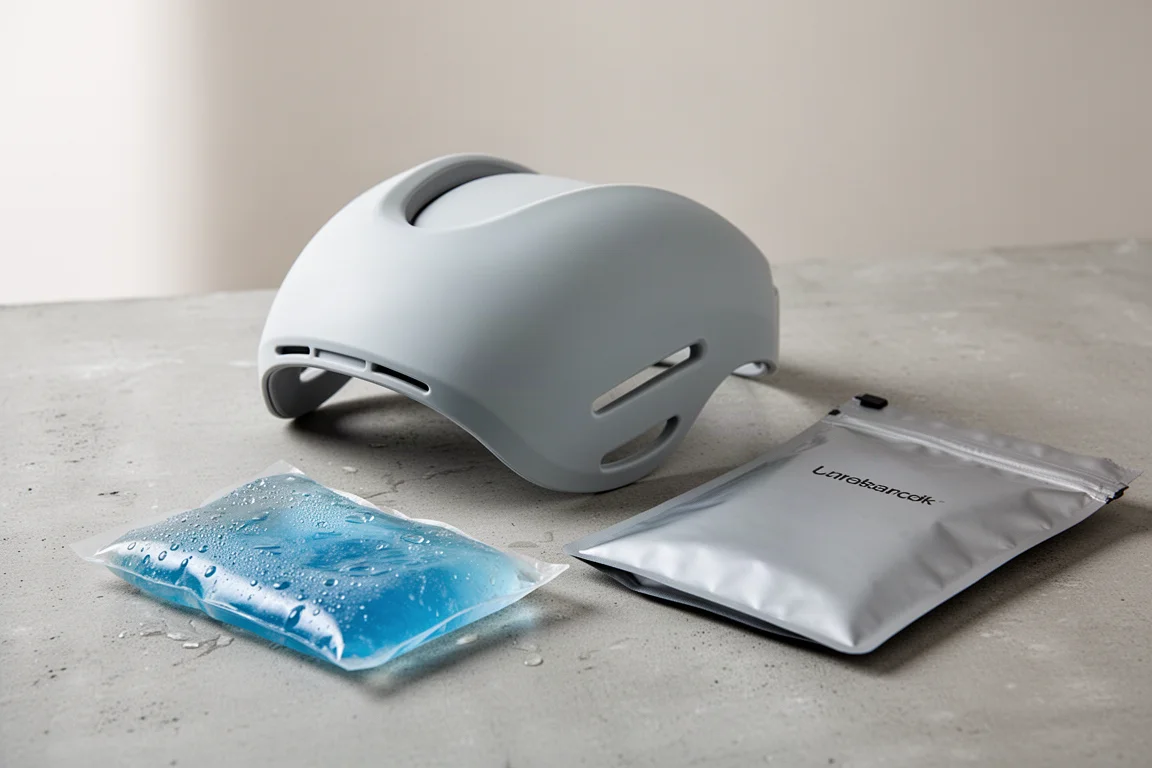
Pyrene Gel Ultra Endurance: Nutrition in a Bottle
Pyrene takes a different route to race fuel. Everything is made in France, in the brand’s own laboratory in Toulouse, and much of the produce comes from the Pyrenees, including the honey and blueberries used in the Ultra Endurance gel. That regional sourcing extends to the sodium, which is locally sourced rather than bought in as a commodity mineral.
The packaging is the practical change. Each bottle holds the equivalent of 15 gels, and you can drink it straight or dilute it. A chart on the bottle tells you how much to dilute based on sex and the intensity you are working at, so you can mix a bottle to match the effort of the day rather than guessing. The brand frames this around longer term health, arguing that athletes want more than a straight sugar hit. Whether or not you buy that argument, a bottle that replaces fifteen wrappers is a genuinely simpler way to carry fuel.

Buying Advice: Matching Gear to Your Race
The most useful lesson from a weekend like this is that almost nothing here is universally worth buying. Cooling gear pays off in hot, non-wetsuit races and does far less for you at a cold early season event. A course specific trisuit like the CRC is a smart pick for a hilly race with long descents and a questionable one for a flat, fully aero course in mild conditions.
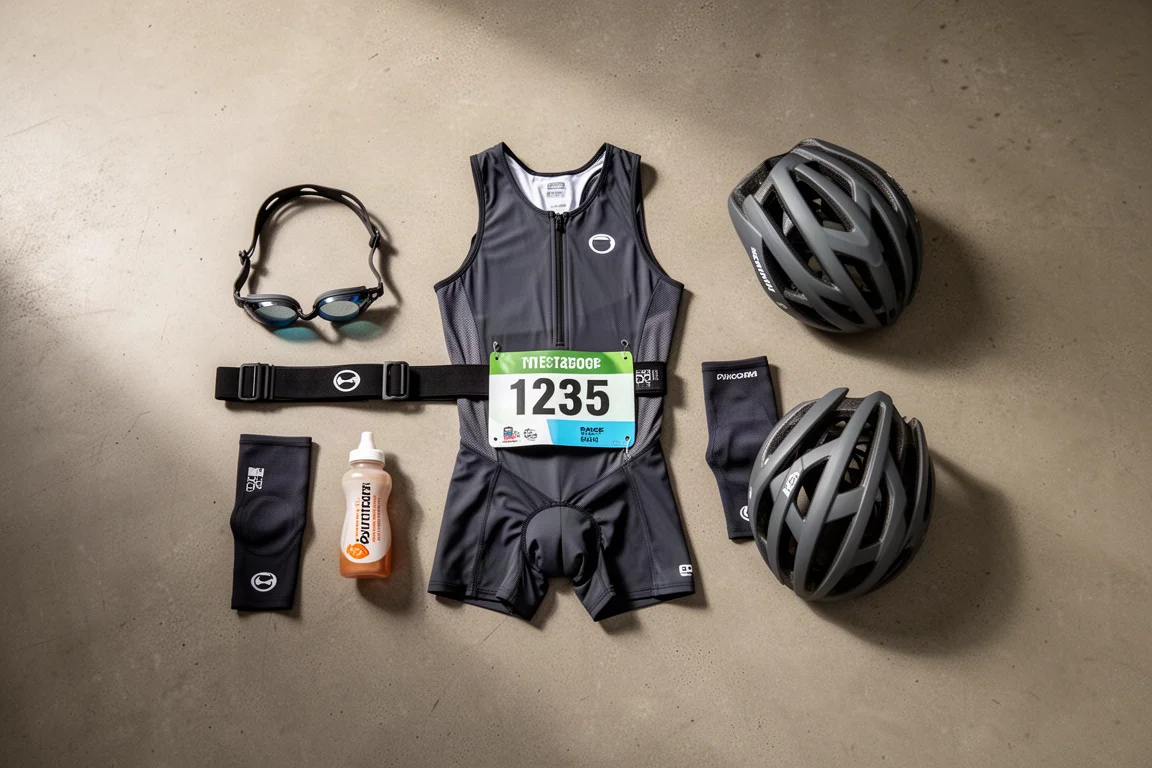
Prioritise the products that remove a problem you actually have. If you lose bottles, or fight with your shoes in transition, a small fix might improve your race more than a three percent drag saving. If you have never had a fit issue with a calf sleeve, the new dot pattern is unlikely to transform your bike split. If you do buy aero apparel, get the sizing right first, because an overstretched panel is the fastest way to waste money in this sport.
Finally, be patient with what is not available yet. The Vanquish X arrives in February 2027 and the updated calf sleeves land at the end of 2026, so neither belongs on an immediate shopping list. Everything else on this page is a current or near term purchase, and each one earns its place by solving something specific.
Conclusion
This was a championship expo dominated by comfort and heat management rather than pure speed, which says a lot about where triathlon is heading. The standout pieces here are the ones that combine a clear purpose with a design change you can actually understand: a visor that reflects rather than absorbs, calf sleeves that admit their benefit varies by athlete, and a saddle that trades a little weight for a lot of durability at a lower price.
Pick the two or three items that match your race calendar and your real weaknesses, size them properly, and leave the rest on the expo floor.
Further reading
Related Reviews
Triathlon Gear
Two Affordable Triathlon Gear Picks: A Race Suit and a Budget GPS Bike Computer
A short-sleeve trisuit and a budget GPS bike computer: two affordable triathlon upgrades with clear use cases, real strengths, and trade-offs to weigh first.
Triathlon Gear
Best Triathlon Tech from Kona 2024: 11 Standout Gear Picks
A roundup of the most interesting triathlon gear spotted at the Kona 2024 Expo, from prototype bikes to smart goggles and recovery boots.
Triathlon Gear
Christmas Gift Ideas for Triathletes: 10 Practical Picks
A practical gift guide for triathletes, covering swim, bike, run, recovery and stocking fillers that solve real training problems.