Outdoor Gear
New Outdoor Gear: 8 Standouts for Camping and Backpacking
Eight new outdoor products worth a closer look, from titanium cookware and trekking poles to freeze-dried meals, a battery-powered ice maker and a deep-winter sleeping pad.
Introduction
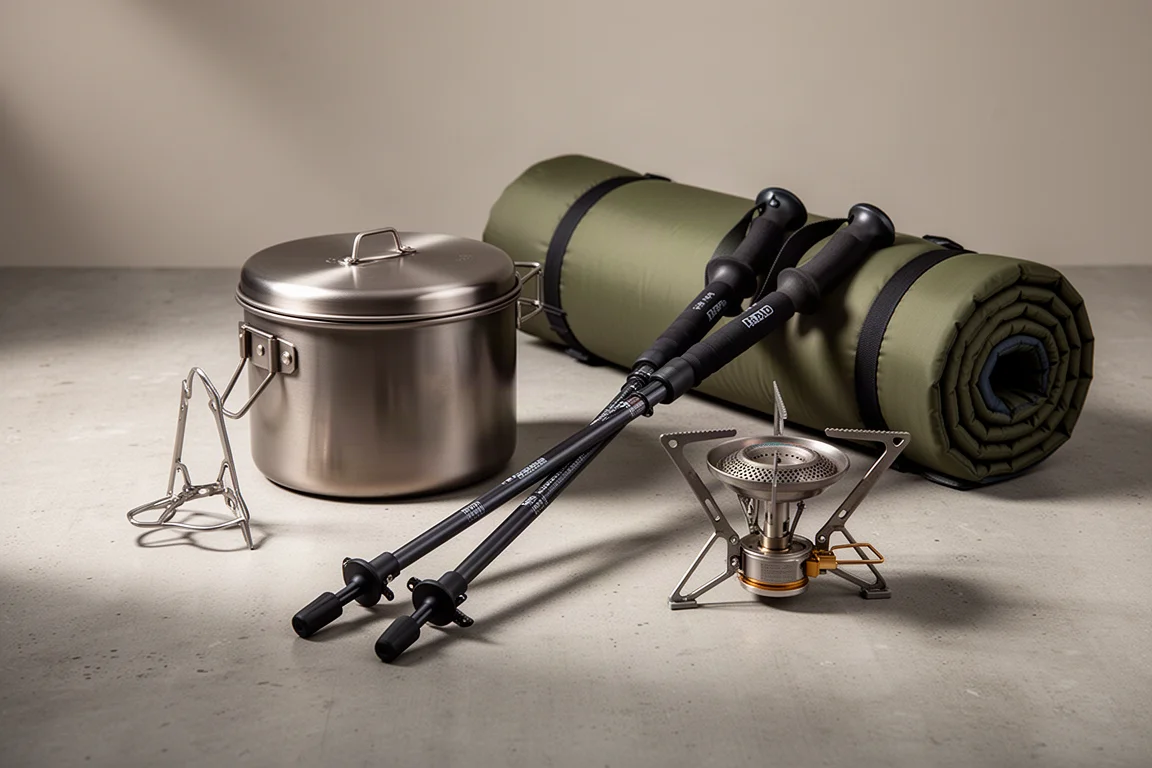
New gear seasons are a mixed bag. Plenty of products are cosmetic updates, and a handful solve problems that campers, hikers and paddlers actually run into. The eight items below fall into the second group: lighter cookware, tougher trekking poles, better trail food, and a few tools that make long trips more comfortable.
Several of these are aimed at specific trip types, and a few carry trade-offs worth knowing about before you commit. Here is what stands out, and who each piece is really for.
Soto Titanium Pots: Two Lightweight Options
Soto has introduced titanium pots in two sizes, 750 ml and 1100 ml. Both are built from a high-grade titanium that keeps weight low without the thin, flimsy feel that cheap cookware often has. Pricing sits roughly in the $42 to $46 range depending on which size you choose, which is competitive for titanium.
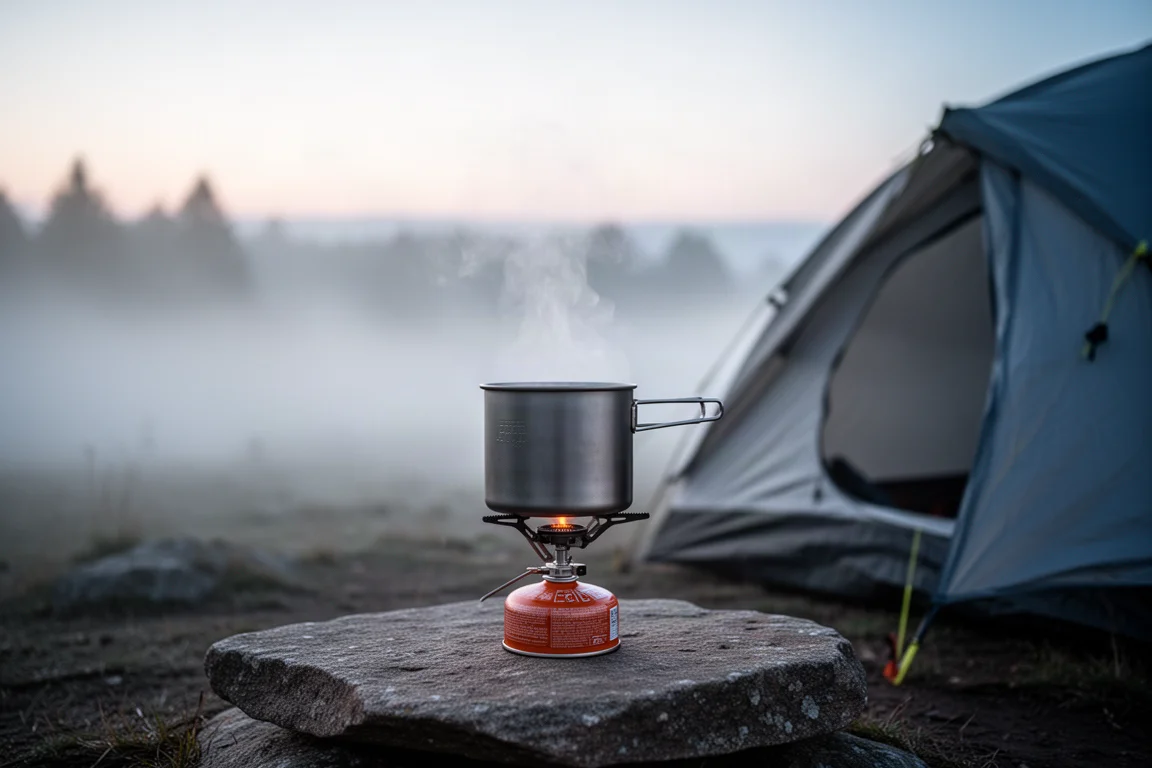
The detail worth noting is the lid, which is designed to integrate with the included pot gripper. The gripper does double duty as a handle and a lid lifter, so you are not carrying a separate tool or burning your fingers on a hot rim. It is a small piece of design work, but it is the kind of thing that matters when you are cooking in the dark at a cold campsite.
Soto Titanium Pot 750ml
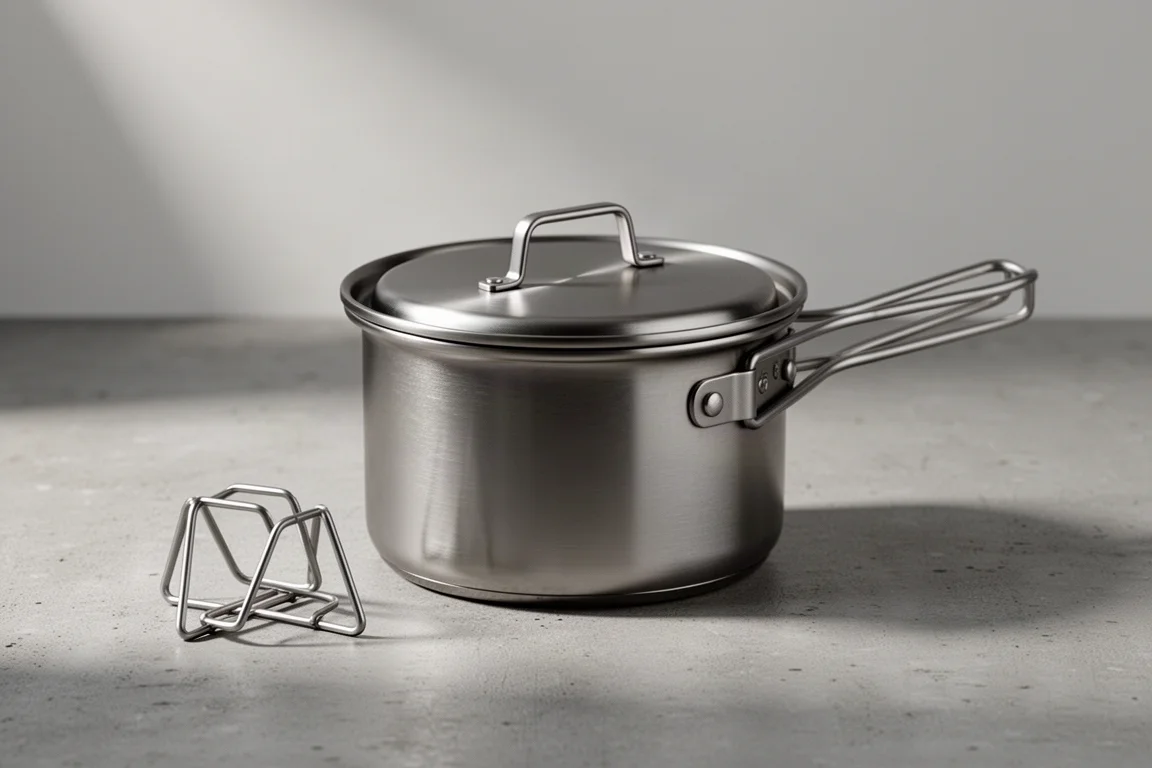
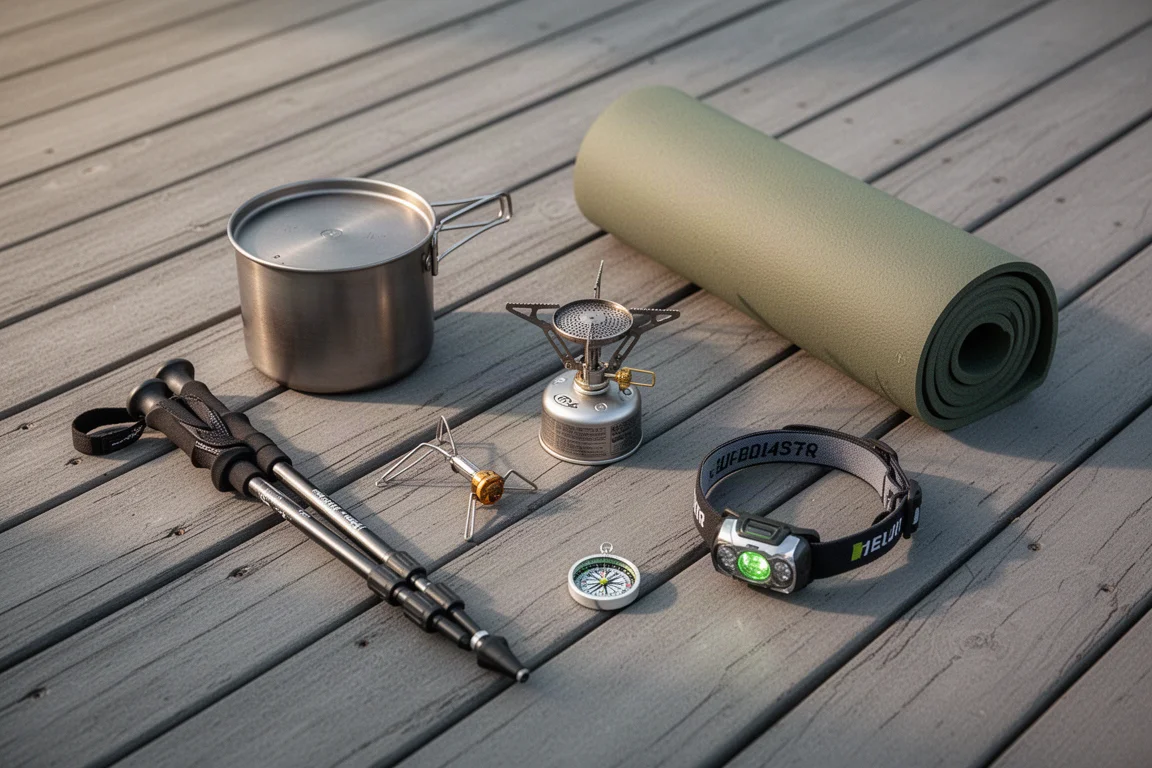
The 750 ml version is the solo option. It handles a single serving of rehydrated food or a hot drink without taking up much room in a pack, and the titanium construction keeps weight near the floor of what is realistic for a pot this size.
Soto Titanium Pot 1100ml
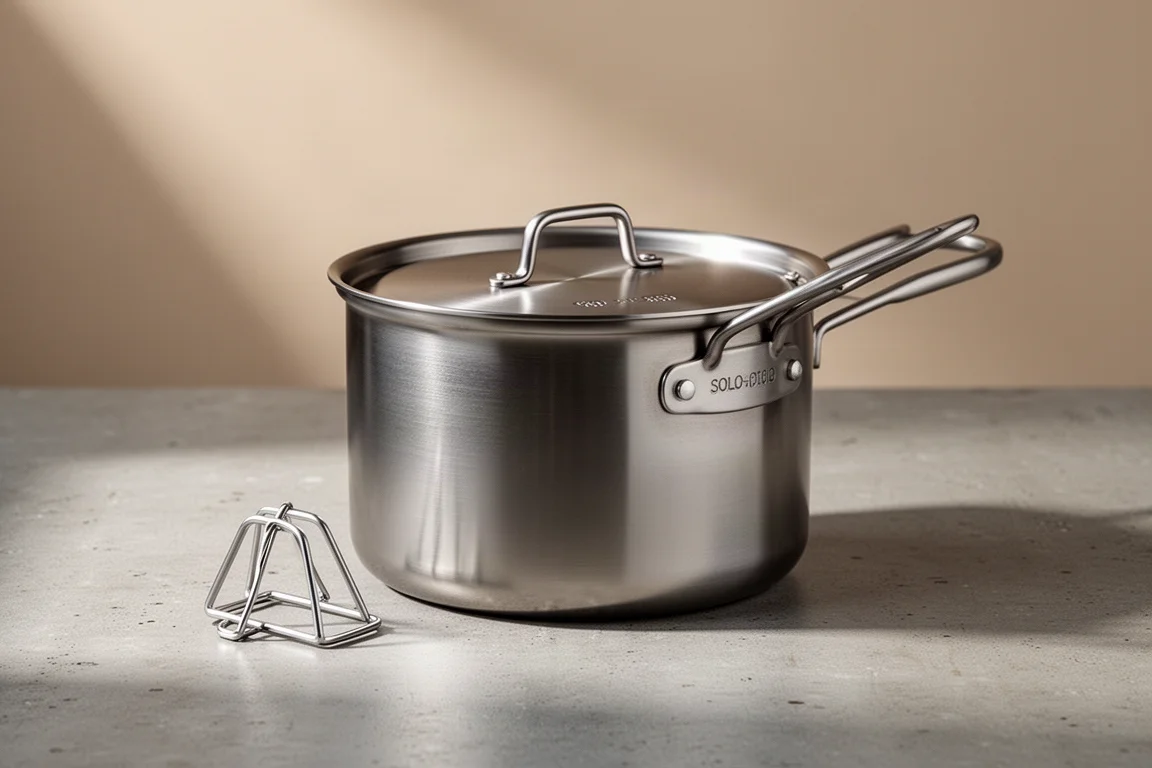
The 1100 ml version adds enough volume for two people sharing a meal, or for one person cooking something more involved. It uses the same titanium construction and the same gripper-friendly lid, so the choice between the two comes down to group size and how much pack space you are willing to give up.
Komperdell Titanium Trekking Poles
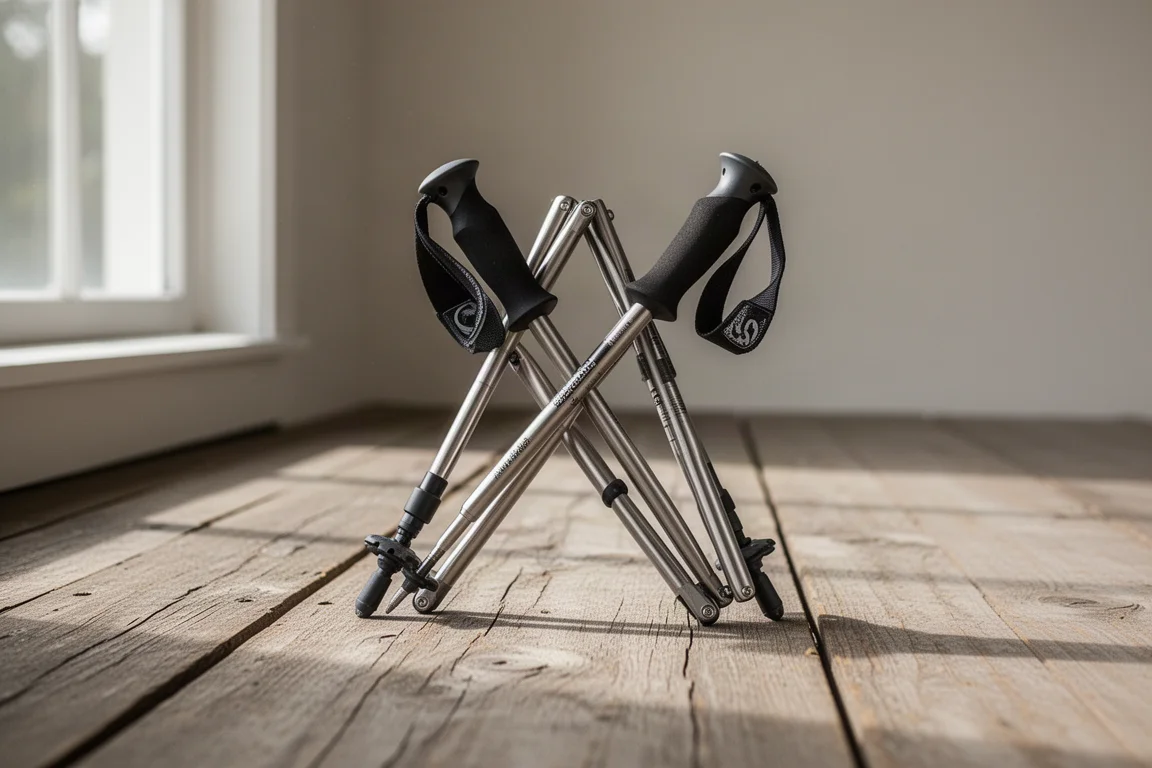
Komperdell’s titanium poles occupy a deliberately middle position. Titanium is more durable than carbon fibre and less expensive to produce, and it costs only a little more than aluminium. That places these poles between aluminium and carbon fibre on both weight and price, which is a useful spot for hikers who want durability without paying carbon fibre money.
The range includes four-section adjustable versions as well as fixed-length options, so there is a configuration for hikers who want packability and one for those who prefer a simpler, lighter fixed design. Komperdell planned a February release for the line.
ReadyWise Proline Meals
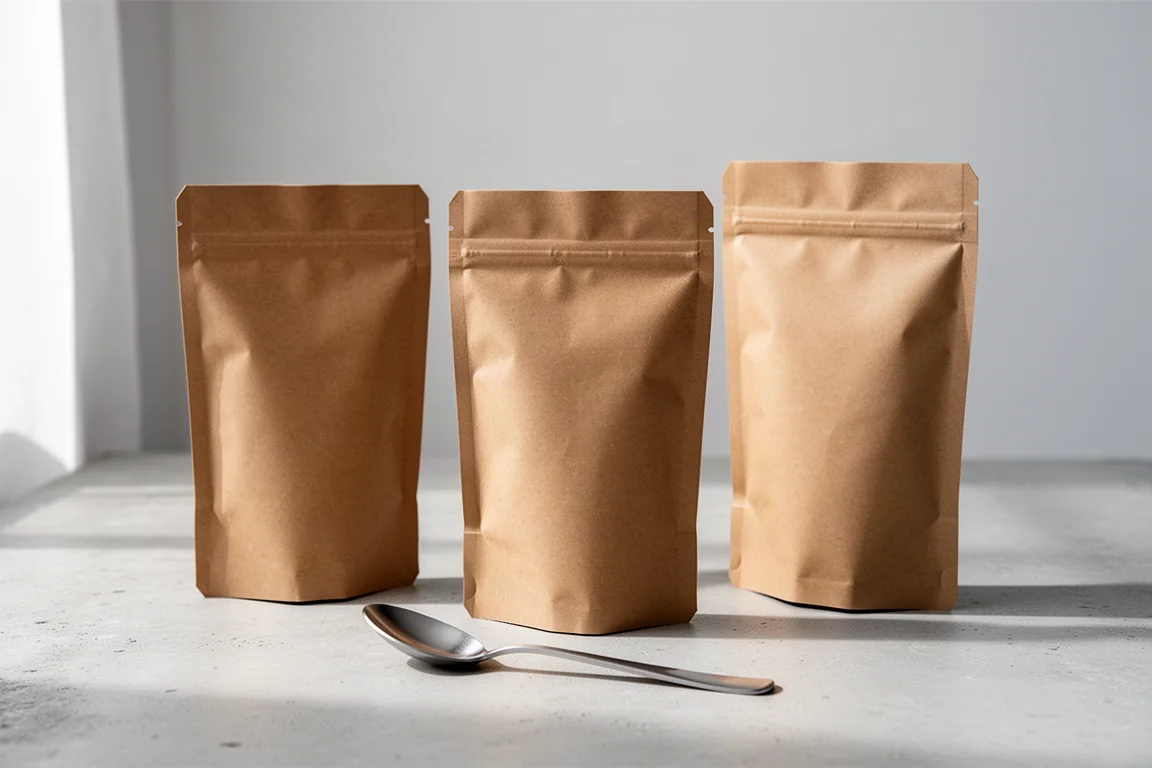
ReadyWise’s Proline meals take a different approach to freeze-dried food. Instead of freeze-drying individual ingredients and combining them afterwards, the entire meal is cooked together first and then freeze-dried as a whole. ReadyWise says that method produces a fuller, more cohesive flavour profile than the mix-and-match approach many freeze-dried meals rely on.
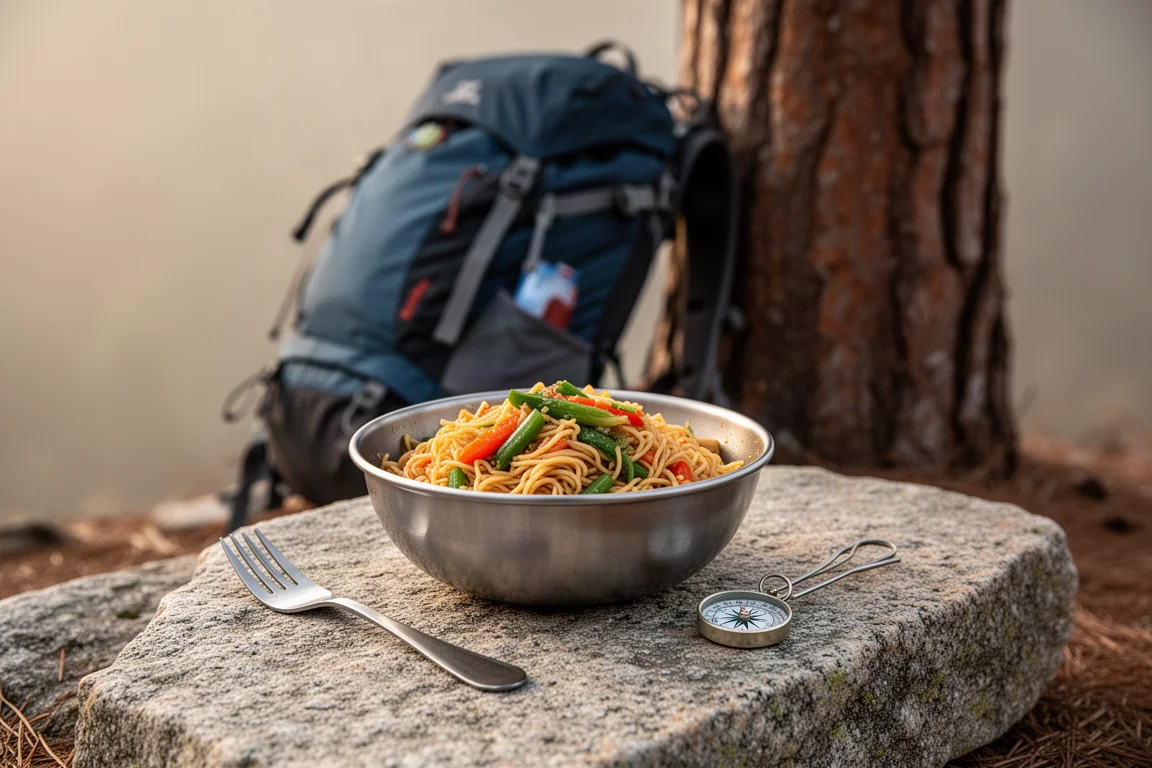
The Proline line was developed with major trail organizations and a group of pro athletes, and a share of the proceeds from every sale goes toward the Appalachian Trail, Continental Divide Trail and Pacific Crest Trail, as well as tree planting through the One Tree Planted organization. For thru-hikers who spend months eating out of pouches, the combination of better flavour and a contribution back to the trails is a reasonable pitch.
FlexSteel Portable Ice Machine
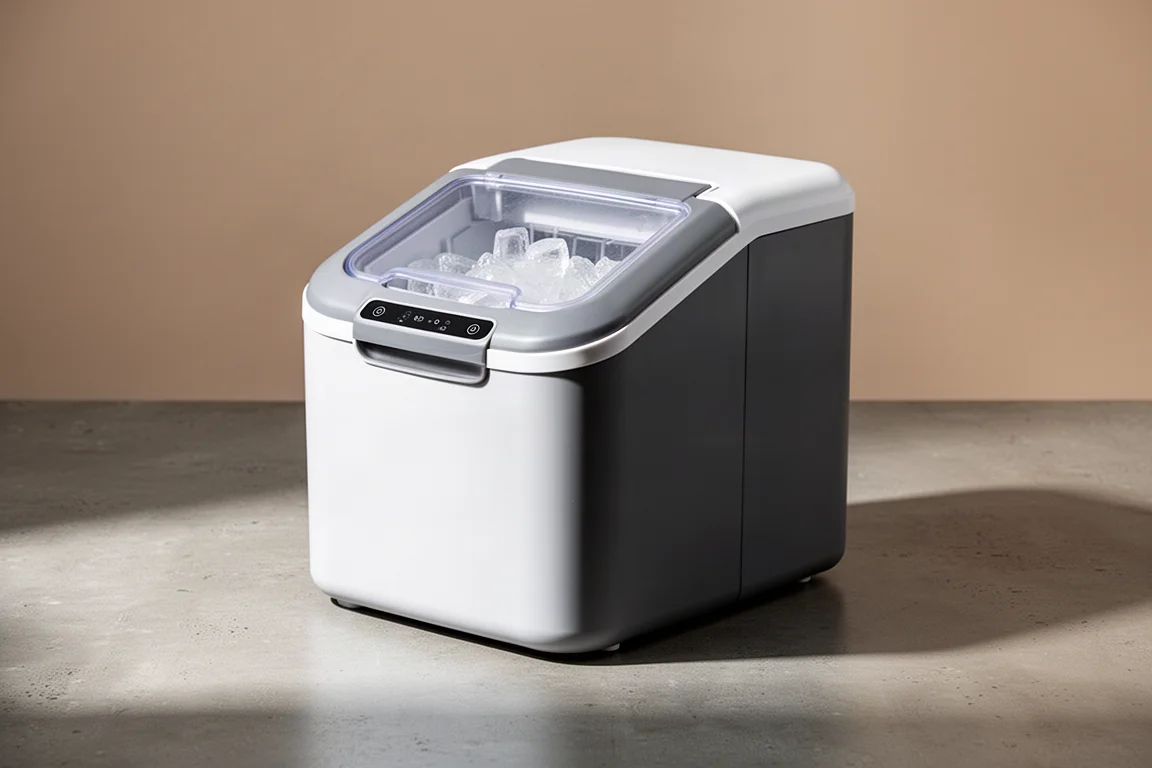
FlexSteel is best known for the tiny electric pumps many backpackers use to inflate sleeping pads, and its new portable ice machine applies the same compact, battery-powered thinking to a different problem. It is small, though not light, and it runs on battery power rather than mains electricity.
Output is quoted at 12 ice cubes every five minutes, with up to 500 cubes possible on a single charge. The case for it is narrow but real: on a longer trip where a cooler cannot keep ice frozen for the whole stay, a battery-powered maker gives you a way to top up drinks and keep food cold without a resupply run.
Nikwax Direct Dry
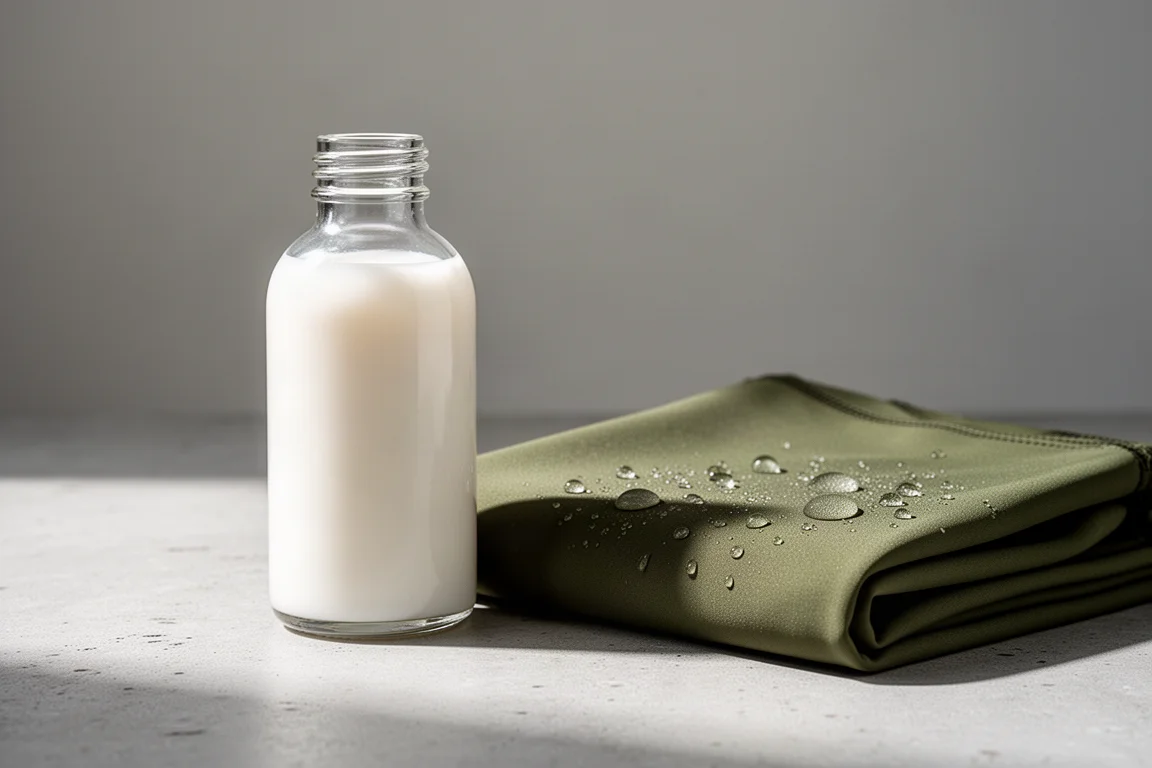
Nikwax Direct Dry is a durable water repellent formulated for industrial use. Rather than being sold as a wash-in treatment for consumers, it is designed for brands such as Outdoor Research and Rab to build into garments during manufacturing.
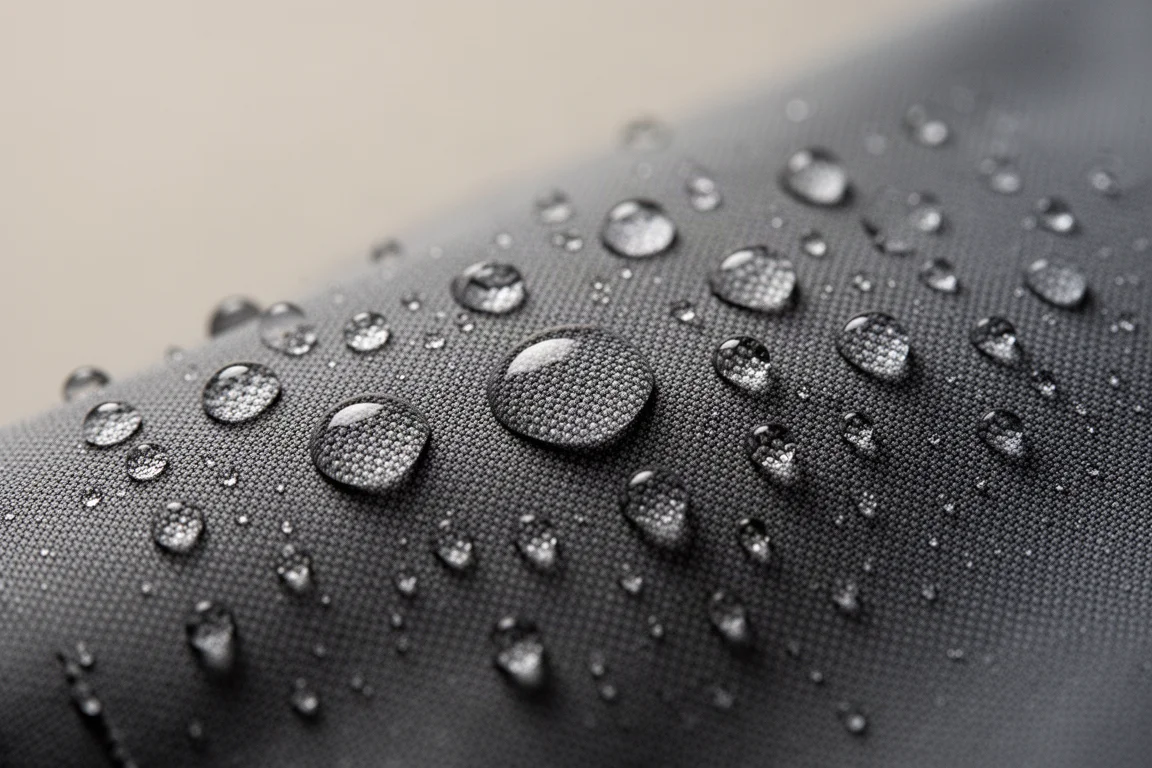
The important part is what is not in it. The C6 DWR treatments in widespread use contain PFAS, and Direct Dry is PFAS-free. Nikwax also claims no loss of performance compared with C6 chemistry, and the finish retains 80 percent of its performance after 20 washes. Washing with Nikwax treatments revives the repellency when it does eventually start to fade.
Scody Portable Barbecue Stove
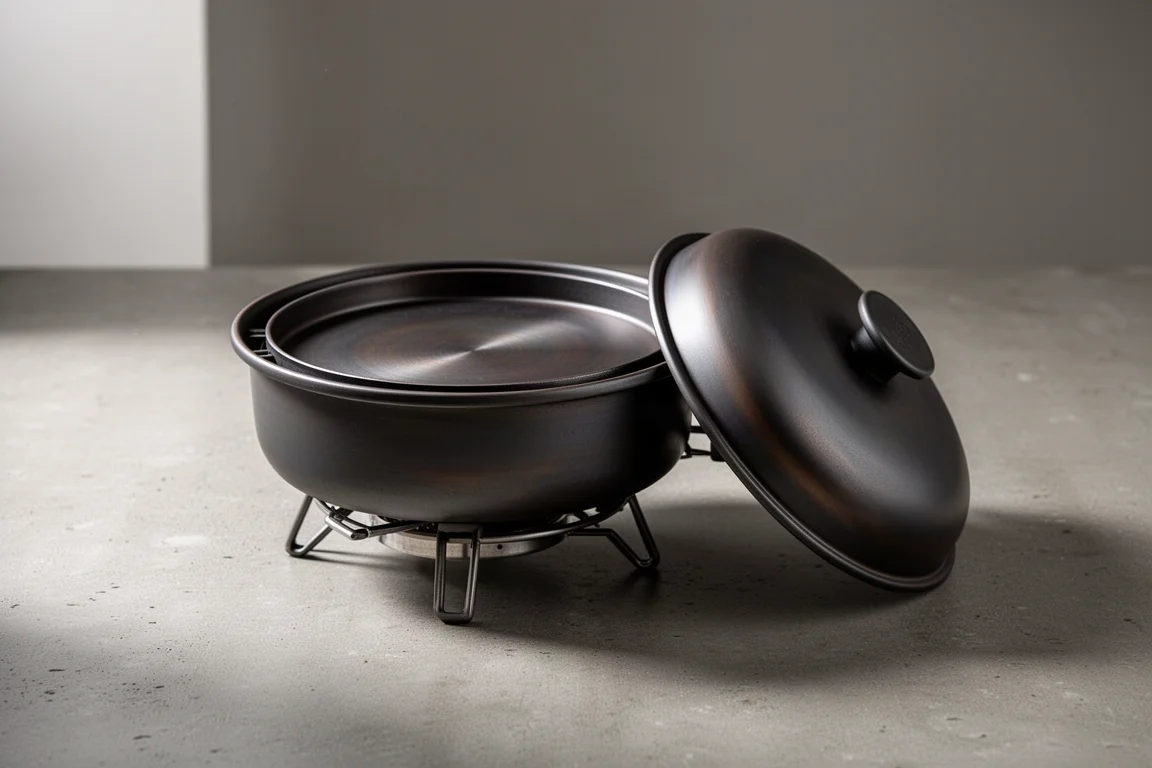
The Scody portable barbecue stove is an all-in-one cooking system that works as a grill, a stove and, with the lid on, an oven for baking. It runs on propane, or on isobutane if you have the right adapter.
The appeal is versatility in a smaller footprint. A conventional two-burner camp stove is bulky and largely limited to boiling and frying, which is why it often stays home unless the trip justifies the space. This one is aimed at canoe trips and car camping, where the ability to cook burgers, steaks or a baked dish without hauling a full-size stove is worth something.
Nemo Tensor Extreme
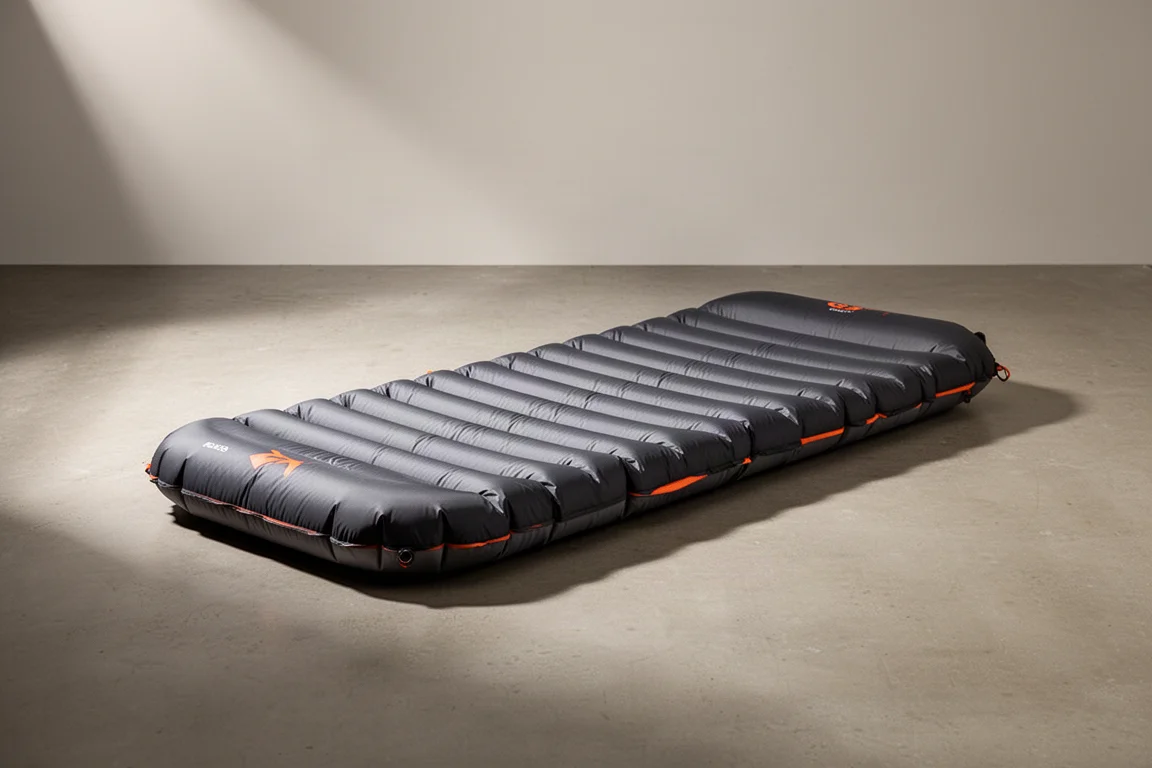
Nemo is expanding its Tensor sleeping pad line, and the headline addition is the Tensor Extreme. It carries an R-value above 8, which puts it firmly in winter territory, and the top surface is designed for comfort rather than pure weight savings.
Exact weight figures were not finalised at the time of the announcement, but the intent is a deep-winter pad that does not demand a punishing weight penalty. Nemo is also adding a 5.4 R-value all-season model and a lighter 2.8 R-value summer pad to the Tensor range, giving buyers a clear choice between summer, three-season and deep-winter options.
Buying Advice
Match the gear to the trip rather than to the spec sheet. A titanium pot earns its price when you are counting grams on a long backpacking route, and it matters far less on a car camping weekend where a heavier pot costs you nothing. The same logic applies to the poles: titanium makes sense if you want durability and do not want to pay carbon fibre prices, while aluminium remains the value pick for casual use.
Think about where each item sits in your kit. The ice machine and the barbecue stove are trip-specific tools, best justified by long stays where a cooler cannot keep up or by canoe and car camping where cooking variety is part of the point. The sleeping pad and the water repellent are the opposite: they are the kind of gear you use on almost every trip, so it is worth spending a little more to get the insulation and the finish you actually need.
Conclusion
The strongest entries here are the ones that fix a specific annoyance: cookware that is light and easy to handle, trekking poles that split the difference between two materials, trail meals that taste better and give something back, and a winter pad warm enough for real cold. The ice machine and the portable barbecue stove are narrower bets, but for the right trip they are the difference between managing and actually enjoying camp cooking.
Buy for the trips you take most often, and let the specialist gear wait until the itinerary calls for it.
Further reading
Related Reviews
Outdoor Gear
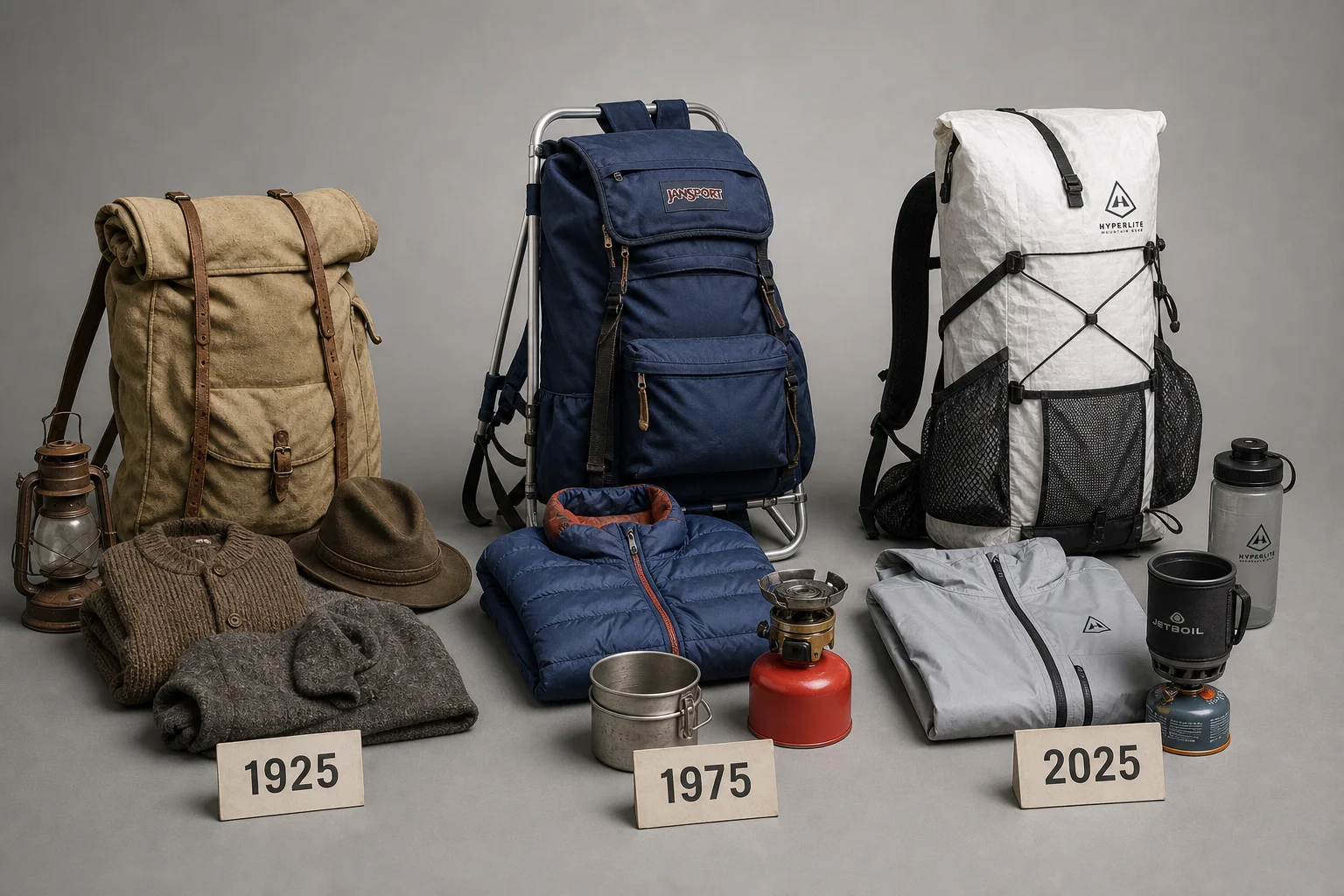
Backpacking Gear Evolution: 100 Years of Technology Compared
We tested backpacking gear from 1925, 1975, and 2025 across a three-day hike in Yosemite. Here's how technology has transformed comfort, weight, and the outdoor experience.
Outdoor Gear
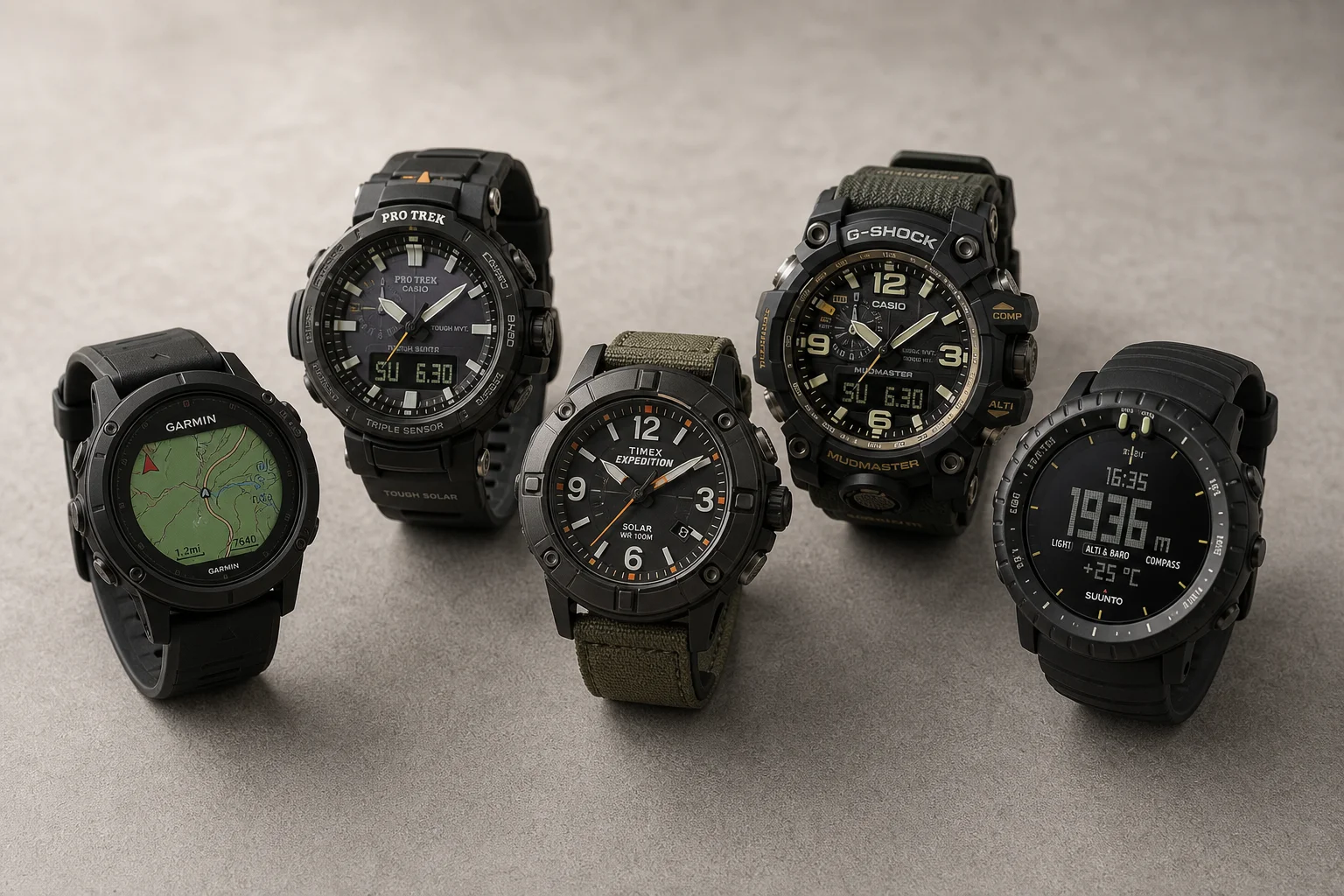
Best Affordable Hiking Watches: Five Rugged Options for Outdoor Adventures
Five durable hiking watches that balance ruggedness, functionality, and value for outdoor enthusiasts who need reliable GPS tracking and weather resistance.
Outdoor Gear
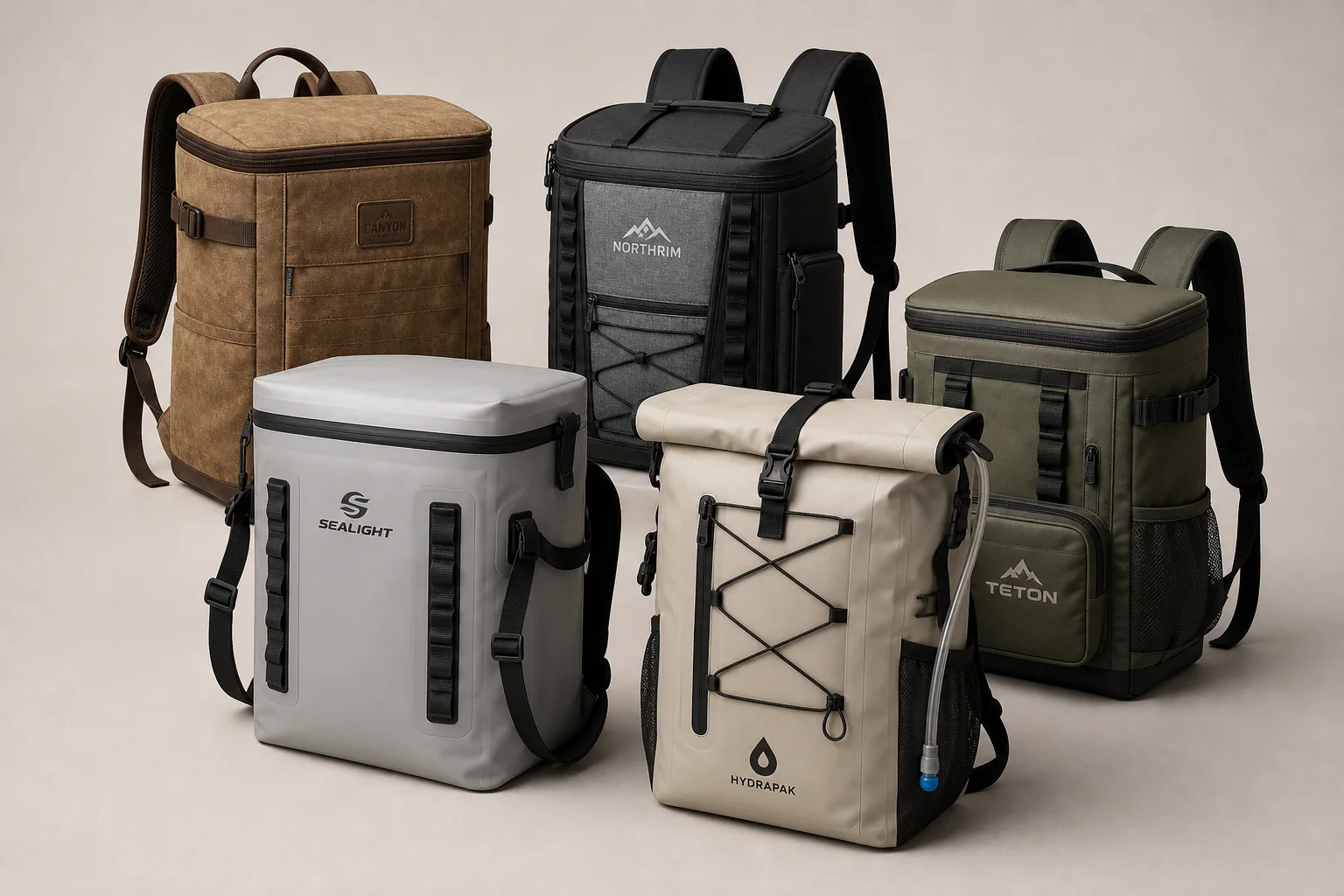
Best Backpack Coolers 2026: Five Practical Options for Outdoor Adventures
Five backpack coolers with distinct cooling capabilities, storage features, and design trade-offs to help you choose the right one for your outdoor needs.