Hi-Fi
New Hi-Fi Releases Worth Knowing: Q Acoustics, Griffin Audio, Mission and Acoustic Energy
A round-up of recent hi-fi launches, from Q Acoustics' expanded Concept range and Griffin Audio's flagship amplifiers to the reborn Mission 770 and Acoustic Energy's Mark II entry series.
Introduction
The last few months have brought an unusually broad spread of new hi-fi hardware. At the accessible end of the market, Q Acoustics has expanded its Concept range with three new models, and Acoustic Energy has rebuilt its entry-level series from the ground up. At the other extreme, Griffin Audio has introduced a range of amplifiers whose prices sit firmly in supercar territory.
In between sits one of the more interesting revivals of recent years: a new version of the Mission 770, a speaker whose original design dates back to the late 1970s.
Taken together, these releases say something useful about where the market is heading. Trickle-down engineering is doing real work at accessible prices, cabinet construction is being rethought rather than merely restyled, and the wide-baffle retro speaker is very much back.
What These Releases Have in Common
Three themes run through this group of products.
The first is technology transfer. Q Acoustics has carried several ideas down from its flagship Concept models into considerably more affordable cabinets, and Acoustic Energy has applied lessons from its flagship 500 series to a new tweeter waveguide. The second is cabinet engineering. Damping layers, bracing and alternative board materials are being used to control resonance rather than simply to add mass. The third is driver redesign: almost every model here uses a new tweeter, a new mid-bass unit, or both.
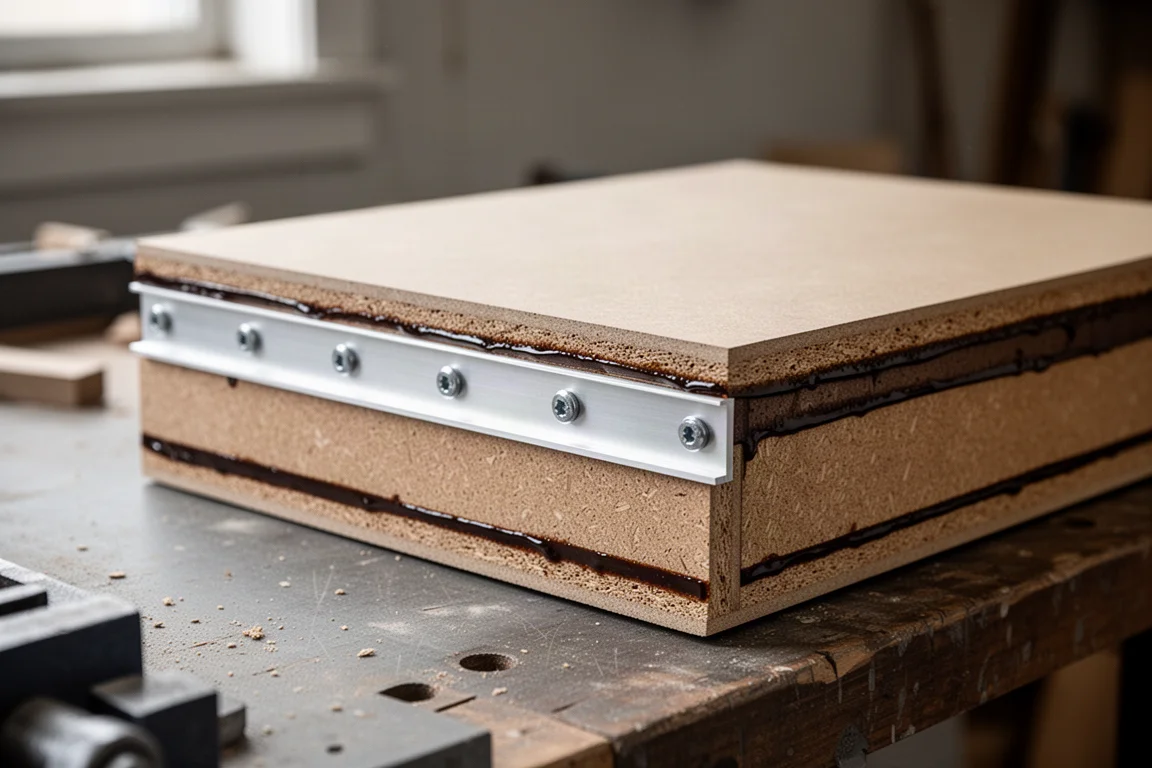
What makes these releases worth attention is not the specification sheets on their own, but the way the design decisions connect. A stiffer baffle, a better-damped cabinet and a larger voice coil all serve the same goal: letting the driver do its job without the enclosure arguing back.
Q Acoustics Expands the Concept Range
Q Acoustics has added three models to its Concept series: the two-way Concept 30 standmount, the MTM-configured Concept 50 floorstander and the Concept 90 centre channel, which completes a compact home cinema set.
Positioning is straightforward. The three new models sit at roughly a little over double the price of the Concept 20, Concept 40 and Concept Centre, and typically below half the price of the flagship Concept 300 standmount and Concept 500 floorstander. Q Acoustics describes the new speakers as much closer in design and sound to the range-topping Concepts than to the models beneath them, and the specification list gives that claim some credibility.
All three share a 3 mm aluminium baffle plate to which the drivers are mounted. It is not purely cosmetic: the plate adds rigidity at the point where the drivers attach. It also creates a clean visual contrast against cabinets finished in gloss white, gloss black or gloss silver.
Internally, the company has worked hard to control unwanted vibration. Point-to-point bracing stiffens the cabinet only where it is needed, preserving internal volume, while the MDF sandwich includes a non-setting gel core layer that absorbs cabinet resonances and dissipates them as heat. Each speaker sits on an isolation base that decouples it from the surface beneath. It is a less sophisticated spring system than the one used on the more expensive Concept models, which is understandable at the price.
The drivers are all new. The 25 mm (1 inch) tweeter is hermetically sealed and mechanically isolated from the baffle, and the voice coil of the 125 mm (5 inch) bass driver has grown from 25.4 mm to 30.5 mm. The stronger motor is claimed to raise power handling by 50 percent.
Q Acoustics Concept 30
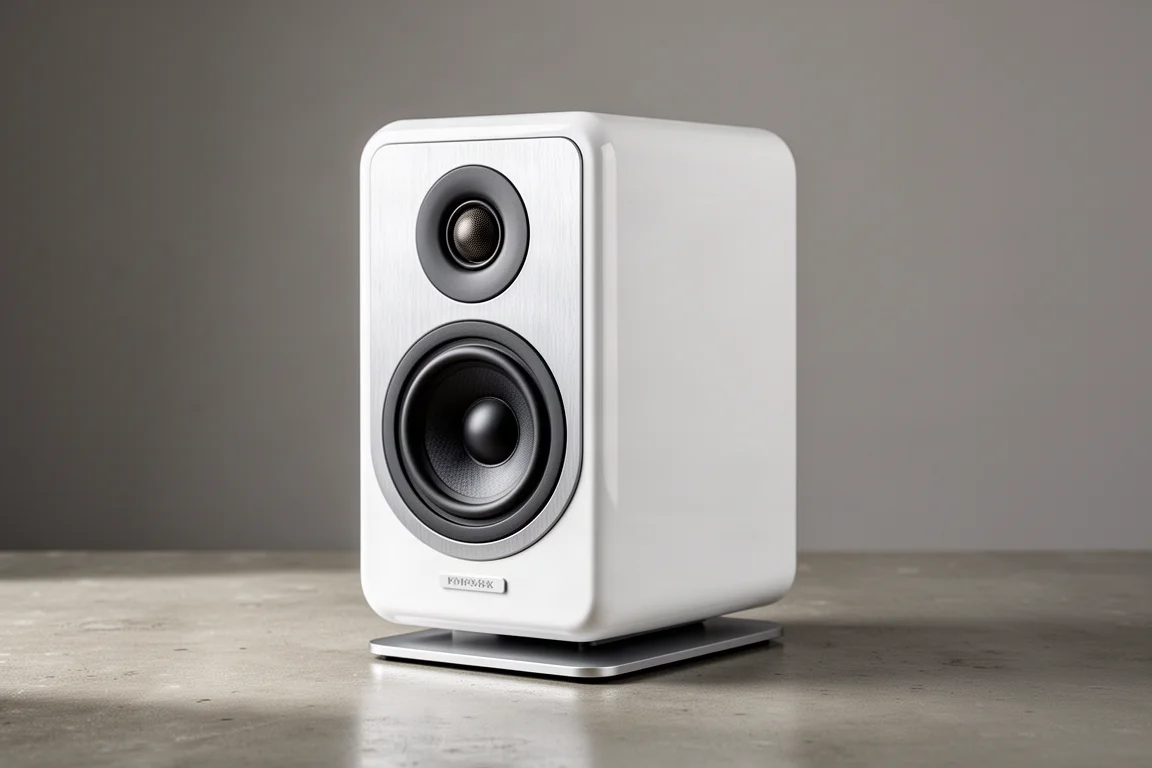
The Concept 30 is the two-way standmount of the group, and the most natural starting point for a small room or a desktop system. It carries the same aluminium baffle, cabinet damping approach and isolation base as its larger siblings, in a package that is easier to place.
At £899 / €1,199 / $1,299 it is a serious standmount rather than an impulse buy, but it is also the least expensive way into the design thinking that Q Acoustics reserves for its Concept line. Buyers who want the family sound in a compact footprint will find the most sensible entry point here.
Q Acoustics Concept 50
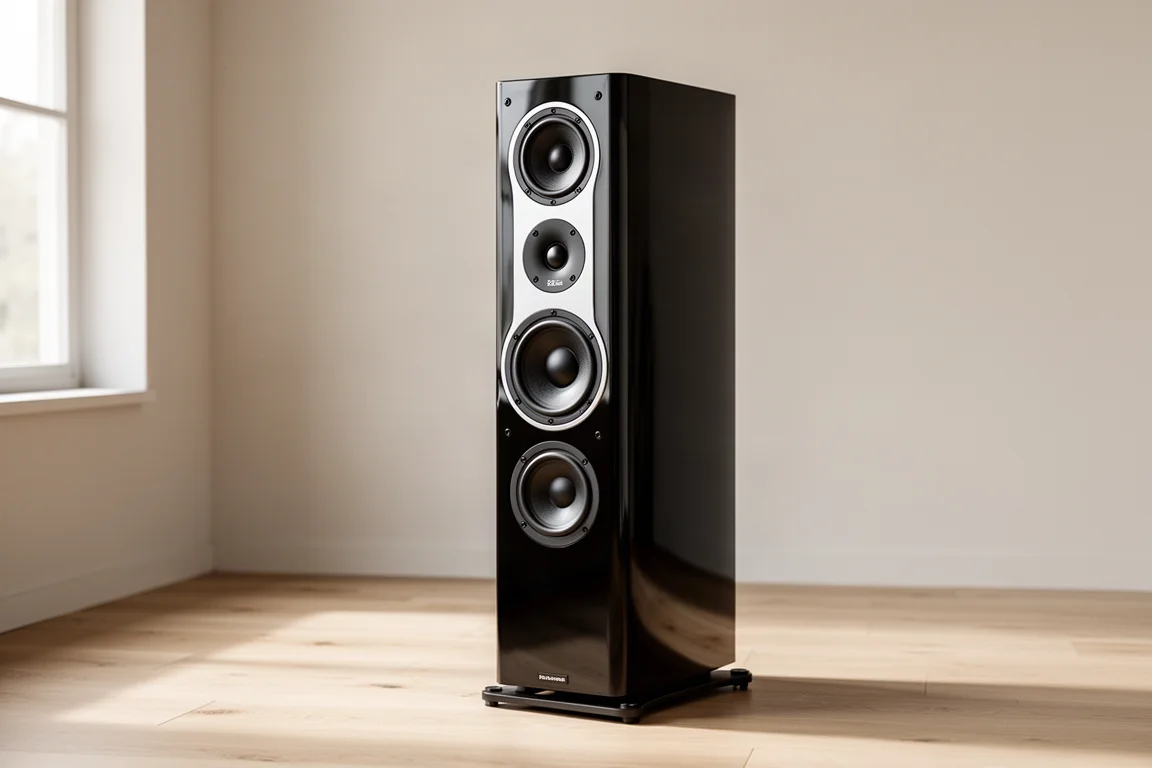
The Concept 50 is the floorstander, and it uses an MTM driver arrangement, with the tweeter positioned between two mid-bass units. That configuration is often chosen for its focused imaging and its ability to keep vocals anchored in the centre of the stage.
It is priced at £1,999 / €2,599 / $2,999, which places it comfortably above the Concept 30 but still well below the flagship Concept 500. For listeners who want full-range presence without adding a subwoofer, this is the model in the new range that makes the strongest case.
Q Acoustics Concept 90
The Concept 90 is the centre channel, and it exists to complete a matched home cinema front end alongside the Concept 30 and Concept 50. It carries the same baffle plate, damping strategy and finish options, so a mixed system still reads as one coherent set.
At £649 / €849 / $999 it is the least expensive of the three, and for anyone building a surround system around the new Concept models it is the piece that keeps dialogue anchored. Buyers assembling a stereo pair first can add it later without compromising the look or the voicing.
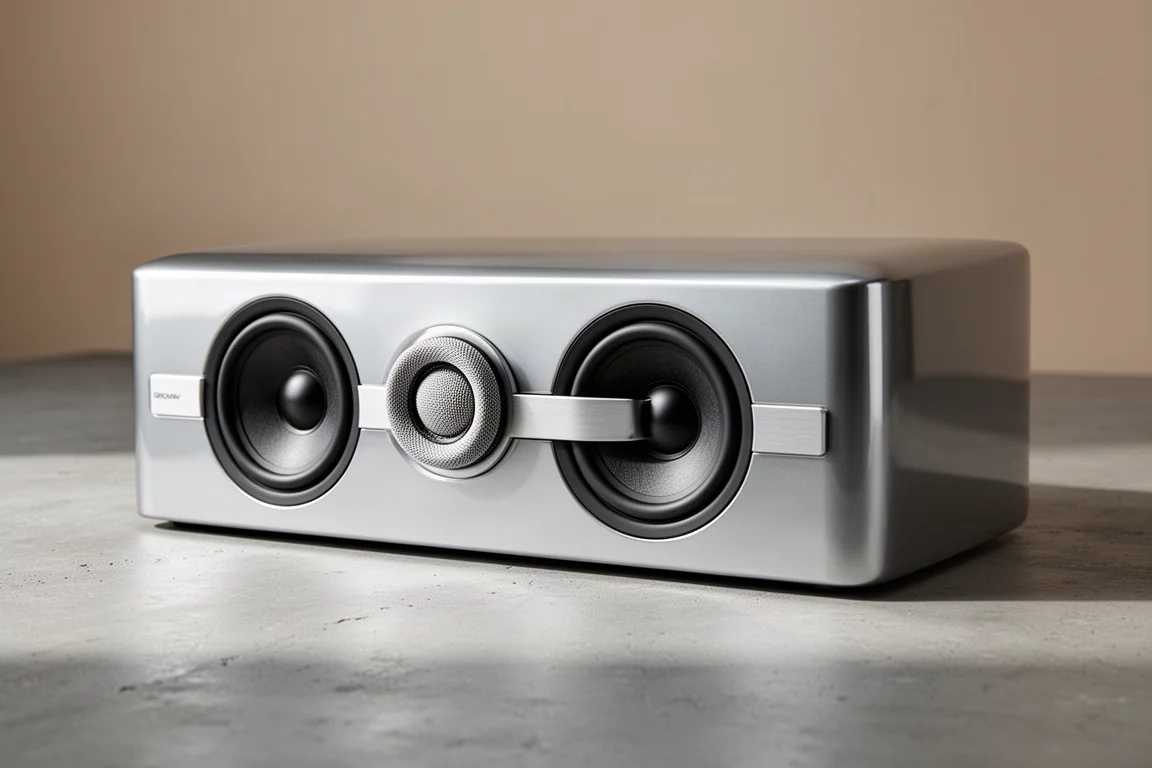
Griffin Audio Apex and Commander: Amplification at the Extreme
Griffin Audio, the Danish brand founded by Fleming E. Rasmussen in 1985, has built a reputation for high-end components. Nothing in its catalogue, however, has been as ambitious as the Apex power amplifiers and the Commander preamplifier.
The engineering numbers are extraordinary. The monoblocks are said to deliver 1,800 watts of pure Class A power into a 1 ohm load, using a total of 128 bipolar output transistors, four custom-made 2,000 VA toroidal transformers (two per chassis) and more than two million microfarads of capacitance, or two farads. The design is dual mono, balanced, dual differential and zero negative feedback, with an automatic green bias circuit to improve efficiency so that long listening sessions do not dim the lights of the entire neighbourhood.
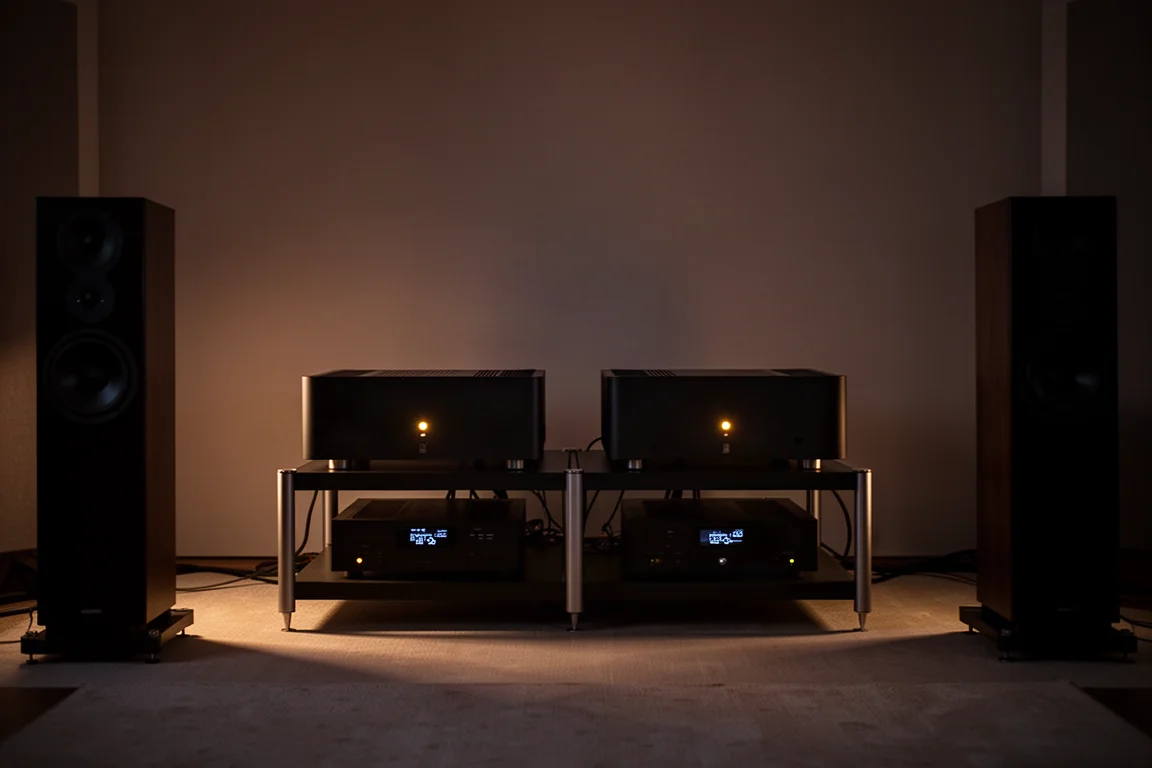
Weight is part of the story too. The monoblocks come in at 900 lb / 408 kg for the pair, while the stereo amplifier is a comparatively svelte 450 lb / 204 kg. Both are housed in a constrained layered damped chassis built from non-magnetic materials to minimise electrical interference.
Griffin Audio Apex Monoblock Power Amplifier
The Apex monoblocks are the flagship of the range, and the most uncompromising expression of the design. A pair is priced at €165,000 or $198,000, which puts them in a category where the conversation is less about value and more about what is technically possible.
For owners of extremely demanding loudspeakers, the appeal is the sheer current delivery and the Class A operation. This is equipment bought for a specific system and a specific room rather than for general use.
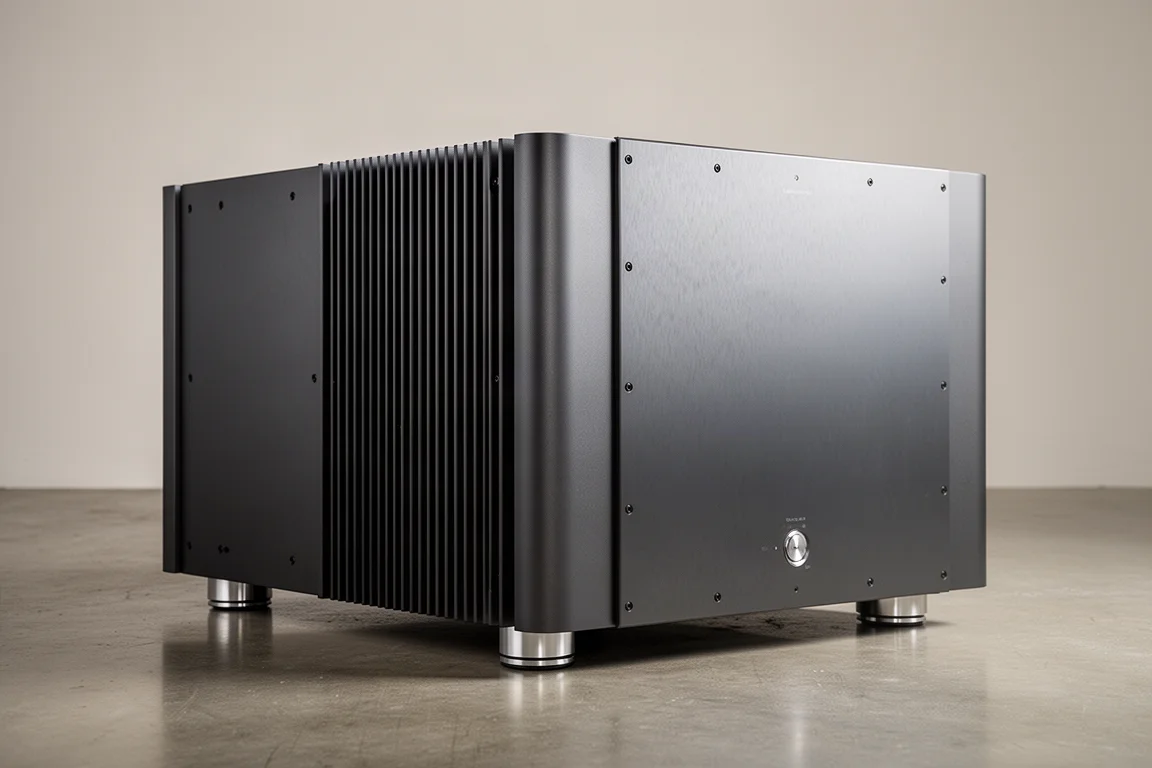
Griffin Audio Apex Stereo Power Amplifier
The stereo Apex uses the same core design philosophy in a single chassis, at exactly half the price of a pair of monoblocks. It shares the zero negative feedback, dual mono, pure Class A approach and the same damping and shielding priorities.
For listeners who want the character of the Apex range without two 450 lb chassis in the room, the stereo version is the more practical route. The trade-off is the obvious one: fewer output devices and less ultimate output capability than the monoblock pair.
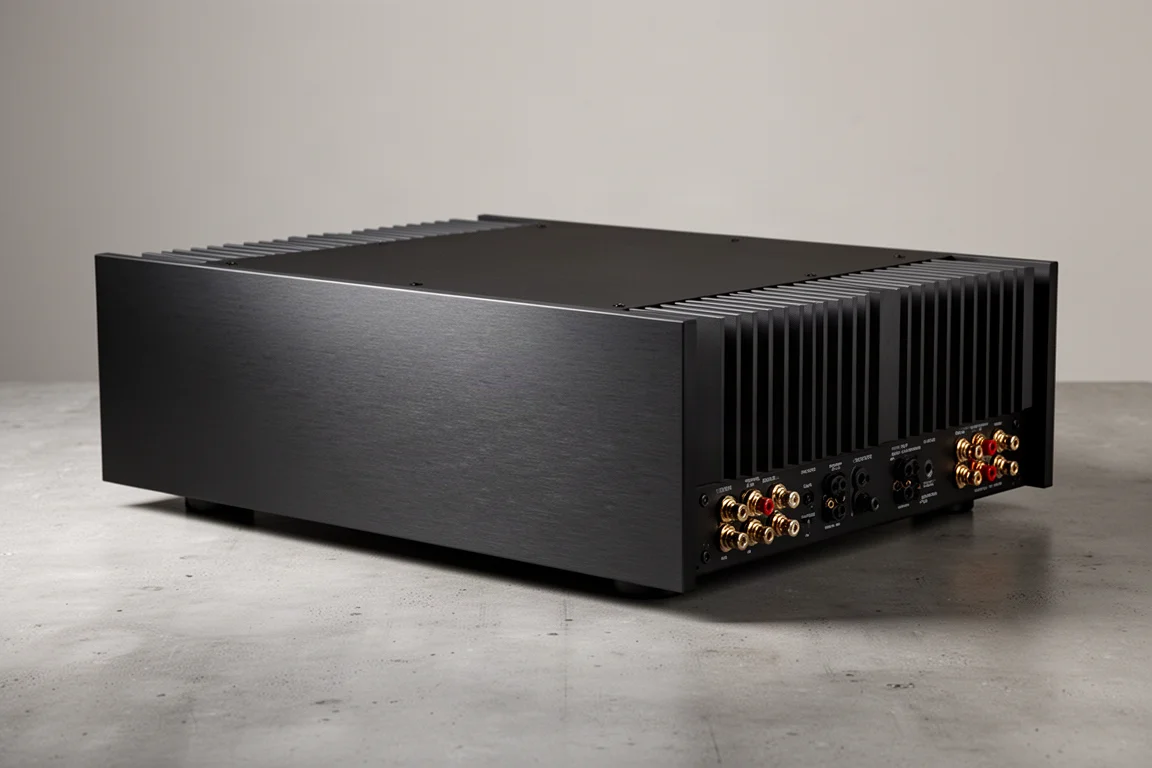
Griffin Audio Commander Preamplifier
The Commander preamplifier is the natural partner, priced at €50,500 or $63,000. Its dual mono layout and Class A input buffer are lifted directly from the highly regarded Pandora model, which now sits below it in the range.
Signal passes through as few electrical components as possible: just two transistors and a resistor, in the pursuit of transparency. Like the Apex power amplifiers, the Commander employs zero negative feedback, and Griffin Audio claims its voltage reference is approximately 50 times lower than the Pandora’s. The power supply lives in a separate chassis and is a fully discrete linear design with four custom-made 36 VA toroidal transformers, one per channel and two reserved for upcoming Griffin source components. Control is via the supplied IR remote or a 4.3 inch TFT touchscreen display.
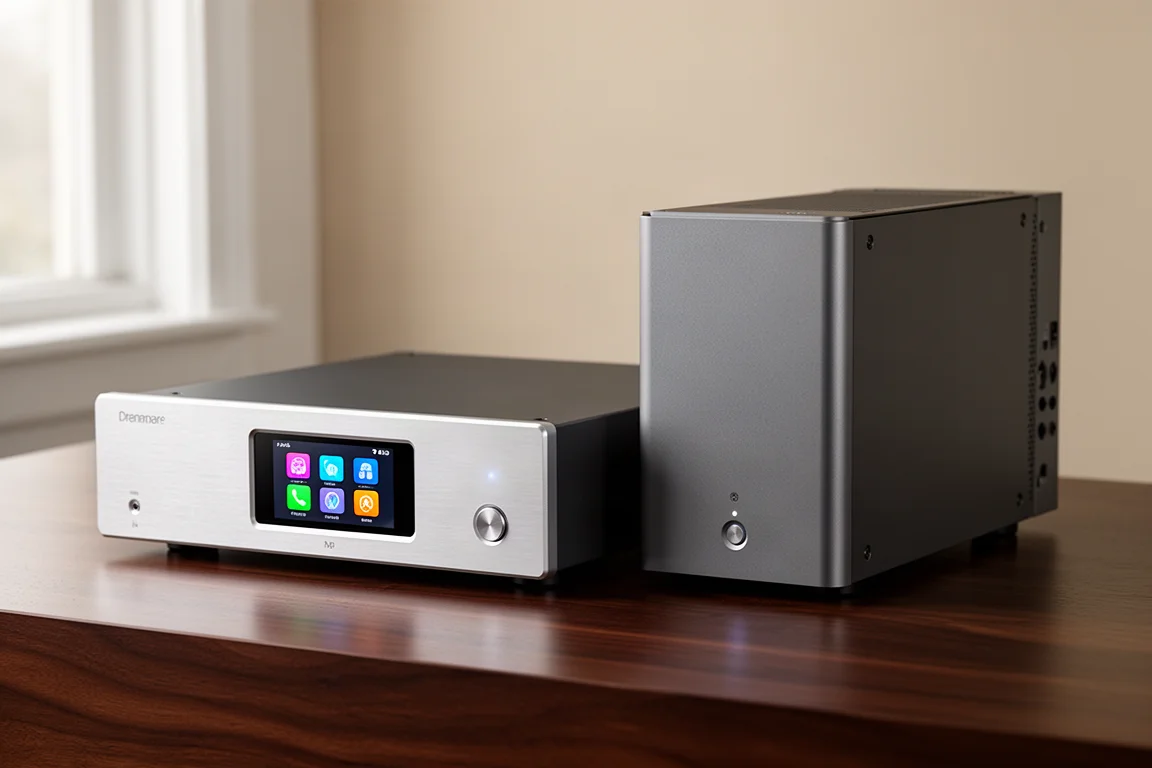
Mission 770: A British Classic Reimagined
Wide-baffle retro speakers are enjoying a genuine resurgence, and the appeal is easy to understand: 1970s styling that sits happily in a modern minimalist room, plus the easeful dynamics that come from large bass drivers and high sensitivity. The trade-offs are equally well known. Wide baffles can introduce edge diffraction that unsettles stereo imaging and soundstage, and multiple large drivers rarely stop and start as quickly as several smaller ones, which affects bass transient response.
Mission, the British brand that is part of IAG, has taken that trade-off head on with a new version of the 770. The original was conceived by Mission founder Farad Azima one year after the company was founded in 1977, and it was one of the first speakers to use a polypropylene driver cone. The intent then was a monitor-class speaker at a relatively affordable price.
The new 770 is not a facsimile of the past. It keeps the 200 mm (8 inch) polypropylene mid-woofer, the 25 mm (1 inch) soft dome tweeter and the famous white painted baffle, but the rest is a fresh design. Instead of thin side panels damped with bitumen pads, the cabinet uses a thicker sandwich of MDF and particle board bonded by a layer of high damping glue. The tuning process ran through more than 120 circuit iterations, guided by IAG’s director of acoustic design, whose career in speaker development spans more than 40 years. The claim is that the new speaker builds on the mid-range quality of the original while performing much better at the frequency extremes.
The new 770 is designed, engineered and built in the UK at IAG’s expanded manufacturing facility.
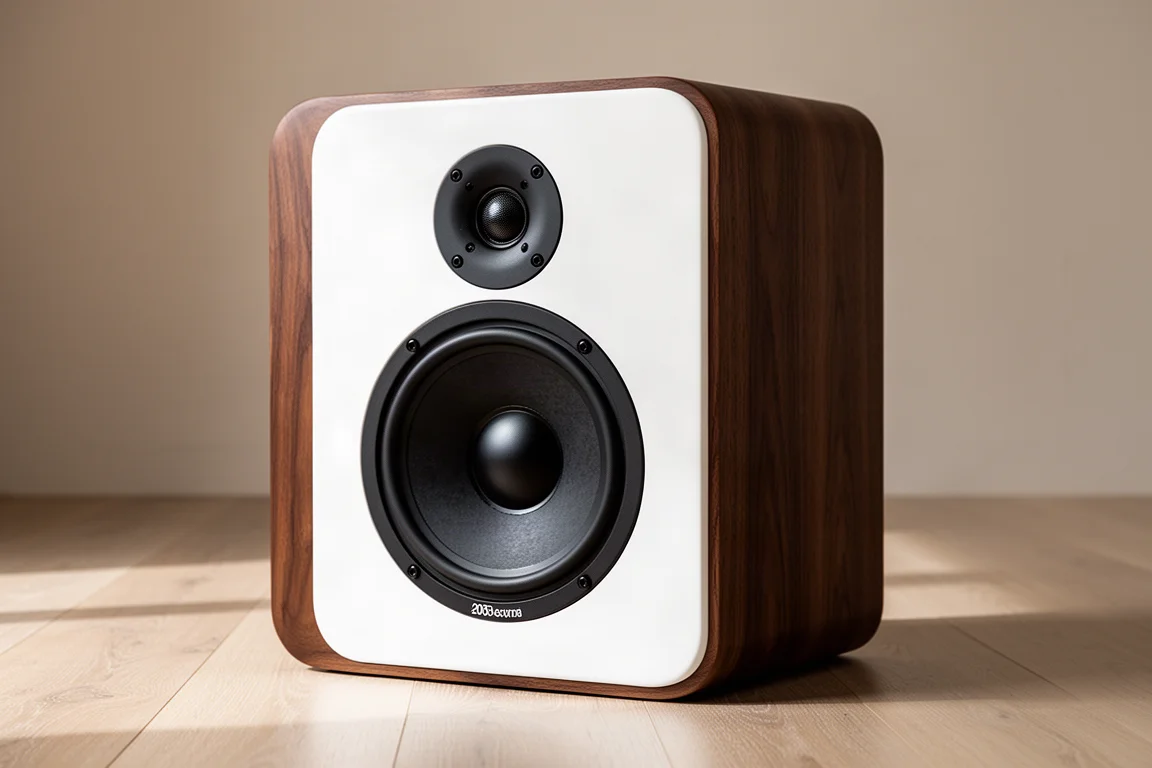
Acoustic Energy Refreshes Its Entry Range
Acoustic Energy has overhauled its entry-level speaker range, and this is a ground-up redesign rather than a facelift. Every model uses new drivers intended to improve response and power handling.
The new 25 mm (1 inch) fabric dome tweeter sits in a revised waveguide developed using knowledge from the flagship 500 series. Acoustic Energy says it offers better dispersion, and it has been moved closer to the mid-bass driver for improved integration.
The paper cone mid-bass woofers have grown from 110 mm (about 4 1/3 inches) to 130 mm (about 5 1/4 inches), which brings a number of benefits including increased power handling. Cabinets have changed too: MDF is out and high density fibreboard, or HDF, is in. It is a first at this price point, and it allowed Acoustic Energy to reduce wall thickness from 18 mm to 15 mm without losing mass or stiffness. External volume has grown by 15 percent while internal volume has increased by 30 percent, and more internal volume means deeper bass response.
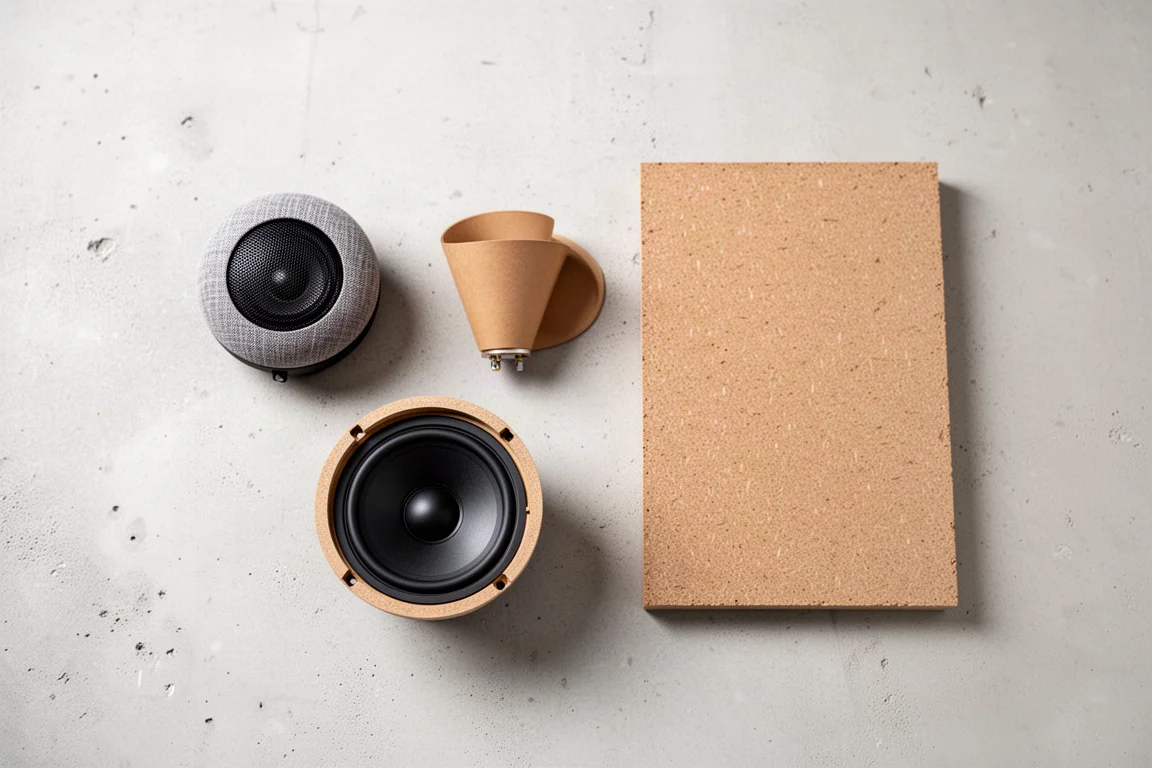
All models are available in a choice of satin white, black or walnut vinyl veneer finishes.
Acoustic Energy A200 Mark II
The A200 Mark II is the two-way standmount of the range and the most affordable entry point at £259. It benefits from the new tweeter, the larger mid-bass driver and the HDF cabinet, in a compact box that suits small rooms and secondary systems.
For a first proper pair of speakers, or for a desk setup where space is tight, the combination of a redesigned driver and a stiffer cabinet is exactly the kind of change that tends to matter more than a cosmetic refresh.
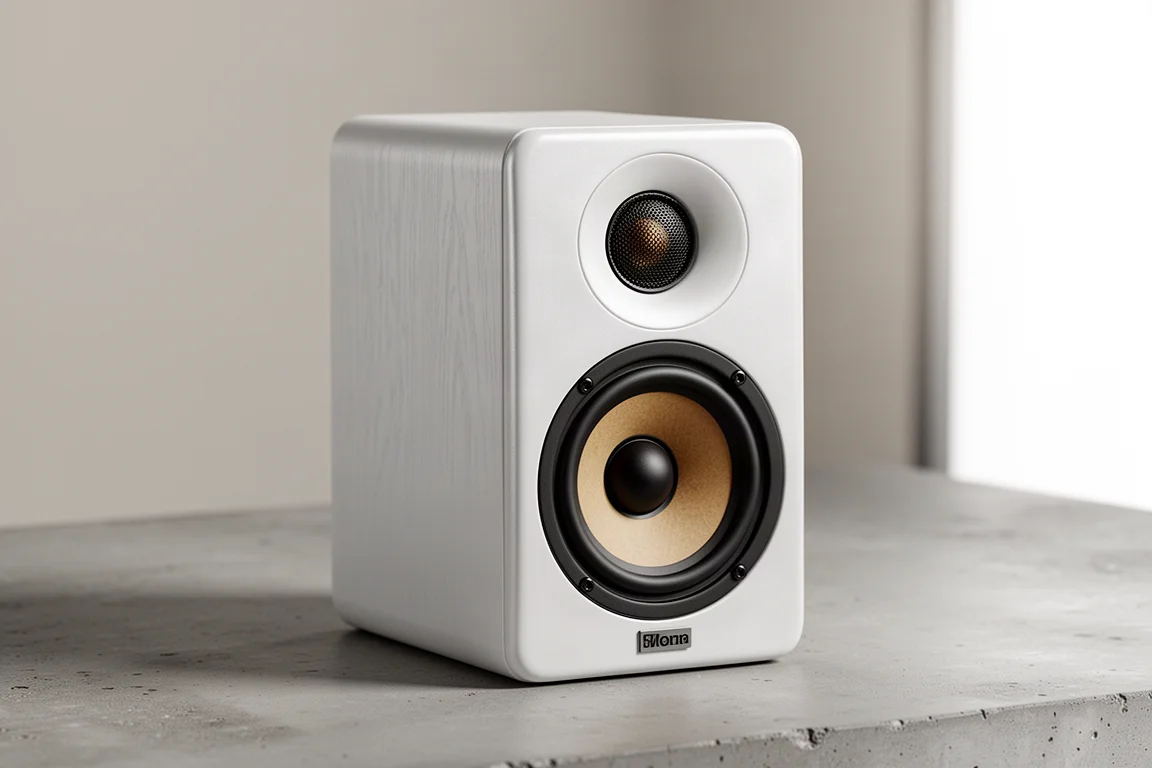
Acoustic Energy AE109 Mark II
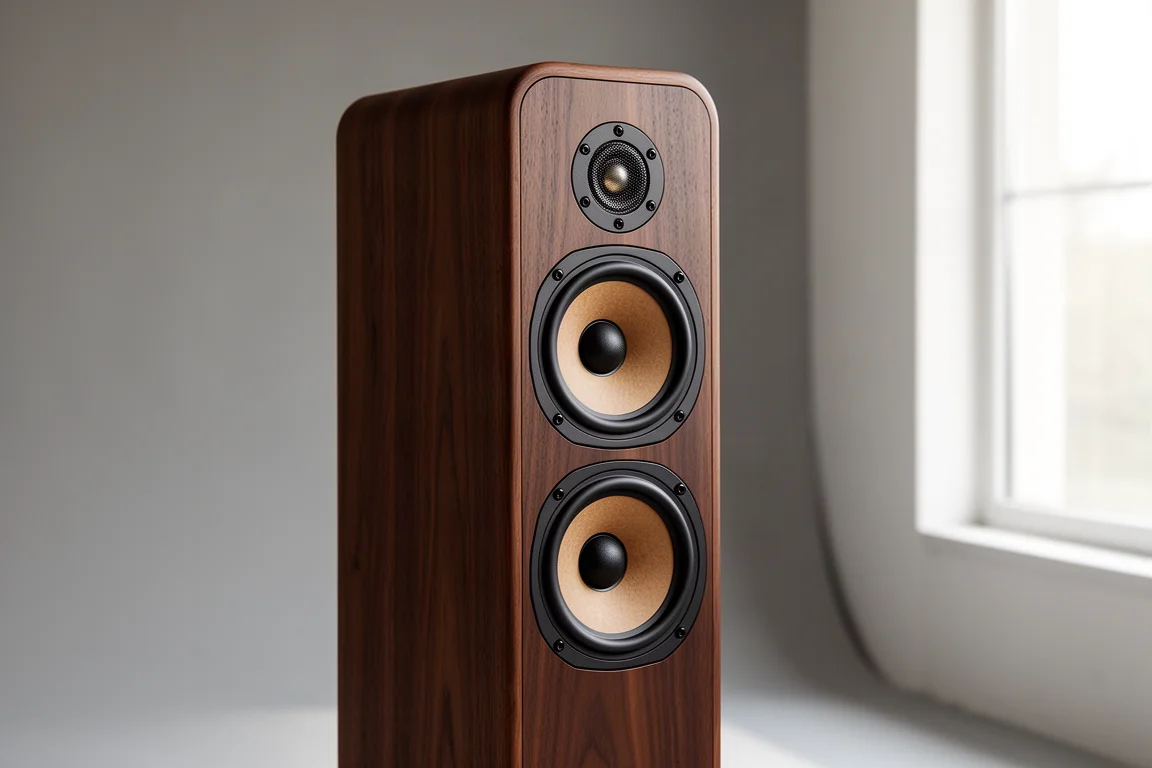
The AE109 Mark II is the slim 2.5-way floorstander, using two of the new mid-bass drivers. At £599 it offers floorstanding presence without a large footprint, and the increase in internal volume is the reason it can reach lower than the model it replaces.
For rooms where a tall, narrow cabinet fits the space better than a standmount on a pair of stands, this is the sweet spot of the revised range.
Acoustic Energy AE107 Mark II
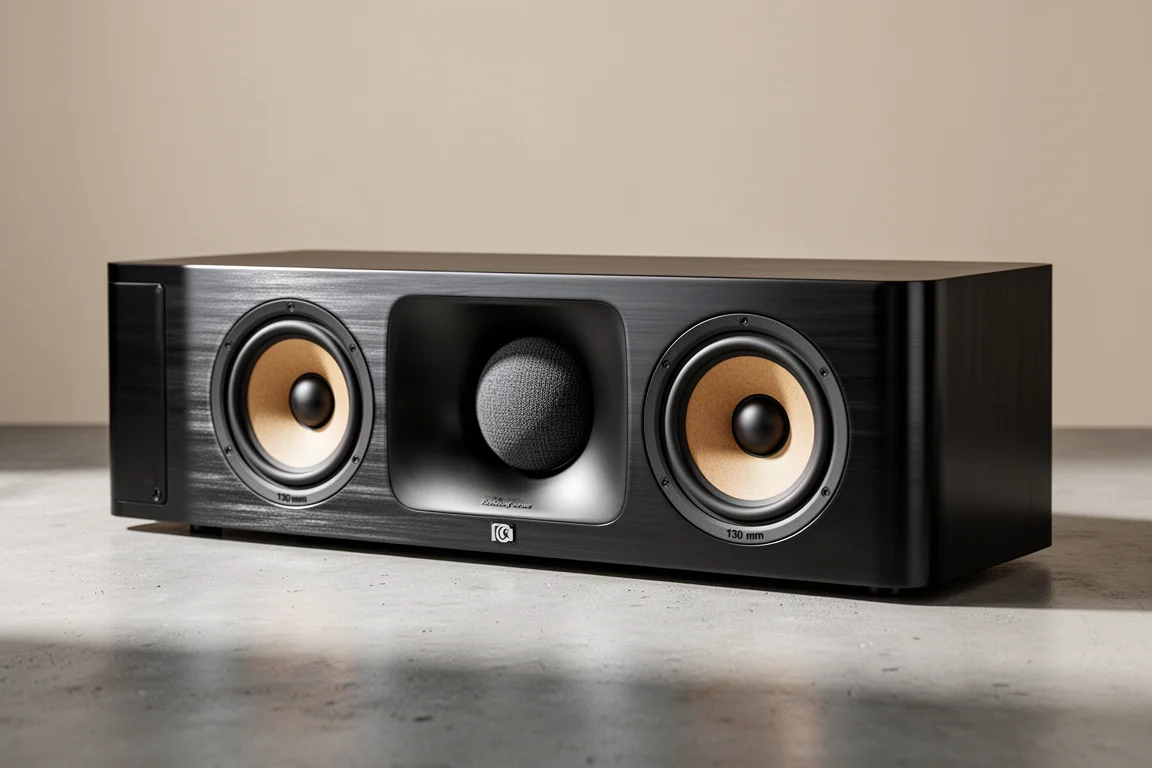
The AE107 Mark II is the dedicated centre channel, priced at £229. It shares the driver and cabinet changes of the rest of the range, which matters in a surround setup where the centre carries most of the dialogue.
For home cinema listeners building around the Mark II series, this is the piece that keeps voices consistent with the left and right channels.
Acoustic Energy A120 Mark II
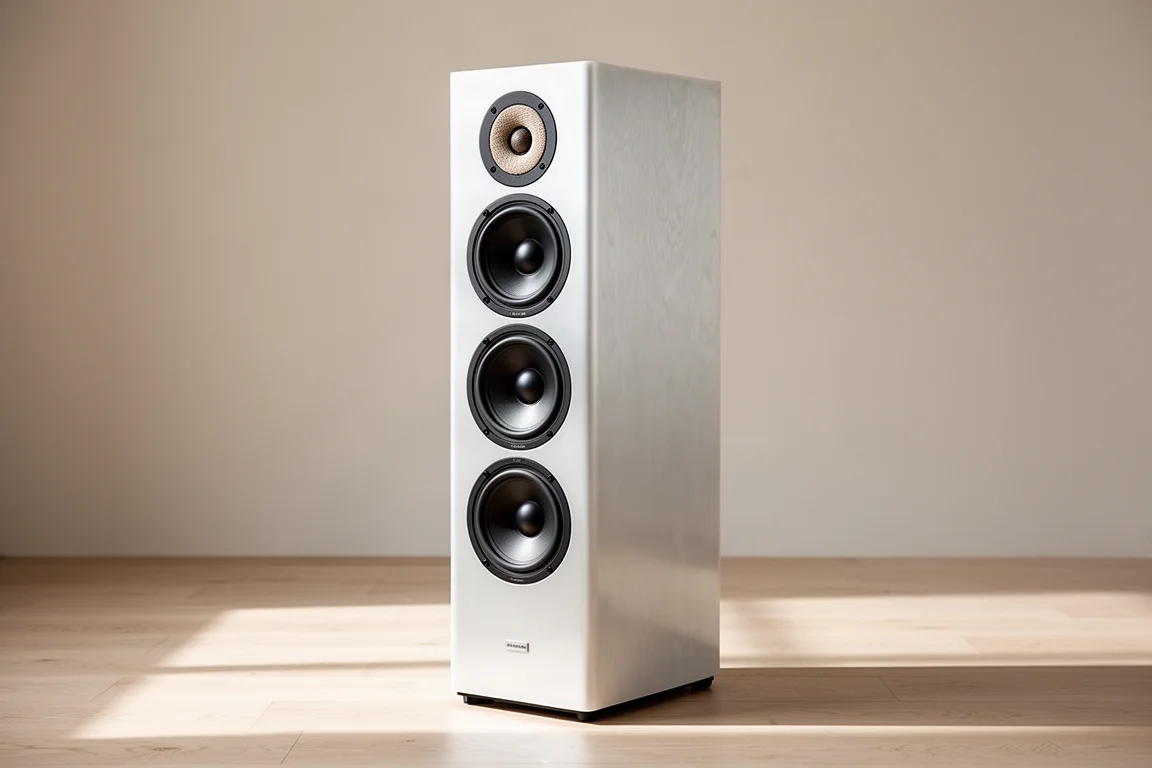
The A120 Mark II is the range-topping three-way floorstander, with a dedicated driver for mid frequencies alongside two handling bass duties. It is priced at £799 and is scheduled to arrive in the spring.
Three-way designs are more complex and more expensive to build, but they allow each driver to work in a narrower band, which typically pays off in midrange clarity and bass control. As the flagship of the entry series, it is the model to watch for listeners who want the most from the new platform.
Acoustic Energy AE108 Mark II
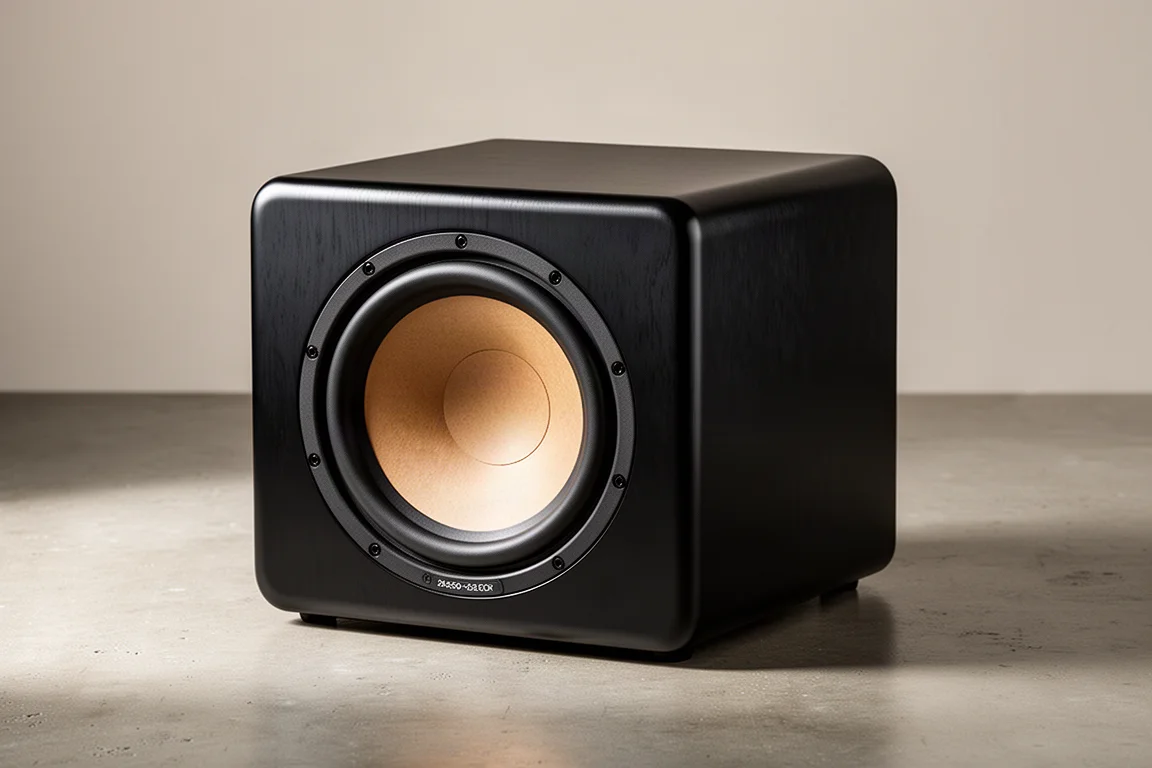
The AE108 Mark II completes the range as a subwoofer. It is a sealed box, downward-firing design with a 250 mm (10 inch) high excursion paper cone that has been doped and stiffened. It is expected in the summer, and pricing has yet to be confirmed.
Sealed subwoofers are often chosen for their tighter, more controlled low-end character, and a downward-firing driver keeps the cabinet visually discreet. For anyone building a Mark II cinema system, this is the final piece.
Overall Buying Advice
These four families sit in completely different parts of the market, so the decision starts with budget and room rather than with specifications.
If you are building a two-channel system and want the most performance per pound, the Acoustic Energy Mark II range is the most accessible route. The A200 Mark II standmount at £259 and the AE109 Mark II floorstander at £599 bring redesigned drivers and HDF cabinets to a price where that level of engineering is unusual. Adding the AE107 Mark II centre channel and the AE108 Mark II subwoofer later turns the same platform into a surround system.
If your budget stretches further, Q Acoustics offers a clear ladder. The Concept 30 is the entry point, the Concept 50 adds scale and low-end reach, and the Concept 90 completes the set for cinema use. Because the three share their baffle plate, cabinet damping and finish options, building the system in stages is straightforward.
The Mission 770 suits a different buyer entirely: someone drawn to the wide-baffle aesthetic and the easeful dynamics of a large driver, who accepts the imaging compromises that design brings and wants a thoroughly modern cabinet underneath the retro look.
Griffin Audio sits outside ordinary buying advice. The Apex monoblocks, the Apex stereo amplifier and the Commander preamplifier are aimed at a small number of listeners with very demanding systems and the budget to match. For everyone else, they are interesting chiefly as an illustration of how far the engineering can be pushed.
Conclusion
This group of releases covers an enormous range of budgets, but the underlying story is consistent. Cabinet construction, baffle rigidity and driver design are where the meaningful gains are being made, whether the speaker costs a few hundred pounds or the amplifier costs as much as a house.
For most buyers, the practical takeaway is simple. Acoustic Energy’s Mark II range offers the most affordable way into genuinely redesigned hardware. Q Acoustics provides a well-defined upgrade path for listeners who want more. The Mission 770 rewards anyone who has always wanted the wide-baffle look without the compromises of a forty-year-old cabinet. And Griffin Audio remains a reminder that the top of the market is still pushing in directions most systems will never need.
Further reading
Related Reviews
Hi-Fi
Award-Winning Hi-Fi Components: Ten Standout Pieces Worth Auditioning
Ten hi-fi components recognised by an international panel of specialist publications, with the strengths and trade-offs that matter before you buy.
Hi-Fi
Best Hi-Fi Products of 2022: Award Winners and Value Picks
A curated look at the standout hi-fi components of 2022, from floorstanding speakers and bookshelf kits to integrated amplifiers and DACs.
Hi-Fi
Best Hi-Fi Gear: Standout Amplifiers, Speakers, DACs and Streamers
A curated roundup of standout hi-fi components, covering amplifiers, speakers, DACs and streamers from around $30 to $2,500.