Running Shoes
New Balance SuperComp Range: Three Carbon-Plated Shoes, One Clear Winner
We look at the SuperComp Pacer, SuperComp Trainer, and SC Elite V3 to see which of New Balance's carbon-plated shoes actually earns a place in your rotation.
Introduction
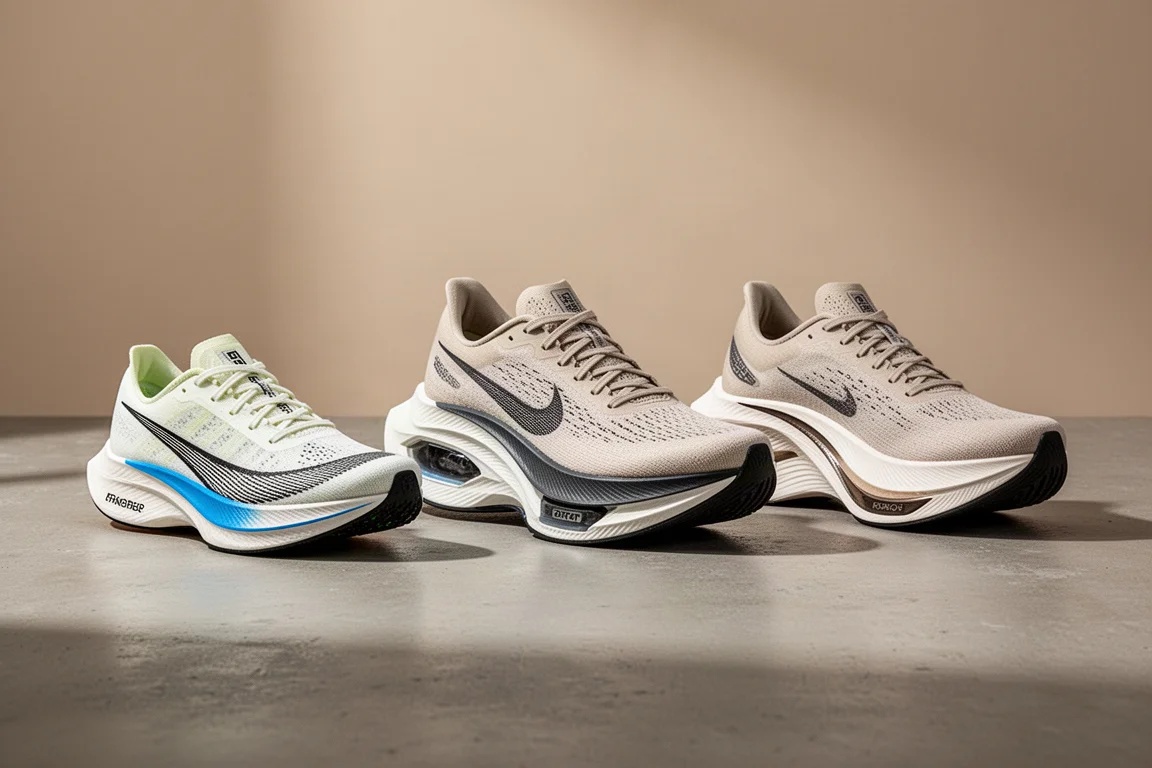
New Balance built the SuperComp range as a three-shoe system: a short-distance racer, a high-stack trainer, and a flagship long-distance racing shoe. All three carry a carbon plate and the brand’s FuelCell foam, but they are very different shoes in practice. Having spent real miles in each, the short version is this: the SC Elite V3 is the standout, while the other two are interesting but limited.
At a Glance: The SuperComp Line-up
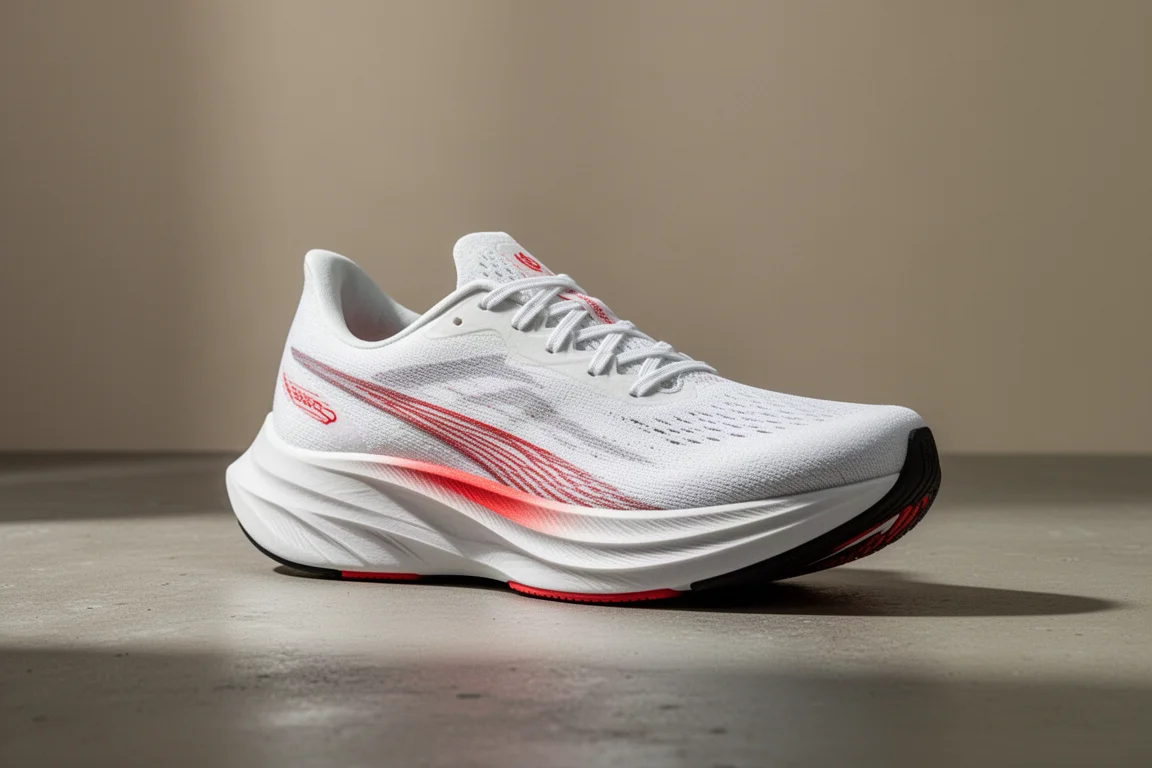
The Pacer is the short-distance racing shoe of the range. It costs £170 in the UK and $150 in the US, weighs 199 grams (7 oz), and runs an 8mm drop with a stack height of around 28mm. Despite the low stack it still packs a full-length carbon plate, Energy Arc geometry, and FuelCell foam, though the foam feels firmer here than in its siblings.
The Trainer is the big one: a 47mm heel stack, 8mm drop, 307 grams (10.8 oz), and a price of £210 in the UK or $180 in the US. It has a pronounced rocker, a huge midsole cutout, and multiple stability features built into the design.
The SC Elite V3 sits at the top as the proper racing shoe for any distance. It costs £220 in the UK and $250 in the US, weighs 228 grams (8 oz), and drops 4mm. It shares the Energy Arc system and aggressive rocker with the Trainer but adds a dual-density FuelCell midsole. Note that so far it has launched only in a New York Edition colorway, with the full release expected in February next year.
New Balance SuperComp Pacer: Fast but Fragile
The Pacer’s appeal is its low, flat, traditional racing feel. It has a full-length carbon plate and FuelCell foam, but the ride is a nippy, slightly slappy one more reminiscent of older racing flats than a modern super shoe. The mesh upper is very thin with a full tongue, and the outsole is minimal, with the rubber sitting almost flush with the foam.
Durability is the main concern. After only 50 to 60km, visible wear marks were already showing, and in one case a small stone punctured straight into the midsole. This is a shoe to use sparingly on short, fast efforts.
The bright spot came in a twisty, partly trail 10K, where the low stack and nimble feel genuinely worked on loose ground and tight turns in a way a high-stack carbon shoe would not have. Still, most runners in that race were just as happy in their high-stack racers, and the Pacer never quite justified the carbon plate, which could barely be felt on the run. If you want a fast low-stack shoe, alternatives like the Takumi Sen do the job better.
New Balance SuperComp Trainer: Big, Bouncy, Limited
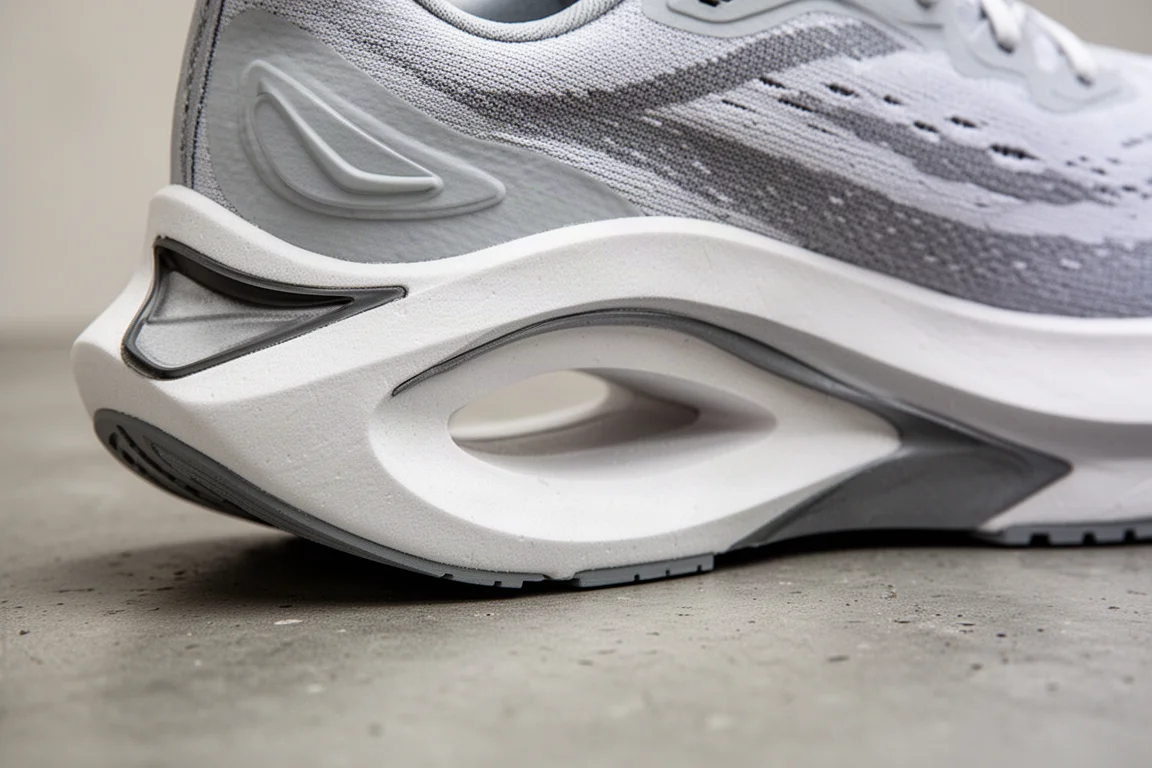
The Trainer is enormously bouncy. On an easy hour-long run it keeps its spring from start to finish, and the ride feels comfortable and propulsive. New Balance has packed in stability features: a wide base, a huge midsole cutout that centres the foot, a plate sitting high at the heel for a firmer landing, raised midsole sidewalls, a firm heel insert, and a wrapping tongue.
The problem is that all that stack and bounce only works within a narrow window. Around 15K and beyond, the shoe starts feeling big and clunky, mentally tiring, and the benefits of the plate fade. It is at its best on smooth terrain in the 5-mile to 15K range, easy runs where you might pick up the pace a little. It is not ideal for tempo runs, intervals, long runs, or uneven ground, and the sheer height makes it a risky pick on dark or uneven roads, so it is not a shoe for beginners.
It also does not truly fill its intended role as the everyday partner to the SC Elite V3, and at £210/$180 it is expensive for what it delivers. Lighter, more natural-feeling options such as the Saucony Speed 3, Puma Deviate Nitro 2, or even the non-plated Hoka Mach 5 handle that job better.
New Balance SC Elite V3: The Shoe That Does Its Job
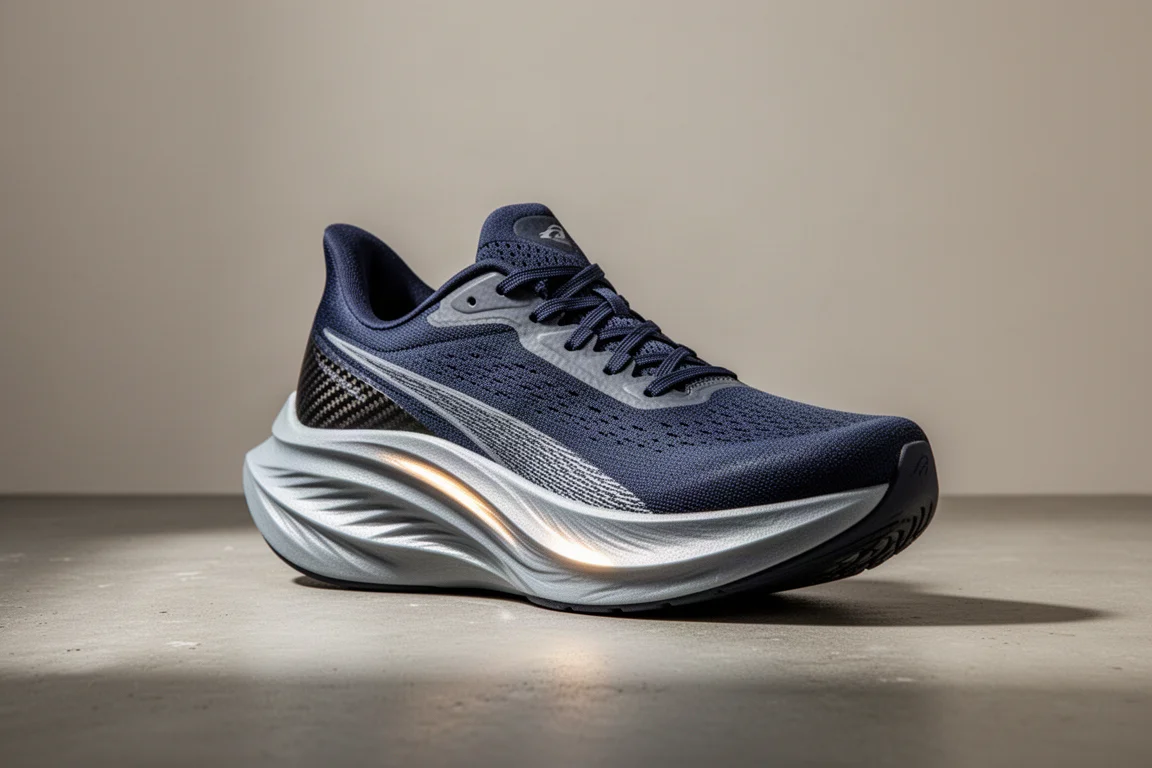
The SC Elite V3 is the clear success of the range. Its dual-density FuelCell midsole pairs a firmer top layer with a softer layer under the carbon plate, and the Energy Arc rocker geometry makes the ride fluid, fast, and propulsive. The heel sits high in the foam for a firmer, more stable feel, and the aggressive rocker tips you onto the forefoot quickly.
It works across every distance: it was great in parkrun-style 5Ks, excellent in a 10K race, and comfortable over 10-mile runs, with the potential to go much further. It is also significantly lighter and poppier than the previous RC Elite V2, and arguably the best racing shoe New Balance has released, standing up well against the Endorphin Pro 3, Metaspeed Sky class, and Vaporfly. The midsole feels a little denser than some of those competitors, which may come down to personal preference.

Fit and Sizing Across the Range
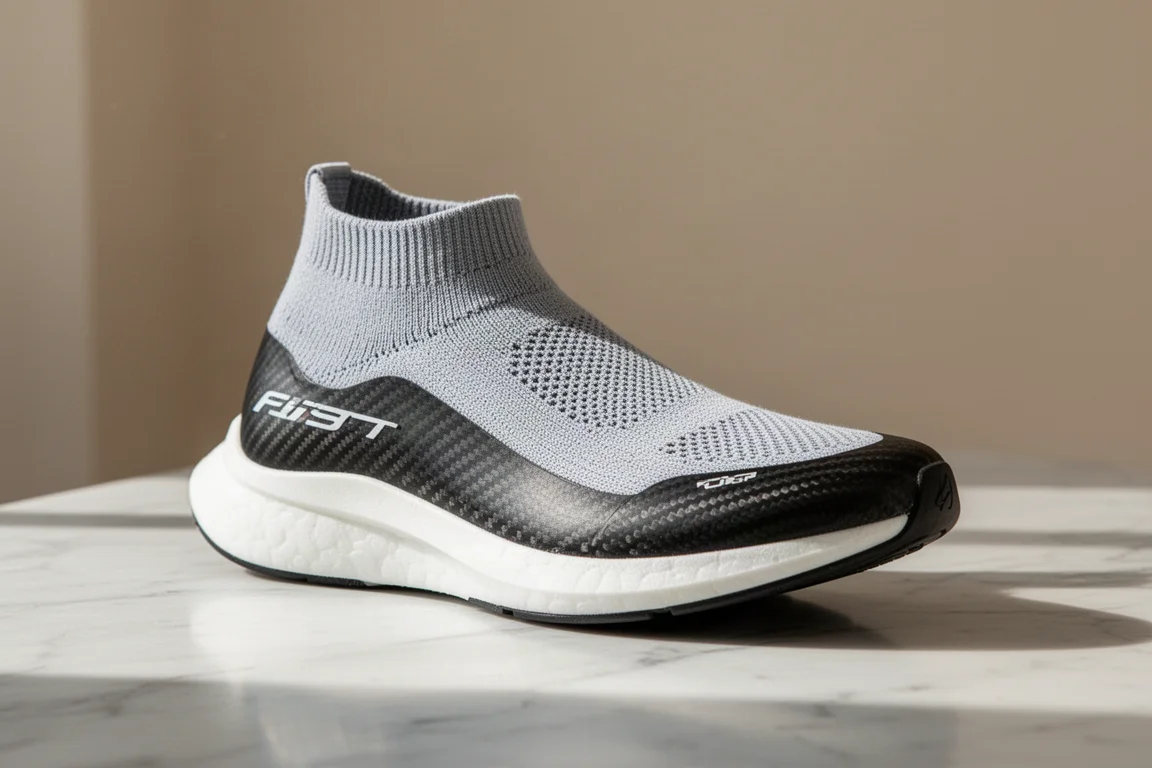
All three shoes were tested in UK 9 / US 9.5. The Trainer fits true to size with a roomy, comfortable training-shoe fit. The Pacer is true to size but runs short in the toe box, so going half a size up is a sensible move for some. The SC Elite V3 is true to size with a snug, sock-like bootie upper; runners with high-volume feet may feel pressure from the elasticated upper and laces.
Verdict: Which One Should You Buy?
As a three-shoe rotation, the SuperComp line does not hold together. The SC Elite V3 is excellent and priced about par for a carbon racing shoe, but the Trainer is expensive and limited, and the Pacer is a niche shoe with real durability concerns. Having plates in every shoe of a rotation is also an unusual approach, and the SC Elite V3 can handle much of what the other two are meant to do, often better.
If you want one shoe from this range, make it the SC Elite V3. Skip the other two unless you have a very specific reason, such as preferring a traditional low, minimal racing feel and accepting the Pacer’s durability trade-offs.
Conclusion
The New Balance SuperComp range shows how hard it is to build a complete carbon-plated system. The SC Elite V3 nails its job as a versatile, fast racing shoe for any distance and competes with the best super shoes on the market. The Trainer and Pacer each have moments, but their narrow use cases, high prices, and durability concerns make them hard to recommend alongside stronger alternatives from other brands. Build your rotation around the SC Elite V3 and spend the rest of your budget elsewhere.
Further reading
Related Reviews

Running Shoes
Best Road-to-Trail Running Shoes: Three Versatile Options for Mixed Terrain
A practical guide to three road-to-trail running shoes that handle both pavement and mild trails, with clear strengths and trade-offs for different runner types.

Running Shoes
Best Running Shoes for Achilles Tendonitis: Three Options Explained
Three running shoes with different heel drops and support features designed to help reduce Achilles tendon pain during walking and running.

Running Shoes
Best Running Shoes for Women: Five Top Choices Ranked
A ranked guide to five women's running shoes, from versatile daily trainers to high-performance racing options, with real strengths and trade-offs for each.