Running Shoes
New Balance Fresh Foam X 860 v14 vs Fresh Foam X Vongo v6: Which Stability Trainer Deserves Your Miles?
Two Fresh Foam stability trainers with very different characters. Here is how they compare for daily miles, long runs, and easy recovery days.
Introduction
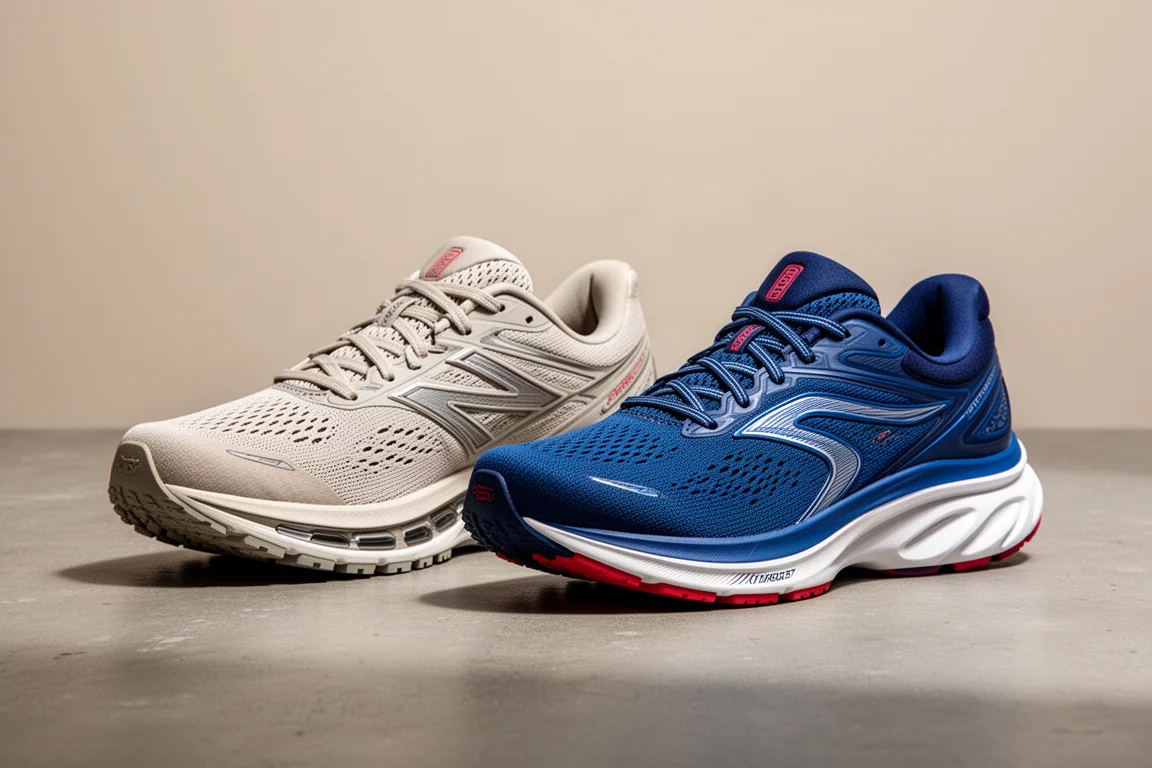
New Balance currently sells two stability shoes in its Fresh Foam family, and on paper they look almost interchangeable. The Fresh Foam X 860 v14 and the Fresh Foam X Vongo v6 both carry stability tech, both borrow design cues from the flagship 1080, and both sit in the same daily trainer category. In practice, they are very different shoes, and one of them is far easier to recommend than the other.
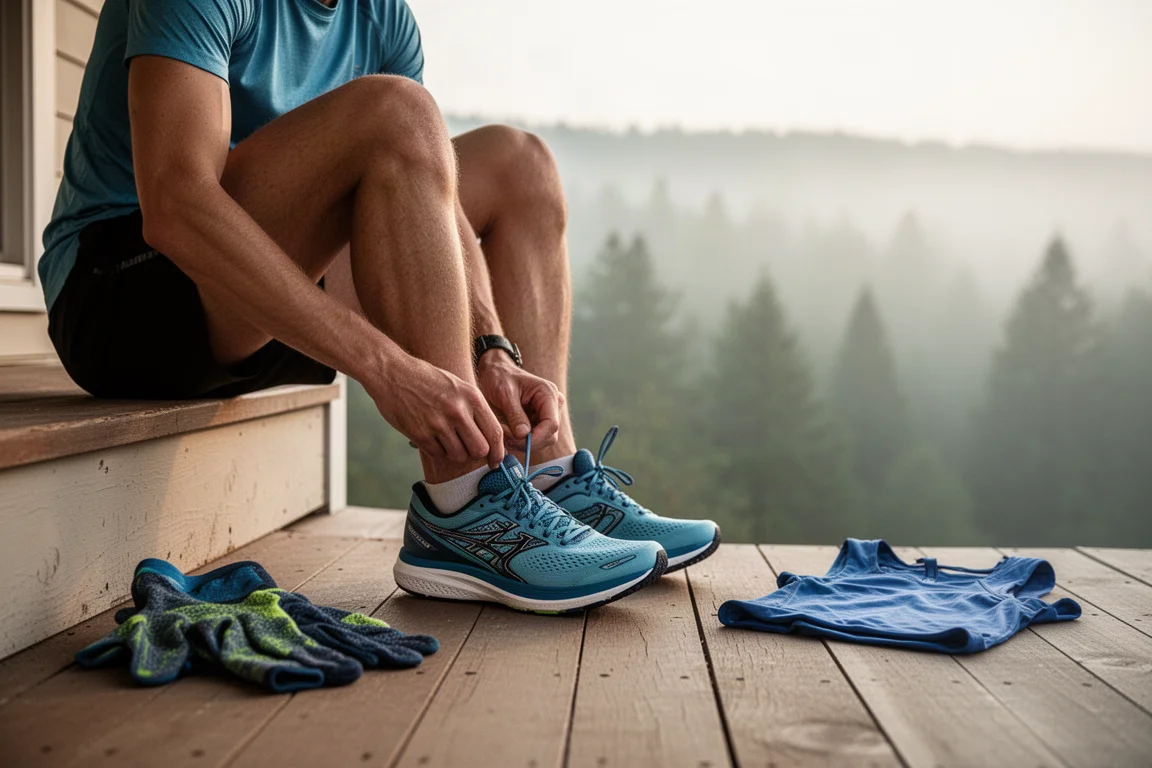
This comparison is based on real running: a 21-mile long run in the 860 v14 followed by an easy four-mile run in the Vongo v6 the next morning, on hilly terrain with tired legs. That is about as honest a head-to-head test as a shoe comparison gets.
Two Stability Trainers, One Confusing Lineup
The naming logic here is genuinely confusing. The 860 is nominally the stability version of the 880, and the Vongo the stability version of the 1080, but stack heights do not follow that story: the 860 actually sits a few millimeters higher than the Vongo. The Vongo also costs more, at roughly $160 to $165, matching the 1080, while the 860 comes in at $140. That leaves you wondering whether New Balance plans to keep both lines or fold one into the other, and whether the 860 is effectively the new direction for this category.
It is also worth remembering that Fresh Foam is not one foam. Every shoe wearing that label uses a different compound, so the Vongo’s “Fresh Foam X” does not automatically deliver the 1080’s ride, even though the two shoes share an upper and similar geometry.
Upper, Comfort, and Fit
This is where the Vongo shines. It uses essentially the same upper as the 1080, with a softer, more satiny fabric, more padding in the tongue, and the same soft pillow around the Achilles. The 860’s upper is a bit stiffer and more basic, with a structured heel counter instead of that plush Achilles wrap.
Slipping either shoe on, the Vongo simply feels more premium. Of the three elements that define step-in feel, the upper and tongue, the midsole, and the insole, the Vongo wins two out of three against the 860. The toe box on the Vongo runs slightly narrower, and heel security is a touch weaker than you would expect from a stability shoe, but as a comfortable, plush-fitting trainer, it has the edge.
Midsole and Plate: Where They Really Differ
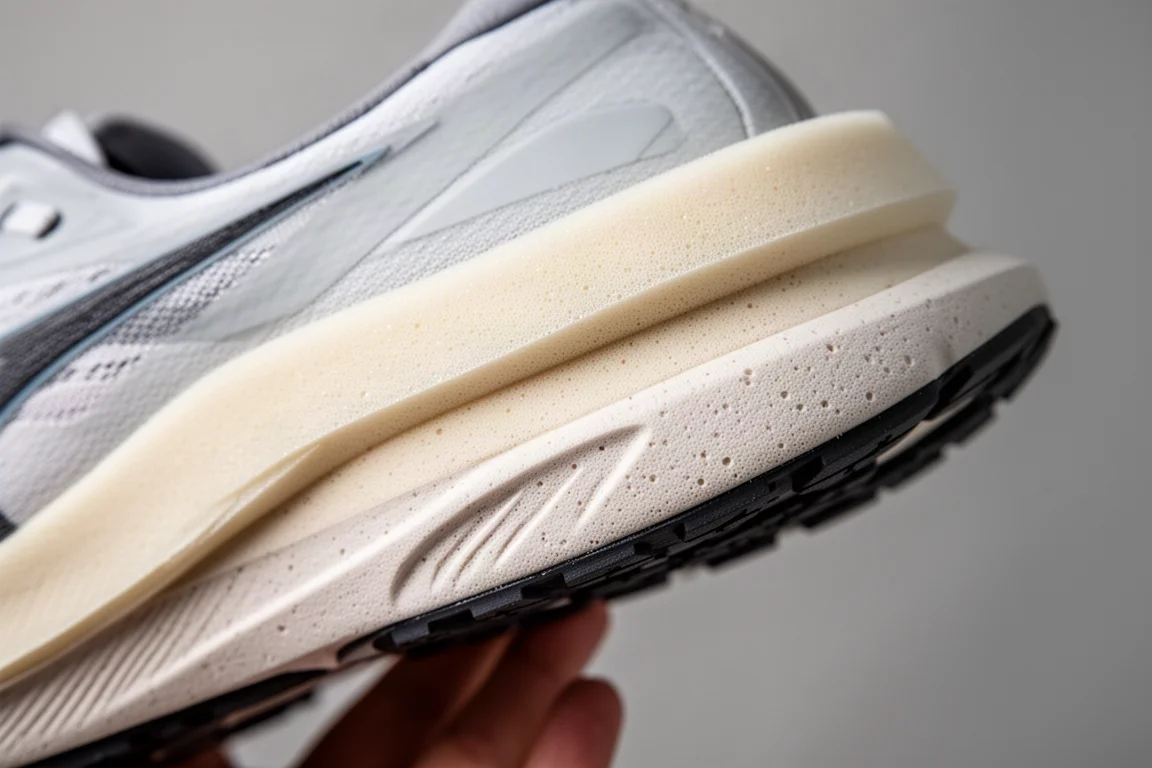
Both shoes use dual-density foam with a plastic stability plate, but they tune it very differently. The Vongo’s plate runs throughout the midsole with a notably firm, dense bottom layer, while the 860’s plate starts on the lateral side and wraps toward the medial side under a softer top layer. Press test confirms it: the Vongo feels firmer and more bottom-heavy, the 860 softer and more cohesive.
Weight distribution follows the same pattern. The 860 is the lighter of the two and feels better balanced, while the Vongo carries noticeable mass low in the shoe. And the ride character diverges sharply from there.
Ride and Geometry: Rocker, Drop, and Platform Feel
The Vongo keeps the 1080’s flat, low-drop geometry with a drop of around 5 to 6 mm and a gentle rocker that starts near the midfoot. That gives it a relaxed, Max-cushion cruiser character when you are just walking around or standing, and it genuinely feels taller underfoot regardless of what the specs say. The softer insole and upper add to that first-impression comfort.
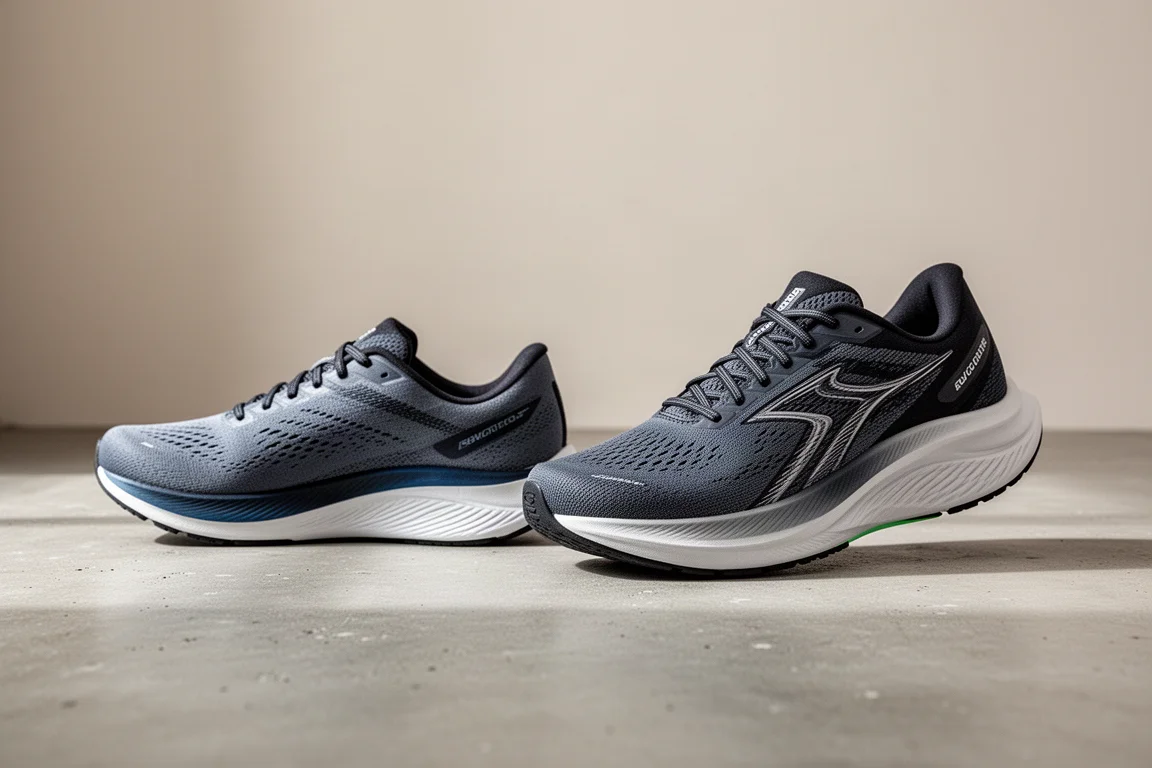
The 860, with its 8 mm drop, sits you up more on your toes, with a rocker that starts much closer to the forefoot and a slightly more aggressive stance. On the move, it is lighter, snappier, and far more alive. During the quick jog test, the difference was dramatic: the 860 rolls you along and pops back up, while the Vongo feels heavy, dense, and flat, as if the foam stays in the ground instead of returning energy.
Real-World Running Impressions
The 860 v14 is the standout here. Over a 21-mile long run, including 10 miles of on-and-off efforts near marathon pace on soft surfaces, it never felt like it was bottoming out or wearing tired. It is a genuine do-it-all workhorse: easy miles, slower running, faster running, and long efforts all feel natural. The abundant outsole rubber gives it a planted, grippy, old-school durable feel, and the upper completely disappears on foot.
The Vongo v6 is a tougher sell. The initial landing is soft enough, but the dense bottom layer acts like a progress stopper, and the ride leans closer to firm daily trainers like the 880 than to the plush 1080 the design suggests. It opens up slightly when you push harder pace into it, but at relaxed paces the foam offers little bounce. Heavier runners, likely over 200 lb, who can put more force into the foam may extract more life from it, and it retains real appeal as a low-drop stability option for that audience. As pure stability, though, it is only average, which is puzzling for the category.
Which One Should You Buy?
For most runners, the choice is clear. The 860 v14 is the more versatile, more fun, better-priced shoe, and it earns its place as a top-tier workhorse daily trainer at $140. If you are lighter on your feet or simply want the best all-around New Balance stability option, this is the one.

The Vongo v6 makes sense in a narrow window: bigger runners who can compress its dense foam, fans of low-drop geometry who want 1080-style comfort with added support, or anyone who values a plush upper and padded tongue above ride quality. If you want maximum softness, the 1080 remains the better pick, and if you only need mild stability with a livelier feel, a shoe like the Novablast 4 covers that ground well.
Conclusion
These two Fresh Foam stability trainers share a family name but not a family ride. The 860 v14 is a crowd-pleasing, versatile workhorse with snap, rocker geometry, and enough durability for marathon training blocks. The Vongo v6 is a niche option: comfortable, stable enough, and beautifully finished, but heavy, dense, and uninspiring at everyday paces. Unless its low drop or plush upper specifically matches your needs, the 860 v14 is the stability trainer to buy.
Product link
View more details for New Balance Fresh Foam X 860 v14
This product is mentioned in the review. Check the specifications, options, and compatibility before buying.
View more details for New Balance Fresh Foam X 860 v14Further reading
Related Reviews

Running Shoes
Best Road-to-Trail Running Shoes: Three Versatile Options for Mixed Terrain
A practical guide to three road-to-trail running shoes that handle both pavement and mild trails, with clear strengths and trade-offs for different runner types.

Running Shoes
Best Running Shoes for Achilles Tendonitis: Three Options Explained
Three running shoes with different heel drops and support features designed to help reduce Achilles tendon pain during walking and running.

Running Shoes
Best Running Shoes for Women: Five Top Choices Ranked
A ranked guide to five women's running shoes, from versatile daily trainers to high-performance racing options, with real strengths and trade-offs for each.