Running Shoes
New Balance 1080 v14 vs Asics Gel Nimbus 27: Which Cushioned Daily Trainer Should You Buy?
Two big-hitting daily trainers go head to head. We compare stack, weight, fit, ride and durability to help you pick the right cushioned cruiser for your easy miles.
Introduction
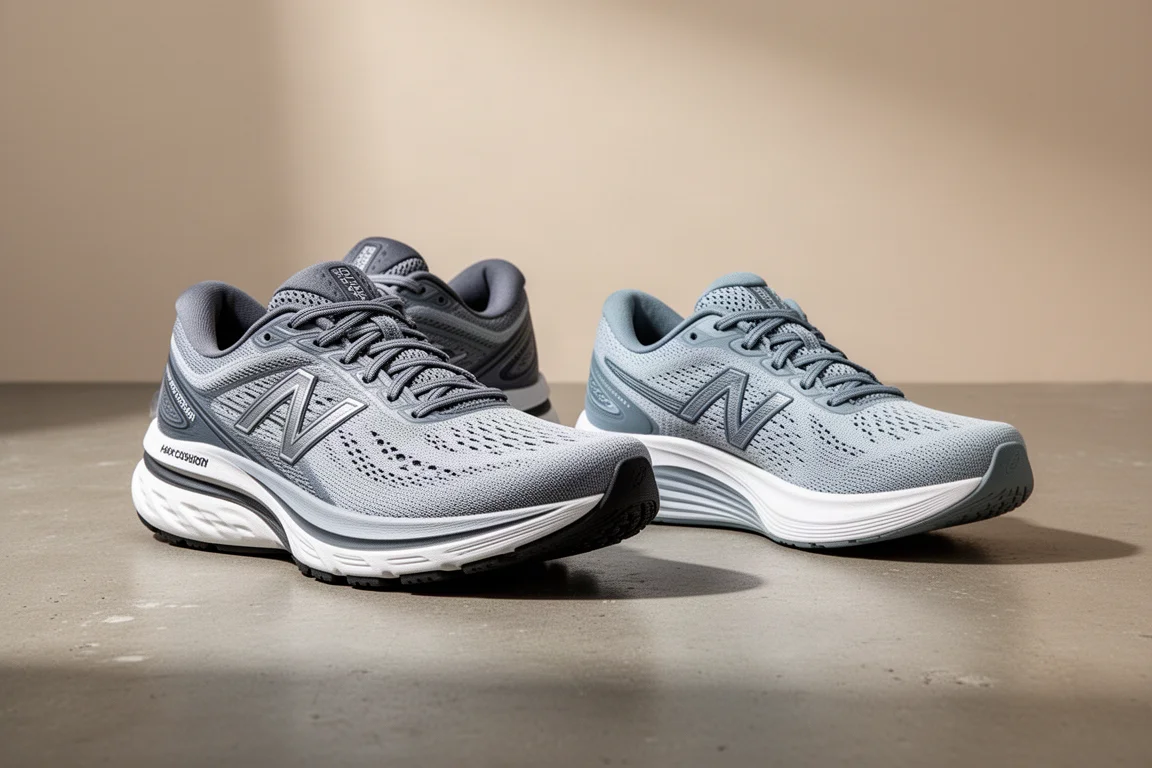
The New Balance 1080 v14 and the Asics Gel Nimbus 27 are two of the biggest names in the cushioned daily trainer category. Both are built to bring guaranteed comfort to your everyday miles, particularly at the easier end of your pace range, and both have earned loyal followings across multiple generations.
We logged real test miles in both shoes, covering everything from slow and easy long runs up to faster paces on progression runs. Here is how they compare, and which one we would pick.
Specs and First Impressions
The Gel Nimbus 27 packs in more foam underfoot, rising to 43.5mm in the heel and 35.5mm in the forefoot for an 8mm drop. The 1080 v14 sits at 38mm in the heel and 32mm in the forefoot, for a shallower 6mm drop. On price, both come in at $165 in the US, though in the UK the Nimbus 27 costs £180 while the 1080 v14 is £160, making the New Balance a bit cheaper there.
On the scales, the 1080 v14 has put on a little weight this generation, tipping over at 10.1oz (285g) in a UK men’s 8.5. The Nimbus 27 is marginally lighter than the Nimbus 26 despite its bigger stack, but it is still heavier at 10.8oz (307g). Put the two side by side and the first thing you notice is the size of the Nimbus: it is bigger, wider and bulkier, making the 1080 v14 look instantly more compact.
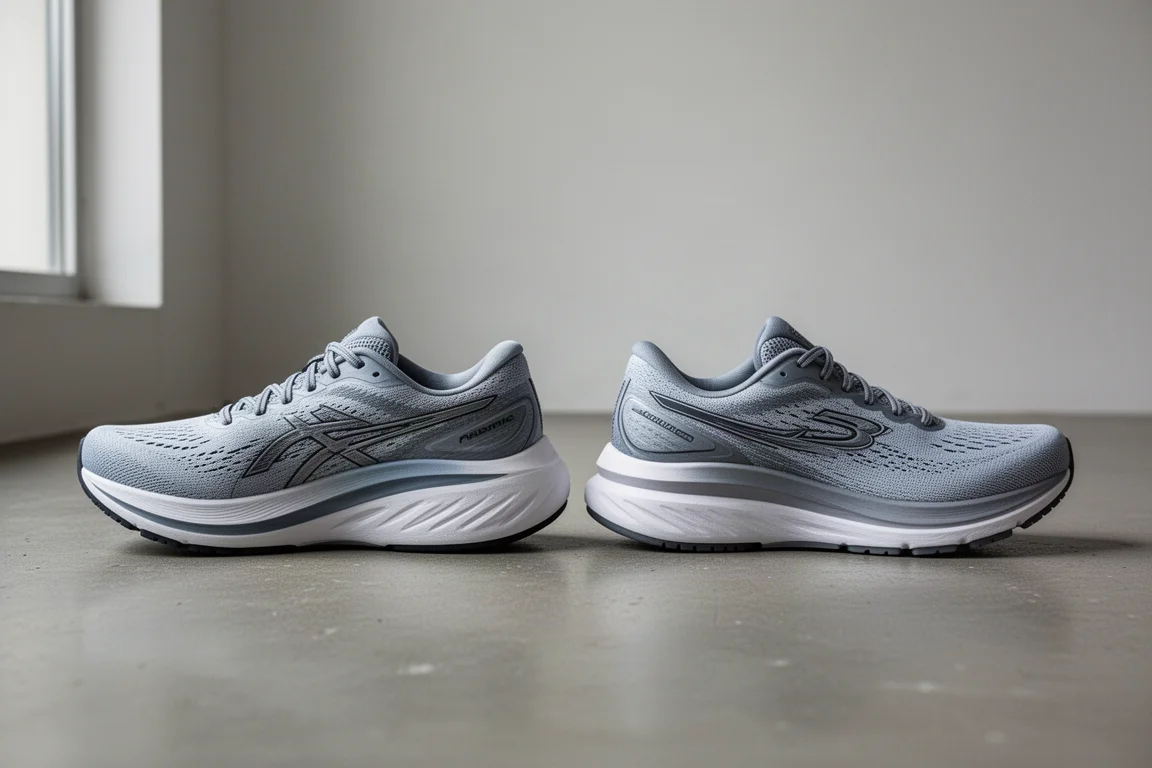
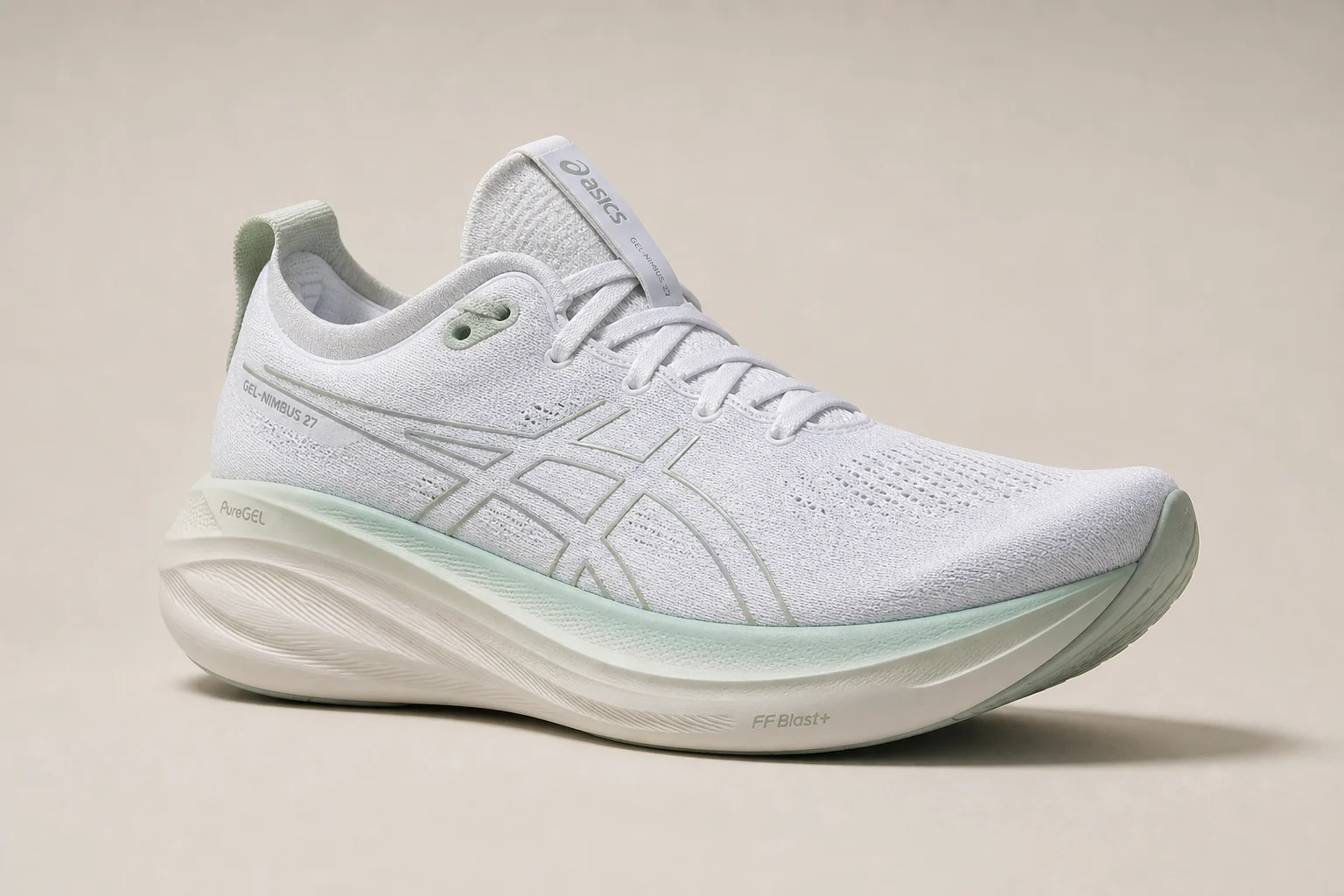
Asics Gel Nimbus 27
The Nimbus 27 prioritises plush comfort with a thick slab of FF Blast Plus Eco foam underfoot. Asics added one and a half millimetres across the stack this generation for an even more cushioned ride, and widened the platform in the heel and forefoot. There is also a pure Gel heel insert to improve shock absorption, particularly for heel strikers.
That extra stack and width translate into a highly protective, stable ride that soaks up road impact very well. It is a maxed-out cushioned cruiser, best suited to easy runs and long runs where protecting the legs matters most. The ride is slightly stiffer than you might expect from a shoe this soft, which means transitions are a bit faster than the shoe’s size suggests, but it can feel a bit laboured, slappy and noisy at speed. Heavier runners who want extra support without a dedicated stability shoe may find the broader base and higher stack particularly appealing.
New Balance 1080 v14
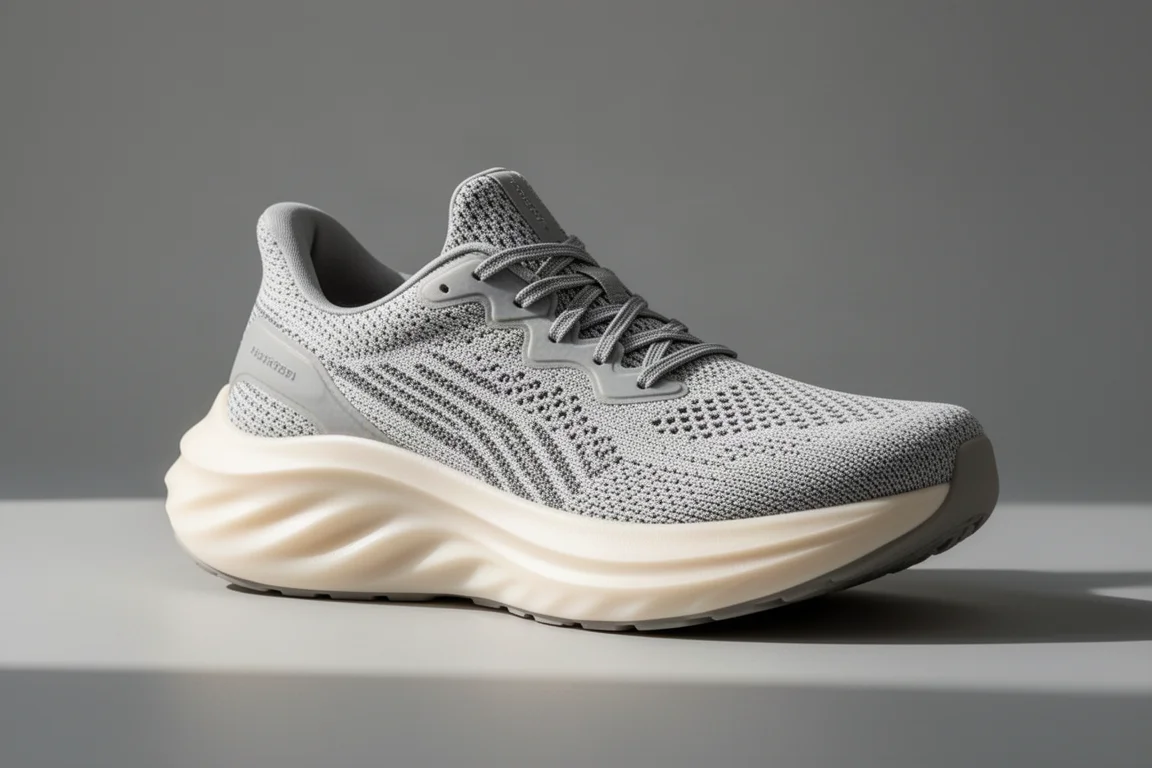
The 1080 v14 sticks with a more conservative stack of Fresh Foam X, paired with a rocked midsole. Where the Nimbus shoots for extra protection, the 1080 has gone the other way with a firmer feel and a snappier return than the notably soft 1080 v13. That gives it a more balanced midsole: still cushioned, but noticeably more versatile.
In testing, the stiffer midsole and outsole combination offered extra resilience and immediacy, making for smoother transitions and a quicker response than the Nimbus 27. The rocker works well at smoothing the heel-to-toe transition, the foam feels a touch softer and livelier under the forefoot, and the smaller, lighter design simply disappears on the foot. It is not an unstable shoe by any means, and while it is still best for easy miles, it picks up the pace more willingly, making it a credible option for tempo runs, faster long runs, or even a comfort-first first marathon shoe.
Upper and Fit
Up top, the Nimbus 27 has a new mesh upper that successfully balances breathability with a snug, supportive fit. The 1080 v14 also uses engineered mesh, but with a more hugging feel and less flex in the toe box, making for a wrapped, less airy fit overall. Both shoes have generously padded heel collars and gusseted tongues; the Nimbus 27’s knitted tongue is thinner and a bit floppier, while the 1080 v14 goes for thick, full-comfort padding that stays put well.
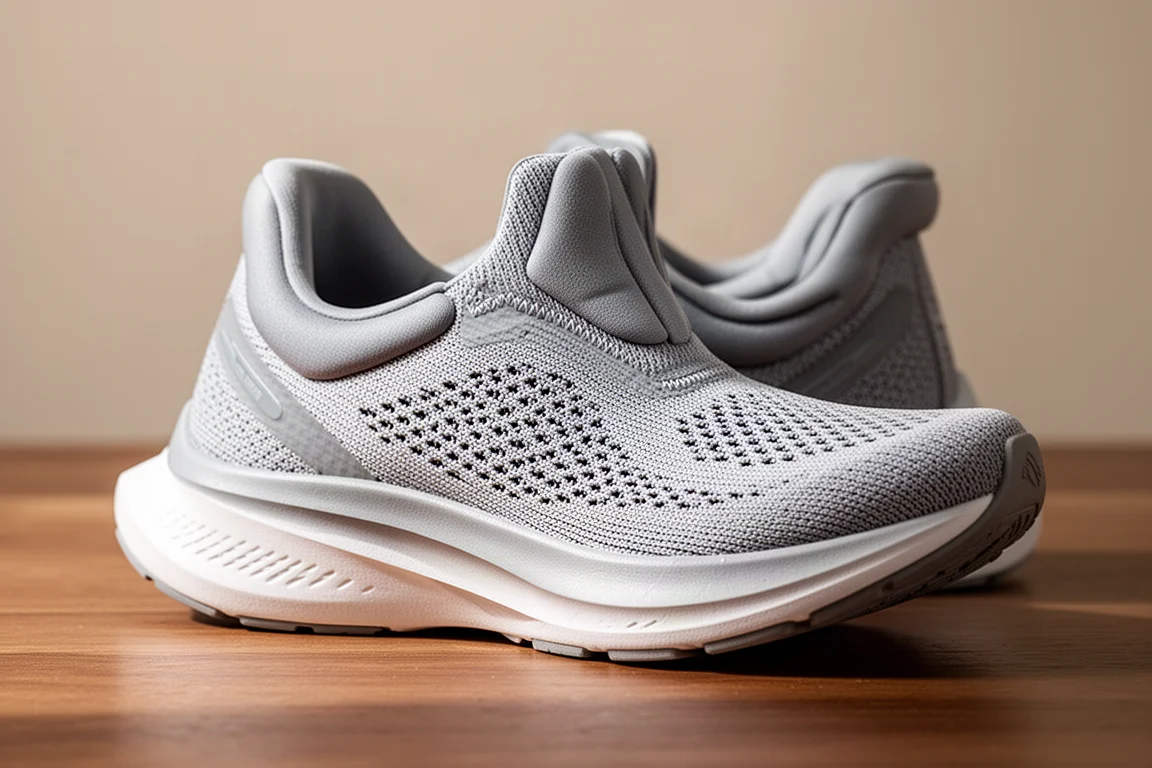
Fit testers came to a consistent conclusion: go true to size in both. The 1080 v14 runs really snug in its UK sizing, with good hold and security, but runners with high insteps or wide feet may find it cramped across the midfoot and toe knuckles; some may want to go half a size up or choose the wide option. The Nimbus 27 is roomier and more accommodating, with plenty of length and wiggle room in the toe box, an ideal fit for longer, easier miles where extra time on feet matters. Both were praised for comfortable lockdown with no heel slippage.
Ride and Performance
Both shoes feature large cushioned platforms designed to absorb road impact and protect your feet over long miles. The Gel Nimbus really takes that softness to another level with its extra stack, and this generation stays just as plush as its predecessors. If you liked the Nimbus 26, you will like the 27.
The trade-off is agility. The Nimbus lacks the quicker return of the 1080 v14, which feels more at home when you move up through the gears. In a direct back-to-back run, the 1080’s smaller size was immediately noticeable: it took over more smoothly, with a slightly softer, bouncier feel under the forefoot, while the Nimbus delivered a slappier, louder, more forceful ride onto the forefoot. Midfoot strikers in particular may find the Nimbus lands dead-on without a smooth rolling action, feeling more like a comfortable wedge of foam than a shoe that moves you through the gait.

Outsole and Durability
Both shoes carry a good covering of protective rubber, with quite a bit of exposed midsole in the middle section. The Nimbus 27 uses Asics’ grippiest outsole compound, AHAR Plus, and offers solid grip with no slippage reported. The 1080 v14 has a horseshoe of rubber around the mid-to-forefoot, a single piece of protected rubber in the middle, and thicker rubber crash pads on the heels than the v13 to boost durability.
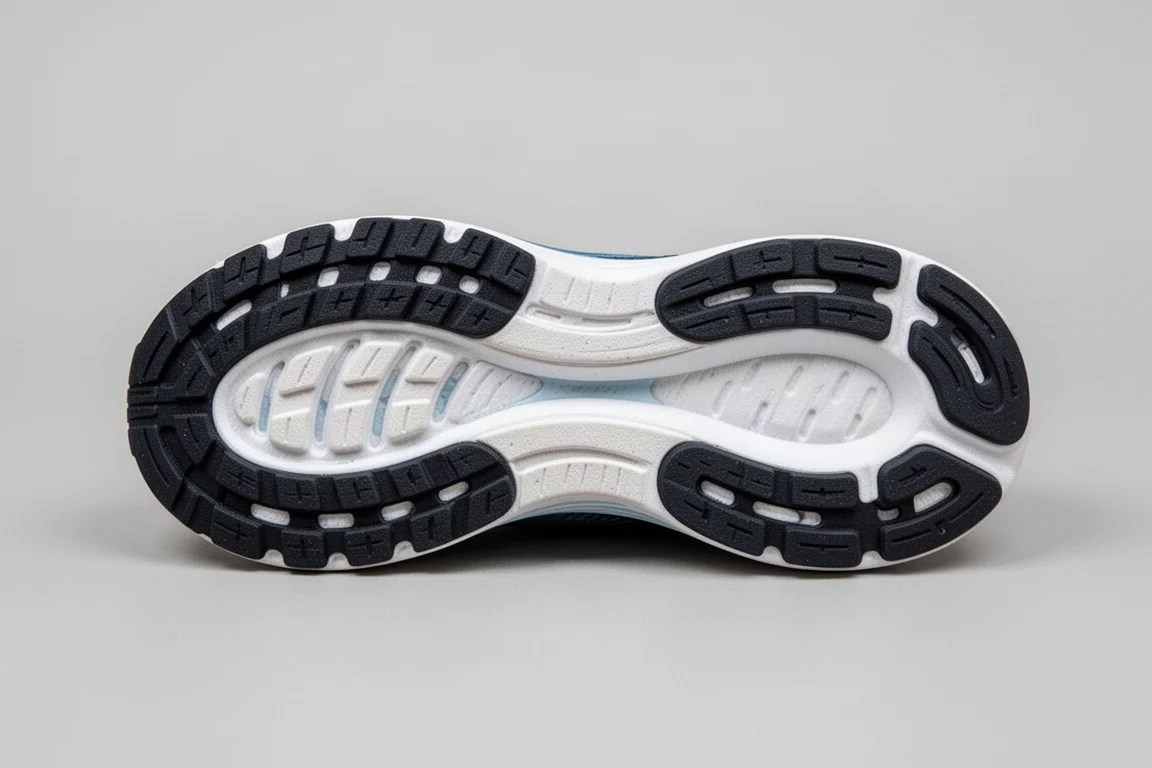
Durability is where a small gap emerged in testing. The 1080 v14 showed little sign of wear after the test miles and feels built to conquer big miles. The Nimbus 27 showed some midsole rubbing where the rubber is not quite as thick, suggesting it is a little less durable, though the rubber on both is by no means bad.
Which One Should You Buy?
If you want one cushioned daily trainer that can do a bit of everything, the New Balance 1080 v14 is the more versatile choice. Its nimbler, more compact design, effective rocker and livelier foam make it better when you want to move with more intent, and in the UK it is cheaper too.
If all you need is smooth, protective, stable comfort for your easiest of easy miles, the Asics Gel Nimbus 27 probably delivers more of exactly that. Heavier runners may also prefer its broader base and higher stack. Just be aware that it is really an easy-day and recovery-run shoe, with limited performance elements.
If neither appeals, other cushioned daily trainers worth considering include the Brooks Glycerin 22, Saucony Ride 17, Asics Novablast 5, Adidas Supernova Prima, Nike Pegasus 41 and Brooks Glycerin Max.
Conclusion
These are two capable daily trainers, both at the more cushioned end of the spectrum and both at their best at slower, easier paces. For us, the more compact, lighter and snappier New Balance 1080 v14 takes the win on versatility and value, while the Gel Nimbus 27 remains a classic plush cruiser for runners who want maximum protection and stability and do not mind a bigger shoe.
Further reading
Related Reviews

Running Shoes
Best Road-to-Trail Running Shoes: Three Versatile Options for Mixed Terrain
A practical guide to three road-to-trail running shoes that handle both pavement and mild trails, with clear strengths and trade-offs for different runner types.

Running Shoes
Best Running Shoes for Achilles Tendonitis: Three Options Explained
Three running shoes with different heel drops and support features designed to help reduce Achilles tendon pain during walking and running.

Running Shoes
Best Running Shoes for Women: Five Top Choices Ranked
A ranked guide to five women's running shoes, from versatile daily trainers to high-performance racing options, with real strengths and trade-offs for each.