Studio Monitors
Neumann KH 80 DSP Review: A Compact Nearfield Monitor Built Around Neutrality
A compact powered two-way monitor with a very linear on-axis response, generous vertical coverage, and clear low-end limits worth understanding before you buy.
Introduction
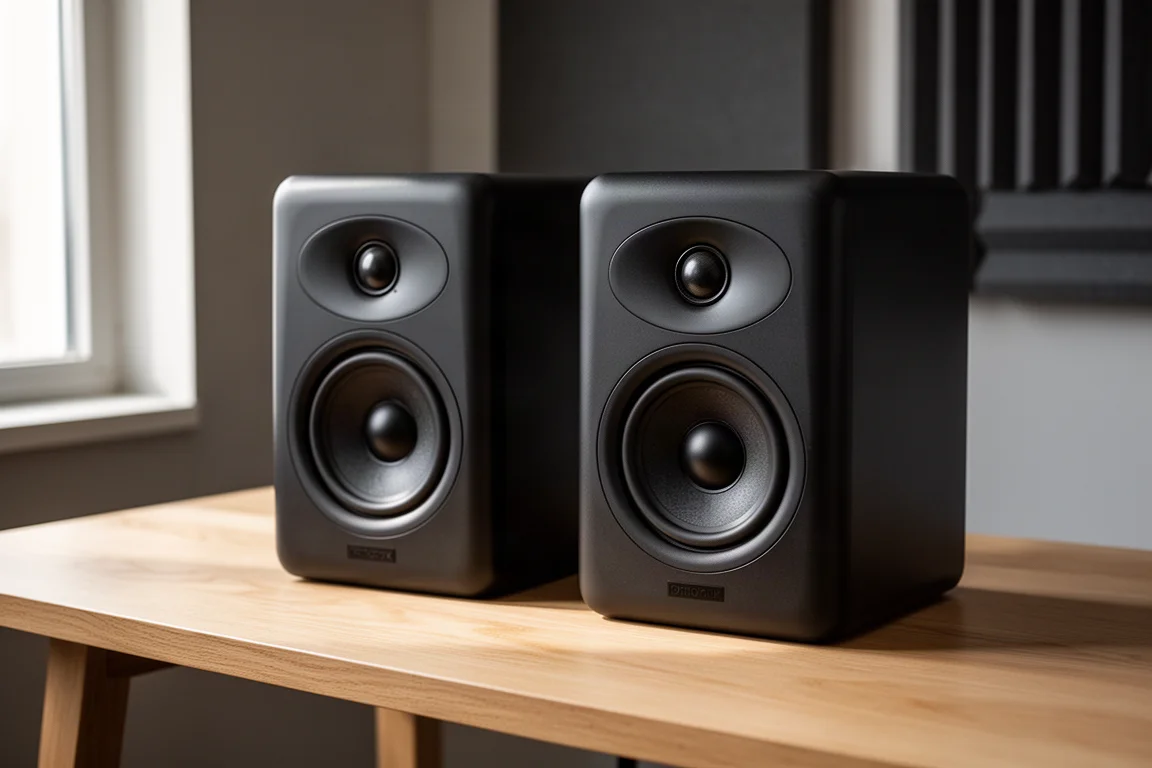
The Neumann KH 80 DSP is a compact powered two-way studio monitor built around a 1-inch tweeter mounted in an elliptical waveguide and a 4-inch mid-bass driver. It is a genuinely small box even by nearfield standards, and it sells for roughly $1,000 per pair, which puts it in a very different conversation from the budget monitors most people start with.
In testing, the speaker was placed on a desk at a little more than arm’s length and used in the nearfield, then moved into a living room and played at roughly 75 to 80 dB from about 6 feet away. That second setup matters, because a monitor this small is usually bought for close listening, and the way it behaves when you step back says a lot about how forgiving the design is in a real room.
Who This Speaker Is For
This is a monitor for people who work close: mixing, tracking, editing, gaming, or simply listening at a desk where the speaker sits within about a meter of your ears. The manual points to a reference axis midway between the tweeter and the mid-bass driver, and that is where your ear should sit. Get that right and the KH 80 DSP is at its best.
It is also a sensible choice if your posture changes through a long session. Because the vertical coverage stays broad, you do not have to sit bolt upright to keep the sound intact. If you tend to sink into the chair as the day goes on, this design holds up better than most small monitors.
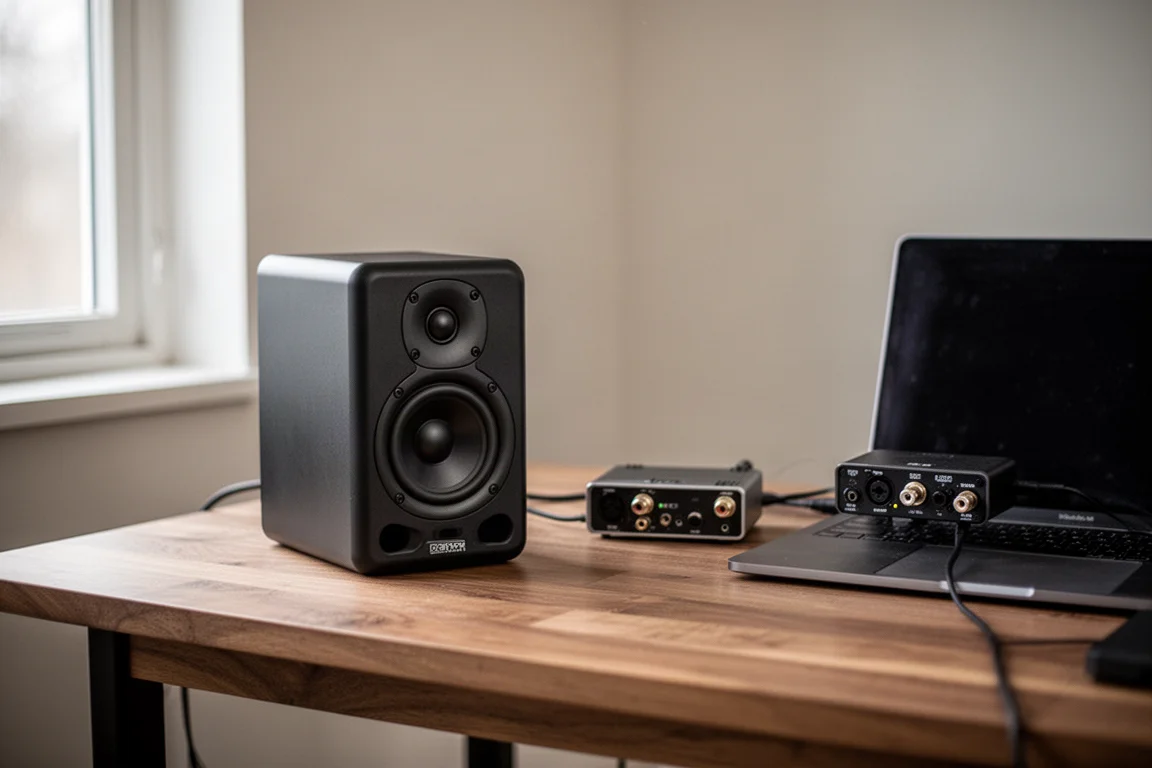
For context, a compact nearfield monitor such as the Kali LP-6 sells for around $300 per pair and remains a strong option in its size class. The KH 80 DSP is a little smaller than that, and it is the more linear of the two.
Design and Setup Notes
The back panel carries a set of placement switches: freestanding, small desk, medium desk, and large desk. Each setting tailors the low-mid response to compensate for the bounce a desk surface adds, which is a practical feature on a monitor that will almost always sit on a desk. There is also a free-field position for stands or unusual placements.
In testing, the speakers were placed on top of a pair of bookshelf speakers and left in the free-field setting, with the input gain at maximum and the output level controlled at the source, either through a monitor controller or through software on the computer. That is a normal way to run a powered monitor, and it keeps the level control in one place.
The cabinet is a plastic shell rather than an aluminium one, but it feels robust in the hand, and the overall footprint is small enough to disappear on a busy desk.
Main Strengths
Neutrality is the headline. On-axis response is smooth and sits within roughly 1 to 2 dB, with an F3 of 57 Hz and an F10 of 48 Hz. That is a very flat direct sound for a speaker of this size, and it is the main reason the KH 80 DSP can be trusted for decisions about balance and tone.
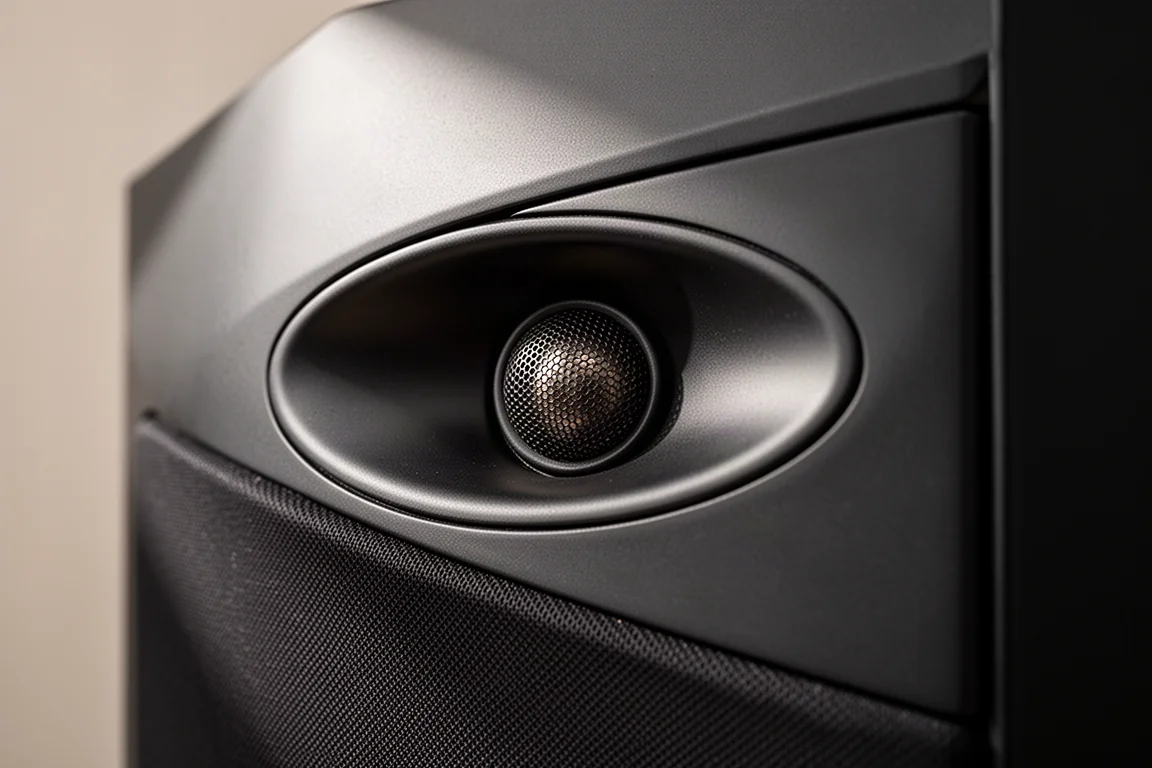
The crossover sits at about 1.8 kHz with 48 dB per octave slopes. Steep slopes at a low crossover point largely remove the comb filtering that shallower filters can introduce, and the practical benefit is more usable vertical space. Vertical coverage holds to roughly plus or minus 30 degrees, while horizontal radiation extends to about plus or minus 50 degrees at the minus 6 dB point, with a contour that stays flat through the crossover region rather than narrowing.
How It Behaves Away From the Nearfield
Step back to about 6 feet and play at 75 to 80 dB and the top end starts to sound a little elevated. The reason is visible in the data: the tweeter’s directivity stays constant and wide, so high frequencies are radiated toward nearby sidewalls with nearly the same intensity as the direct sound. In a reflective room with walls close by, that reflected energy adds up as extra treble.
The estimated in-room response shows a shallow dip around 1 to 2 kHz and roughly a 2 to 3 dB difference between the midrange trend and the high frequencies. That dip did not come across as a loss of clarity, but the treble trend lines up with what the ear picks up at distance.
None of this is a problem in the nearfield, where the direct sound dominates. It is worth understanding because it explains why this monitor is not the right tool for a large, live-sounding room.
Things to Consider Before Buying
The low end is limited. With an F3 of 57 Hz, the deepest part of a kick drum and the lowest notes of a bass guitar, which sit around 50 Hz, are not fully reproduced. Most nearfield work survives that, but a subwoofer is the obvious addition if you need to hear that region properly.
Adding a subwoofer and high-passing the monitors does not reduce multi-tone distortion in the midrange, which is a useful sign: the drivers already have good distortion behavior on their own, so the sub is about extension rather than cleanup.

The enclosure is plastic rather than metal. It feels solid, but buyers who want a machined cabinet should know exactly what they are getting before ordering.
Output, Headroom, and Adding a Subwoofer
Multi-tone distortion at 96 dB for a single speaker measures above 3 percent, landing in the region of 5 percent. A second speaker adds roughly 6 dB of output, which is why a pair can reach about 102 dB at one meter. Realistic nearfield listening sits far lower, around 77 to 88 dB, where distortion is not a concern.
Compression behavior is tidy up to about 96 dB down to roughly 80 Hz. Push harder with a fast sine sweep and the protection circuit engages and trims the midrange, which is normal for a powered monitor. With a sustained multi-tone signal, roughly 1 dB is lost in the midrange at about 96 dB of output, so usable maximum output sits closer to about 95 dB. For a 4-inch mid-bass driver in a nearfield role, that is a sensible limit rather than a shortcoming.
Buying Advice
At around $1,000 per pair, the KH 80 DSP is a considered purchase, and it makes the most sense for anyone who listens close and wants a neutral reference without a large cabinet on the desk. A combo deal at B&H pairs the speakers with a small measurement microphone so you can run your own in-room calibration, which is a genuinely useful inclusion.
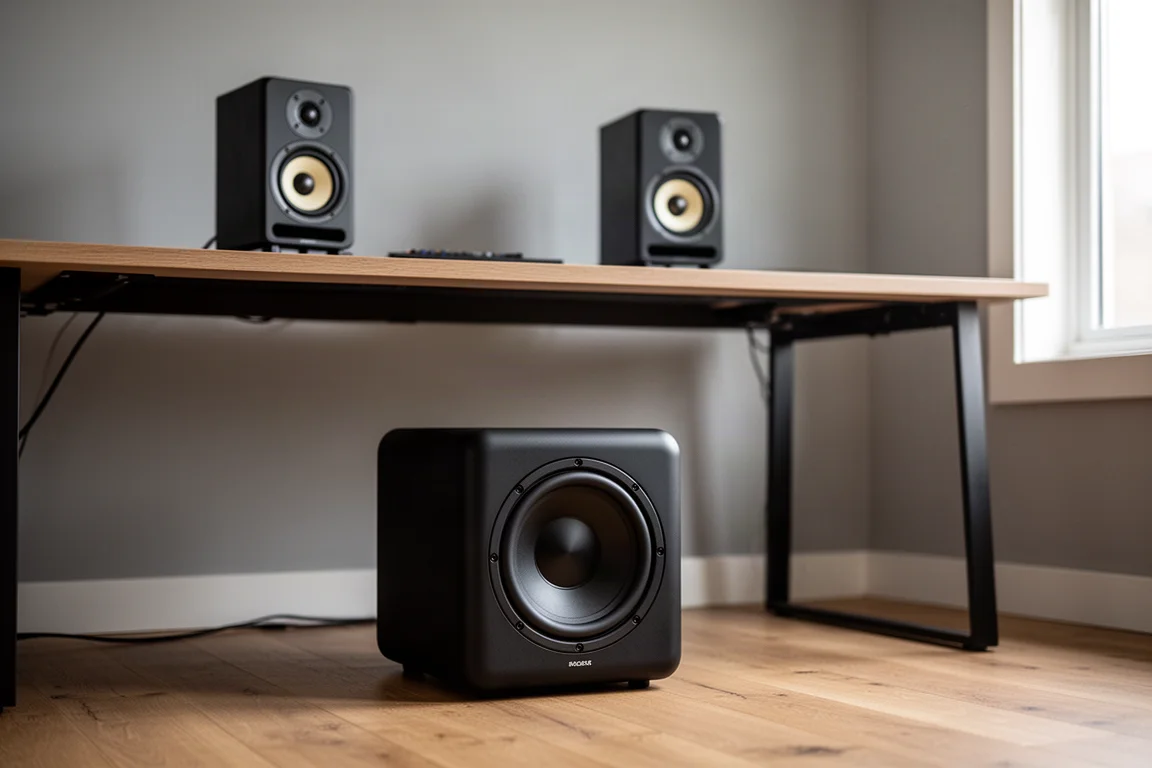
Buy it if your listening distance is short, your desk is where the work happens, and you value a flat on-axis response over bass weight. Budget for a subwoofer if the low end matters to you, and keep the setup out of a reflective far-field position where the wide treble directivity works against you.
Conclusion
The Neumann KH 80 DSP is a small monitor that gets the important things right: a very linear on-axis response, a low crossover with steep slopes, and vertical coverage that tolerates real seating positions. Its limits are equally clear. It will not deliver deep bass on its own, and it is not the right choice for a reflective room at distance. For desk-based nearfield listening, those trade-offs are easy to live with.
Product link
View more details for Neumann KH 80 DSP
This product is mentioned in the review. Check the specifications, options, and compatibility before buying.
View more details for Neumann KH 80 DSPFurther reading
Related Reviews
Studio Monitors
ADAM Audio A8H Review: A Three-Way Studio Monitor That Also Knows How to Have Fun
A three-way active studio monitor with an 8-inch woofer, a handmade AMT tweeter, and two distinct tunings, the ADAM Audio A8H aims to satisfy both critical work and everyday listening.

Studio Monitors
Best Studio Monitors 2026: Six High-End Options Compared
We tested six premium studio monitors in a real studio space to see which ones deliver the best mix of accuracy, musicality, and value.
Studio Monitors
Focal Alpha 65 Evo Review: An Honest Studio Monitor With Real Bass
A bi-amplified active studio monitor with deep bass, useful tone controls and a truthful, uncoloured voicing, assessed for small studios and home setups.