Backpacking Tents
Nemo Hornet vs Nemo Hornet Elite: Choosing a Freestanding Backpacking Tent
A practical look at the Nemo Hornet and Nemo Hornet Elite, covering the Osmo fabric update, the weight gap between them, and which version suits solo backpackers.
Introduction
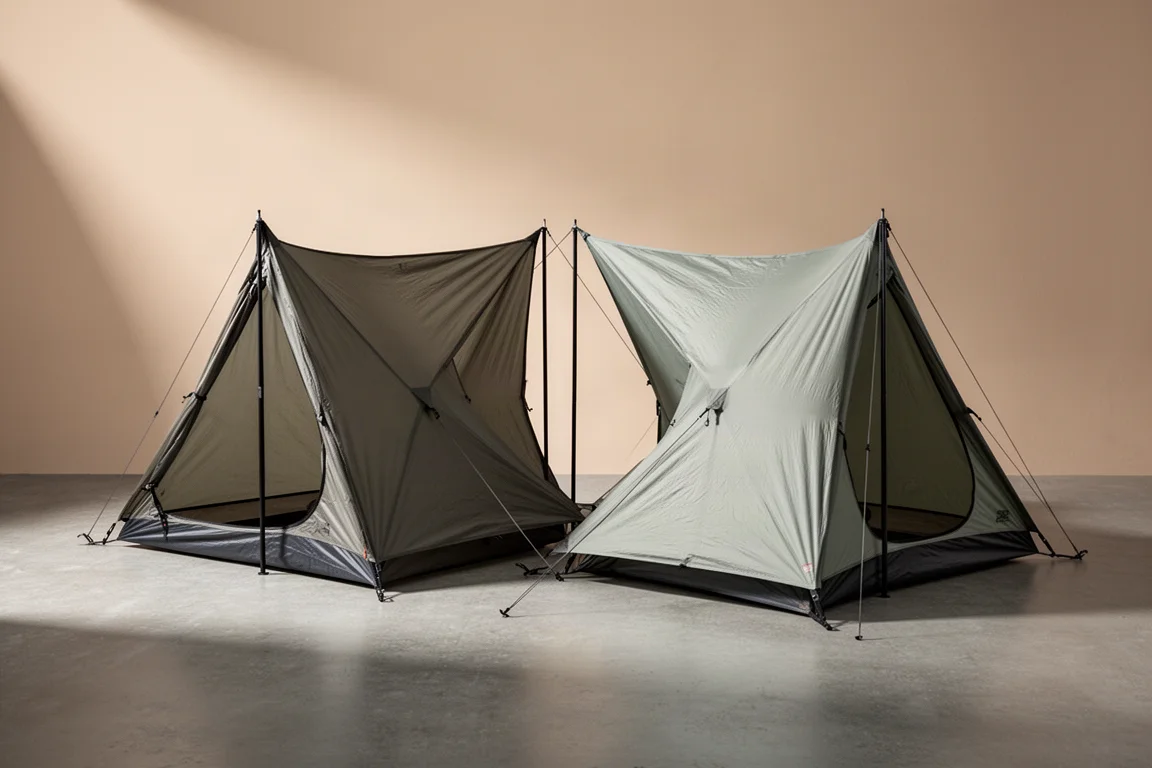
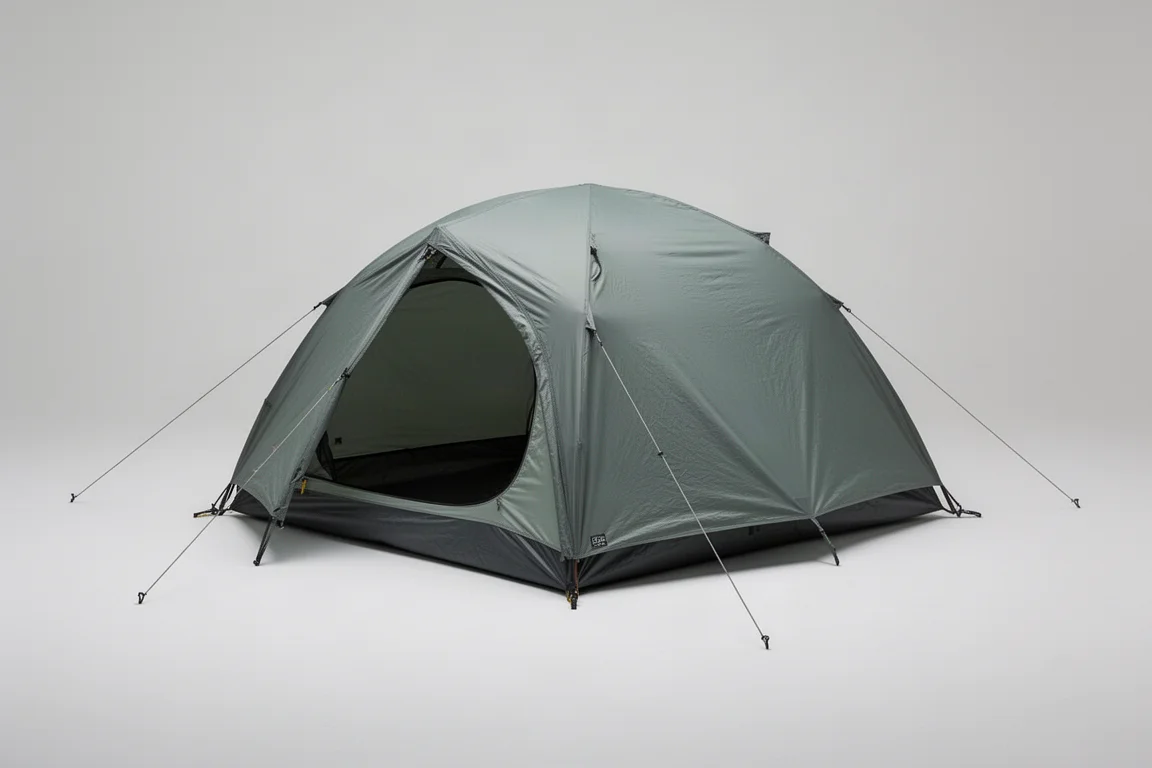
The Nemo Hornet has been a dependable freestanding backpacking tent for solo hikers for years, and the current lineup splits into two clear choices: the standard Nemo Hornet and the lighter Nemo Hornet Elite. Both are built around the same two-person platform that solo backpackers tend to prefer, because the extra interior space costs very little in packed footprint. Both also now use Nemo’s Osmo fabric, which replaced the nylon used on earlier versions.
This guide covers what each tent does well, where the two versions actually differ, and which one is worth the money depending on how you camp.
What Makes This Design Work for Solo Backpackers
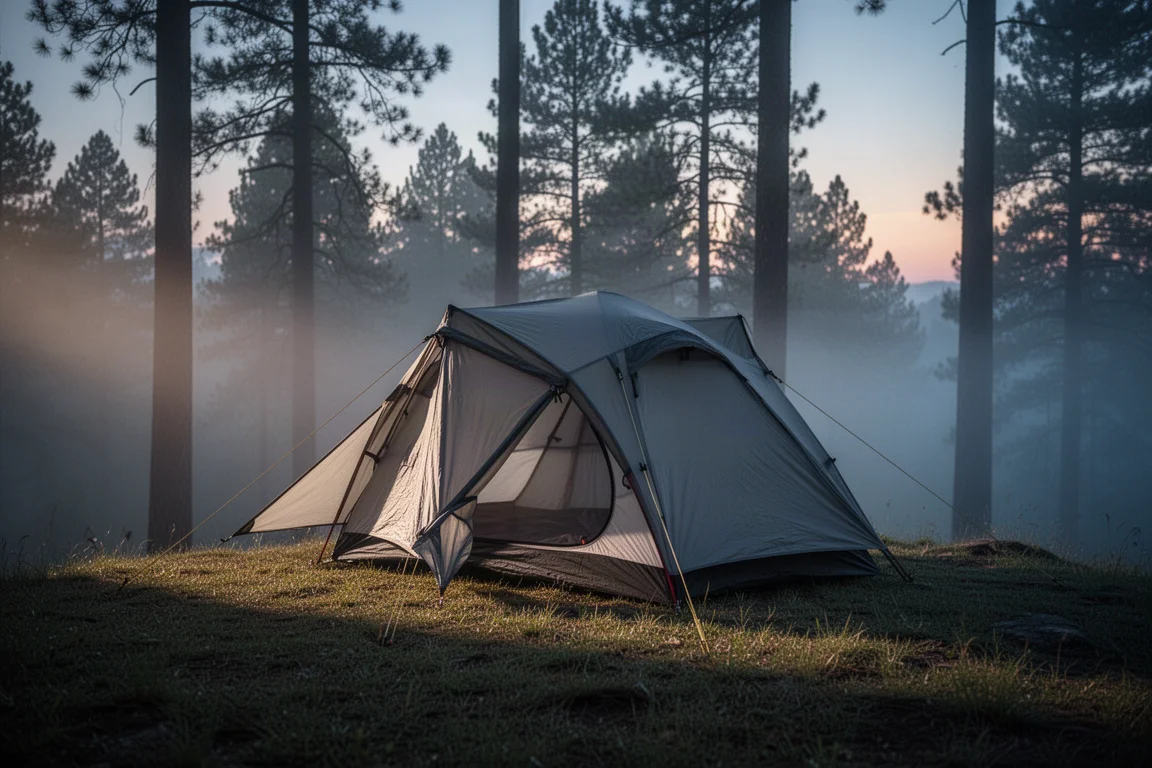
The two-person Hornet is most often used as a one-person tent, and that is where it makes the most sense. There is enough interior volume to spread gear out and sleep comfortably, while the packed footprint stays small enough to fit into tighter campsites where a larger tent would be awkward to pitch.
A lot of that comes down to how the headroom is shaped. The ceiling narrows into a tight point at the top rather than staying wide across the full width. That keeps the vestibules pulled in close to the body of the tent, so the overall footprint does not spread outward the way a boxier design would. For a solo hiker moving between small, uneven sites, that is a practical advantage rather than a compromise.
Nemo also offers a one-person version of this tent for anyone who wants to go smaller still, but the two-person model is the version that gives a solo camper room to spare.
Nemo Hornet: The Entry-Level Freestanding Tent
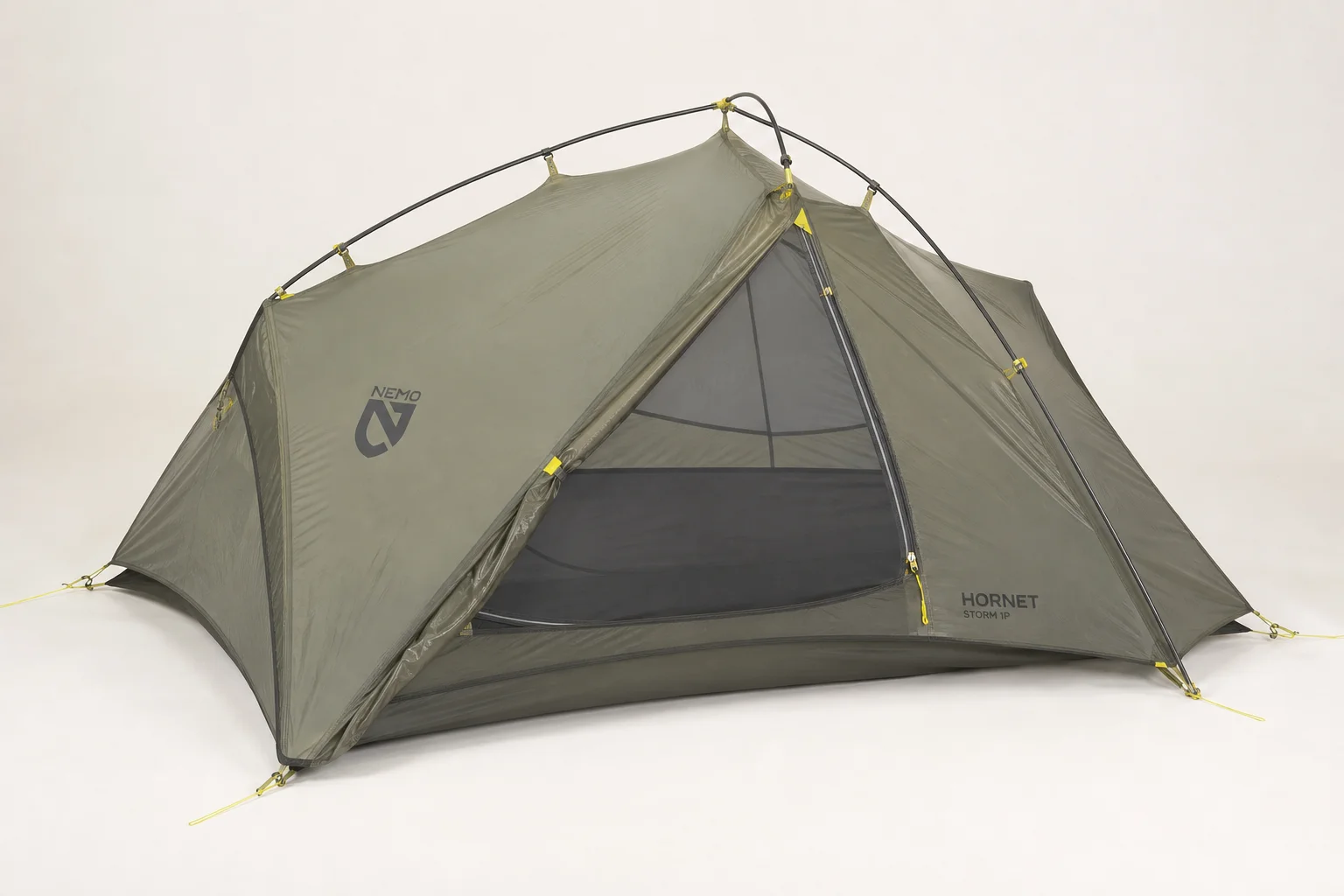
The standard Hornet is the more accessible of the two, and the current version uses Osmo fabric across the fly and floor. Osmo was designed entirely in-house at Nemo, and the company claims it delivers four times longer lasting water repellency, three times less stretch when wet, and 20 percent more strength than the fabric used on earlier Hornets.
Several smaller details changed alongside the fabric. The brow pole, a short piece that lifts the ceiling slightly for extra headroom, has been reduced from two to one. That trims a little weight, and the difference in headroom is not something you notice while lying inside. The rainfly attachment points at the back corners are simpler now as well: instead of bending a clip underneath the tent pole, the new system snaps together in a single motion. The front of the tent rises slightly higher than before, and the color is a more subdued, low-profile tone than the bright green used previously.
Nemo Hornet Elite: Lighter, With the Same Footprint
The Elite keeps the same shape and dimensions but removes roughly four to five ounces from the total weight. That is the core trade-off, and it comes with a noticeably higher price.
Earlier Elite versions used a 7-denier nylon where the entry-level tent used a 10-denier nylon, and that thinner fabric held up well over years of use without developing a single hole. The current Elite moves to Osmo as well, so the weight advantage now sits alongside the same fabric technology as the standard model. Buyers who want the lightest freestanding option in this family will find the Elite is the version that delivers it.
If weight is not the deciding factor, the standard Hornet covers the same ground for less money. The Elite makes the most sense for backpackers who count every ounce and are willing to pay for the reduction.
Osmo Fabric: What Actually Changed
Osmo is the most consequential update to this tent family. It was developed in-house, and the headline claims are longer lasting water repellency, less stretch when wet, and greater strength compared with the previous nylon.
Those stretch claims were put through a direct side-by-side test using identical strips of nylon, polyester, and Osmo fabric, each weighted with two pounds. In a 30-minute dry run, all three materials stretched very little, with nylon stretching the most and Osmo the least. The strips were then soaked in water for several hours. Once fully wet, the nylon stretched roughly three quarters of an inch near the bottom, the polyester stretched about an eighth to a quarter of an inch, and the Osmo strip showed no perceivable stretch at all. That is a notable result for a material that is as light as nylon, and it supports the idea that the fly will hold its shape better through sustained rain.
Things to Consider Before Buying
There is very little to dislike here, but a few points are worth knowing before you buy.
The door uses a single zipper rather than a dual zipper. A dual zipper would let you open a small vent at the top of the door while keeping the vestibule closed, which is an easy way to improve airflow. As it stands, ventilation takes a little more management on warm, still nights.
Headroom narrows toward the top of the tent. It is a deliberate part of the small-footprint design, and it rarely matters unless you are waiting out a storm inside, but taller campers should expect the ceiling to come in close.
The brow pole is attached to the inner tent rather than packed separately, so it can get slightly in the way when you are folding everything up. It is a minor annoyance rather than a real problem.
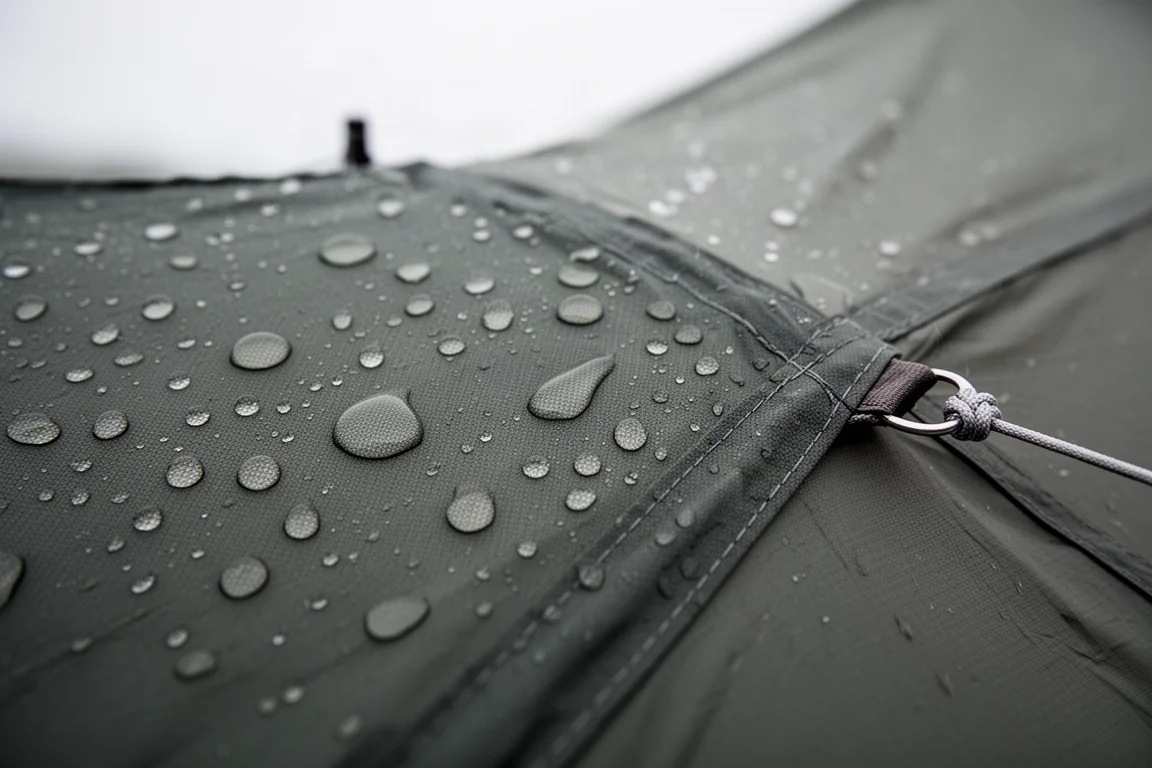
Some owners have reported that rain pooling on the raised rear section of the fly can work its way inside. That has not been an issue across long-term use of these tents, and any pooling seen has been minimal, but it is worth pitching carefully and checking tension across the back of the fly.
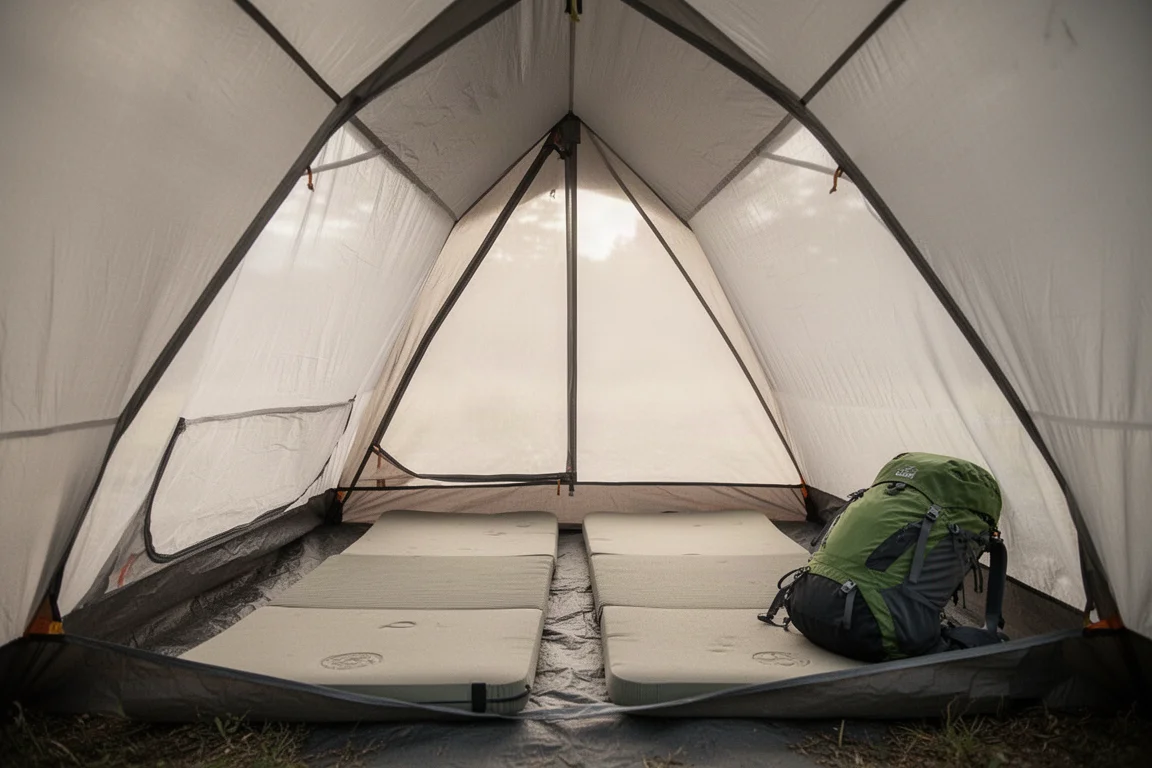
Finally, think honestly about how you will use the two-person version. Two people can sleep in it comfortably enough, and both can sit up at the same time, though heads will come close to the mesh at the top. If you plan to spend long evenings inside the tent as a pair, it will feel tight. As a solo tent that occasionally hosts a second person, it is close to ideal.
Buying Advice: Which Hornet Makes Sense
If you already own an original Hornet or Hornet Elite, there is no pressing reason to upgrade. The earlier tents remain excellent freestanding options, and the improvements in the current versions are refinements rather than a redesign.
For a new purchase, the decision comes down to weight versus price. The Elite cuts four to five ounces and is the better choice if you are counting grams on long trips and the higher cost is acceptable. The standard Hornet keeps the same shape, the same Osmo fabric, and the same small footprint while costing less, which makes it the more sensible pick for most backpackers.
Either way, the case for this design is the same: a freestanding structure that pitches quickly, a footprint small enough to fit almost anywhere, and enough interior room for one person to live comfortably with gear spread out.
Conclusion
The Nemo Hornet and Nemo Hornet Elite are two versions of the same well-sorted idea, and both are easy to recommend for solo backpackers who want a freestanding tent that goes up fast and fits into tight campsites. Choose the standard Hornet for the best balance of cost and capability, or step up to the Elite if saving four to five ounces is worth the premium to you.
Further reading
Related Reviews
Backpacking Tents
3F UL Lanchan Pro 1 Review: A 1 lb 8 oz Single-Wall Trekking Pole Tent
A practical look at the 3F UL Lanchan Pro 1, a single-wall trekking pole shelter with a 1 lb 8 oz weight, 20D silnylon fabrics, and a roomy 90 x 31 x 49 inch interior.
Backpacking Tents
3F UL Taiji 2-Person Tent: A Convertible Backpacking Shelter Worth a Closer Look
A practical look at the 3F UL Taiji two-person tent, covering its materials, true two-person interior, fly-first pitching, and the seasonal inner swap that lets one shelter cover more of the year.
Backpacking Tents
3FUL Lanshan Twoerson Pro Review: A Light Trekking Pole Shelter That Struggled in Rain
A two-person trekking pole shelter with a 2026 redesign, pitched with sticks and put through a night of steady rain. Here is what worked, what did not, and what to check before buying.