Backpacking Tents
Nemo Dagger Osmo Two-Person Tent Review: Livable Space in a Freestanding Shelter
A detailed look at the 2025 Nemo Dagger Osmo Two-Person Tent, covering freestanding setup, Osmo fabrics, oversized vestibules, ventilation limits, weight, and price.
Introduction
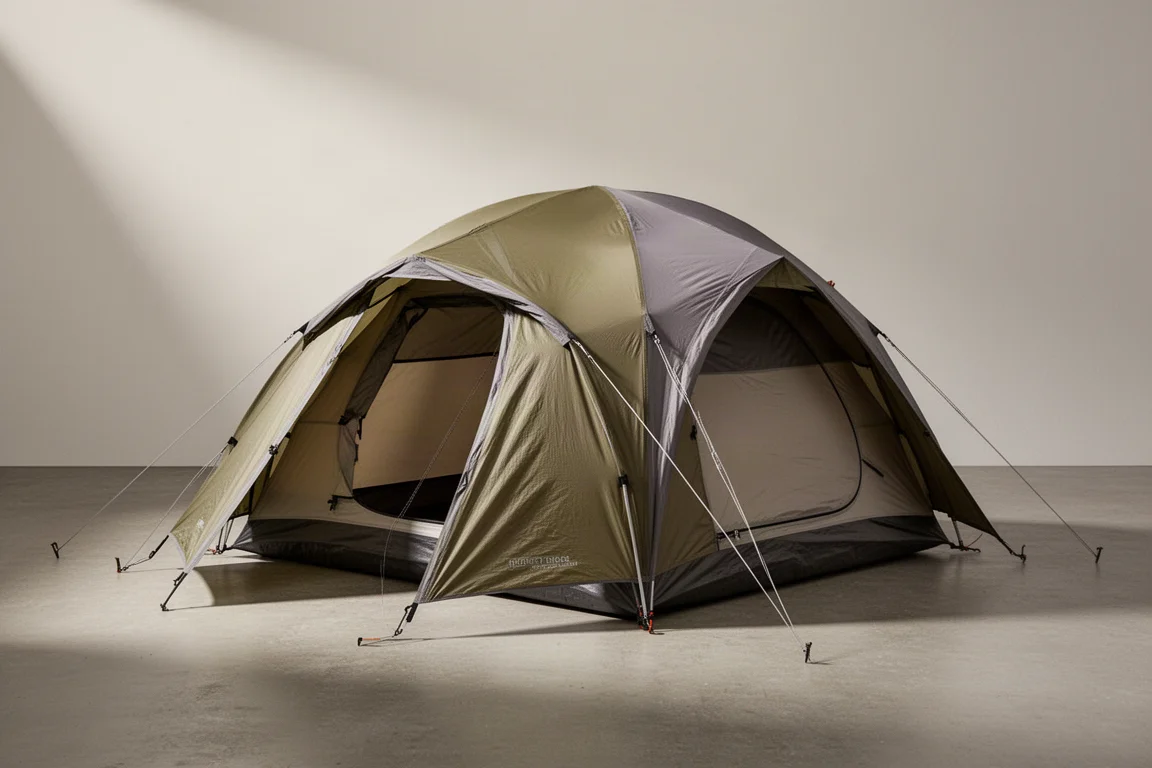
The Nemo Dagger Osmo Two-Person Tent is a fully freestanding, double-wall backpacking shelter built for campers who would rather carry a little more weight than give up living space. The 2025 update brings more peak height, a larger interior, and redesigned vestibules compared with the previous generation, and it keeps the Osmo fabric construction that has defined this line in recent years.
At just shy of 4 lb and $549 USD, it sits in the lightweight-but-livable category rather than the ultralight one. The sections below cover how it goes together, how much room two people actually get, where it performs well, and which trade-offs are worth accepting before you buy.
Who This Tent Is For
The Dagger Osmo is aimed at backpackers who are not chasing the lowest possible pack weight. It suits couples or friends heading out for a weekend, hiking into a spot, and staying put for multiple nights rather than moving camp every day. Base camping is the natural fit.
Because the tent weighs just under 4 lb, that load can be split between two people at roughly 2 lb each, which keeps longer days and bigger mileages realistic without giving up interior comfort. It is also a three-season shelter. The generous mesh panels and the pole structure are not intended for snow loading, so winter trips are better served by a different design. A three-person version exists for anyone who needs more room, though the two-person size is likely to be the more common choice.
Setup and Construction
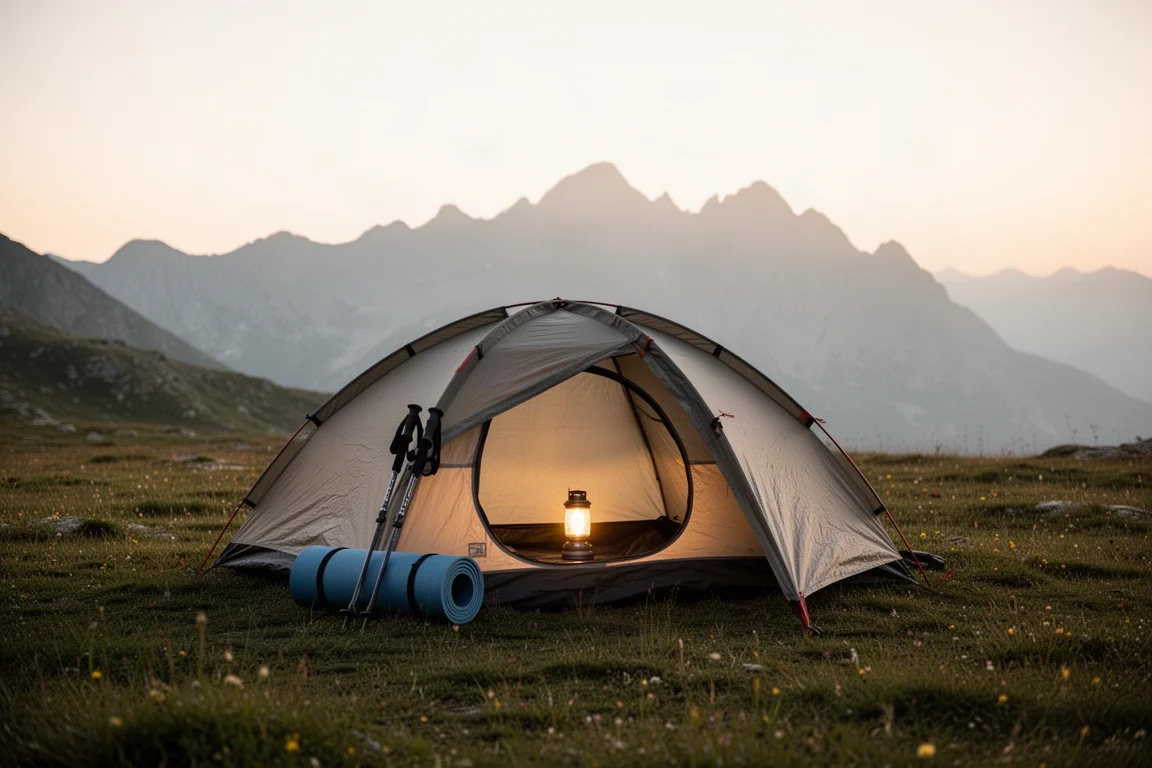
The four corners can be loosely staked first, and each corner has its own tension adjustment. That matters on uneven ground, where fine-tuning the pitch is the difference between a taut shelter and a flapping one.
The pole set arrives as a single piece with pre-bent sections and a custom hub, and the pole ends snap into ball sockets at the corners of the tent. There are no loose pole segments to keep track of. Once the structure is up, the inner body clips to the poles, and because the tent is fully freestanding it can be pitched without driving a single stake. A brow pole can be repositioned so it crosses over the top of the body, which adds tension across the inner tent.
Living Space and Interior Design
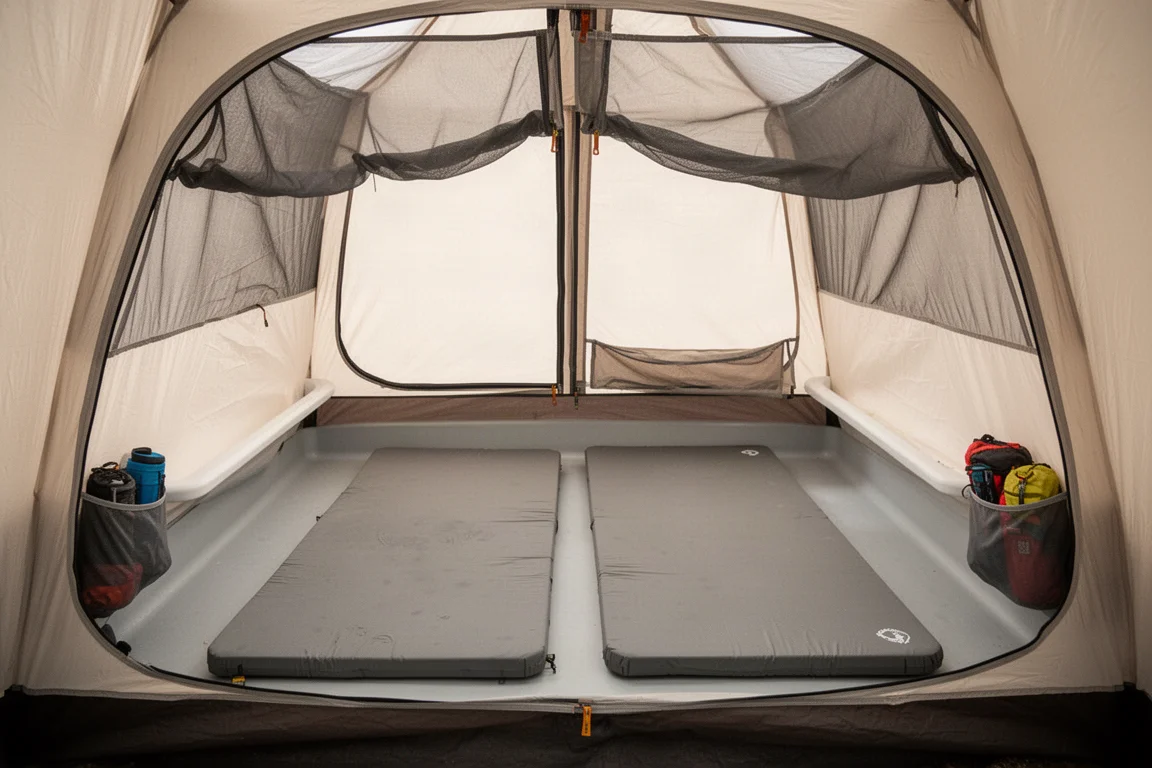
The floor measures 88 in long by 50 in wide, with 43 in of peak height. The floor plan is fully rectangular and symmetrical, so either occupant can sleep at either end, and the nearly vertical end walls preserve usable space instead of tapering it away.
Two wide pads fit, but it is a snug arrangement. One 25 in pad alongside a 26 in pad fills the 50 in width almost completely. Length is where the tent feels most generous. The design is double wall, which helps limit condensation and keeps gear from getting damp from the inside. The mesh is intentionally split into two tones, with darker mesh overhead for a clear view of the night sky and lighter mesh lower down for privacy while changing. Solid fabric also rises fairly high around the bathtub floor, which keeps blown sand and dirt out of the sleeping area.
Storage, Doors, and Vestibules
There are two doors and two vestibules. Each door rolls up to the top of the opening rather than off to one side, which keeps entry and exit simple.
The vestibules are unusually large. Each is shaped in three dimensions rather than hanging as a single flat panel, using two stake points plus a support bar that raises the height of the vestibule at that point. The added volume costs very little in weight and makes room for a bulky pack without consuming the entire space. One vestibule includes a landing zone, a bathtub-style floor that fills the vestibule footprint and provides a waterproof barrier for gear you would rather not leave on wet ground. Only one is included, and it can be unclipped and rolled back with a toggle and loop when you want the vestibule fully open.
Inside, there are storage pockets at both ends, a large pocket on each side positioned well above the floor, and a yellow nightlight pocket that softens the glare of a headlamp into a warm amber glow. Loops at the ceiling give you a place to hang a lantern or a length of cordage.
Ventilation and Weather Protection
The rainfly uses Osmo fabric with a 1,500 mm hydrostatic head, and the Osmo floor is rated at 2,000 mm. The fly attaches with clips around the brow pole and a key lock system at the corners: the fitting slides in, twists, and locks into a notch to hold the fly in place.
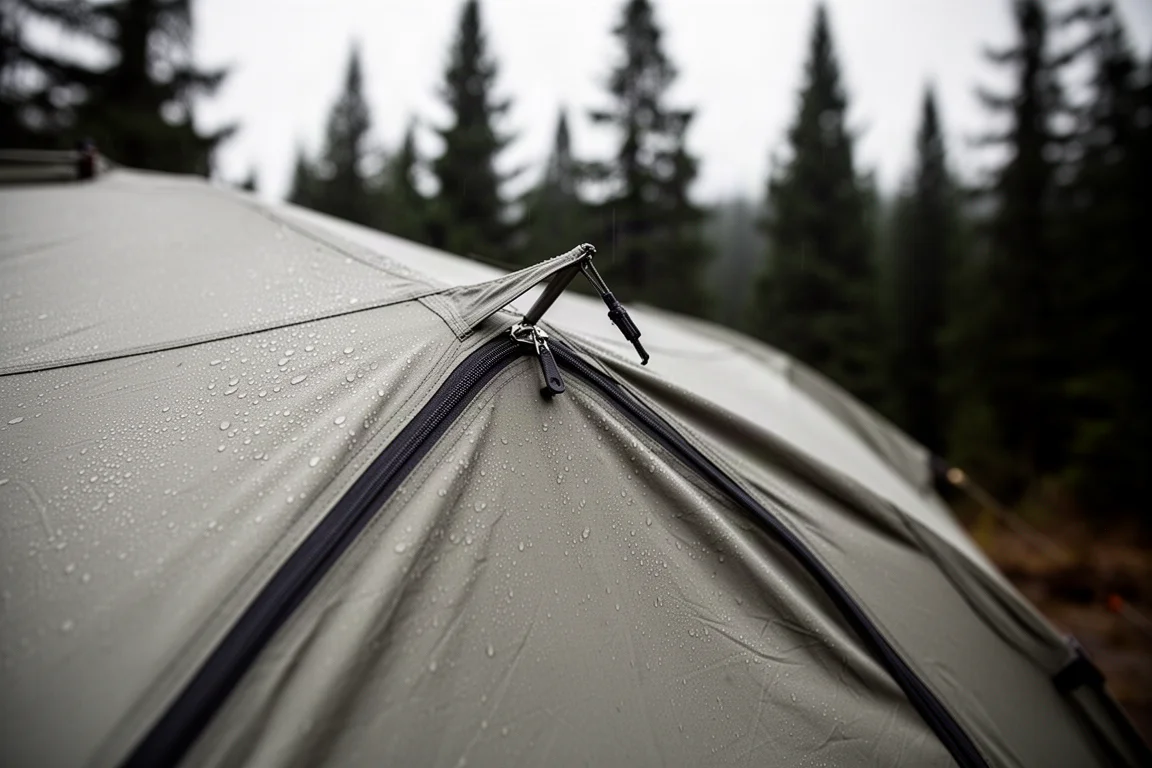
As a double-wall shelter, the tent manages condensation better than a single-wall design, and the airflow through the mesh body is generous in mild conditions. The end walls, however, have no vents. Ventilation at the doors comes from a small post at the top of each zipper that props the panel open and creates an opening. Two people inside will produce a lot of moisture, so a careful, well-tensioned pitch matters, particularly at the head and foot ends where the fly needs to be pulled away from the floor.
Things to Consider Before Buying
The tent is not a fly-first pitch, which means the inner body goes up before the rainfly. In sustained rain, that sequence leaves the interior exposed while you finish the setup. Campers who regularly pitch in wet weather should weigh that against the rest of the package.
Eight stakes ship with the tent. That is fewer than ideal, since the two vestibule stake points plus the head and foot ends leave you short, so plan on a few extra stakes and a couple of guy lines for windy pitches. The door vent also involves a trade-off. Lowering the panel to increase airflow reduces the height of the door opening, so you end up ducking more on the way in and out.
Finally, the 50 in floor width is the practical minimum for two adults on wide pads. It works, and the length and vestibule space keep the tent comfortable, but anyone who wants obvious side-to-side clearance should look at the three-person version.
Weight, Price, and Long-Term Value
Packed weight is just shy of 4 lb. For a two-person shelter with this much interior volume and this much vestibule space, that is a fair number, and splitting it between two people brings it down to about 2 lb each. Adding the recommended extra stakes pushes the total slightly over 4 lb.
The price is $549 USD, which is a serious amount for a tent when generic options cost a fraction of that. What the higher price buys is premium fabric, premium hardware, and a company that supports repair over replacement. A six-person Nemo tent used heavily for about three years, including plenty of hard use from kids on the zippers, eventually failed at the zipper. Nemo asked for it back, inspected it, confirmed it fell under warranty, and arranged the repair rather than requiring a new purchase. That kind of support changes the long-term math on a tent at this price.
Buying Advice
Buy the Dagger Osmo Two-Person Tent if livability is the priority: two real doors, two genuinely large vestibules, a rectangular floor with vertical walls, and enough length for two adults to sleep without feeling packed in. It is a strong choice for three-season base camping, for couples, and for anyone who wants a shelter that stays comfortable during a long afternoon waiting out weather.
Plan on adding two to four stakes for the vestibules and end walls, and consider a couple of guy lines for exposed campsites. If you need true ultralight numbers, or if you regularly camp in snow, this is not the shelter to choose. If you want maximum comfort per pound and a design that is easy to live with, it is a well-considered option.

Conclusion
The Nemo Dagger Osmo Two-Person Tent earns its place by being exceptionally thoughtful about the details that shape a night out: adjustable corner tension, a one-piece pole set, a simple key lock fly attachment, oversized vestibules, and a nightlight pocket that turns a headlamp into something pleasant. Its limits are equally clear. It is a three-season shelter with no end-wall vents, it does not pitch fly-first, and it ships a couple of stakes short of ideal.
For backpackers who value space and comfort over the lowest possible weight, and who are willing to pay for durable materials and long-term support, the Dagger Osmo makes a convincing case at $549 USD.
Product link
View more details for Nemo Dagger Osmo Two-Person Tent
This product is mentioned in the review. Check the specifications, options, and compatibility before buying.
View more details for Nemo Dagger Osmo Two-Person TentFurther reading
Related Reviews
Backpacking Tents
3F UL Lanchan Pro 1 Review: A 1 lb 8 oz Single-Wall Trekking Pole Tent
A practical look at the 3F UL Lanchan Pro 1, a single-wall trekking pole shelter with a 1 lb 8 oz weight, 20D silnylon fabrics, and a roomy 90 x 31 x 49 inch interior.
Backpacking Tents
3F UL Taiji 2-Person Tent: A Convertible Backpacking Shelter Worth a Closer Look
A practical look at the 3F UL Taiji two-person tent, covering its materials, true two-person interior, fly-first pitching, and the seasonal inner swap that lets one shelter cover more of the year.
Backpacking Tents
3FUL Lanshan Twoerson Pro Review: A Light Trekking Pole Shelter That Struggled in Rain
A two-person trekking pole shelter with a 2026 redesign, pitched with sticks and put through a night of steady rain. Here is what worked, what did not, and what to check before buying.