Aquarium Accessories
Neat Aquatics Feeding Portal Review: A Cleaner Way to Feed Through a Net Top
A 3D-printed feeding hatch that lets you feed and dose through a mesh net top without lifting it, plus what to check before you cut the netting.
Introduction
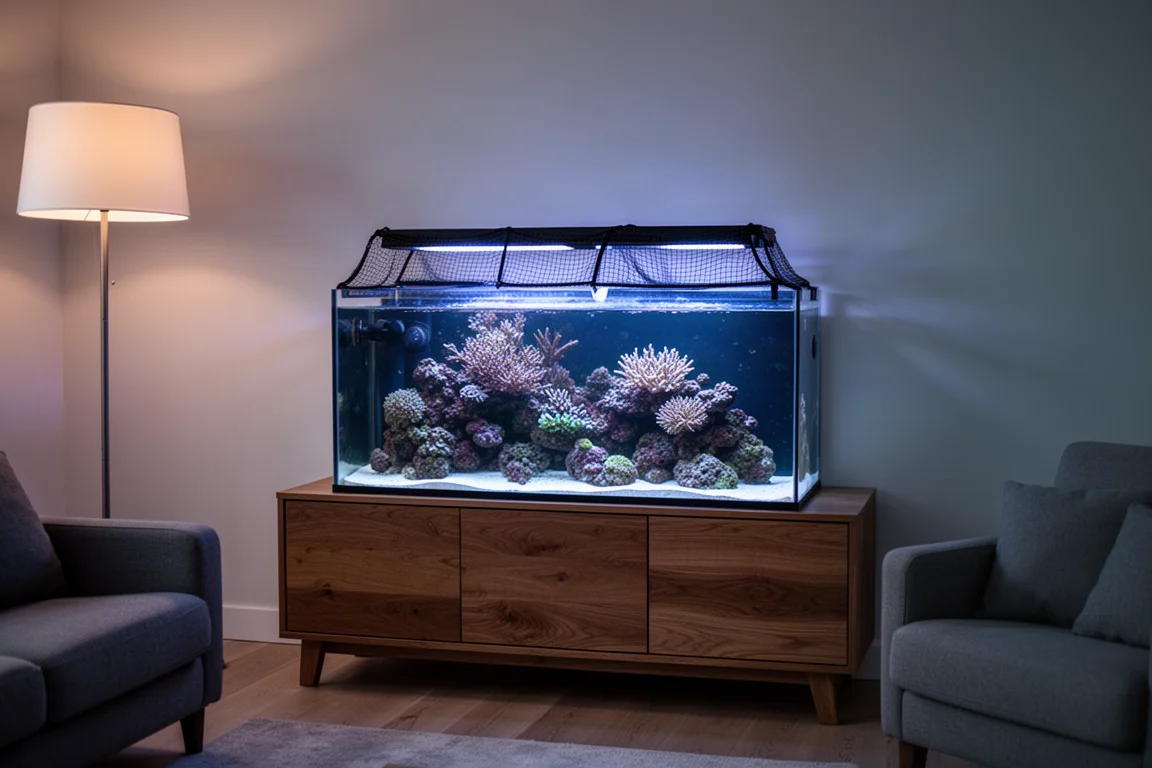
Net tops earn their place on a reef tank. They keep fish from jumping out, and a well-made one barely registers visually. The friction is daily access. Most aquarists need to get into the tank at least once a day to feed, and often a second time to dose two-part or other additives. Sprinkling food through the mesh works for a while, but flake and frozen food eventually cake onto the netting and stop looking clean. So the top comes off again.
Removing a top is no problem for a water change or a monthly maintenance session. It is the everyday removal that causes trouble. It is easy to forget to put the top back, or to be in a hurry and leave one corner sitting slightly high. When that happens, a jumper can find the gap.
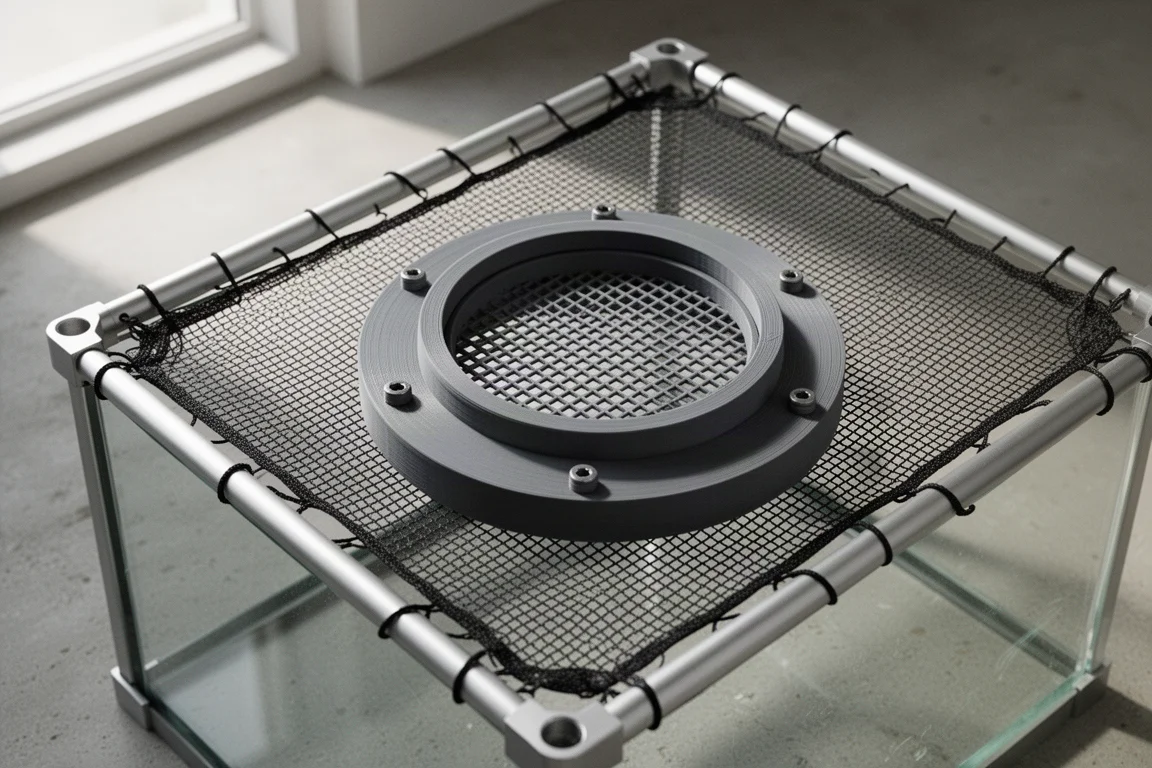
The Neat Aquatics Feeding Portal is a small 3D-printed hatch that addresses both halves of that problem. It is printed from 100% reef-safe material, installs on just about any net top, and gives you a comfortable three inch diameter opening to feed through. The lid uses a three eighths inch grid, which lets light pass through while keeping fish safely inside.
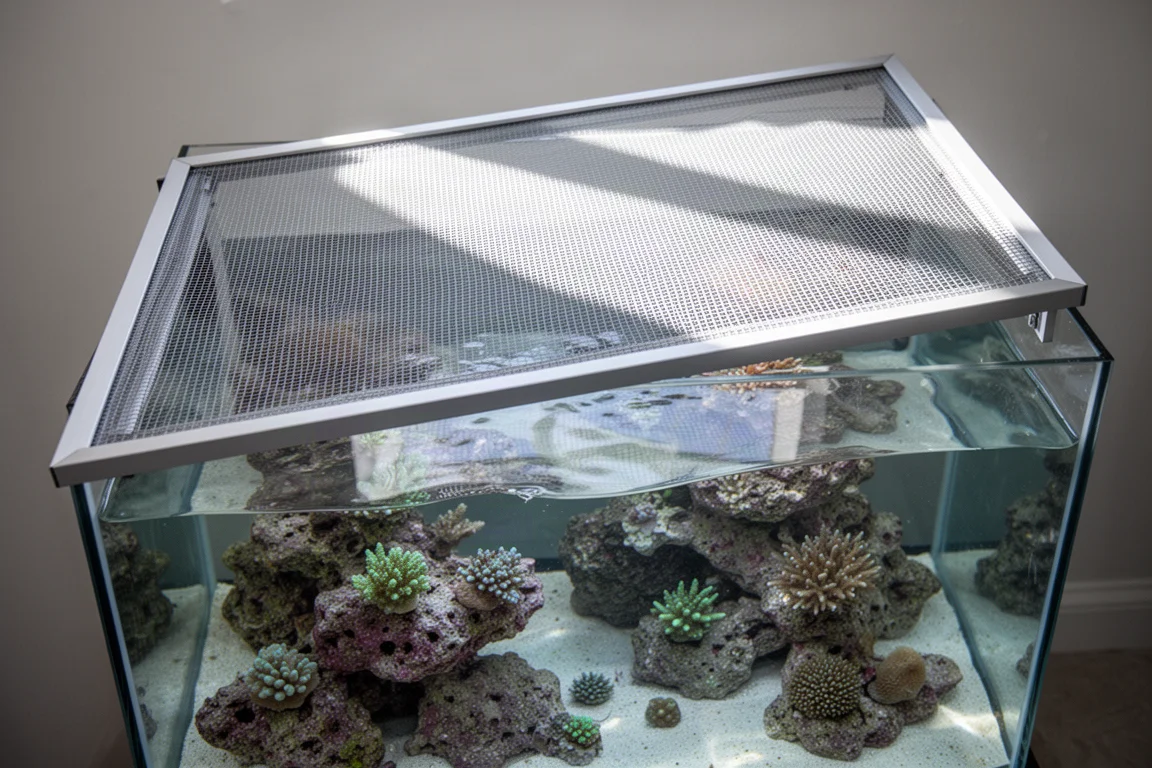
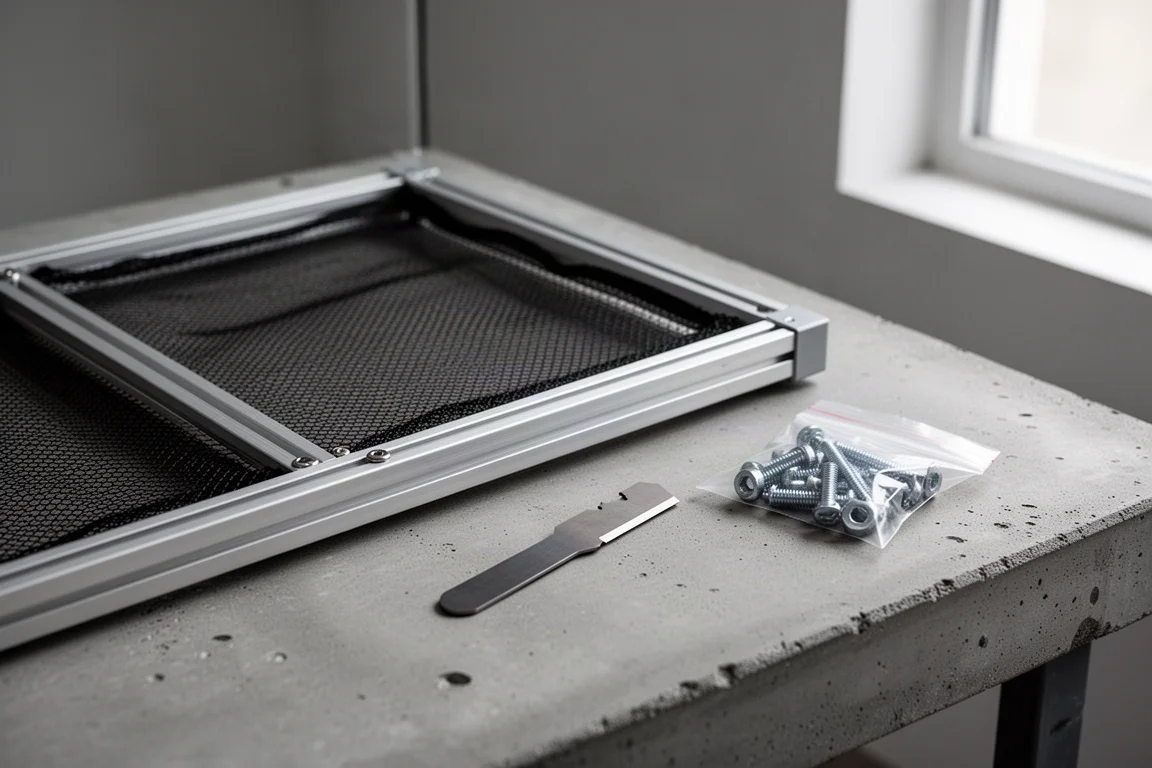
Installation takes a few minutes and needs no special tools beyond a sharp blade. Once the portal is in place, feeding and dosing happen through the hatch, the net top stays seated, and the mesh stops collecting food.
Who this product is for
This portal suits anyone running a mesh net top on a reef tank, particularly if feeding or dosing happens daily. The more often you open the tank, the more value a dedicated hatch delivers, because the top simply stays where it belongs.
If you run more than one tank with a net top, the case gets stronger. The portal is designed to be reused, so it can be lifted off one top and moved to a replacement later without buying a second unit.
It is less relevant if your aquarium is open-topped with no netting at all, or if your top already has a purpose-built feeding hatch. If you only open the tank once a week for maintenance, the daily friction removed here is smaller, though never having to disturb a seated top still has some appeal.
Main strengths
The materials and the design are the headline. The portal is 3D-printed from 100% reef-safe material, and it arrives as three components: a two-piece collar and a lid. A bag of eight small reef-safe nuts and bolts holds the assembly together, and the kit includes instructions.
The three inch opening is generous enough to feed flake, frozen or pellets through without aiming, and comfortable for dosing additives. The lid’s three eighths inch grid is the practical part of the safety story: light still reaches the tank, and fish stay put.
The small details are handled well too. An orange retaining band with a small scissors icon keeps the portal together in the packaging, so it is obvious at a glance how to release it. There is no tape holding the product together and no glue residue to clean off.
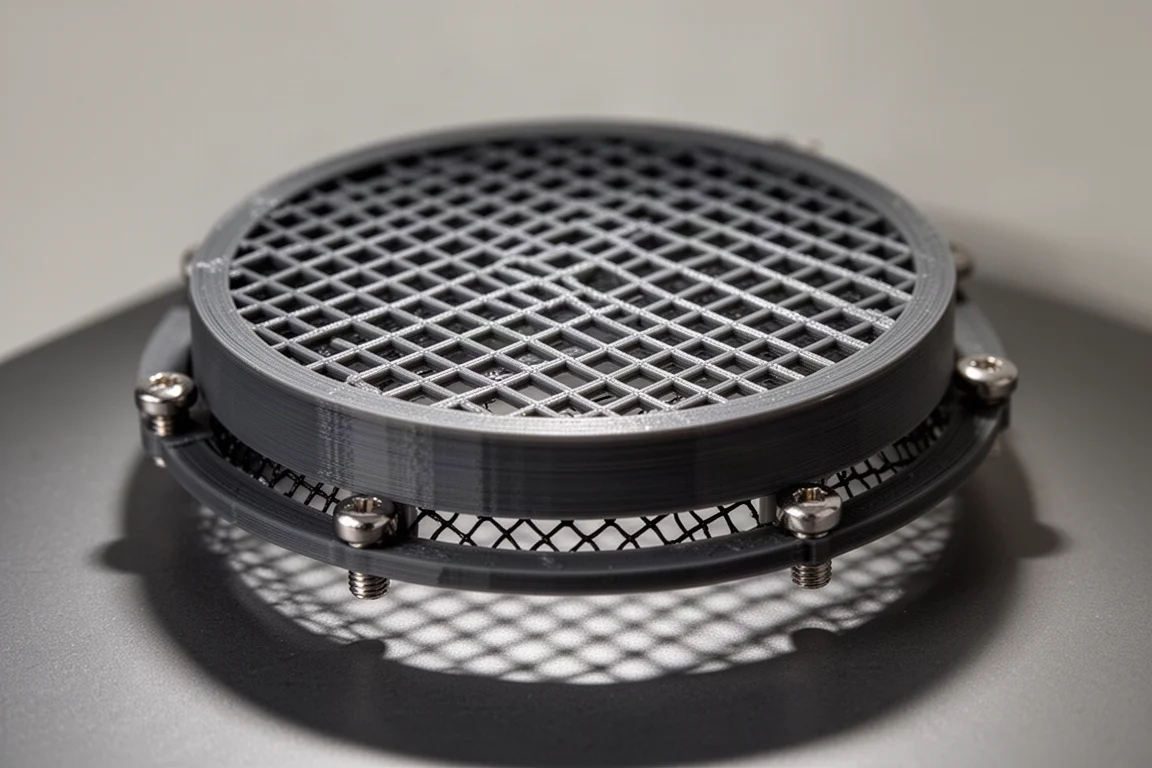
Fitting is deliberately forgiving. The collar is designed to sit on just about any net top, and the eight-bolt layout lets you tighten gradually rather than clamping down in one pass, which keeps the grip even around the ring.
How installation works
Start by pressing all eight nuts into the back of the bottom portion of the collar. Each nut has a small raised circle, and that side should face outward. Hold the bottom half of the collar under the netting where you want the portal, place the top half above it, and line up the holes.
Thread the screws in by hand until they just begin to pinch the netting. Then work in a crisscross pattern, tightening a little at a time until all eight are finger tight and the collar is firmly gripping the mesh.
There is a simple way to confirm the grip. Press the netting gently in the center of the portal and watch the netting just outside the ring. If that outer netting gets pulled inward, the collar needs a bit more tightening. Once it holds firm, cut the netting out from the center with a sharp blade such as a flat razor, then place the cap on.
Placement matters more than people expect. You can install the portal anywhere on the top, but if the netting is not perfectly taut and has some waves to it, one of the corners is usually the best choice.
Things to consider before buying
This is a modification, not an accessory that clips on and off. You will cut the netting out of the center of the collar, so that particular top will have a permanent hatch in it once the job is done. The portal itself is reusable, but the opening is not reversible.
A sharp blade and a careful hand are required for that final step. The cut is small and contained inside the collar, but it is still worth treating as a deliberate task rather than something to rush at the end of a maintenance session.
Fit depends on the tension in your netting. Taut mesh grips evenly anywhere on the top. Mesh with waves is better served by a corner placement, which is why it is worth checking how your top sits before you choose a spot.
Finally, the grid pattern in the lid is doing real work. Keeping the cap on between feeding sessions is what preserves the safety benefit, so the portal is best treated as a hatch that stays closed, not a permanently open hole in your cover.
Reusability and long-term value
One of the more practical aspects of the design is that it comes off as easily as it goes on. If you decide to replace a net top, whether because you were not satisfied with the first build or because the tank setup has changed, you can unscrew the collar from the old top and mount it on the new one.
That means one purchase covers a top replacement rather than a new portal every time. For aquarists who have already rebuilt a DIY net top more than once, that detail alone is likely to be the deciding factor.
Neat Aquatics has built a reputation for finding the annoyances reefers simply accept and solving them in a simple, affordable way, and this portal fits that pattern closely. It does not try to do anything clever. It removes a repeated, slightly risky action from the daily routine.
Buying advice
Check two things before ordering. First, confirm your top is a mesh net top with netting you are willing to cut. Second, look at how taut that netting is, since that determines whether the center of the top or a corner is the better position.
Beyond that, the decision is mostly about frequency. If you feed once a day and dose on top of that, the portal pays for itself in convenience quickly, and it removes the small but real risk of leaving a corner of the top lifted. If you have a second tank with a net top, it is worth mapping out which top you feed through most before deciding how many to install.
Installation itself is quick enough that it can be done during a normal maintenance session. Press the nuts in, align the two halves, tighten in a crisscross pattern until finger tight, test the grip, cut the center, and cap it.
For a hobby where most equipment upgrades are expensive, this is a small, affordable change that quietly improves a daily routine and protects the fish you already have.
Conclusion
The Neat Aquatics Feeding Portal is a rare kind of aquarium accessory: minimal, inexpensive and aimed at a problem most reefers have simply learned to live with. Feeding and dosing through a hatch instead of lifting a net top keeps the mesh clean, keeps the top seated, and removes the moment where a missing corner lets a fish out.
It is worth buying if you run a net top and open the tank every day. The materials are reef-safe, the fit is adaptable, the hardware is included, and the whole thing can move to a new top when you need it to. The only real commitment is that first careful cut.
Product link
View more details for Neat Aquatics Feeding Portal
This product is mentioned in the review. Check the specifications, options, and compatibility before buying.
View more details for Neat Aquatics Feeding PortalFurther reading
Related Reviews

Aquarium Accessories
Reef Rax Clam and Anemone Cradle Review: A Stable Pedestal for Clams and Anemones
A purpose-built resin cradle that gives tridacnid clams and anemones a solid surface to attach to, plus sizing limits and placement notes worth checking first.
Aquarium Test Equipment
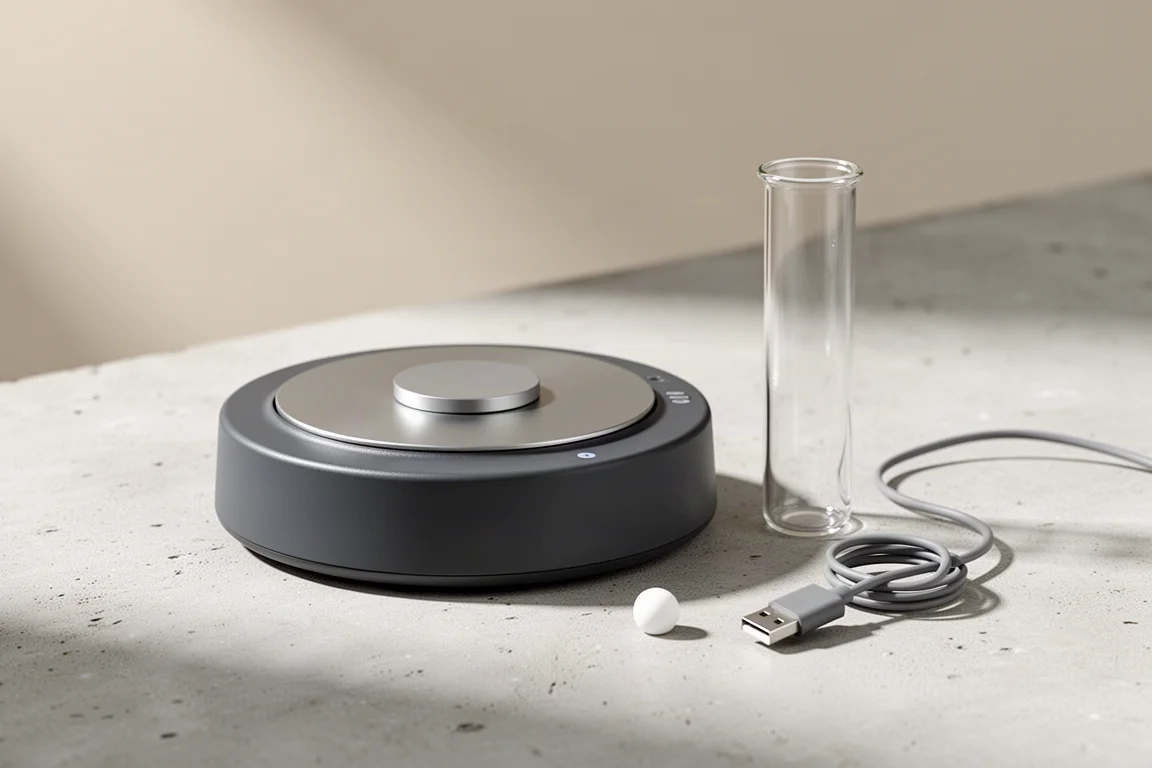
Auto Aqua Smart Stir Review: More Consistent Aquarium Test Results
A compact rechargeable magnetic stirrer that keeps aquarium titration tests mixing hands-free for clearer end point colors and steadier results.
Aquarium Equipment
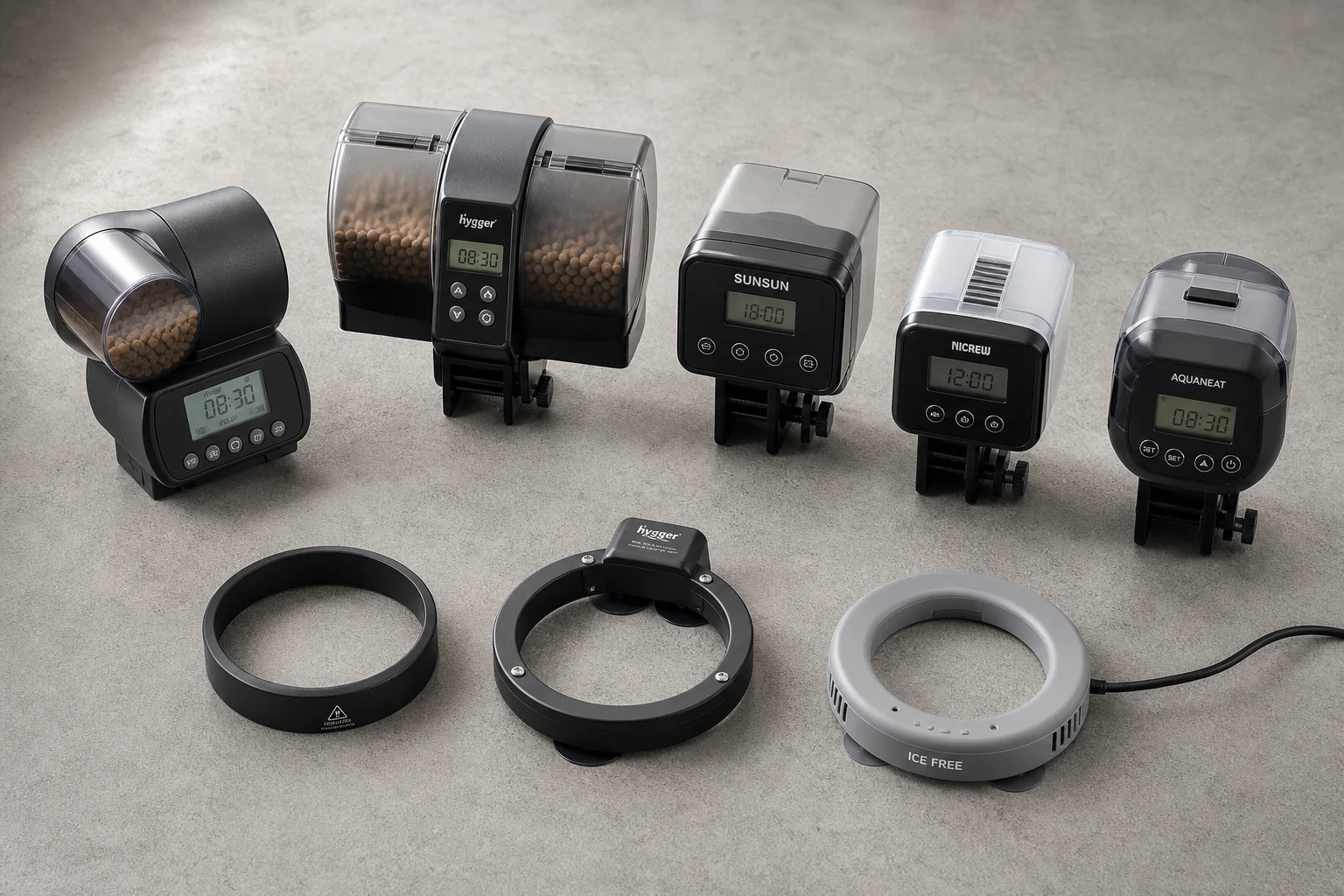
Best Automatic Fish Feeders and Feeding Rings: A Practical Comparison of Eight Options
Eight automatic fish feeders and feeding rings tested across capacity, ease of use, reliability, and price. Find the right feeder for your aquarium setup.