Backpacks
Naturehike Rock 2.0 60L Backpack Review: Ultralight Volume With a Real Frame
A 2.8 lb, 60-litre ultralight backpack with a genuine frame sheet and pre-shaped aluminium stay, carried for 14 miles with a 25 lb load.
Introduction
Naturehike entered the outdoor market as a tent brand, offering unusual designs at unusually low prices. Early products were inconsistent. Some features did not work as intended, and build quality could be disappointing. Since then the company has grown into one of the largest outdoor brands in the world, and its catalogue now reaches well beyond shelters into sleeping pads, backpacks, and gear for backpacking, car camping and truck camping.
The Rock 2.0 60L is the latest generation of the company’s ultralight backpack line. The first version of that pack was a genuinely poor design. The shoulder straps were sewn so close together that a forearm would not fit between them, and the pack was uncomfortable enough that it was hard to recommend to anyone. The Rock 2.0 is a different proposition entirely. After roughly 14 miles of carry time with a load of about 25 lb, including food, water and gear, it has made a strong early impression.
This is a first look based on that initial testing rather than a finished verdict. Longer trips with heavier loads are still to come, but what this pack delivers at its price is already worth talking about.
Who This Backpack Is For
The Rock 2.0 60L is aimed at backpackers who want large volume and low weight without giving up organisation. At 2.8 lb it is genuinely light for a 60-litre pack, and most ultralight makers stop at 40 to 45 litres at a comparable weight. It is also unusual in carrying a proper frame sheet and a pre-shaped aluminium frame stay, which means it can transfer a load rather than simply hanging from the shoulders.
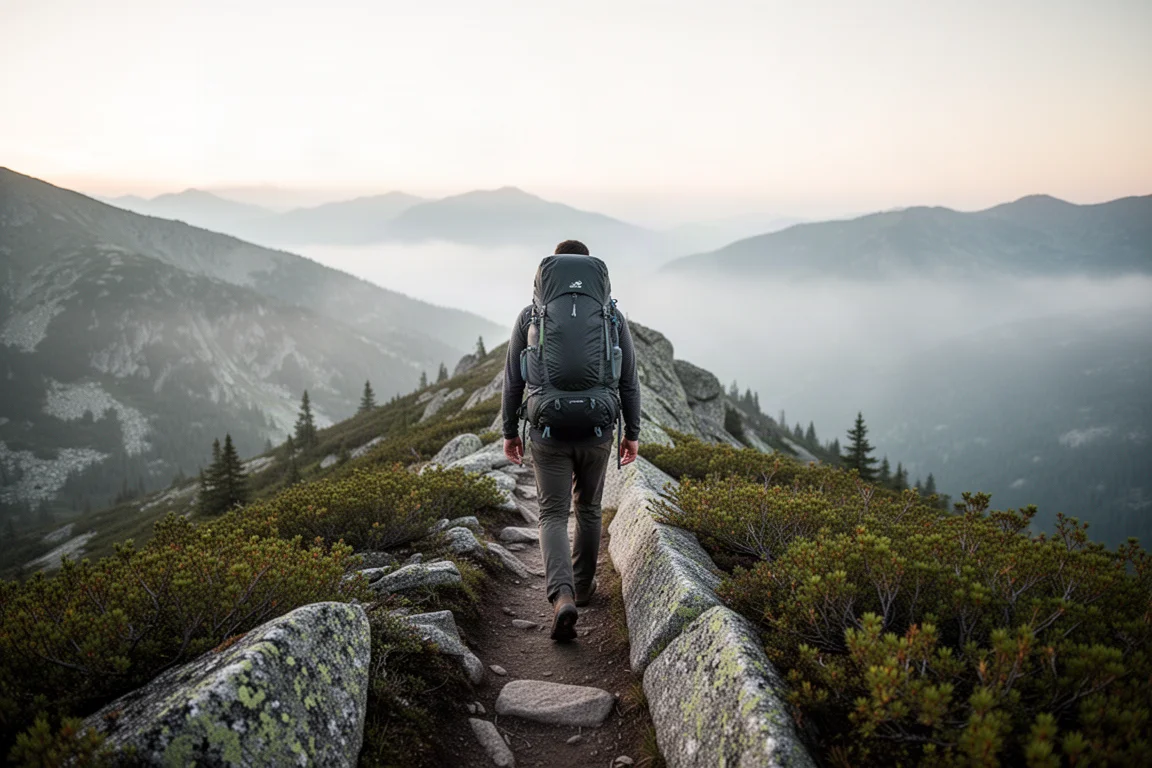
That combination suits hikers who like pockets, multiple access points and plenty of ways to lash gear down. It also suits off-trail travellers who need the load to stay controlled while stepping over rock and fallen timber, where a pack that shifts around quickly becomes tiring.
The line comes in 30, 45 and 60 litre versions, with the 60-litre model covered here. Torso length is offered in medium and large, and the colour options are black and grey or white and grey. Older versions of the same pack can still be found in 65 litres, so it is worth reading the listing carefully before ordering.
Design and Feature Highlights
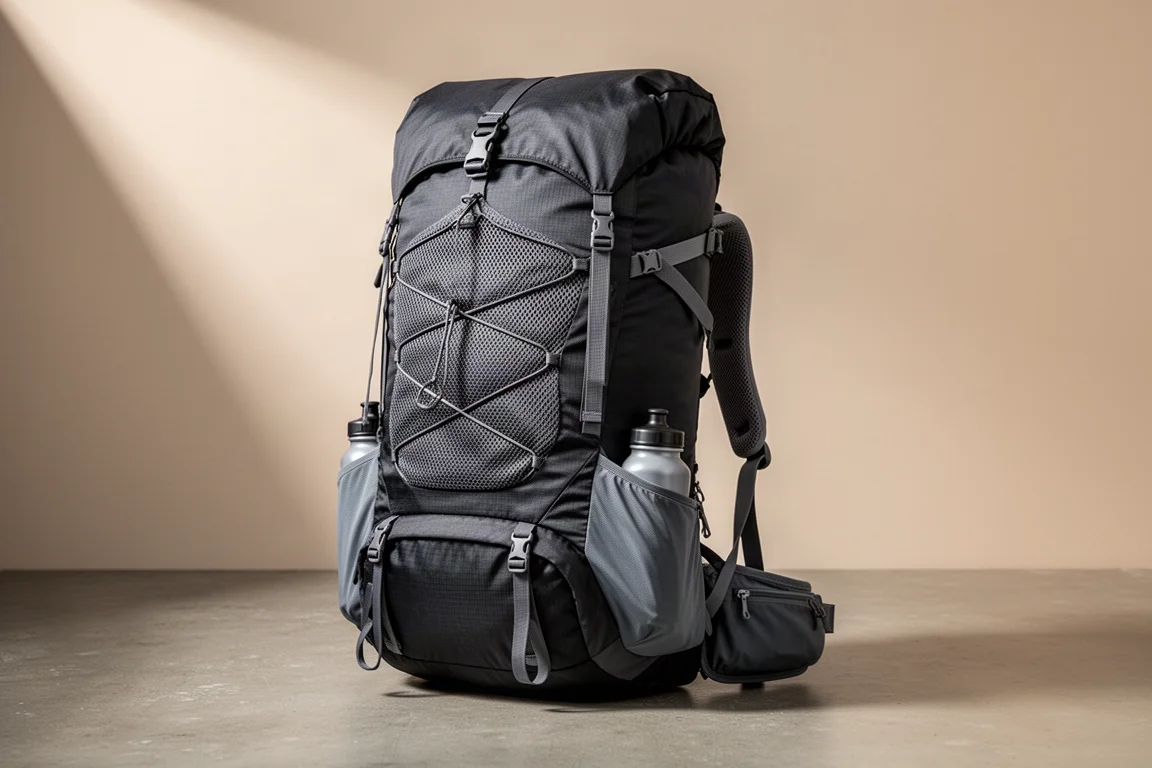
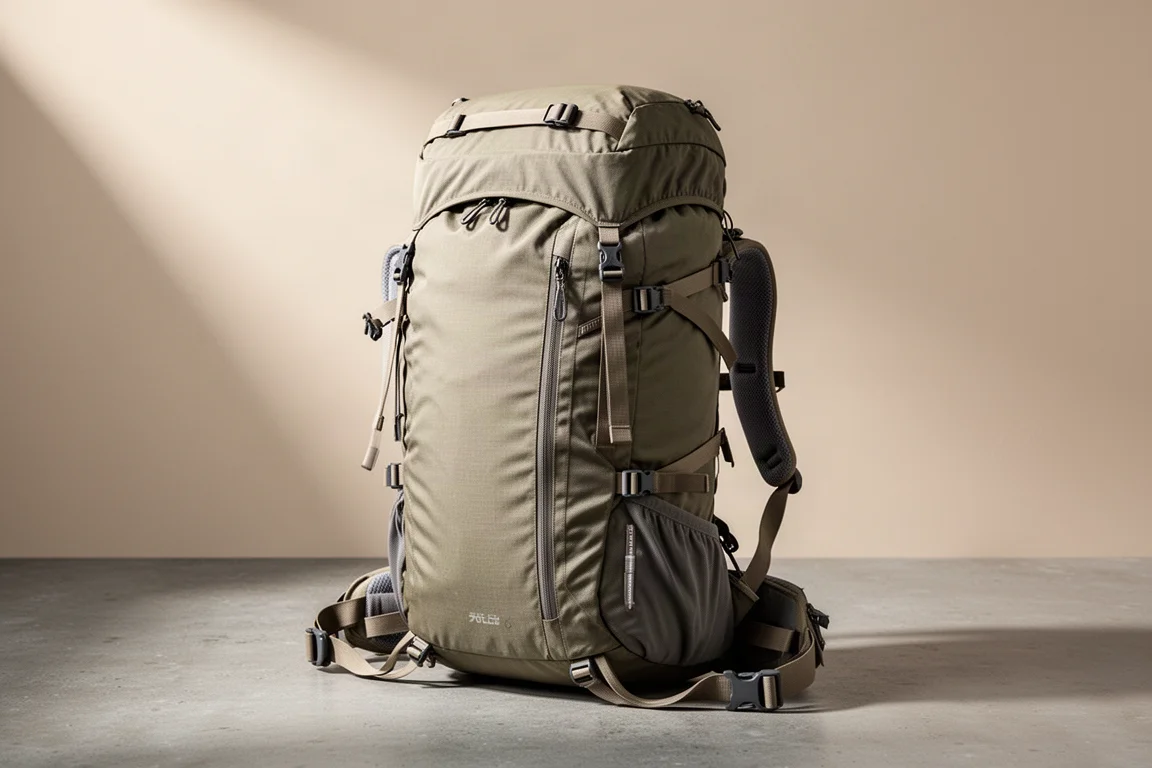
The feature count is the first thing that stands out. Ultralight packs are usually deliberately feature poor, and this one is not. At the top there are two compression straps with buckles that anchor to a front sleeve, which gives you a place to stow gear outside the main body. In front of that sleeve sits a large stretchy mesh pocket, and a compression strap runs across the middle so you can cinch both the pocket contents and the overall loadout.
There are two sets of gear attachment points, elastic loops near the top and fixed loops lower down. On the base of the pack you get two more compression straps, plus a zipped pocket that holds the included pack cover for wet weather.
Moving down the sides, the layout is familiar but generous. The waist belt carries very large pockets, and the side water bottle pockets double as gear sleeves. A stretchy pocket on the flank can be tightened down, and a compression strap adjusts the depth of the pack. The right side adds something less common: a zip that runs down the lower body and opens directly into the main compartment, giving the pack two access points, one from the side and one from the top.
The harness follows the same practical thinking. There is a grab handle, load lifters, padded shoulder straps, attachment loops, and a fully adjustable sternum strap. The waist belt adjusts fully as well, and the back panel adds lumbar support, side support, and recessed mesh over the frame system.
Weight, Materials, and Frame System
The headline numbers are strong. The pack measures 10.2 in wide, 8.3 in deep and 25.6 in tall, and the roll-top lid adds another 16.5 in when fully expanded. That expansion is worth noting: the opening grows large enough to make packing and unpacking bulky items straightforward.
The weight is 2.8 lb, which counts as ultralight for a pack of this volume. The body combines polyester fabric with ultra-high molecular weight polyethylene, and the lining is 100 percent polyester.
Inside, there is an access point to the frame sheet, a hydration sleeve, a hanger strap for a 3-litre bladder, and two hydration ports. The frame itself is the part that separates this pack from most of its rivals at the weight: a frame sheet paired with a pre-shaped aluminium frame pole system.
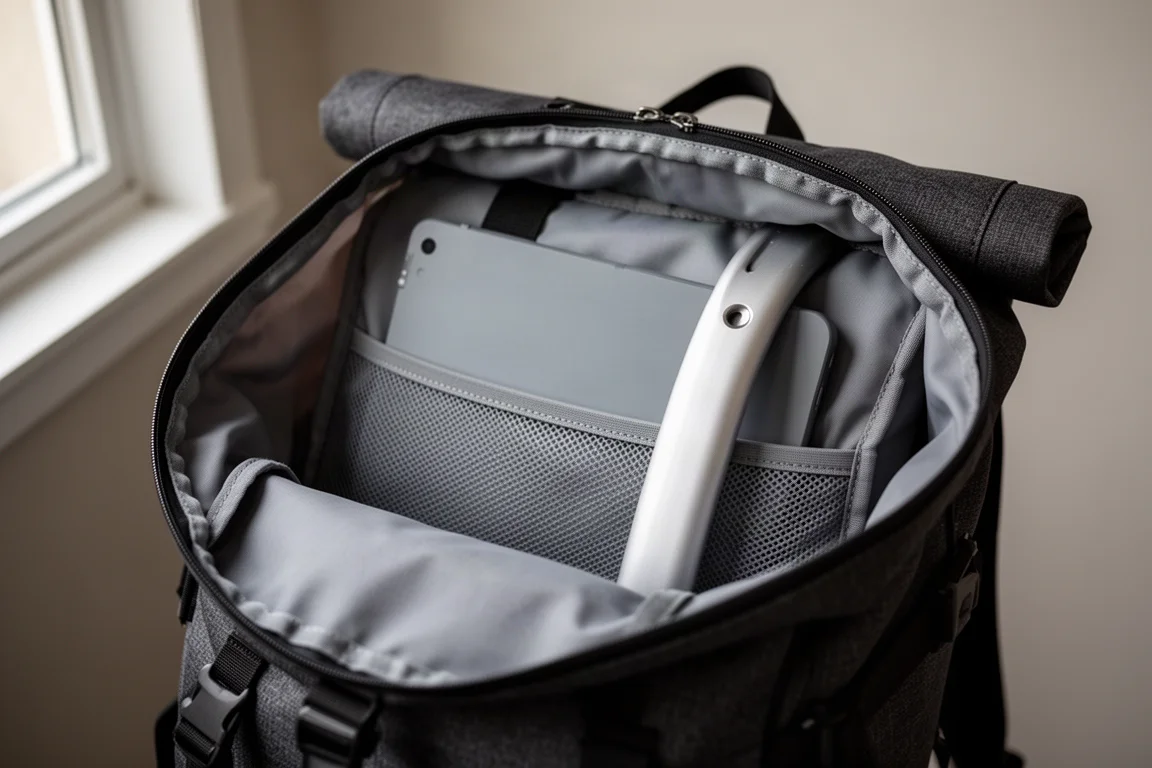
That frame is not a gimmick. It is the reason the pack can hold a load steady instead of folding around the shoulders, and it is a feature that is genuinely rare in the ultralight category. Most lightweight packs expect you to build your own structure from a sleeping pad, which quietly adds weight back into the system.
Main Strengths
Manufacturing quality is very good. The pack looks top-notch, and the only issue spotted during testing was two loose threads that needed trimming. Nothing else stood out as a flaw.
The bigger surprise is how much is packed into a light shell. There are pockets throughout, two ways into the main compartment, and numerous options for lashing gear externally. At the same time you get load lifters, an adjustable sternum strap, a fully adjustable waist belt, usable pockets, and a 3D mesh back panel that provides noticeably better ventilation than a flat panel pressed against your back.
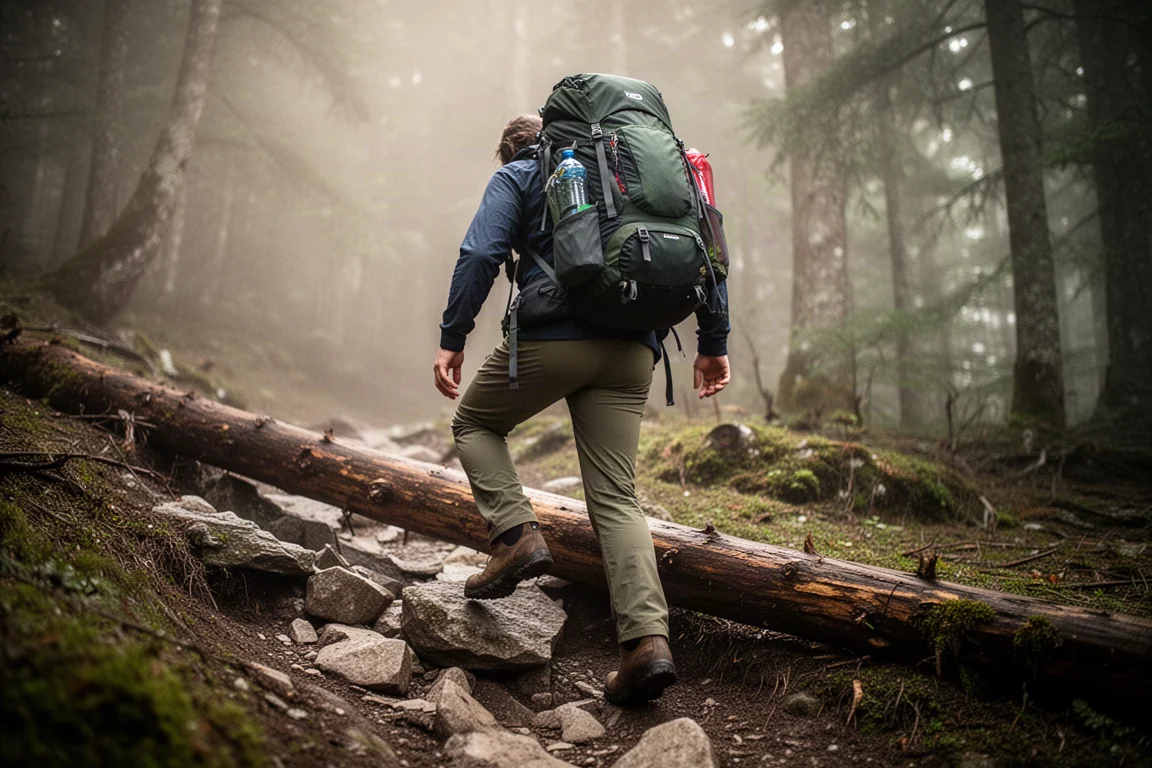
Load control is where the frame system earns its place. With everything cinched down, the body of the pack stays well connected to the frame, and the weight stays settled whether you are on a maintained trail or picking your way off trail. For hikers who cover rough ground, that steadiness matters more than a few grams of savings.
Carry Comfort After 14 Miles
Roughly 14 miles of testing with a 25 lb loadout produced no complaints. The harness is fully adjustable, the waist belt is comfortable, and there were no pressure points worth noting. The ventilation, while not the best available, is better than most ultralight packs, which typically offer nothing more than a simple panel against the back.
The torso system is not adjustable, so fit depends on choosing the right size, medium or large. Load lifters and the sternum strap still allow meaningful tuning of how the pack sits once the size is right. Heavier loads remain the open question. A 25 lb loadout is modest, and the plan is to return to this pack with roughly 30 to 35 lb to see how the shoulder harness and weight transfer hold up.
Things to Consider Before Buying
The side hydration pockets are the clearest weak point. They work well enough while you are walking, but they are not made from mesh, which would have saved weight and allowed the pockets to sit higher and hold gear more securely. As it stands, water bottles can work their way out of those pockets once the pack is lying in a car or truck.
The torso length is fixed, so there is no way to fine-tune it beyond choosing medium or large. The naming across the range is also genuinely confusing, with 30, 45 and 60 litre versions, medium and large torso sizes, two colourways, and older 65-litre models still in circulation. Checking the exact specification before buying is worth the extra minute.
Finally, the testing so far covers a 25 lb load. For a system like this, staying below 40 lb is sensible, and the comfortable sweet spot is likely under 30 lb. Anyone planning to carry substantially more should treat the heavier-load performance as unconfirmed for now.
Buying Advice
Retail price is $150, and the pack was available for around $130 on Amazon at the time of writing. That figure is the crux of the value argument. Comparable ultralight packs from small domestic makers often run $300 to $500, and they do not necessarily include a real frame sheet with a pre-shaped frame wire.
For buyers weighing a first serious ultralight pack, the Rock 2.0 60L offers volume, organisation and load control at a price that leaves room in the budget for the rest of a kit. Riders… sorry.
For buyers weighing a first serious ultralight pack, the Rock 2.0 60L offers volume, organisation and load control at a price that leaves room in the budget for the rest of a kit. It makes the most sense for hikers who want a large pack that stays light and carries properly, and who value pockets and access options over the absolute minimum feature set. If you need a torso length outside the two offered sizes, or you routinely carry loads well above 35 lb, look carefully before committing.
Conclusion
The Rock 2.0 60L represents a genuine turnaround for a backpack line that started badly. It is well made, thoughtfully laid out, comfortable under a moderate load, and unusually well equipped for its weight. The frame sheet and pre-shaped frame stay in particular put it in territory that inexpensive ultralight packs simply did not occupy a few years ago.
It is not a finished story. Heavier-load testing is still pending, and the side pockets and fixed torso length are worth weighing against your own priorities. On everything tested so far, though, this is an impressive pack at a price that makes it hard to ignore.
Product link
View more details for Naturehike Rock 2.0 60L Backpack
This product is mentioned in the review. Check the specifications, options, and compatibility before buying.
View more details for Naturehike Rock 2.0 60L BackpackFurther reading
Related Reviews

Backpacks
Best Backpacks 2026: Laptop Protection, Durability, and Comfort Compared
We tested 12 backpacks from $18 to $350 for laptop protection, durability, back padding, comfort, zipper smoothness, and water resistance.
Backpacks
Best Backpacks Under ₹500 in India: Five Practical Options Compared
Five backpacks tested side by side, from budget-friendly to premium Indian brands. Real strengths, trade-offs, and honest buying advice for daily use.
Backpacks
Decathlon Trek 100 70L Backpack Review: Serious Value for Backpacking
A 70-litre backpacking pack with a torso system you can adjust while wearing it, a rigid frame, and a 10-year warranty for $120.