Camping Tents
Naturehike Mongar 2 Ultralight Review: A Lighter Three-Season Tent With a Full Awning
A lighter, more compact take on a well-known budget backpacking tent, with sil nylon fabrics, a complete awning pitch, and a few trade-offs worth understanding first.
Introduction
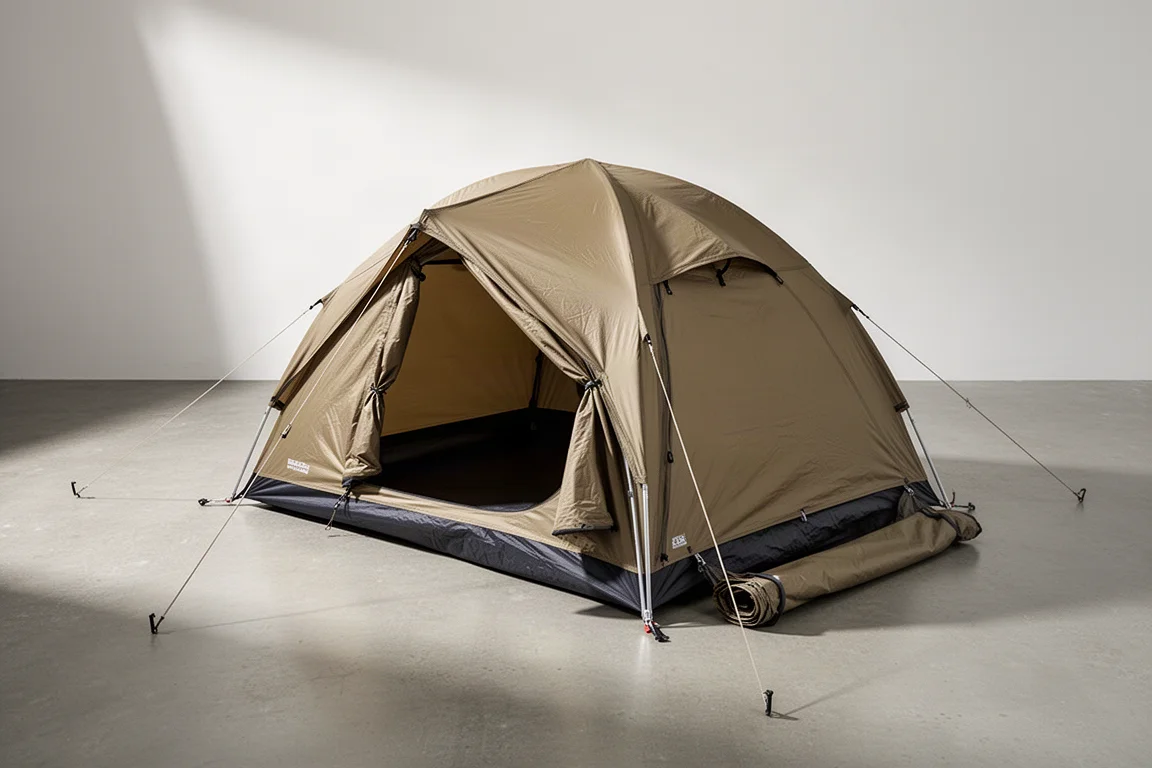
The Naturehike Mongar 2 has spent years as one of the most popular lightweight budget tents available, largely because it uses sil nylon rather than the polyester taffeta found on plenty of shelters that cost considerably more. The new Mongar 2 Ultralight takes that formula further. The two-person version drops from roughly 4.7 lb to 3.3 lb, packs down smaller, and adds a pitch configuration that is genuinely unusual at this price.
This review covers what the Ultralight version changes, where it performs well, and the trade-offs worth understanding before you buy.
Who This Tent Is For
The Mongar 2 Ultralight is a three-season, two-person tent. Naturehike also offers a one-person version in the same ultralight series, a first for this model line. It suits backpackers who want a low packed weight and a small footprint in the pack, and campers who expect cool to mild nights rather than humid summer heat.
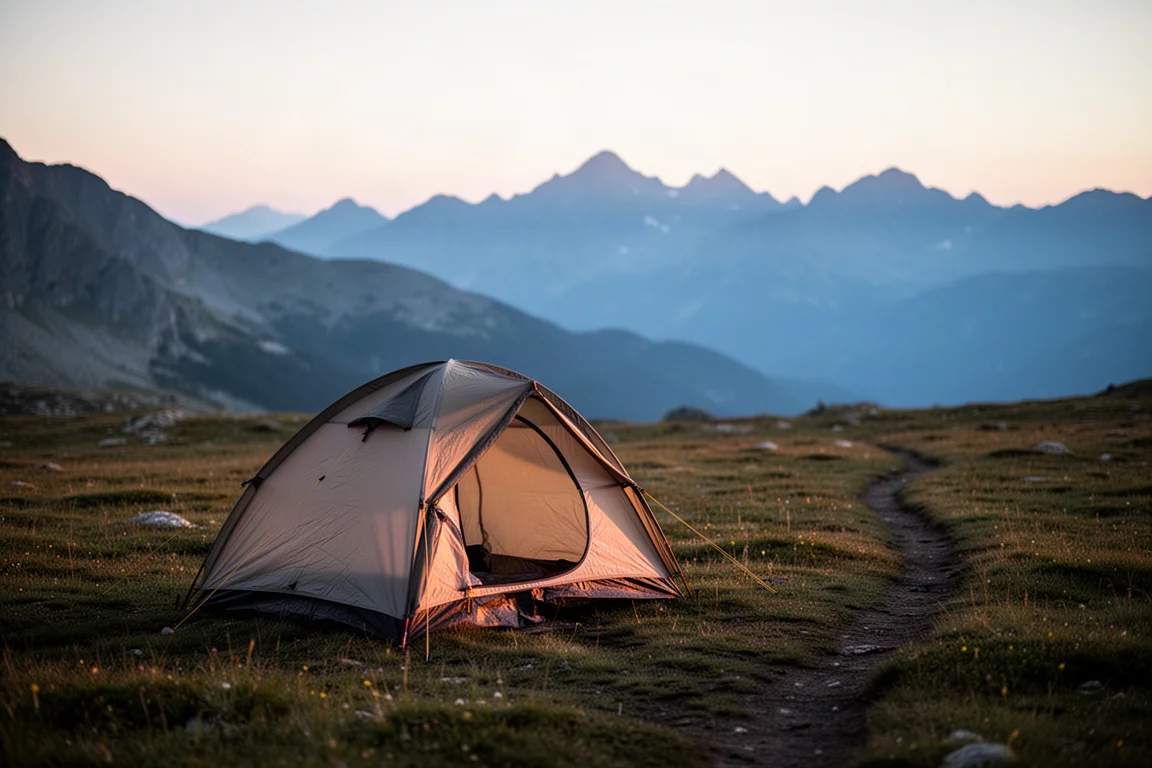
If your trips tend to run warm and humid, the amount of solid fabric around the lower half of this tent works against you, and a shelter with more mesh will be the more comfortable choice. For everyone else, the combination of low weight, compact packed size, and a genuinely useful awning makes it worth a close look.
What Stands Out: Weight and Materials
The headline number is weight. The regular Mongar 2 comes in at around 4.7 lb on a scale with all components, while the Ultralight version lands at 3.3 lb. That is more than a pound saved, and the packed size shrinks along with it. The storage bag measures roughly 16 in by 6 in, and it is deliberately a little oversized so the tent slides in without a fight.
The fabrics are where the weight saving comes from. The fly uses a 15D nylon with a 3000 mm hydrostatic head rating, the floor uses a 20D nylon rated to 1500 mm, and the inner tent is built from a 15D mesh. Poles, stakes, and ropes are aluminium and nylon. Sil nylon is stronger than polyester, lighter, more compressible, and more water-resistant, which is why it appears on most high-end tents. Plenty of established shelters still use polyester taffeta instead. The North Face Stormbreak 2 is one example at around $200, and other brands sell polyester tents for $300 and above. Against that backdrop, the material choice here is a real advantage.
The Full Awning Setup
Most tents with an awning offer only a partial one. The Mongar 2 Ultralight goes further. Inside the door there is a second zipper, and by attaching a trekking pole, a long stick, or something similar and staking it out, the door panel lifts into a complete awning that runs across the front of the shelter.
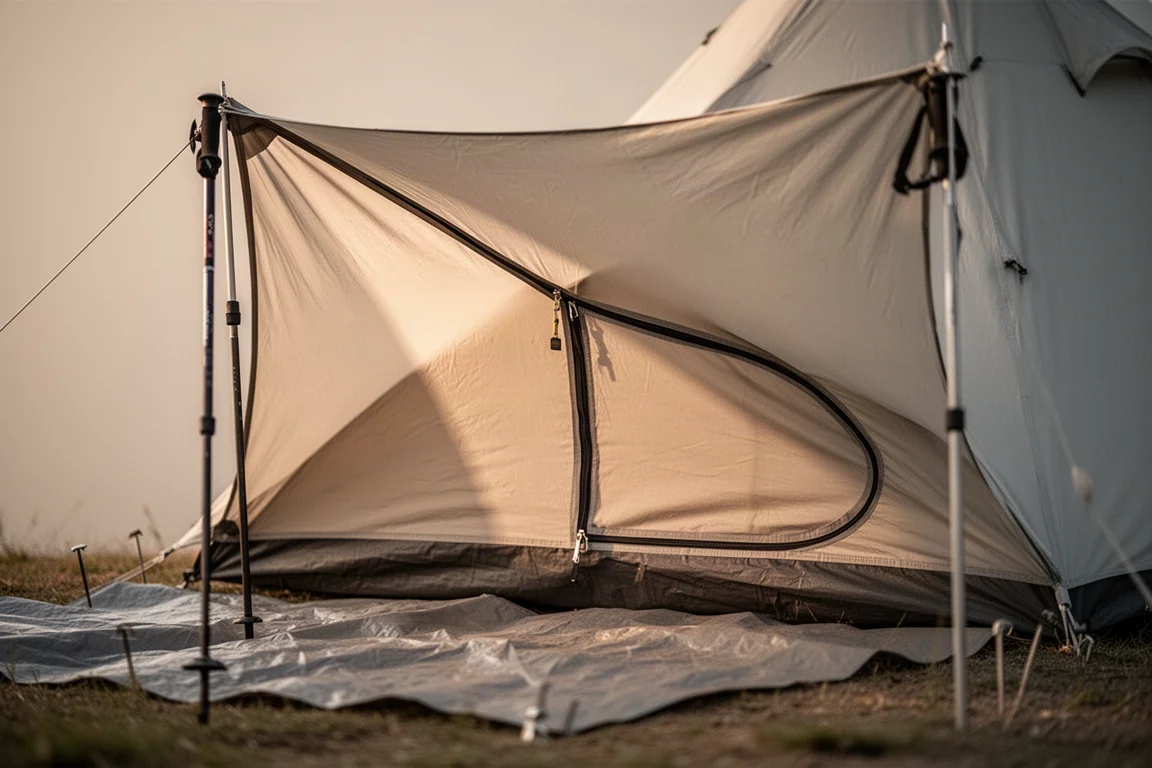
The awning is designed with sun in mind rather than rain, although adding a cover over the top would make it fully waterproof. It is not large enough to sit under with a backpacking chair, but there is room to kneel, set up a stove, and make coffee while staying out of the sun. It is the most interesting feature on the tent and a smart piece of design.
The pitch is flexible too. You can set up the inner tent with the poles alone, the inner with the fly, or the ground sheet with the fly, and you can leave the door closed or open the awning as conditions allow.
Weather Performance and Condensation Control
In heavy rain the tent has stayed fully dry, and in strong winds it has held its shape. On an exposed ridge at around 6,000 ft with winds near 40 mph, the shelter did not budge. Stability comes from the pole structure and the fly, which pulls away from the inner all the way around.
That gap between fly and inner does double duty, letting air circulate underneath and keeping condensation under control. Each side of the tent has a vent, every door has two panels, and storm flaps cover the zippers on both sides. The bathtub floor is aggressive, rising 7 to 8 inches at the front and close to a foot and a half along the sides, so heavy rain running off the fly and hitting the ground is unlikely to splash back inside.
Setup, Space, and Interior Details
Setup and breakdown are both straightforward, and the tent is light enough and compact enough to disappear into a pack. The two doors are large, which makes getting in and out easy, and there is enough interior space for two people with vestibule room for shoes, packs, and other gear.
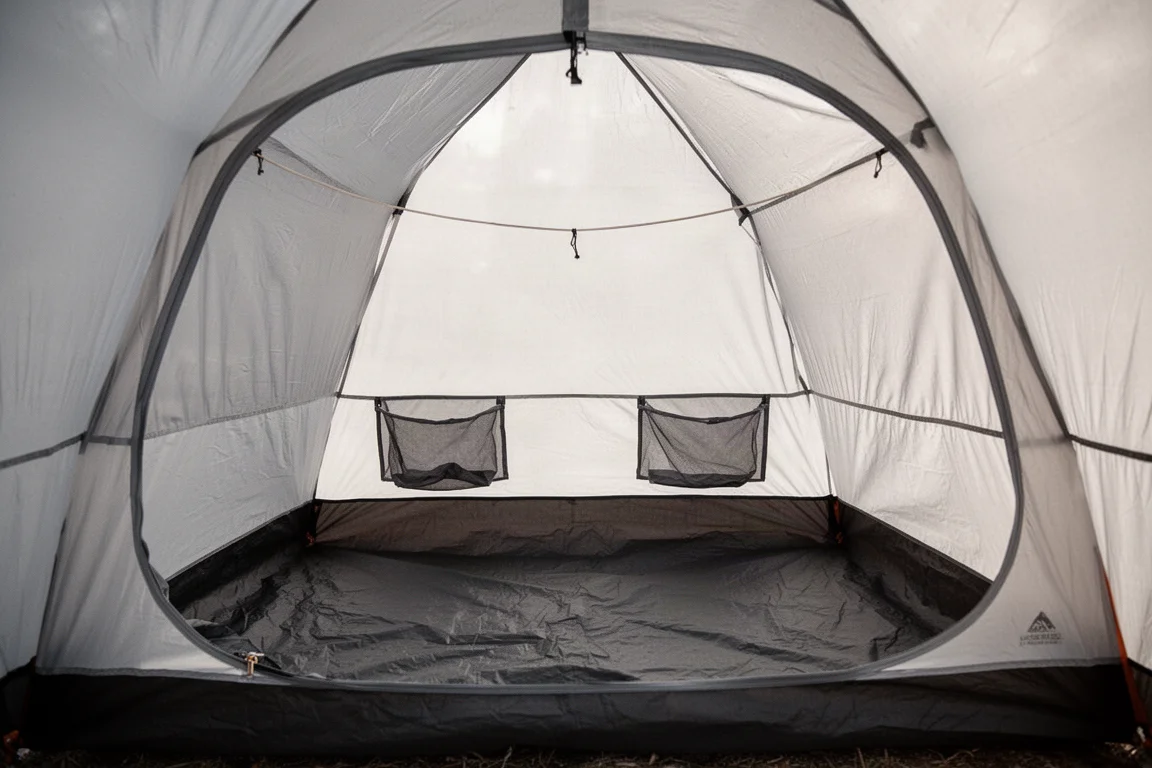
Inside, there are four mesh pockets: one at each end and two near the top. A hanging line runs across the ceiling for a light or for drying small items. The package includes the body, fly, ground sheet, pole system, 12 tent stakes, four guidelines, and storage bags, with four guyline placements at the ends and above each door.
Build quality looks strong for the price. Seam work is tidy, there are no loose stitches, and the seam tape is well applied. In cool conditions the interior stays comfortable, and at a low of around 40°F the tent felt warm and settled.
Things to Consider Before Buying
A few details are worth weighing before you commit.
The stakeout points are not adjustable, which makes it harder to get a clean pitch on uneven ground, and real campsites are rarely perfectly level. Adding shock cord to the ends of the stakeout points is a simple workaround that eases setup, improves the pitch, and keeps the materials taut as they stretch.
The included ground sheet is the second thing to think about. It protects the tent floor and it is genuinely useful, but it is made from a heavy 210T polyester and weighs close to a pound, which sits oddly against an ultralight brief. If you are counting ounces, leaving it at home and using a lighter third-party ground sheet is a reasonable move.
The third consideration is airflow. A large share of the lower half of the tent is solid fabric rather than mesh, and because you sleep below the mesh line, that fabric blocks the breeze that would otherwise reach you. On a cool night that is a benefit. In hot, humid weather it is not. If summer heat is a regular part of your camping calendar, a tent with more mesh, including the regular Mongar 2, will be more comfortable.
Finally, by the usual benchmark of a two-person tent under 3 lb, this one comes close but does not quite reach it.
Buying Advice
The Mongar 2 Ultralight is listed at $200 for the two-person version and $169 for the one-person version, and it comes in khaki or gray. The regular Mongar 2 typically sells between $99 and $143 depending on color and promotions, so the Ultralight asks for a meaningful premium.
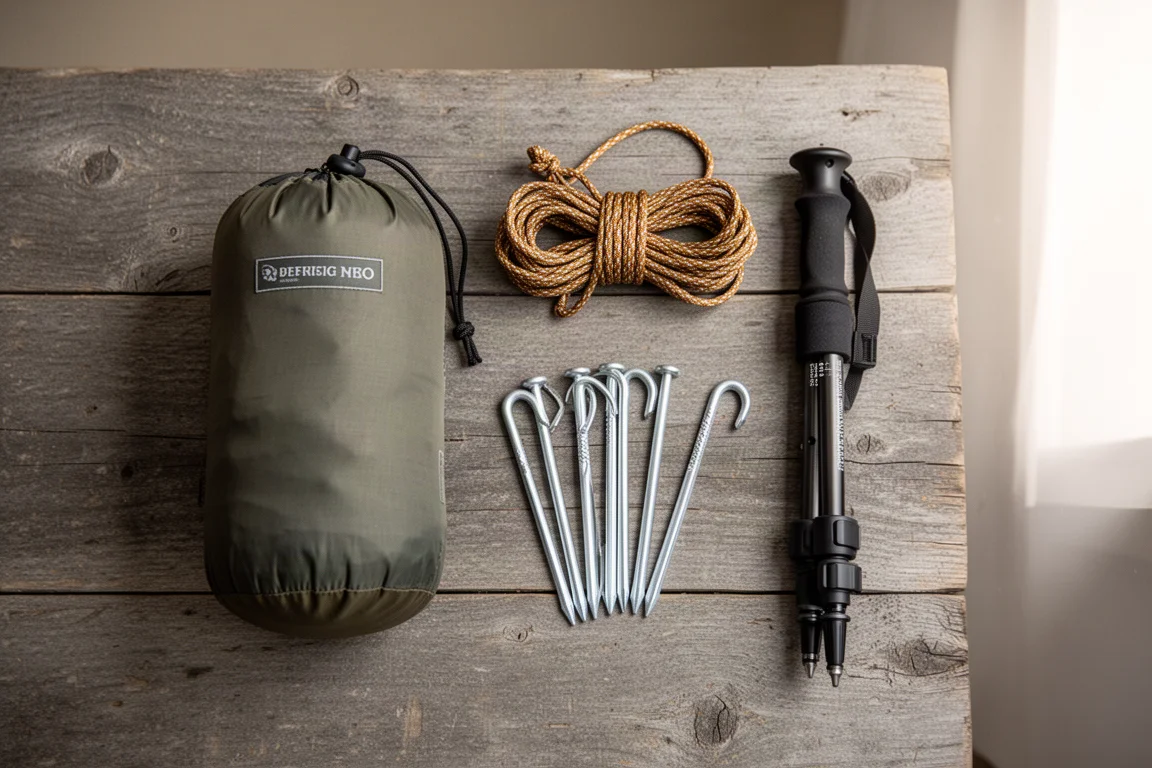
That premium buys a lighter and more compact package, a complete awning, and the same sil nylon construction. If you backpack in cooler conditions and value the weight saving, the Ultralight is the version to choose. If most of your trips happen in hot, humid weather, the regular Mongar 2 with its more open mesh body is likely the better fit, and the money you save can go toward the rest of your kit.
Whichever version you pick, the ground sheet decision is worth making deliberately rather than by default, since it is the heaviest single item in the bag.
Conclusion
The Mongar 2 Ultralight is a thoughtful update to a well-established budget tent. It sheds more than a pound, packs down smaller, keeps the sil nylon fabrics that made the original appealing, and adds a full awning that is unlike anything else at this price. It handles rain, wind, and condensation with confidence, and the build quality looks solid.
The trade-offs are clear: non-adjustable stakeout points, a heavy included ground sheet, and a fabric-heavy lower body that limits comfort in hot weather. Buyers who camp in cool to mild conditions and want a light, compact, well-equipped shelter will find a lot to like here. Those who camp in real heat should look at a more mesh-forward design.
Product link
View more details for Naturehike Mongar 2 Ultralight
This product is mentioned in the review. Check the specifications, options, and compatibility before buying.
View more details for Naturehike Mongar 2 UltralightFurther reading
Related Reviews
Camping Tents
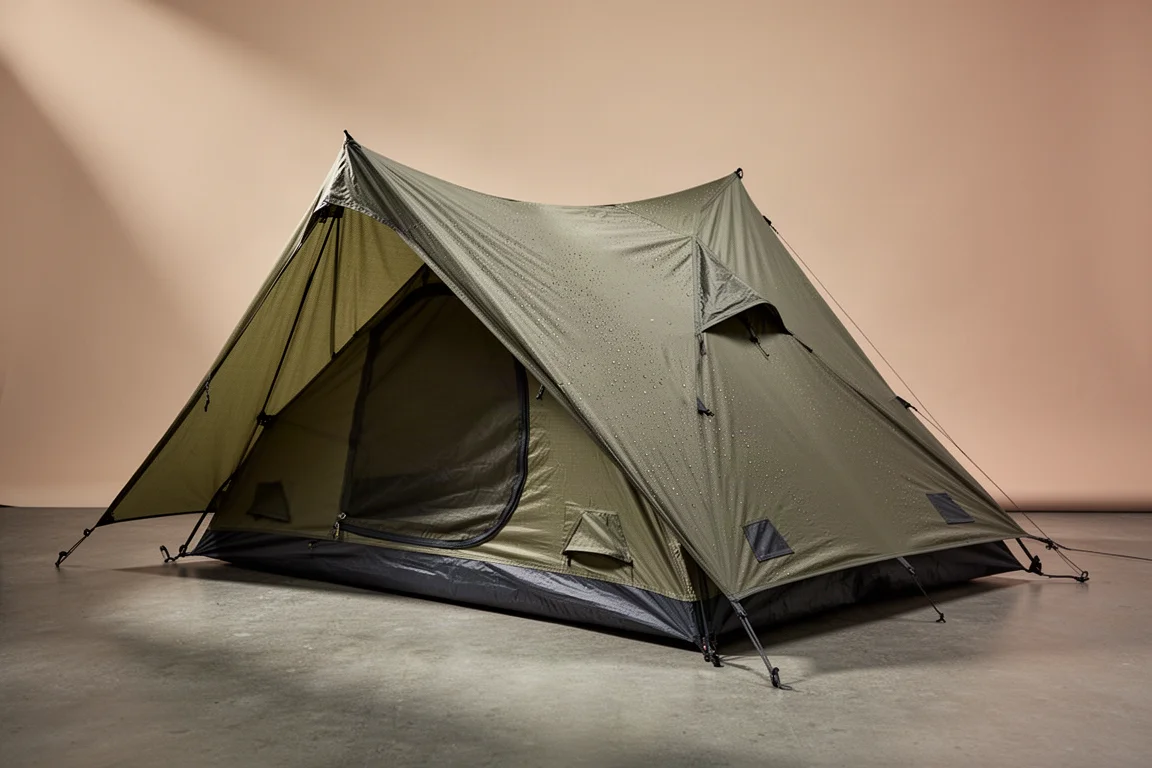
3F UL Gear Taiji Two-Person Tent Review: Field Waterproofing Results and Buying Advice
The Taiji pairs an attached fly with a removable inner, but sustained rain exposed untaped vent seams that need sealing before this shelter can be trusted.
Camping Tents
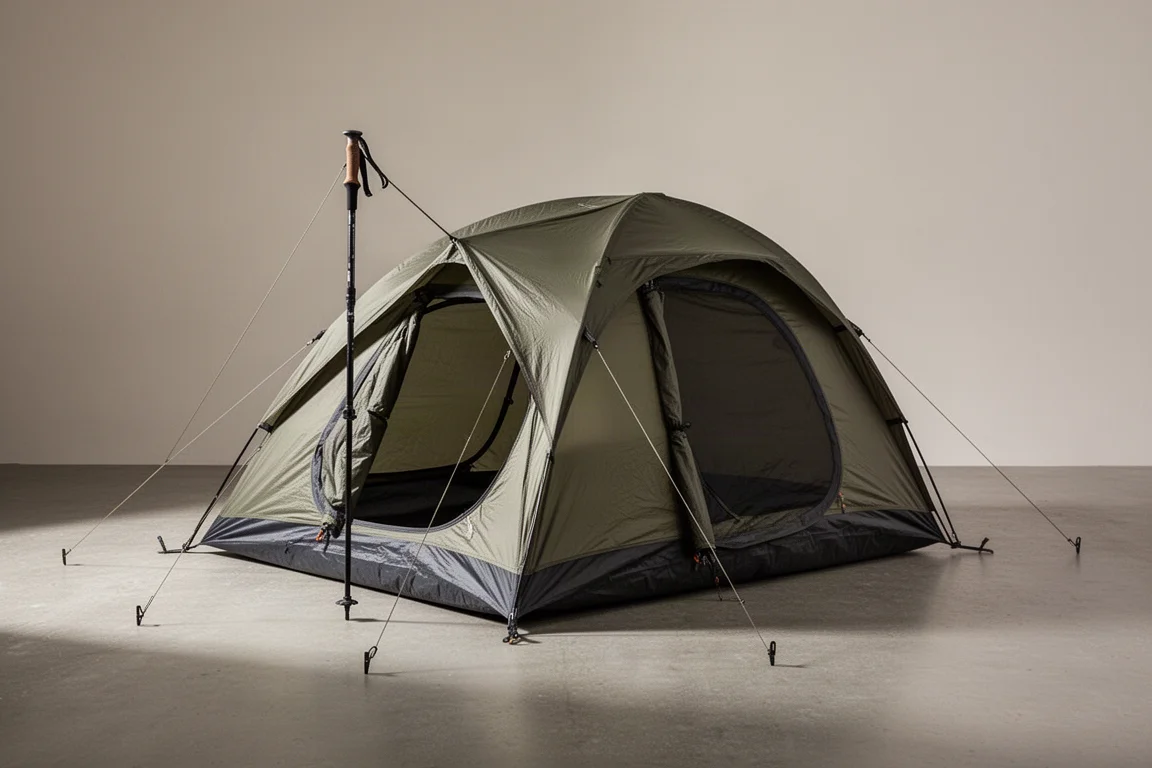
3FUL Gear Lanshan 2 Pro 4-Season Review: A Sub-$200 Single-Wall Trekking Pole Tent
An early look at the 3FUL Gear Lanshan 2 Pro 4-Season, covering its straightforward pitch, generous interior space, and the condensation and seam-sealing questions that come with any single-wall shelter.
Camping Tents
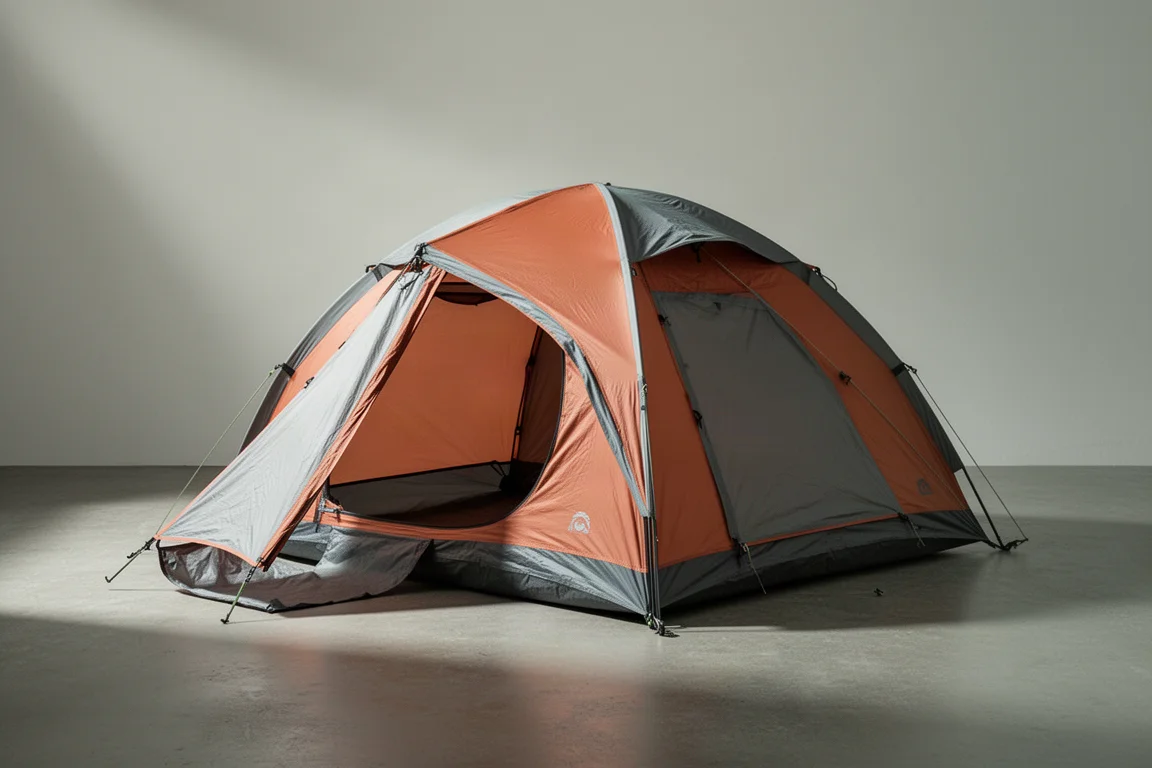
Alps Mountaineering Lynx 1-Person Tent Review: Big Value in a Small Budget Tent
A close look at the Alps Mountaineering Lynx 1-Person Tent, covering real interior dimensions, materials, setup time, ventilation limits, and who should buy it.