Backpacking Tents
NatureHike Cloud Up 1 Upgraded Review: A Roomy One-Person Backpacking Tent
A practical look at the NatureHike Cloud Up 1 Upgraded, a lightweight one-person backpacking tent with a tall interior, a 230 cm floor, and a 65 cm porch.
Introduction
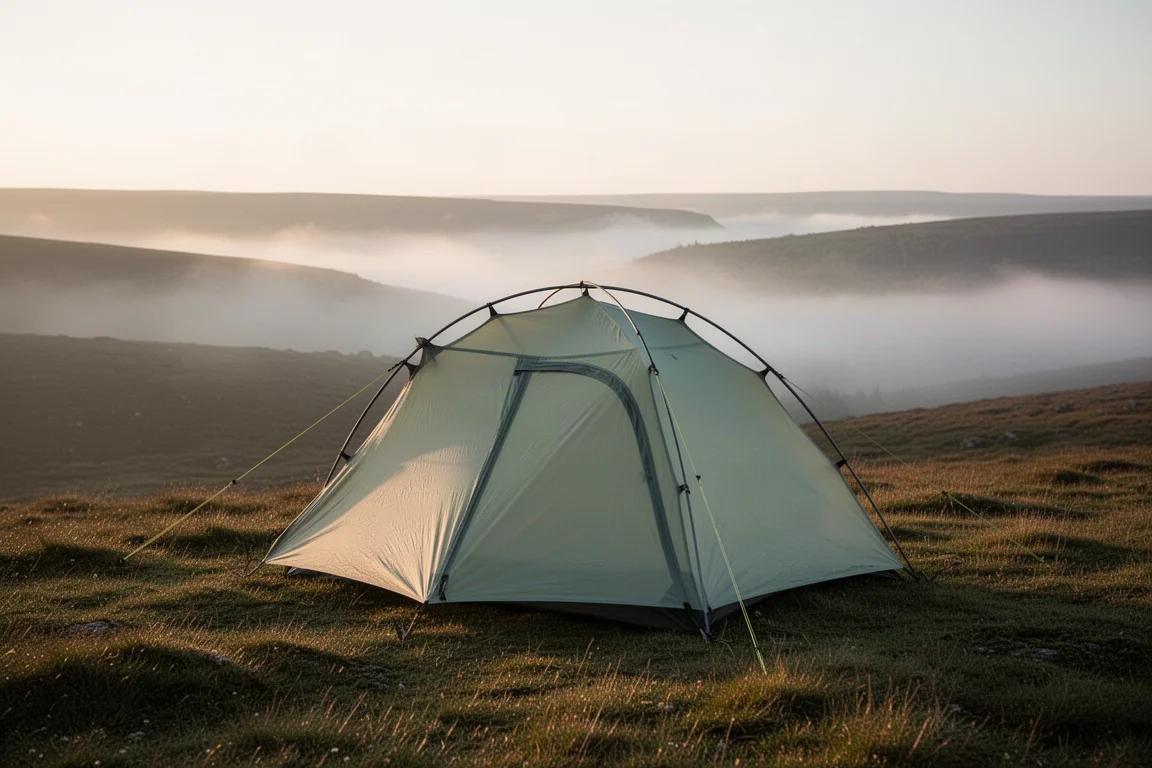
The NatureHike Cloud Up 1 Upgraded is a one-person backpacking tent built around a simple idea: give a solo camper enough space to actually live in, without turning the pack into a burden on the climb. It weighs 1,547 g including the bags and the ground sheet, measures 230 cm in length with an additional 65 cm porch, and stands 100 cm high at its peak.
Those numbers put it in an interesting position. It is a true one-person shelter, but the interior reads more like a compact two-person tent. For backpackers who want to sit up, stretch out a sleeping pad, and still have somewhere to cook under cover, the specification is worth a closer look.
Who This Tent Is For
The Cloud Up 1 Upgraded suits solo backpackers who put interior comfort ahead of the absolute lowest pack weight. At 172 cm (5 ft 8 in), the interior feels ample in every direction, to the point where a two-person tent would be unnecessary for that height.
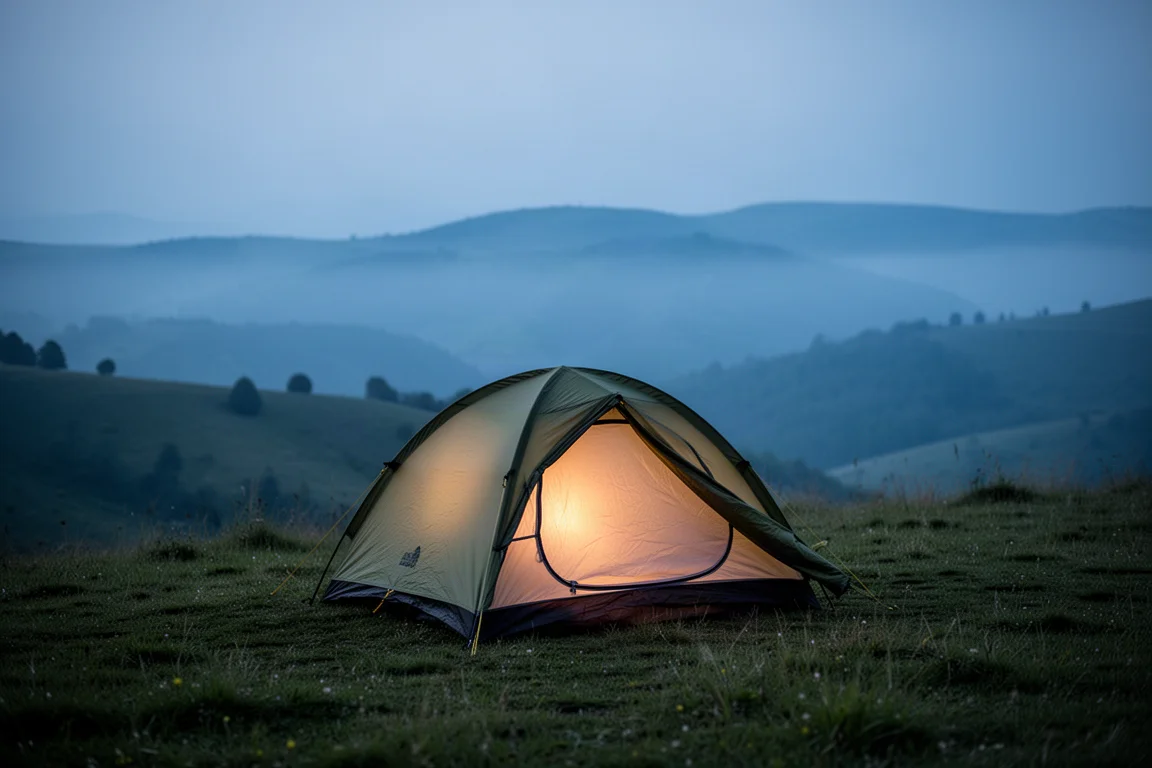
It also makes sense for campers who want a covered area for cooking and gear. The porch creates a useful buffer between the sleeping area and the weather, and the tall peak makes changing clothes or reading in the evening far less cramped than in a low-profile shelter.
Taller backpackers should weigh the decision more carefully. Around six foot or above, the additional length of a two-person model may be the more comfortable route.
Space and Interior Comfort
Inside, this is a genuinely large one-person tent. A 185 cm by 54 cm sleeping pad leaves roughly 30 cm of clear space at the foot end, and the width along the side is enough to lay out a full-size backpack without it crowding the sleeping area.
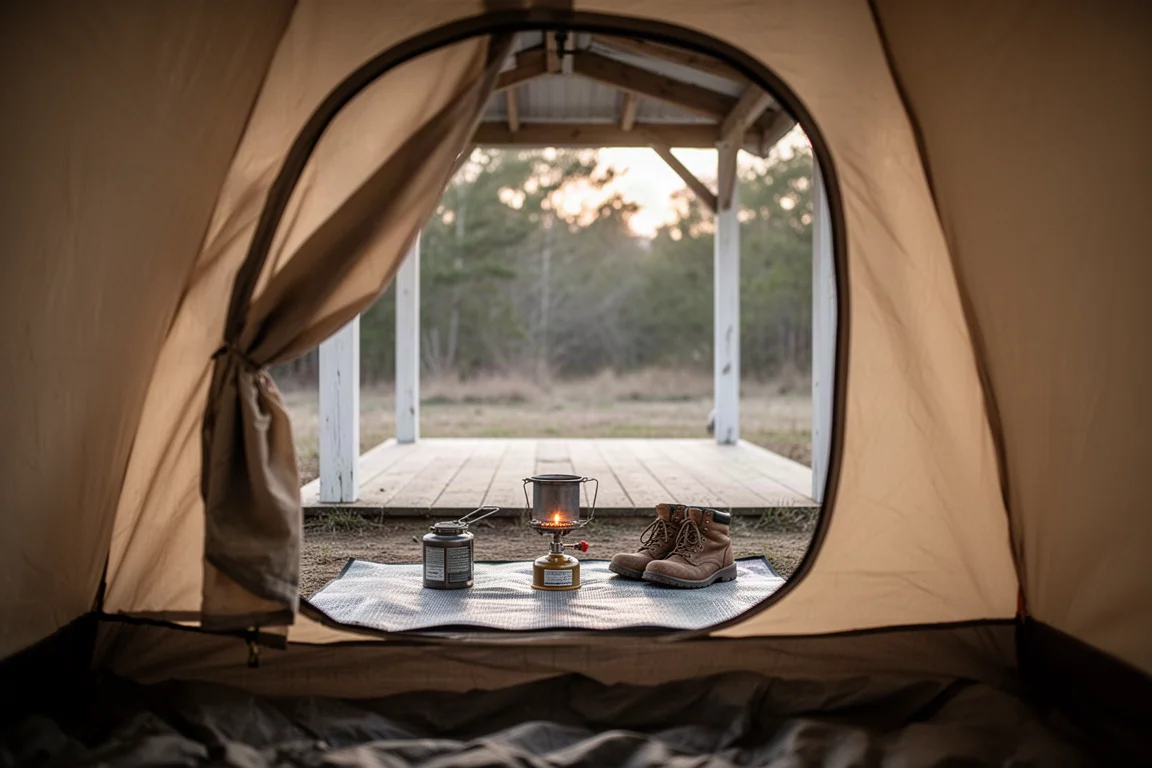
The 100 cm peak height is the headline figure. It allows a seated position with room to spare, which matters on wet evenings when the tent becomes the entire camp. The 65 cm porch extends the usable footprint further, giving you a place to leave wet boots or set up a stove away from the sleeping mat.
The inner can be pulled out and tensioned at the adjustment points, which keeps the walls taut and makes the most of the available floor area once you are inside.
Build Quality and Materials
Out of the bag, the complete package feels more expensive than the price suggests. It arrives with instructions, a pole set in its own pole bag, aluminium pegs in a small peg bag, a ground sheet with its own bag, a fly sheet, and an inner tent.
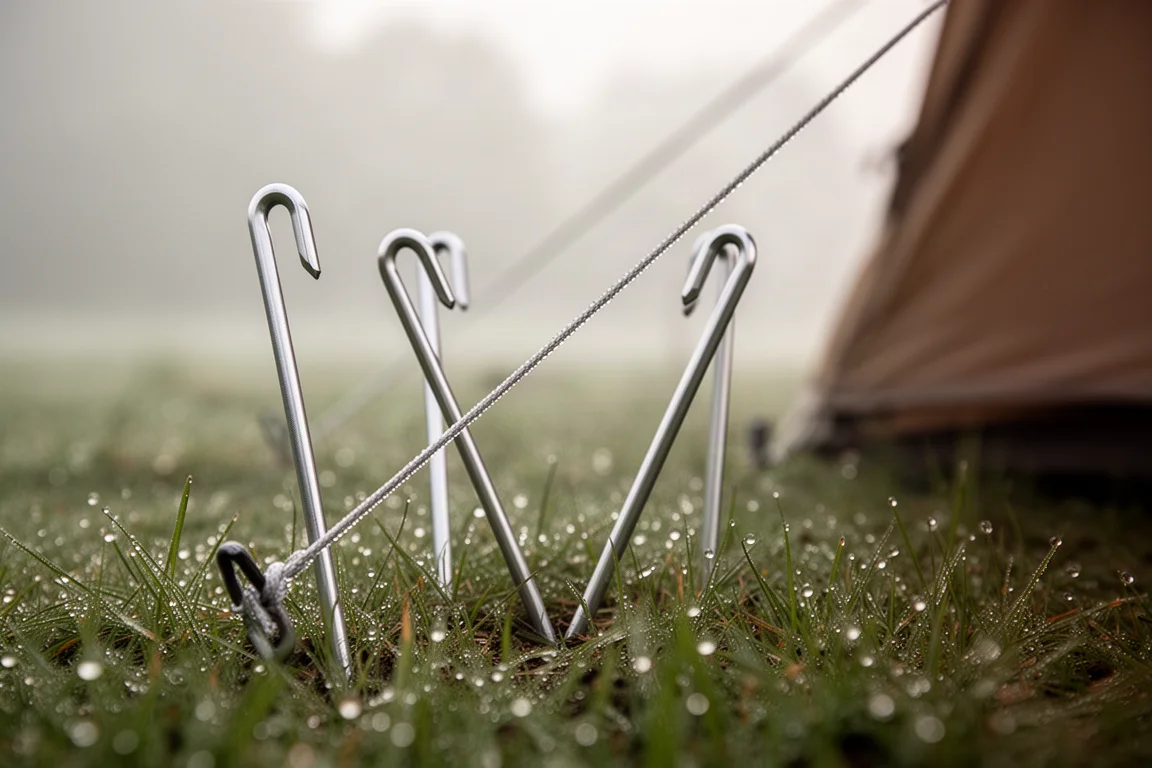
The pegs are light and neatly finished, and the poles pack down tidily. The ground sheet is included rather than sold separately, which is a meaningful addition for anyone adding up the cost of a full setup. The inner attaches with simple snap clips that are difficult to get wrong, and the fly sheet connects with matching clips plus a centre clip that links the inner and outer together.
Pitching and Setup
Pitching is quick and straightforward. The ground sheet goes down first and the poles slot into place in a matter of seconds. The inner tent then goes up over the same poles, with the pole ends passing through both the ground sheet and the inner so that the two are tied off at the same peg points.
The fly sheet clips on top, and the tensioning points can be tightened with a simple pull to suit the conditions. There is some visible flex in the pole structure once pitched, though it does not look or feel under strain, and the tent stayed steady in windy conditions while it was being set up.
Ventilation and Weather Protection
Ventilation is a clear strength. A large front vent should help considerably in warm weather, and it is a more generous arrangement than the single small rear vent used on the two-person version of this design.
For windier pitches, the package includes three spare pegs and three lengths of guy line. These allow the tent to be secured at two points on the front and an extra point at the back, which adds real confidence when the weather turns. The door uses a Velcro tab and a zip that can be opened one-handed, and the fly sheet tensioners make it easy to fine-tune the pitch.
Things to Consider Before Buying
The 1,547 g figure includes the bags and the ground sheet, so the total weight reflects a complete, protected setup rather than a bare shelter. Backpackers chasing the lowest possible pack weight will want to factor that in when comparing options.
The pole structure shows noticeable flex when pitched. It held up well in wind, but the supplied guy lines are worth adding as a matter of routine rather than as an emergency measure.
Pricing and availability are worth checking in both places. This tent was bought for around £115 from NatureHike’s own store on Amazon, which cost a little more than ordering directly from NatureHike, but qualified for next-day delivery with Amazon Prime.
Buying Advice
The Cloud Up 1 Upgraded makes the most sense for solo backpackers who want a tall, comfortable interior and a covered porch without moving into two-person territory. If you are around 172 cm or shorter, the space on offer is generous enough that a larger tent is simply not needed.
If you are close to or above six foot, or you routinely carry a lot of kit, the two-person version of the same design is the more sensible choice. Either way, the included ground sheet, pegs, and guy lines mean the tent arrives ready to pitch.
Conclusion
The NatureHike Cloud Up 1 Upgraded packs a lot of liveable space into a one-person shelter: 1,547 g all in, a 230 cm floor, a 65 cm porch, and a 100 cm peak height that lets you sit up properly. It pitches quickly, feels well made for the money, and includes the extras that usually push the final cost higher. For solo backpackers under about six foot who want room to move, it is a strong and practical choice.
Product link
View more details for NatureHike Cloud Up 1 Upgraded
This product is mentioned in the review. Check the specifications, options, and compatibility before buying.
View more details for NatureHike Cloud Up 1 UpgradedFurther reading
Related Reviews
Backpacking Tents
3F UL Lanchan Pro 1 Review: A 1 lb 8 oz Single-Wall Trekking Pole Tent
A practical look at the 3F UL Lanchan Pro 1, a single-wall trekking pole shelter with a 1 lb 8 oz weight, 20D silnylon fabrics, and a roomy 90 x 31 x 49 inch interior.
Backpacking Tents
3F UL Taiji 2-Person Tent: A Convertible Backpacking Shelter Worth a Closer Look
A practical look at the 3F UL Taiji two-person tent, covering its materials, true two-person interior, fly-first pitching, and the seasonal inner swap that lets one shelter cover more of the year.
Backpacking Tents
3FUL Lanshan Twoerson Pro Review: A Light Trekking Pole Shelter That Struggled in Rain
A two-person trekking pole shelter with a 2026 redesign, pitched with sticks and put through a night of steady rain. Here is what worked, what did not, and what to check before buying.