Camping Heaters and Stoves
Naturehike 3-in-1 Portable Heater Stove Review: Butane Heat, Cooking, and Light in One Cube
A compact butane heater that also cooks and glows, with standout fuel efficiency and a few practical limits worth knowing before you buy.
Introduction
Some camp gear tries to cover three jobs and ends up doing none of them well. The Naturehike 3-in-1 Portable Heater Stove takes a different route. It runs on inexpensive butane and works as a radiant heater, a small cooking surface, and a soft light source inside a single cube-shaped body. Naturehike positions it for camping, off-grid use, outdoor adventures, and overlanding.
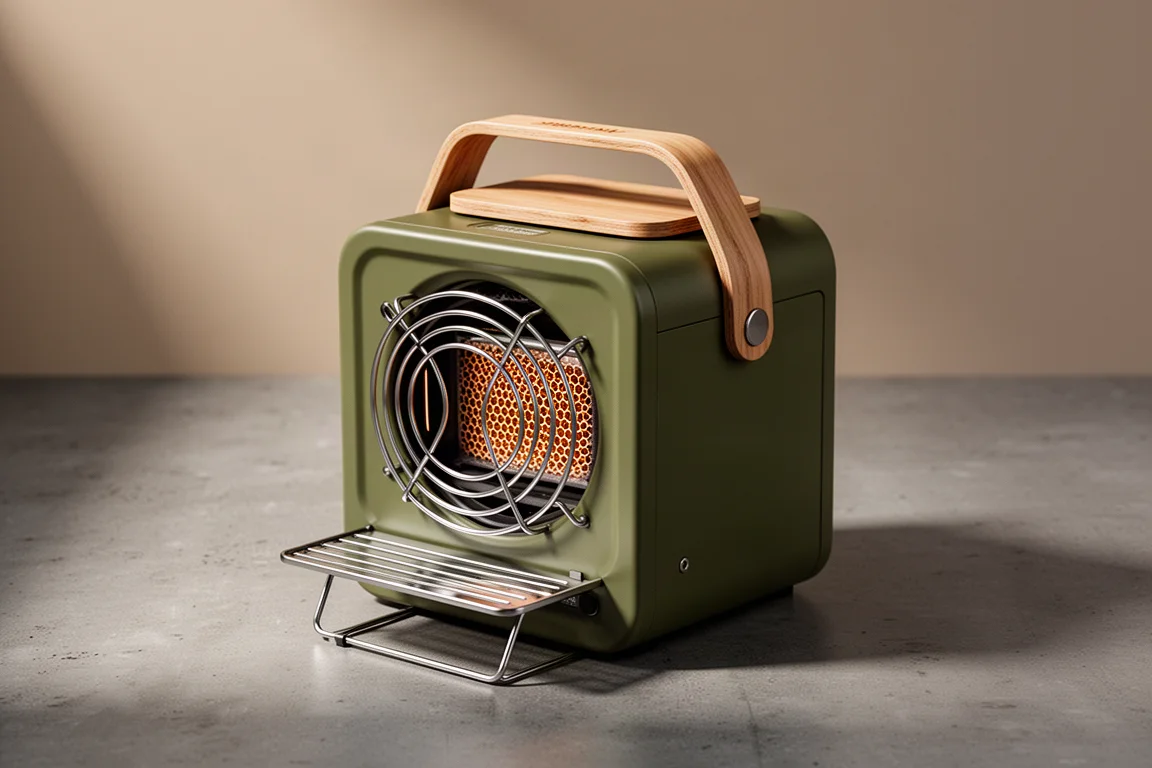
The box contents are straightforward. You get the heater itself, a detachable shelf that clips to the front, an output adjuster dial, and a built-in igniter. A cage covers the honeycomb heating element, heat-release vents sit on both sides, and the fuel canister slot is at the back with a small window that helps you confirm the canister is seated correctly. Four grippy rubberized feet keep the unit planted on a flat surface.
Who This Product Is For
This is a heater first and a stove second, and that order matters when you decide whether it belongs in your kit. It suits campers, overlanders, and off-grid users who want warmth in a tent, a vehicle, or a shelter, and who like the idea of warming food or a drink without packing a second appliance. Because it runs on butane, running costs stay low and refills are easy to find in most markets.
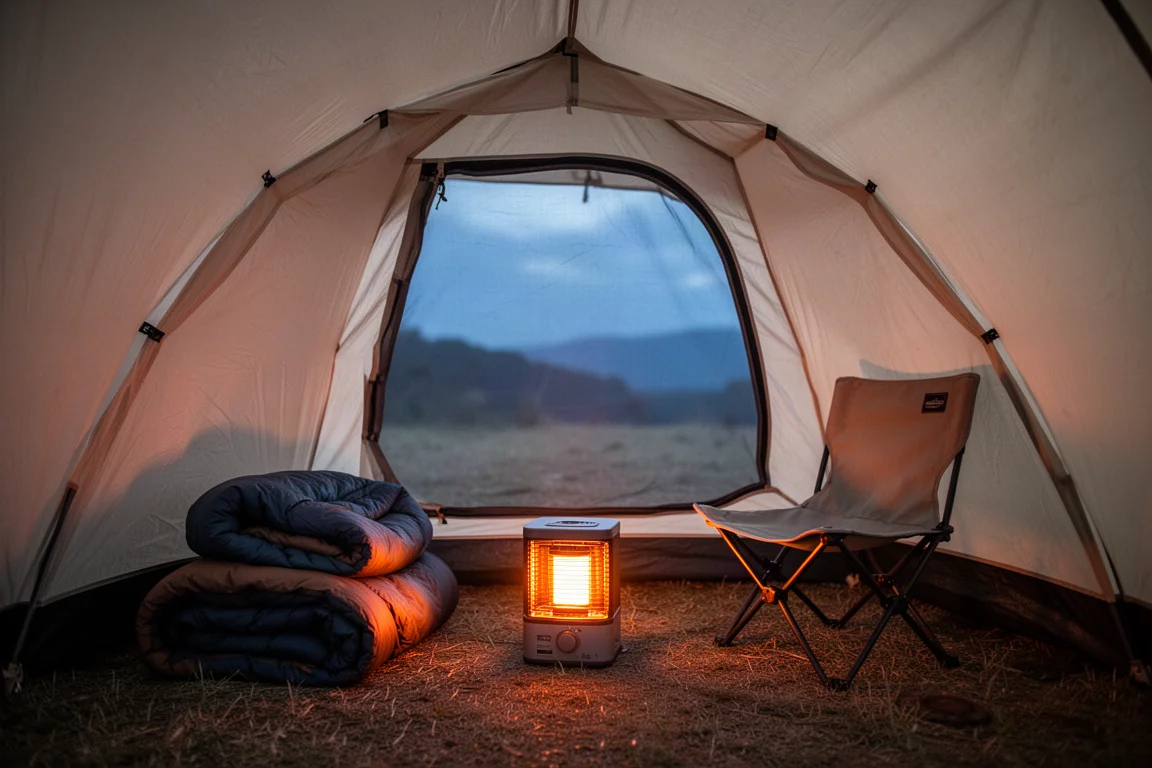
If your main goal is cooking proper meals, a dedicated stove remains the better tool. The 3-in-1 makes the most sense as a heat source that can also handle light kitchen duty, reheating a meal, warming a mug, or boiling water when nothing faster is available.
Main Strengths
Three things stand out in use. The heat output and fuel economy are excellent, the controls feel well judged, and the unit throws a surprising amount of ambient light. On paper it weighs 3.1 lb, measures 5.6 by 5.3 by 6.5 inches, runs on butane at 3,753 BTUs, and comes in khaki or green. The body combines cold rolled steel and stainless steel with aluminum, copper, and bronze, plus a beechwood handle and rubber feet.
Heating Performance and Fuel Efficiency
As a heater, this unit delivers. Crank it to maximum and it puts out a serious amount of radiant heat, and it can also be dialled down to a very low setting that still releases meaningful warmth. That low end is where the efficiency comes from. One canister returned close to nine hours of runtime across a trip that mixed high, medium, and low use, and on the lowest setting runtime can stretch toward eight to ten hours. On high, expect roughly three to four hours. The company lists a maximum temperature of around 572 degrees on the highest setting.
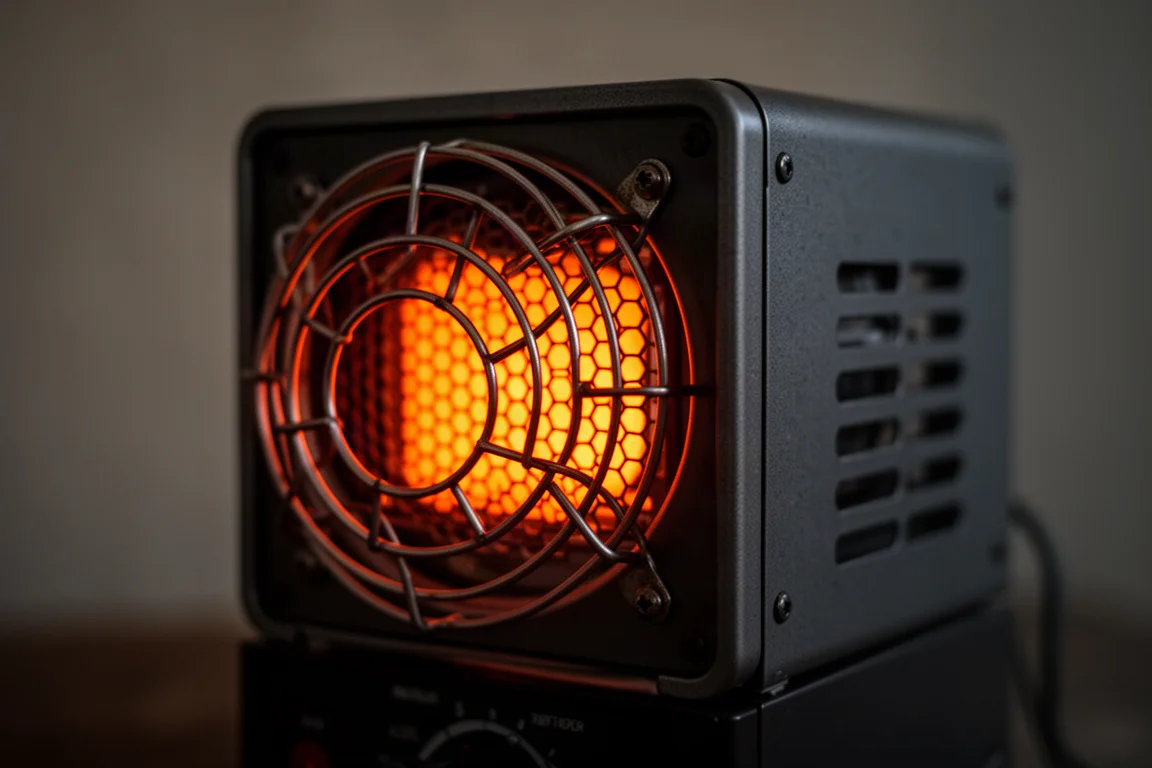
Heat radiates on four sides, from the top, the front, and both flanks, which is unusual for a portable heater of this size, since most designs push heat out of the top and front only. An internal reflector bounces heat outward and upward, while the base and the back stay protected and do not get hot. The adjuster dial has a good amount of resistance without feeling tight, so small changes are easy to make, and the built-in igniter has worked every time.
Cooking and Boiling
Cooking is the area where the design gives ground. A pot sits on top without trouble, and the front shelf is designed for reheating a cup that is already full, but the unit will not replace a dedicated stove. Boiling takes patience. A pot of cowboy coffee needed around 20 minutes.
The cause is heat loss. With vents on the sides and the front, a large share of the output escapes instead of reaching the base of the pot. Covering the front opening with a piece of foil redirects much of that heat upward and clearly improves the cooking experience. A larger, foldable shelf attached to the body could shield more of that loss and channel heat toward the pot, which is the single change that would help this design most.
Lighting and Portability
The glowing element doubles as a light source. In a dark environment it throws more light than most people expect, enough to sit around and fill a small area with a warm glow. It will not replace a headlamp or a dedicated lantern, but paired with the heat it makes a shelter noticeably more comfortable.
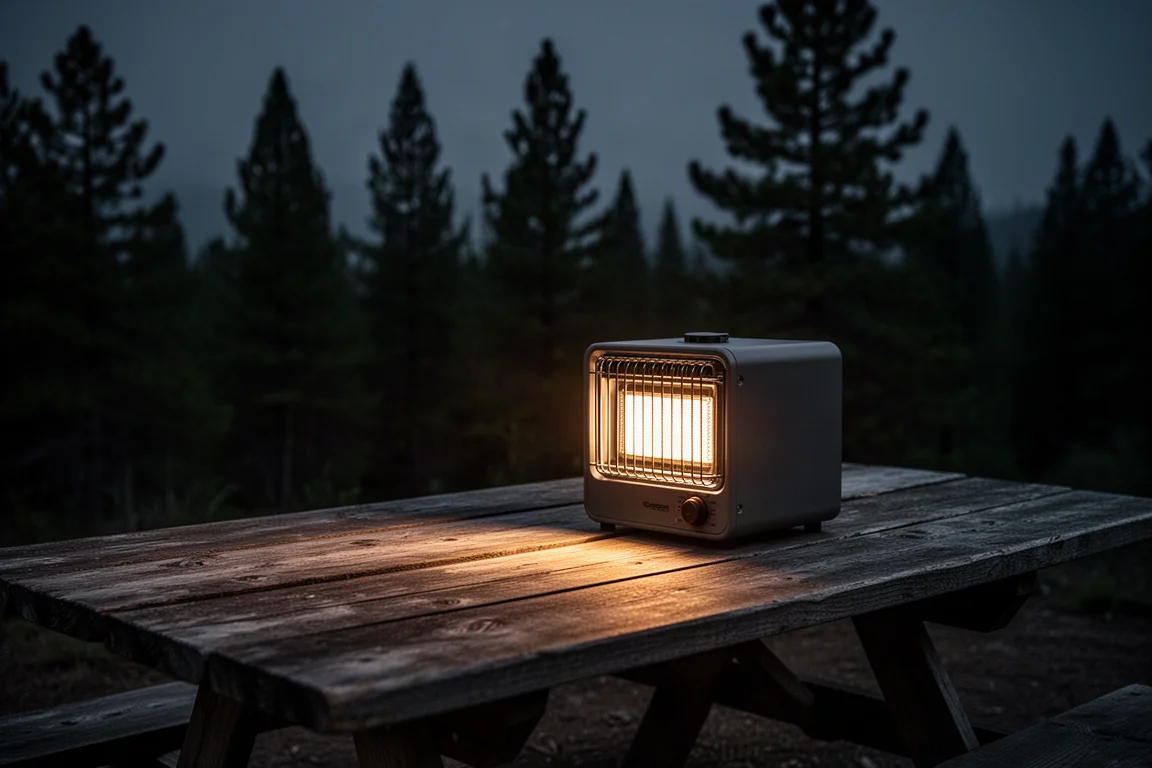
A handle folds down and lifts up for transport. It does the job, though the balance is worth paying attention to, since moving the unit while it is lit takes a little care. The cube shape, the weight, and the grippy feet make the heater very stable in place, and it does not slide or want to tip.
Things to Consider Before Buying
A handful of practical points are worth weighing before ordering.
- The front shelf is small. It holds roughly a small coffee cup and will not take even a small pot, and because it detaches it can be mislaid.
- The handle is not especially well balanced for carrying the unit while it runs.
- The heater is loud on the highest setting.
- No safety systems are documented. No low-oxygen sensor and no tip-over sensor are listed, so placement and ventilation are your responsibility. The stable base helps, but it is not a substitute for sensible use in a well ventilated area.
- Cooking performance is modest. Plan for longer boiling times, or bring a dedicated stove for real meals.
- The honeycomb element glows visibly hot in use, so keep the cage in place and keep children and loose fabric clear.
Buying Advice
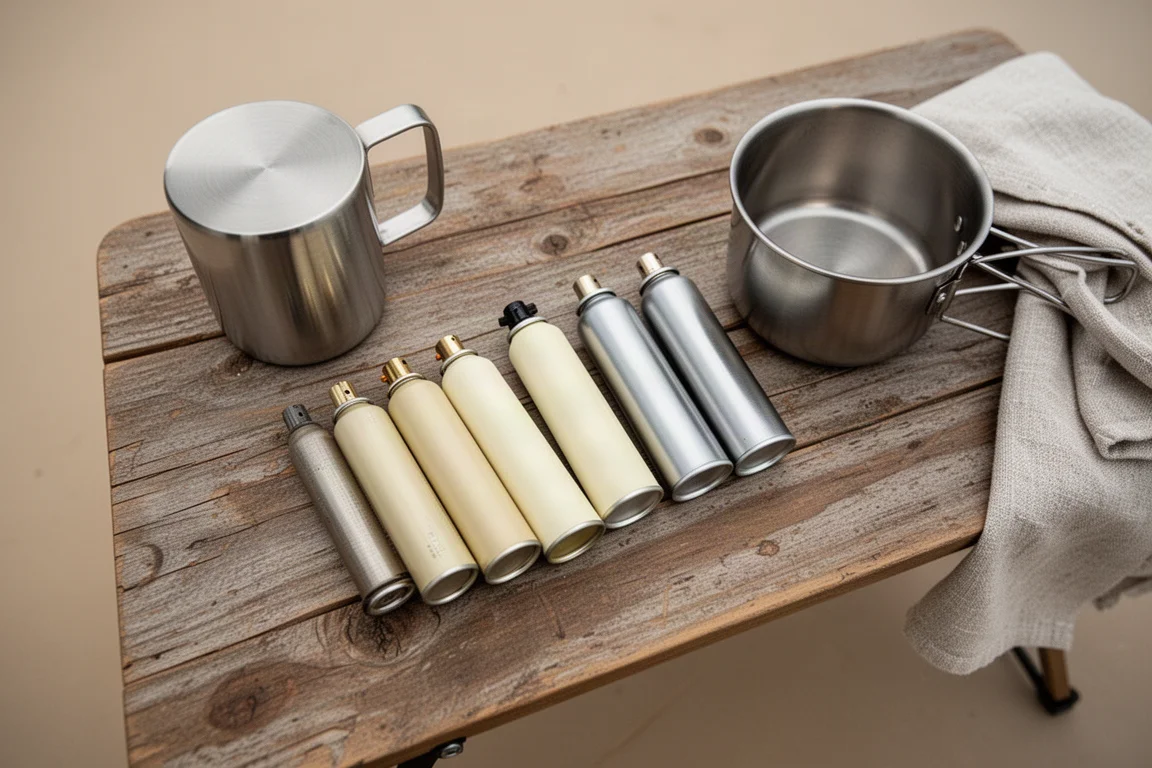
At around $97, the case for this heater rests on fuel economy. Butane is inexpensive, and buying in bulk brings the cost down further, with a 12-canister pack listed at $28. Runtime on the low setting can reach eight to ten hours, a large step up from what comparable portable butane heaters typically deliver, and the low setting goes lower while still producing heat.
If warmth and efficiency come first and cooking is a convenience rather than a daily requirement, this is an easy recommendation. If you regularly boil large volumes or cook full meals, budget for a dedicated stove alongside it, or accept longer waits and use the foil trick to keep more heat on the pot.
Conclusion
The Naturehike 3-in-1 Portable Heater Stove does the heater job exceptionally well. It is efficient, stable, easy to control, and inexpensive to run, and the ability to cook and light a space are genuine bonuses rather than the main event. The small shelf, the handle balance, and the modest boiling speed are the trade-offs to accept, along with the absence of documented safety sensors. For campers and overlanders who want dependable warmth from cheap fuel, it is a compelling option at a reasonable price.
Product link
View more details for Naturehike 3-in-1 Portable Heater Stove
This product is mentioned in the review. Check the specifications, options, and compatibility before buying.
View more details for Naturehike 3-in-1 Portable Heater StoveFurther reading
Related Reviews
Insulated Jackets
Aerogel vs Down Insulation: Two Aerogel Jackets Compared
Aerogel is the lightest solid on record, but two aerogel jackets measured against a comparable down jacket tell a more complicated story about warmth.
Power Banks
Anker 737 PowerCore 24K Review: Fast Charging in a Simple Package
A 140W portable power bank with a 52-minute recharge time, a health-tracking display, and a three-port layout that skips the app entirely.
Emergency Shelters
Aqua Quest Survivor Emergency Tarp Review: A High-Visibility Shelter Built for Hard Weather
A 10 x 10 ripstop nylon emergency tarp with taped seams, a 5,000 mm hydrostatic head rating, 19 tie-out points, and reflective trim, tested through winter storms and driving rain.