Ski Gear
Narrow Frontside Skis 2025: 22 Carving Skis From 65.5 mm to 75 mm
A practical roundup of 22 narrow frontside carving skis, covering turn radius, construction, weight and price so you can match the ski to how you actually ski.
Introduction
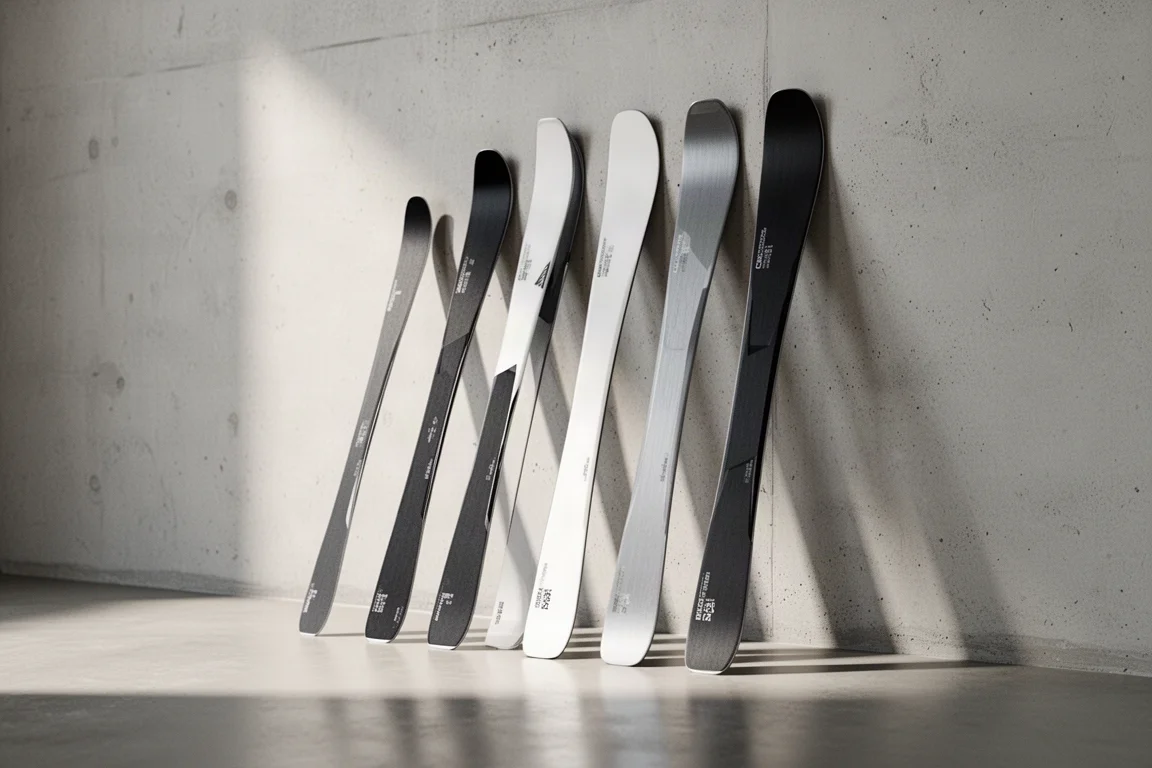
This is the narrow end of the alpine market. Waist widths across this group run from 65.5 mm to 75 mm, and the price spread is more than $1,000, so the category name hides a lot of variation. Two variables do most of the work in deciding which ski suits which skier: turn radius, which determines whether a ski behaves like a slalom tool or a giant slalom tool, and price, which does not track performance in a straight line.
The good news is that a narrow carving ski is one of the most rewarding purchases in skiing when it matches your terrain and your technique. The risk is buying on reputation or on a single number. The notes below cover what each ski is built to do, where it gives the most back, and what it asks of the person standing on it.
How These Narrow Frontside Skis Differ
Turn radii in this group span 11.9 m to 18.2 m. At the short end you get a ski that wants to arc constantly and rewards fast, repeated turns. At the long end you get a ski that runs, holds a line at speed, and can be steered out of the arc when you want to. The middle, roughly 14 m to 16 m, is where most skiers will have the easiest and most enjoyable time.
Almost every ski here ships with a binding. A few come as a ski and plate only, which limits the binding choice to a compatible race binding rather than leaving it open. Weight with binding ranges from about 2,560 g to 3,380 g, and that difference is very noticeable over a full day of lift-served skiing.
Profiles are dominated by full camber. Rocker is minimal, and where it appears it is a slight early rise in the tip, with one model adding a short section of tail rocker. Metal laminates are the other big variable: the count runs from zero sheets of titanal up to three, and that single number drives weight, price, vibration damping and edge grip at the same time.
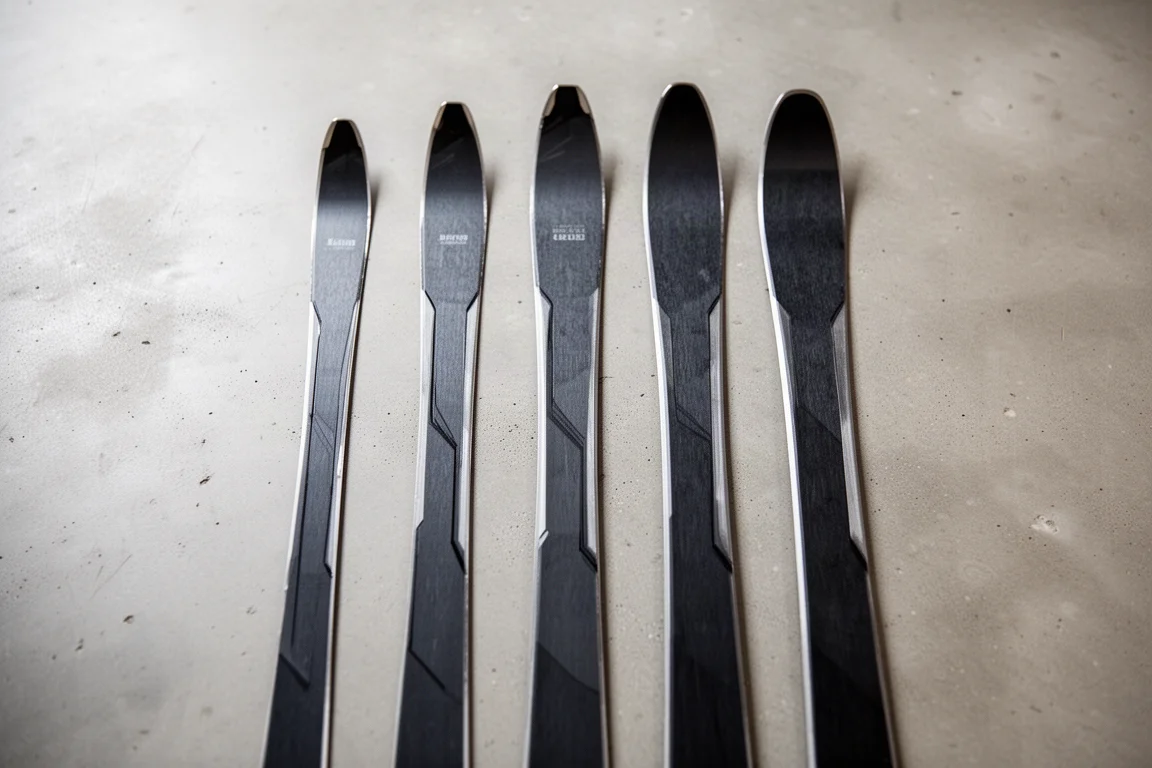
The practical consequence is that these skis are not interchangeable. A 65.5 mm ski with no rocker and a 15 m radius is a very different instrument from a 75 mm ski with tip rocker and a carbon build, even though both are frontside carvers. Narrow skis also need the right surface. On firm, well-prepared groomers they are superb. On soft packed powder they dig in rather than float, and that is where the narrower models start to feel like a specialised tool.
Atomic Redster X9 S
The Redster X9 S is the narrowest ski in this roundup at 65.5 mm underfoot, which makes it narrower than a World Cup giant slalom ski. The build is an Ultra Power wood core with two layers of titanal and the Revo Shock S vibration damping system, so the construction is essentially that of a race ski.
At 175 cm it carries a 15.2 m turn radius, which lands between a consumer slalom and a consumer giant slalom shape rather than at either extreme. The flex is very stiff and there is no rocker at all, just full camber. That makes the ski quick to engage and easy to get up on edge, but also completely unforgiving. It rewards deliberate weighting and clean technique and it exposes looseness immediately. It also wants firm, well-prepared snow, and it does not enjoy softer packed powder. Skiers who prefer to simply go fast and aggressively may be happier on the Redster G9.
Head Supershape e-Original
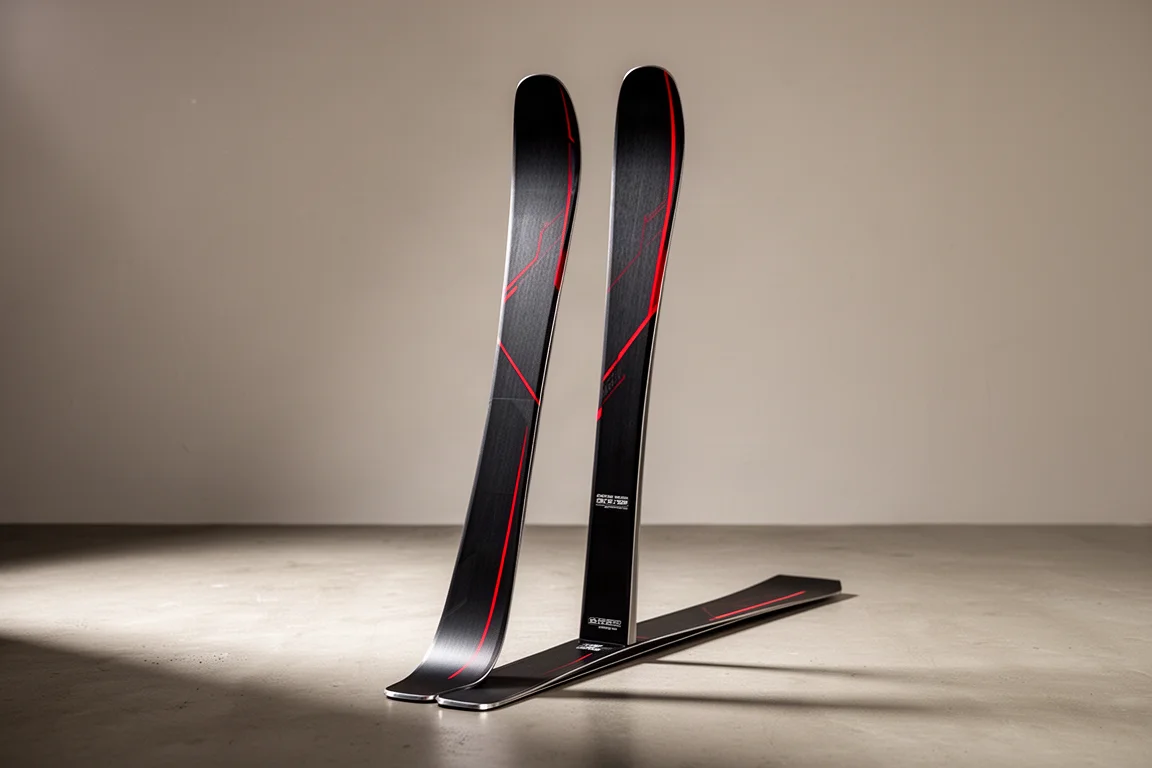
At 66 mm underfoot and 170 cm, the Supershape e-Original is the most slalom-oriented model in the Supershape line, with a 12.1 m turn radius. The construction is a World Cup sandwich with a poplar and beech wood core, two sheets of metal and a graphene strip, plus the Energy Management Circuit for vibration control. The current version adds a Crossforce carbon layer in the underfoot zone, which raises torsional stiffness and adds grip and energy. Extra width in the tips and tails is what pulls the radius down.
There is a solid metal tail and very little rocker, so input travels from tip to tail with almost nothing lost. It is a precise, energetic ski that deliberately stops short of the power of a full race build, which is the point of the model: it trades a notch of aggression for a little more comfort and a slightly more relaxed ride.
Stöckli Laser WRT Pro
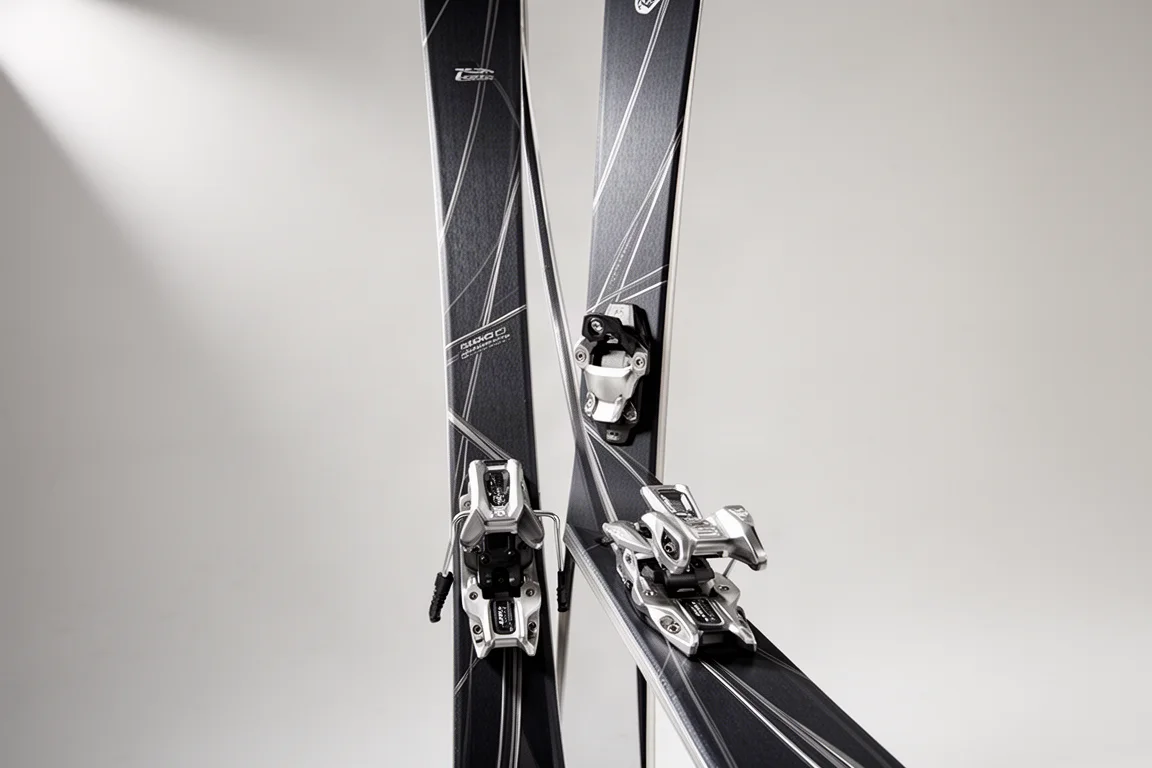
A poplar and beech wood core sits under the Titanal Tech Pro layup, where one sheet of metal forms the top sheet and a second, noticeably thick sheet runs beneath the core along the base. At 67 mm underfoot and 172 cm, the WRT Pro carries a 14.8 m turn radius, a middle ground between slalom and giant slalom that suits a dedicated carving ski.
It weighs 3,270 g with binding and runs $2,079 for ski and binding. There is a slight amount of early rise that only shows up once the ski is decambered, and the tail is flat and squared off. The flex is stiff and the ski generates strong g-forces while filtering out almost all vibration. It is a demanding tool that gives the most back to strong, committed skiers.
View more details for Stöckli Laser WRT Pro
Stöckli Laser WRT
The non-Pro Laser WRT shares its footprint, sidewalls and 14.8 m radius at 172 cm with the Pro, along with the same 67 mm waist. The differences are in the layup: there is no metal top sheet, and an additional carbon steering control strip runs through the forebody. A tip protector is fitted, which the Pro does not need because its top sheet is already metal.
The result is a ski with slightly more energy and a slightly smoother, more vibration-resistant feel. Weight is 3,300 g with binding, and it comes in around $200 less than the Pro. For riders who want this level of performance but do not need the last increment of responsiveness, the WRT is the more relaxed of the two.
Head Rebels e-SL Pro
The Rebels e-SL Pro is the closest thing here to a World Cup slalom ski. It uses a dense wood core, two sheets of titanal, graphene and the Energy Management Circuit. At 68 mm underfoot it is a touch wider than a true FIS slalom ski, and the 160 cm length carries a genuine 12 m turn radius, with a 170 cm option for a slightly longer slalom feel.
The shape is pure slalom: camber only, no rocker, an extended sidecut in the shovel and almost no taper in the tail. Despite that, the flex is surprisingly supple for an aggressive slalom ski, and the plate floats enough to open up a bigger sweet spot. It is sold as a ski and plate for $999, and adding a binding brings the total to roughly $1,300 to $1,400. This is a ski built for short, fast, repetitive turns.
View more details for Head Rebels e-SL Pro
Atomic Redster S9
The Redster S9 is Atomic’s closest approach to a competitive slalom ski outside its race room. The Power wood core blends poplar and ash, two sheets of metal are laminated in, and the ski runs the X 12 binding system rather than a race plate. Revo Shock Steel plates handle vibration.
At 68 mm underfoot and 160 cm, the turn radius is 11.9 m. The tail uses a plastic insert rather than raw metal, which makes it slightly friendlier than the blockier tails elsewhere in this group. The ski comes in under 3,000 g. It is a fast-twitch, energetic ski with a snappy finish to the turn, and it is a strong choice for anyone working on short-radius technical skiing, including instructor-level exams and amateur slalom racing.
View more details for Atomic Redster S9
Blizzard Firebird WRC
The Firebird WRC uses the densest version of Blizzard’s TrueBlend Race wood core, which varies the blend of beech and poplar stringers along the length of the ski to tune flex in different zones. That tuning is obvious by hand: the extremities feel distinctly softer than the section underfoot. Three sheets of metal are laminated in, and the package includes an X 14 binding.
At 175 cm the turn radius is 17.5 m, which puts it in consumer giant slalom territory rather than FIS giant slalom territory. There is a slight amount of early rise and a flat, squared tail. It is stiff, stable and fast, and at $1,200 for ski and binding it makes a convincing case given how much metal is in the build.
Atomic Redster G9
The Redster G9 shares its construction with the S9: a Power wood core with poplar and ash, two sheets of metal and Revo Shock Steel plates. What changes is the shape. At 177 cm the turn radius stretches to 18.2 m, and the tip is noticeably straighter than on the slalom-oriented models.
That straighter cut and longer radius make the G9 smooth and composed in longer turns, and they also make it easier to break out of the arc and steer deliberately rather than being locked into a fixed turn shape. It is a strong option for skiers who want to drive the ski rather than follow it.
View more details for Atomic Redster G9
Nordica Dobermann Multigara DC
The Multigara DC is built like a Dobermann GSR, with one key addition: a zinc and aluminum plate underfoot. The core is dense, two sheets of metal are laminated in, and Nordica’s double core technology stacks two cores on top of each other. The result is exceptionally smooth and stable, and it holds a carve with a lot of confidence.
At 70 mm underfoot the turn radius is 14.8 m, which is a genuinely enjoyable middle ground. The shape is simple: full camber, no rocker, and a wide squared tail. Weight is 3,100 g with binding, and there is enough roundness in the flex to keep the ski from feeling like a pure race plank. At $1,500 it sits well below the most expensive skis here while delivering a comparable premium feel.
For skiers who want the smooth, quiet character of a top-tier carving ski without the very top-tier price, this is one of the most persuasive options in the group. It is easy to control because the radius is short enough that the ski never runs away from you, while still offering as much performance as most skiers will ever need.
Stöckli Laser SX
The Laser SX is one of the lighter and more mobile skis in this group at 3,130 g with binding. Its wood core uses poplar along the sides with a mix of poplar and beech in the middle, which makes it a little lighter and more flexible than the other Lasers. Turtle Shell 2.0, the wave-like slits cut into the upper metal sheet, appears in both the tip and the tail, allowing a measure of torsional flex at the ends.
At 70 mm underfoot and 173 cm, the radius is 16 m, and there is 7 cm of tail rocker plus a slight amount in the tip. The extra flex at the shovel makes the ski more amenable to softer, less bulletproof groomers than the narrower Lasers, and it gives the ski a playfulness that is unusual in a carving build. It is accessible for an intermediate, though an expert or former racer will find its ceiling sooner. Price is $1,699 for ski and binding.
View more details for Stöckli Laser SX
Atomic Redster X7
The Redster X7 steps the construction down a level from the X9 S. A Power wood core replaces the Ultra Power core, one sheet of metal replaces two, and Revo Shock C replaces Revo Shock S. The binding system and plate are lighter and more plastic than the metal X 12 setup.
The payoff is a ski that weighs 2,670 g and flexes noticeably softer, which makes it much less fatiguing over a full day and far easier to bend. At 70 mm underfoot and 176 cm, the radius is 15.5 m. It is aimed squarely at intermediate and progressing skiers rather than experts, and it is one of the few skis here that suits that level well. Price is $799.95.
View more details for Atomic Redster X7
Blizzard Thunderbird R13
The Thunderbird R13 takes the footprint of the wider R15 and narrows it to 70 mm underfoot, which raises torsional stiffness and edge grip on firm snow while shortening the radius. At 170 cm the radius is 13.5 m. A TrueBlend piece wood core varies the beech and poplar stringers so the shovel and tail bend more easily while the central core stays dense for stability. Two sheets of metal and an Active Carbon Armor plate at the forebody of the binding round out the build.
That carbon plate keeps the central portion of the ski glued to the snow and reduces how much the ski rises and falls, which gives the ski a notably accessible feel for its shape. Weight is 3,200 g with binding, and it is priced at $1,199.95.
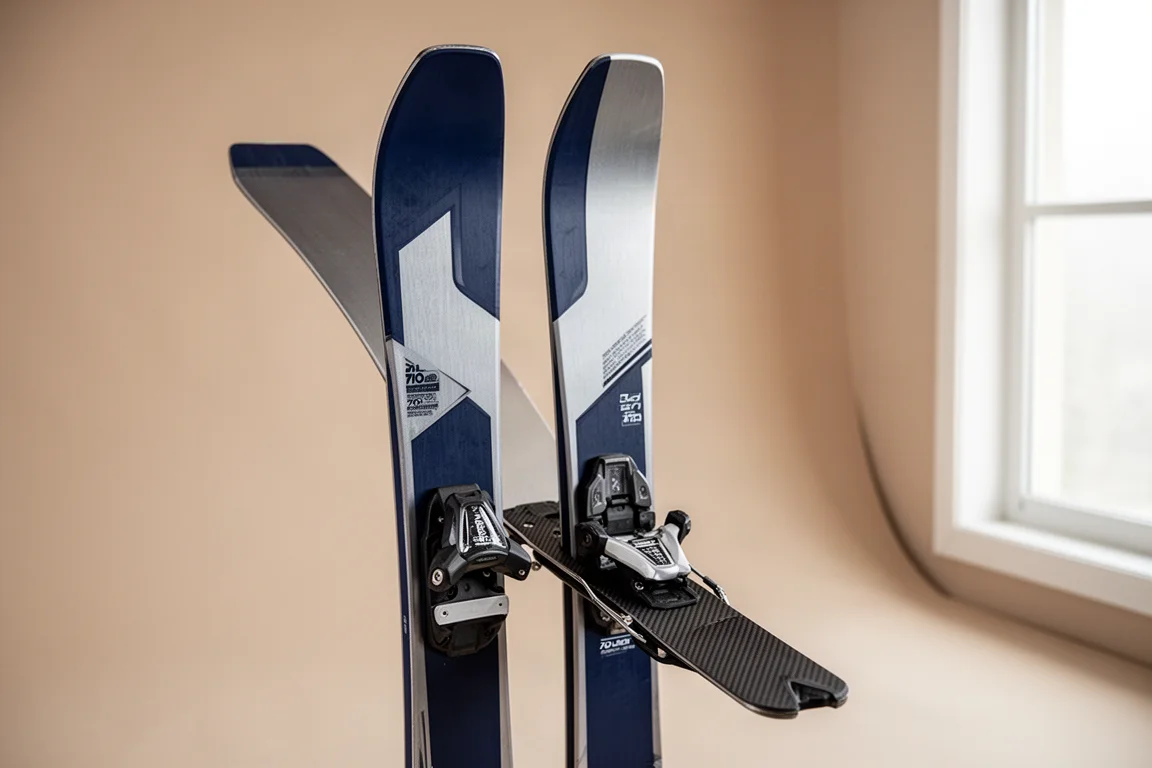
Rossignol Hero Elite LT TI
The Hero Elite LT TI uses a dense beech wood core and a full-length, full-width sheet of titanal rather than two separate sheets. Rossignol’s Line Control Technology, a vertical strip running down the center of the ski, is designed to help with counter-flexing and to produce more consistent, predictable edge contact with the snow.
At 18 m the radius is among the longest here. Weight is 3,380 g with binding, and the ski carries more rocker than anything else in this group so far, though still a modest amount, with a flat tail. It makes long, round GS-style carves, but the tip shape and rocker also let it be broken free for shorter skidded turns, which gives it more stylistic range than most of the slalom shapes.
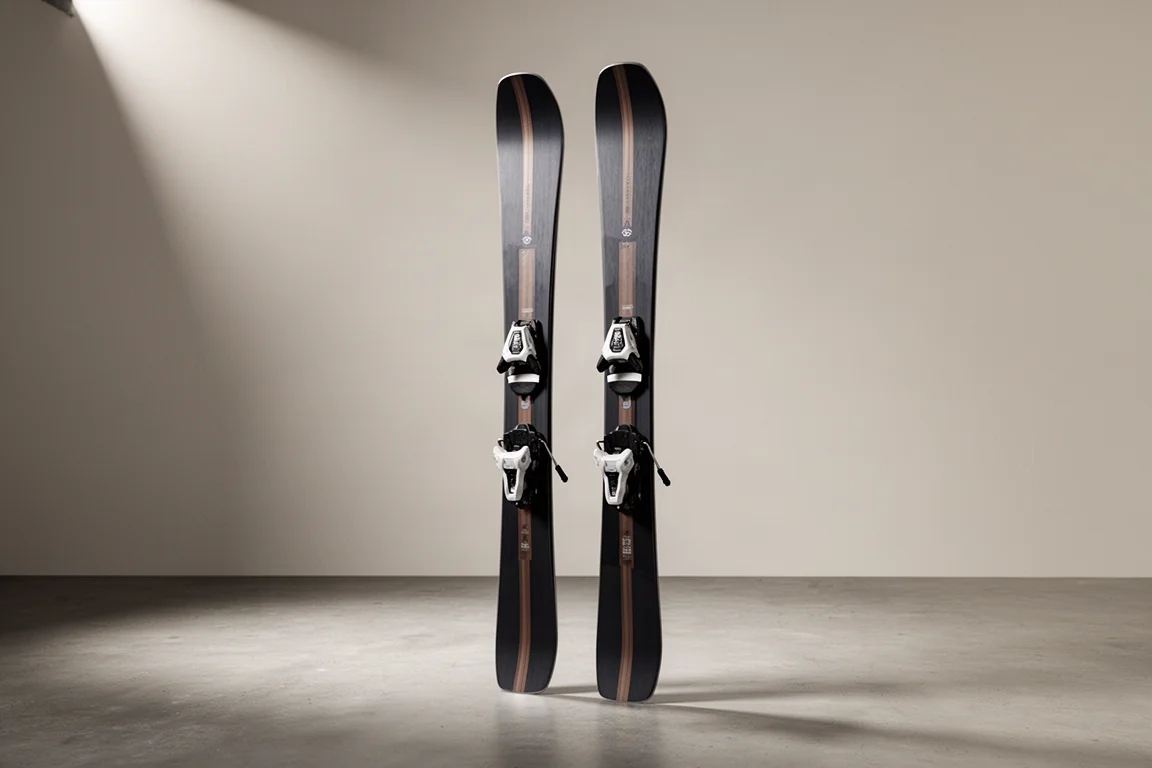
Stöckli Laser SC
The Laser SC uses a poplar and beech wood core with two sheets of metal, along with Flex Torsion Control, a wave cut in the tip that allows proper articulation. At 72 mm underfoot and 177 cm, the dimensions are 123/72/104 with a 16.2 m turn radius.
It weighs under 2,000 g despite the two metal sheets, and there is enough tip flex to make turn initiation easy while the rest of the ski stays stout and stable. The ability to work with softer snow rather than claw at it makes it more versatile than the narrower Lasers as an everyday carving ski.
Stöckli Laser Ora
The Laser Ora is the Laser SC with a different top sheet. The construction is otherwise the same, including the poplar and beech core and the two metal sheets, and bamboo inserts are called out in the top sheet, though they are a cosmetic detail rather than part of the core.
At 177 cm the radius remains 16.2 m and the waist stays at 72 mm. The premium over the standard SC is about $200, bringing the price to $1,899. It is worth being clear about what that buys: a special-edition finish rather than different on-snow performance.
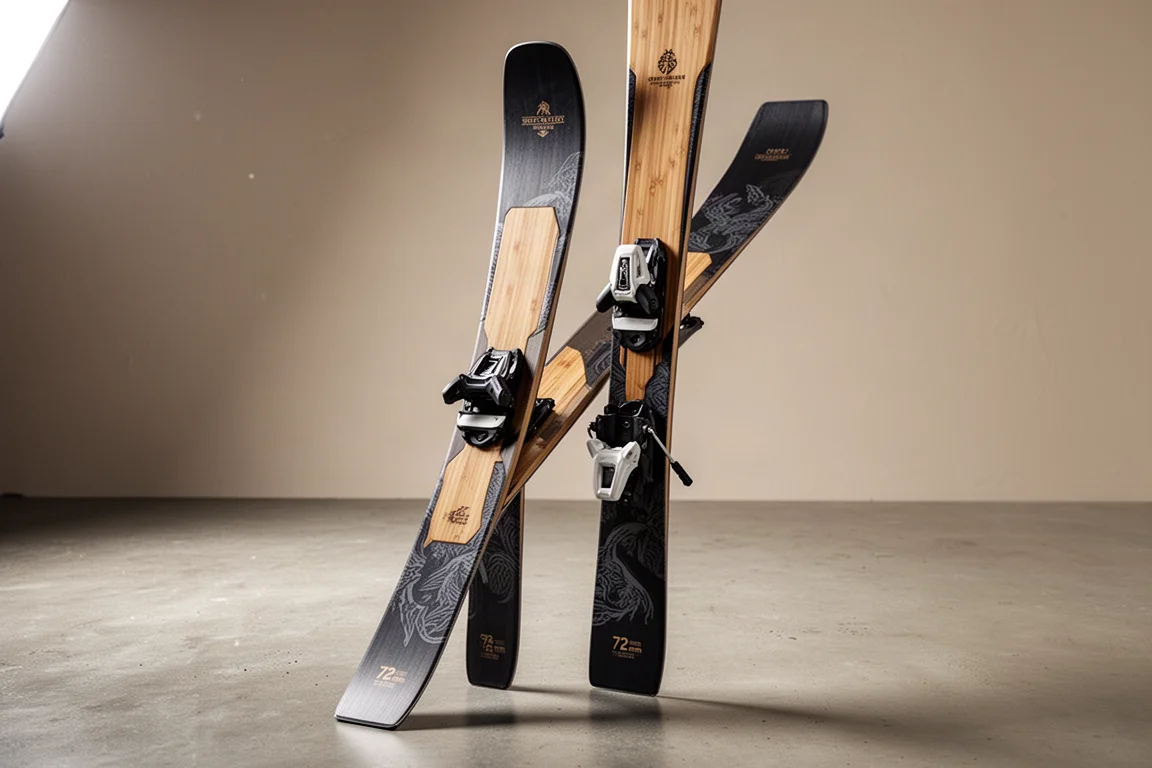
Nordica Spitfire 74
The Spitfire 74 uses Nordica’s double core construction with a single metal layer in the middle and a Pulse Core for vibration damping, and it runs the Xcell binding system. The binding plate is almost entirely plastic, which opens up the flex underfoot a little and keeps weight down compared with models that use a metal plate.
At 74 mm underfoot and 180 cm, the radius is 17.1 m and the weight is 3,300 g with binding. There is a lot of positive camber, no meaningful taper or rocker, and a flat squared tail. The ski feels connected and intuitive from the first turn, with a good deal of energy for a race-oriented shape, though it is a little more high-octane and slightly harsher than a softer all-mountain build. Price is $999.99.
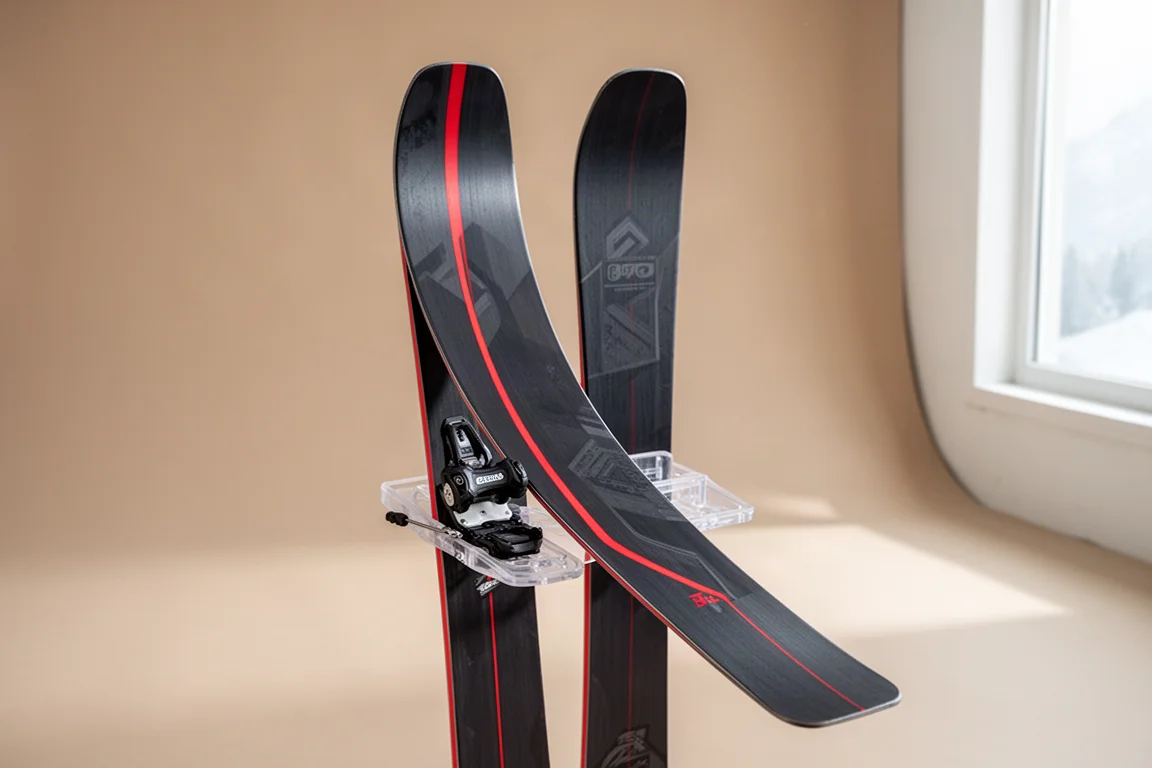
Rossignol Hero Elite MT TI
The Hero Elite MT TI shares its family with the LT TI but softens the recipe: a poplar wood core replaces the beech core, a partial titanal beam replaces the full sheet, and a Carbon Alloy Matrix is added. Line Control Technology is still present. The result is a less aggressive ski with a flex that supports rather than punishes.
At 74 mm underfoot and a 15 m radius, the MT is built for multiple turn shapes, and it carries slightly more rocker than the LT, with real tip rocker and a flat tail. Weight is 3,150 g with binding, one of the lighter builds here. It is plenty of ski for most advanced and expert skiers, and it is a genuinely versatile frontside option at $949 for ski and binding.
View more details for Rossignol Hero Elite MT Ti
Kästle MX 74
The MX 74 is new to the MX series and the narrowest model in it. A new wood core varies narrow stringers of beech and poplar through the ski, putting beech where stability matters and poplar where mobility and ease of use matter. Two sheets of metal and prepreg fiberglass laminates add a consistent level of stiffness, and Hollowtech Evo stops the metal short so the tip stays manageable.
At 178 cm the radius is 16.9 m and weight is 3,224 g. There is slight tip rocker, more early taper than most of this group, slight tail rocker, and a chunky metal insert in the tail that finishes a turn with authority. The shape is the most all-mountain in this lineup, and the flex in the shovel has a suppleness that is unusual for a frontside ski.
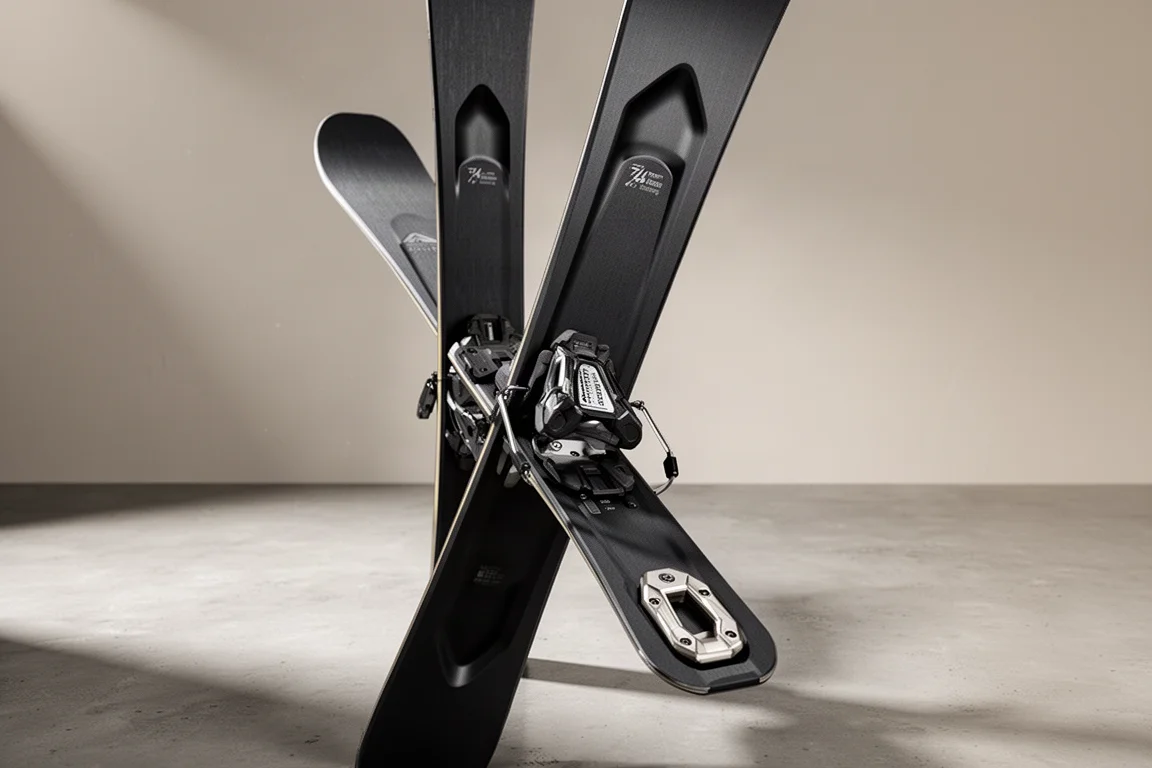
Atomic Redster Q9
The Redster Q9 is the narrower version of the Redster Q9.8, and it is built a little more aggressively than the X7. It uses a Power wood core rather than the Ultra Power core, a full sheet of metal, Revo Shock S and a stronger binding system, along with Ultra Wall construction.
At 75 mm underfoot and 176 cm, the radius is 14.2 m and the flex is stiff, with weight at 3,200 g. The shovel is wide and friendly, and the overall feel is closer to a daily driver than the precise, firm-snow tools at the narrow end of this group. Skiers who spend nearly all their time on groomers but do not want a harsh carving ski are the natural audience here.
View more details for Atomic Redster Q9
Rossignol Forza 60
The Forza 60 uses a poplar wood core with titanal underfoot and a Carbon Alloy Matrix, a construction similar to the Hero Elite MT but with a shorter turn radius and a rounder overall profile. At 75 mm underfoot and 179 cm, the radius is 14 m, and this is the longest length available, so shorter lengths tighten the radius further.
There is a slight amount of tip rocker, a lot of camber underfoot, and early taper in the tail. The ski is energetic and rewarding at moderate speeds, but it has a speed sweet spot rather than an unlimited top end, which keeps it approachable for a wide range of skiers including lighter advanced and expert riders. The early taper also lets you feather turns and make more surfy shapes than the wider Forza 70 allows. Weight is 3,280 g and the price is $899.99 for ski and binding.
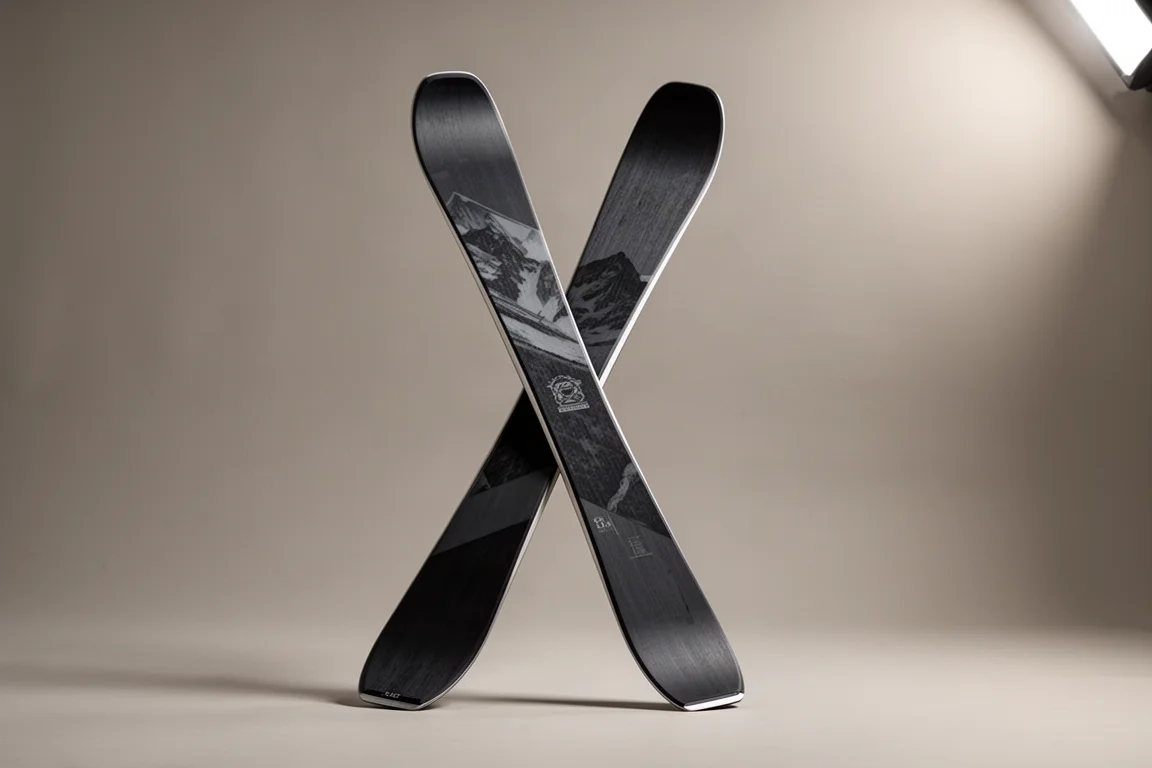
Head Shape e-V8
The Shape e-V8 is the only ski in this group without metal. It uses a Karuba wood core with graphene, carbon and the Energy Management Circuit, which is a lightweight all-mountain build packaged in a frontside shape. That combination gives it a distinctive personality.
At 75 mm underfoot and 170 cm, the radius is 13.2 m and weight is only 2,560 g. The flex is light but not soft, with more roundness than most skis here. There is full camber and effectively no rocker. Response to skier input is immediate, and the ski is quick and energetic, which makes it a strong tool for intermediates working on technique and for experts who want to dial the pace back. It will highlight flaws rather than hide them, and it has a defined top end.
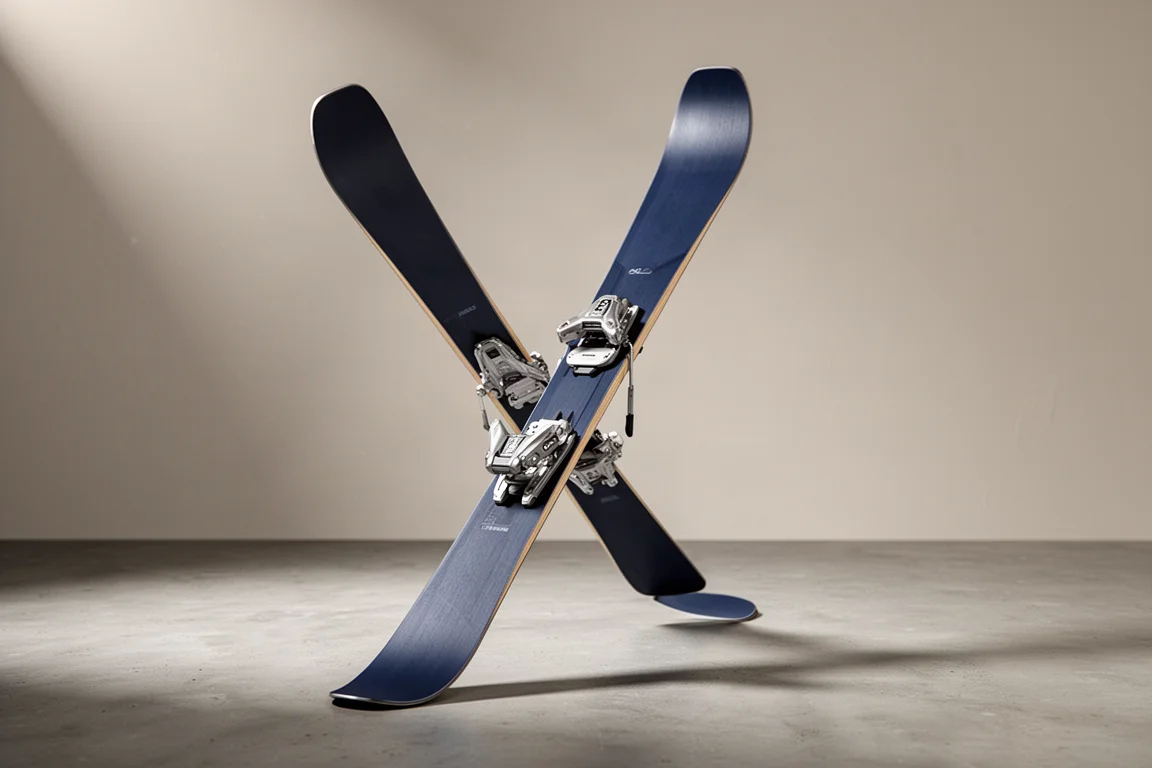
Atomic Redster Q7
The Redster Q7 is the build below the Q9 and shares its 75 mm footprint, but it is lighter and more mobile at 2,700 g. The waist is unchanged, the turn radius is the same 14.2 m at 176 cm, and Carbon Revo Shock technology adds a little energy while keeping weight down. The binding system is lighter and more plastic than the Q9’s, which costs some stability underfoot.
The trade-off is deliberate. Shorter, quicker turns come more easily on the Q7, while the Q9 offers more stability at speed and a more race-like feel. For an intermediate buying a first pair of skis, or a lighter expert who does not want to work hard all day, the Q7 is a sensible long-term choice at $799.95.
View more details for Atomic Redster Q7
Buying Advice: Matching Turn Shape, Width and Weight
Start with turn radius, because it determines the character of the ski more than anything else. A radius of 12 m or less is a slalom feel: constant, quick arcs and a lot of turns per run. A radius of 17 m or more is a giant slalom feel: the ski runs, holds a long line at speed, and can be steered out of the arc when you want variety. Between roughly 14 m and 16 m is the middle ground that most recreational skiers find easiest to live with day after day.
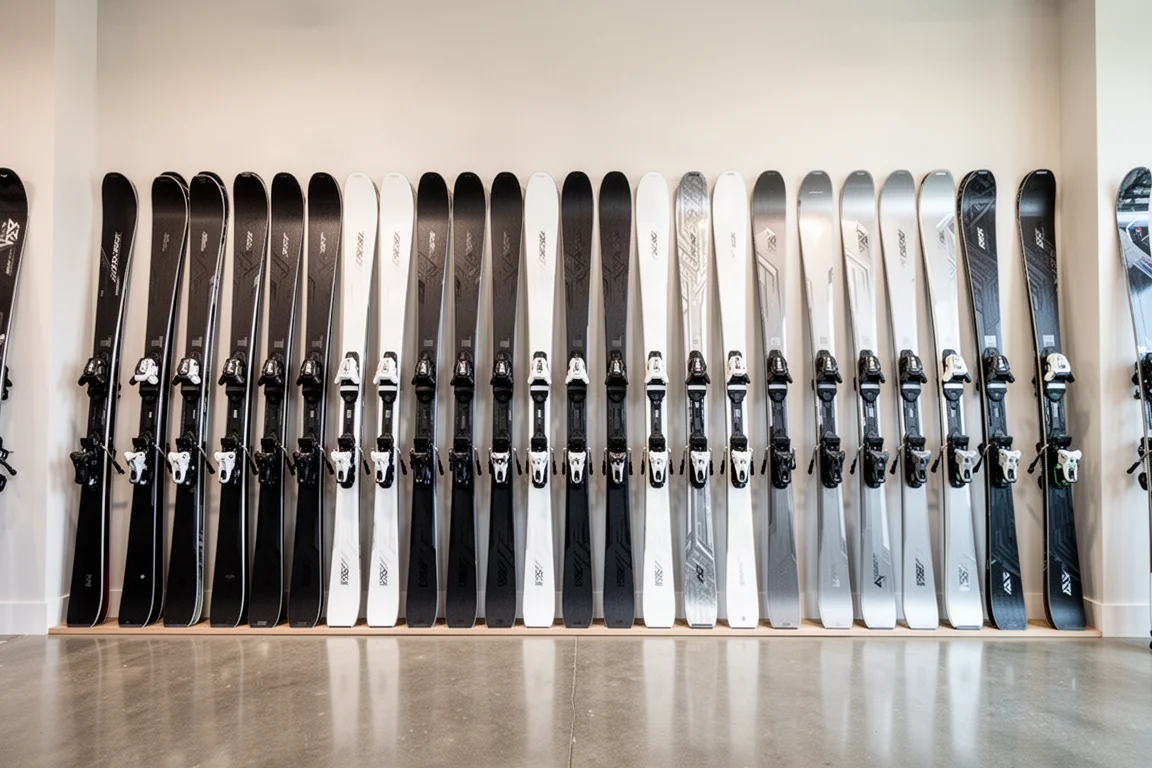
Width comes next. Between 65 mm and 68 mm, the ski demands firm, well-prepared snow to give its best; on softer packed powder it digs in and can feel unpredictable. Between 70 mm and 72 mm you get a useful compromise that still grips hard on ice but works with softer groomers. Between 74 mm and 75 mm the ski starts to overlap with wide frontside and all-mountain territory, and it handles variable conditions far more gracefully.
Weight and binding platform matter more than they look on a spec sheet. Metal adds weight, stability and cost. Lighter skis with plastic plates are less tiring and easier to bend, which suits intermediates, lighter skiers and anyone who skis shorter sessions. Heavier skis with metal plates and race bindings feel planted and damp, but they will wear you down over a long day.
Finally, price does not scale linearly with performance. The $799 to $949 skis in this group are genuinely capable and suit a very wide range of skiers. The $1,500 to $2,079 skis are specialised tools built for strong, committed skiers who will use what they offer. Buying more ski than your technique can use is the most common mistake in this category, and it is an expensive one.
Conclusion
Narrow frontside skis reward a clear-eyed match between the ski and the skier. If you ski firm groomers and want precision, the 65 mm to 68 mm race-derived shapes deliver it, provided you are prepared to stay balanced and deliberate. If you want a carving ski that still works when the snow softens, the 70 mm to 72 mm options are the safer bet. And if you spend nearly all your time on groomers but want something forgiving enough to grow with, the 74 mm to 75 mm group at the accessible end of the price range is where most skiers will be happiest.
Further reading
Related Reviews

Ski Gear
2023 Blizzard Hustle vs Rustler: Six Freeride Skis Compared
Blizzard's 2023 Hustle collection rebuilds the Rustler shape with a lighter core and no metal. Here is how all six skis differ, and which one suits your riding.

Ski Gear
2023 Skis of the Year: Atomic Maverick 88 TI, Salomon QST 106, and Look SPX 12 Pro
Three standout ski picks for all-mountain carving, powder days, and reliable binding performance, with practical buying notes for 2023 models.

Ski Gear
2025 Nordica Enforcer 104 Review: A Directional Charger Replaces the 104 Free
The 2025 Nordica Enforcer 104 drops the Free name and the twin-tip personality, gaining weight, stiffness and composure in rough snow. Here is what changed and who it suits.