Fountain Pens
Namiki Yukari Royale Review: A Vermilion Urushi Fountain Pen Worth the Wait
A close look at the Namiki Yukari Royale, a metal-bodied urushi fountain pen with a gold No. 20 nib, covering design, nib sizes, writing performance, and who it suits.
Introduction
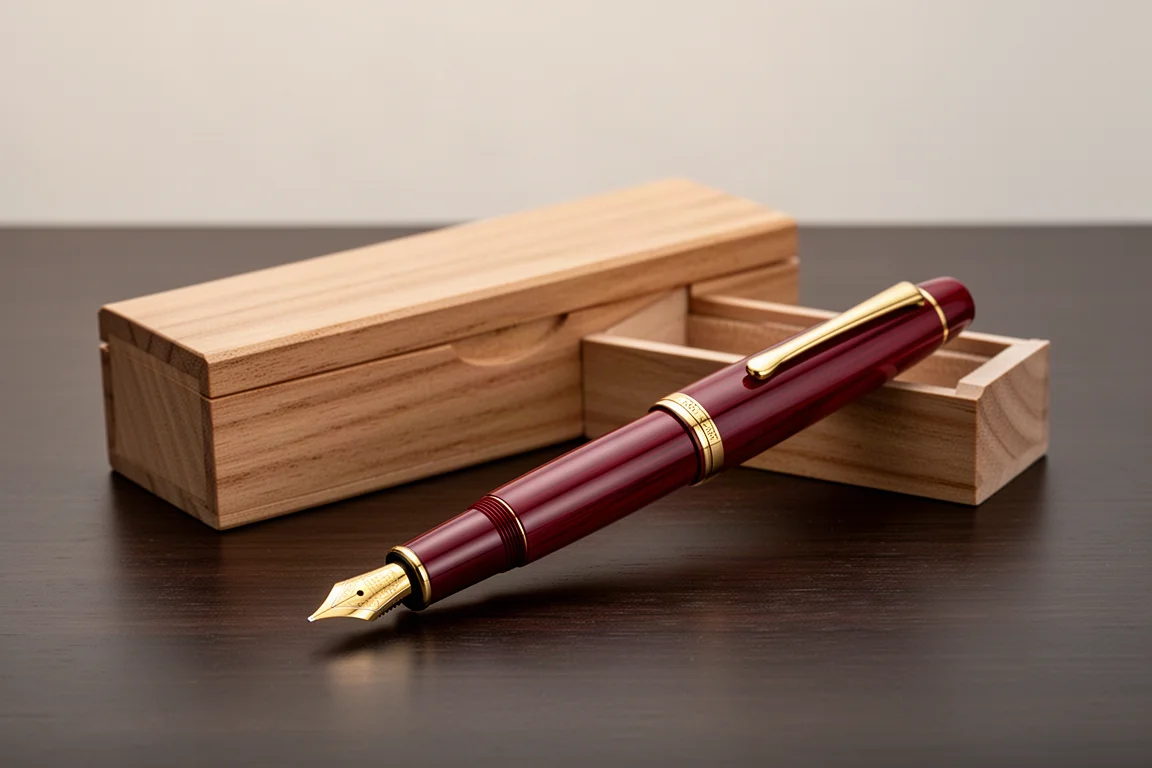
The Namiki Yukari Royale is one of those pens that sits quietly at the top of most fountain pen enthusiasts’ wish lists. It is a genuinely expensive pen, retailing at most sites for around $1,500, and it fills a specific role: a beautiful, striking urushi lacquer pen with a deliberately simple design. This review covers its parts and features, what works well and what does not, size comparisons against other Pilot and Namiki models, and a writing sample from the fine 18 karat gold nib.
The Story Behind Namiki
Namiki’s roots go back to 1918, when the Pilot Pen Company was founded by two gentlemen, Misawada and Rico Namiki. The company was originally named the Namiki Manufacturing Company before being changed to Pilot, a name chosen as a tribute to their shared passion for the sea, referring to a fleet’s flagship. In 1924, Namiki was founded as an artisan offspring of Pilot.
Namiki’s early pens were made from ebonite, which tends to change color and lose its shine over time. To solve this, the company began coating its pens in urushi lacquer, creating a more attractive body while limiting the deterioration of the ebonite.
Unboxing and What’s Included
The Yukari Royale arrives in a large box, with an inner packet containing a use and care guide, warranty information that can be mailed back to register the pen, and a DVD documenting the maki-e and urushi process in great detail. The DVD’s video content dates from the early 1990s and runs roughly 45 minutes. It moves slowly compared to modern content, but it is genuinely interesting and a nice inclusion.
The pen itself comes in a very nice soft wood box with a lift-off lid. Underneath the padding you will find a polishing cloth, a bottle of black ink, and the pen.
Design and Materials
The Yukari Royale is essentially the younger sibling of the Namiki Emperor, sharing the classic cigar shape, though the Emperor is significantly larger. The review unit here is the vermilion model, which is also available in black.
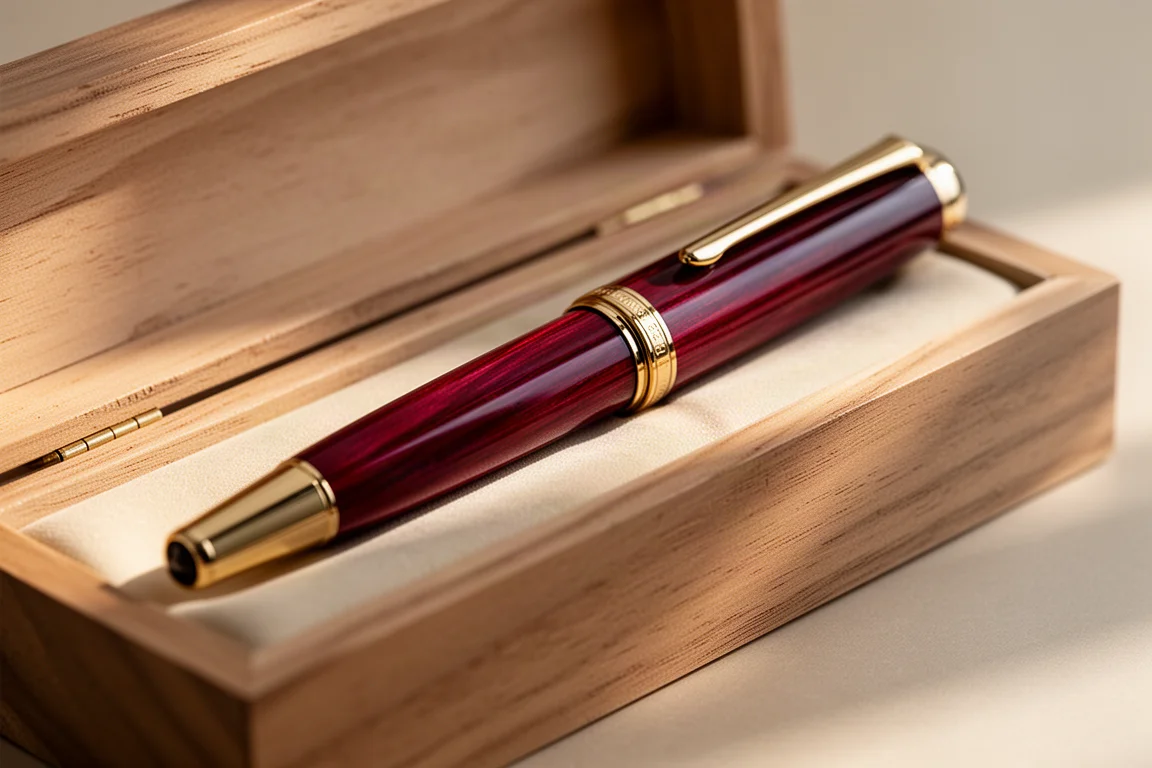
Beyond size, the biggest difference between the Yukari Royale and the Emperor is the body construction: the base of this pen is metal rather than the ebonite of the Emperor. The deep red exterior is achieved with a non-oil lacquer for the final coat and a polishing method that involves repeatedly rubbing in raw lacquer after polishing the surface with special charcoal. The resulting red reads just slightly deeper than that of the Emperor.
The cap is rounded at the top and transitions into the traditional Namiki clip. The trim is gold plated, the word Namiki on the clip is the only exterior branding, and the pen’s serial number sits at the very top of the clip. The clip is identical to the one found on the much larger Emperor, and a thin gold-plated band finishes the end of the cap. The step from cap to barrel is fairly small, and the barrel tapers down to a rounded end.
Nib and Section
The cap twists off in just under two rotations to reveal a number 20 sized 18 karat gold nib, available in fine, medium, and broad. The stamping on Namiki nibs looks really classy, and some versions of this pen come with a two-tone nib featuring Mount Fuji in silver. The No. 20 is around the same size as a standard number six Jowo nib, and the feed is red plastic. The section is urushi coated resin, starting with a flare, angling up to a small step before the threads.
Everyday Use
This is not an oversized pen, and it is very comfortable in the hand. The cap posts securely, but posting throws off the balance and backweights the pen more than is ideal, so it is best used unposted. There is also a practical reason to avoid posting: posting an urushi pen has the potential to damage the material over time. The inner cap is lined with felt to help minimize that risk, but caution is still the better approach.
The Yukari Royale is a cartridge converter pen accepting proprietary Pilot cartridges, and a Con-70 converter is provided. Because of the metal in the section and the metal interior of the pen, eye dropping is not recommended.
Size Comparisons
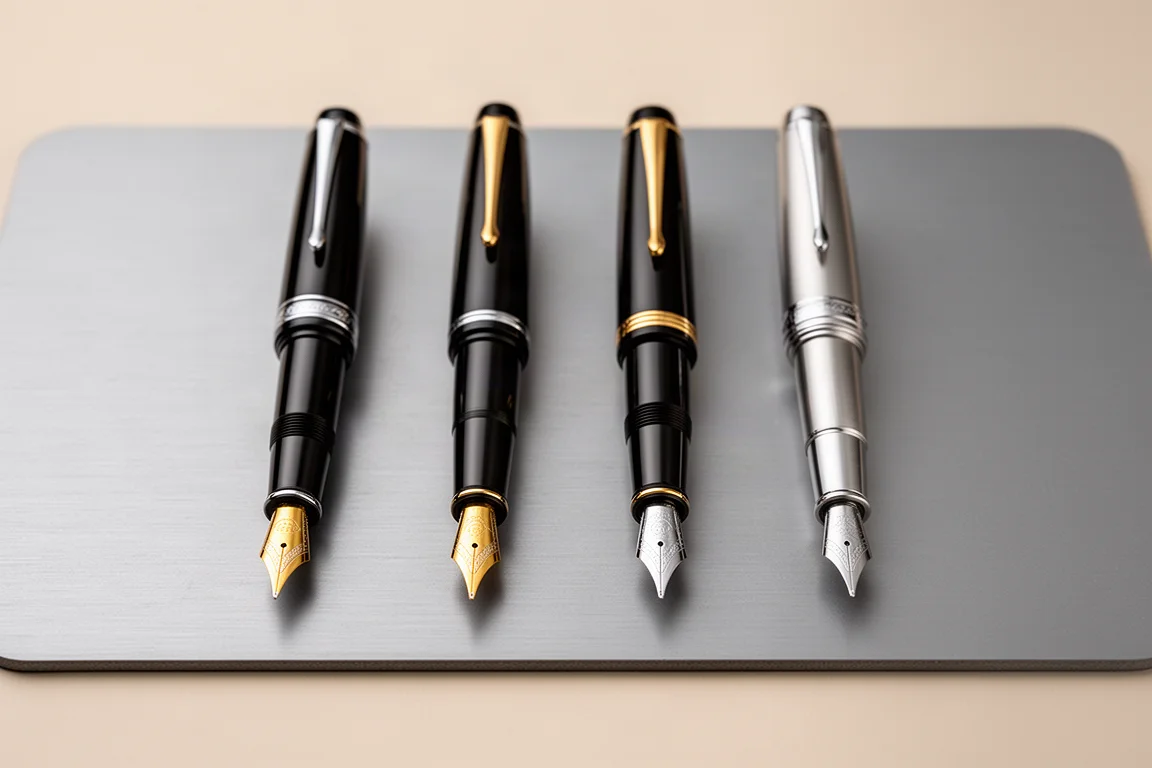
Against the Pilot Custom 823, the Namiki Nippon Art series, and the Pilot Vanishing Point, the Yukari Royale is clearly the larger pen. It also holds its own next to the Montblanc 149, the Sailor King of Pen in Royal Tangerine, and the Pelikan M1000, sitting comfortably in that upper tier of full-size pens while remaining more manageable than the Emperor.
Nib Size Comparison
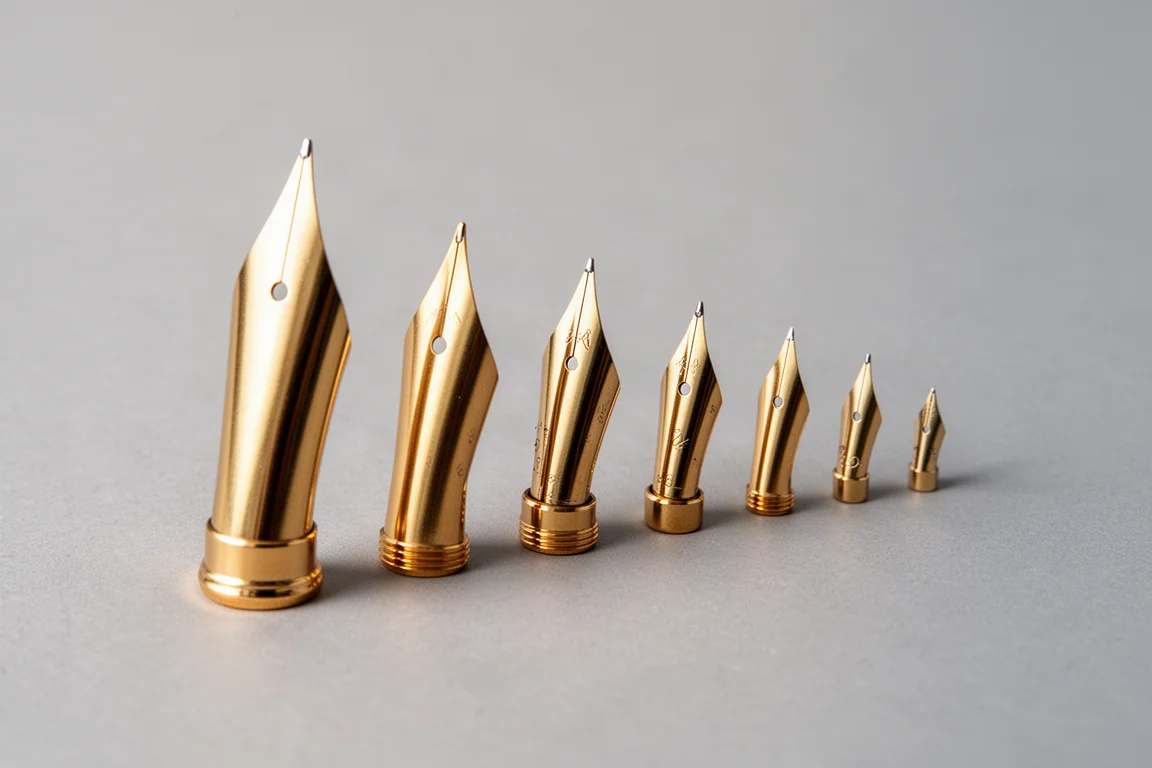
For context on Pilot’s proprietary nib sizing: the Emperor carries a No. 50, the Yukari Royale a No. 20, and Pilot’s own No. 30 slots between them in some models. Below that, the Pilot 845 uses a No. 15, the Namiki Nippon Art a No. 10, the Pilot Custom 742 also a No. 10, the Custom Heritage 91 a No. 5, and the Stella 90s a No. 3. Seeing them all together makes the No. 20 in the Yukari Royale look genuinely substantial without being extreme.
Writing Performance
The fine 18 karat gold nib is a true Japanese fine, and it is interesting to write with. You can get a decent amount of line variation out of it, and it has a fair amount of feedback with a little bite. In the grand scheme of things it could be a touch smoother, since fine nibs are not everyone’s preference, but it is a very pleasant writer overall.
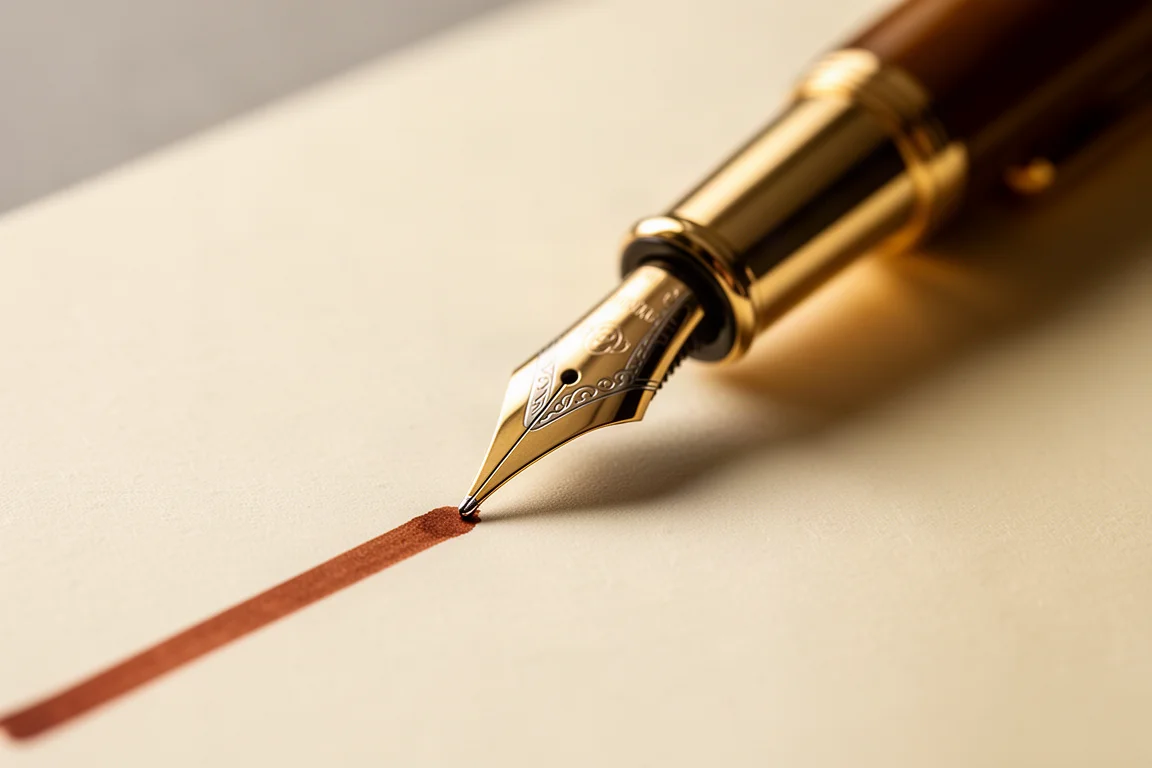
Ink flow is decent, and reverse writing works well, laying down an extra extra fine line that is a little bit sharp. During fast writing, the feed keeps up just fine. The ink used in the sample was Franklin-Christoph Terra Firma, a brownish red that pairs beautifully with urushi pens; it has been discontinued and replaced by the Franklin-Christoph Urushi Red, which also looks great in this pen and the Emperor.
Things to Consider Before Buying
The Yukari Royale is a rather expensive pen at roughly $1,500 retail, so it is worth being clear about what you are getting. There are things that could be different: ebonite rather than metal for the body, and an ebonite feed would have been nice as well. But those issues feel minimal overall, because the pen looks great and performs nicely. If you want the Emperor look in a more practical size, or if you are building out a collection of Pilot and Namiki nib sizes, it slots in beautifully.
Conclusion
The Namiki Yukari Royale is a pen worth being glad to own: sharp looks from the deep vermilion urushi finish, a substantial No. 20 gold nib with a true Japanese fine point, and comfortable unposted handling. The metal body and plastic feed are small compromises against an otherwise refined package, and for collectors who appreciate traditional lacquerwork, it fills a very satisfying hole in a collection.
Product link
View more details for Namiki Yukari Royale
This product is mentioned in the review. Check the specifications, options, and compatibility before buying.
View more details for Namiki Yukari RoyaleFurther reading
Related Reviews
Fountain Pens
Best Budget Fountain Pens Tested: 9 Pens, One Clear Winner
A hands-on comparison of nine affordable fountain pens for everyday writing, calligraphy, and sketching, with a clear standout for flexible nib fans.
Fountain Pens
Aurora Optima Review: An Italian Piston Filler That Punches Above Its Price
A 14k gold nib, ebonite feed, and a beautifully deep oraloid body make the Aurora Optima one of the most rewarding piston fillers around.
Fountain Pens
Cross Bailey Light Review: The Entry-Level Fountain Pen Worth Keeping at the Office
A plastic-bodied Cross with a metal clip, snap cap, and famously smooth extra fine steel nib. Around $15, available almost everywhere, and easy to recommend.