Fountain Pens
Namiki Nippon Art Great Wave Fountain Pen: Hokusai's Icon You Can Write With
A maki-e fountain pen that reinterprets Hokusai's Great Wave with hand-placed gold, a 14k nib, and a surprising argument for daily use.
Introduction
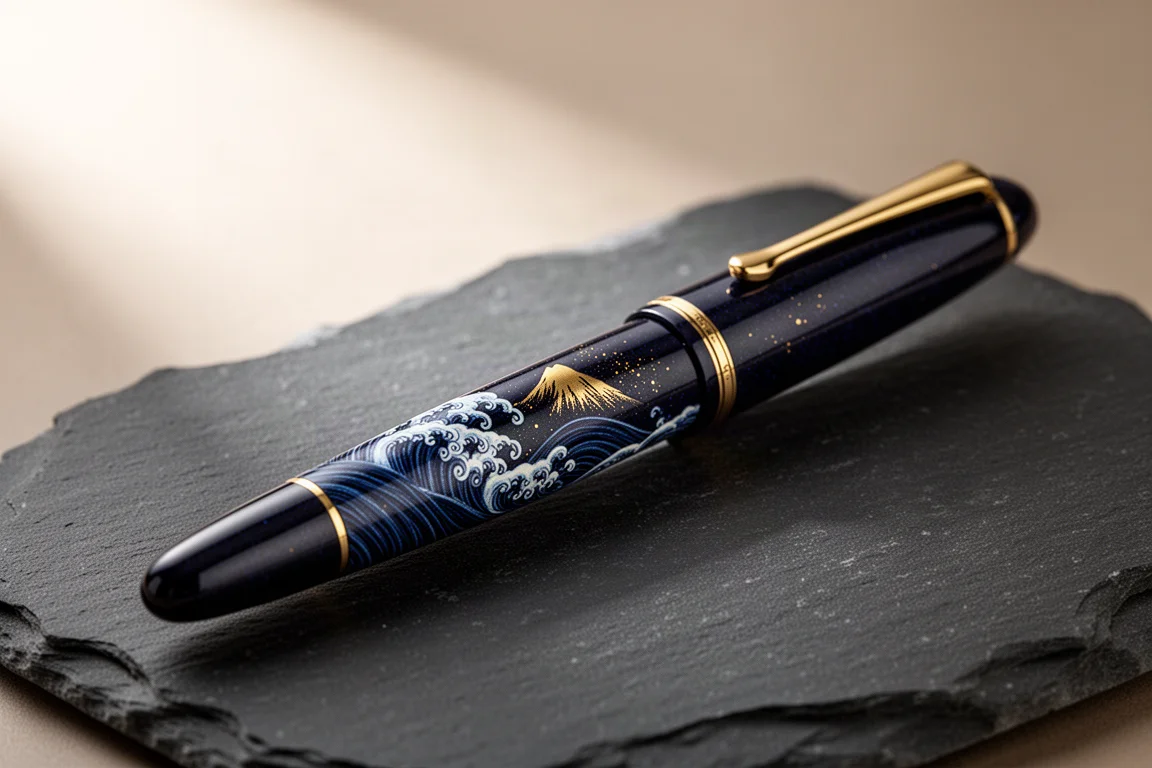
Some fountain pens are tools. A few are statements. The Namiki Nippon Art Great Wave fountain pen belongs to a smaller group still: pens that carry one of the most recognizable images in the world on their barrel and manage to say something new with it.
Hokusai’s Great Wave off Kanagawa is right up there with the Mona Lisa in terms of instant recognition, but where the Mona Lisa is pretty and tranquil, the Great Wave is far more dangerous. It captures a suspended moment of extreme drama: a swelling monster of water with a foamy claw about to engulf three tiny boats, while Mount Fuji watches from a distance in extreme calmness. Namiki takes that image and reinterprets it rather than simply pasting it onto the barrel, honing it down to its essence and heightening its drama in the process.
Why Hokusai’s Great Wave Works So Well on a Pen
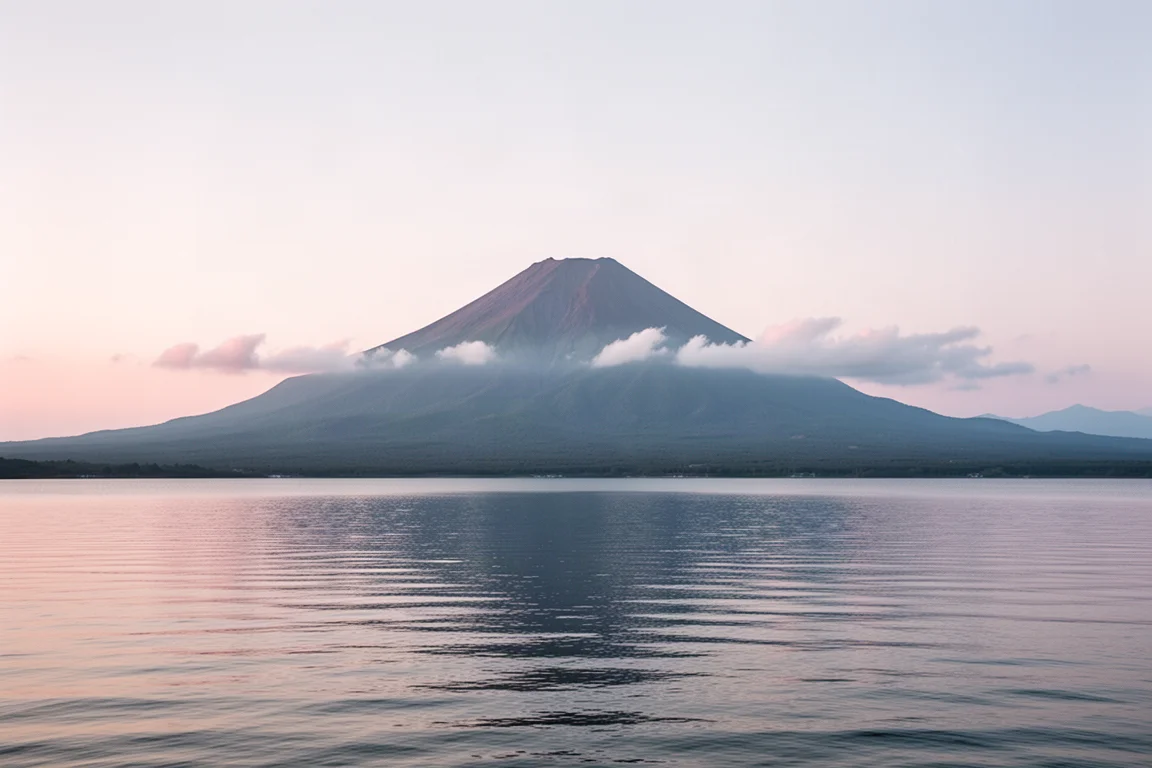
The source material is genuinely dramatic. The edge of the wave reaches out like hands, the fishing boats tilt at a foundering angle, and the fishermen cling on in a suspended moment between living and dying. Behind all of that fury stands Mount Fuji: eternal, massive, and completely indifferent to the storm.
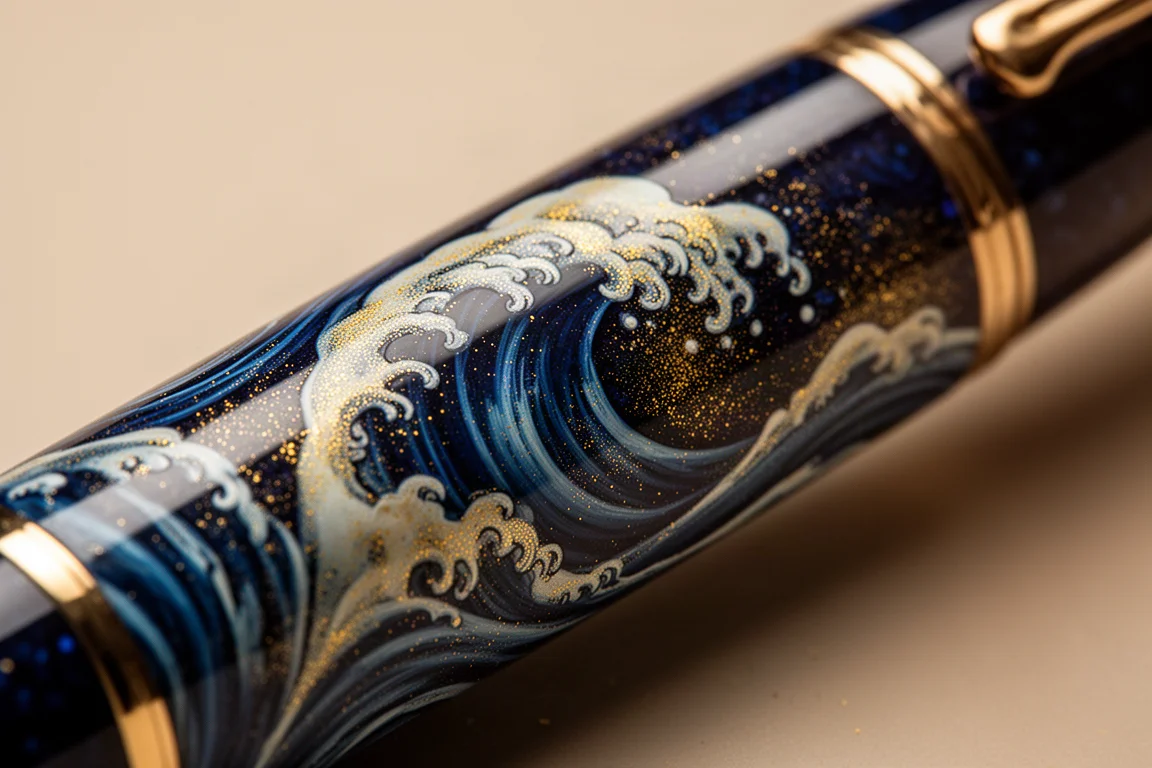
Namiki’s version makes a deliberate choice. The boats and the fishermen are stripped away entirely. Only the wave, Mount Fuji, and the birds remain, and that reduction turns the artwork into a kind of internal dialogue between chaos and constancy. The wave keeps its rhythmic energy, its crest about to break, its almost musical repetition of curves. The birds read as aspirations, above it all, unbound to water or land, able to escape what the boats cannot.
The obvious question is whether this is just a museum piece. Namiki clearly doesn’t think so, and the writing experience backs that up, which we’ll get to below.
The Art Behind the Pen
Understanding this pen means understanding maki-e, which literally means “sprinkled picture.” The technique is older than Hokusai himself, and for most of Japanese history it lived on decorative objects. Namiki, founded in 1925, did something radical: it took this ancient art and applied it to the fountain pen, elevating the humble writing instrument to a museum piece with equal standing to Japan’s great decorative works. Namiki was, as far as anyone can tell, the first to do this.
The Nippon Art series is a love letter to Japan’s iconic images, and for the Great Wave they chose Hira Maki, where the designs sit flush with the lacquer. The result is subtle but luminous. Every speck of gold is hand-placed, and every layer of urushi lacquer is cured for days, sometimes weeks. This is not manufacturing so much as a meditation, and the work is carried out by the artisans of the Kokokai Collective.
The pen is built around the same duality that makes the original print so striking: fury and calm, beauty and danger, all expressed in a striking graphic of beautiful blue.
Namiki Nippon Art Great Wave Fountain Pen
This pen manages the rare trick of looking like an heirloom while behaving like a daily driver. The 14 karat gold nib is made in-house and is itself enamelled with a view of Mount Fuji, once again emphasizing that theme of calm at the center of the storm. It comes in fine, medium, or broad.
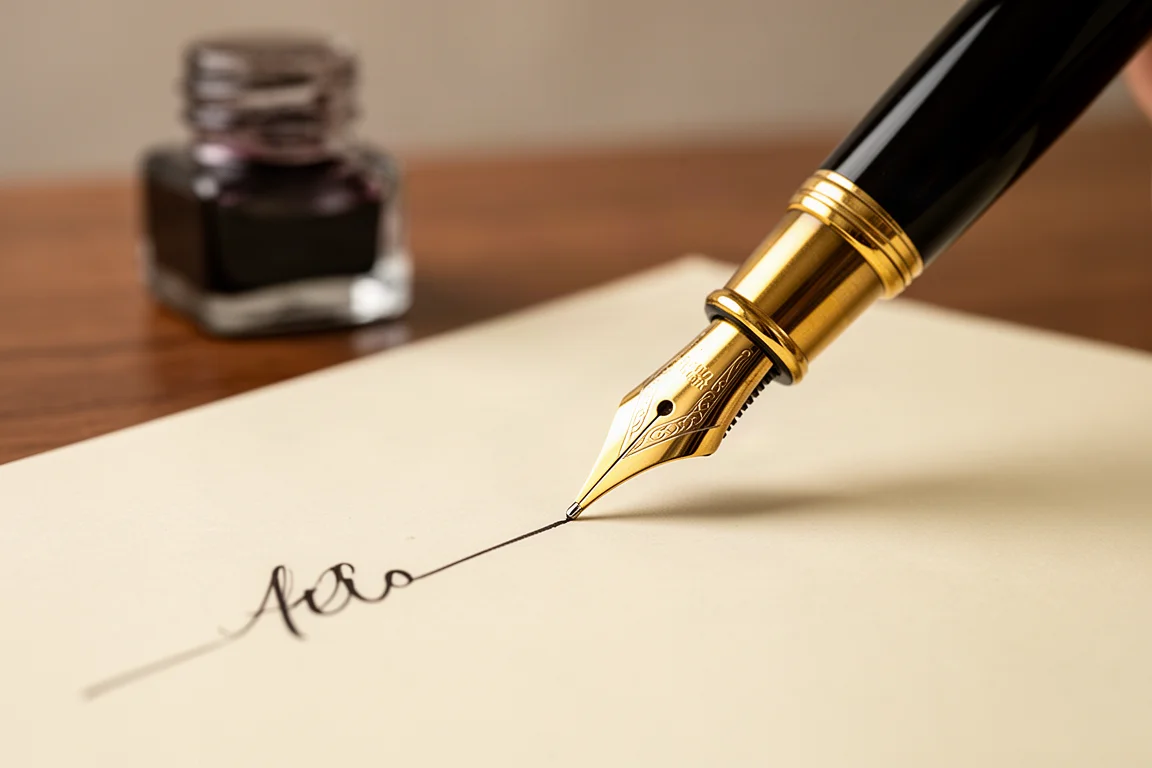
The nib is smooth and precise, a bit narrower than European nibs but so elegant that it draws a beautiful clean line. It is a cartridge-converter pen, and while the converter is serviceable rather than extraordinary, it does the job well. At roughly 31 grams, the weight is perfectly balanced, and it feels strangely lighter in the hand than the numbers suggest, with a certain buoyancy that ties back to that image of a boat. The maki-e surface has a warmth to it, almost organic, and the pen genuinely wants to be held.
There is a real argument that this pen should not live in a box. The urushi and maki-e construction is solid, in many ways stronger than resin, and the design is meant to be used. Ink it up, write a note, draft a letter, sign a receipt. The sublime meets the everyday, and the little signs of life the pen gathers over time are exactly what make it come alive.
How It Writes
The bottom line for any fountain pen is the writing experience, and here the Great Wave genuinely earns its keep. Filled with the Namiki ink that comes with it, it is a complete and absolute joy to write with. The nib is responsive, a fine-tuned brush of a nib rather than a stiff display piece.
One small aesthetic note: the black ink is lovely, but a blue ink, or even a great-wave blue, would tie the whole experience together more neatly. Namiki blue would work just as well.
If you find yourself hesitating to use a pen this beautiful, think of Hokusai. He did not make his art for museums. He made it for people, for the streets of Edo, and he wanted it seen and hung and lived with. This pen is the same. It wants your hand, not your display case.
Caring for a Maki-e Pen
Maki-e pens reward gentle, consistent use, and a few habits go a long way toward keeping the lacquer in good condition.
Avoid extreme swings in humidity and temperature. Going from a freezer straight into the hottest day of the year can cause cracking, as it can with almost any material, so keep the pen away from wild changes. Ironically, high humidity is also worth avoiding, but don’t worry about your hands: the natural oils actually condition the surface and keep it alive over time.
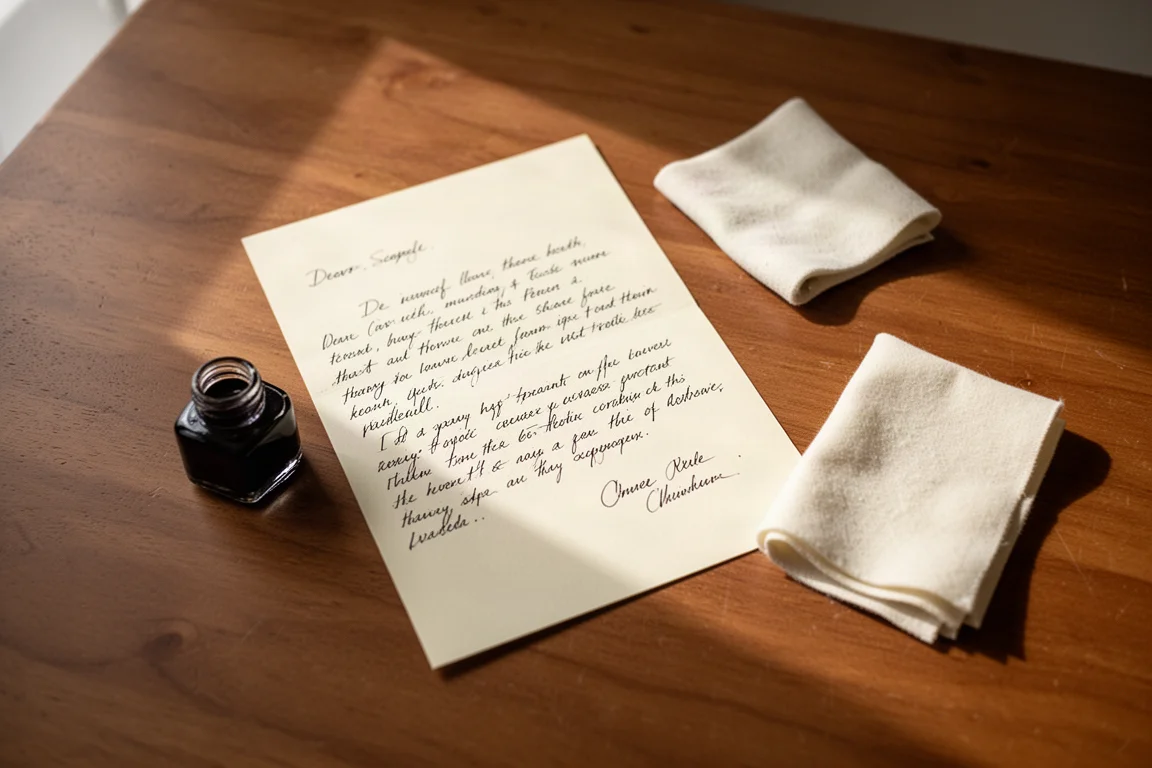
Dust and grime are the other enemy, since rubbing them in can scratch the finish. Wipe the pen gently with a really soft cloth as a first pass, and never reach for solvents. Rubbing alcohol and anything similar should stay well away from the pen, because you never know how they will interact with the historic and natural substances in the lacquer.
Conclusion
The Namiki Nippon Art Great Wave is a pen of paradoxes: it looks like an art object yet writes beautifully, it feels delicate yet is stronger than resin, and it depicts chaos while demanding calm. At its heart, the artwork carries a simple lesson, one Hokusai embodied late into his life: there is always calmness at the center of turmoil, and you can seek it out.
For anyone who loves Japanese art, fountain pens, or the idea of writing your way through a turbulent day, this is one of the most meaningful pens Namiki makes. It is not meant to sit behind glass. It is meant to be your boat.
Product link
View more details for Namiki Nippon Art Great Wave Fountain Pen
This product is mentioned in the review. Check the specifications, options, and compatibility before buying.
View more details for Namiki Nippon Art Great Wave Fountain PenFurther reading
Related Reviews
Fountain Pens
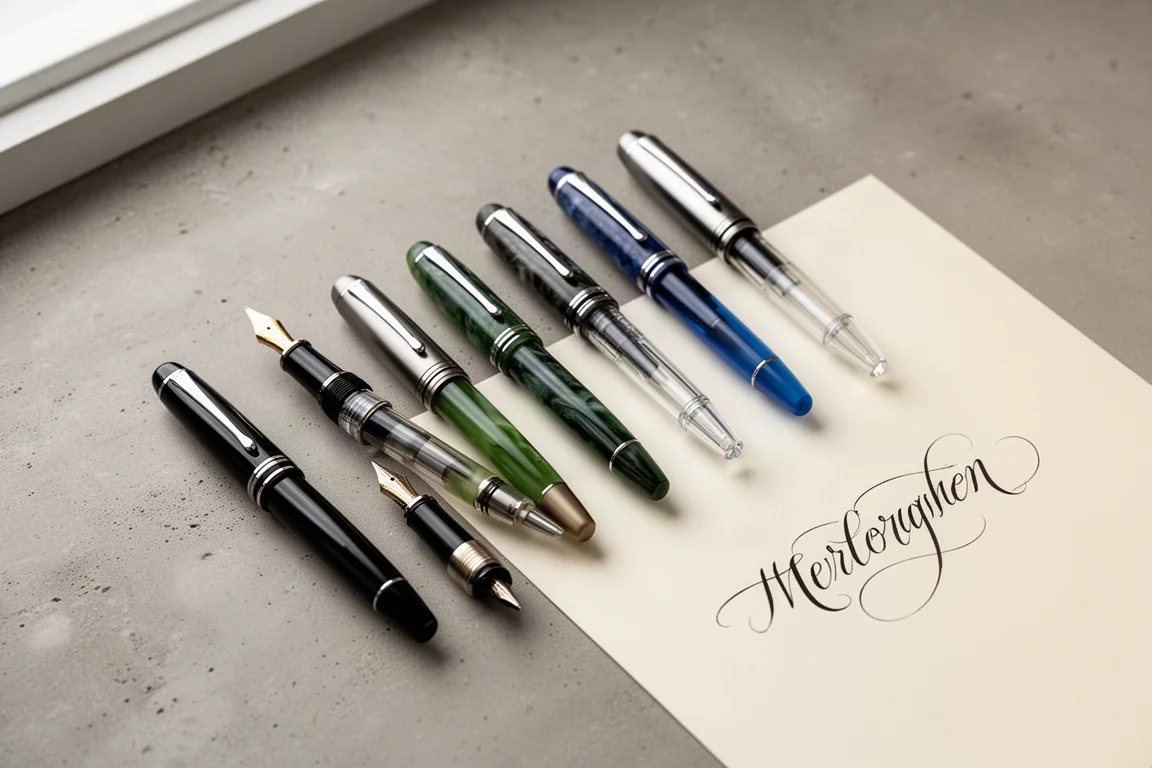
Best Budget Fountain Pens Tested: 9 Pens, One Clear Winner
A hands-on comparison of nine affordable fountain pens for everyday writing, calligraphy, and sketching, with a clear standout for flexible nib fans.
Fountain Pens
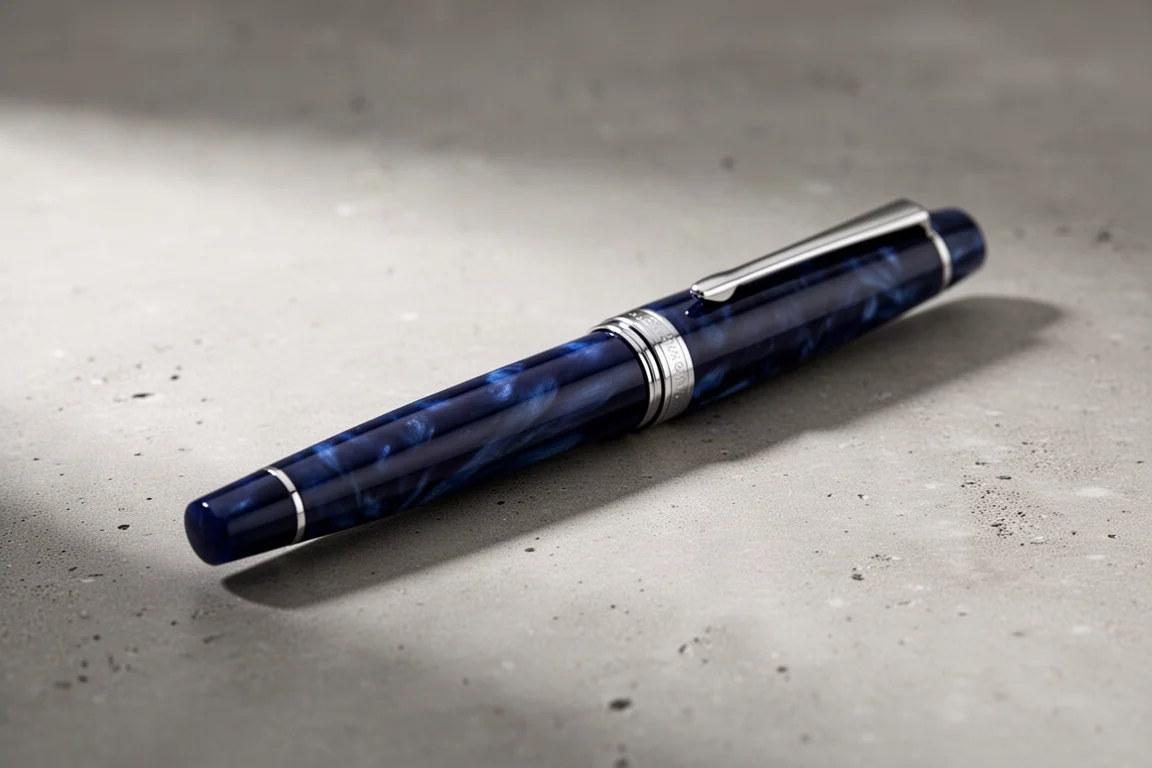
Aurora Optima Review: An Italian Piston Filler That Punches Above Its Price
A 14k gold nib, ebonite feed, and a beautifully deep oraloid body make the Aurora Optima one of the most rewarding piston fillers around.
Fountain Pens
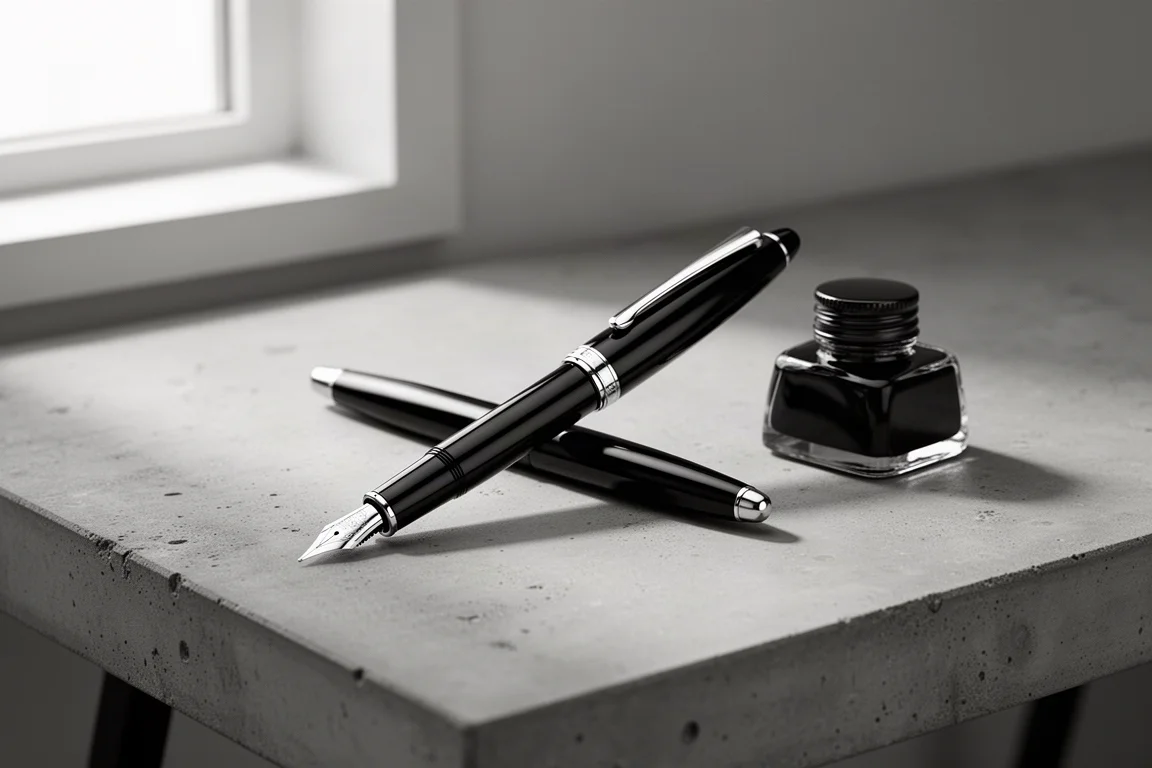
Cross Bailey Light Review: The Entry-Level Fountain Pen Worth Keeping at the Office
A plastic-bodied Cross with a metal clip, snap cap, and famously smooth extra fine steel nib. Around $15, available almost everywhere, and easy to recommend.