Bike Maintenance
Muc-Off Chain Lube Guide: Hydrodynamic vs Ludicrous AF
Two pro-level chain lubricants compared: what each formula is built for, how they differ, and how to choose the right one for your riding.
Introduction
Chain lubricant looks like a trivial purchase. In practice it is one of the few consumables that touches almost everything about how a bike feels: shift quality, drivetrain noise, component wear, and the amount of energy lost between your pedals and the rear wheel. It also helps to reduce rust and corrosion, which matters more than most riders expect over a full season of riding.
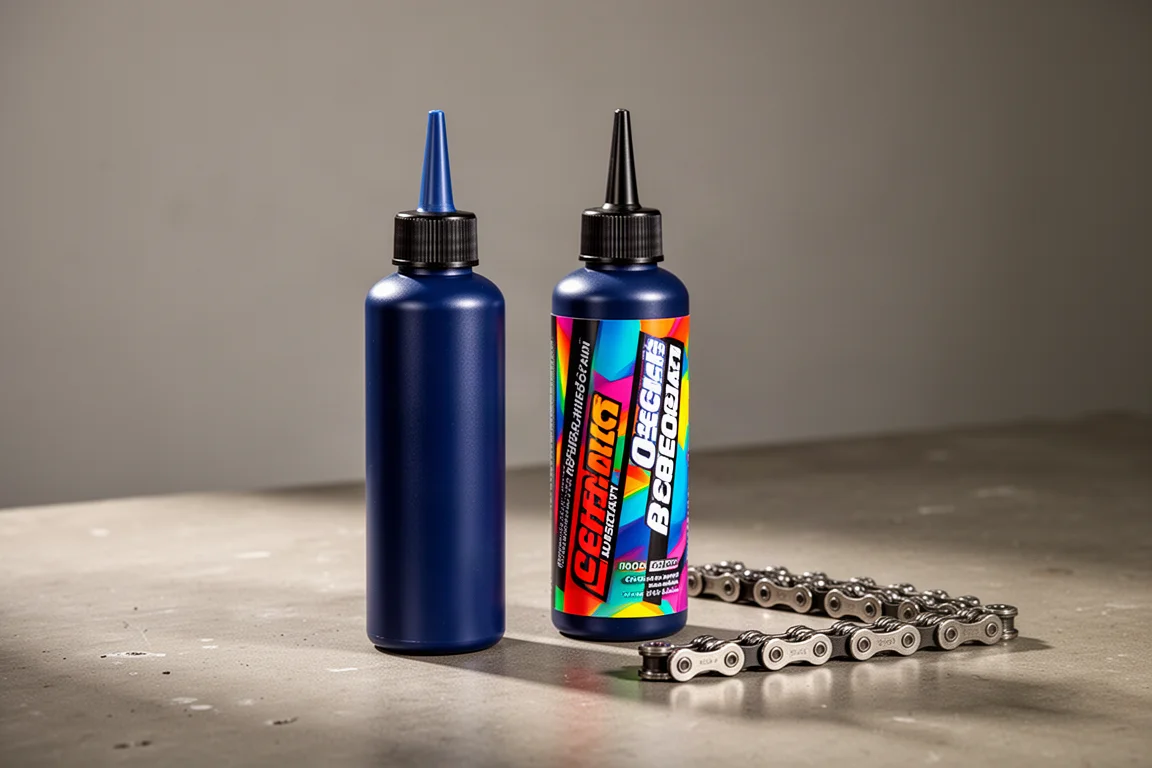
The range on a bike shop shelf is broad, spanning wet and dry formulas, ceramic blends, sprays, and biodegradable options. The two lubricants covered here sit at the top of that range. Muc-Off Hydrodynamic Lube and Muc-Off Ludicrous AF Lube are drip-feed formulas drawn from the treatments Muc-Off has used to prepare chains for professional racing teams over nearly a decade, including Ineos and EF Education. Both are sold as ordinary consumer lubricants, and each is built around a different priority.
What Chain Lubricant Does for Your Drivetrain
In short, lubricant allows your gears to run more smoothly. It reduces friction between the chain’s inner surfaces and the teeth they engage, which extends the lifespan of the components on your bike and lowers the resistance that quietly eats into the power you put through the pedals.
Two habits matter more than brand loyalty. Clean the chain before you lubricate it, and re-lubricate every time you wash the bike. A reasonable working interval for a clean-and-lube routine is roughly every 150 km of riding, though wet, gritty conditions will push that interval shorter.
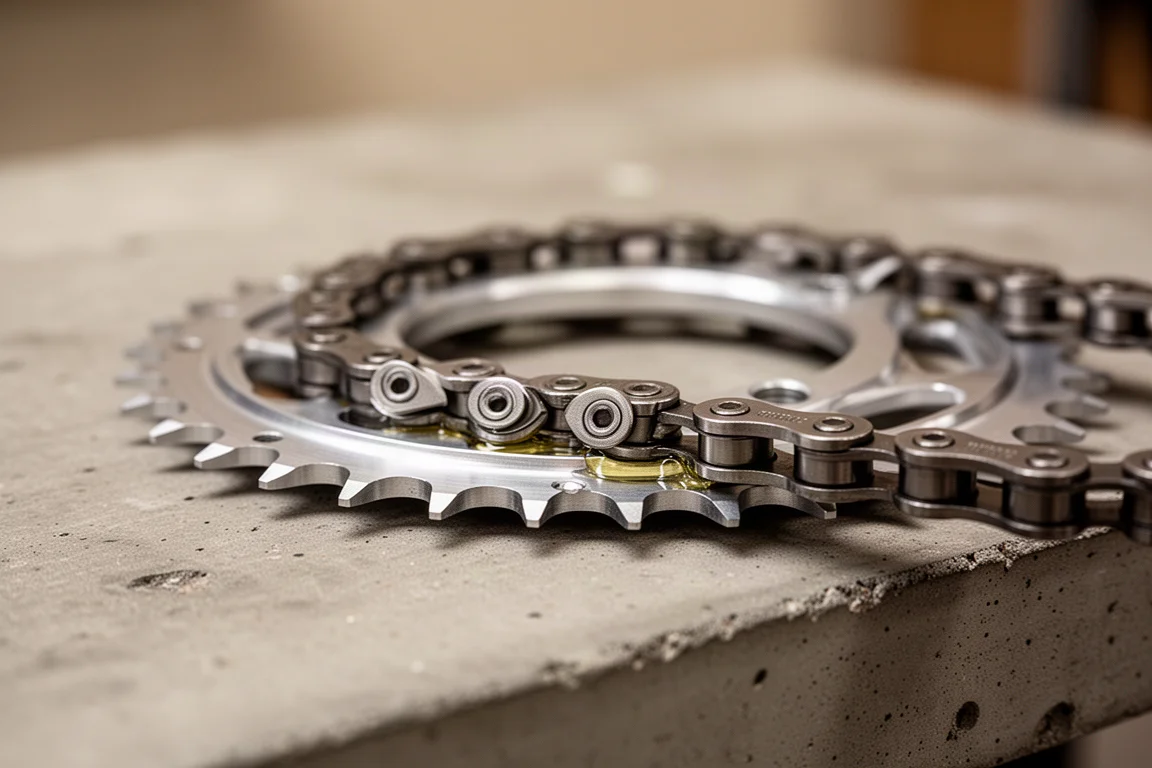
The friction story is where the more advanced formulas come in. When you pedal, some of the energy you produce is always lost to resistance inside the drivetrain. A good lubricant reduces that loss; a very good one reduces it further still. That is the entire premise behind ceramic and pro-level formulas, and it is worth understanding before choosing between the two lubricants below.
Wet, Dry, Ceramic, and Spray Formats
Before comparing the premium options, it helps to know what the standard categories are actually for.
Dry lubricant is intended for dry conditions, when there is little or no chance of the chain getting wet. It dries onto the chain rather than sitting on it, which makes it far less prone to attracting dirt. The trade-off is that rain washes it off more easily, so wet rides demand reapplication after every one of them.
Wet lubricant is the opposite: a thicker, stickier formulation built for rain and mud that will not wash off anywhere near as easily. The obvious question is why anyone would use anything else, and the answer is dirt. Because it stays tacky, wet lubricant picks up grit in dry and dusty conditions, which can leave you with a filthy chain and noticeable added resistance.
Ceramic lubricants sit alongside both, available in wet and dry versions. They contain nano ceramic particles and synthetic polymers, and they are designed to be slippery and smooth in the same spirit as ceramic bearings, reducing drivetrain friction further. Many lubricants across all of these categories are also available in biodegradable formulations that avoid petroleum-based oils entirely.
One detail worth knowing if you have ever found a small UV light in a lubricant box: many of these formulas contain UV dyes. It is not a gimmick. Under the light you can see exactly where application started and finished, which makes it much easier to avoid under-applying or over-applying. Over-application is a real problem, and an easy mistake to make.
Spray and aerosol lubricants work on the same principles but apply differently. They are quick, they cover the whole chain in seconds, and for some riders that is exactly what they want. The caution is precision. Sprays are less controlled, and careless use carries a genuine risk of contaminating disc brakes and rotors, or of leaving an uneven coating along the chain.
Muc-Off Hydrodynamic Lube: Balance Across Conditions
Hydrodynamic Lube is the formula developed with Team Sky, now Team Ineos, to strike a balance between speed and durability. That brief makes sense the moment you consider what a professional stage race asks of a drivetrain: a single stage can move through several weather systems, and mountain passes can deliver conditions that change within the hour.
The result is a lubricant intended to hold up across that kind of variability rather than optimising for one narrow set of conditions. If you have ever wondered which lubricant to reach for when the forecast is uncertain, or when rain arrives partway through a ride, this is the formula built to answer that question. It is available to buy as an ordinary consumer lubricant, applied as a straightforward drip feed.

For riders who deal with mixed weather and would rather not swap bottles depending on the morning’s forecast, Hydrodynamic is the more versatile of the two. It is the sensible default for unpredictable conditions.
Muc-Off Ludicrous AF Lube: Stripped Back for Speed
Ludicrous AF takes the opposite approach. Where Hydrodynamic balances competing priorities, this one has a single purpose: to deliver speed.
The formula was developed by leading tribologists, the specialists who study friction, wear, and lubrication between interacting surfaces. Muc-Off describe it as super low friction and durable, and they have deliberately stripped out the colour dye so you can see exactly where it is being applied on the chain. In character it is the Formula 1 equivalent of a chain lubricant, refined purely for the lowest possible friction rather than for all-round convenience.
That focus makes it best suited to riders chasing marginal gains, whether that means racing, chasing personal bests, or simply wanting the fastest drivetrain they can reasonably run. If your priority is all-weather durability with no fuss, the balance of Hydrodynamic will usually be the more practical choice.
Shop-Level Ultrasonic Cleaning and Lubrication
Both lubricants are also available as part of a deeper service offered at specialist bike shops, using an ultrasonic wash tank followed by an ultrasonic lube tank. The process breaks down the stickiest oils, grease, and grime far more thoroughly than a chain can be cleaned by hand, then lubricates it evenly in the same controlled environment.
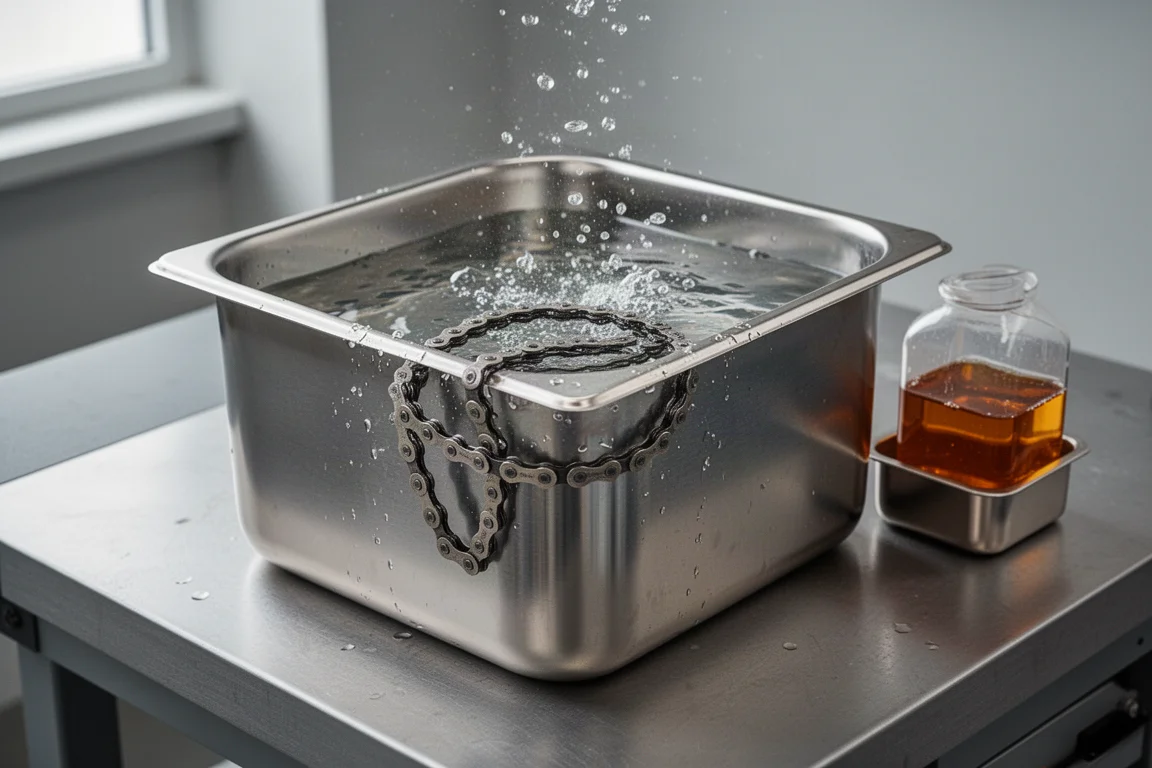
The service is quoted at around £24.99 with the Hydrodynamic lube step, and around £49.99 with the Ludicrous AF step. It is fair to point out that a new chain can cost the same or less. The counter-argument is that a well-maintained chain often still has hundreds of miles of usable life left in it, and a freshly optimised chain that has been through ultrasonic treatment and a pro-level lubricant will not necessarily be matched by a brand new chain straight out of the packet. After the service, the chain needs around 24 hours to cure before it is ridden.
Beyond the Two: The Wider Lube Range
Hydrodynamic and Ludicrous AF are the headline formulas, but they are not the whole range. Muc-Off also produce an e-bike lubricant designed to cope with the constant higher torque that a motor-assisted drivetrain delivers, and a lubricant rated for temperatures down to minus 50 degrees Celsius for riders who face genuinely extreme cold. The brand’s performance hub online is a useful reference point if you want to narrow down the options before buying.
Buying Advice: Matching a Lube to Your Riding
Start with conditions, not with price. If your riding regularly includes rain, mud, or a forecast that changes its mind, Hydrodynamic Lube is the straightforward answer, because it was built to hold its performance across that variability. If your priority is outright drivetrain efficiency and you are willing to accept a more specialised formula, Ludicrous AF is the speed-focused option.
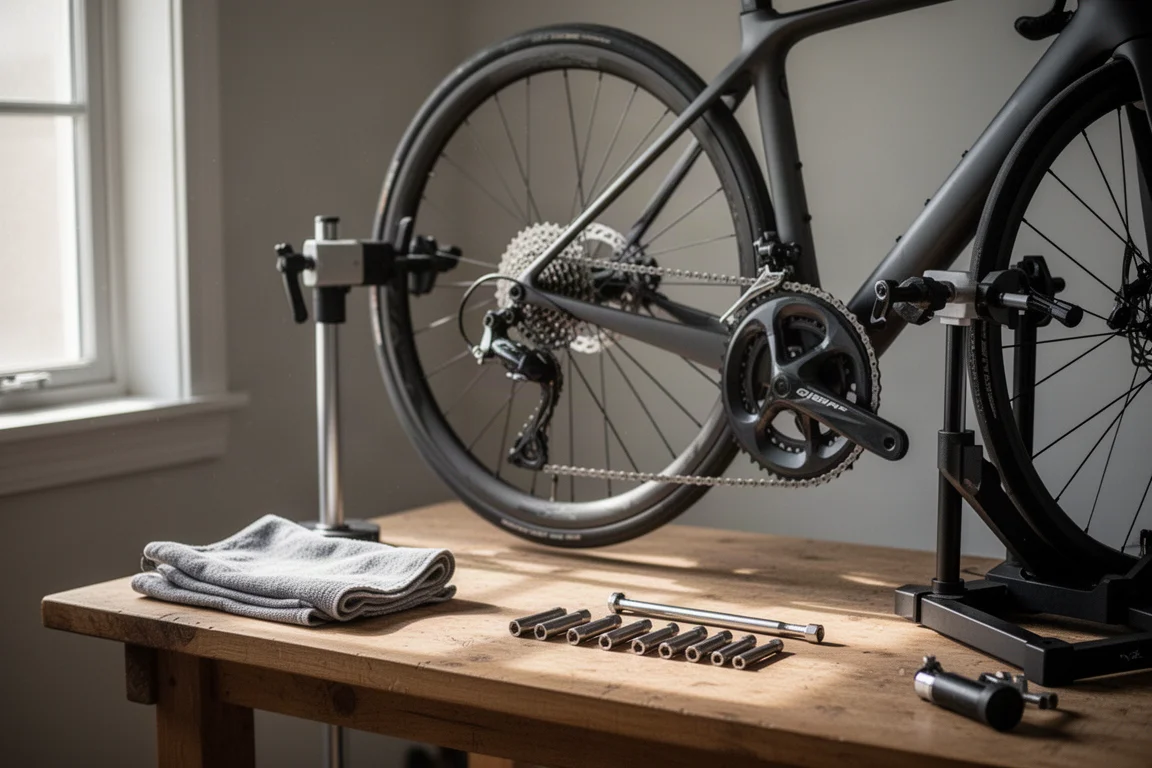
Then consider how you maintain the bike. Drip-feed bottles suit regular at-home routine, and either formula works for that. The ultrasonic shop service makes more sense if you want the deepest possible clean and are happy to leave the chain for a day to cure afterwards. Whichever route you take, the fundamentals do not change: clean before you lubricate, reapply after every wash, and keep an eye on how quickly your chain picks up dirt, because that tells you more about your lubricant choice than any label does.
Conclusion
Both lubricants come from the same development work that Muc-Off has put into professional racing chains for nearly a decade, and both are sold as normal consumer products rather than team-only equipment. Hydrodynamic Lube is the all-rounder, engineered for speed and durability across changing conditions. Ludicrous AF Lube is the specialist, stripped back and built purely for low friction. Pick the one that matches the riding you actually do, and the rest of the drivetrain will thank you for it.
Further reading
Related Reviews

Bike Maintenance
Cyclowax Performance Wax Kit Review: First-Time Chain Waxing Made Simple
A practical look at the Cyclowax Performance Wax Kit, how hot waxing changes chain care, and what to check before you make the switch.
Bike Maintenance
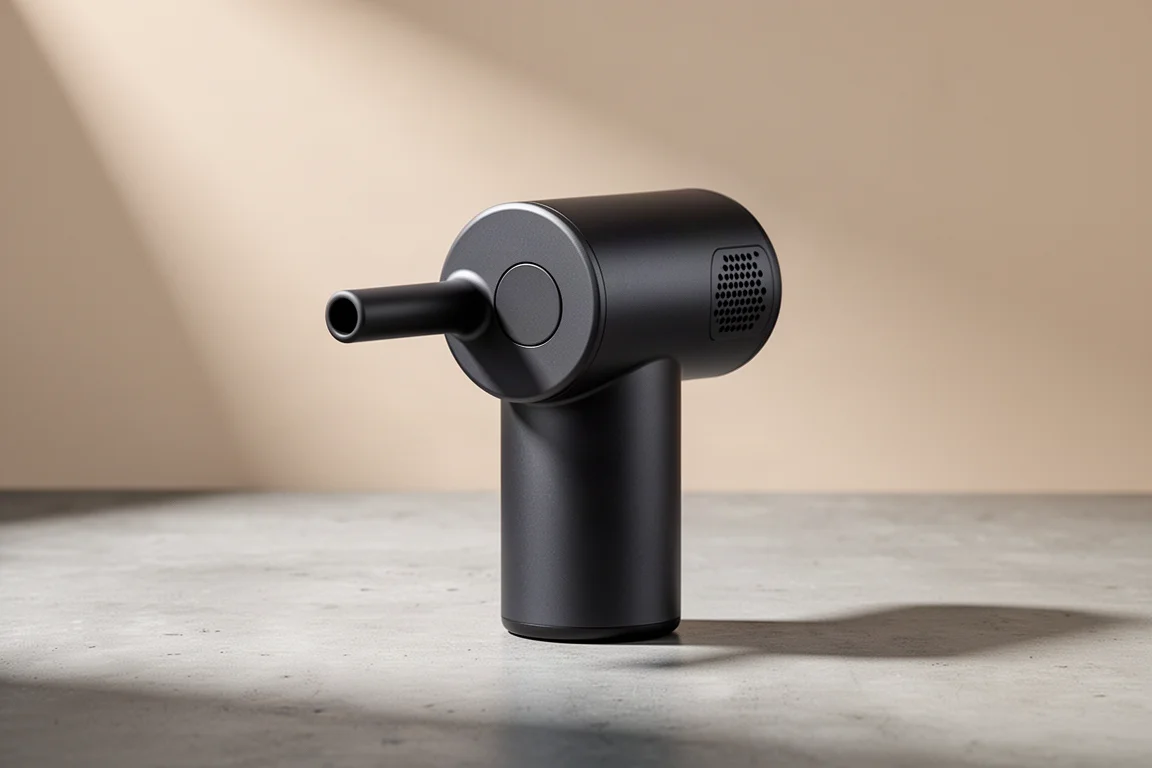
Mukoff Air Blaster Review: A Portable Bike Dryer Worth £120?
A handheld air blower built to dry a bike after washing. It works, it travels well, but the price and power gap against a workshop compressor need a closer look.
Bike Maintenance
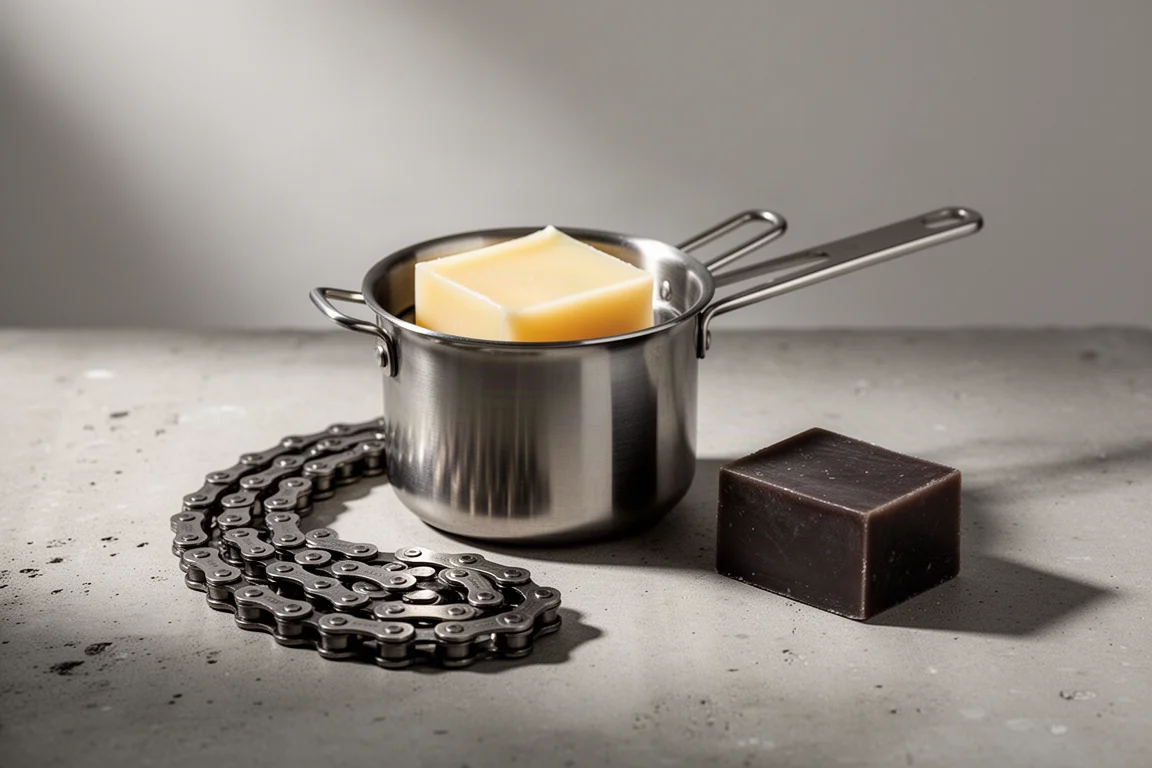
Optimize Chain Wax Review: Graphene, Graphite, and the Fancy Pants Wax Cooker
A practical look at three Optimize wax products, how hot wax compares with drip wax, and what the real time and performance trade-offs look like.