Backpacking Tents
MSR FreeLite 2 vs Nemo Hornet Elite 2: Two Ultralight Backpacking Tents Compared
A close comparison of two semi-freestanding two-person tents that both land near 2 lb, covering floor space, headroom, weight, price, and the rain-day trade-offs.
Introduction
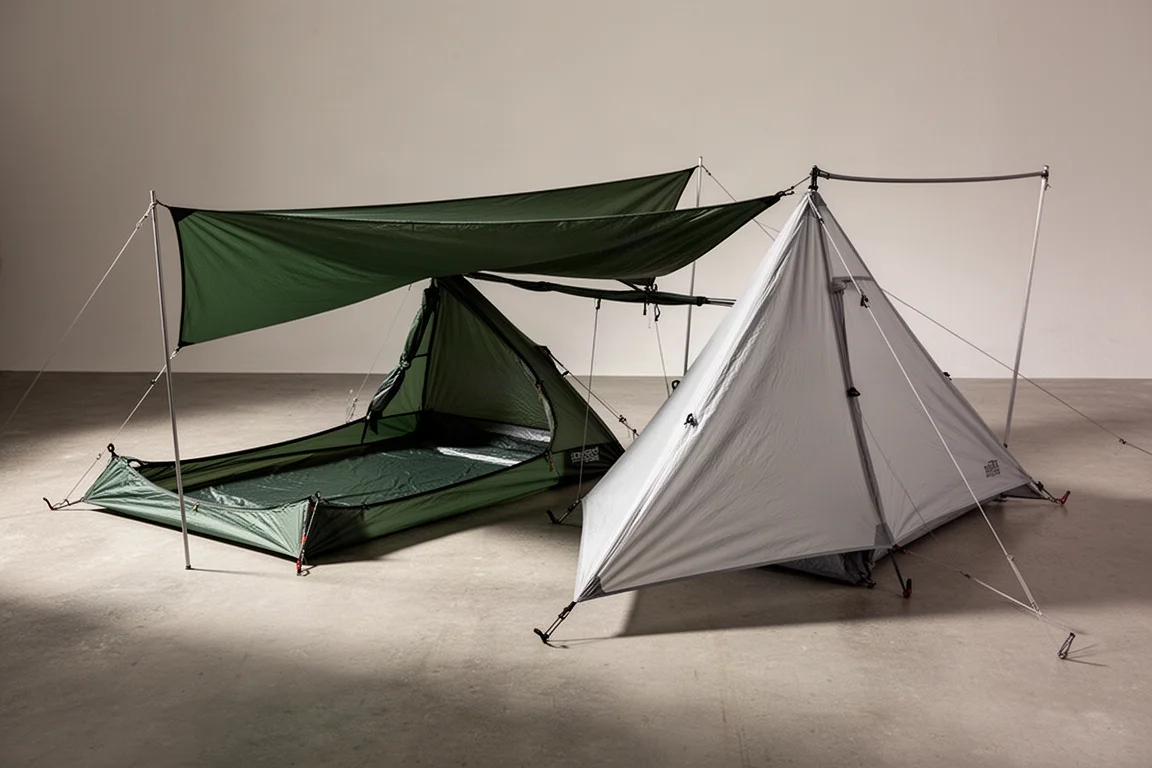
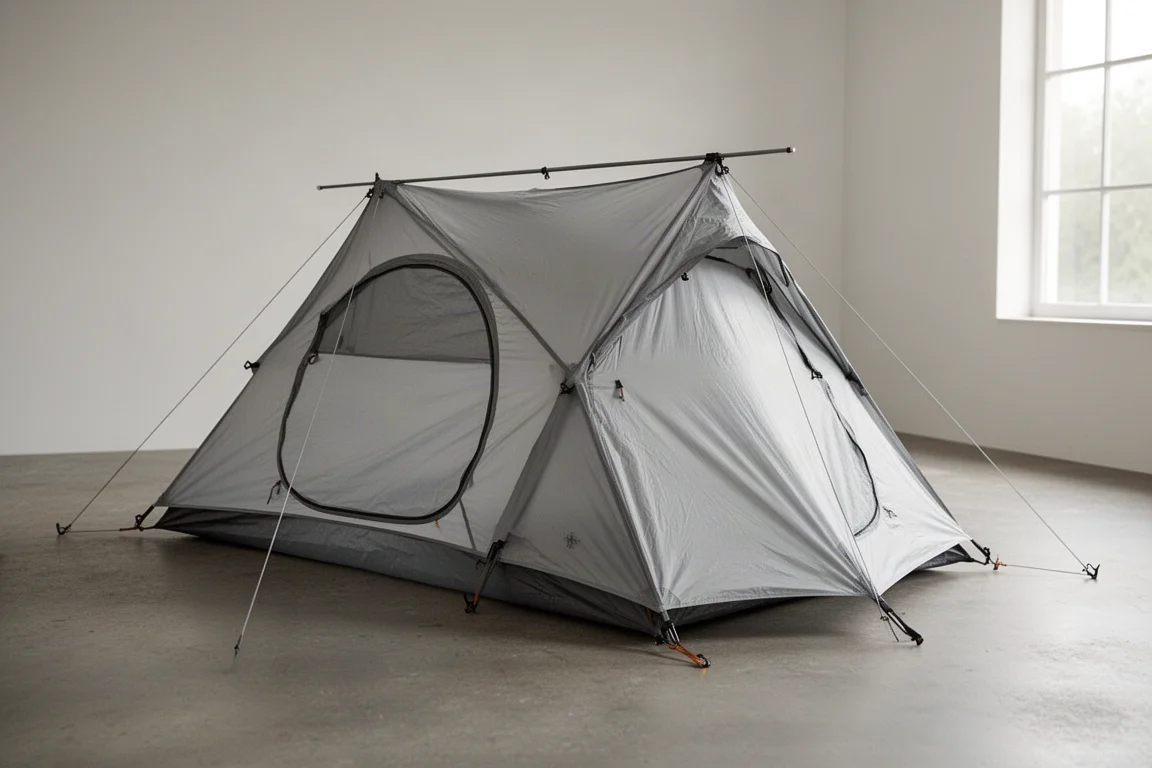
Semi-freestanding ultralight tents are a favorite category for backpackers who want to keep pack weight low without giving up two doors and two vestibules. The MSR FreeLite 2 has been redesigned to be about 8 oz lighter, landing closer to 2 lb, which puts it directly alongside a tent that has been a reference point in this class for years: the Nemo Hornet Elite 2.
The two shelters feel remarkably similar in use. Both are semi-freestanding, both sleep two, both have two doors and two vestibules, and both sit close to the 2 lb mark. They also share a small cutout at the head of the tent to improve ventilation. MSR states that the new FreeLite is more spacious than the Hornet, which makes a direct comparison worthwhile.
On price, the two are not identical. The FreeLite is listed at $409 US, while the Hornet Elite runs about $500 US.
What These Two Ultralight Tents Share
Start with the fundamentals, because they explain why these tents get compared so often.
Both are semi-freestanding designs, which means they hold their shape with poles but still rely on stakes to be fully tensioned. Each offers two doors and two vestibules, so two campers do not have to climb over each other to get in and out. Both are built for two people and both weigh close to 2 lb. Each also includes a small cutout at the head to increase ventilation.
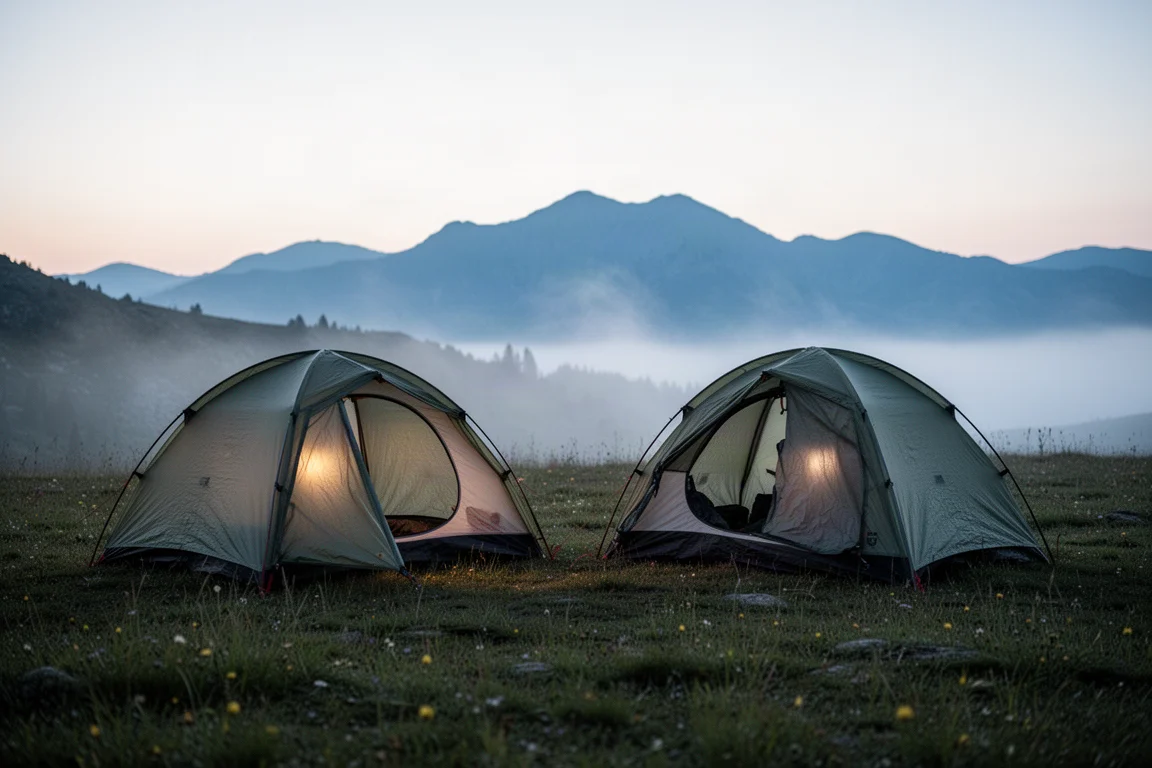
Those shared traits matter more than they might appear. Two doors and two vestibules in a shelter this light is the reason this category exists at all, and the near-identical weight figures are what make the choice between them so close.
Interior Space and Headroom Compared
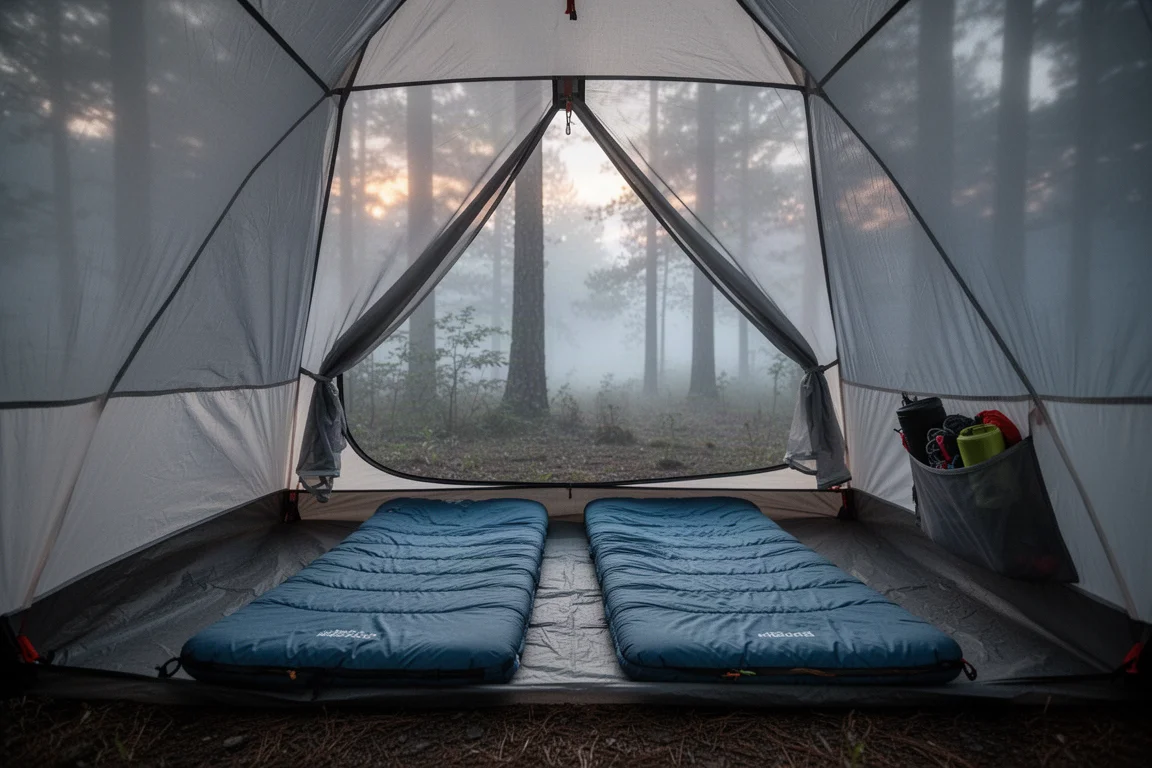
The claim about space holds up on paper. The FreeLite offers 29 sq ft of floor area against 27 sq ft for the Hornet. More importantly, the FreeLite’s floor is a true rectangle: 50 in across the head and 50 in across the feet. The Hornet is 50 in at the head but tapers to 42 in at the feet.
In theory, that rectangular floor should allow two 25 in sleeping pads side by side. In practice, fitting a very wide 30 in pad next to a 20 in pad did not quite work, though that may simply be a question of how the pads press against the walls.
Headroom is where space pressure shows up most. The FreeLite is 2 in taller and uses a longer crossbar that adds a few inches of width on either side. Even so, the walls still feel like they lean inward. The Hornet counters with clips that attach the inner mesh to the outer fly, which opens up a little extra room. It is a small amount of space, but it is the kind of feature more two-person tents should adopt.
Sitting inside, the Hornet feels the more constrictive of the two. The netting sits close to your head even with a single occupant, which is worth noting in a tent rated for two. The FreeLite’s longer crossbar makes a bigger difference in daily use than the numbers alone suggest.
MSR FreeLite 2-Person Tent: Space, Access, and Weight Savings
The headline change is weight. MSR trimmed about 8 oz from the FreeLite and advertises a 2 lb even trail weight. That figure covers the body, the fly, and the poles only. Because these are semi-freestanding tents, stakes are still required, so the real-world total came in at 2 lb 4 oz on a home scale, roughly 3 oz heavier than the Hornet.
The detail that stands out most is the placement of the vestibule zippers. On most freestanding tents, reaching the fly zipper from inside means folding yourself toward the far end of the vestibule. On the FreeLite, the zipper sits within easy reach, so getting out in the morning does not require any contortions. The doors use double zippers that open smoothly with one hand, and the fly has double-ended zippers so the top can be cracked open for extra ventilation.
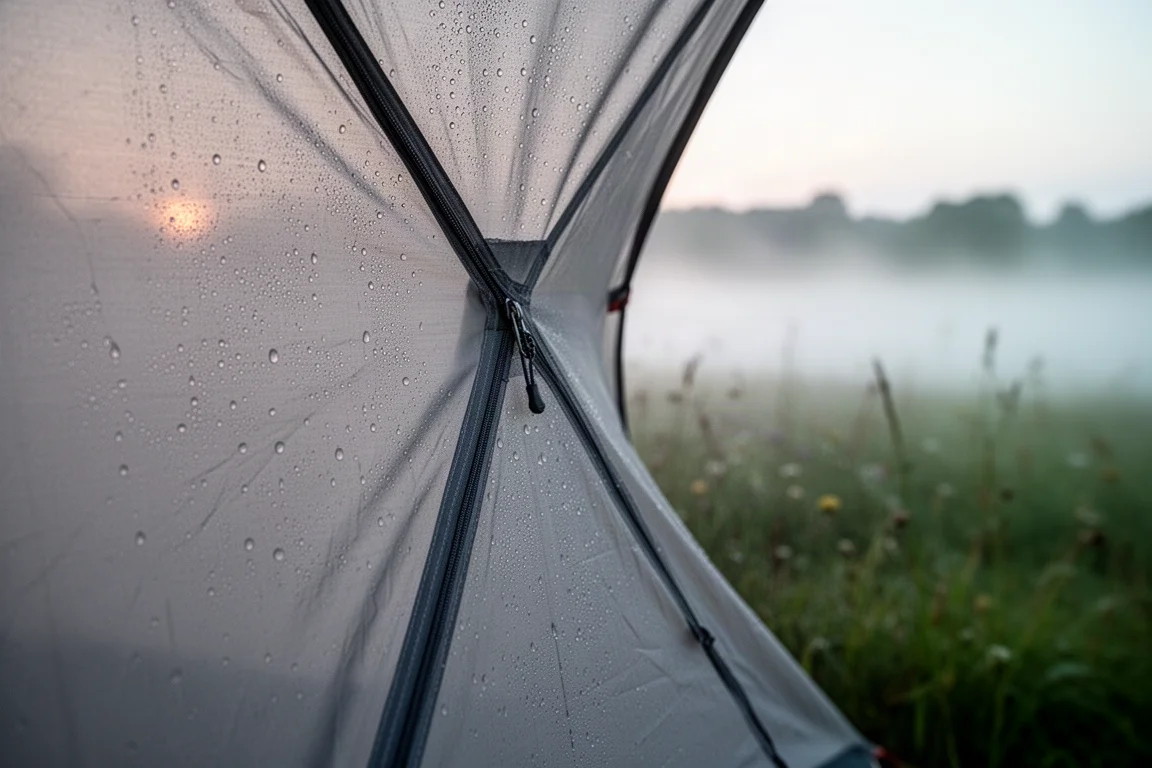
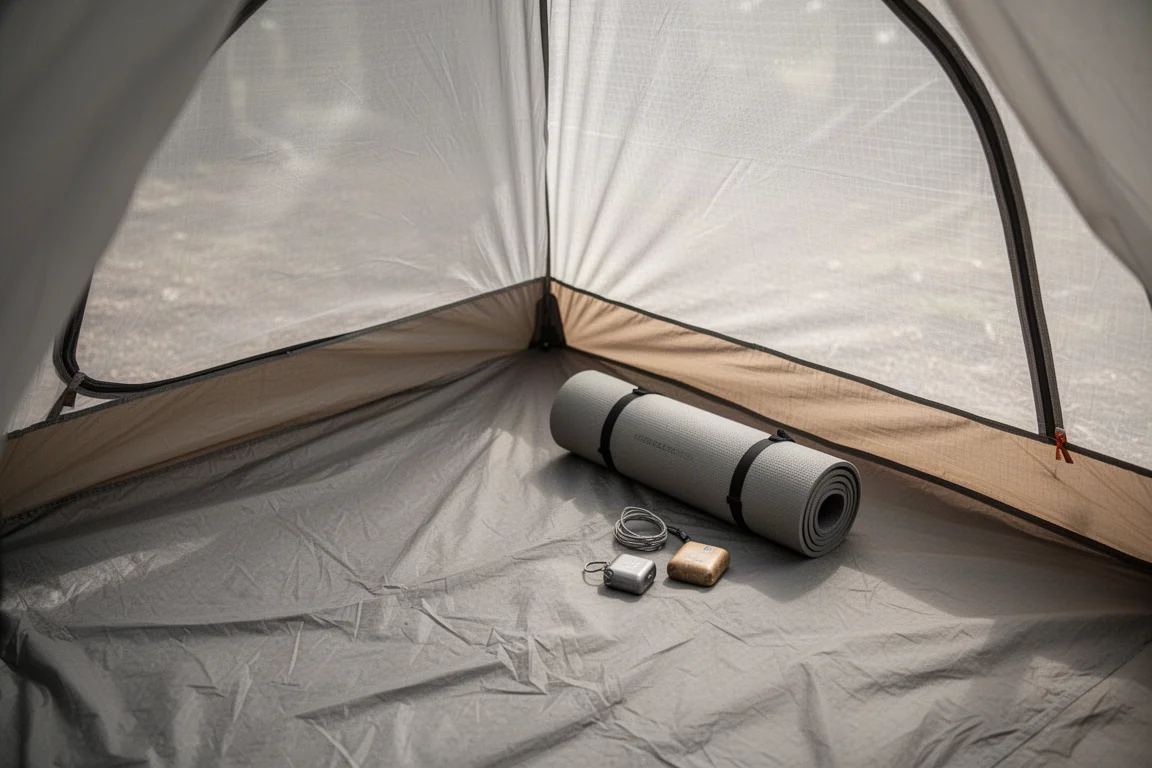
The interior is also better organized than the Hornet’s. There are two pockets on each side plus two in the ceiling, and the pockets have small openings at the bottom intended for routing charging cords. Whether those openings earn their place is debatable, since a battery bank can usually sit in the same pocket as the phone, and small items may slip through the gap.
Two other FreeLite features are worth noting: rain gutters that channel water away from the door, and stiff corners at the foot that keep the bathtub floor taut.
There are trade-offs. The crossbar is a separate piece from the rest of the pole set and is genuinely easy to misplace, often disappearing under the tent or somewhere near camp during setup. More seriously, opening the fly after rain tends to drip water inside the tent despite the rain gutters. The floor uses a taped seam rather than a single piece, which looks like a future leak point. There is no pole repair sleeve, though MSR does include two extra stakes.
Nemo Hornet Elite 2-Person Tent: The Lighter Option
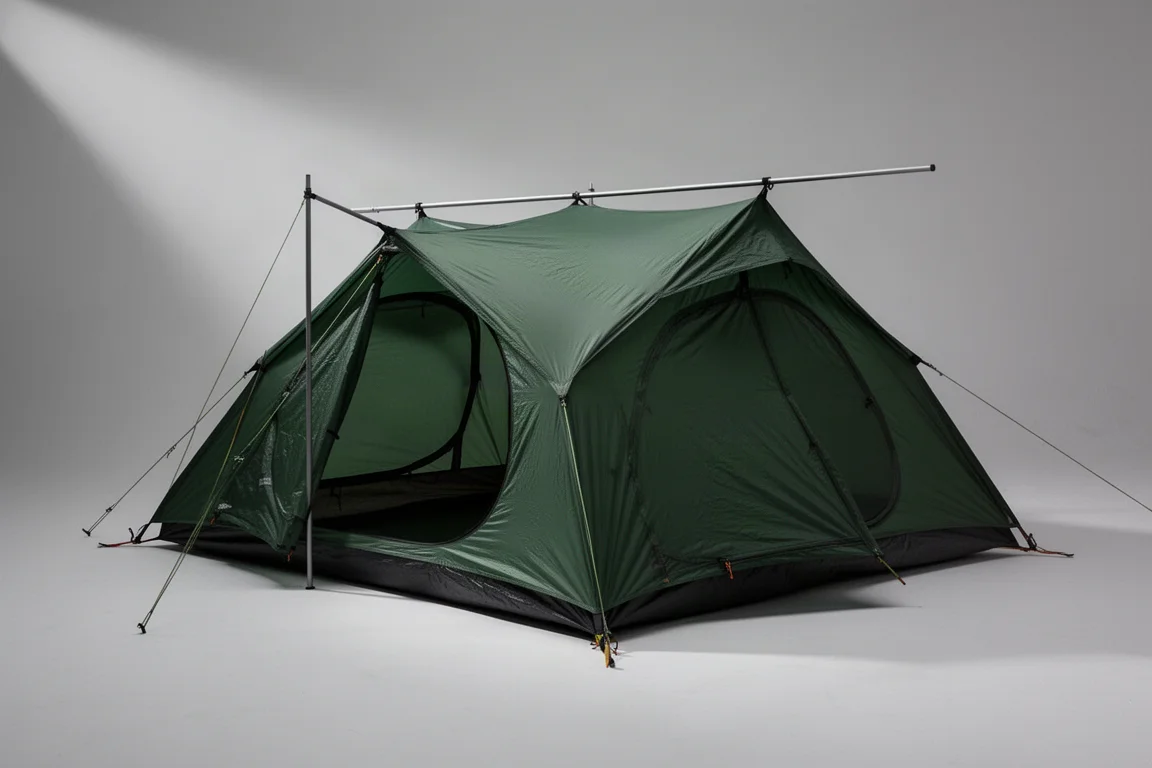
The Hornet Elite remains the lighter tent of the two by about 3 oz once stakes are counted, and for weight-focused backpackers that margin is not trivial. It costs more, at about $500 US.
Nemo takes a different approach to the crossbar question with a fly bar that stays attached to the tent, so it cannot be lost. The downside is packing: the attached bar makes it harder to stuff the tent into its sack, and there is a real worry about breaking it in the process.
Inside, the Hornet has two pockets on each side and a single ceiling pocket that includes a light diffuser for a headlamp. The floor is a solid one-piece design rather than a seamed panel, and the tent includes a pole repair sleeve. The doors use a rainbow-style design that needs two hands to open, which is less convenient than the FreeLite’s double zippers.
The Hornet’s fabric is also thinner: a 7-denier fly and a 10-denier floor, compared with 15-denier fly and floor on the FreeLite. That is likely where much of the weight savings come from.
Nemo is updating the Hornet Elite with a new fabric and a shift to a gray color. Everything else appears to carry over from the current design.
Setup, Doors, and Vestibule Design
Setup differences come down to small pieces of hardware. The FreeLite’s separate crossbar demands attention during pitching, because it is easy to set down and lose. The Hornet’s attached fly bar removes that risk entirely but adds bulk to the packed tent.
Door design separates the two more clearly. The FreeLite’s double-zipper doors open with one hand, and the fly’s double-ended zippers allow partial opening at the top for airflow. The Hornet’s rainbow doors need both hands, which is a minor annoyance that adds up over a trip.
Vestibule access is the FreeLite’s strongest practical advantage. Being able to reach the zipper without folding yourself toward the end of the fly makes a genuine difference on a cold morning.
Fabric, Floor, and Durability Details
Material choices explain much of the weight gap. The FreeLite uses a 15-denier fly and floor, while the Hornet Elite uses a 7-denier fly and a 10-denier floor. Thinner fabric saves ounces, and it also asks for a little more care around abrasive ground and sharp rocks.
Floor construction differs as well. The Hornet uses a solid one-piece floor, while the FreeLite relies on a taped seam that could become a leak point over time. The Hornet also ships with a pole repair sleeve, something the FreeLite lacks.
Price and Value: Three Ounces Versus About a Hundred Dollars
The FreeLite lists at $409 US and the Hornet Elite at about $500 US, so the MSR comes in roughly $100 cheaper. In exchange, the Hornet saves about 3 oz of packed weight and offers the more reassuring floor construction.
Whether that trade makes sense depends entirely on how you count weight. For backpackers who track every ounce, 3 oz at the end of a long day can matter. For everyone else, the FreeLite’s lower price, larger rectangular floor, and easier door and vestibule access are substantial advantages.
Buying Advice
Choose the MSR FreeLite 2 if you want the more spacious floor, a true rectangular footprint, easier vestibule access, and one-handed doors, and you are comfortable with slightly more packed weight in exchange for a lower price. It is the more livable tent of the two for most two-person trips.
Choose the Nemo Hornet Elite 2 if saving every possible ounce matters more than price and you prefer a one-piece floor plus a built-in pole repair sleeve. The thinner fabrics call for a bit more care, but the weight figure is hard to beat in this class.
One practical caution applies to the FreeLite: if you camp in wet conditions often, the way water drips into the tent when the fly is opened after rain deserves a close look before you commit. It is the single issue that keeps the FreeLite from being an easy recommendation over the Hornet.
For dry-weather trips and three-season use where weight and space are the priorities, both tents do the job well. Matching the tent to your typical conditions matters more than the spec sheet.
Conclusion
These two shelters are close enough that the decision comes down to priorities rather than outright performance. The MSR FreeLite 2 wins on floor space, price, and everyday access, while the Nemo Hornet Elite 2 wins on packed weight and floor construction. If rain is a regular part of your trips, the FreeLite’s drip issue is worth weighing carefully. If space and cost lead your list, it is the stronger pick.
Further reading
Related Reviews
Backpacking Tents
3F UL Lanchan Pro 1 Review: A 1 lb 8 oz Single-Wall Trekking Pole Tent
A practical look at the 3F UL Lanchan Pro 1, a single-wall trekking pole shelter with a 1 lb 8 oz weight, 20D silnylon fabrics, and a roomy 90 x 31 x 49 inch interior.
Backpacking Tents
3F UL Taiji 2-Person Tent: A Convertible Backpacking Shelter Worth a Closer Look
A practical look at the 3F UL Taiji two-person tent, covering its materials, true two-person interior, fly-first pitching, and the seasonal inner swap that lets one shelter cover more of the year.
Backpacking Tents
3FUL Lanshan Twoerson Pro Review: A Light Trekking Pole Shelter That Struggled in Rain
A two-person trekking pole shelter with a 2026 redesign, pitched with sticks and put through a night of steady rain. Here is what worked, what did not, and what to check before buying.