Backpacking Tents
MSR Elixir 1 vs MSR Hubba NX: Should You Upgrade Your Backpacking Tent?
A practical comparison of the MSR Elixir 1 and MSR Hubba NX, covering durability, weight, interior space and when a tent upgrade is actually worth the money.
Introduction
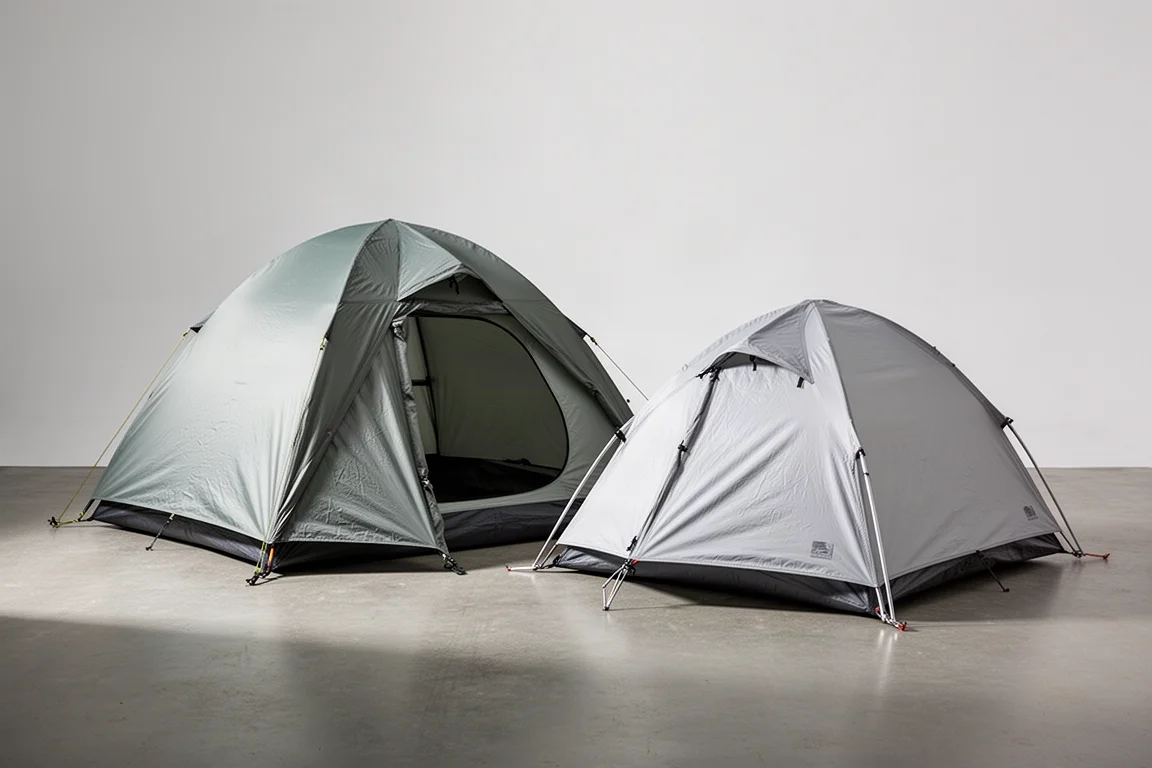
Choosing between two tents from the same brand is one of the clearest ways to see what extra money actually buys. The MSR Elixir 1 and the MSR Hubba NX sit at opposite ends of the one-person backpacking range. The Elixir 1 costs around £270 and the Hubba NX around £490, a difference of roughly £220.
That extra spend buys a much lighter, far more packable tent, but it also gives up fabric durability, interior space and a number of small conveniences that the cheaper tent provides. This guide works through the practical differences between the two, then looks at the wider question of when a tent upgrade is genuinely worth the money.
What You Get When You Spend More on a Tent
Spending more on a backpacking tent normally buys one of two things, and sometimes both together. The first is weight: lighter fabrics, lighter poles and less hardware. The second is durability: thicker coatings, stronger fabrics and construction that holds up over many seasons.
Not every expensive tent is lighter, though. Some of the most weather-resistant tents on the market are not dramatically lighter than mid-price options. The money goes into materials and build quality instead, with heavily siliconised nylon fabrics and construction designed for sustained bad weather. At the other end of the spectrum, ultralight backpacking tents use very thin, very strong composite fabrics to strip out as many grams as possible.
The Elixir 1 and the Hubba NX sit neatly between those ideas, and they show how the trade-offs land in practice.
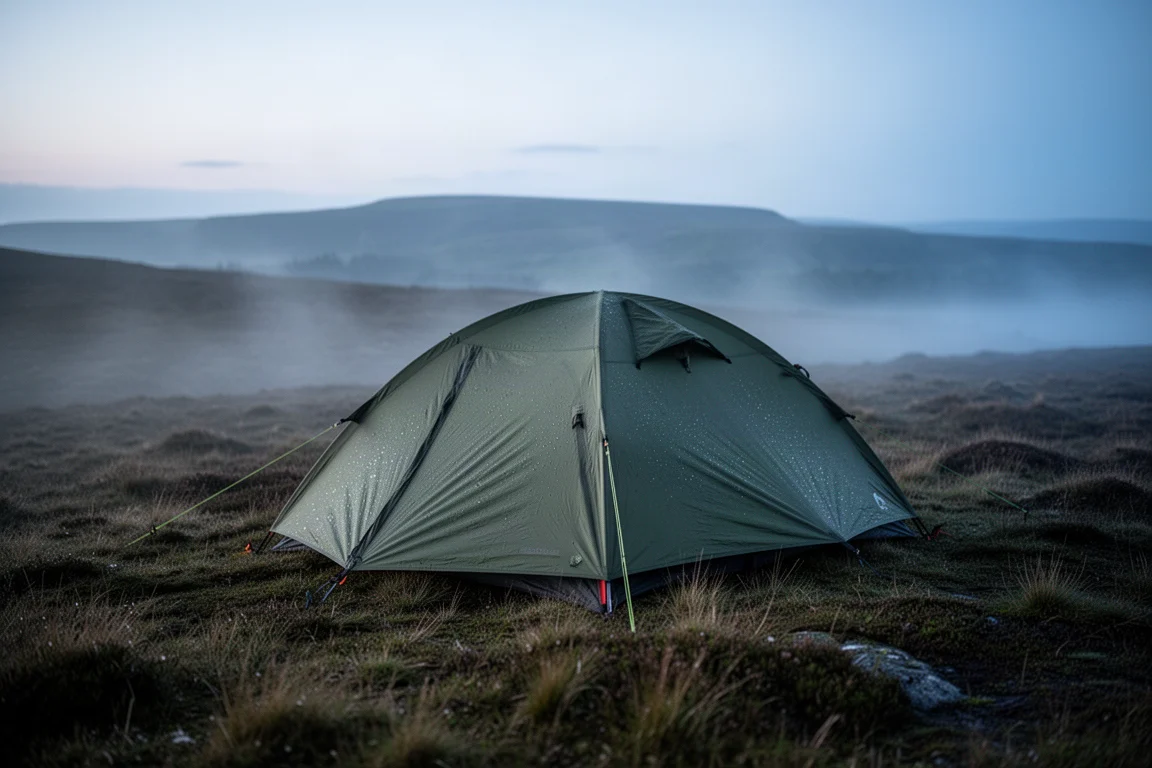
The rest of this guide looks at each tent on its own terms, then compares the details that are easy to overlook when you are reading specifications.
MSR Elixir 1: The Durable, Spacious Value Pick
The Elixir 1 is built around a 68D polyester fly. That is a much thicker fabric than the nylon used on the Hubba NX, and it behaves differently in wet weather: polyester tends not to sag when it gets soaked, so the fly stays taut and keeps its shape. The cost of that choice is weight, and it is a large part of why this tent is the heavier of the two.
The floor is a thick 70D fabric with a 3,000 mm hydrostatic head, which makes for a genuinely waterproof bathtub groundsheet. The fly is rated at 1,500 mm and the inner mesh is 20D.
Interior space is where the Elixir 1 pulls clearly ahead. It is 9 cm taller than the Hubba NX, 2 cm longer and 8 cm wider, which makes a real difference if you are tall or you simply prefer room to move. It also comes with more storage: a pocket on either side, two more at the top, and four points for hanging a lantern.
MSR Hubba NX: The Lightweight Upgrade
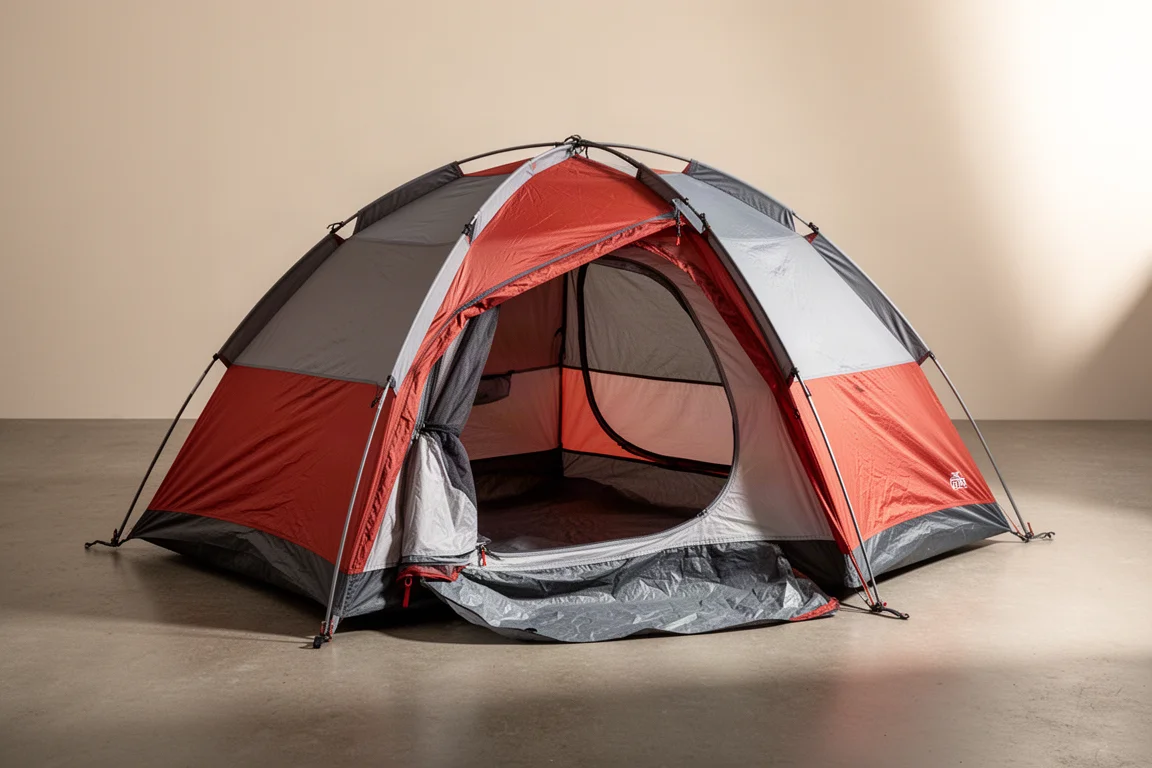
The Hubba NX takes the opposite approach. Its fly is 20D nylon with a 1,200 mm hydrostatic head, which is lower than the Elixir 1 rating, and the inner mesh is thinner at 15D. The floor keeps the same 3,000 mm hydrostatic head, so ground protection is comparable even though the fabric itself is thinner.
The weight saving is not limited to the flysheet. The tent uses high-quality DAC poles in an all-in-one pole system, which keeps pitching simple and cuts grams at the same time. The result is a tent that packs down far smaller than its specifications suggest, and one that can be compressed hard when space in a pack is tight.
Inside, the Hubba NX is deliberately sparse: a couple of small hooks and a single pocket. Ventilation comes from one vent on one side, and the guy lines are adjustable, which makes it easier to fine-tune the pitch when the weather turns. Both tents share the same 76 cm vestibule.
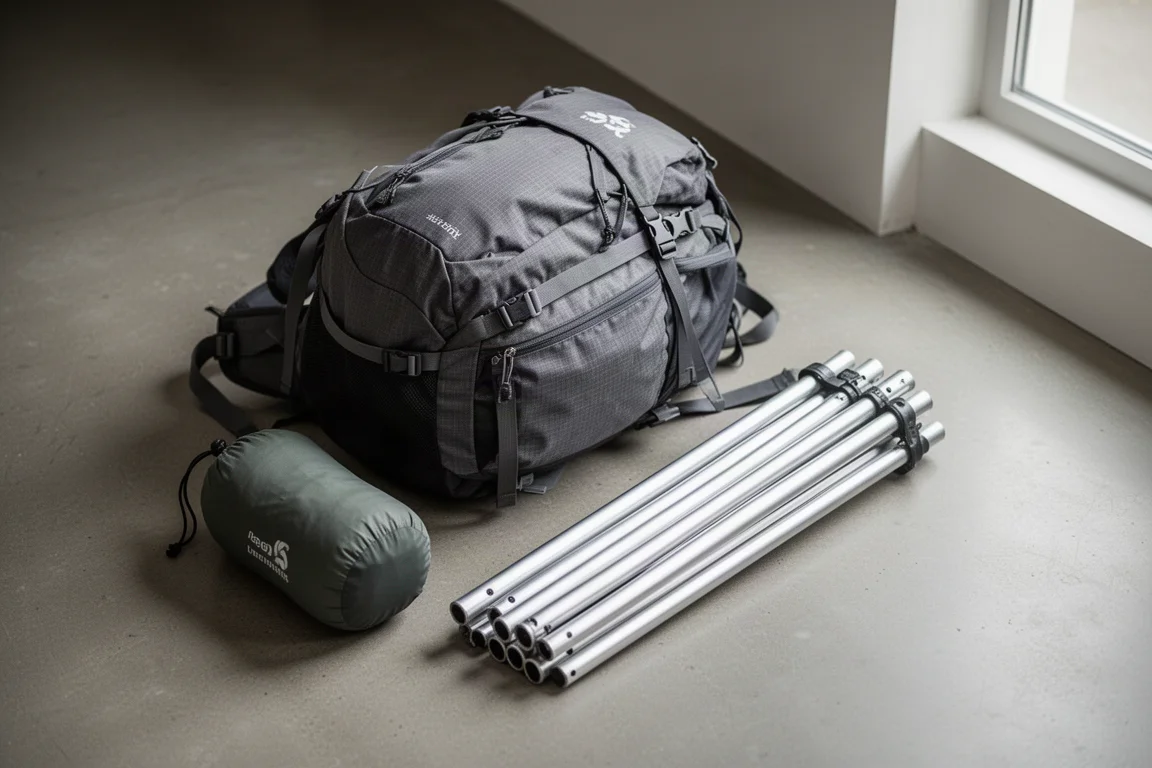
That combination of low weight and small packed size is the core of the Hubba NX appeal, and it is the reason it costs considerably more than the Elixir 1.
Packability, Pegs, and Poles: What Changes as You Spend More
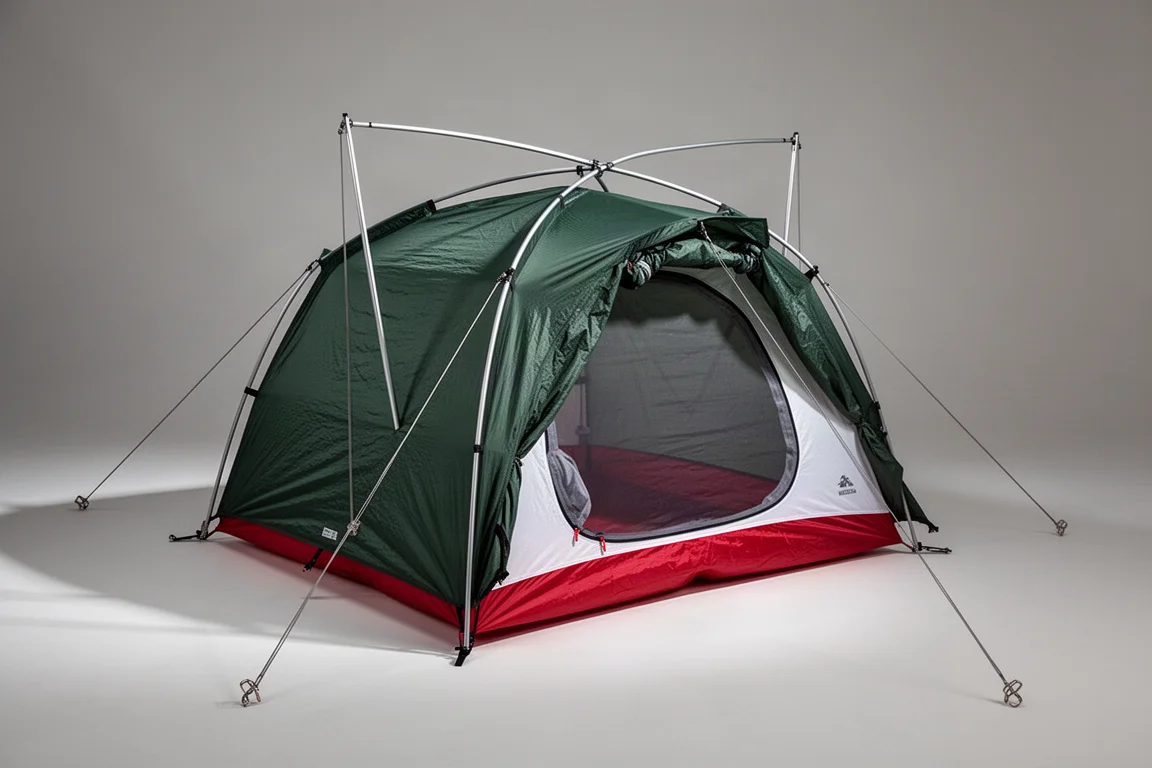
On paper, the packed size difference between the two tents looks small. The Hubba NX is listed as only 2 cm longer, and the other dimensions are identical. In use, the gap is much bigger: the Hubba NX compresses down very tightly, while the Elixir 1 remains a solid, bulky pack. The tent bags tell the same story, with a thick, heavy bag on the Elixir 1 and a lightweight fast-packing bag on the Hubba NX.
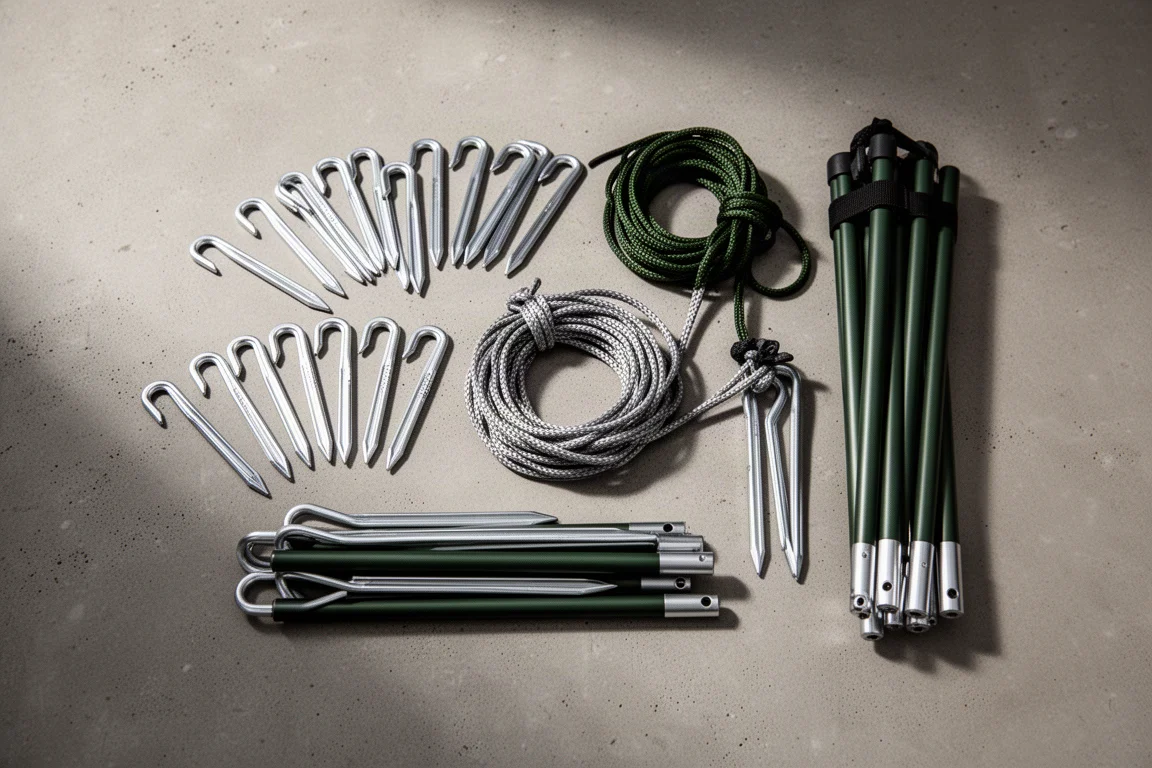
The pegs are worth attention on both tents. The Elixir 1 uses hook-style pegs that are a decent length and drive well into hard ground, but they bend easily. The Hubba NX uses smaller, lighter pegs that are thin, work well in hard ground and perform poorly just about everywhere else. Whichever tent you choose, upgrading the pegs is a sensible first move.
The poles follow the same pattern. The Elixir 1 uses a heavier set of 7,000 series aluminium poles, which are still a good quality set, along with a heavier pole bag. The Hubba NX uses DAC poles that are light, strong and noticeably more refined.
Ventilation, Storage, and Pitching
Both tents are inner-pitch-first designs, so the inner goes up before the fly. The Elixir 1 includes a footprint, and that footprint does more than protect the bathtub floor: it also allows the tent to be pitched outer-first, which is useful when you are setting up in rain.
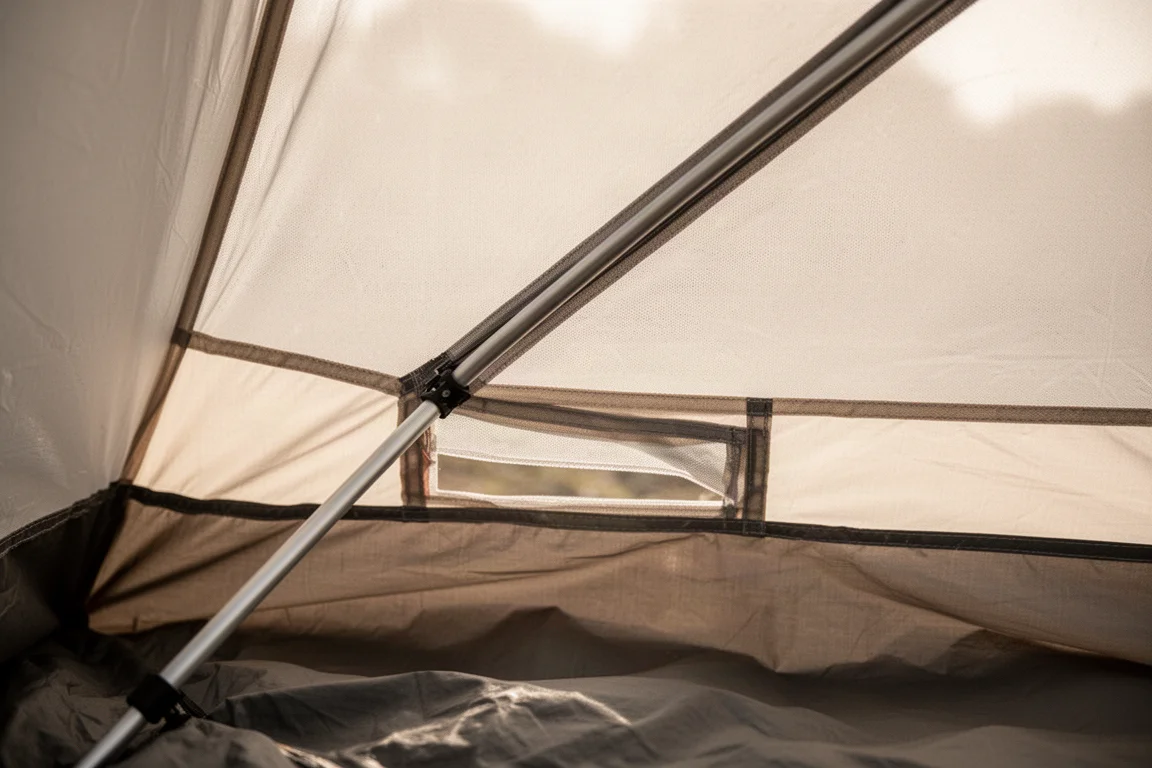
Ventilation favours the cheaper tent. The Elixir 1 has a vent at either end, while the Hubba NX has a single vent on one side. The Elixir 1 also uses more mesh in the inner, which helps airflow through the tent.
Storage and adjustment go different ways. The Elixir 1 offers pockets on both sides, two pockets at the top and four lantern hang points, while the Hubba NX keeps things minimal with a couple of hooks and one pocket. The Elixir 1 guy line is a simple non-adjustable length of cord, whereas the Hubba NX uses guy lines you can properly fine-tune. The vestibule is 76 cm on both.
Small details like these rarely decide a purchase on their own, but they add up over a long trip.
Which Tent Suits Which Trip
The Elixir 1 makes the most sense for cold-weather camping and windy camping, where its thicker polyester fly, resistance to sagging and more generous interior space are all advantages. It is also the more versatile tent across the year, and it is the stronger value of the two by a clear margin.
The Hubba NX is the better answer for longer backpacking trips. If you are covering big distances day after day, the weight and pack size savings matter more than the extra durability, and the adjustable guy lines and refined pole set make it pleasant to live with.
Buying Advice: Where the Money Goes
Tent upgrades are not linear. The first step up the ladder delivers a lot: moving from a very cheap tent with fibreglass poles to one with aluminium poles and a decent nylon fly costs relatively little and improves the experience enormously. Beyond that point, gains get smaller and prices climb faster.
The numbers make this clear. The difference between a £50 tent and a £100 tent is significant, and so is the difference between £100 and £200. Between a £300 tent and a £500 tent, there is much less to show for the money. Both the Elixir 1 and the Hubba NX are well put together, long-established designs that represent good value in their own brackets, and value for money in tents generally tends to be strongest at the cheaper end of the scale.
If your budget is fixed, put the money into the fabric, the poles and a good set of pegs before you chase the last few hundred grams.
Conclusion
The MSR Elixir 1 and the MSR Hubba NX are both strong tents, and the right choice depends on the trips you actually take. For year-round camping, cold and windy conditions, more interior space and the best value for money, the Elixir 1 is the straightforward pick, even though it is heavier and bulkier to carry.
For multi-day backpacking where every gram and every litre of pack space counts, the Hubba NX justifies its higher price. The upgrade is worth it if low weight is the priority; if durability and space matter more, the cheaper tent is the better buy.
Further reading
Related Reviews
Backpacking Tents
3F UL Lanchan Pro 1 Review: A 1 lb 8 oz Single-Wall Trekking Pole Tent
A practical look at the 3F UL Lanchan Pro 1, a single-wall trekking pole shelter with a 1 lb 8 oz weight, 20D silnylon fabrics, and a roomy 90 x 31 x 49 inch interior.
Backpacking Tents
3F UL Taiji 2-Person Tent: A Convertible Backpacking Shelter Worth a Closer Look
A practical look at the 3F UL Taiji two-person tent, covering its materials, true two-person interior, fly-first pitching, and the seasonal inner swap that lets one shelter cover more of the year.
Backpacking Tents
3FUL Lanshan Twoerson Pro Review: A Light Trekking Pole Shelter That Struggled in Rain
A two-person trekking pole shelter with a 2026 redesign, pitched with sticks and put through a night of steady rain. Here is what worked, what did not, and what to check before buying.