Robot Lawn Mowers
Mowva LideX Ultra 2000 Review: A Wire-Free Robot Mower Built for Tall Lawns
Lidar navigation, AI obstacle avoidance, generous cutting height, and strong wheel traction make the Mowva LideX Ultra 2000 a promising pick for larger, uneven lawns.
Introduction
Robot mowers have quietly become one of the more interesting smart-home purchases of the year, and the Mowva LideX Ultra 2000 is a good example of why. It skips the boundary wire entirely, relies on lidar and cameras to find its way around, and offers a cutting height range that finally works for lawns that are kept taller than a putting green.
This is a first-look style review based on hands-on impressions of the machine, including its setup approach, cutting hardware, traction, and charging system.
Who This Product Is For
The LideX Ultra 2000 is aimed at homeowners with multiple lawn sections and grass that is kept relatively tall. If you mow at around three and a half inches, which is common in regions like Michigan where cutting close is not ideal, the cutting height range matters more than anything else. It is also a fit for anyone who wants a mower that can move between driveway and sidewalk surfaces to reach different parts of the yard without getting stranded.
Wire-Free Navigation: Lidar, Cameras, and AI
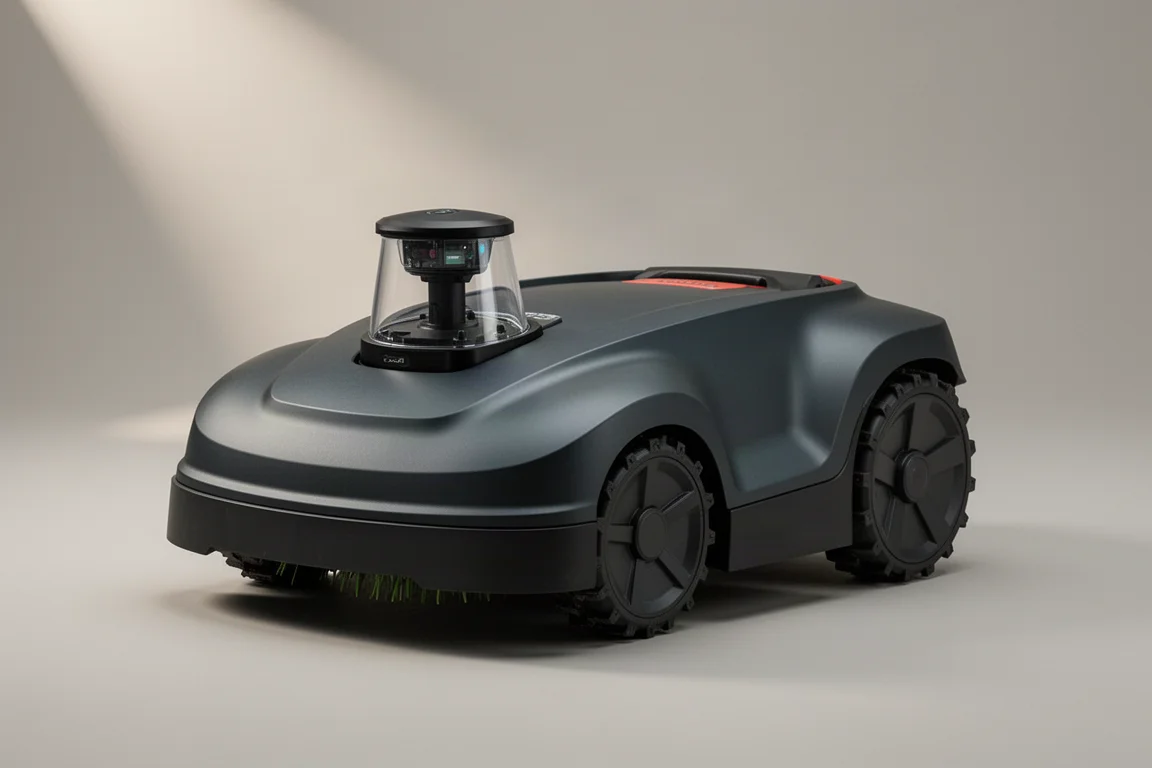
The headline feature is that no boundary wire is required. Navigation is handled by a lidar unit mounted at the front of the machine, protected by a small plastic cover, supported by cameras and AI processing. The idea is that the mower can see obstacles, recognize them, and route around them on its own.
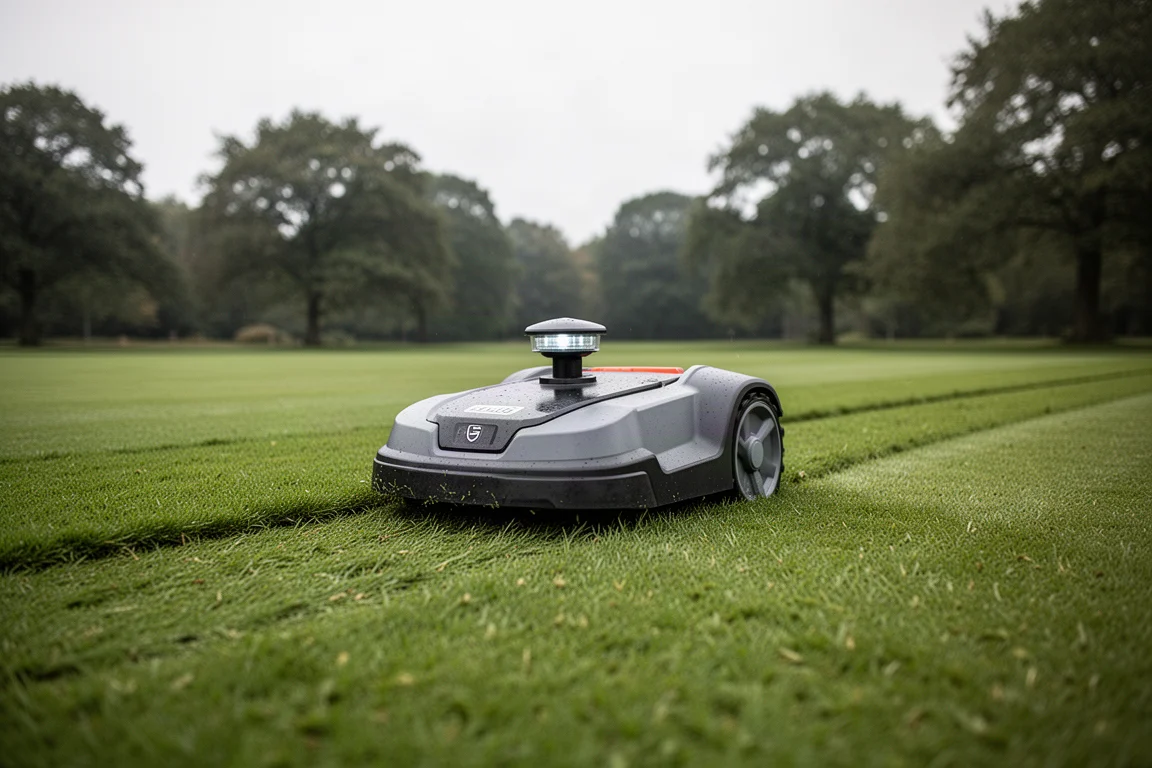
That combination is what makes a wire-free setup practical for a yard with several distinct sections. The mower maps and navigates rather than following a buried perimeter, so reconfiguring the lawn or adding a new area does not require digging up anything.
Cutting Hardware and Safety
The cutting system is deliberately simple. The blade occupies a small 7 to 8 inch circle and uses small box-cutter style blades that can be swapped out easily. The safety angle is the interesting part: if something gets under the cutting deck, those blades fold inward rather than plowing through whatever they hit.
That design trades raw cutting width for safety and simplicity, which suits a mower that is meant to run frequently and quietly without close supervision.
Traction and Cutting Height
Two attributes stand out for buyers in northern climates. First, the cutting height range runs from 1.9 to 3.9 inches, which is far more generous than many robot mowers offer. For lawns cut close to four inches, the practical setting is somewhere between 3.5 and 3.9 inches.
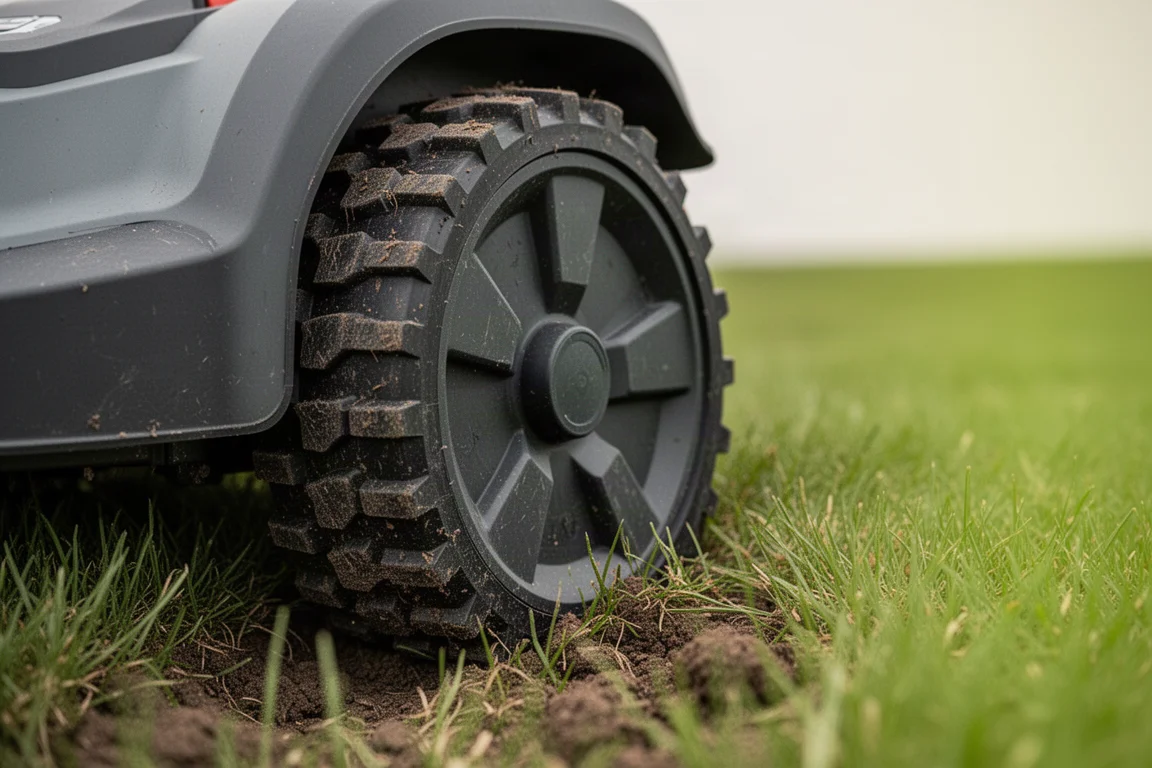
Second, the wheels. Previous robot mowers in this category, including models from other well-known brands, often lacked this level of grip and would get stuck. The LideX Ultra 2000’s treaded wheels are designed to traverse different surfaces, including driveways and sidewalks, which helps it reach every section of a divided yard without burying itself in a soft hole.
Charging Setup and Runtime
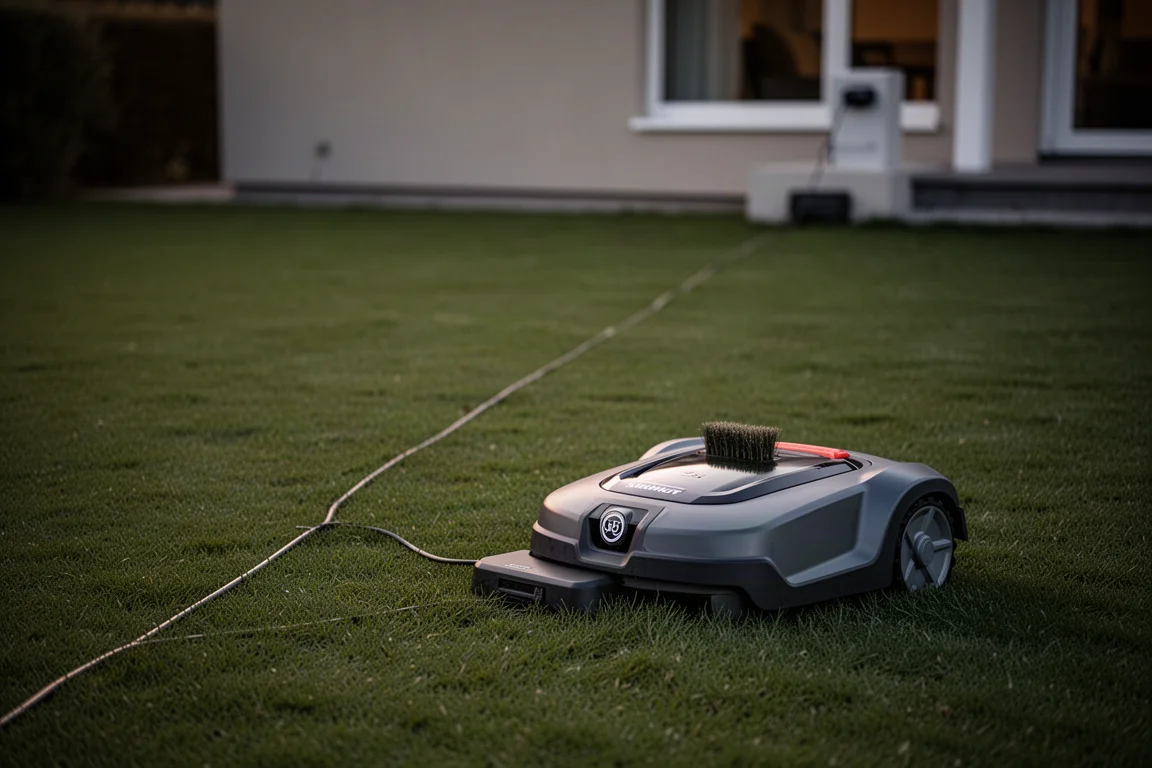
The charging bay is well thought out. Handles around the dock make it easy to pick up and position, the assembly snaps together with no tools, and a very long cord means the dock does not need to sit next to an outlet. A small brush on top clears moisture off the lidar, and the mower drives forward onto two metal contact points to charge.
Runtime is the honest trade-off. The mower is rated to cut roughly 0.04 to 0.05 acres per charge, so covering a half acre means multiple charge cycles. That matters for your daily schedule: it will head out, mow, return, recharge, and repeat. Buyers who want less acreage coverage can look at the smaller Ultra 1000 model, which is rated for less area and is presumably a bit less expensive.
Controls and Everyday Use
Most operation happens on a phone app after connecting the mower to a home internet connection. The onboard controls are minimal: power, movement, start, and stop. Setup so far requires no tools, and the overall ownership experience is designed to be hands-off once the dock is placed and the app is configured.
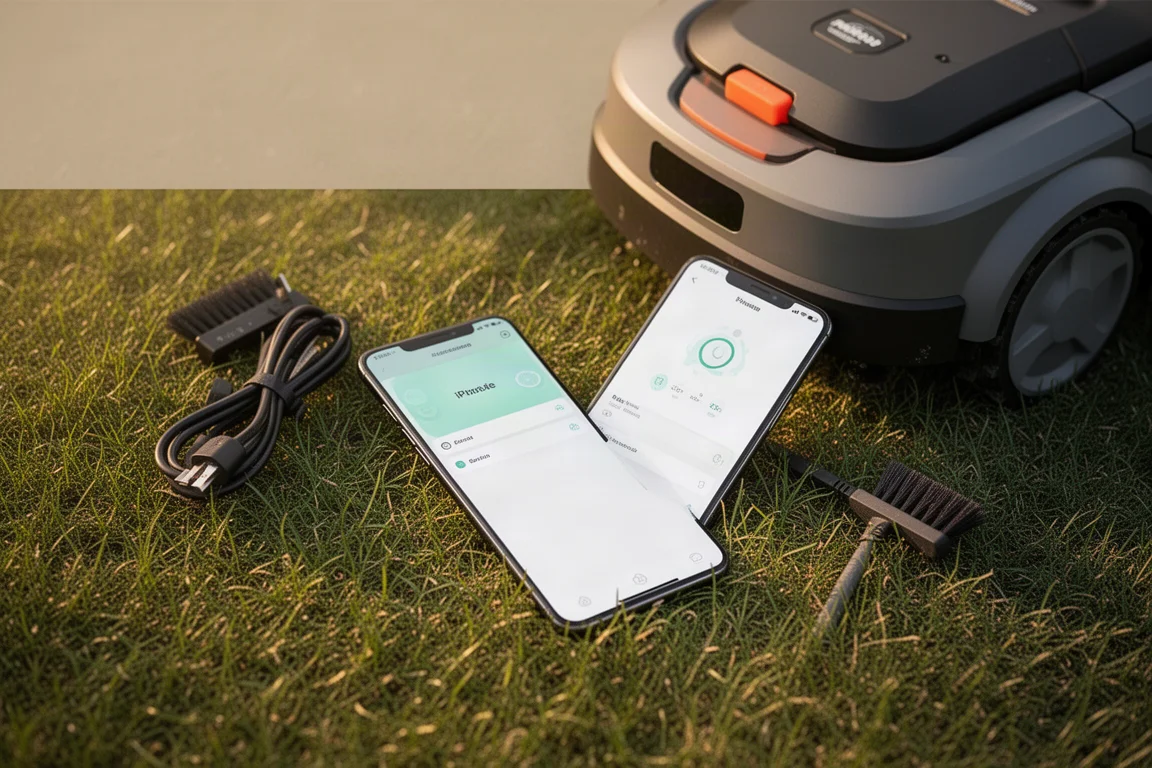
Security is a reasonable concern with any unattended outdoor device. The mower has handles that make it easy to lift, but a thief cannot do much with it without the charger and a full reset and re-setup, which makes stealing it largely pointless.
Buying Advice
Choose the LideX Ultra 2000 if your lawn is larger, split into sections, kept tall, or contains surfaces the mower must cross. Accept the frequent recharging as the cost of a small, safe cutting system. If your lawn is smaller and you want to spend less, the Ultra 1000 covers less acreage at a lower tier. If you have never owned a robot mower, expect a mindset shift: you stop mowing and start supervising a machine that mows constantly in small passes.
Conclusion
The Mowva LideX Ultra 2000 puts its money where it counts for real-world lawns: wire-free lidar and camera navigation, fold-away blades for safety, a 1.9 to 3.9 inch cutting height, and wheels with genuine traction. Frequent recharging is the main compromise, but for homeowners with tall grass and complicated yards, this is one of the more capable wire-free options to consider this year.
Product link
View more details for Mowva LideX Ultra 2000
This product is mentioned in the review. Check the specifications, options, and compatibility before buying.
View more details for Mowva LideX Ultra 2000Further reading
Related Reviews
Robot Lawn Mowers
Segway Navimow X430 Review: A Hands-Off Robot Mower for Large, Challenging Lawns
A real-world look at the Segway Navimow X430 robot lawn mower, covering setup, cutting quality, obstacle detection, heat tolerance, and daily automation.
Robot Lawn Mowers
Airseekers Tron SE DS Review: A Robot Mower That Mulches Like Nothing Else
Six blades, Flow Cut mulching, net RTK navigation and strong wet-grass performance make this compact robot mower an interesting pick for smaller lawns.
Robot Lawn Mowers
Antbot M9 Pro Review: A Compact Robot Mower That Cuts Where Others Give Up
The Antbot M9 Pro combines RTK, 360-degree lidar and dual cameras so it keeps mowing under trees and around obstacles. Here is how it performed in real-world testing.