Camping Tents
Mountainsmith Lyken One-Person Tent Review: A Stealth-Camping Bivy With Real Trade-Offs
A low-profile one-person bivy with a big door, generous length, and a full accessory kit, plus the ventilation and weight questions to weigh before buying.
Introduction
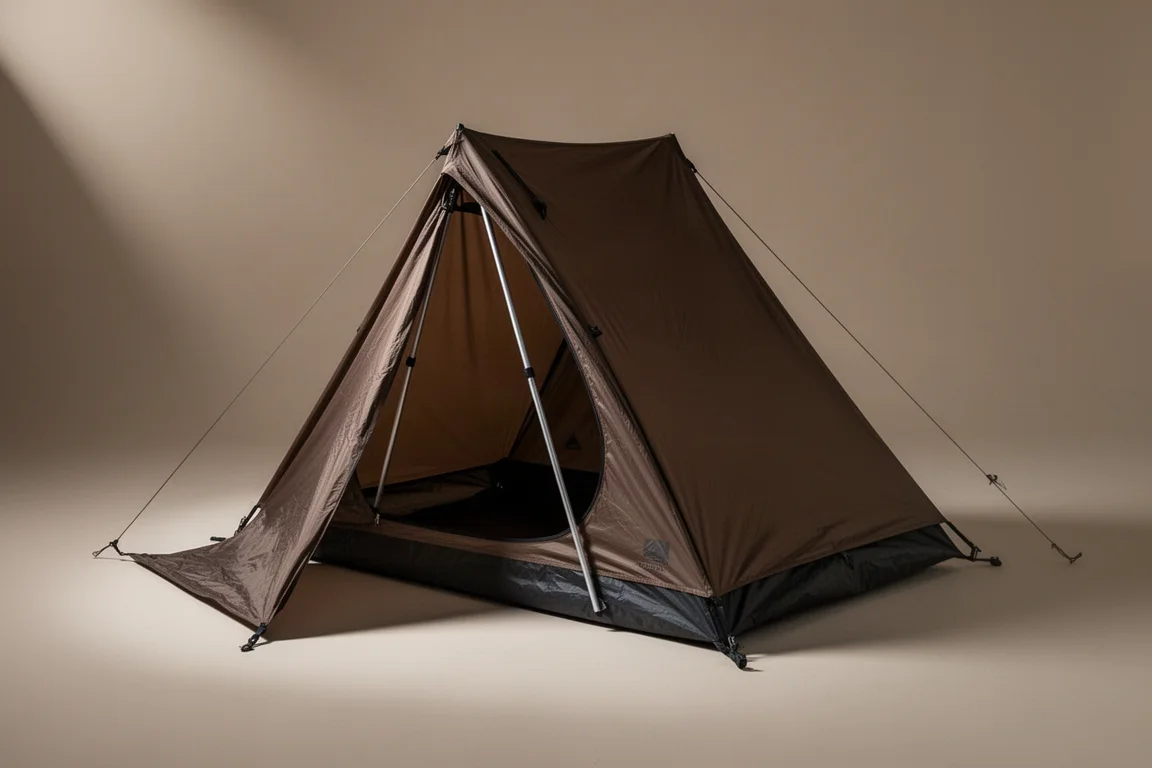
The Mountainsmith Lyken is a one-person, non-freestanding bivy-style tent built around a simple idea: give solo campers a low-profile shelter that disappears into the landscape without costing a fortune. It has drawn attention as an alternative to a well-known low-profile one-person bivy whose price has climbed over the years, which is precisely the gap the Lyken is trying to fill.
At a glance, the package looks generous for the money. You get the tent body, a full-coverage fly, an aluminum pole set, ten shepherd hook stakes, and a footprint cut to match the floor exactly. That is a lot of shelter for a street price under $100, and the pitch is refreshingly straightforward.
This overview covers what comes in the box, how the tent goes together, the real-world measurements, and the trade-offs that will decide whether it suits the way you camp.
Who This Tent Is For
The Lyken is aimed at solo campers who want a low-profile shelter rather than a roomy freestanding dome. Because it has to be staked out to stand, it belongs on ground where stakes will hold: forest duff, meadow, turf, and similar surfaces. It is not the tent to bring to a bare rock slab or a wooden platform.
Interior length is the headline number. Based on real-world measurements, the tent comfortably accommodates someone under 6 ft 8 in, which is unusually generous for a one-person bivy. Peak height reaches about 3 ft, maximum width is around 4 ft, and the floor tapers to roughly 2 ft across at the foot box. There is enough room inside for one person plus a reasonable amount of gear, though vestibule space is essentially nonexistent.
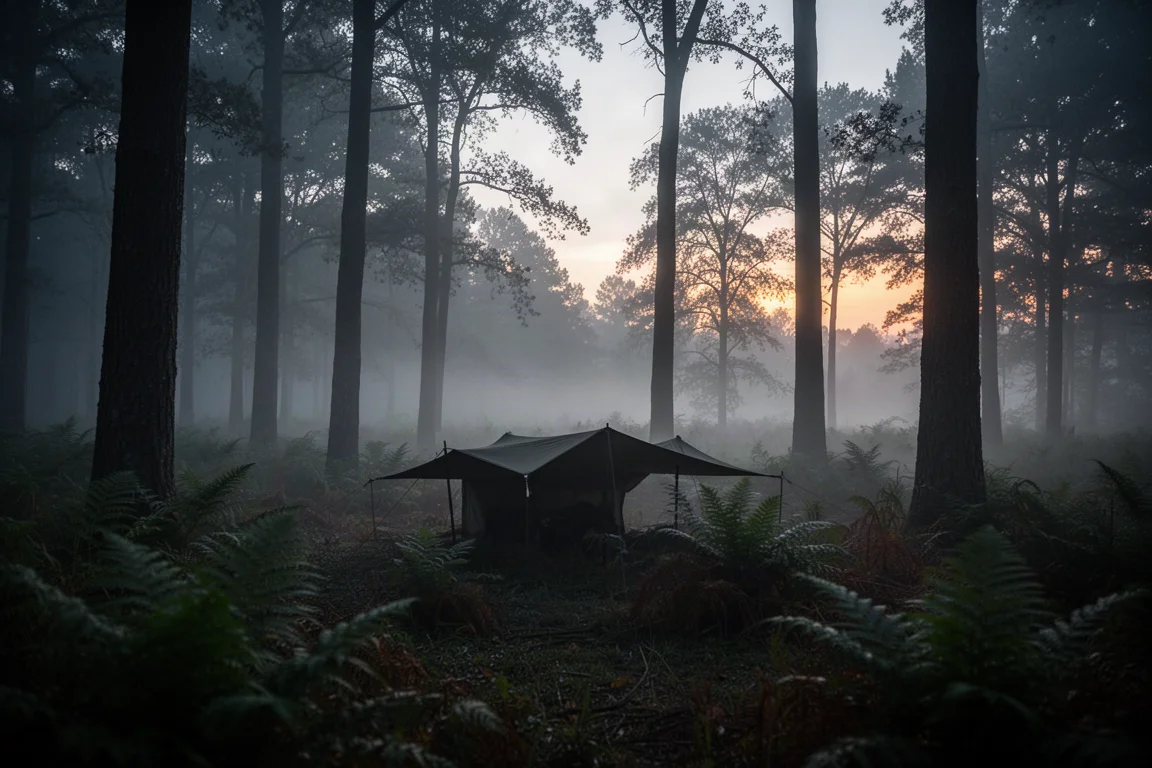
The dark earth-tone fly is the other clue about intent. It blends into natural surroundings, which is the whole point for stealth camping.
Main Strengths
The front door is the standout feature. It is large, and the peak is high enough that getting in and out is far easier than with most low-slung bivy shelters. That single design decision makes the tent much more livable on a daily basis.
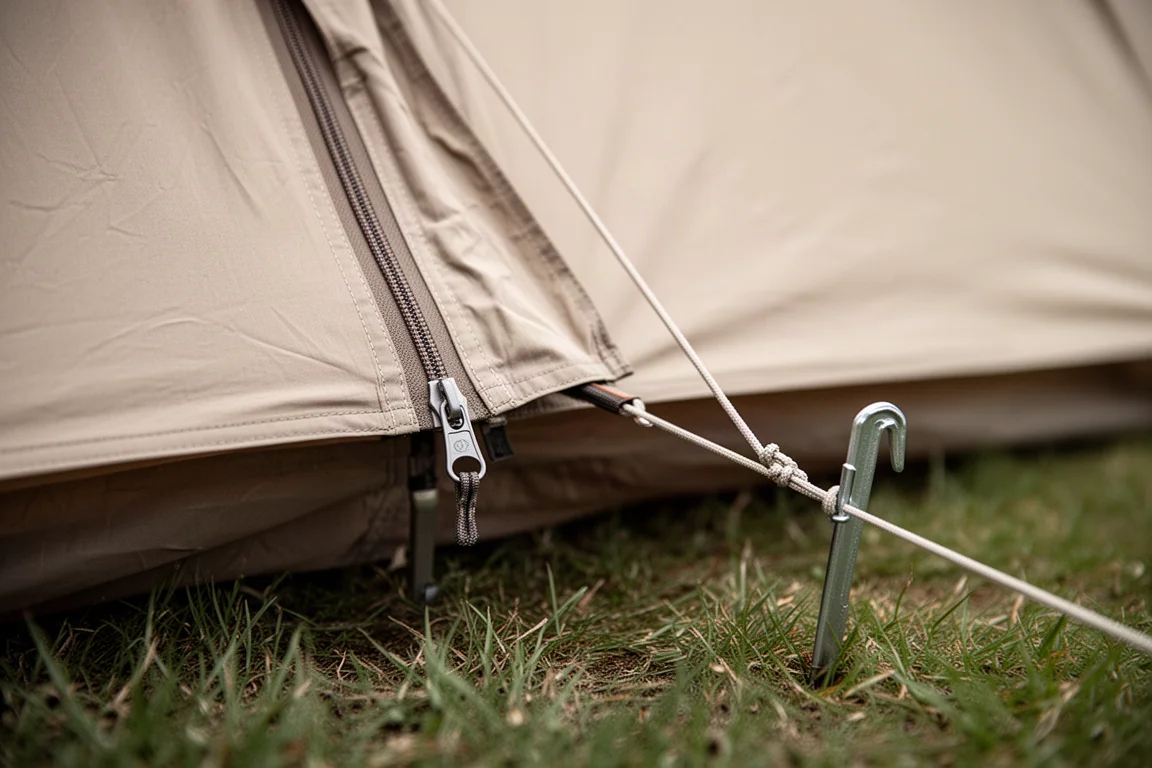
Setup is quick and logical. The body clips to the poles, the footprint matches the floor without any tucking or folding, and buckles connect the ground sheet and body to the fly. You can pitch the body, footprint, and fly together, or leave the body out and fasten the fly directly to the ground sheet for a lighter, faster shelter. Pitching without the fly is also possible.
Weather protection reads sensibly on paper. The fly is 185T polyester with a 2,000 mm hydrostatic head rating, and the floor combines 85D and 190T polyester with a 5,000 mm hydrostatic head rating. The floor is a bathtub design and the seams are taped. The fly adds a storm flap over the door zipper and two guy lines, one per side, to hold it down in wind. The door can be tied back for easy entry.
You also get a lifetime warranty, a footprint included in the box, and a two-person version of the same design if you want more room.
Setup Options and Real-World Measurements
Packed down, the tent fits into a stuff sack measuring about 23 in long by 7 in by 7 in. Total weight is 4 lb 6.2 oz, which is heavy for a one-person shelter and reflects the materials used rather than the floor area.
There is a lot of hardware on this tent. Buckles and attachment points appear throughout, and they add both weight and fiddliness to an otherwise simple pitch.
Mesh coverage is limited. There is mesh at the door, one panel, a strip, and a partial strip at the rear, with the pattern repeating on the other side. The top of the tent and much of the front are fabric. Mountainsmith labels the Lyken a three-season shelter, a claim printed on the tent itself, which makes the limited mesh a curious choice for a tent meant to cover spring through fall.
Things to Consider Before Buying
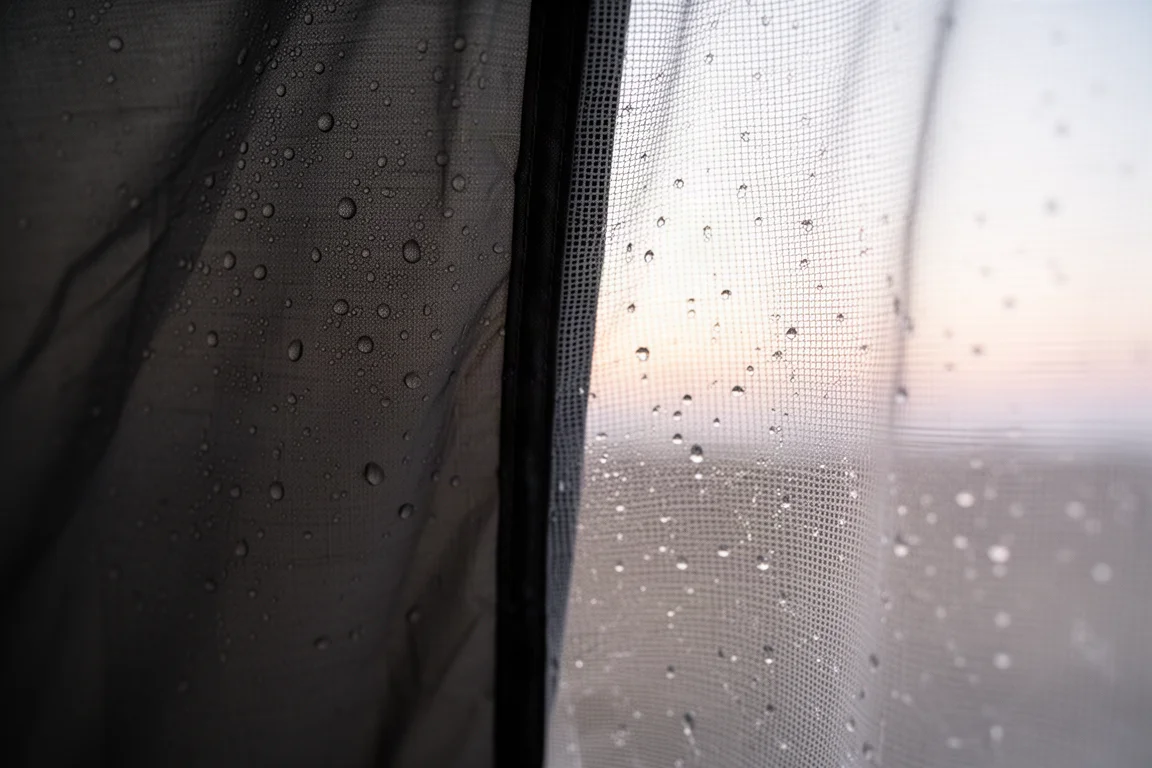
Ventilation is the main question mark. The fly drops nearly to the ground, and there are no vents once everything is zipped up. Combined with the fabric-heavy inner, that points to restricted airflow and a real chance of condensation on cool, damp nights. The large mesh panels near your head and chest help, but they do not solve the whole picture.
Heat retention is the flip side of the same design. A fabric inner holds warmth, so this is a warmer shelter than a mesh-forward three-season tent. That is welcome in shoulder seasons and cold mornings, and less welcome in the middle of summer.
Build quality is acceptable rather than polished. There are loose threads around the tent, and the fly arrived with two dark marks that came from the factory. At $90 to $100 that is easy to overlook; at the $180 full retail price it is harder to justify.
One detail worth noting: the fly is described by the brand as green, but in person it reads much closer to coyote brown. If color matters to your setup, expect a dark earth tone rather than a green.
The brand itself is another consideration. Mountainsmith has been around for a long time but keeps a low profile, and there is little public feedback about how its lifetime warranty is handled in practice. Buyers who want a long track record of service stories may want to weigh that.
Buying Advice
The Lyken makes the most sense at its street price. Around $99, or $90 during a brand sale, you are getting a complete package: tent, fly, poles, ten stakes, and a fitted footprint, with a large door and generous interior length. For a solo camper who wants a low-profile shelter that vanishes into the treeline, that is a reasonable proposition.
Match it to the right conditions. Cooler trips, shoulder seasons, and the transition from winter into spring suit this tent far better than a hot summer night, when the fabric-heavy body and near-ground fly will work against you. If airflow and condensation control are your priorities, a mesh-forward three-season tent will serve you better.

Check the seams, threads, and fly condition when the tent arrives, and pitch it once at home before your first trip so the staking points and buckle layout are familiar. If you need more space or plan to camp with a partner, the two-person version of the same design is worth a look.
Conclusion
The Mountainsmith Lyken is a genuinely interesting one-person bivy with a strong core: a big door, a tall peak, generous length, taped seams, a bathtub floor, and a footprint included. Its weaknesses are equally clear, with a fabric-heavy inner, limited mesh, and a fly that sits close to the ground. At around $99 it is easy to recommend to the right camper; at full retail it is a harder sell.
Product link
View more details for Mountainsmith Lyken One-Person Tent
This product is mentioned in the review. Check the specifications, options, and compatibility before buying.
View more details for Mountainsmith Lyken One-Person TentFurther reading
Related Reviews
Camping Tents
3F UL Gear Taiji Two-Person Tent Review: Field Waterproofing Results and Buying Advice
The Taiji pairs an attached fly with a removable inner, but sustained rain exposed untaped vent seams that need sealing before this shelter can be trusted.
Camping Tents
3FUL Gear Lanshan 2 Pro 4-Season Review: A Sub-$200 Single-Wall Trekking Pole Tent
An early look at the 3FUL Gear Lanshan 2 Pro 4-Season, covering its straightforward pitch, generous interior space, and the condensation and seam-sealing questions that come with any single-wall shelter.
Camping Tents
Alps Mountaineering Lynx 1-Person Tent Review: Big Value in a Small Budget Tent
A close look at the Alps Mountaineering Lynx 1-Person Tent, covering real interior dimensions, materials, setup time, ventilation limits, and who should buy it.