Backpacking Tents
Mountain Hardwear Strato 2 Review: Two-Person Headroom Without the Weight Penalty
A two-person backpacking tent that spends a few extra ounces on genuinely usable headroom, two doors, and two vestibules.
Introduction
Backpacking tents are small on purpose. A compact footprint packs down neatly, sheds weight, and leaves more room in the pack for everything else. That trade is easy to accept right up until the moment you want to sit up and pull on a layer, which is where most lightweight shelters start to feel like a compromise.
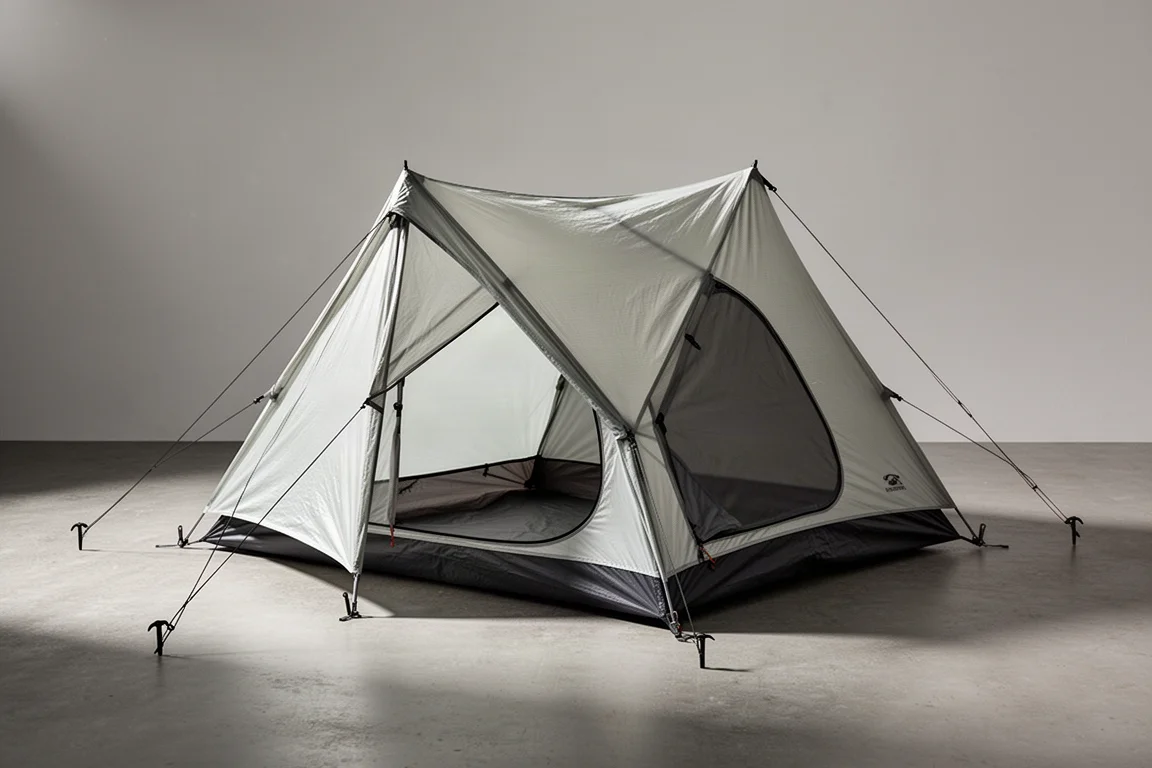
The Mountain Hardwear Strato 2 is a two-person backpacking tent that takes a different position on that compromise. It adds roughly 6.5 oz over the lightest shelters in its class and spends that weight on interior volume instead of trimming it away. Near the peak, headroom approaches two feet, and the sidewalls sit far closer to vertical than the sloping walls many backpackers are used to. On a home scale, the complete setup with poles, stakes, and guylines comes in at 2 lb 6.5 oz, which is a competitive figure for a two-person tent.
The result is a shelter that feels considerably more liveable than its packed weight suggests, with a set of practical details worth understanding before you decide whether the extra ounces earn their place in your pack. The Strato 2 was introduced in 2021 and remains a relevant option for backpackers who put a premium on interior comfort.
Who This Product Is For
The Strato 2 makes the most sense for backpackers who genuinely sleep two to a tent and who have felt the frustration of a shelter that only works when one person is inside. Headroom rarely matters when you are alone, because you can position yourself wherever the ceiling is highest. With two people inside, every movement becomes a negotiation, and the simplest tasks, such as adding or removing a layer, turn into a contortion exercise in a low tent.
This tent targets that specific problem. The near-vertical sidewalls and the tall peak give both occupants room to sit up and move without constantly ducking. Anyone who has spent a cold morning wrestling with a jacket zipper while pressed against a sloped wall will recognise the value immediately.
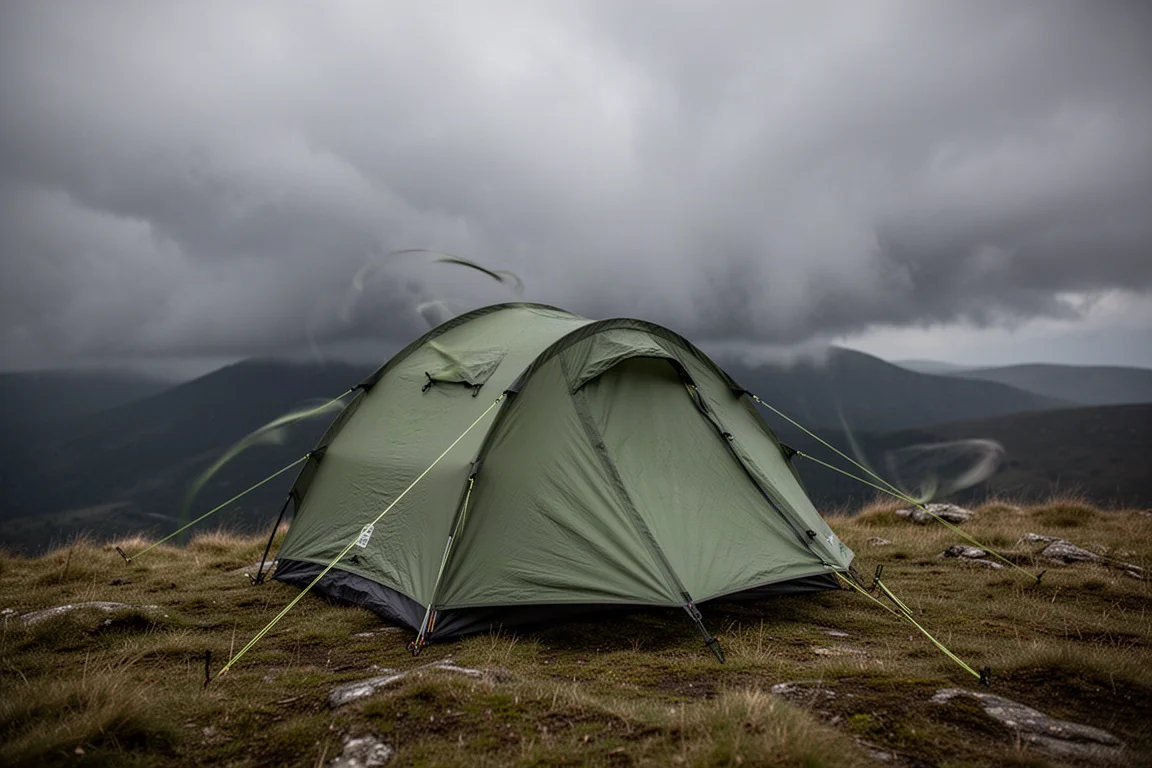
It is also a strong fit for backpackers who want the weight of a compact shelter but are willing to carry a modest penalty for comfort. The 6.5 oz premium over a lighter tent is the entire point of the design, and it is a reasonable exchange for anyone who spends long evenings and early mornings inside rather than only using the tent as a place to sleep.
Where the Strato 2 clearly does not fit is with taller sleepers. A six-foot sleeper lying flat found both head and feet brushing the tent walls, and that was without inflated sleeping pads. A two to three inch pad raises you off the floor and makes the contact worse. Taller backpackers should treat this as a genuine limitation rather than a minor one.
Main Strengths
Headroom and Interior Space
Headroom is the headline feature here. With close to two feet of clearance near the top and sidewalls that approach vertical, the Strato 2 lets two people sit upright at the same time. That single change transforms the way the tent feels in daily use, from a cramped shell you crawl into and out of to a space where you can organise gear, change layers, and wait out weather without discomfort.
The interior volume also makes the tent easier to share. Sleeping bags, pads, and small items stay where you put them rather than sliding into the middle of the floor, and there is enough vertical space that a headlamp does not bounce off the ceiling right above your face.
Doors, Vestibules, and Livability
Two doors and two vestibules are the features every two-person backpacking tent should have, and the Strato 2 delivers both. Each occupant gets an independent entry and exit, which removes the awkward ritual of climbing over a partner to get outside in the middle of the night. Each side also has its own covered storage area for boots, packs, and wet layers.
Each door uses two zippers rather than one. That detail matters more than it sounds: a double zipper makes the door far easier to open one-handed, which is exactly what you need when you are wedged inside a small tent with another person and trying not to disturb them.
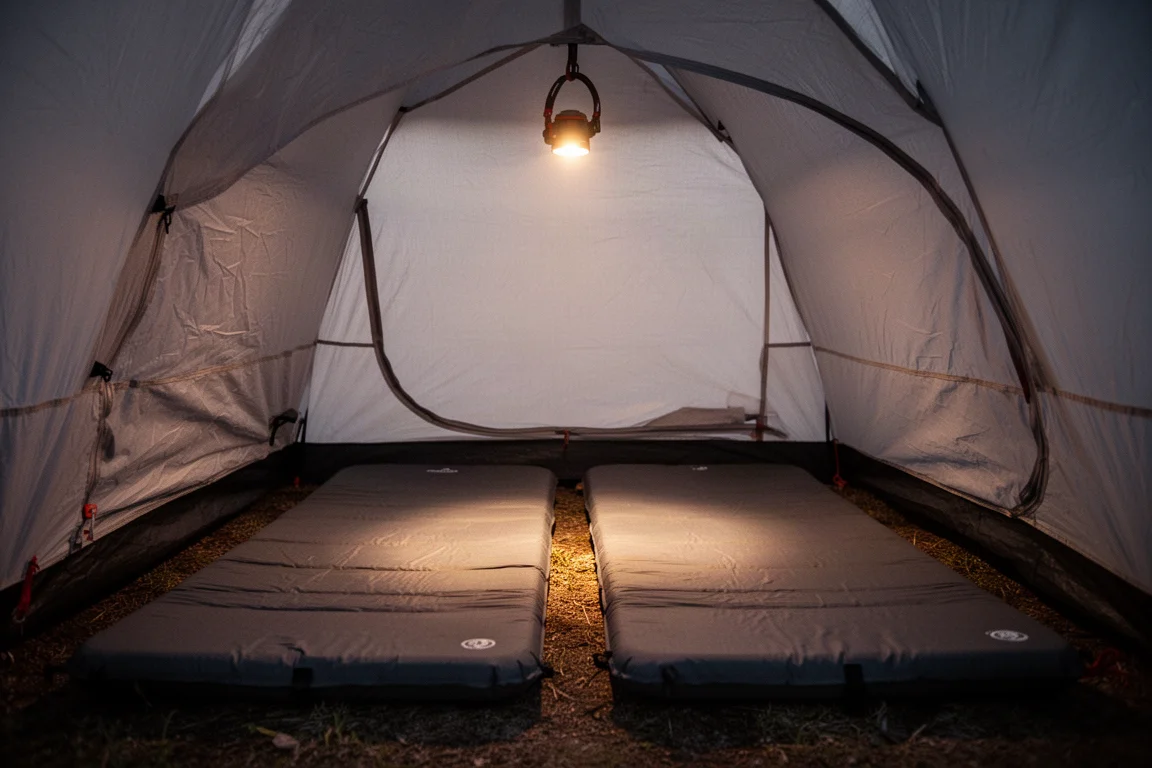
A pre-bent pole at the foot end adds a small amount of extra space that keeps the toe box of a sleeping bag from pressing against the wall and soaking up condensation. It is a subtle design choice, but it addresses one of the most common annoyances of sleeping in a lightweight tent.
The tent also includes a simple, deliberate way to keep the poles with the tent, which makes packing up and setting out again noticeably tidier. It is the kind of small organisational detail that a gear company either thinks about or does not, and here it has clearly been thought about.
Weight and Packed Size
At 2 lb 6.5 oz with all poles, stakes, and guylines included, the Strato 2 sits in a sensible place for a two-person backpacking tent. It is not the lightest option available, and it does not pretend to be. The design accepts a roughly 6.5 oz penalty over a leaner shelter in exchange for the interior volume that defines the tent.
For backpackers who have spent years tolerating poor headroom purely to save weight, that figure is worth weighing carefully. Six and a half ounces is a meaningful amount on a long trip, but it is also a small fraction of total pack weight, and it buys comfort on every single night of a multi-day route.
Things to Consider Before Buying
Taller Sleepers
Height is the clearest constraint on this tent. A six-foot occupant lying flat touched both the head and foot walls, and that measurement came without an inflated sleeping pad underneath. Adding a typical two to three inch pad lifts the sleeper closer to the sloping fabric and reduces clearance further.
This is a widespread issue with backpacking tents rather than something unique to the Strato 2, but it is worth being honest about. If you are around six feet or taller, you should expect contact with the walls at the head and foot, and you may want to consider a longer or larger shelter instead.
Pitch, Weather, and Setup Details
Getting the fly properly taut takes more effort here than on many tents. It required walking the perimeter more than once and tensioning every guyline individually before the fly sat cleanly. On other tents, a tight fly often comes together in a single pass while staking out. It is a setup detail rather than a design flaw, but it does add time at camp.
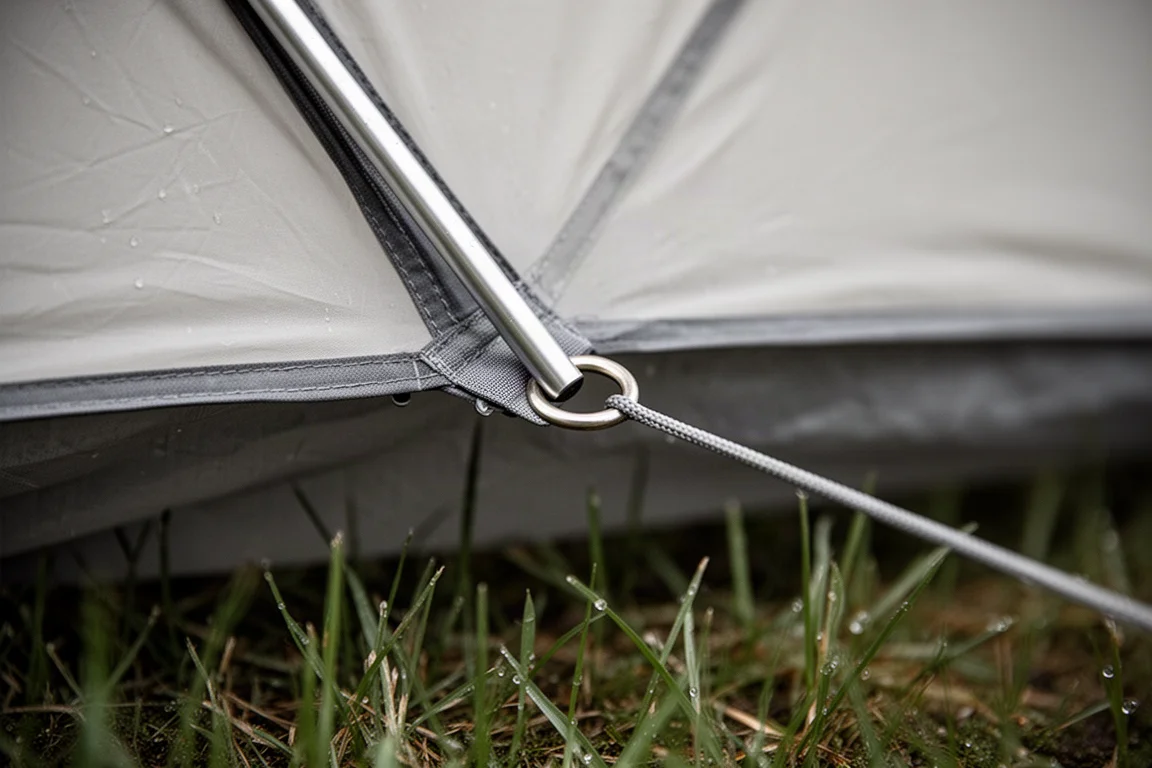
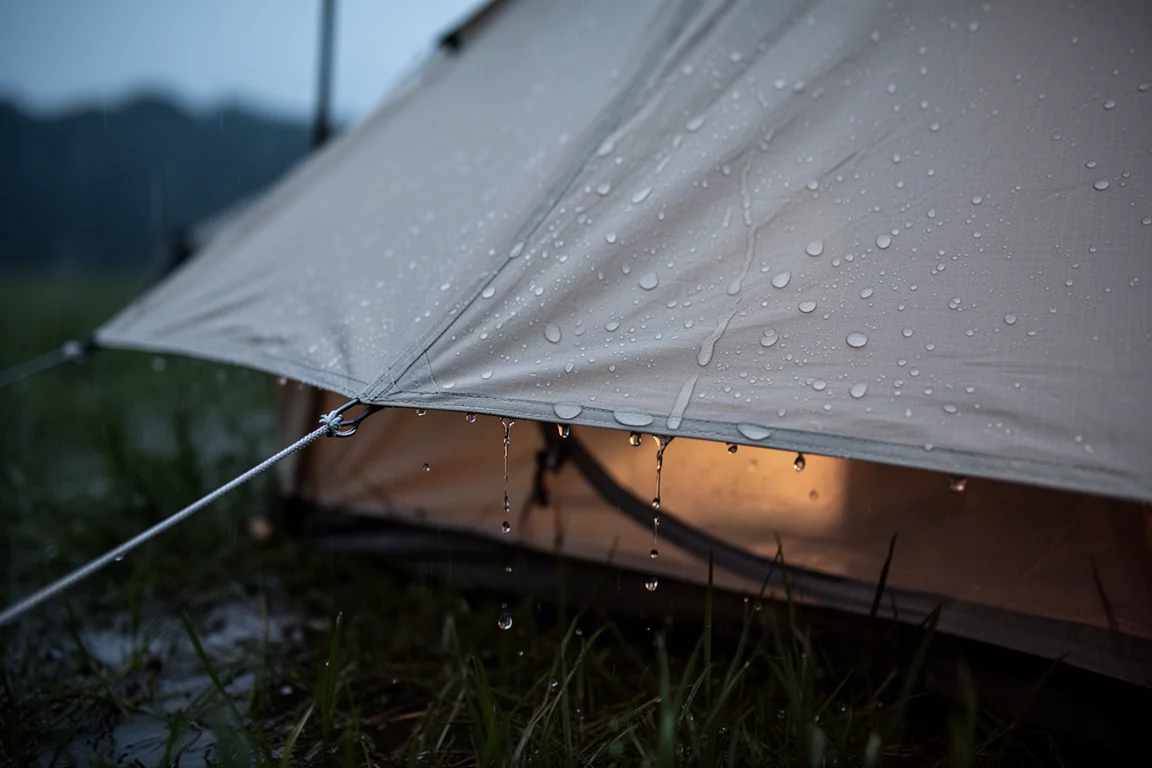
The mesh on this tent sits quite low, which means heavy rain will likely produce some splashback onto the inner floor. That is the trade for lower weight and better ventilation, and it is a reasonable one for three-season use. The tent has not been tested in a genuine downpour here, so treat splashback as an expected characteristic of the design rather than a confirmed measurement.
A few smaller details are worth noting. Near the bottom front, the tent uses two fabric loops instead of the low-weight clips found elsewhere on the structure. Those clips are clever and lighter than traditional hardware, but the loops at the front are awkward to feed poles through, and they are easy to overlook entirely. The floor is also built in two pieces with a seam, which raises a legitimate long-term concern about water working its way through at that join. Finally, the door tie-back sits well back toward the foot of the tent, making it a long reach from the door opening.
The colour is a matter of preference. The pale finish is inoffensive and reduces the dyes, energy, and water required in production, which is a real benefit, though a brighter colourway would stand out more in photographs.
Buying Advice
At around $400, the Strato 2 is neither the most expensive nor the cheapest two-person backpacking tent available. That price sits in the middle of the category, and the decision comes down to how much you value interior space relative to carried weight.
If you backpack as a pair, if you spend real time sitting up inside the tent, and if you are under roughly six feet tall, the extra 6.5 oz is easy to justify. The headroom, the two doors, the two vestibules, and the one-handed door zippers all improve the experience of every night on the trail.
If you travel solo, count every ounce, or measure close to six feet or above, the case is weaker. A lighter shelter will serve you better, and the headroom advantage only pays off when there is a second person sharing the space. Buyers should also factor in the two-piece floor seam and the low mesh if they regularly camp in sustained heavy rain.
Conclusion
The Mountain Hardwear Strato 2 solves a problem that most lightweight two-person tents simply accept. It trades a modest amount of weight for headroom that approaches two feet, sidewalls that stay close to vertical, and a layout with two doors and two vestibules, so two people can share the tent without negotiating every movement.
It is not a tent for everyone. Taller sleepers will find the walls close, the fly takes patience to pitch taut, and the low mesh means some splashback in hard rain. For backpackers who fit the design, though, the extra ounces buy comfort on every night of the trip, and that is a trade many will happily make.
Product link
View more details for Mountain Hardwear Strato 2
This product is mentioned in the review. Check the specifications, options, and compatibility before buying.
View more details for Mountain Hardwear Strato 2Further reading
Related Reviews
Backpacking Tents
3F UL Lanchan Pro 1 Review: A 1 lb 8 oz Single-Wall Trekking Pole Tent
A practical look at the 3F UL Lanchan Pro 1, a single-wall trekking pole shelter with a 1 lb 8 oz weight, 20D silnylon fabrics, and a roomy 90 x 31 x 49 inch interior.
Backpacking Tents
3F UL Taiji 2-Person Tent: A Convertible Backpacking Shelter Worth a Closer Look
A practical look at the 3F UL Taiji two-person tent, covering its materials, true two-person interior, fly-first pitching, and the seasonal inner swap that lets one shelter cover more of the year.
Backpacking Tents
3FUL Lanshan Twoerson Pro Review: A Light Trekking Pole Shelter That Struggled in Rain
A two-person trekking pole shelter with a 2026 redesign, pitched with sticks and put through a night of steady rain. Here is what worked, what did not, and what to check before buying.