Outdoor Jackets
Mountain Equipment Atmo and Tupilak: Choosing the Right Waterproof Shell
A close look at Mountain Equipment's Drilite-based Atmo and the long-standing Gore-Tex Pro Tupilak, plus how to decide which shell suits the days you actually climb.
Introduction
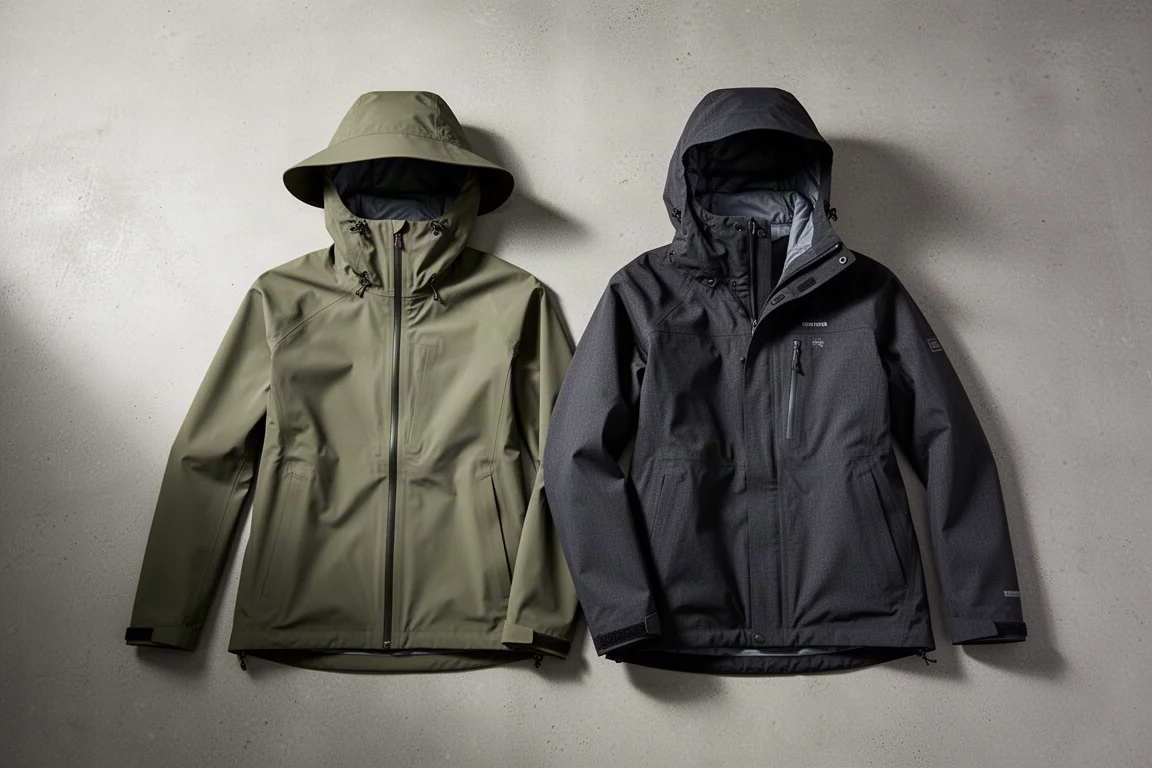
Mountain Equipment has built a long reputation for waterproof shells. Names such as Lhotse, Manaslu and Tupilak have been in the range for years and they perform very well in demanding conditions. They have traditionally relied on Gore-Tex Pro, a substantial and dependable fabric with a slightly higher waterproofing rating.
The Atmo takes a different route. It uses Mountain Equipment’s own Drilite material, and it is positioned as a lighter, softer alternative for climbers who want to move freely on harder routes. This article looks at what each jacket does well and where each one makes sense.
What Sets the Atmo and Tupilak Apart
Gore-Tex Pro is a brilliant fabric. It does exactly what it is known for, it belongs in the mountains, and there is nothing wrong with choosing it. What it cannot do is feel soft. A static fabric like Gore-Tex Pro cannot deliver the freedom of movement and the slight stretch that a softer construction allows.
That difference shapes everything about the Atmo. It is built to feel closer to a soft shell than a traditional hard shell: soft to the touch, quiet in use, and with a little bit of stretch. The result is less rustle and less distraction when you are concentrating on a route.

The Tupilak sits at the other end of the spectrum. It is a proper tank of a jacket, built around Gore-Tex Pro and an 80 denier face fabric, and it has spent years proving itself in bad weather. The trade-off is bulk. On a really hard route, especially in Scottish winter conditions, that extra weight and stiffness can leave you feeling less nimble than you would like.
Mountain Equipment Atmo: A Lighter Shell for Harder Routes
The Atmo has been through a few iterations, and earlier versions carried the Tupilak Atmo name as a refinement of the Tupilak itself. This one drops that name, and that makes sense, because it has more of its own character.
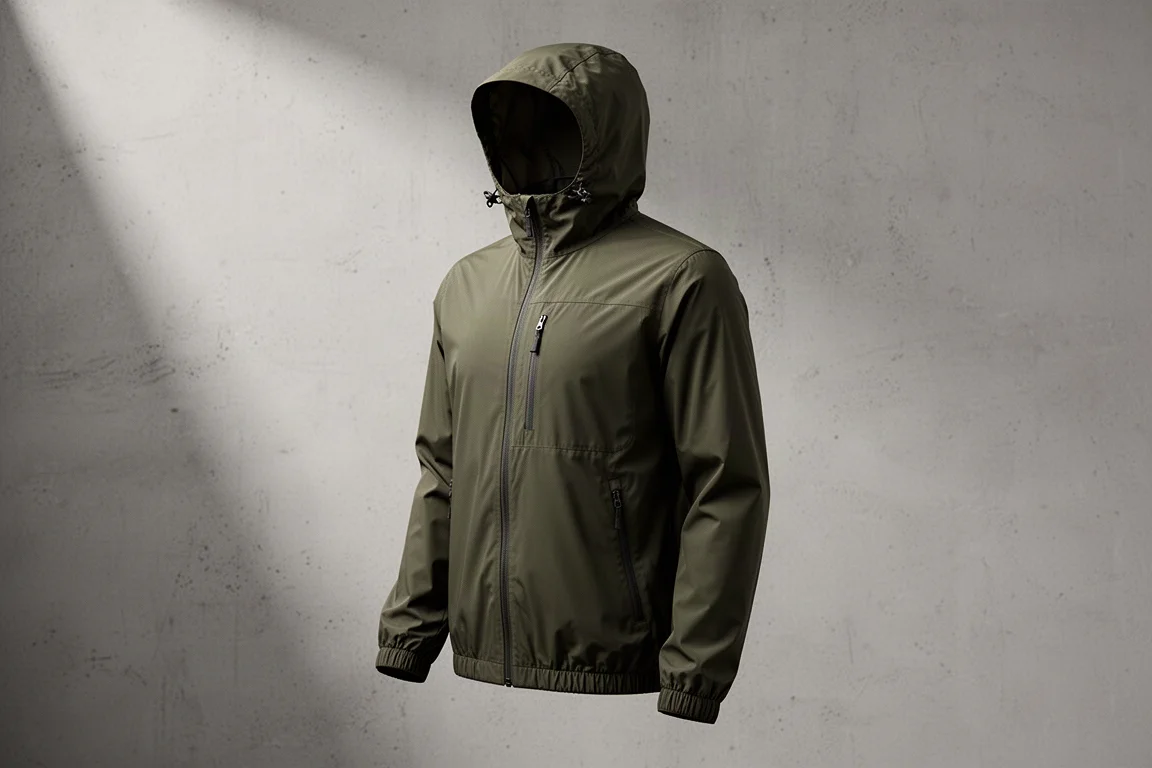
The design goal is straightforward. It is made for harder routes where you want to keep the weight down. It packs up really small, small enough to disappear into a pack, and when you are wearing it you feel noticeably freer to move. The 40 denier face fabric is lighter than the Tupilak’s 80 denier, which means it is probably not quite as burly, but it also makes the jacket feel lighter and more agile on the move.
That combination of a soft hand, a quiet fabric and a bit of stretch lets you get on with the climbing rather than thinking about the jacket. It is the kind of shell that works well on the days when you would normally reach for a soft shell but the weather is too uncertain to take the risk.
Inside the Atmo: Drilite Fabric and Feature Choices
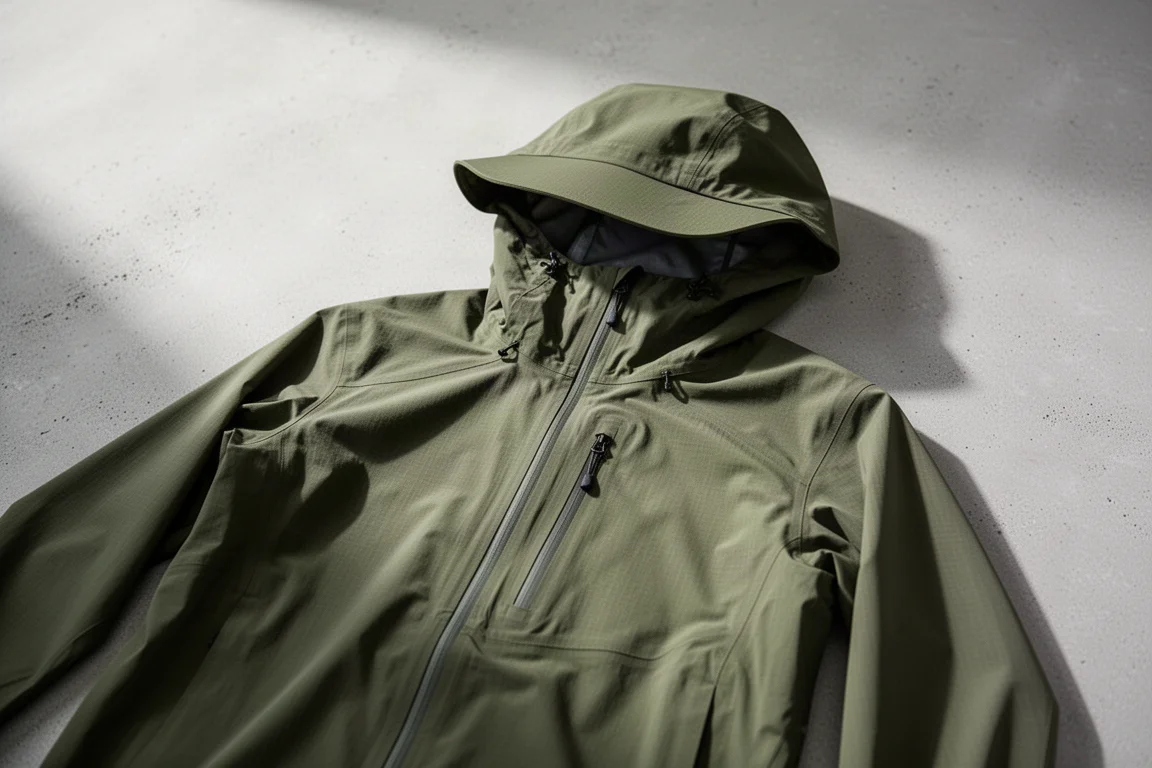
Drilite is rated at 20,000mm hydrostatic head for waterproofing and 20,000 for vapour transfer rate, which is the breathability measure. In practice the breathability feels better than that figure suggests, and the brand has acknowledged holding the published number at 20,000 rather than quoting the stronger results it has recorded.
Gore-Tex Pro still carries a slightly higher waterproofing rating, but the gap matters far less than it sounds. You are very unlikely to get wet in the Atmo. What the extra breathability buys you is comfort: you can push harder without taking the jacket off, and it does not feel claustrophobic. It is soft and flexible enough to run in comfortably, which is unusual for a mountain jacket.
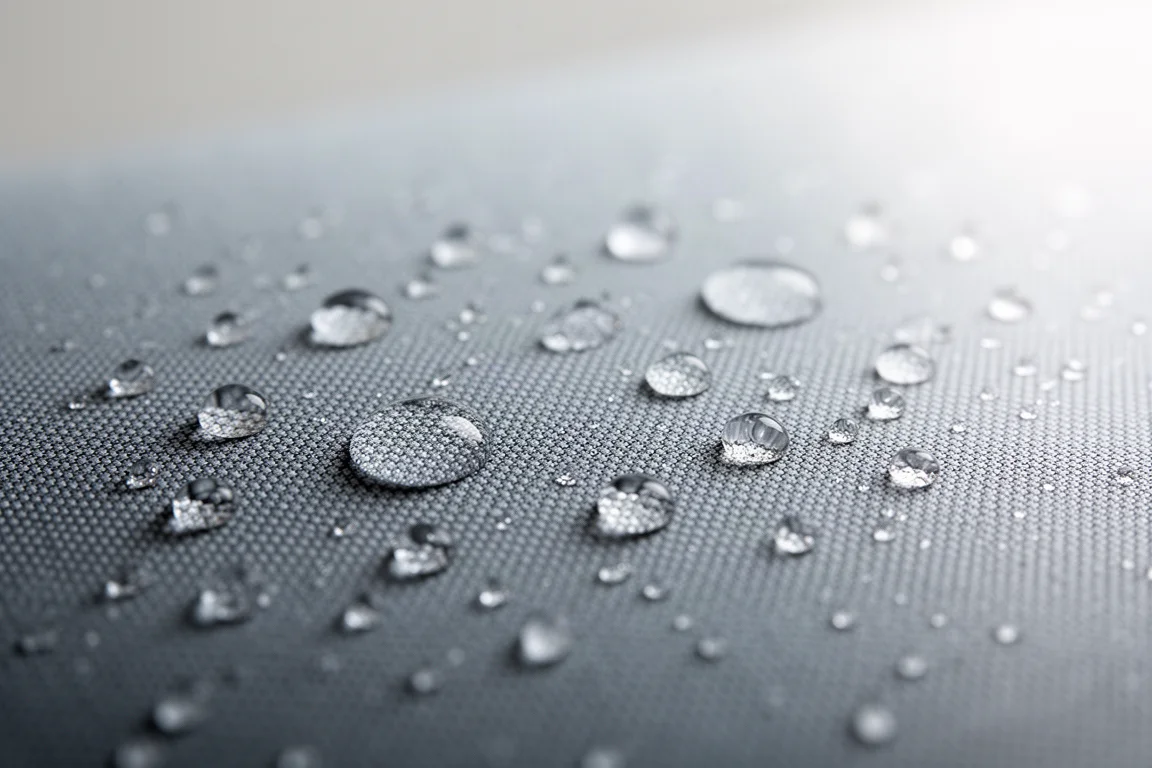
The face fabric uses 40 denier, and the construction includes a solution dyed backer alongside a PFC-free durable water repellency, which means the finish is free of forever chemicals. That is better for the environment and for the people in the supply chain, with the honest trade-off that the jacket needs washing and reproofing more often.
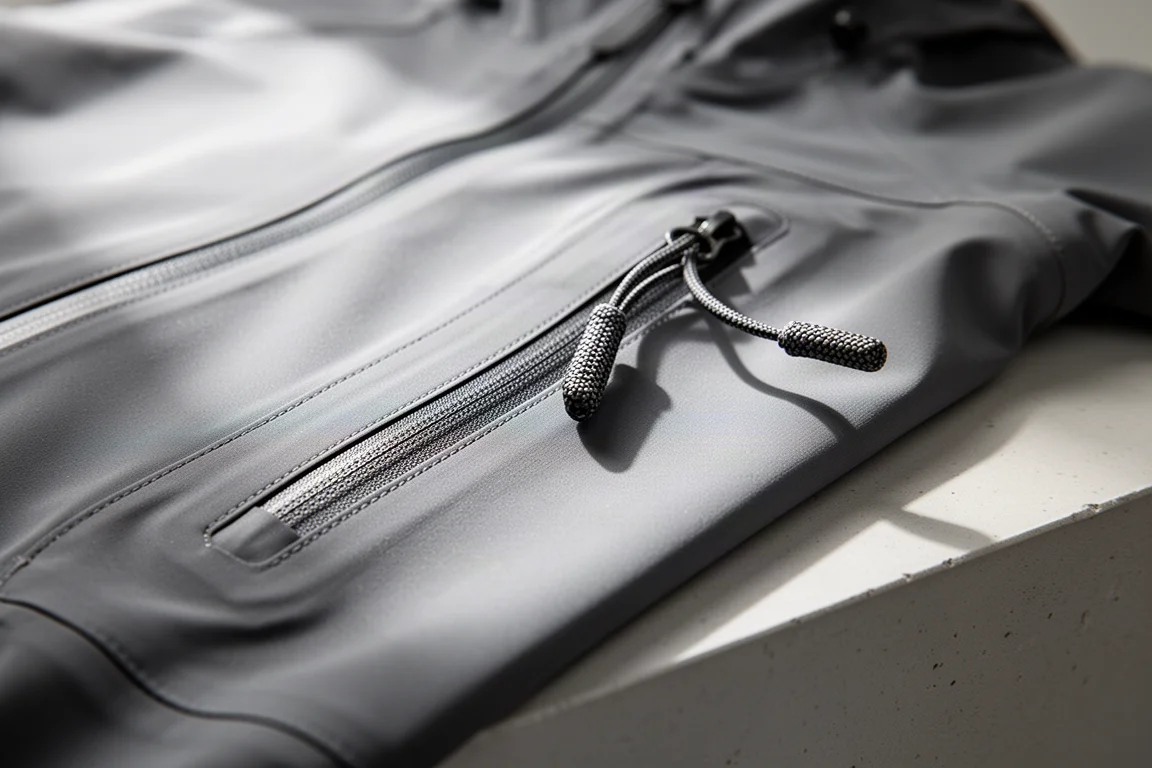
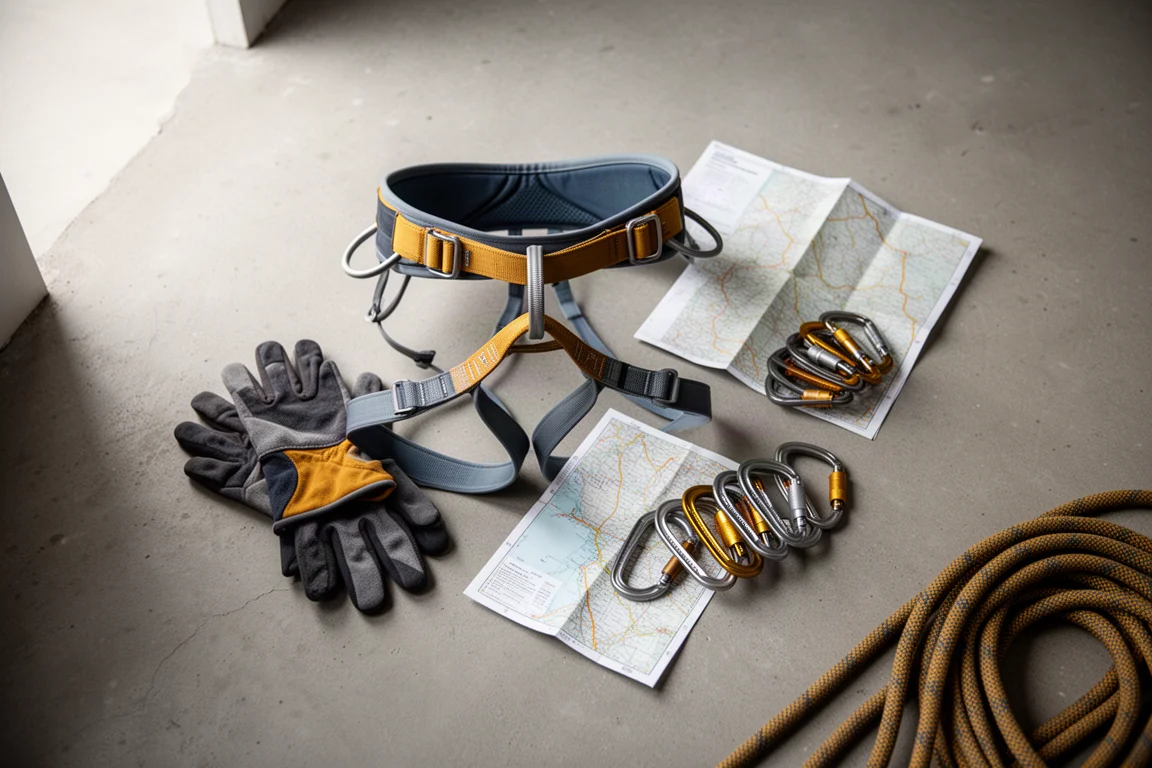
The feature set is deliberately stripped back. You get a waterproof shell, a light weight and one pocket, and not much else. There are no hand pockets and no pit zips, which saves weight and removes potential failure points. If you are wearing a rucksack, hand pockets tend to become pointless anyway. The single chest pocket is a good size and can take a guidebook or a map at a squeeze, though most people will use it for a phone.
The hood is not the same as the Tupilak hood, which swallows a helmet and hides you away from a big storm. The Atmo hood still goes over a helmet without any trouble, and it has a wide peak that keeps you feeling free to climb while remaining a proper mountain hood. It cinches down well, with a pull cord at the back and two at the front, so it sits snug when you are not wearing a helmet. The pull cords use Cohesion hardware, which is very easy to undo with big gloves on. There is also a two-way main zip, a feature plenty of climbers appreciate for belaying.
One small detail stands out. The hem pull cords are cut in half and sealed at the ends rather than left as loops. That means you cannot accidentally clip your gear through them when you are racking up on a harness, and it removes the risk of a crampon catching on a loop during a high step.
Mountain Equipment Tupilak: The Established Storm Shell
The Tupilak is the reference point for this comparison. It uses Gore-Tex Pro with an 80 denier face fabric, and it is built to take a beating. It has been in the range for years, it has handled a lot of bad weather, and it is still going strong.
What it delivers is certainty. You know you will stay dry and well protected, and the heavier fabric stands up to rough treatment. Its hood is designed to swallow a helmet and shut out a serious storm, which is exactly what you want when the weather turns.
The downside is the one already mentioned. It is chunky and clunky compared with the Atmo, and on a hard route that bulk costs you a little nimbleness. It is the jacket you reach for when protection matters more than freedom of movement.
Living With a PFC-Free DWR
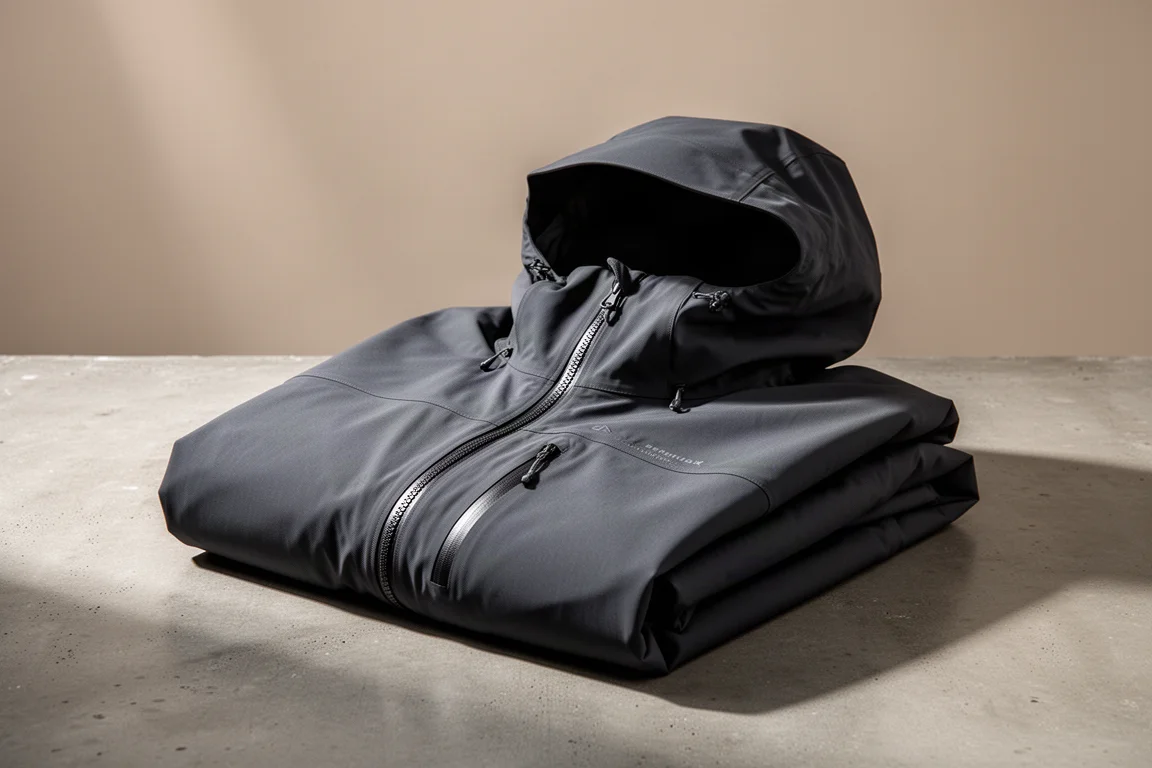
The Atmo’s durable water repellency is free of forever chemicals, and that is the right direction for the environment and for the people who make the jacket. It does come with a practical consequence.
A PFC-free finish will not bead water as aggressively as the coatings on older jackets, and it will need more attention over time. Washing and reproofing the jacket regularly keeps the repellency working properly. That is a small amount of extra maintenance in exchange for a finish that is better for the environment, and it is worth staying on top of rather than letting the surface wet out.
It is also worth remembering that the Atmo was introduced for the summer season but is not a summer-only jacket. It has been used through a winter of Scottish climbing, including demanding routes in stormy but manageable weather, and it performed brilliantly. The usual choice on that kind of day would have been a soft shell, and the Atmo covered it without any problems: breathable, light, and free enough to move that it never held anything back. It is equally well suited to summer in the Alps and to spring running.
How the Two Shells Compare
The Atmo pairs Drilite at 20,000mm hydrostatic head and 20,000 vapour transfer rate with a 40 denier face fabric. It is soft, quiet and slightly stretchy, with one chest pocket, no hand pockets and no pit zips, a PFC-free DWR, a hood that fits over a helmet with a wide peak, and a two-way main zip. It suits harder routes, Scottish winter climbing, spring running and summer alpine use.
The Tupilak pairs Gore-Tex Pro, with its slightly higher waterproofing rating, with an 80 denier face fabric. It is burlier, heavier and less nimble, and its helmet-swallowing hood is built for serious weather. It suits stormy days and any situation where maximum protection is the priority.
The two complement each other rather than competing directly. The Atmo handles the days when you want to move fast and feel unencumbered. The Tupilak handles the days when the weather is the main problem.
Buying Advice
If you already own a Gore-Tex Pro shell, the Atmo is a natural companion rather than a replacement. It covers the days when a heavier jacket feels like too much and you would otherwise gamble on a soft shell.
If you are choosing a single shell, think about the conditions you actually meet. Where storms and sustained rough weather are the norm, the Tupilak’s heavier fabric and slightly higher waterproofing rating are the safer call. Where you want to move quickly on harder routes and value breathability and freedom of movement above all else, the Atmo is the more rewarding jacket.
Either way, the maintenance routine matters. A PFC-free finish needs regular washing and reproofing to keep performing, and staying ahead of that keeps the jacket working the way it should. Neither option is a compromise on protection. The real question is how much fabric you want to carry and how much freedom you want in return.
Conclusion
Mountain Equipment’s Gore-Tex Pro jackets have earned their reputation over many years, and the Tupilak remains an excellent choice for stormy, demanding days. The Atmo does something different and does it well: a Drilite shell rated at 20,000mm and 20,000, with a 40 denier face fabric, a soft quiet hand and enough stretch to feel closer to a soft shell.
For climbers who want to move freely on hard routes without giving up reliable waterproofing, the Atmo is a strong and well-considered option. For everything the weather can throw at you, the Tupilak is still the tank.
Further reading
Related Reviews
Outdoor Jackets
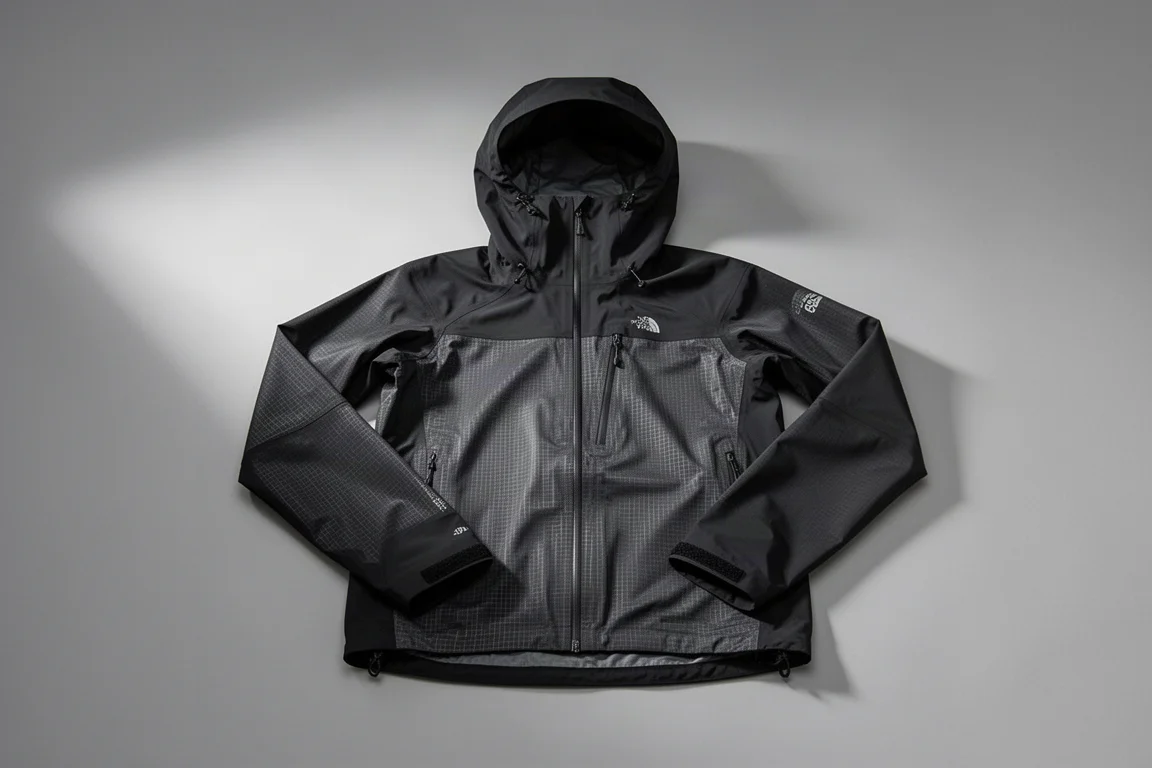
Arc'teryx Alpha Jacket Review: A Lightweight Gore-Tex Shell Built for Climbing
A detailed look at the Arc'teryx Alpha Jacket, a lightweight Gore-Tex mountaineering shell with rugged shoulders, a Hadron body, and a deliberately simple feature set.
Outdoor Jackets
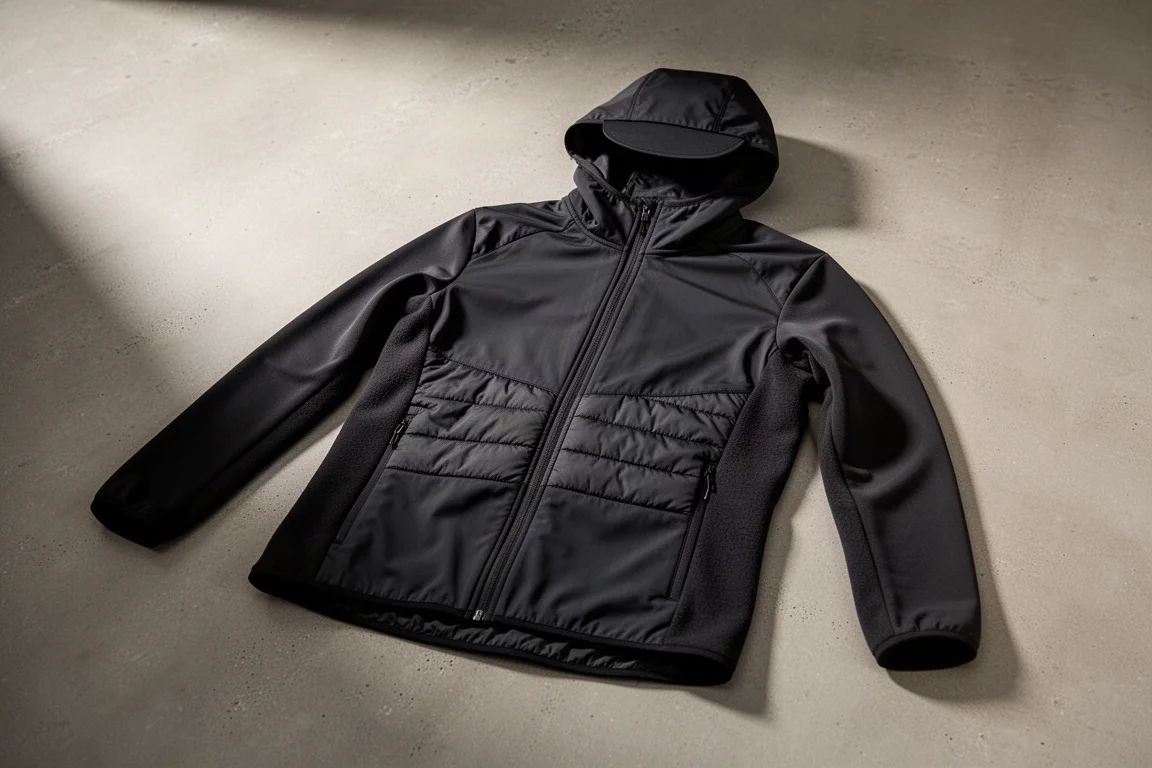
Arc'teryx Atom LT Review: A Versatile Synthetic Midlayer for Cold Weather
A detailed look at the Arc'teryx Atom LT, a lightweight synthetic midlayer built for active cold-weather use, with its strengths, trade-offs, and who it suits best.
Outdoor Jackets
Haglöfs L.I.M Mimic Barrier Hood Review: Light, Breathable, Built to Move
A close look at the Haglöfs L.I.M Mimic Barrier Hood, a 282 g windproof and breathable synthetic layer that works alone in mild weather and as part of a winter system.