Fountain Pens
Montblanc 149 vs Visconti Homo Sapiens Bronze Age: Which Flagship Fountain Pen Deserves Your Money?
Two iconic flagship fountain pens face off across materials, nibs, filling systems, design, writing experience, and value to help you pick the right grail pen.
Introduction
Choosing between the Montblanc 149 and the Visconti Homo Sapiens Bronze Age is one of the hardest questions in modern fountain pen collecting. These are two very different, very interesting flagship pens, and each inspires strong feelings among enthusiasts. The 149 is the venerable classic that some collectors love and others find divisive, while the Homo Sapiens Bronze Age is an upstart built from genuinely extraordinary materials. This comparison works through materials, nibs, filling mechanisms, extra features, overall design, writing experience, and value, then closes with a clear recommendation on which one to buy or keep.
Evaluation Criteria
The comparison is deliberately methodical: materials first, then nibs, filling mechanisms, other features, overall design, the writing experience, and finally value. Each category produces a winner, and the scores carry forward into the final verdict. The two pens are so different that the conclusion ultimately depends on taste, but the category-by-category breakdown makes the trade-offs easy to see.
Materials: Lava Resin vs Classic Resin
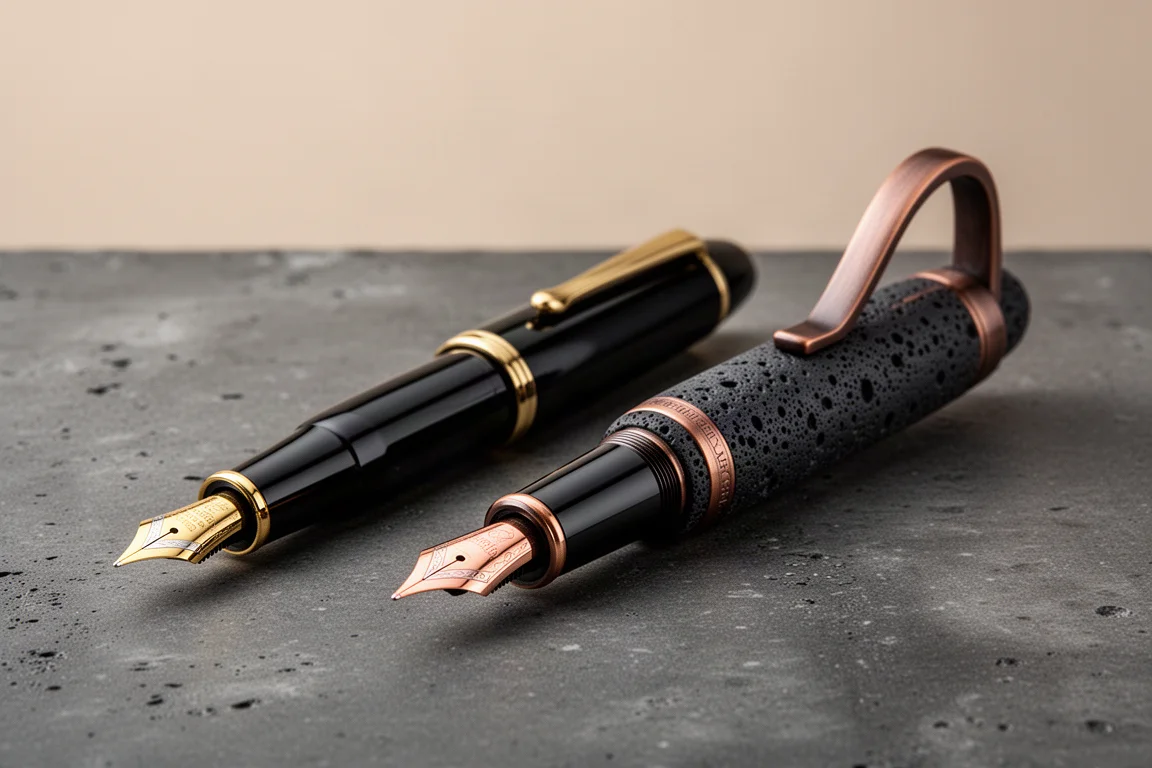
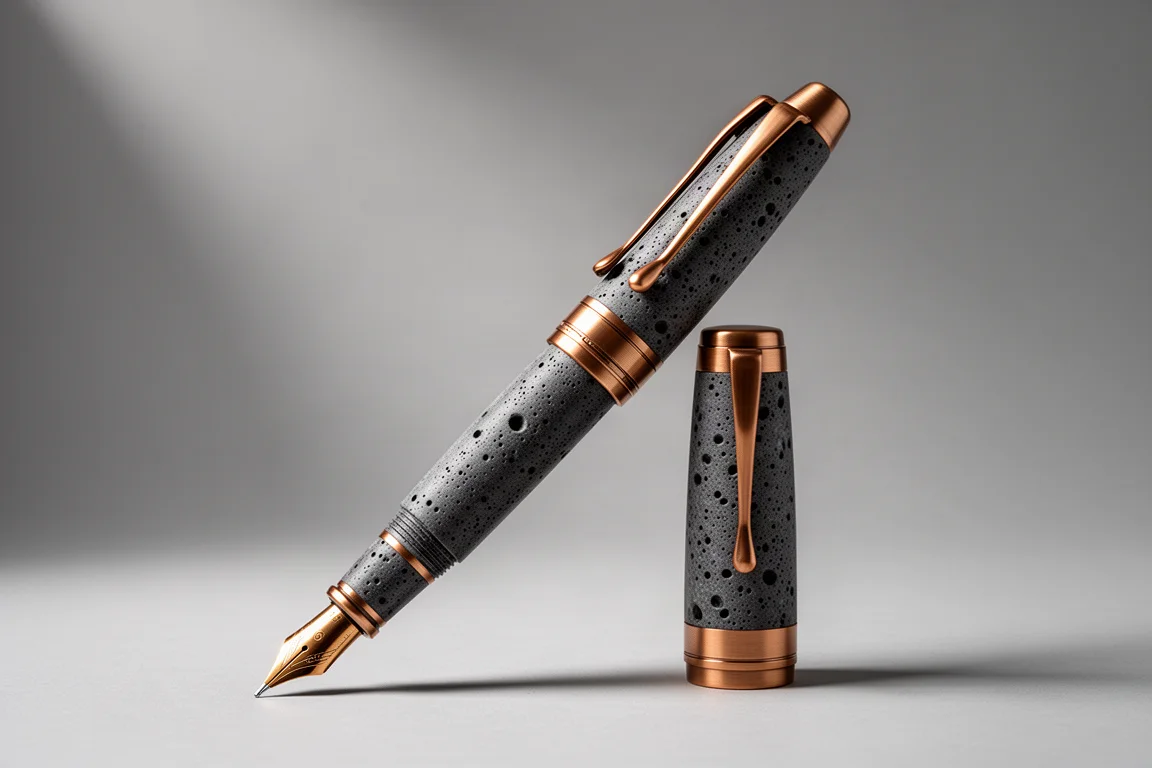
It is hard to make the case that the proprietary resin in the Montblanc 149 is superior to the basaltic lava and resin mix used in the Visconti Homo Sapiens Bronze Age. Visconti takes material spewed out of Mount Etna in Sicily, grinds it into a fine powder, and mixes it with resin to create the pen material. The result is supposedly virtually indestructible, and it is also hygroscopic, meaning it absorbs a little moisture. If your hands get slightly clammy as you write, the pen can take that clamminess away, which is a genuinely remarkable quality. The material has a bit of grain and texture and stays relatively light, though it is heavier than the Montblanc.
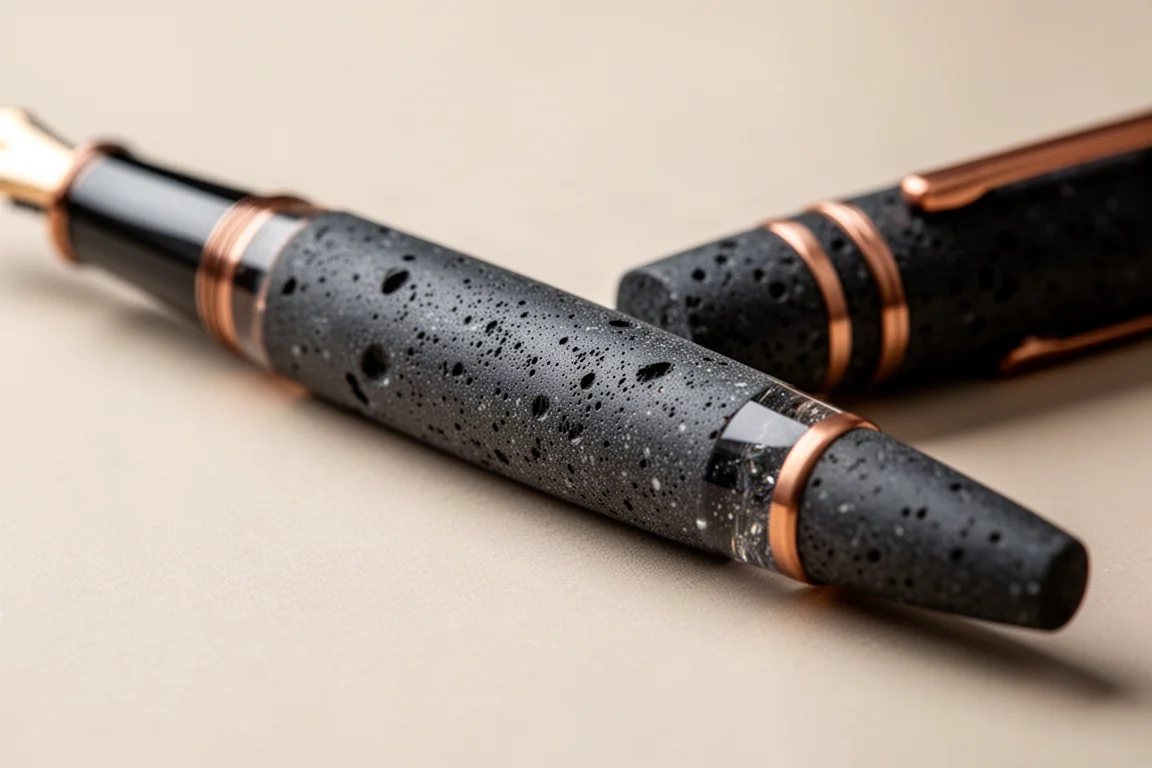
There is a dark side to it, both literally and figuratively: the material is heavier than the Montblanc’s, and that weight does affect long writing sessions. Still, scored purely on materials, the Visconti is the clear winner because it is a truly unique and interesting substance. Score: Visconti 1, Montblanc 0.
Nibs: Two-Tone Gold vs Rose Gold
This is a battle of 18 karat gold nibs. The Visconti Homo Sapiens Bronze Age carries a lovely rose gold nib with a stylized fleur-de-lis style design, beautifully rendered and absolutely gorgeous. The Montblanc 149 counters with a two-tone yellow and white gold 18 karat nib that is one of the largest fountain pen nibs you are likely to encounter anywhere; it is difficult to imagine a larger nib that would still be comfortable to use.
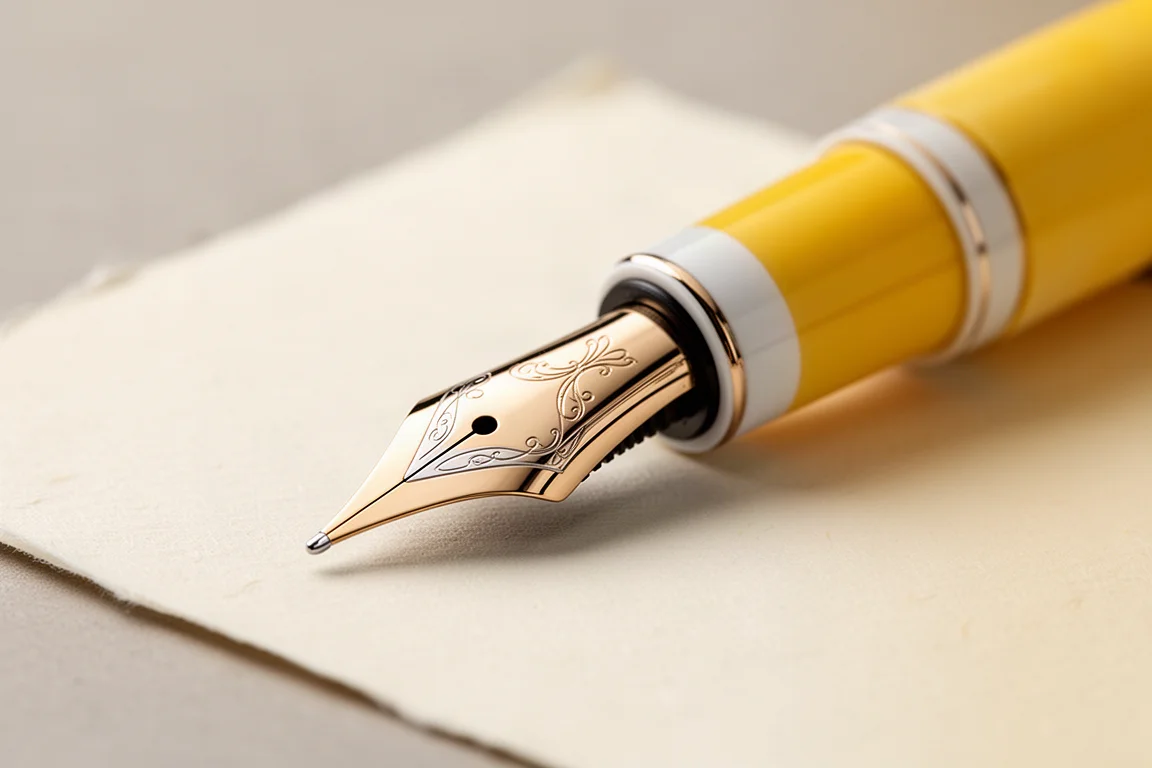
Both are made of amazing materials, but the Montblanc’s two-tone nib is stunning and an icon in the fountain pen world. The Visconti nib is admirable, yet the Montblanc is the clear-cut winner here. Score tied at one apiece.
Filling Mechanisms: Piston vs Power Fill
The Montblanc 149 uses a screw piston filling mechanism that has been refined over many years and works extraordinarily well. After a long time it may need servicing as it can begin to stick; one owner’s eleven-year-old 149 still feels the same as a much younger unit, but occasional maintenance is part of the deal. It is also a bit fiddly, since you have to screw and unscrew during filling.
The Visconti uses its Power Fill system: screw the back, pop it up, pop it down, like a vacuum fill. It fills the pen very quickly, almost greedily, with a distinctive thirsty sound if you listen carefully. The fill system incorporates titanium, which suggests long-term durability. Between a fiddly piston needing occasional lubrication and a slightly over-engineered but precise and charming system, the Visconti takes this round.
Other Features: Clips, Caps, and the Hook Safe Lock
The Montblanc 149 has a screw-on cap and a very traditional clip: effective, lovely, and straightforward. The Visconti features an arching crescent-shaped clip that is very thick and grabs the pocket very effectively, plus a Hook Safe Lock cap mechanism unlike anything else on the market. It technically screws in, locks, and will not come undone without a push and unlock, effectively blending a screw-on cap with a quick-release cap and preventing the cap from coming loose in a pocket and causing an ink-stained shirt incident.
The trade-off is that the Montblanc involves a lot of screwing and unscrewing throughout a workday, while the Visconti’s mechanism is smooth, effective, and fun. Another point to the Visconti.
Overall Design: Classic Cigar vs Modern Baton
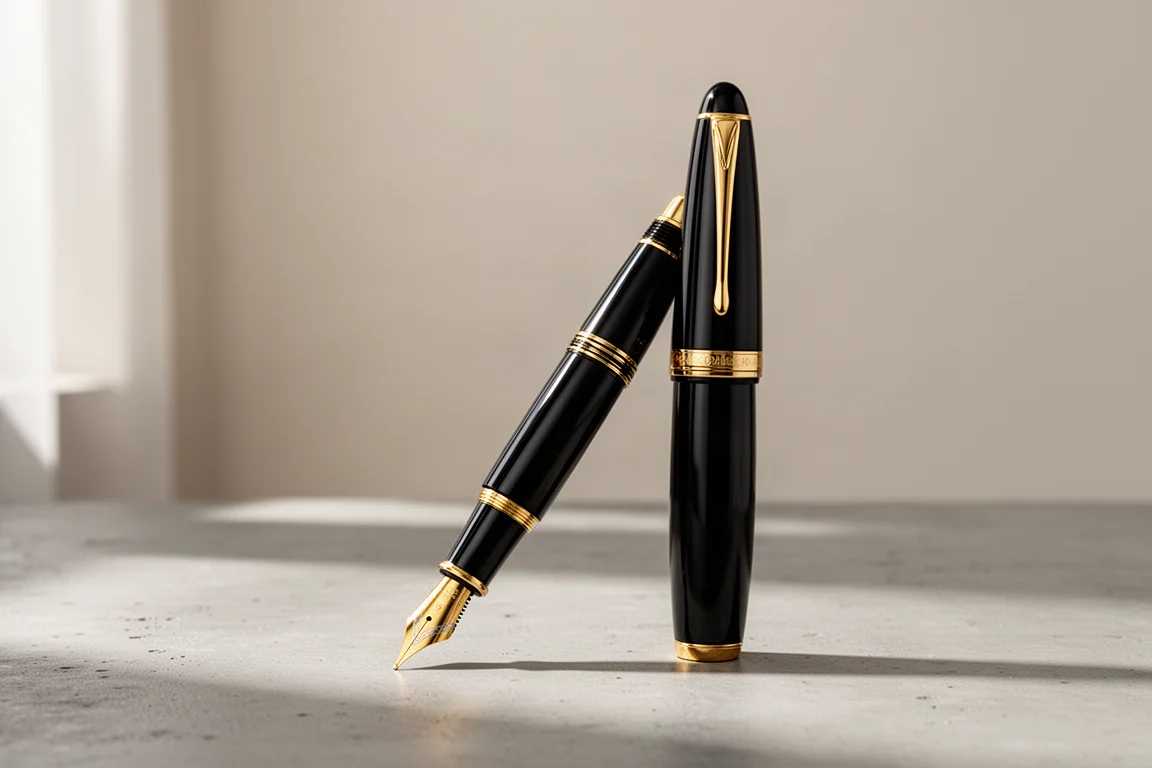
The Montblanc 149 is a true classic: an elongated cigar-shaped pen with the white six-sided star logo atop the cap, tapering beautifully. It is perhaps a little boring in its black-and-gold-trim form, and it has been copied by other pens so often that this both diminishes it slightly and elevates it to true icon status. In its black iteration it can get a bit lost in a collection, though a burgundy example changes things considerably. Its styling cues are firmly rooted in the 1950s and 1960s.
The Visconti Homo Sapiens is more of a baton shape: robust, strong-looking, aggressive, and hard like rock itself. It looks as though it might weigh two pounds, yet it is actually lighter than you expect. The design is rooted in the Visconti family, especially the crescent clip cues. If the Montblanc is a Rolls-Royce or Bentley, the Visconti is a Bugatti or Lamborghini. Comparing a Rolls-Royce and a Lamborghini comes down to taste, but the Visconti’s original, standalone design earns it this category, if somewhat begrudgingly.
Writing Experience: The Handling Test
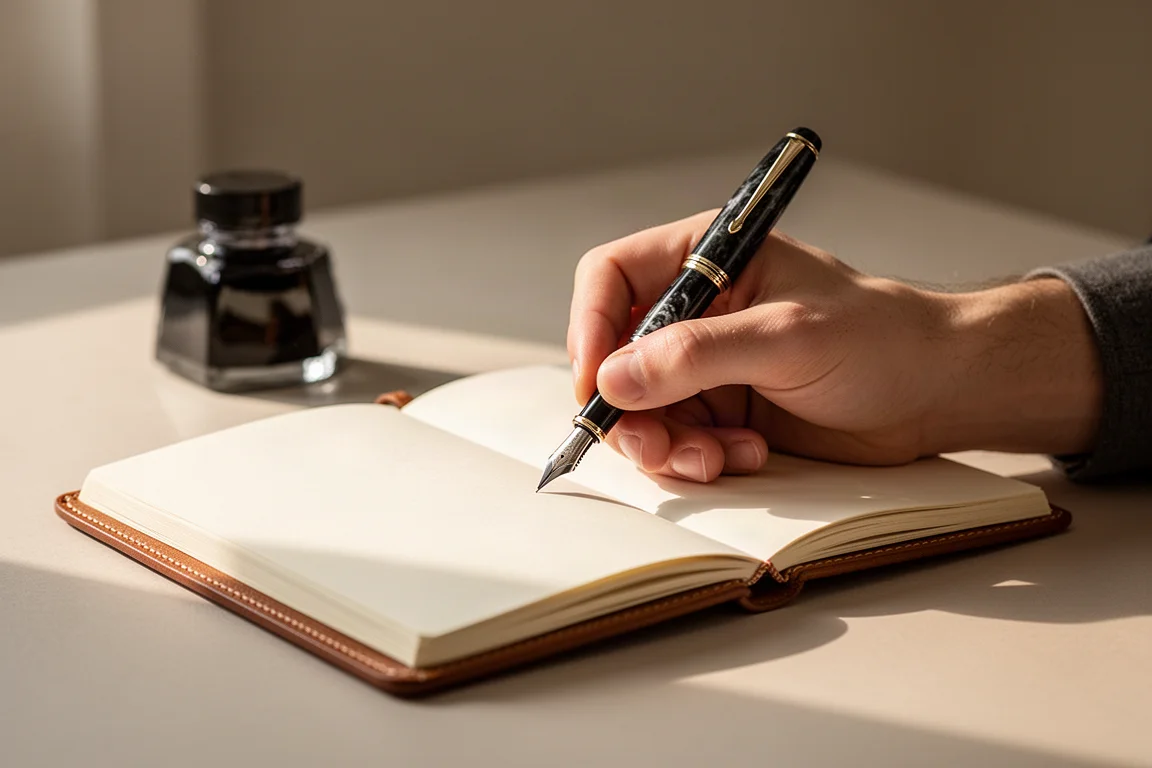
The Montblanc 149 is a fantastic pen and an absolute joy to write with. The nib is sensitive, fun, and interesting to use, it is one of the smoothest pens around, and it never skips. Minute variations in how you let the weight of the pen guide across the paper produce pleasing line variation. The pen is quite light, making it easy for long writing periods: extensive journaling sessions and daily notes at work are comfortable, the girth suits larger hands, and cramped fingers never appear the way they can with slender pens.
The Visconti Homo Sapiens is a very precise writer with a very nice nib. It has less spring than the Montblanc and feels a bit stiffer, though it seems to carry quite a bit of tipping material and would likely accommodate different angles of approach. It is smooth, free-flowing, and has never skipped a beat.
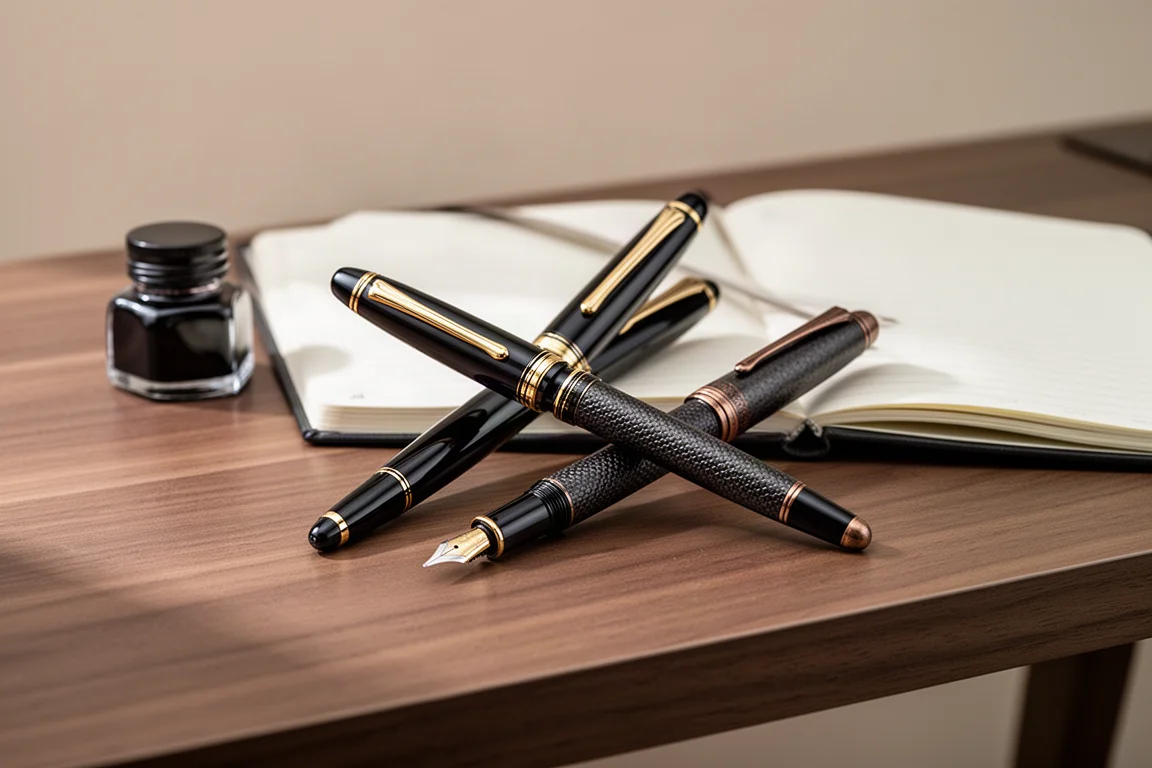
The issues are weight and grip: it feels much heavier in hand than the Montblanc, and after writing for some time fatigue sets in and the urge to grab the 149 arrives. The hook mechanism on the cap sits within the grip area, so you are very aware of its bumpiness while writing. Neither pen gets posted, since posting risks scratches and both are large enough unposted. For overall writing experience, the Montblanc 149 wins: it is easier to write with for long stretches, there is less going on in the grip, and it is lighter and more of a joy as you steer it across the page.
Value: Brand Heritage vs Unique Features
The Montblanc 149 typically sits in the mid nine hundreds, crossing a thousand dollars with the calligraphy nib. The Visconti Homo Sapiens Bronze Age retails for around 900 but is commonly available for around 700, a difference of roughly 200 dollars. With the Montblanc you pay for years of brand heritage, and the recognition that comes with it is a valid reason to buy. Registered Montblanc owners can also take the brand’s calligraphy lessons, which are rather good, include replays, and can be revisited as often as needed.
The Visconti was founded in 1988 in Florence, so it has a newer but wonderful heritage. Italian pens are usually slightly mad, and this one is no different, which is part of its charm. For around 700 you get an incredible resin pen made from pieces of Mount Etna, a very novel cap lock mechanism, and a very effective titanium fill system. With the Montblanc you get one of the finest nibs in the world, which cannot be said enough. The question is whether brand markup and calligraphy lessons are worth the 200 dollar delta; for this comparison, the value proposition goes to the Visconti.
The Verdict: Which One Would We Choose?
As a pen, the Visconti Homo Sapiens Bronze Age is arguably the better product. The Montblanc 149 uses inferior materials in this comparison, and while it has an absolutely amazing nib, the rest of its features are classic but fairly uninspired. The Visconti is an original design you can love or hate, a little weird but actually kind of cool, with a fantastic fill mechanism, a grainy and interesting lava resin, an underrated crescent-style clip, a hook cap that really does not come apart, and even the option to customize the cap.
But the bombshell is this: if forced to choose one pen to keep, the Montblanc 149 stays. It is simply a better writing experience, and for all the great features in the world, the writing experience is what matters. You can write for a long time without your hand getting tired, and the lighter, brilliant feel of the nib makes every session a pleasure. If you are choosing a grail pen and must pick between the two, go with the Montblanc 149; if your priorities lean toward original design, unique materials, and features, the Visconti Homo Sapiens Bronze Age is the more rewarding buy.
Conclusion
Scored category by category, the Visconti Homo Sapiens Bronze Age takes materials, filling, features, design, and value, while the Montblanc 149 wins on nib quality and, crucially, the overall writing experience. The final choice depends on what you value most: the Visconti is a more robust pen with unique features you will not find anywhere else at around 700, while the Montblanc offers an exquisite nib, timeless design, and effortless long-session comfort worth the premium. Whichever you choose, both are magnificent pens that justify their flagship status.
Further reading
Related Reviews
Fountain Pens
Best Budget Fountain Pens Tested: 9 Pens, One Clear Winner
A hands-on comparison of nine affordable fountain pens for everyday writing, calligraphy, and sketching, with a clear standout for flexible nib fans.
Fountain Pens
Aurora Optima Review: An Italian Piston Filler That Punches Above Its Price
A 14k gold nib, ebonite feed, and a beautifully deep oraloid body make the Aurora Optima one of the most rewarding piston fillers around.
Fountain Pens
Cross Bailey Light Review: The Entry-Level Fountain Pen Worth Keeping at the Office
A plastic-bodied Cross with a metal clip, snap cap, and famously smooth extra fine steel nib. Around $15, available almost everywhere, and easy to recommend.