Running Shoes
Mizuno Wave Rider 30 First Run Review: A Comfort-First Daily Trainer With a Modern Edge
A close look at the updated Wave Rider 30, with its dual-density ENERZY NEXT midsole, plush upper, and soft-but-alive ride for easy miles.
Introduction
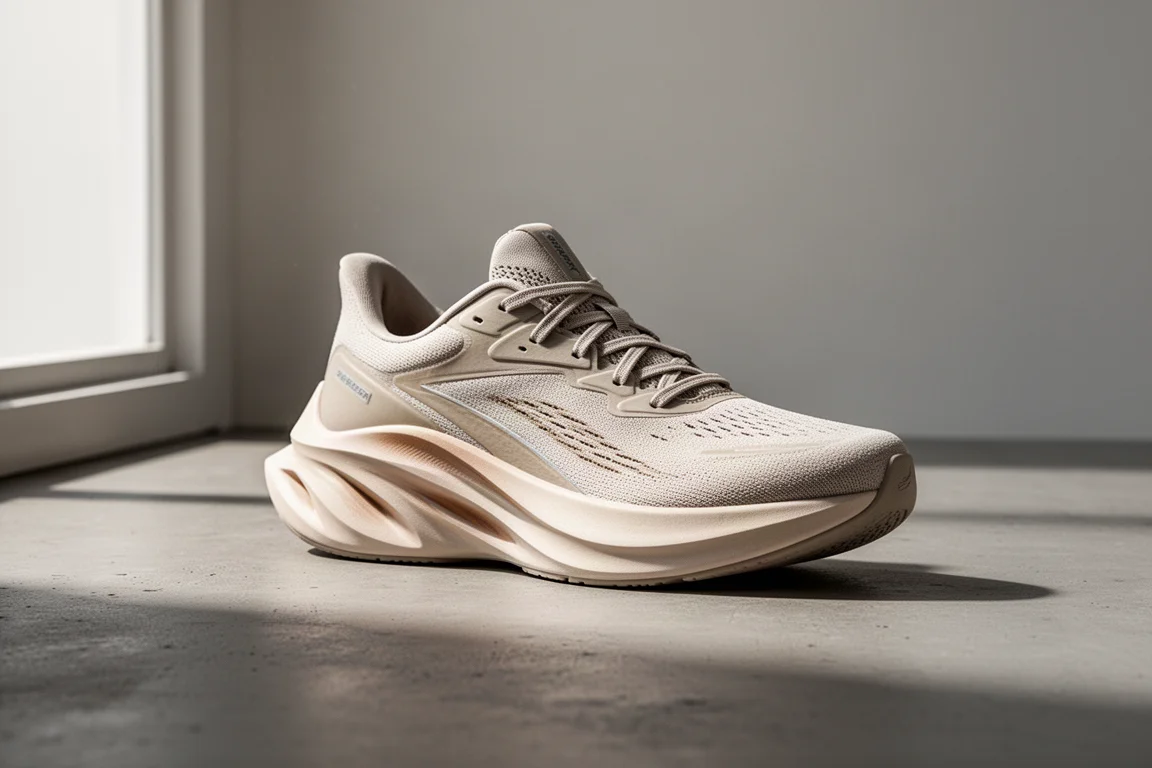
The Wave Rider line has been around for a long time, and the Wave Rider 30 is a genuinely big update to that familiar formula. It is a neutral cushioned daily trainer that has been modernised with a new midsole setup, and it arrives at £140 in the UK and $150 in the US. In a UK 8.5, which is a US 9.5, it weighs 266 g or 9.4 oz, which is pretty lightweight given the high stack of foam underfoot.
The stack measures 42.5 mm at the heel and 34.5 mm at the forefoot for an 8 mm drop. On early easy runs, the shoe comes across as a classic daily trainer that has picked up some of the better trends in modern running shoes: soft, well cushioned, fairly light, and a bit more fun than many traditional daily trainers.
Upper: Built for Comfort, Not Breathability
The upper follows a fairly standard cushioned daily trainer recipe, but with comfort as the clear priority. There is a fairly thick, almost dual-layer material around the forefoot, plus lots of padding in the tongue and around the back of the shoe. An internal heel counter holds the rearfoot in place.
This is not a lightweight, highly breathable upper. It is one built very much for comfort, and all that padding means it can pick up a bit of sweat in the summer months. In UK early-summer temperatures around 20 degrees Celsius it has been fine, but runners who find shoes sweaty and live in very hot climates may notice it more.
Midsole and Outsole: The Big Changes
The midsole is where the Wave Rider 30 differs most from previous models. It uses Mizuno’s ENERZY NEXT foam in a dual-density setup: a nitrogen-infused layer on top and a standard EVA layer on the bottom. Running between those two layers sits the Mizuno wave plate, a long-standing feature of the Wave Rider line.
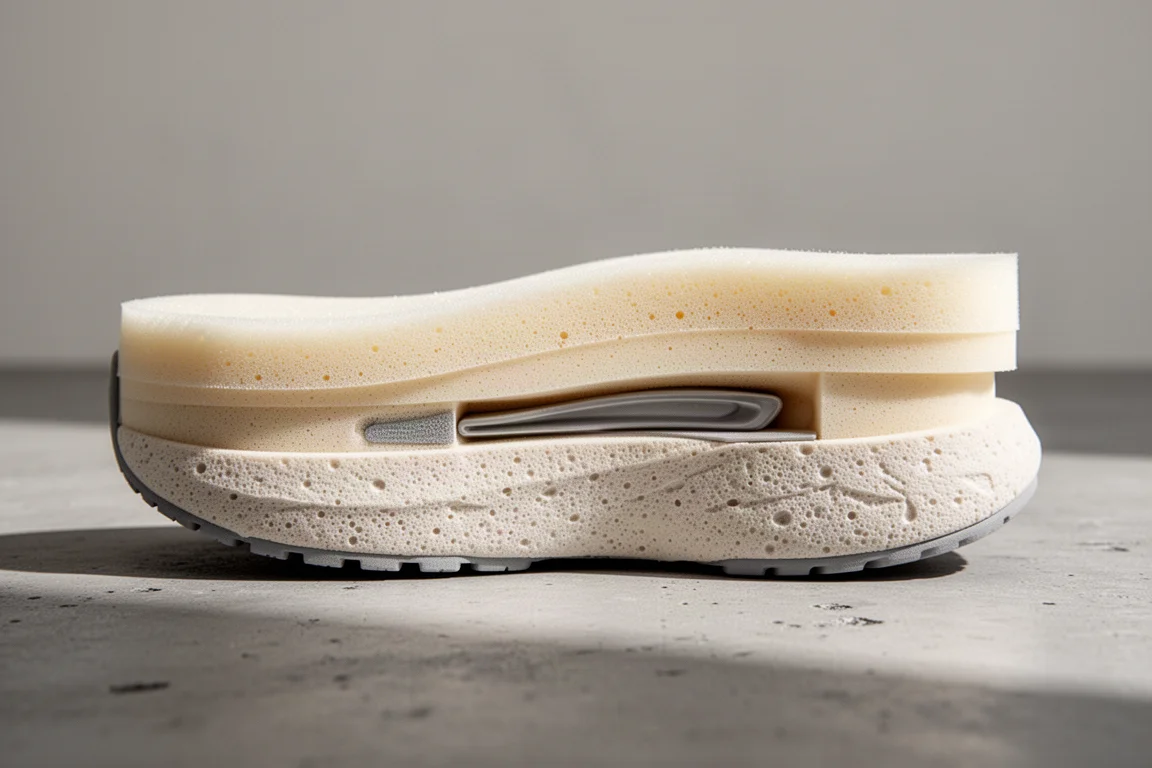
The plate is not there to add stiffness or propulsion. The shoe remains quite flexible, and the plate seems to exist more to stabilise the high stack of foam. The outsole offers good coverage with most of the forefoot and heel covered in a fairly thick layer of rubber, and a cutout in the central area exposes the plate while helping to reduce weight.
Fit and Sizing
The fit is snug across the midfoot and roomy in the toe box, which is a nice balance. There is generous toe clearance, roughly a thumb’s width or more, and that space sweeps down to give the little toe decent room. The uppers have plenty of flex, so the toe area feels comfortable without being cavernous. The padded tongue locks down well, and the heel collars are medium to well padded.
The heel collars sit a bit lower at the back, particularly under the Achilles. That lowness raised some initial concern about rubbing, but it proved fine in practice and offered enough support. The internal heel counter delivers a secure heel fit.
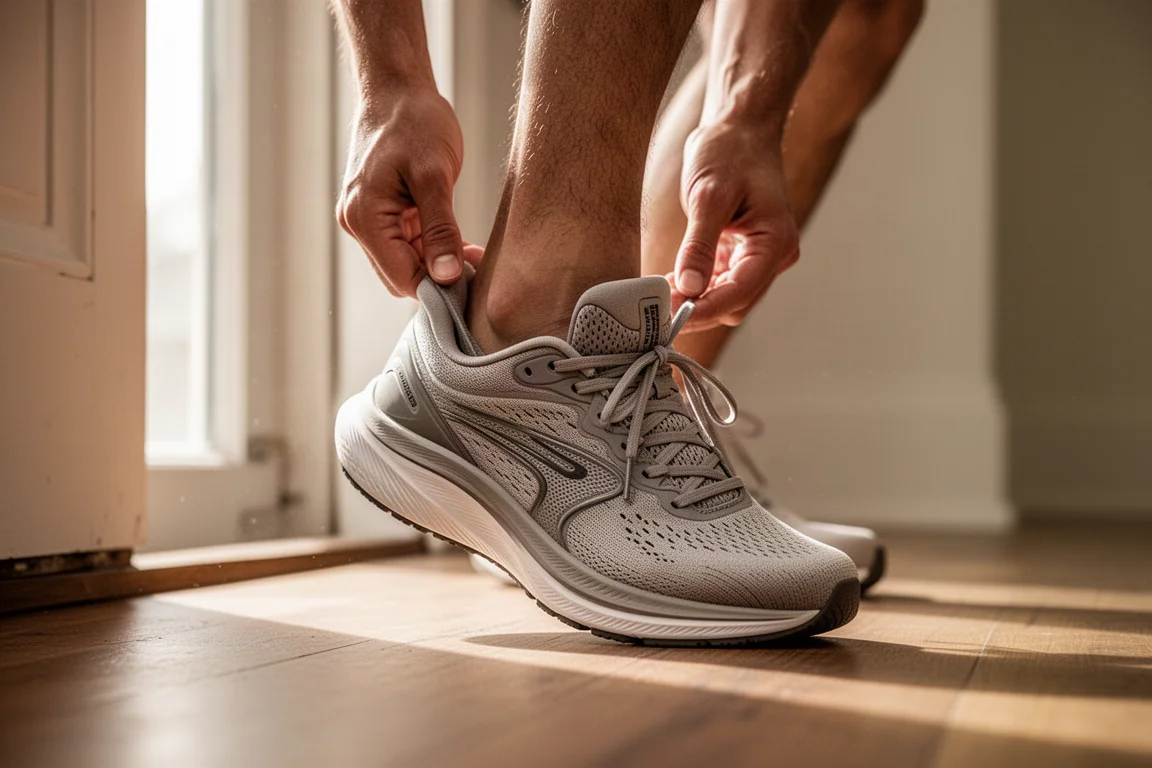
On sizing: the tester typically runs between a UK 8.5 and UK 9 and went half a size down from normal UK size, landing on a US 9.5 that works across some brands. Mizuno sizing can be a bit inconsistent in general, but the smaller size produced a really good fit with plenty of toe room and solid heel and midfoot hold. Most runners can stick with their normal size, and going true to size is recommended unless you have particularly wide feet, in which case the roomy toe box should still be workable.
Ride Impressions: Soft, Cushioned, Not Overly Bouncy
The main takeaway from the first runs is softness. The midsole delivers a soft, cushioned ride focused on protection, absorbing road impact nicely without feeling overly squishy or dead. There is a cradling quality to the platform, and a little bit of energy returns from the foam, so it does not feel dull or sinking. That combination of softness and spring-back makes it a good easy and recovery run option.

Despite the plate, the shoe does not feel stiff at all. It stays flexible with a nice, smooth but not aggressively rockered roll through. Runners who prefer something stiffer and more rockered will notice the difference. The shoe also carries a wide base to help with stability at the high stack, and it does feel stable enough, though not as naturally stable as firmer daily trainers like the Pegasus, Ghost, or Nimbus. The softer foam gives slightly more wobble underfoot.
It is also light enough that it never feels too big on the foot despite the high stack and wide base. At 266 g, it sits in a mid-weight zone and the padding does not make it feel overbuilt. One caveat: the shoe did not feel particularly energetic or poppy. This is a cushioning-first shoe, and early impressions suggest it is geared toward easy miles rather than being the most versatile option at faster paces.
Where It Fits in the Market
The Wave Rider 30 does not feel like the Pegasus or the Ghost. It sits closer in character to something like the NovaBlast: a shoe designed for day-in, day-out comfort and protection, but with a slightly softer, more fun ride than very traditional daily trainers. That makes it more of a competitor to cushion-focused shoes like the Nike Invincible than to classic trainers.
At £140 or $150 it is not cheap, but it sits in a reasonable price zone for a shoe offering this level of comfort and fun in a fairly lightweight, well-cushioned design. Runners wanting more versatility may find alternatives with a broader range, but for easy cruising the Wave Rider 30 delivers well.
Should You Buy the Wave Rider 30?
This is a very competent cushioned daily trainer that most runners will like for its comfort. If your running is mostly easy, cruisy miles, with the occasional pickup to about a minute or two slower than marathon pace, it fits that use case well. It even nudged the pace along slightly on easy runs thanks to the bit of spring in the midsole.
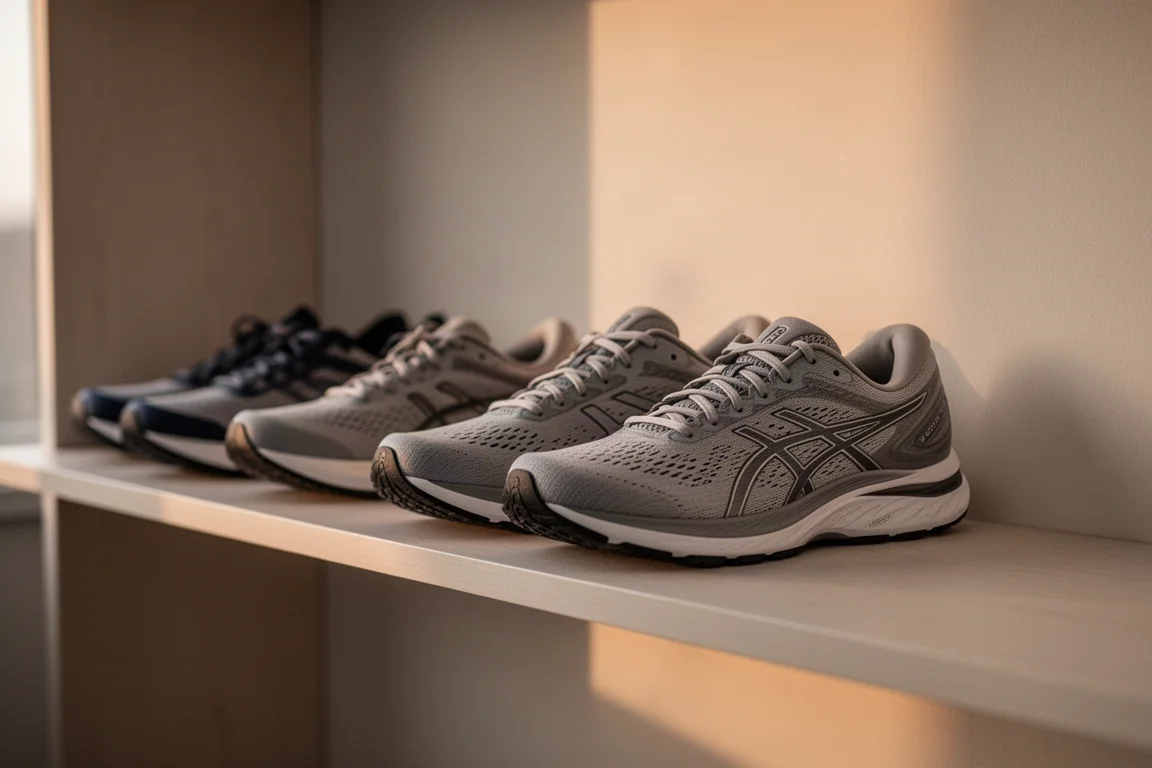
If you want a stiffer, more rockered, more propulsive ride, or you need one shoe to cover everything from intervals to long tempo sessions, early impressions suggest looking elsewhere. But as a comfortable, protective, reasonably light daily trainer that is anything but dull, the Wave Rider 30 is an easy recommendation.
Conclusion
The Mizuno Wave Rider 30 takes a long-running classic and brings it firmly into the modern era. With a new dual-density ENERZY NEXT midsole, a wave plate for stability rather than stiffness, and a plush comfort-focused upper, it offers a soft, cradling ride with just enough spring back to keep easy runs feeling alive. It may not be the most versatile shoe in the line-up, but for daily easy miles it is a genuinely pleasant surprise.
Product link
View more details for Mizuno Wave Rider 30
This product is mentioned in the review. Check the specifications, options, and compatibility before buying.
View more details for Mizuno Wave Rider 30Further reading
Related Reviews

Running Shoes
Best Road-to-Trail Running Shoes: Three Versatile Options for Mixed Terrain
A practical guide to three road-to-trail running shoes that handle both pavement and mild trails, with clear strengths and trade-offs for different runner types.

Running Shoes
Best Running Shoes for Achilles Tendonitis: Three Options Explained
Three running shoes with different heel drops and support features designed to help reduce Achilles tendon pain during walking and running.

Running Shoes
Best Running Shoes for Women: Five Top Choices Ranked
A ranked guide to five women's running shoes, from versatile daily trainers to high-performance racing options, with real strengths and trade-offs for each.