Art Supplies
Mitsubishi Hi-Uni Graphite Pencils Review: A Full 22-Grade Set Worth the Premium
A complete 10B to 10H graphite set from a Japanese maker with a long heritage. Here is what stood out in testing, and who should actually buy it.
Introduction
Graphite pencils are not all the same, and that is the single most useful takeaway from spending years drawing, swatching and testing across different brands. Many people assume a 2B pencil is identical no matter who makes it, but in practice the differences between brands range from subtle to glaring. Which set suits you best depends heavily on the type of artwork you intend to create, which is why it is worth reading several opinions before committing.
The Mitsubishi Hi-Uni graphite pencils have earned a reputation as one of the premium options, and this full 22-grade set delivers the complete scale from 10B to 10H. They sit on the pricier side of the market, but there is a clear reason for that, and this review walks through whether the premium makes sense for your work. If graphite is central to your art, this is a set that rewards the investment.
Who This Product Is For
The Hi-Uni range makes the most sense for serious graphite artists. If you create pieces you intend to sell or display, these are the type of pencils you want to reach for. The tonal quality and the consistency across all 22 grades support finished work rather than casual sketching.
That said, the full 22-grade span is more range than most artists will ever use. The practical top end for many is around 4H, since applying a slightly lighter touch with a 4H produces tones similar to a 10H. The extreme H grades exist for artists who genuinely want them, and some will, but plenty of buyers could happily opt for a smaller set ending around 4H or 5H and lose very little in practice. Smaller set sizes are available, which helps if you want to sample the range without committing to the full tin.
What Is in the Tin
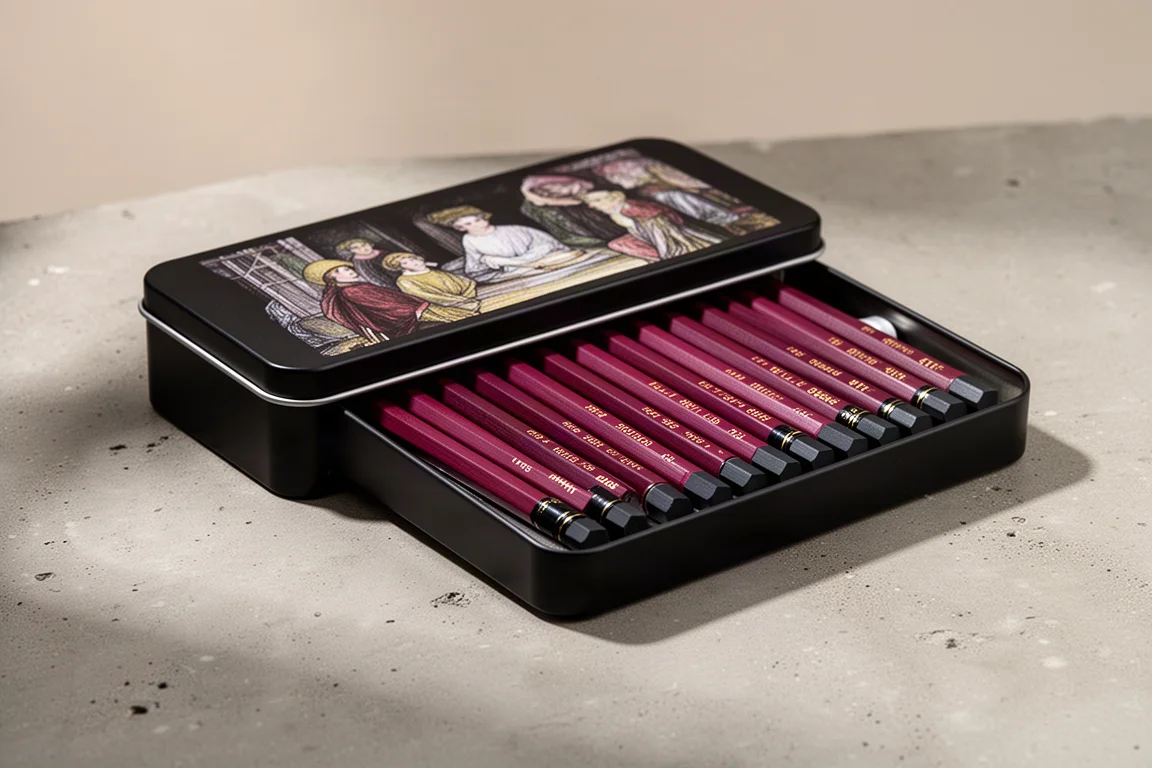
The set arrives in a plain black tin with a small amount of artwork printed on the front. The piece is genuinely beautiful and does a good job of hinting at the tonal range inside, even if the artist behind it is not credited on the packaging. Two push-point indicators on the lid pop the tin open cleanly.
Inside, the 22 pencils cover the full graphite scale: 10B at the softest end, all the way through 10H at the hardest, with HB and the rarely discussed F grade sitting in the middle. For anyone unfamiliar with the system, B grades get progressively softer and darker as the number climbs, while H grades get progressively harder and lighter.
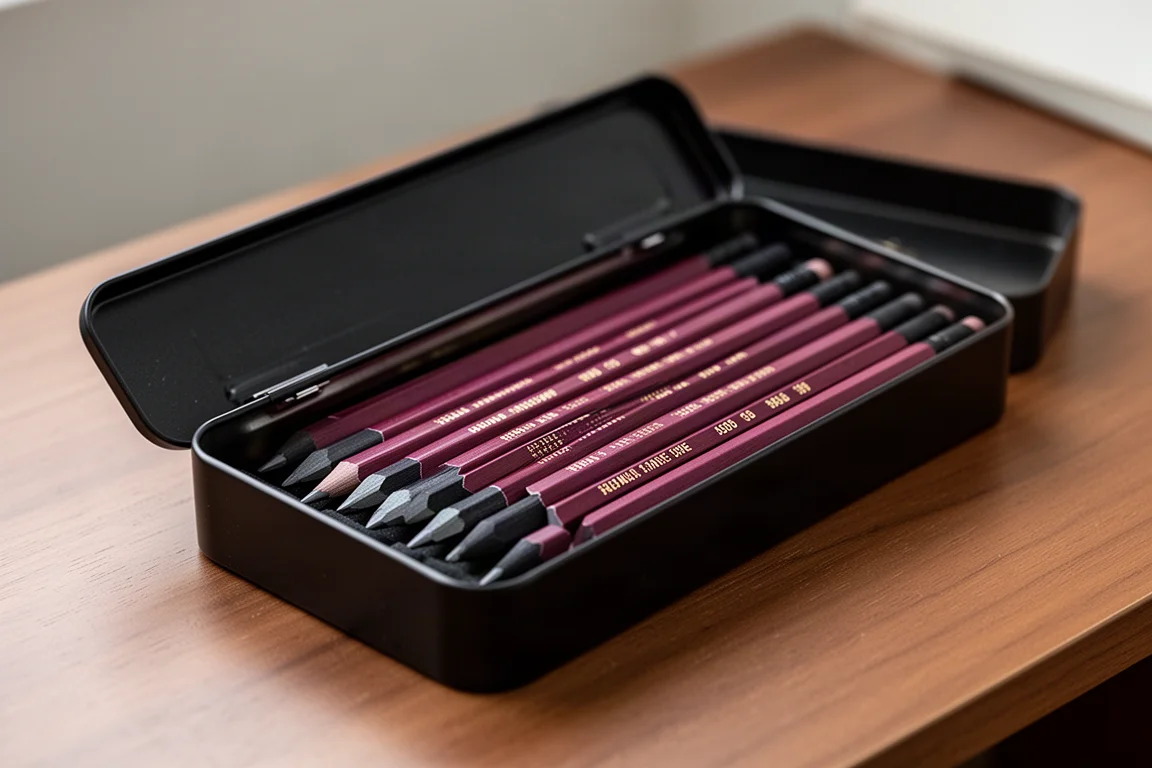
The pencils come unsharpened, which is a small but thoughtful touch. Because you get the full barrel untouched, you can sharpen to whatever point shape you prefer, whether that is a long needle tip, a shorter working point, or a knife-cut edge. It simply gives you more control over how the pencils start their life.
Build, Barrels and Core Sizes
The barrels are lacquered in a rich burgundy maroon, with a black lacquered end cap carrying the grade marking. The barrel is hexagonal, and the grade is printed in gold on every single face against the black background, which makes the marking extremely easy to read at a glance. Along the barrel you will also find the company’s founding year of 1887, the brand name, “Hi-Uni”, a note that the pencils are made in Japan, and a barcode, since every pencil is also sold as open stock individually.
One caution when buying individual pencils: prices fluctuate considerably between retailers, so it is worth shopping around rather than grabbing the first listing you see. Also be aware that the manufacturer makes a very similar looking line called the Hi-Uni Star, so double-check that you are ordering the standard Hi-Uni pencils and not the lookalike variant.
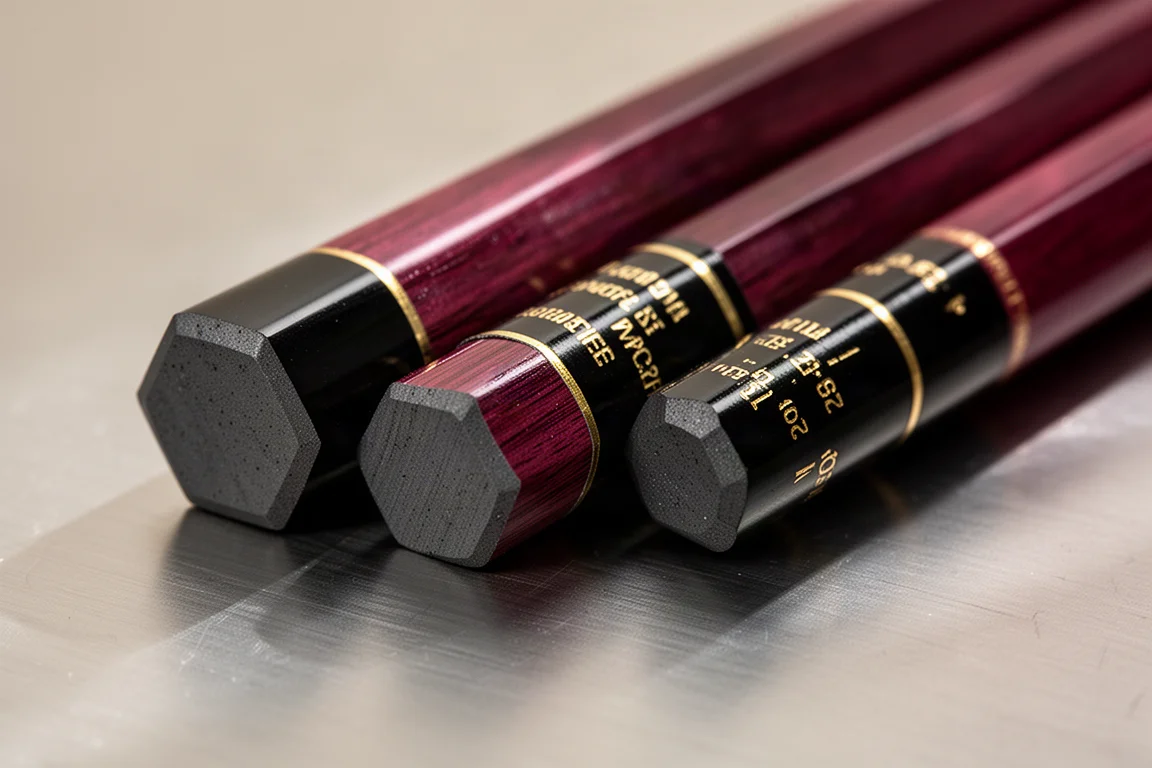
Core sizes vary meaningfully across the range. The hexagonal barrel measures around 7.1 mm across its width. The HB core sits at 2.5 mm in diameter, the 10H at 2.1 mm, and the 10B at a substantially thicker 4.2 mm. The reason is simple: softer cores are mostly graphite held together by a small amount of binding agent, and a 4.2 mm 10B core would not survive sharpening if it were as thin as the hard grades. The thicker girth keeps the soft, powdery core intact under a sharpener or blade.
Swatch Testing and Tonal Range
Testing was done on Strathmore 300 series Bristol Vellum, a surface with a little tooth but not too much, which allows the graphite to move freely. Each grade was tested three ways: a heavy linear application, a light linear application, and a light application blended out with a paper blending stump to see how well the graphite moves across the paper.
The blending results were the standout finding. On many brands, blending the harder H grades still leaves visible traces of the original pencil strokes underneath, even after working the stump across them. With the Hi-Uni pencils, even up at 10H, there was not a single trace of the linear strokes once blended. That level of cohesion is usually reserved for premium brands, and even then it is not guaranteed, so it is a strong quality signal.
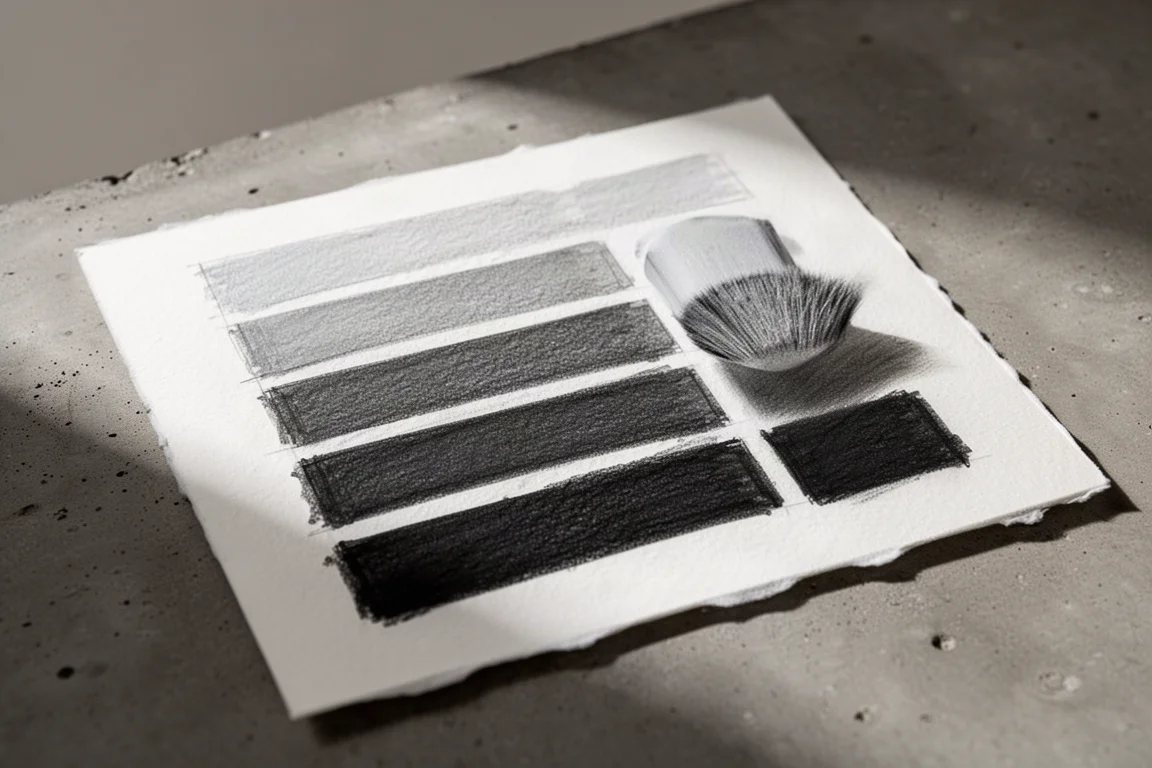
Moving down the B grades, the heavier applications show the metallic sheen that graphite naturally produces when light hits it. This appears noticeably around 10B through 6B but far less on the HB, B and 2B grades. Sheen is not a defect; it is simply a property of graphite rather than carbon-based alternatives. What matters is that the sheen here is milder than in several other brands tested, where it dominates even at rest and makes judging tonal values difficult without constantly tilting the paper.
Tonal values in the soft range are genuinely deep. From 10B down to around 5B or 6B, the grades read very similarly in darkness, which is worth knowing if you are choosing between them, but the values offered are very good for finished graphite work.
Main Strengths
The consistent quality across all 22 grades is the headline strength. The clean blending on the hard grades, the deep usable darks in the soft grades, and the restrained sheen compared to cheaper competitors all point to a well-made core formula.
The presentation also earns praise. The burgundy and black lacquer finish looks and feels premium, the gold grade markings are unmissable, and the unsharpened pencils let you shape every tip to your own preference. Add the ability to buy any grade individually as open stock, and the set becomes easy to maintain and replace over years of use.
Things to Consider Before Buying
The price is the obvious consideration. This is an expensive set, and whether it is worth it depends entirely on how important graphite art is to you. For serious or professional work, the quality justifies the cost. For occasional sketching, a cheaper set will likely serve you fine.
Lightfastness is another open question. Graphite lightfastness is a genuinely contested topic, and no reliable grade or rating system for the Hi-Uni line could be confirmed directly from the manufacturer. If a verified rating surfaces, it would be worth checking before committing to work intended for display under changing light.
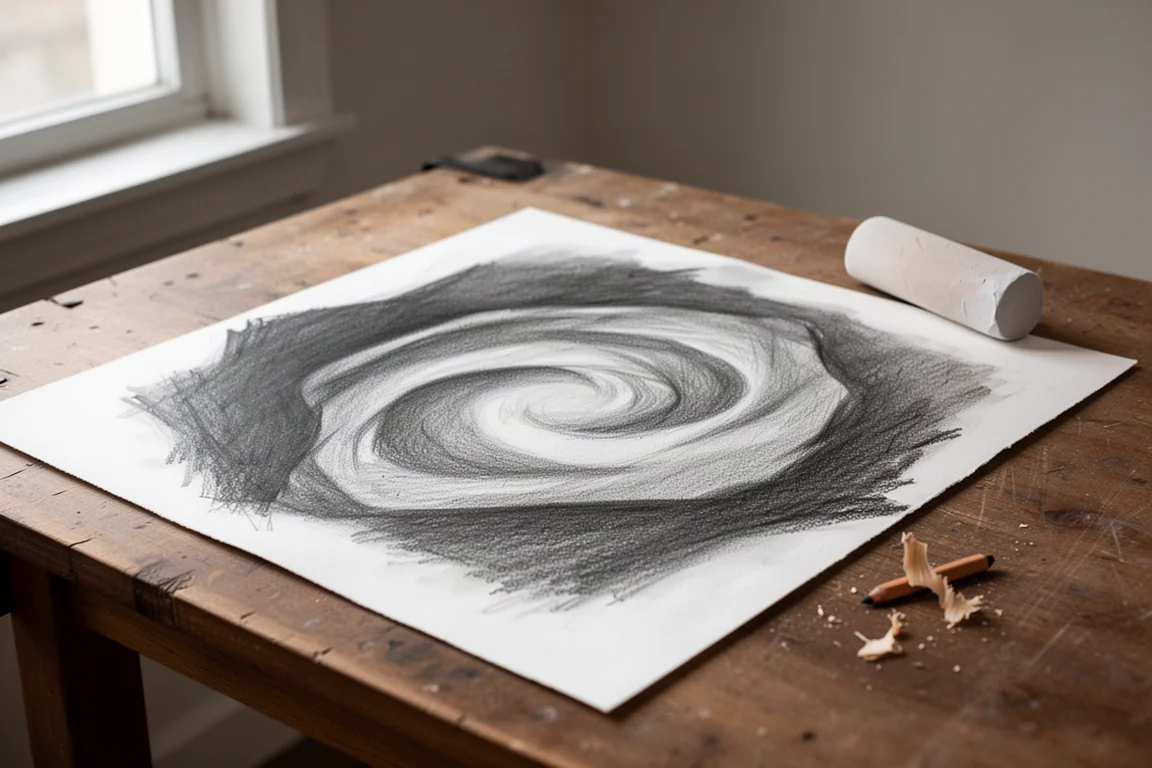
Finally, remember that all graphite shows some sheen. A finished piece with heavy dark areas will catch light with a faint metallic look when hung on a wall, so framing choices and placement away from strong reflections matter if you plan to display your work.
Buying Advice
If you pursue graphite seriously, this set is easy to recommend. It is a gorgeous pencil, a pleasure to use, and the swatch results back up the premium reputation. The full 22-grade tin suits artists who want every option on hand, while buyers who rarely go past 4H should consider one of the smaller available set sizes to save money without sacrificing the grades they actually use.
Buy individual open-stock pencils to fill gaps, and shop around, because prices on single pencils swing considerably between sellers.
Conclusion
The Mitsubishi Hi-Uni 22-grade set earns its premium standing through consistent quality: flawless blending on the hard grades, deep tonal range in the softs, and presentation that feels as good as it performs. If graphite is your medium of choice and you want pencils suited to work you plan to sell or show, this is a set worth the spend. If you sketch occasionally, sample a smaller set first.
Product link
View more details for Mitsubishi Hi-Uni Graphite Pencils
This product is mentioned in the review. Check the specifications, options, and compatibility before buying.
View more details for Mitsubishi Hi-Uni Graphite PencilsFurther reading
Related Reviews
Art Supplies
Art Pop Watercolor Pencils 48-Color Set: A Thoughtfully Designed Student-Grade Option
The Art Pop 48-color watercolor pencil set blends well, dissolves smoothly, and includes artist-friendly details like barrel-printed color names, all at an affordable price.
Art Supplies
Artics Acrylic Markers 3mm Review: Versatile Paint Markers With a Few Caveats
A 48-color set of water-based acrylic paint markers that blend while wet, dry permanent, and keep the price low, though safety transparency remains a question.
Art Supplies
Best Art Supplies Worth Your Money: Pencils, Pens, Paints, and Paper That Earned Their Spot
After years of daily use and testing, these are the pencils, pens, watercolors, gouache, brushes, sketchbooks, and erasers that stand above the rest.