Job Site Power
Milwaukee Roll-On Power Supply: A Quieter Alternative to the Job Site Generator
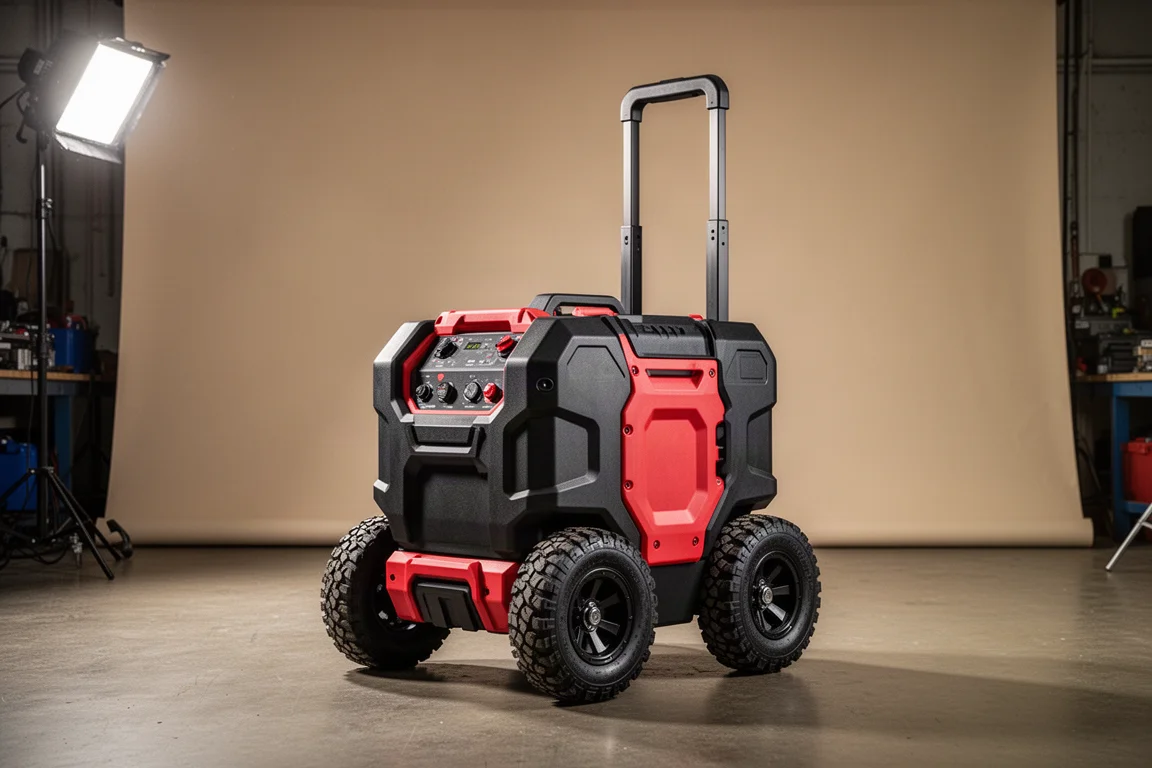
Milwaukee's Roll-On is a 3,600-watt battery power supply on wheels, built to replace noisy, fume-heavy gas generators and overloaded spider boxes on job sites.
Introduction
Some tools split opinions, and Milwaukee’s Roll-On Power Supply is one of them. It is a large, wheeled, battery-powered alternative to the gas generator and the classic spider box used for temporary power on construction sites. At around $4,500, it is not an impulse buy, but it solves problems that gas generators create every day: fumes, noise, long extension cord runs, and the walk back to the generator every time a breaker trips. After spending time with the specs and the real-world performance, here is how it stacks up and who should actually consider it.
Why Milwaukee Built the Roll-On
Gas generators on job sites come with familiar headaches. Storing fuel on site raises safety concerns, and noise and emissions often force the generator far away from the actual work area. That distance costs productivity: walking back for breaker trips, fuel runs, or just to check on the unit.
Spider boxes in the temporary power phase bring their own issues: crowded outlets, tripped breakers, and voltage drop from long extension cord runs. All of that translates into lost time.
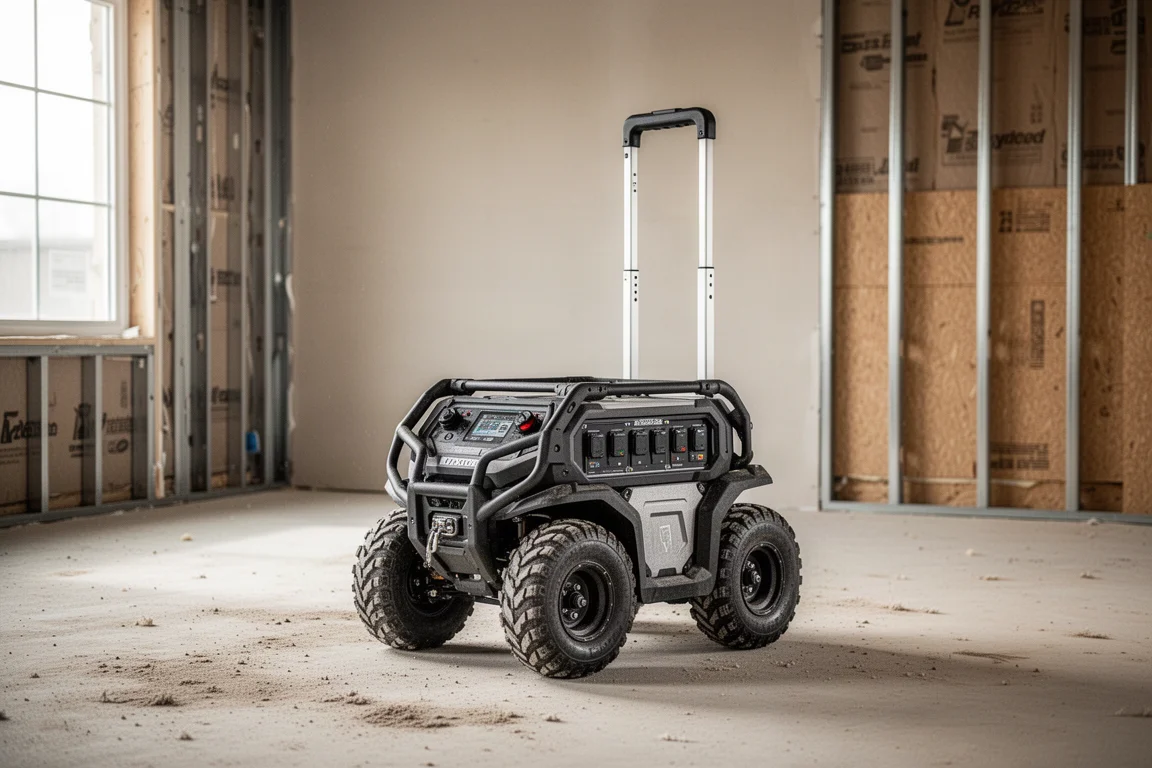
The Roll-On aims to eliminate those problems. It runs silently apart from a cooling fan, produces no fumes, and can sit right next to the work area, even indoors. The battery is integrated, and the unit supports pass-through power, so you can plug it in and run tools continuously while it charges.
Power Output and Real-World Performance
The Roll-On delivers 7,200 watts of starting power and 3,600 watts of continuous power, which puts it in the territory of a large gas generator. It can run two high-demand 20-amp tools at once while also charging batteries and USB devices.
In a side-by-side demonstration against a similar-continuous-wattage gas generator at the end of a 200-foot extension cord, the difference was clear. Cutting 4x4 tubular steel with an abrasive chop saw and grinding the same steel with a large angle grinder, the generator struggled to keep up, partly because of limited starting wattage and partly due to voltage drop over the long cord. The Roll-On cut through the metal noticeably faster, even with a battery charger also plugged in.
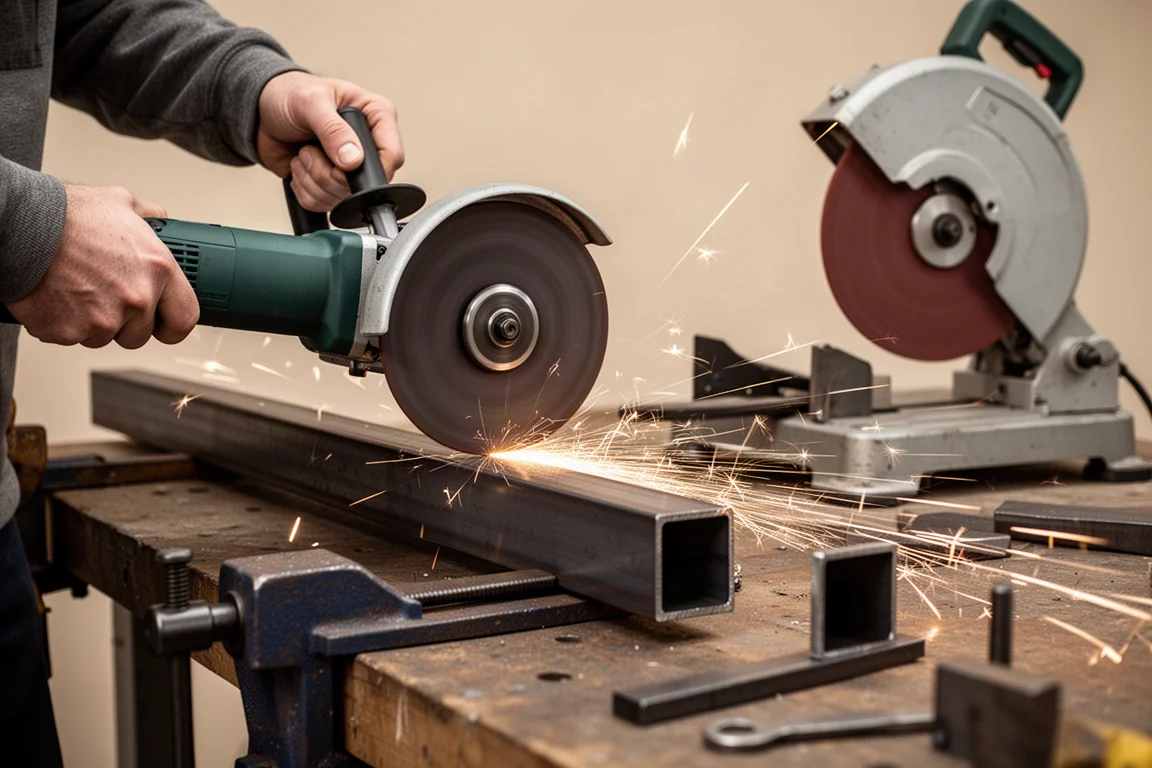
Starting wattage is the detail that matters here. Continuous wattage alone does not tell the whole story, and this is where the Roll-On earns its price tag for demanding applications.
Battery, Charging, and Pass-Through Power
The unit has an integrated REDLITHIUM 2.5 kWh battery, so there is nothing extra to buy. REDLINK intelligence provides optimized performance, protection, and battery life management.
Charging takes under 3.5 hours for a full charge, with 25% charge available in about 35 minutes. That may sound slow compared to smaller 1,500 to 2,000-watt power stations, which often charge in about an hour to an hour and a half, but this battery is far larger. And because of pass-through power, if there is already electricity at the site or in the shop, you can plug in the Roll-On and run it continuously while it charges, with no noise or fumes to worry about.
Outlets, Charging, and Pure Sine Wave
The Roll-On includes two 20-amp duplex outlets, two USB outlets for personal electronics, a high-resolution HMI screen showing the unit’s status, and two charging mounts for batteries. You can also monitor and control the unit from your phone.
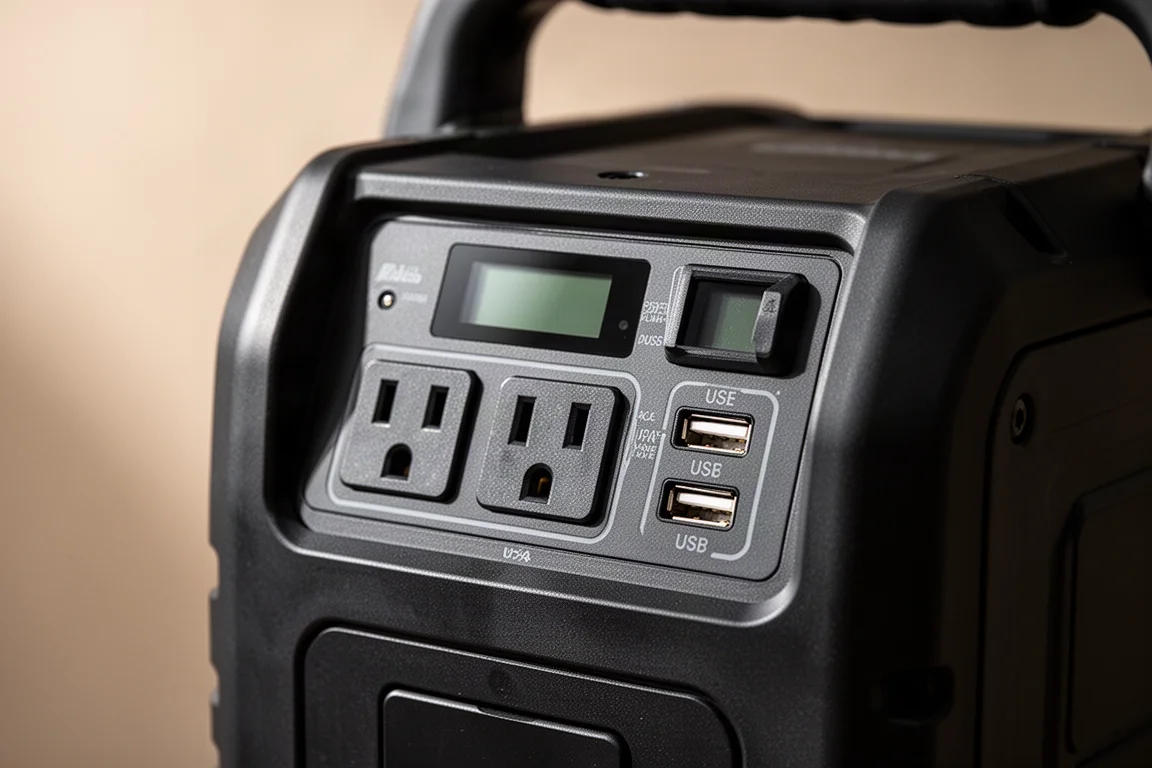
Importantly, it uses pure sine wave technology for sensitive electronics. On a standard generator, power surges can damage phones, laptops, and other electronics. Pure sine wave output avoids that risk, which is a genuinely smart inclusion for a unit meant to serve four operators at once.
Portability, Durability, and Weight
The unit weighs 104 pounds, which Milwaukee says is 80 pounds lighter than comparable gas generators. It rolls on 3.5-inch all-terrain wheels, and it carries an IP54 rating for dust and water resistance, so it is built to work in the elements as well as indoors.
Things to Consider Before Buying
The price is the obvious hurdle: about $4,500. That is a significant investment, though it includes the built-in 2.5 kWh battery, so there is no need to buy additional battery packs or fuel. Runtime is finite when running off battery alone, so the pass-through charging feature is where this unit really shines if grid power is available anywhere on site. If you regularly work in locations with zero electricity and no way to recharge, factor that into your decision.
Buying Advice
This unit makes the most sense for crews working near occupied buildings or in enclosed spaces, where complaints about generator fumes and noise are constant and OSHA concerns about extension cords running through doors are real. Being able to keep power silent, fume-free, and right next to the work area can mean the difference between shutting down and finishing the job. If those situations are part of your routine, the $4,500 may well be worth avoiding the headaches.
Conclusion
The Milwaukee Roll-On Power Supply is not for everyone, but for job sites where noise, fumes, and long extension cords create real problems, it is a genuinely practical solution. With 7,200 starting watts, 3,600 continuous watts, pure sine wave output, and a built-in battery that charges and discharges at the same time, it rethinks temporary power in a way gas generators cannot match.
Product link
View more details for Milwaukee Roll-On Power Supply
This product is mentioned in the review. Check the specifications, options, and compatibility before buying.
View more details for Milwaukee Roll-On Power SupplyFurther reading
Related Reviews
Audio Power Supplies
AIYIMA 48V 5.2A Power Supply Review: More Headroom, One Audible Catch
A higher-voltage supply for the AIYIMA A07 that adds low-end weight and a fuller bottom end, but also brings an audible tone around 1,600 to 1,700 Hz at higher volume settings.
Power Tools
Milwaukee M12 Fuel Cordless Ratchets: Compact Power for Tight Spaces
The Milwaukee M12 Fuel 1/4-inch and 3/8-inch cordless ratchets bring brushless power and a compact head to fastening jobs in tight spaces.

Work Lights
Milwaukee M12 Rover Review: A Compact Work Light That Goes Where You Do
The Milwaukee M12 Rover is a compact, versatile work light with three brightness levels, multiple mounting options, and USB-C charging for your devices.