Tech
Milwaukee RED Earbuds Review: Jobsite Hearing Protection That Actually Sounds Good
A full rundown of the Milwaukee RED earbuds, covering noise reduction, sound quality, call handling, and why the big charging case is the main trade-off.
Introduction
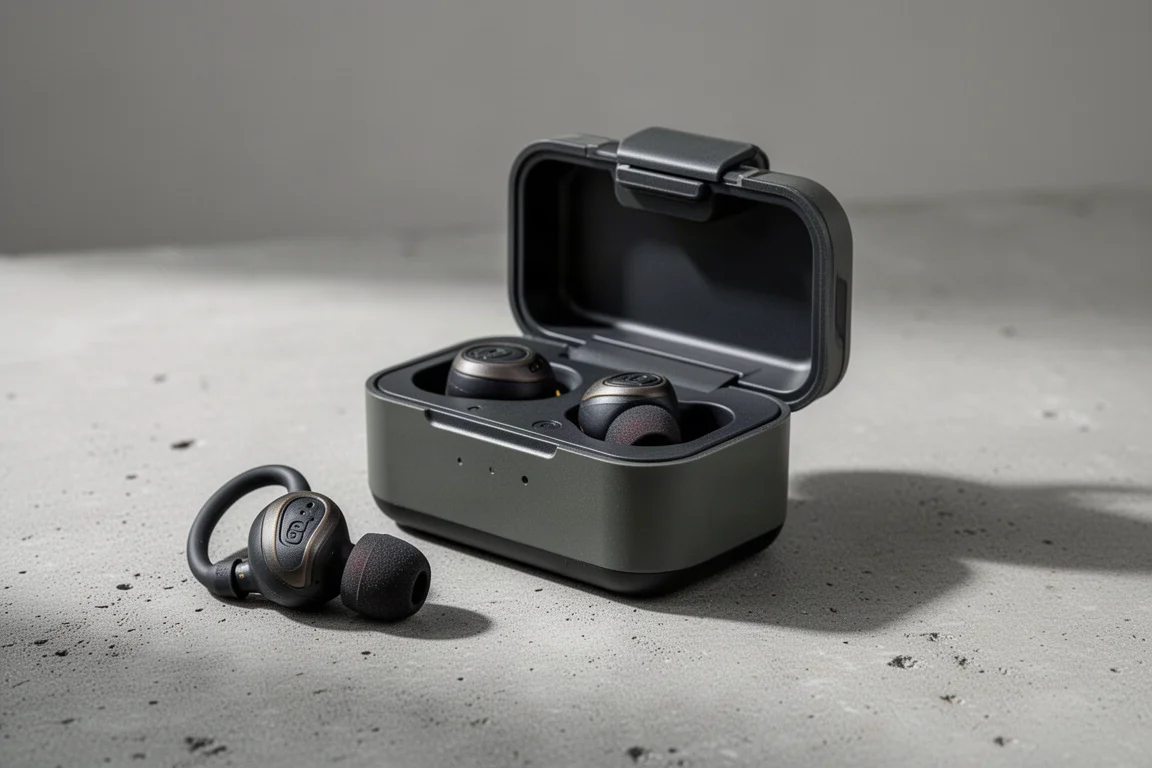
If you spend your working days around mowers, tractors, or power tools, regular noise cancelling earbuds are rarely the right tool. The Milwaukee RED Earbuds aim to fill that gap: a chunky, purpose-built pair designed for hearing protection on the jobsite, with the ability to let useful sound back in when you need it. The first impression is size, and it can be off-putting. After a little use, though, the size stops mattering. They are not heavy, they are easy to forget you are wearing them, and the noise reduction and sound quality hold up surprisingly well against mainstream consumer earbuds costing considerably more.
This review goes through the package top to bottom: fit, noise reduction, ambient hearing, call quality, battery life, and the practical trade-offs worth knowing before you buy.
Noise Reduction: Foam Tips Make the Difference
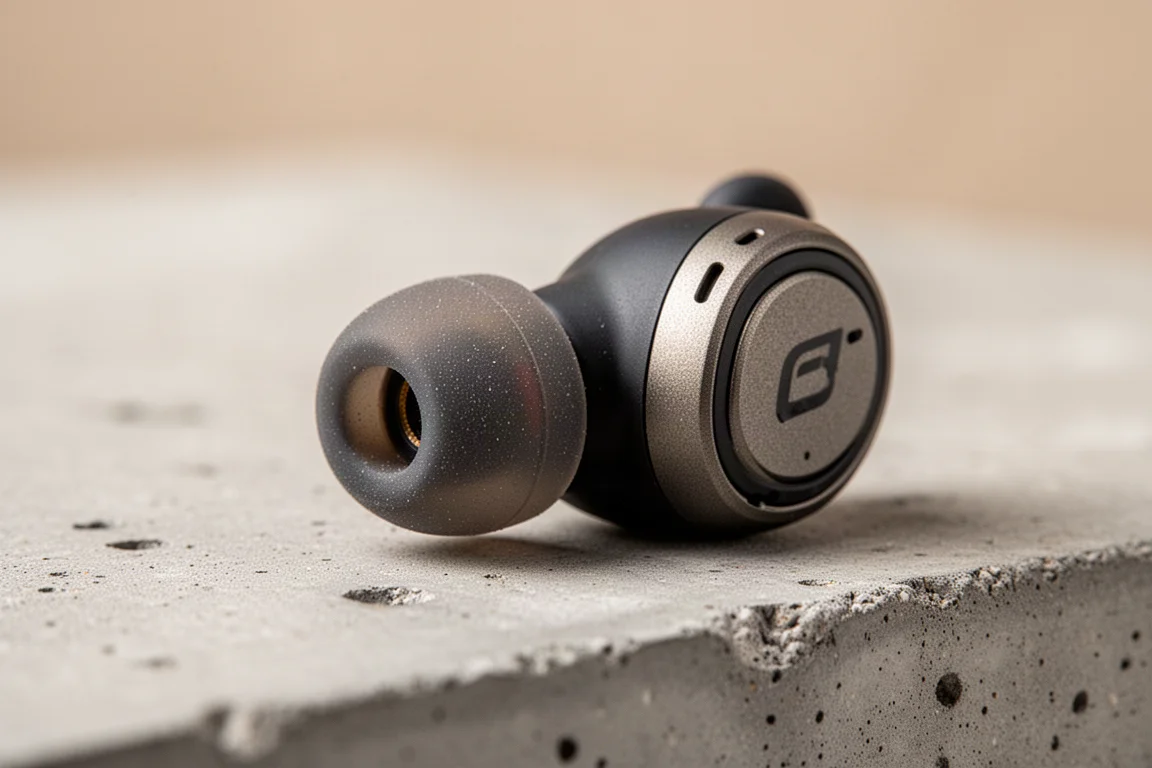
The headline numbers depend entirely on which ear tips you use. With the foam ear tips, the noise reduction rating is 25. With silicone tips, it drops to 22. If hearing protection is the main reason you are buying, the foam tips are the ones to use. The trick with foam is familiar: compress the tip slightly, insert it, and let it expand to seal the ear canal. It works very well, and the buds sit comfortably for hours.
Milwaukee includes extra foam tips in different sizes plus multiple silicone tip sizes, so finding a good fit should not be a problem. There is also a clever fit detail worth noting: soft rings wrap around each earbud and flip into the ear as an additional anchor point, giving the buds a second way of staying put. The result is that they stay in place remarkably well. On comparable consumer earbuds, constant adjustment is a common complaint; with these, that was not the case. And because the controls are tactile buttons with a firm, dedicated click, fiddling with the fit never triggers an accidental command.
Case, Design, and Everyday Handling
The charging case is well thought out. The earbuds sit securely, and if you want to swap between foam and silicone tips you can leave spares inside without them falling out. The clip on the case is a little different from what you might expect: you push it in to open, and it closes magnetically. A magnet also turns the earbuds on and off when you seat them.
Status lights go green to orange to red to show charge level. One quirk to expect: the two buds rarely hit the same level at the same time. One often shows orange while the other shows green, suggesting one drains slightly faster than the other. It is cosmetic rather than a real problem, but it is noticeable.
Ambient Sound and the Jobsite Noise Reduction Feature
The left earbud has a dedicated button for what Milwaukee calls jobsite noise reduction, essentially an ambient listening mode. One push toggles it on and off, and a double tap raises or lowers the volume of what you hear around you. The button is firm and requires a deliberate press, so it will not fire by accident while you adjust the bud.
This feature is genuinely useful. In a tractor cab, for example, you can pull the noise down while still hearing what matters. Higher frequency sounds come through clearly: a PTO chain ticking against a safety cover, footsteps through leaves. Lower frequency thumps, like a hammer pounding, get pulled down more, so the balance is tuned toward alerting you rather than reproducing everything faithfully.

There is one nuance. With ambient mode active, there is a slight background hum, almost like faint static. Switch the noise reduction off entirely and the earbuds go completely dead quiet. Some people will never notice the hum; if you are sensitive to it, now you know it exists. There is also a small behavior quirk when a song changes: the ambient mode rolls through one ear into the other, switching off and back on briefly. Again, minor, but worth knowing.
Sound Quality
Sound quality is where these earn their keep. Compared directly with high-end consumer earbuds, the general impression is near parity. Clarity is very good, everything is crisp, and loudness is never lacking. Running them at full volume triggers a hearing warning on the phone past about three quarters, which is a sensible guardrail and means you will likely never need more than that anyway.
Bass is the one variable. Some tracks sound light on bass, others deliver plenty, and the difference seems to come down to the song rather than the earbuds. For most listening, 95% of people will be happy. In a hearing protection context, the tuning actually makes sense: most users keep the volume deliberately low so they can hear what is happening around them, and at those levels the sound remains clear and pleasant.
Call handling is also strong. The microphones pass through quite a bit of background noise rather than isolating only your voice, but calls taken in a vehicle cab or a typical jobsite came through clearly, with the other party able to hear without discomfort. Taking calls out in the open next to a running mower is not recommended, but in a cab or a standard site environment they work well.
One behavioral difference to note: if your phone is muted, nothing comes through the earbuds. Some competing earbuds will still announce calls and messages through the buds even when the phone is silenced. With these, a muted phone means a silent experience. It is not a flaw so much as a different default, but it caught the reviewer off guard the first time.
Controls and Ease of Use
The control scheme is simple and printed right inside the case lid, so you never have to guess. The factory defaults are sensible and needed no adjustment:
- One push on the left earbud toggles jobsite noise reduction on and off
- Double tap on the left raises or lowers ambient volume
- One push answers a call, another push hangs up
- Double tap ignores an incoming call
- One skip forward, two backward, and standard play and pause controls live on the right earbud
The buttons are large, deliberate, and difficult to press accidentally. For gloves-on, dusty environments, this tactile approach beats touch panels. Call answering, skipping, and pausing are all easy to learn within a day of use.
Battery and Charging
Runtime is solid. In use stretching to seven hours continuously, the earbuds held up without issue. Anyone pushing beyond that may want to plan a recharge, though the case makes that easy: pop them in during a lunch break and they click from orange to green fairly quickly, within roughly 15 to 20 minutes based on regular use.
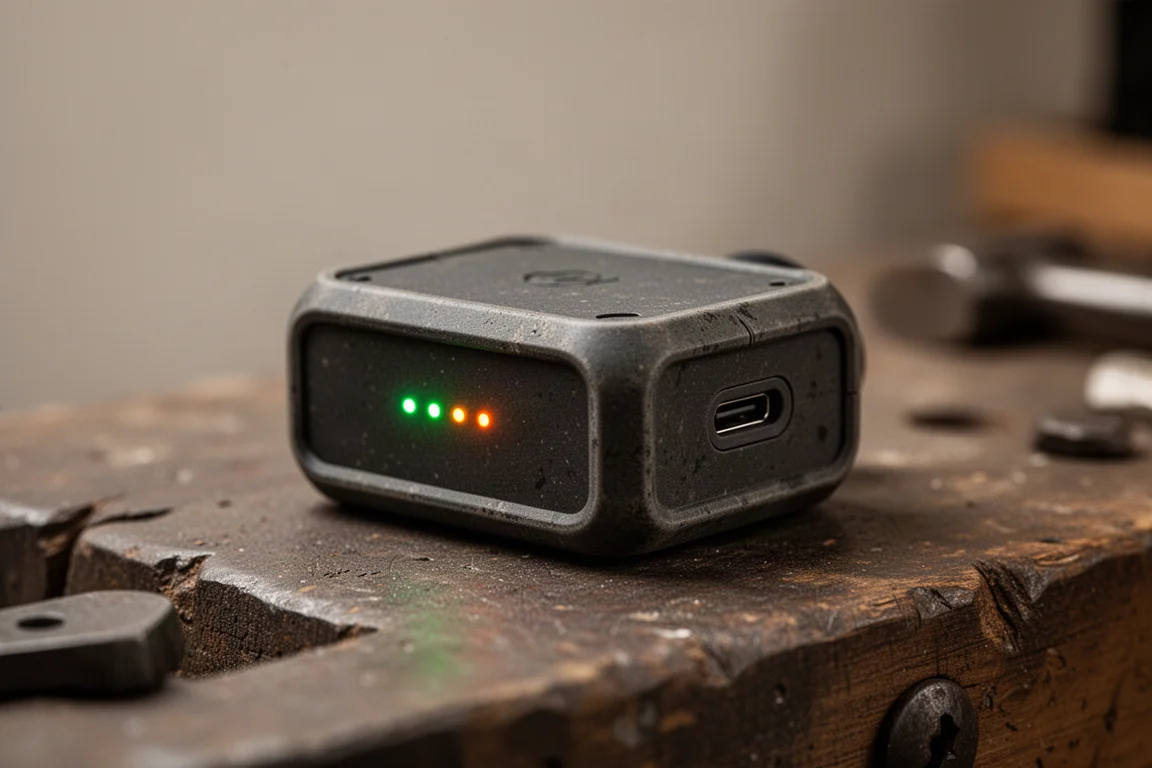
The case battery adds upwards of seven full recharges, which in practice can stretch to about a week of use between case charges. That is a real benefit for anyone away from power for days at a time. There is also a light on the side next to the USB-C charging port for the case itself.
Things to Consider Before Buying
The trade-off is the case. Because it houses a large battery, it is noticeably bigger than a typical consumer earbud case. There is no belt clip, and no attachment point for one, which would have been a welcome addition for carrying. If you are hauling it in a pocket alongside sawdust and dirt, the size and lack of a clip become real inconveniences. For contractors who can leave the case in the truck and just wear the buds, this is a non-issue; for people who carry the case everywhere, it is the main thing to weigh.

If your days are spent on a riding mower, a skid steer, or any sustained-noise environment, that trade-off is easy to accept. These keep your hearing protected, let you hear what matters around you, and sound good doing it.
Buying Advice
At $179, these undercut comparable high-end earbuds while delivering better fit stability and purpose-built jobsite features. If hearing protection with decent audio is the goal, they are an easy recommendation. If you want a tiny pocketable case and app-based sound customization for everyday commuting use, mainstream earbuds remain the better fit. For tradespeople and anyone doing lawn work, this is about as well matched to the job as earbuds get.
Conclusion
The Milwaukee RED Earbuds nail the brief: strong 25 dB noise reduction with foam tips, a genuinely useful ambient mode, clear and loud sound, reliable call quality, long battery life, and controls that work with gloves on. The only real complaint is the large case and the lack of a way to clip it on. Everything else does what it promises, and it is hard to find a genuine fault beyond that. For anyone working in noise, they are well worth it.
Product link
View more details for Milwaukee RED Earbuds
This product is mentioned in the review. Check the specifications, options, and compatibility before buying.
View more details for Milwaukee RED EarbudsFurther reading
Related Reviews

Tech
Apple MacBook Neo Review: A Surprisingly Capable Budget Laptop
The MacBook Neo brings M1-equivalent performance to a $599 entry-level laptop. We tested it across real workflows to see if it's worth considering over pricier alternatives.

Tech
ASUS ZenBook 16 With Snapdragon and RTX 4060: Can an ARM Laptop Game With an External GPU?
An early look at pairing an Nvidia RTX 4060 with a Snapdragon-powered laptop using a Thunderbolt 5 eGPU dock, including real gaming results.

Tech
GPD G2 eGPU Dock Review: A Sturdy, Future-Ready Boost for Your Handheld or Mini PC
The GPD G2 eGPU dock brings new connectivity standards, a robust build, and desktop-class graphics to laptops, handhelds, and mini PCs.