Tools
Push vs Pull: Milwaukee Locking Bit Holders Compared
A close look at two Milwaukee locking bit holders, the Universal Quick Lock and the Shockwave, and how their release mechanisms change real-world drilling.
Introduction
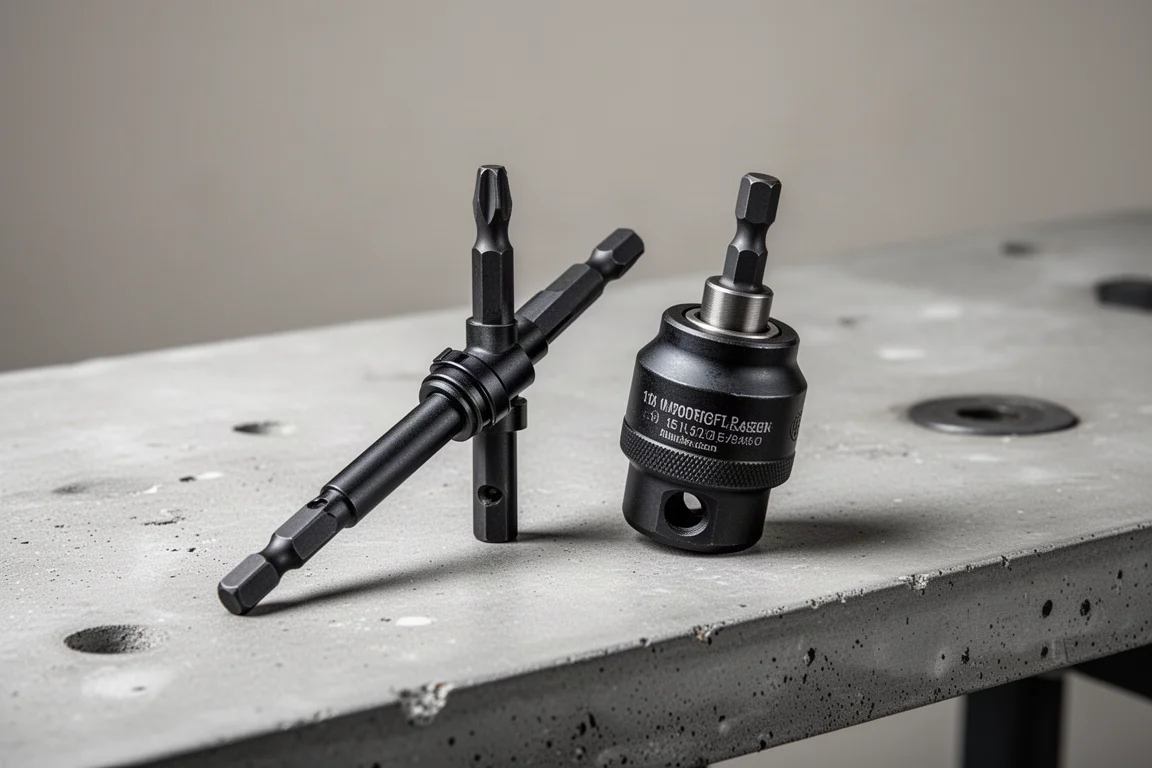
Locking bit holders seem simple until you lose a drill bit inside a wall. That single moment is what separates the two main designs on the market: holders where you push the retaining collar to release the bit, and holders where you pull it. Milwaukee makes both, and each has a clear reason to exist. This comparison covers the 3-inch Universal Quick Lock and the shorter, impact-rated Shockwave locking bit holder.
Two Ways to Release a Bit
The debate comes down to what happens when the retaining collar catches on something as you back a bit out of a deep hole. With a push-to-release collar, that catch can pop the bit loose mid-pull. Wider spade bits are especially vulnerable, because once they fall out of a hole they are difficult to realign and retrieve. With a pull-to-release collar, the same bump will not eject the bit, which makes drilling into walls and workpieces safer for the bit itself.
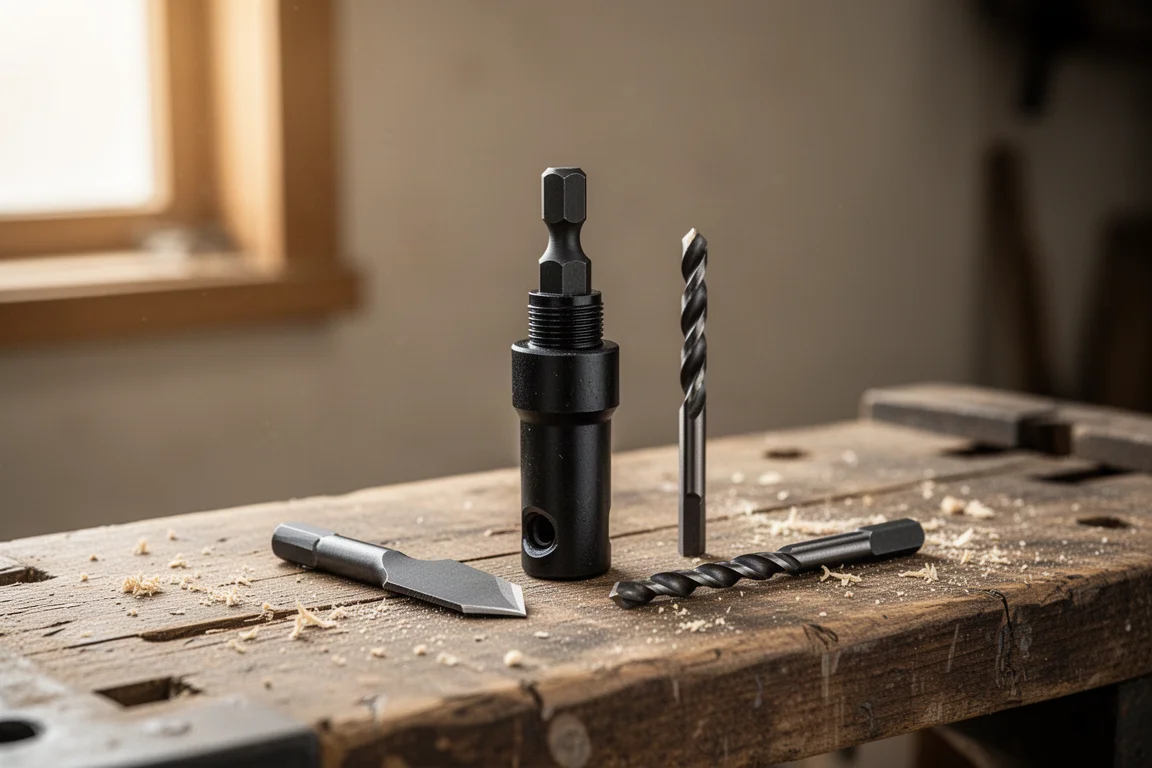
Both designs share a real advantage in day-to-day use: quick, often one-handed bit changes. The difference is which direction the failure mode points, and that depends entirely on how you work.
Milwaukee 48-28-1000 Universal Quick Lock
The Universal Quick Lock is the 3-inch version with a pull-to-release collar. That length makes it a useful light extension in a regular drill, turning bits in places a chuck cannot reach. Once a bit is pushed in and locked, it sits with essentially zero play, and the collar will not release it by accident. You can bump or press anywhere on the holder while drilling and the bit stays put.
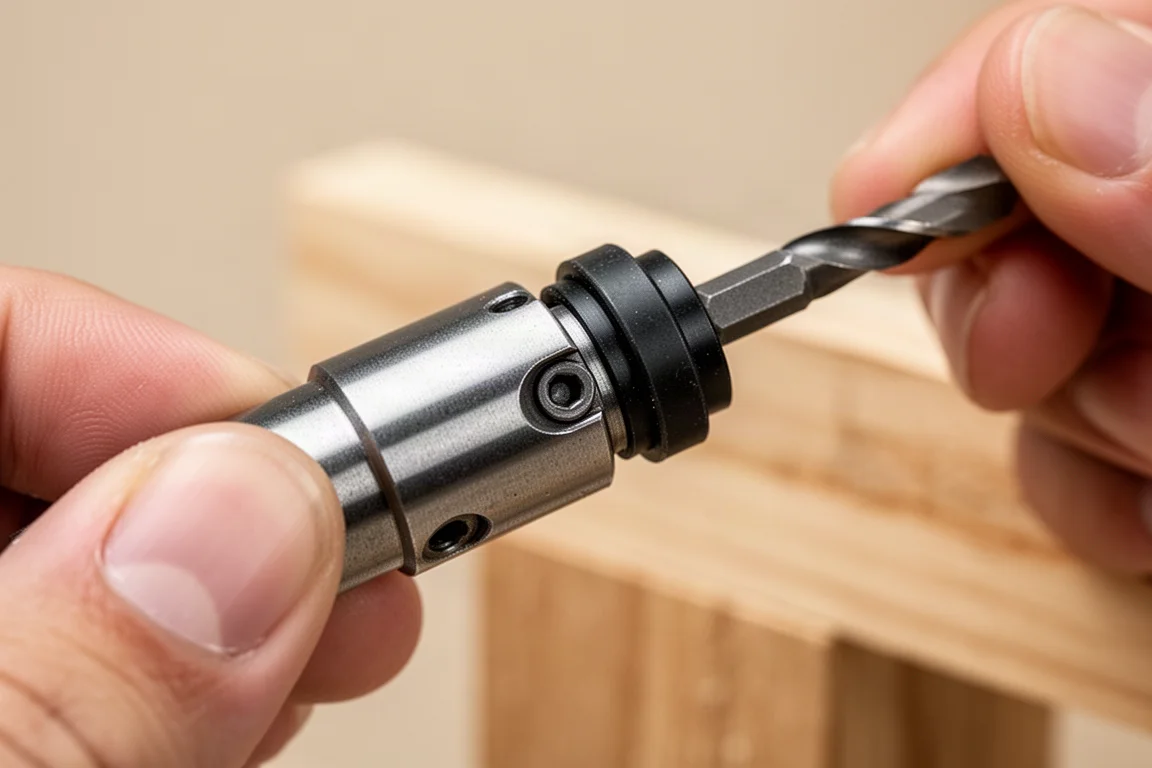
That pull-to-release behavior is the safer choice for boring holes through walls or thick stock, where a spade bit dropping out mid-retrieval can mean cutting open the workpiece to get it back. The trade-off is that releasing the bit requires holding the collar back, which can feel less effortless one-handed, especially with gloves on.
Milwaukee Shockwave 48-32-4531 Locking Bit Holder
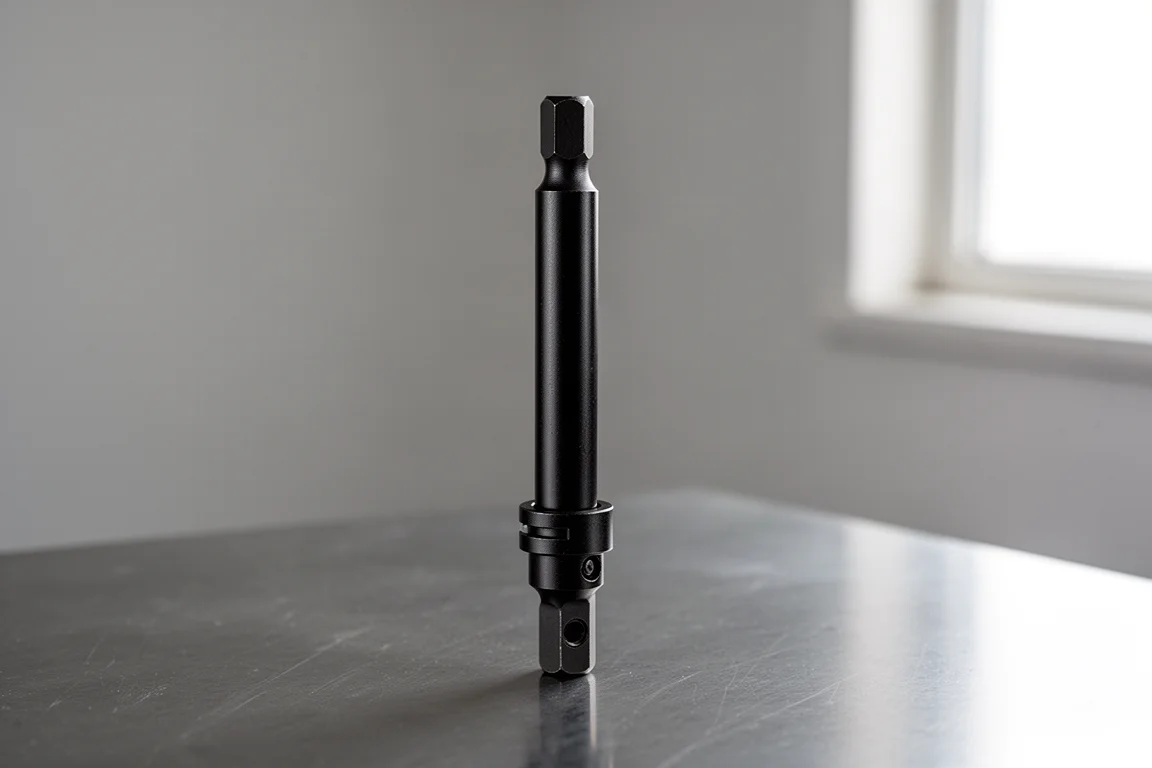
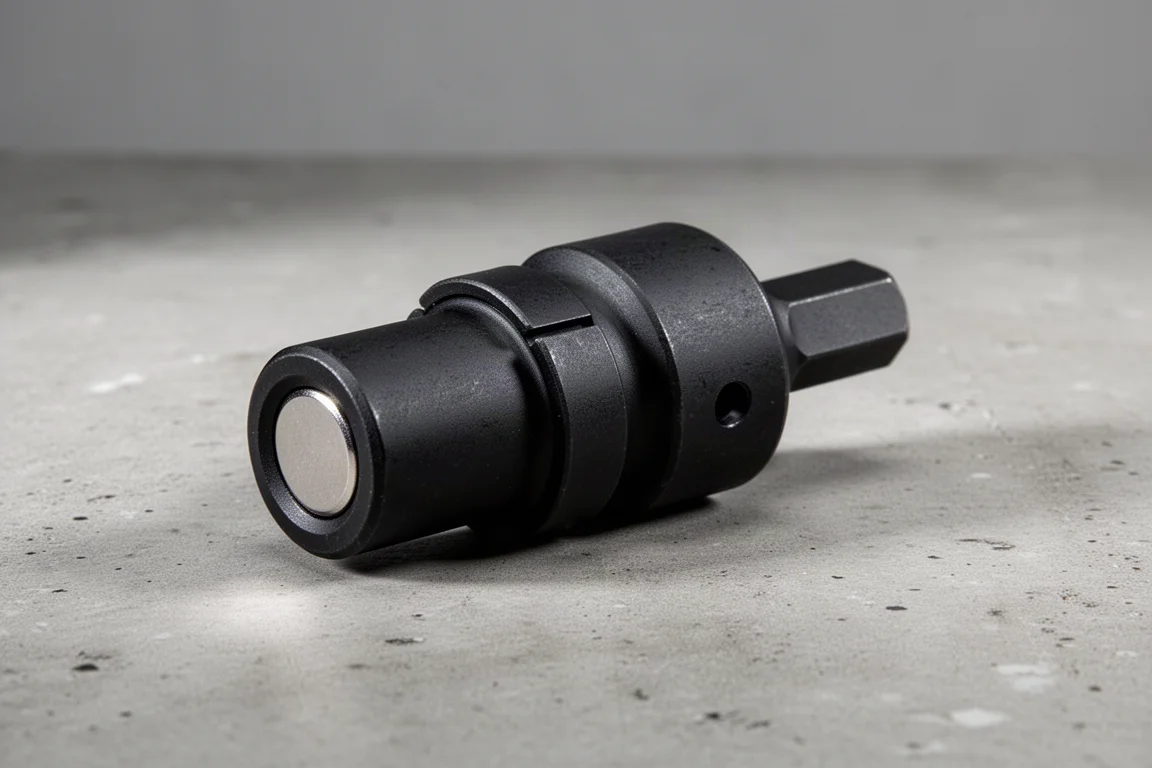
The Shockwave locking bit holder is shorter at 2 and 7/8 inches, impact rated, and uses a push-to-release collar. It is also noticeably bulkier, with more girth in the barrel, which you will feel when working with small bits or tight spaces. There is a magnet inside, so it holds bits a little differently than the non-magnetic Universal Quick Lock, and there is somewhat more play in the bit fit, likely tied to the impact design.
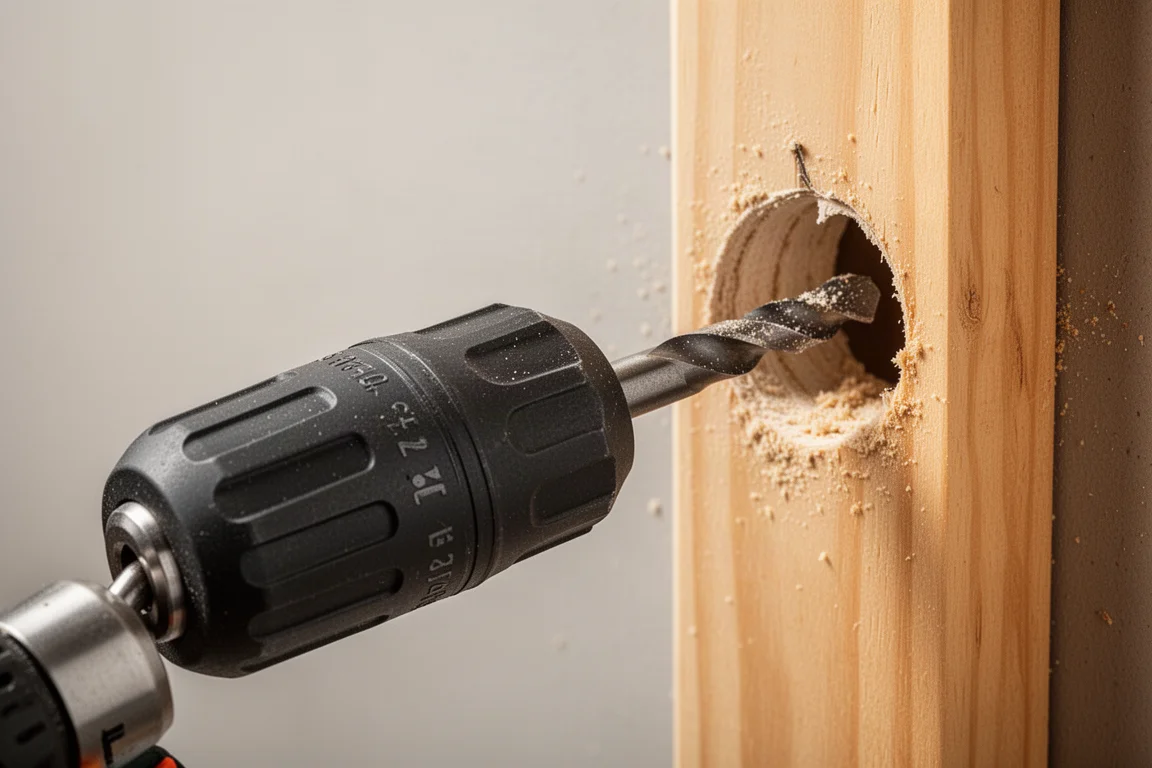
Where it shines is one-handed bit swapping. With the holder seated in the tool, a quick push of the collar pops the bit out as soon as you release it, then locks the next one in. If one hand is holding the workpiece, that speed is genuinely useful. The risk is the scenario above: if the collar catches while backing out of a hole, the bit can eject and end up trapped inside the workpiece.
Which Other Brands Use What
The push-versus-pull split runs across the industry. Diablo uses a large pull-to-release collar that will not toss a spade bit into a wall. DeWalt’s longer holders also use pull. Milwaukee, meanwhile, sells many different lengths of these holders, and a large number of them use push because they are impact rated, suggesting the design choice is tied to impact duty. Others go the opposite direction, such as the push mechanism used on a flexible screwdriver. Both approaches clearly have reasons behind them.
Buying Advice
If your work involves drilling deep holes, especially with spade bits, the pull-to-release Universal Quick Lock is the safer pick because a caught collar cannot eject the bit. If you frequently swap bits one-handed or drive fasteners with an impact driver, the push-to-release Shockwave is faster and more convenient, as long as you stay aware of the collar when backing out of deep holes. Many people end up using both.
Conclusion
Push and pull locking bit holders are functionally similar overall, but the small design difference decides where the failure risk sits. Choose pull for deep-hole drilling security, push for fast one-handed changes, and you will rarely regret owning one of each.
Further reading
Related Reviews

Tools
Best Contractor Grade Tape Measures 2026: Eight Models Tested Head to Head
We tested eight contractor grade tape measures from Milwaukee, DeWalt, Crescent Lufkin, Tajima, Stanley, Irwin, Gelan, and Craftsman to find the best value and performance.

Tools
Best Precision Screwdriver Sets 2026: Manual and Electric Options Compared
We compare 19 precision screwdriver sets, from budget manual kits to electric drivers, to find the strongest bits and best value.

Tools
Best Stud Finders 2026: Five Popular Models Put to the Test
We tested five popular stud finders on drywall, firewall, and lath and plaster surfaces to see which ones really find studs and avoid false readings.