Tools
Milwaukee 48-32-6400 Wire Stripper Kit Review: A Time Saver With One Catch
A drill-powered wire stripper and wire nut driver that speeds up repetitive electrical work, with one design flaw worth knowing about first.
Introduction
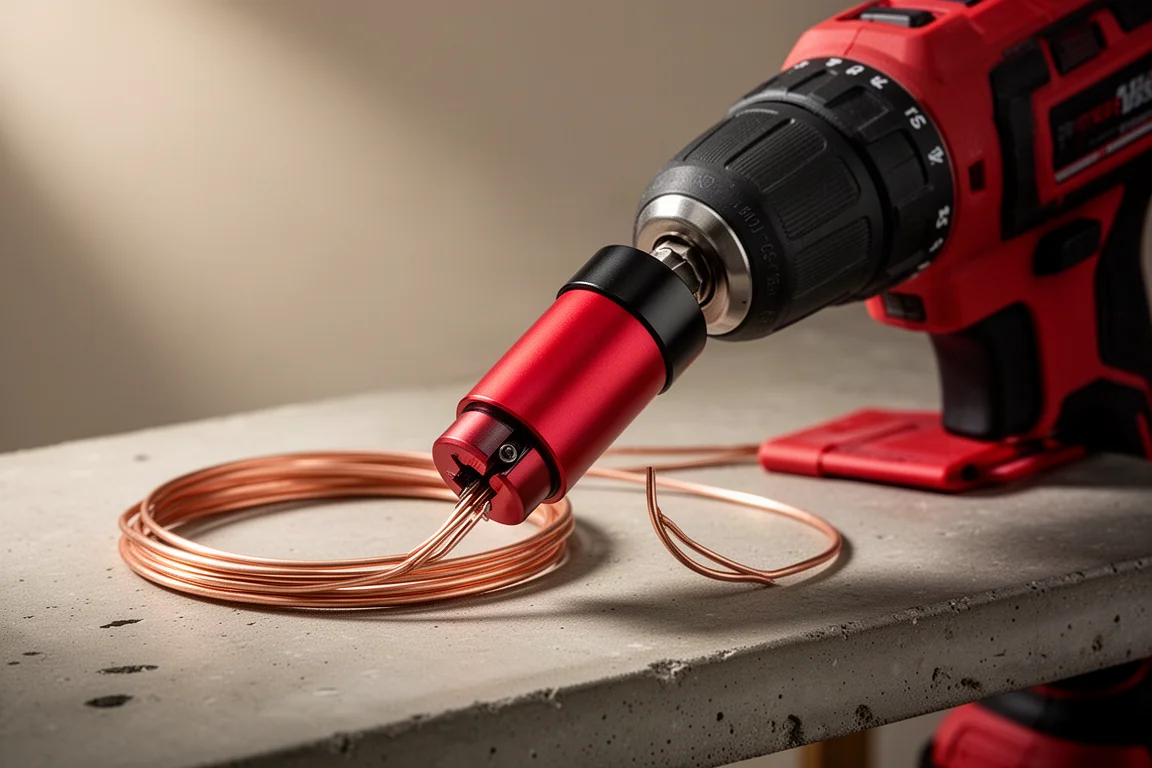
Repetitive electrical work has a way of eating a day. If your job involves stripping the same wire gauge over and over, or twisting dozens of wire nuts, small tool upgrades can genuinely change how fast the work moves. The Milwaukee 48-32-6400 is exactly that kind of tool: a self-contained wire stripper attachment that spins in an impact driver or drill, paired in the same ecosystem with a wire nut driver.
It is clever, well made, and affordable. It also has one real weakness that showed up clearly during testing, and it is worth understanding before you buy.
Who This Product Is For
This attachment is built for electricians and DIYers who strip a lot of the same wire repeatedly. The 48-32-6400 handles 12-gauge solid wire, a separate version covers 14-gauge, and a kit adds 10 and 8-gauge strippers. Note that these work on solid wire only, not stranded.
The design is fully self-contained, which sets it apart from similar products on the market that use a single arbor with a handful of swappable blades, more like a hole saw kit. Milwaukee builds everything into one unit, and the construction quality is noticeably good.
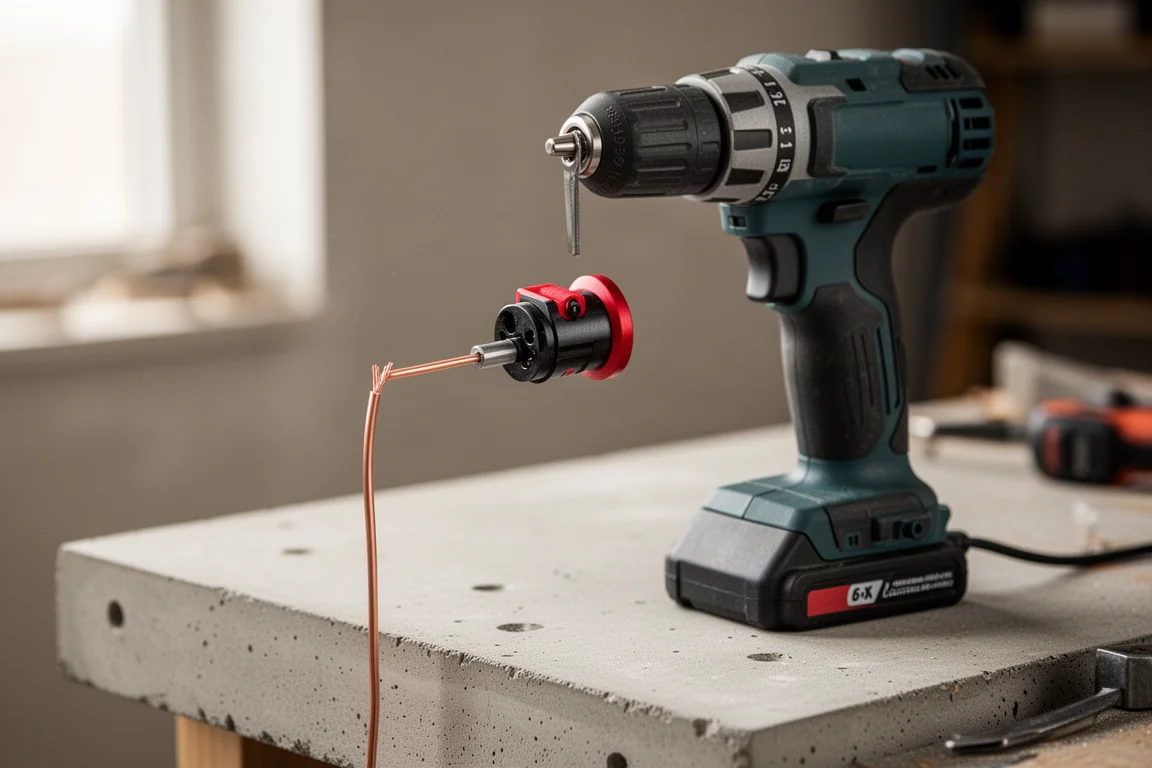
One practical tip: it is possible to force the wrong gauge into the wrong stripper, though not easily. A dedicated way to confirm wire size before spinning would be a welcome addition.
How the Depth Adjustment Works
The attachment adjusts for strip depth by sliding the collar down and moving the quick-lock adapter back and forth. Marked positions at 1/2, 1, and 1-1/2 inches help hold it in place, and the adjustment creates an internal stop that controls how far the wire goes in.
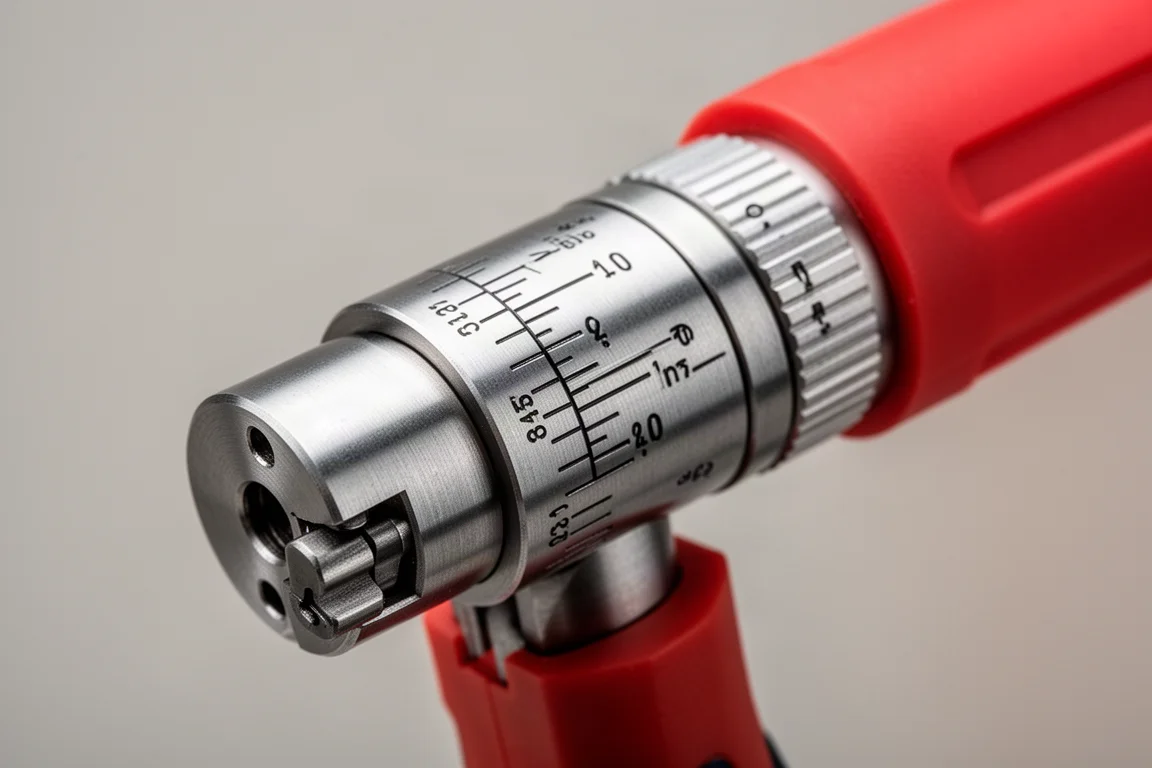
The blade spins inside an impact driver or drill and grinds the insulation off very precisely. Run it right, and you get a clean, smooth strip with no snag points, which matters when you are working inside a junction box where rough edges can catch on other wires.
Real-World Performance: Impressive, With a Catch
In testing, results were mixed in an interesting way. On some pieces of 12-gauge wire, the stripper performed beautifully, grinding the insulation off cleanly and quickly. On others, it bogged down because the plastic outer coating on the wire jammed inside the tool. After a couple of strips, debris wedges inside, and performance drops fast.
The frustrating part is cleaning it out. There is no access port. The pick method gets some material out, but the tool is closed on both ends, so thoroughly clearing it is difficult. Taking it apart does not help either, since there is still no useful access point.
It may come down to wire differences, because the results varied noticeably between pieces. On Romex, performance was much better: stripped ends came out clean, and repeated use worked well when the debris was cleared between runs. When it works, it is fast and almost frees up your second hand, since you do not have to hold everything together.
The Wire Nut Driver: The Underrated Companion
Alongside the stripper, the wire nut driver may be the more universally useful piece. Wire nuts drop into the socket, fit snugly, and it drives them on solidly. It also works well for taking them off. It handles nearly all wire nut sizes, though very tiny connectors can be an issue.
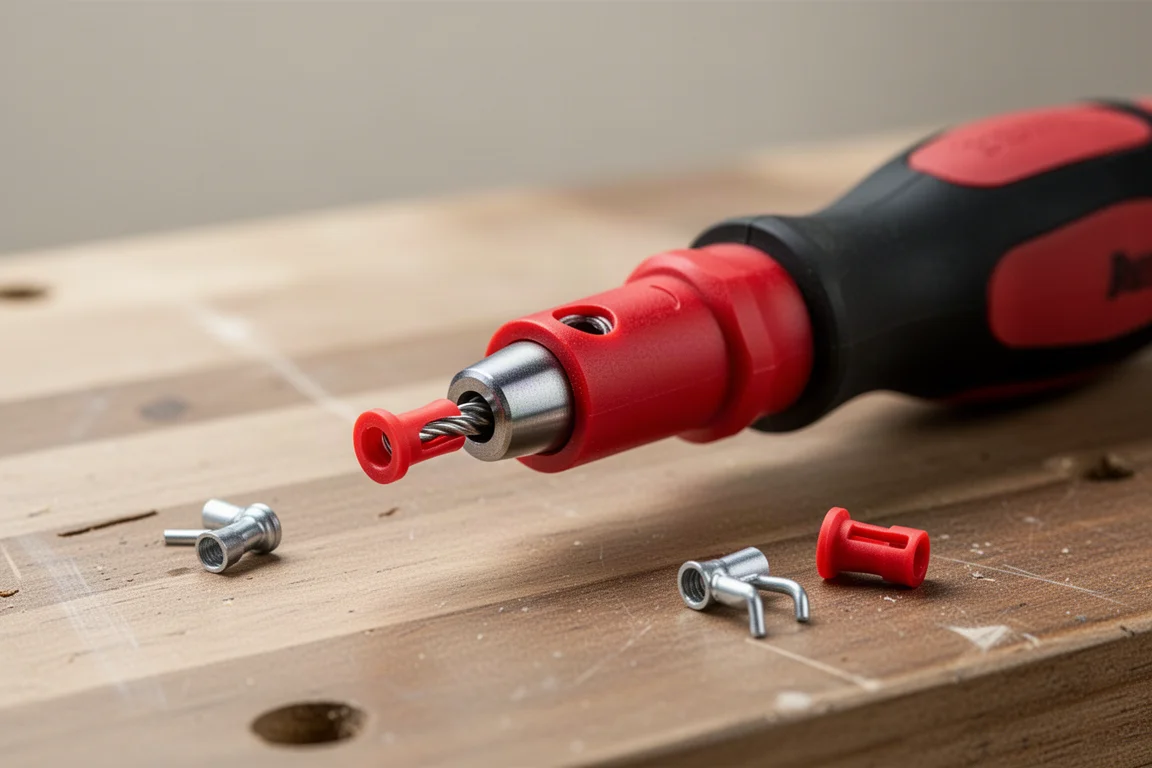
In testing, the sweet spot turned out to be using it on a manual driving handle rather than a powered driver. That setup gives a much better feel for how tight the connection is getting, something that is hard to judge on an impact. Run it on a driver at low torque, though, and it is remarkably fast.
There is one design note: a split ring is all that holds the connector retainer in place, and if you disassemble it, the holes must line up with the internal ball bearing before it goes back together correctly.
Buying Advice
Pricing is a big part of the appeal. The single stripper attachment runs around 10 dollars, which is genuinely hard to argue with for how well the core function works. The multi-size kit lands in the high 30s, and the larger set sits somewhere in the 50s to 60s range. Availability spans Acme Tools, Home Depot, and other retailers.
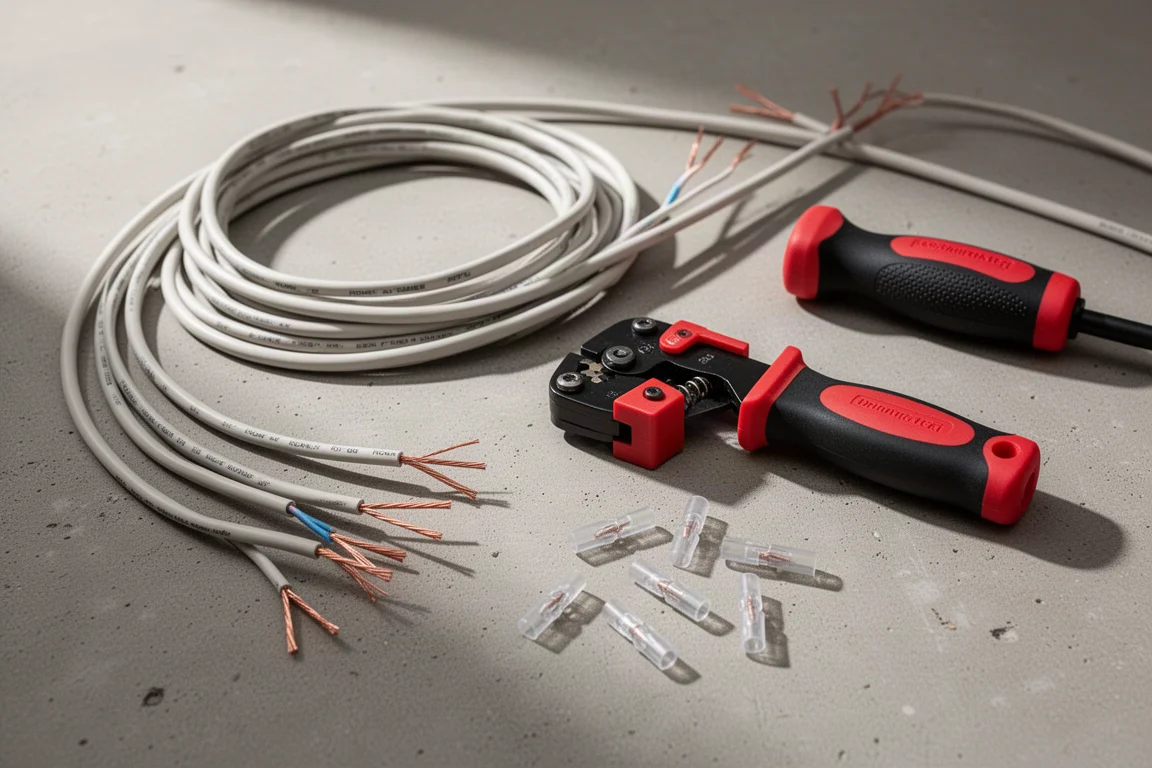
If you do the same stripping task over and over, this can be a real time saver and deserves a spot in the bag. If you strip mixed, occasional wires, the jamming and cleaning issues may outweigh the speed benefit. The wire nut driver is arguably the keeper of the pair: cheap, handy, and it saves you from dedicating a full driver to the job.
Conclusion
The Milwaukee 48-32-6400 is a slick, well-designed attachment with an obvious cult following for good reason. The stripping action is smooth and precise, the depth adjustment is thoughtful, and the wire nut driver alone justifies the price. The lack of any cleaning access is a genuine flaw, and the tool can gum up quickly depending on the wire. Accept that trade-off, use it on repetitive same-gauge work, and it earns its place.
Product link
View more details for Milwaukee 48-32-6400 Wire Stripper Kit
This product is mentioned in the review. Check the specifications, options, and compatibility before buying.
View more details for Milwaukee 48-32-6400 Wire Stripper KitFurther reading
Related Reviews

Tools
Best Contractor Grade Tape Measures 2026: Eight Models Tested Head to Head
We tested eight contractor grade tape measures from Milwaukee, DeWalt, Crescent Lufkin, Tajima, Stanley, Irwin, Gelan, and Craftsman to find the best value and performance.

Tools
Best Precision Screwdriver Sets 2026: Manual and Electric Options Compared
We compare 19 precision screwdriver sets, from budget manual kits to electric drivers, to find the strongest bits and best value.

Tools
Best Stud Finders 2026: Five Popular Models Put to the Test
We tested five popular stud finders on drywall, firewall, and lath and plaster surfaces to see which ones really find studs and avoid false readings.