Ski Gear
Mid-100 Ski Roundup 2026: 12 Freeride and All-Mountain Skis Worth Considering
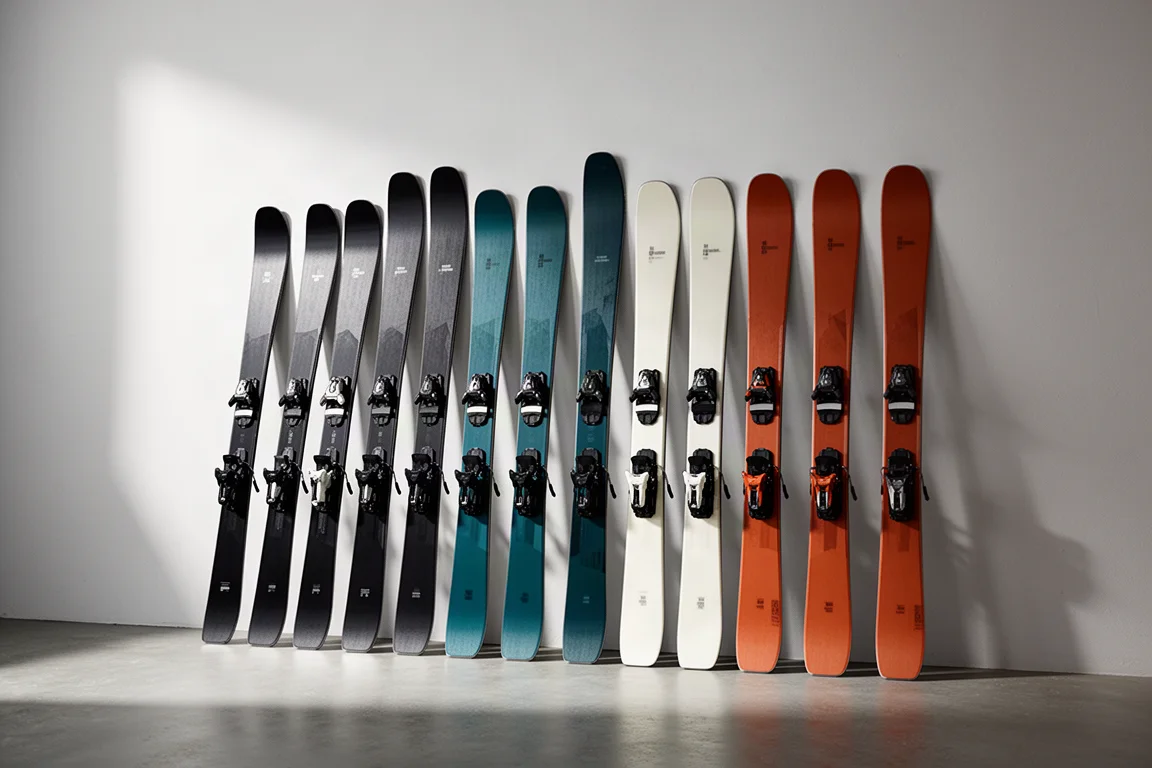
Twelve skis between 102 and 107 mm underfoot, from stout freestyle twin tips to light hybrid touring builds, with notes on who each one actually suits.
Introduction
Waist widths in this group run from roughly 102 mm to 107 mm, which puts every ski here squarely in soft-snow territory. What makes the category interesting is how little the number underfoot tells you about how a ski actually behaves. Tip and tail width, rocker profile, core thickness, and construction choice all change the picture considerably.
Where these skis sit in a quiver depends on where you ski. If your home hill sees modest snowfall, something in this width is likely to be the widest ski you own. If you ski somewhere snowier, one of these can serve as a daily driver, with narrower options taking over on firm days. Both are valid, and it is worth knowing which one you are before you buy.
How to Think About a Mid-100 Ski
The most useful split in this width is between twin tips and directional shapes. A full twin tip gives you switch skiing and freestyle capability, but it also limits how directional the ski can be, which is why manufacturers add taper from tip to tail to keep it maneuverable. Directional shapes trade that versatility for a longer effective edge, cleaner turn exit, and more grip on firm snow.
Weight is the second big variable, and it is frequently counterintuitive. In this group, weight runs from around 1,680 g up to more than 2,100 g, and the heavier ski is not always the one with metal in it. A dense wood core in a twin tip can add more mass than a metal laminate in a directional ski, and carbon stringers can make a light ski feel considerably stronger than its weight suggests.
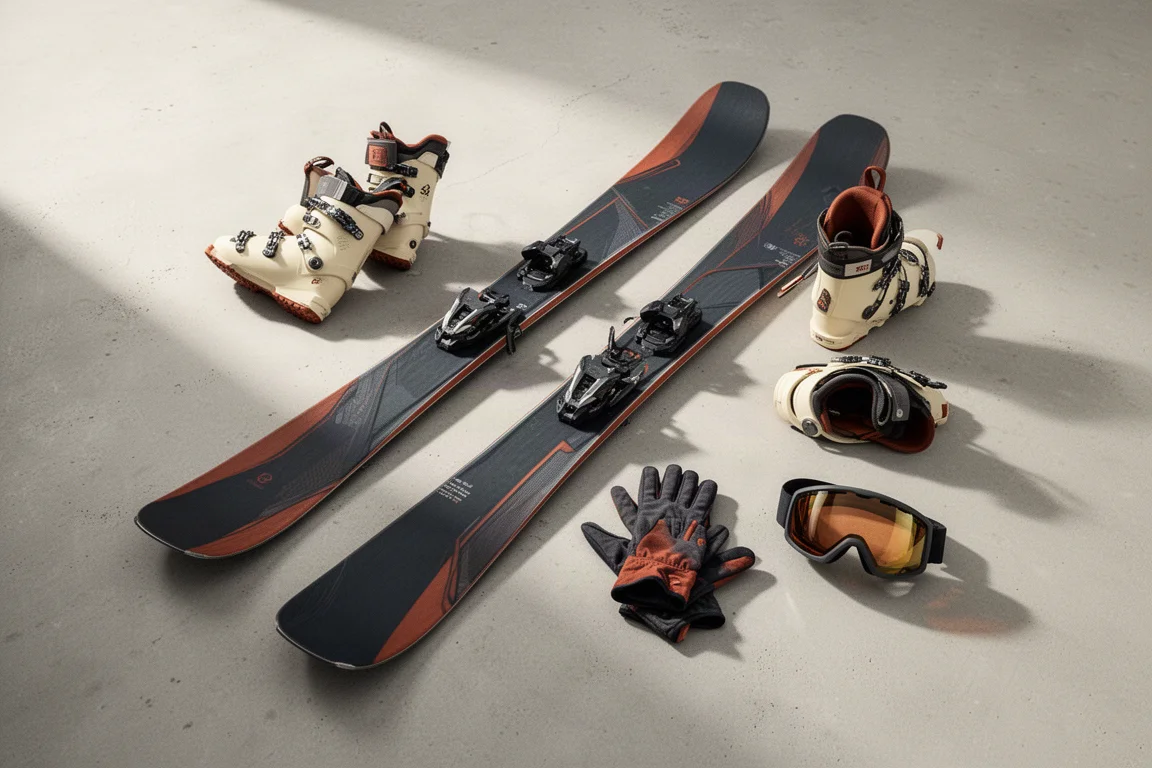
Construction explains most of the feel differences. Metal laminates, whether full sheets or partial ones that taper away before the rocker, add damping and a planted, quiet ride. Carbon, whether as stringers, rods along the edges, or full laminates, adds energy and rebound while keeping weight down. Skis built around carbon can feel surprisingly like metal in the way they absorb vibration, but they tend to release out of a turn with more pop.
Faction Mana 2
The Mana 2 replaces the Candide 2.0 in Faction’s line: a 102 mm twin tip with a freestyle-derived shape that has been tuned toward freeride use. The core is poplar, and a carbon and rubber stomp pad sits underfoot, giving the ski a stout, planted feel right where you pressure it.
At 1,920 g in the 183 cm length, the Mana 2 is not a lightweight ski, and that comes through on snow. It trades some of the quick, flickable character of the Candide line for stability at higher speeds. Core thickness stays fairly consistent from tip to tail, and the rocker profile is close to symmetrical, though the tail is a few millimetres narrower than the tip. It is a full twin tip, so it suits skiers who want to ski switch, spend time in the park, and still point it down the fall line.
K2 Reckoner 102
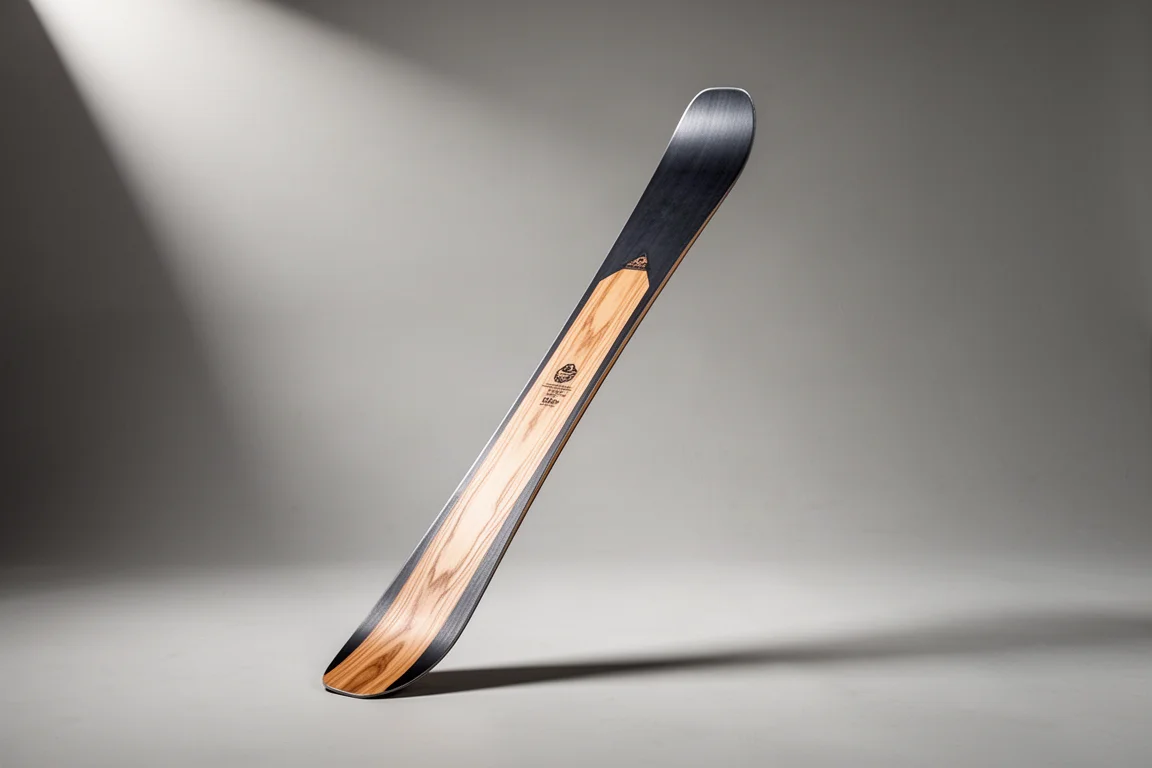
The Reckoner 102 occupies similar territory to the Mana 2 but takes a lighter approach. Around 1,820 g, it uses an aspen wood core with vertical carbon stringers and a carbon spectral braid. The result is a ski with a very soft longitudinal flex but genuinely surprising torsional stiffness, so it holds an edge when you stay centred even though the tips and tails feel loose and bendy.
That centred stance matters. Let your weight drift too far forward and the ski stops cooperating. For lighter or less aggressive skiers it is a very approachable option, and it has found fans both among park skiers and among technical, directional skiers who spend their days in the trees.
The other thing worth knowing is that it does not enjoy being bashed around. It rewards a finessed style rather than a punishing one, and if you are hard on your equipment there are more durable options in this width.
Blizzard Rustler 10
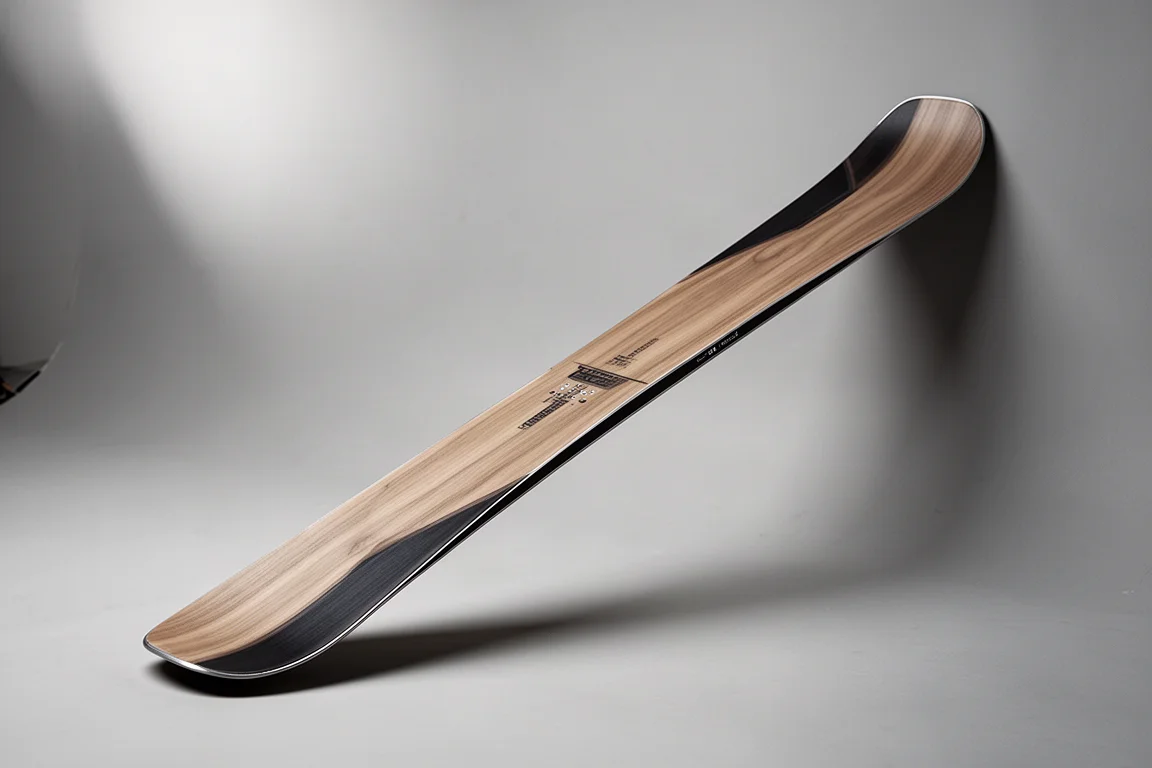
The Rustler 10 returns essentially unchanged, with only topsheet updates. Its construction pairs dual rocker with camber underfoot, a carbon flip core, and a partial metal laminate underfoot that tapers away before the rocker begins.
At just over 2,000 g it is neither especially heavy nor especially light. The combination of a damp, stable feel underfoot with rockered, metal-free tips and tails makes it unusually maneuverable for how planted it feels. That mix has made it a long-standing favourite as an East Coast tree ski, where a single run can move from soft snow into ice, and it remains a reasonable choice for western skiers as well.
View more details for Blizzard Rustler 10
Blizzard Hustle 10
The Hustle 10 uses the same footprint as the Rustler 10 and changes the construction. A True Blend wood core replaces the metal laminate with full-width carbon stringers underfoot, dropping roughly 150 to 180 g, to around 1,850 g.
The trade is straightforward. You give up some of the Rustler’s damping and gain a poppier, more energetic ski with strong bounce in soft snow. Blizzard positions it as a hybrid ski that can be paired with a touring binding, but it works perfectly well as a resort ski in its own right, and plenty of skiers will never take it uphill.
View more details for Blizzard Hustle 10
DPS Koala 103
The Koala 103 is a simpler, freestyle-influenced build compared with the brand’s Pagoda line, using a fibreglass-heavy foundation construction rather than two carbon laminates. It weighs around 1,850 g but feels considerably stronger on snow than that number suggests.
DPS has given it more taper in the tip and tail and a larger difference between tip and tail dimensions than a pure twin tip, which shifts it toward directional freeride and tree skiing and away from park use. It still carries a lot of tail rocker, so it lands somewhere between a hybrid freeride and freestyle ski. The stiffness and float make it a good option for a playful skier who wants a soft-snow ski without a full twin tip.
Line Blade Optic 104
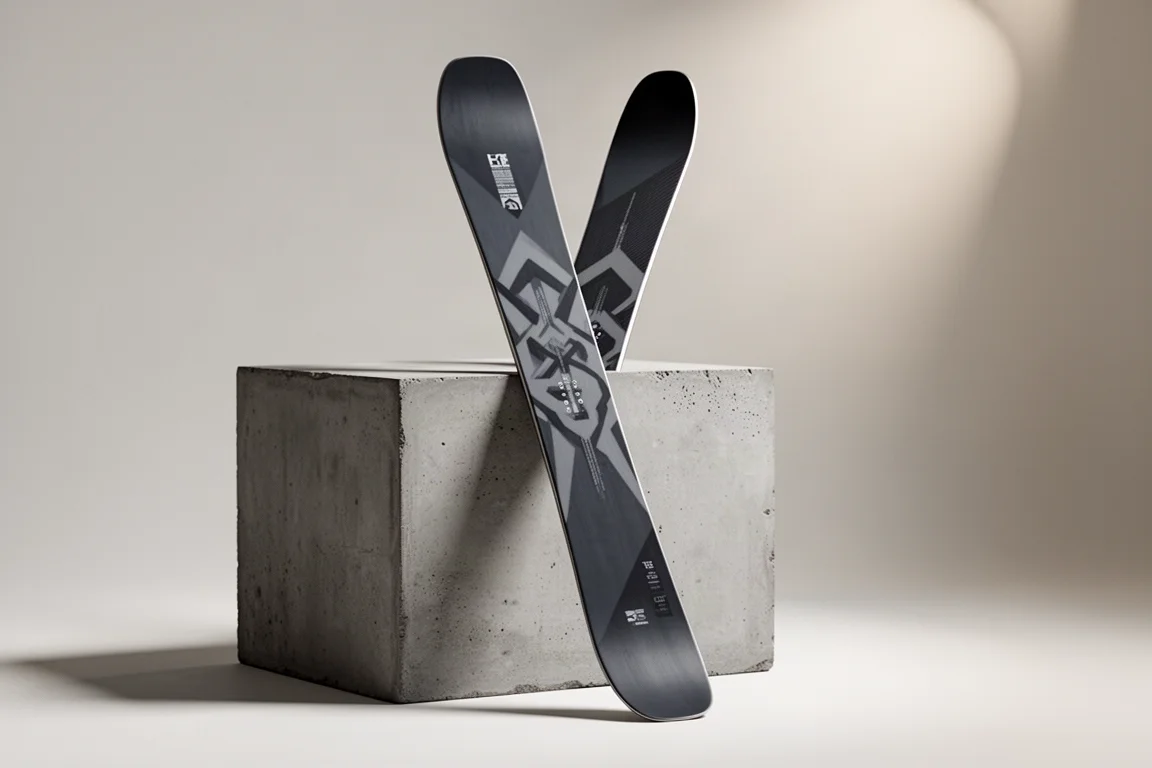
The Blade Optic 104 uses Line’s gas pedal metal, which runs through to the edges underfoot and then tapers away, extending further than the metal found in a Rustler 9. It is a full sidewall to cap construction, and at around 2,100 g there is a lot of ski here.
The shape combines long tip and tail rocker with smooth early taper. On a flat ski the effective edge is short and the ski flicks around easily. Tipped on edge it is strong, stable, and happy to be pushed hard, with a straighter, more sideways turn shape than an Enforcer 104 Free. That leans it further toward a freestyle feel, which suits skiers who want to rip the fall line and still pop a 360 off a windlip.
Nordica Enforcer 104 Free
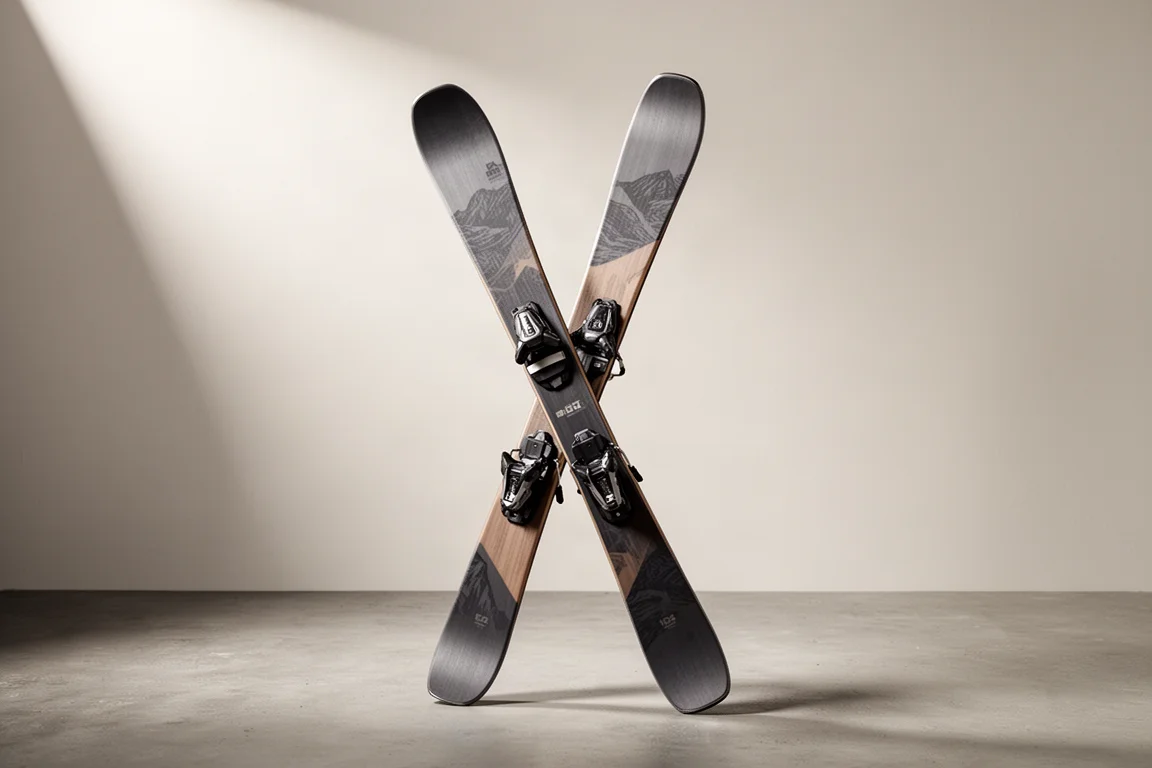
The Enforcer 104 Free has not changed since it was introduced, and its reputation rests on a turny sidecut that extends past the rocker line, giving it a round, intuitive turn entry and a high performance ceiling. At around 2,100 g in the 179 cm length, it is a substantial ski.
The rocker splay in the tail keeps it playful for its weight, and it floats well in fresh snow. As lighter carbon builds have arrived in this width, the Enforcer 104 Free has shifted in relative terms toward the power and stability end of the category. It remains a strong choice for hard-charging skiers who want a ski that can genuinely be driven.
For skiers who value a smooth, damp ride and a ski that stays composed when the snow gets chopped up, that repositioning is not a downside at all. It simply means the ski now sits at the stable end of a category that has grown more varied around it.
View more details for Nordica Enforcer 104 Free
Nordica Enforcer 104 Unlimited
The Enforcer 104 Unlimited takes the same shape as the Enforcer 104 Free and swaps metal for carbon, bringing the weight down to roughly 1,750 g. Turn initiation feels the same, and the shape’s intuitive entry carries over. What changes is the energy: there is more snap and bounce out of a turn and a softer overall flex.
It is marketed as a touring ski, but it works well as a resort ski, and it is noticeably more smeary and easier to move from turn to turn in tight trees and soft snow. The 186 cm length carries an 18.5 m turn radius. One practical note: the topsheet shows scratches more readily than the metal version, and a heavy touring binding can cancel out the weight savings entirely.
Head Kore 105
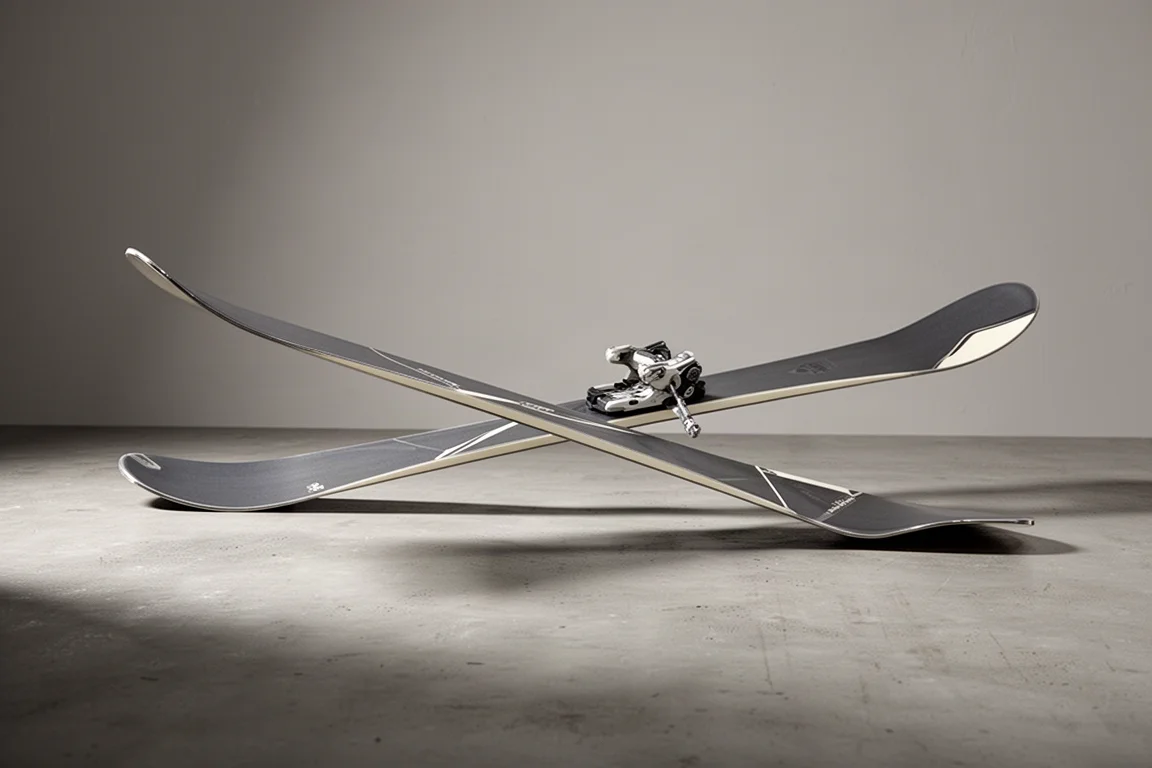
The Kore 105 is the lightest ski in this group at roughly 1,680 g. It uses a blend of karuba and graphene, and a new topsheet material this season has smoothed out its on-snow feel without changing anything else about the build.
It is stiff, but less punishing than some narrower models in the same family, and it remains extremely quick. That combination makes it one of the best directional tree skis here and a strong pick for tight, technical terrain. It is not catalogued as a touring ski, but there is nothing stopping you from mounting a touring binding on it.
Salomon QST 106
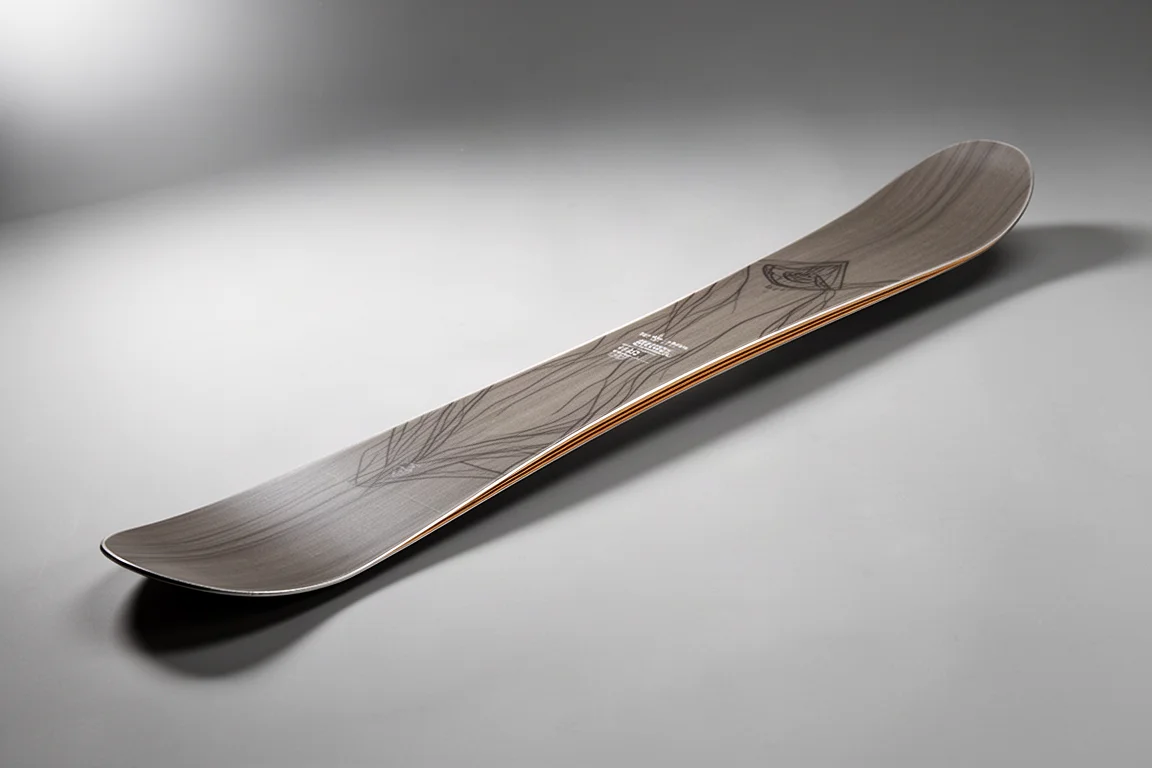
The QST 106 keeps a slightly longer turn shape than Salomon’s shorter-turning models, with a 19 m radius in the 181 cm length. At just over 2,000 g, much of the weight comes from a generous amount of poplar, with carbon and flax in the tips and tails and a beefed-up sidewall underfoot.
The blend is what stands out. It feels solid and stable, but it stays easy to turn, surfy, and forgiving enough to make you feel like a better skier than you are. It handles groomers, deep days, and mixed terrain without complaint, and it can be thrown sideways into a long drift when you need to line something up. It is not positioned as a touring ski, though it does have a skin attachment point.
Elan Ripstick 106
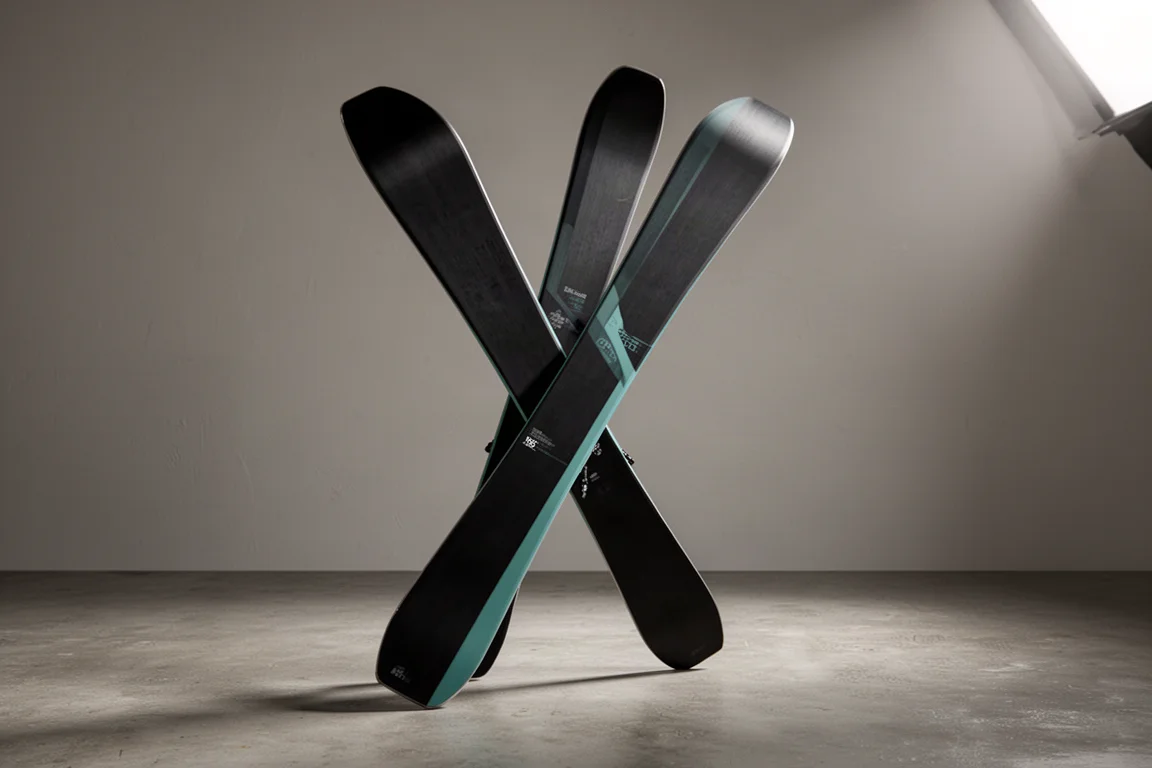
The Ripstick 106 is a directional ski built around Elan’s Tubelight wood core and carbon rods that run along the edges. That three-dimensional application of carbon adds vibration damping without metal, which is why these skis are frequently described as feeling metallic when they are not.
It weighs around 1,850 to 1,900 g and is light enough to tour on. The Amphibio profile puts more rocker on the outside edge. Flex is softer than the narrower Ripsticks but more supportive than the 88 and 96. Despite a relatively modest rocker profile, a large shovel gives it good float, and it is agile in trees, clean and round on groomers, and easy to bend into a turn.
Atomic Backland 107
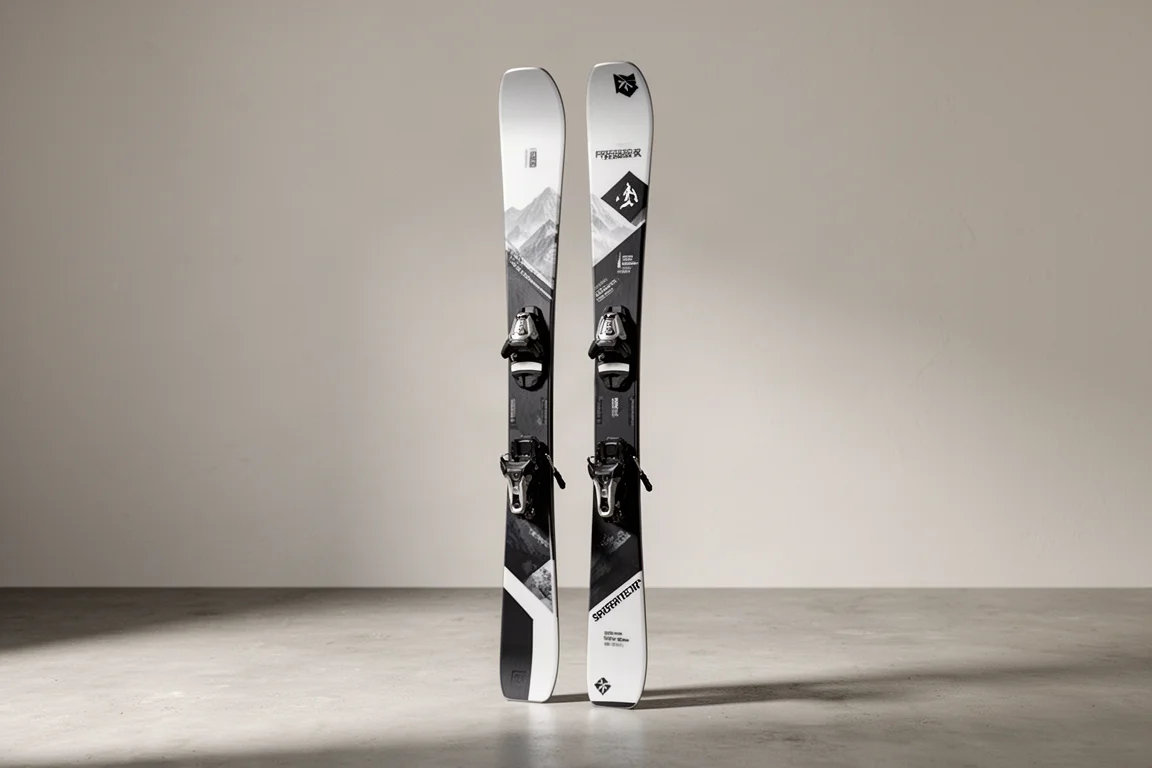
The Backland 107 closes out the group as a lightweight hybrid build: a light wood core with a carbon backbone, Horizon Tech in the tips, and a more directional tail that gives a smooth exit from the turn with good flotation up front.
It is one of the lightest skis here, and it was designed for backcountry touring, which is where it makes the most sense. Even so, it has enough top-end performance to be skied hard on the descent, with a long effective edge and a smooth, energetic feel. Built up with a touring binding in a long length, the total package reaches around 2,670 g, which is a useful reminder that the ski is only part of the weight equation.
View more details for Atomic Backland 107
Buying Advice
The most useful question is not which ski is best but where this ski sits in your quiver. If it is going to be your widest ski on a low-snow hill, favor maneuverability, a forgiving flex, and a shape that stays fun when conditions are firm. If it is going to be a daily driver in a snowier region, you can afford to prioritize stability and a higher performance ceiling.
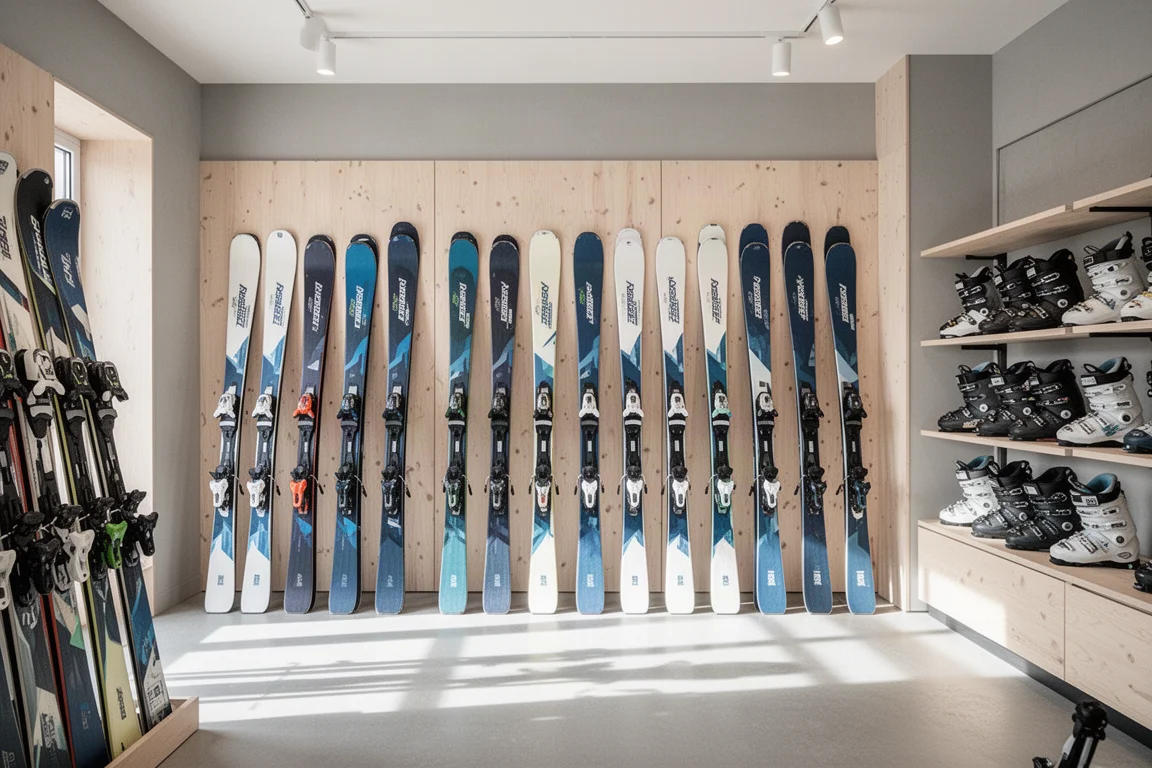
Binding choice changes the total package more than most buyers expect. A heavy hybrid binding can erase the weight savings of a lighter ski, while a lightweight tech binding on a heavier directional ski will noticeably change how it feels underfoot. Decide how much touring you will realistically do before you commit, and let that drive the binding rather than the other way around.
Between twin tips and directional shapes, be honest about how much switch skiing and freestyle you actually do. A full twin tip is the right call if you genuinely use it. If you do not, a directional ski with a rockered tail will give you more grip and a cleaner turn exit for the same money.
Conclusion
This width range rewards matching the ski to the skier rather than chasing a spec sheet. Twin tips like the Faction Mana 2, K2 Reckoner 102, and Volkl Revolt 104 style builds suit skiers who want freestyle capability alongside freeride stability. Directional shapes like the Blizzard Rustler 10, Salomon QST 106, and Elan Ripstick 106 suit skiers who want grip, float, and an easy turn. And the lighter hybrid builds, including the Blizzard Hustle 10, Nordica Enforcer 104 Unlimited, Head Kore 105, and Atomic Backland 107, blur the line between resort and touring use.
If you can, ski two or three of them back to back. The differences in flex, weight, and shape that look minor on paper tend to feel obvious on snow.
Further reading
Related Reviews

Ski Gear
2023 Blizzard Hustle vs Rustler: Six Freeride Skis Compared
Blizzard's 2023 Hustle collection rebuilds the Rustler shape with a lighter core and no metal. Here is how all six skis differ, and which one suits your riding.

Ski Gear
2023 Skis of the Year: Atomic Maverick 88 TI, Salomon QST 106, and Look SPX 12 Pro
Three standout ski picks for all-mountain carving, powder days, and reliable binding performance, with practical buying notes for 2023 models.

Ski Gear
2025 Nordica Enforcer 104 Review: A Directional Charger Replaces the 104 Free
The 2025 Nordica Enforcer 104 drops the Free name and the twin-tip personality, gaining weight, stiffness and composure in rough snow. Here is what changed and who it suits.