Trail Running Shoes
Merrell Agility Peak 5 vs Hoka Speedgoat 5: Which Trail Workhorse Deserves Your Money?
Two remarkably similar road-to-trail runners go head to head on stack, grip, fit, and ride feel to help you pick the right trail workhorse.
Introduction
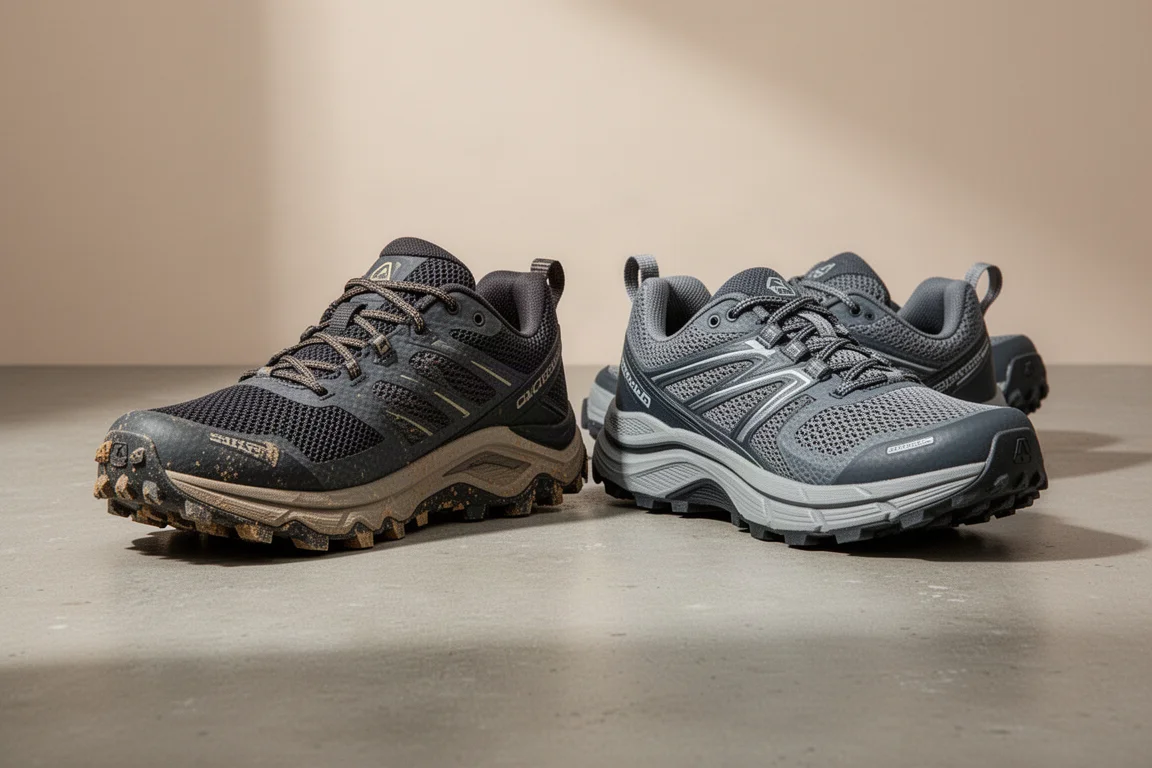
The Merrell Agility Peak 5 and the Hoka Speedgoat 5 are two remarkably similar shoes. Both are built for rolling road-to-trail routes and for everything from short off-road excursions to long ultra-distance adventures on technical terrain. The real question is whether Merrell has built a shoe that can genuinely rival the Speedgoat, and the answer turns out to be closer than you might expect.
This comparison breaks down the numbers, the fit, the ride, and the grip so you can decide which one belongs on your feet.
Specs and Build: Stack, Weight, and Price
The Agility Peak 5 lists a 31mm heel and 25mm forefoot stack for a 6mm drop. The Speedgoat 5 sits marginally higher, particularly under the toes, with 32mm in the heel and 28mm in the forefoot for a lower 4mm drop. On the scale, the Peak 5 weighs 280g (9.9oz) in a UK size 8.5, a chunk lighter than the Speedgoat 5 at 291g (10.3oz).
Price is where things get interesting. Both shoes list at £140 in the UK, but in the US the Speedgoat 5 costs $155 against the Agility Peak 5’s $140, making the Merrell $15 cheaper there.
Both follow the same blueprint for a daily trainer trail shoe: a big stack of responsive midsole, flexible reinforced mesh uppers, plush padded heel collars, and substantial 5mm lugs. The Agility Peak 5 uses a new medium-density FloatPro foam that is softer and more energetic than previous Peak models, plus a rocker for smooth heel-to-toe transitions and a rock plate for protection from sharp trail debris. The Speedgoat 5 uses a single-density compression-molded EVA that is lighter and more responsive than past Speedgoat models, with a late-stage meta-rocker. Notably, you do not get a rock plate in the Speedgoat 5.

Up top, the Agility Peak 5 has engineered mesh with generous pliable TPU overlays from toe to heel for durability, a gusseted wraparound tongue that prevents lace pinch, plus a D-ring at the bottom of the lacing for extra lacing options and a velcro gaiter attachment at the heel. The Speedgoat 5 uses a double-layer jacquard mesh with a neoprene-style patch across the top of the toes for added flex. Its heel collar is a touch narrower and less flexible, with a structure that rises higher up the heel, while the Merrell keeps a more traditional, roll-top style collar.
Fit and Sizing
Both shoes fit true to size in a regular running shoe size, and going true to size is recommended for both. If anything, the Hoka fits marginally more snugly, with slightly less room across the top of the toes and into the toe box. The Agility Peak 5 offers a little more room in that area, which matters if black toenails are a recurring problem or if you are planning ultra-distance efforts.
Both deliver good heel hold and solid lockdown across the midfoot. If you prefer a wider, longer fit in trail shoes, going half a size up in either shoe is an option, but staying true to size is the safer bet.
Outsole and Grip
Flip both shoes over and you find a generous covering of multi-directional 5mm lugs. The Agility Peak 5 mixes chevrons and X-shaped lugs designed to increase traction and shed debris with each step, and while the lug depth is listed the same as the Speedgoat’s, they look notably more substantial in person.
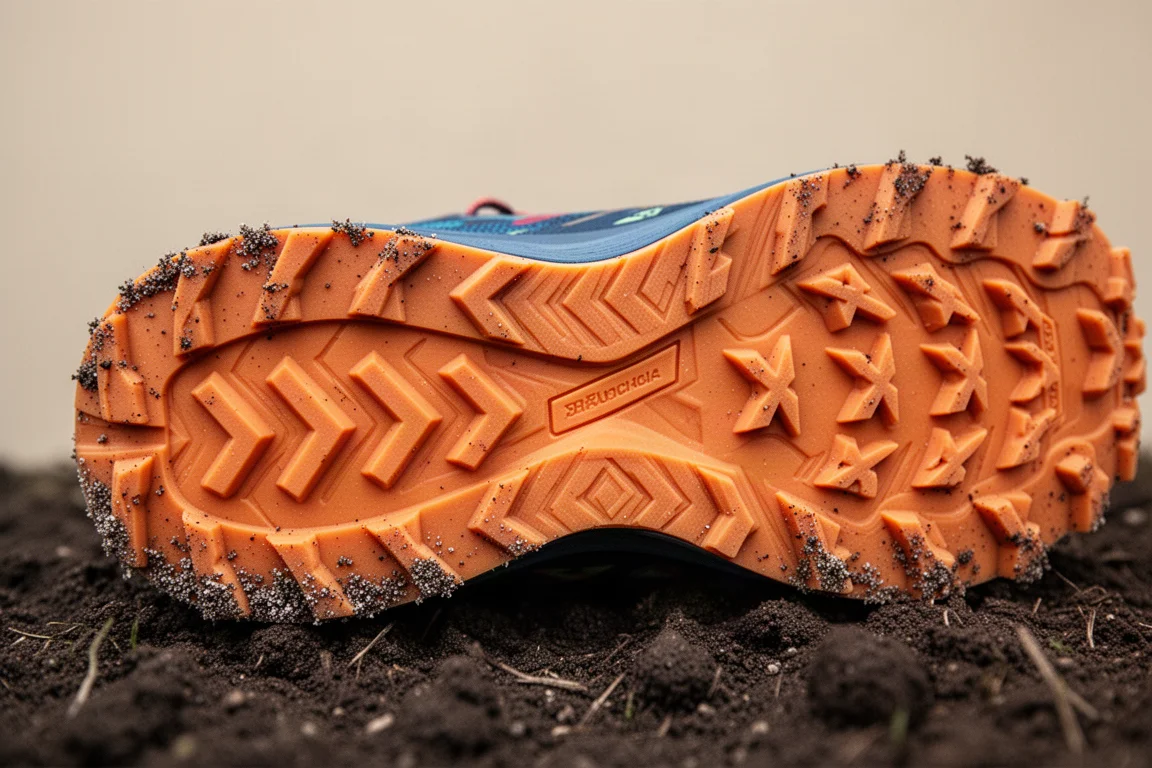
Both shoes offered good, reliable grip across all tested conditions, which included hard-packed park and riverside paths, forest trails, grass, and heavy boggy mud. Neither was tested on very steep or rocky terrain, but they held firm everywhere they went, with the Merrell just about edging it on grip overall.
Head-to-Head Ride Test
The Speedgoat 5 has been a long-term favorite workhorse for hundreds of miles across forest trails, coastal paths, and plenty of road miles to reach them, including runs of six hours and longer. The Agility Peak 5 was tested over around 30 miles on very similar terrain, with the longest run at 90 minutes on foot.
Running a side-by-side mile with one shoe on each foot confirmed how similar these two really are. They ride in a very similar way overall, but there are differences worth knowing. Despite the Speedgoat having the higher listed stack, the Agility Peak 5 feels like it has more cushioning underfoot: slightly softer, and definitely a touch more springy and bouncy. The bigger 6mm drop also tips you forward a little more, giving extra forward momentum and getting you into the rocker sooner, while the flatter 4mm Speedgoat runs a bit more level with more ground contact.
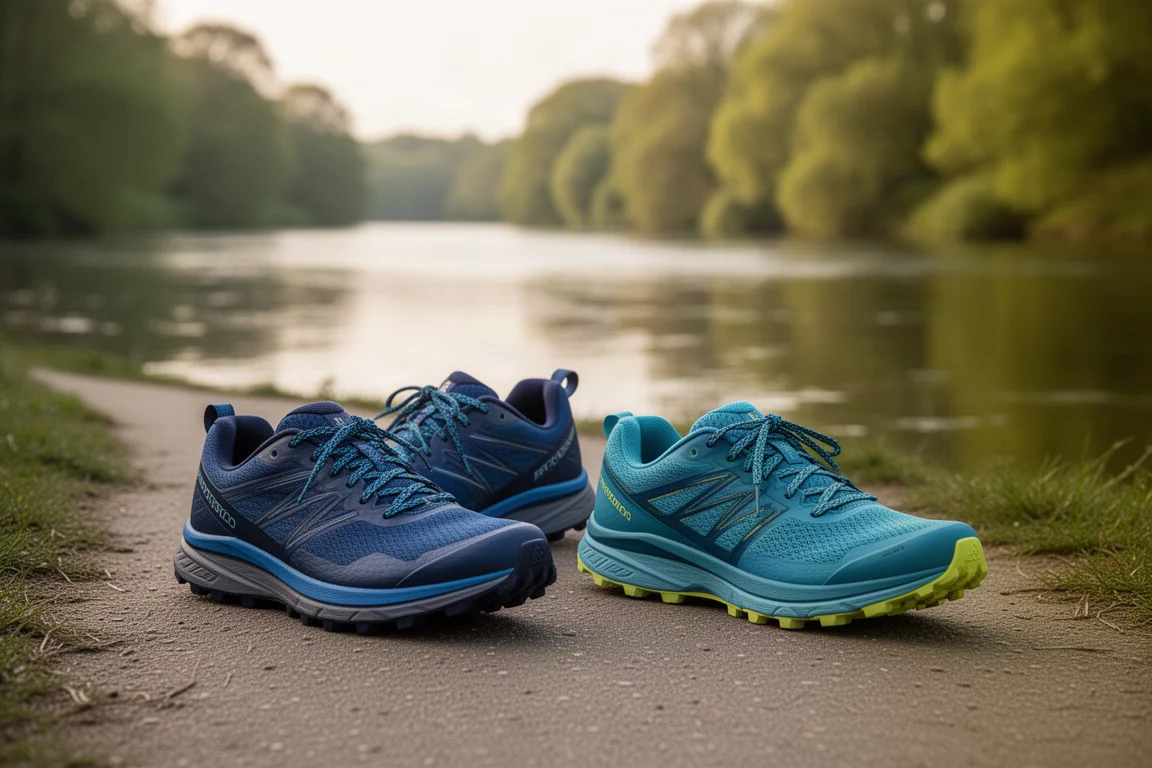
That flatter, more grounded feel could come into its own on technical trails, but on flat, wet, easy off-road terrain the Agility Peak 5 performed ever so slightly better. On road sections, that extra softness again made the Merrell marginally better, though both cope well with hard compacted ground, which matters for ultras that route back through towns and villages.
Overall Buying Advice
These are both great workhorse shoes that handle a wide range of terrain and paces, and either could happily be worn for clipping along the trails day after day.
The Agility Peak 5 is a nicely balanced cushion-to-protective trail shoe that matches the Speedgoat’s easy-rolling ride, making it a strong choice for longer ultra efforts where extra foot protection matters, particularly with its rock plate advantage. The Speedgoat 5 remains a trusted, reliable trail companion with a familiar, proven ride.
In the UK, both list at the same price, but in the US the Merrell is $15 cheaper, which makes it even more appealing. Good deals can be found on both shoes, and the simplest advice is to go for whichever one you can find cheapest, or to follow your brand preference if you have one.

Conclusion
The Merrell Agility Peak 5 has all the tools needed to rival the Hoka Speedgoat 5, particularly on rolling road-to-trail terrain, and there is very little real discrepancy between the two. The Speedgoat 5 remains the slightly more proven long-term favorite, but the Agility Peak 5 deserves careful attention from anyone considering a Speedgoat-style trail shoe, especially where the Merrell is cheaper. Whichever you choose, both are excellent picks for road-to-trail runners.
Product link
View more details for Merrell Agility Peak 5
This product is mentioned in the review. Check the specifications, options, and compatibility before buying.
View more details for Merrell Agility Peak 5Further reading
Related Reviews
Trail Running Shoes
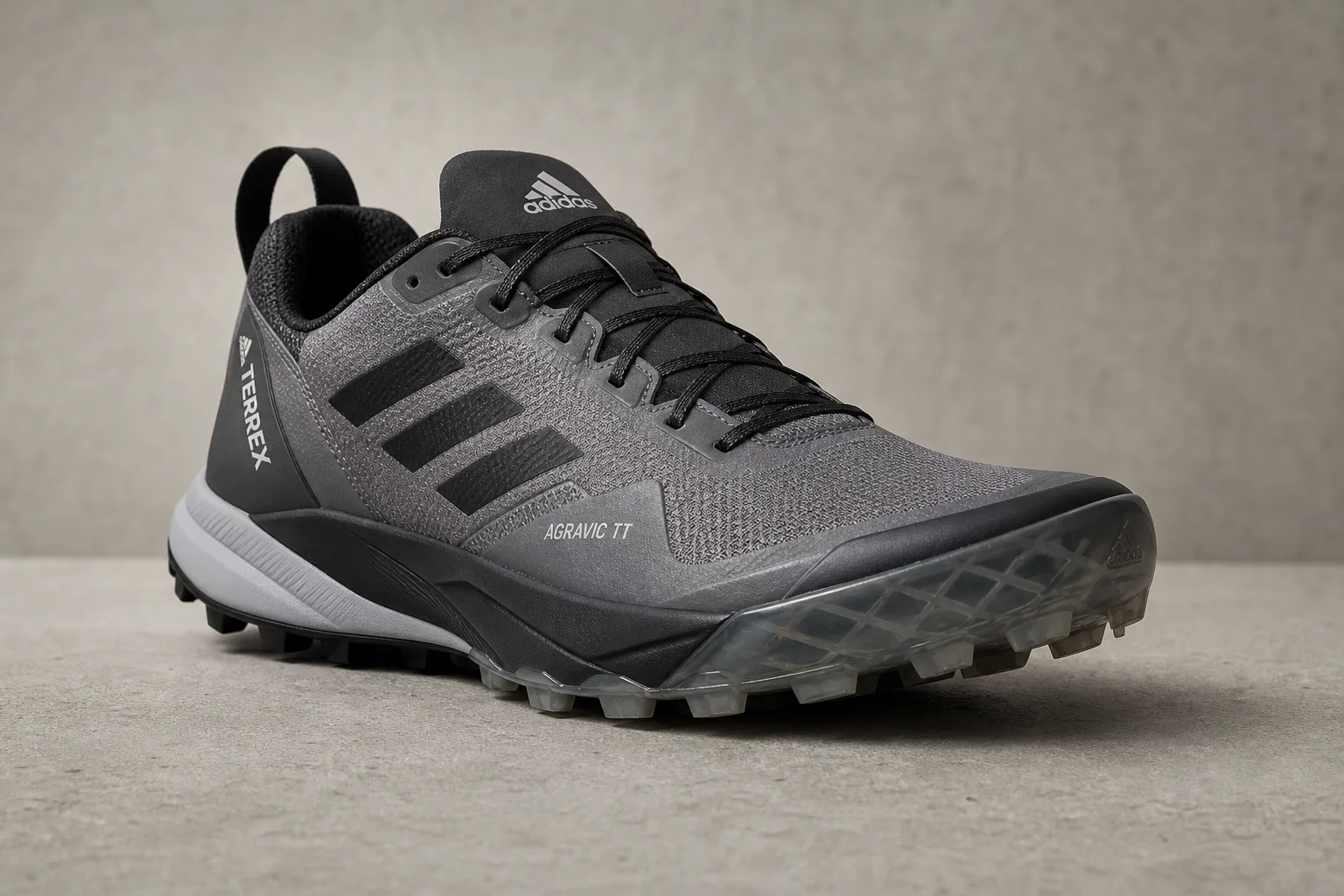
Adidas Terrex Agravic TT Review: A Technical Trail Shoe Built for Rocky Terrain
The Adidas Terrex Agravic TT combines a full-coverage rock plate with a firmer midsole to deliver protection and stability on technical, rocky trails. A capable choice for runners who prioritize underfoot defense over lightweight cushioning.
Trail Running Shoes
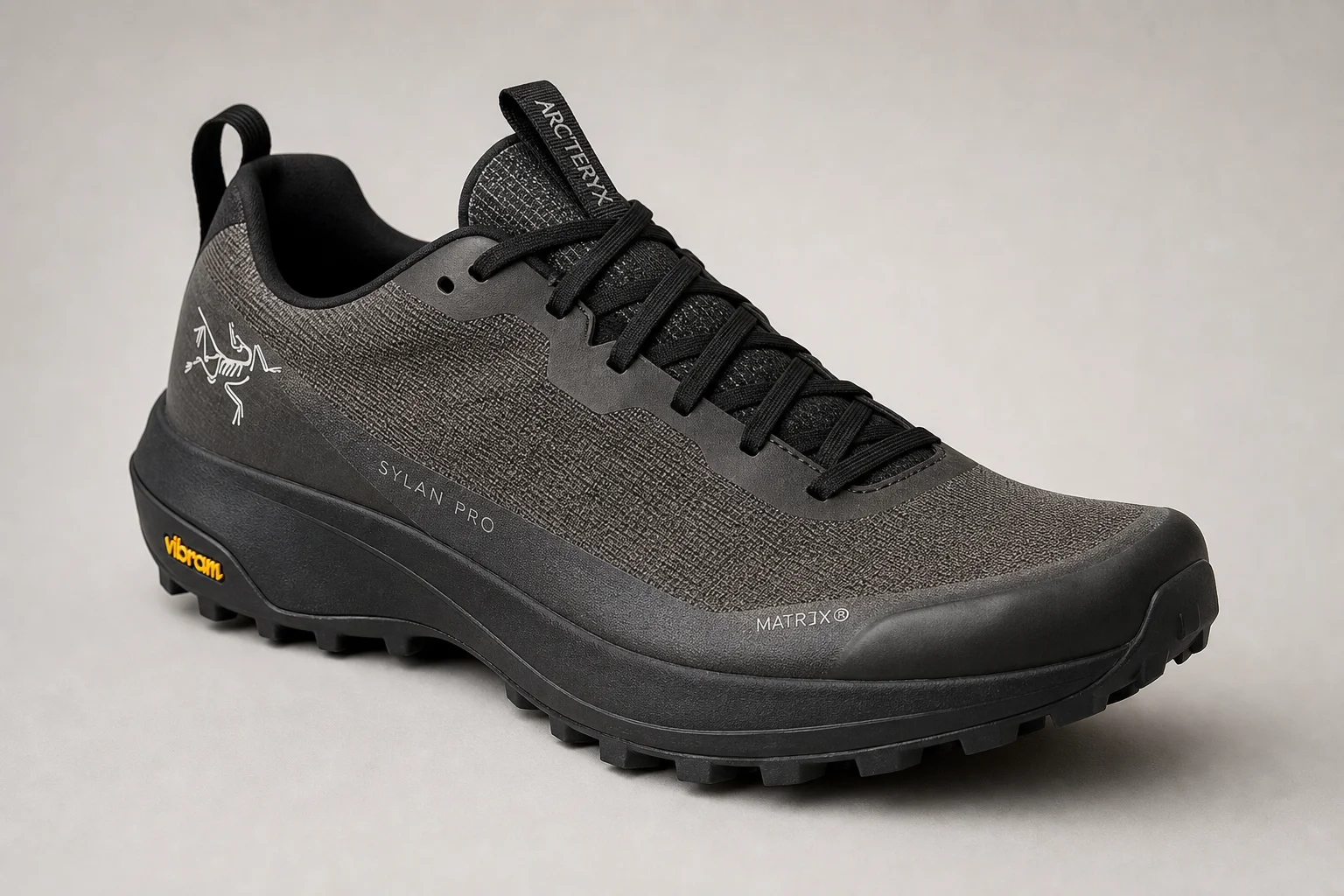
Arc'teryx Sylan Pro Review: A Rocker-Focused Mountain Running Shoe Tested on 20 Miles
The Arc'teryx Sylan Pro brings a pronounced rocker geometry and secure fit to mountain terrain. We tested it on a 20-mile Sawtooth loop to evaluate its climbing efficiency, protection, and handling of technical descents.
Trail Running Shoes
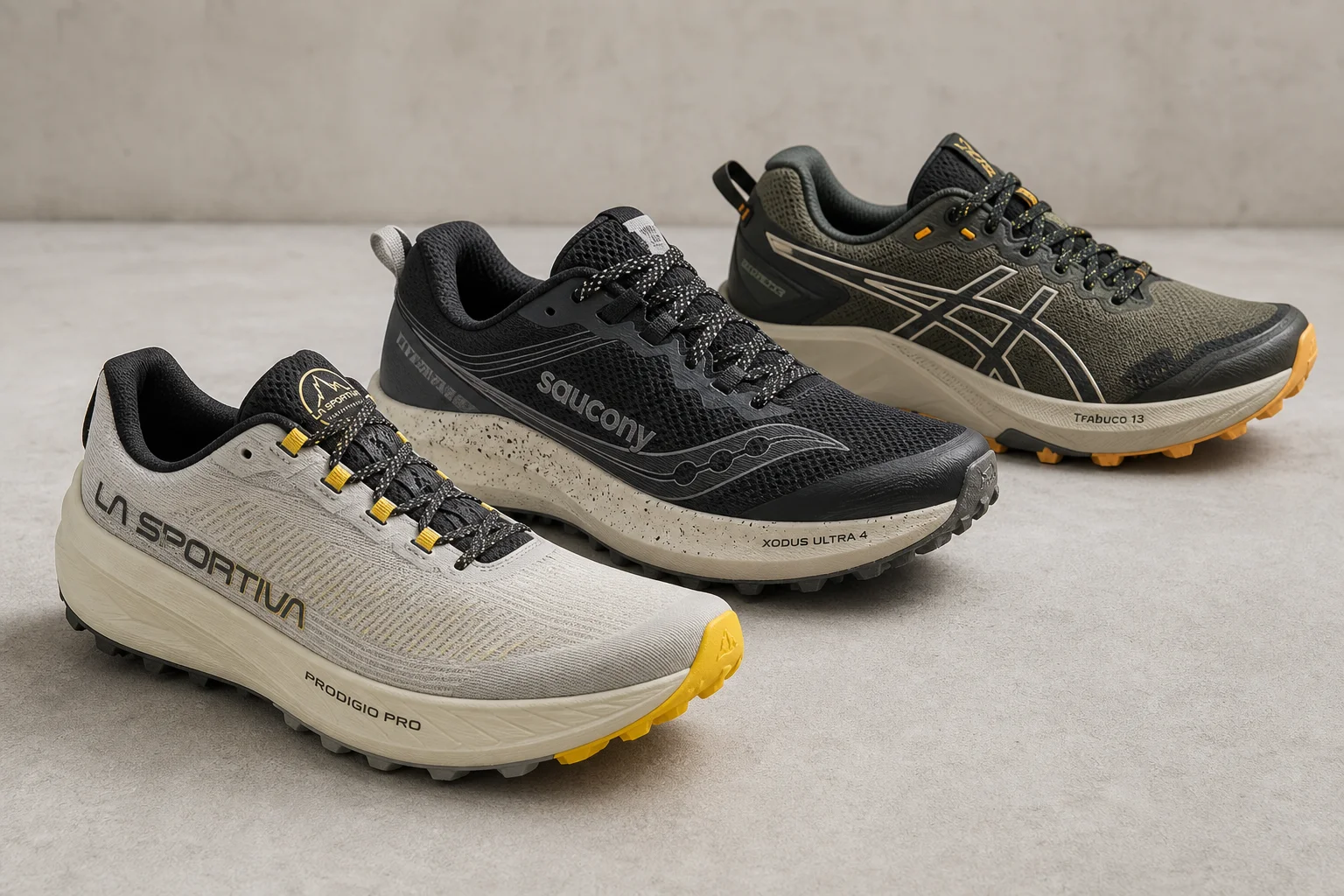
Best All-Mountain Trail Running Shoes: Three Versatile Options for Any Trail
A focused roundup of three all-mountain trail running shoes that handle technical terrain, long distances, and variable conditions with real strengths and practical trade-offs.