Ski Gear
Best Men's All-Mountain Skis 88 to 92 mm: 10 Standout Models Compared
A practical guide to ten men's all-mountain skis in the 88 to 92 mm waist range, ordered from the most playful to the most carving-focused, with the trade-offs worth knowing before you buy.
Introduction
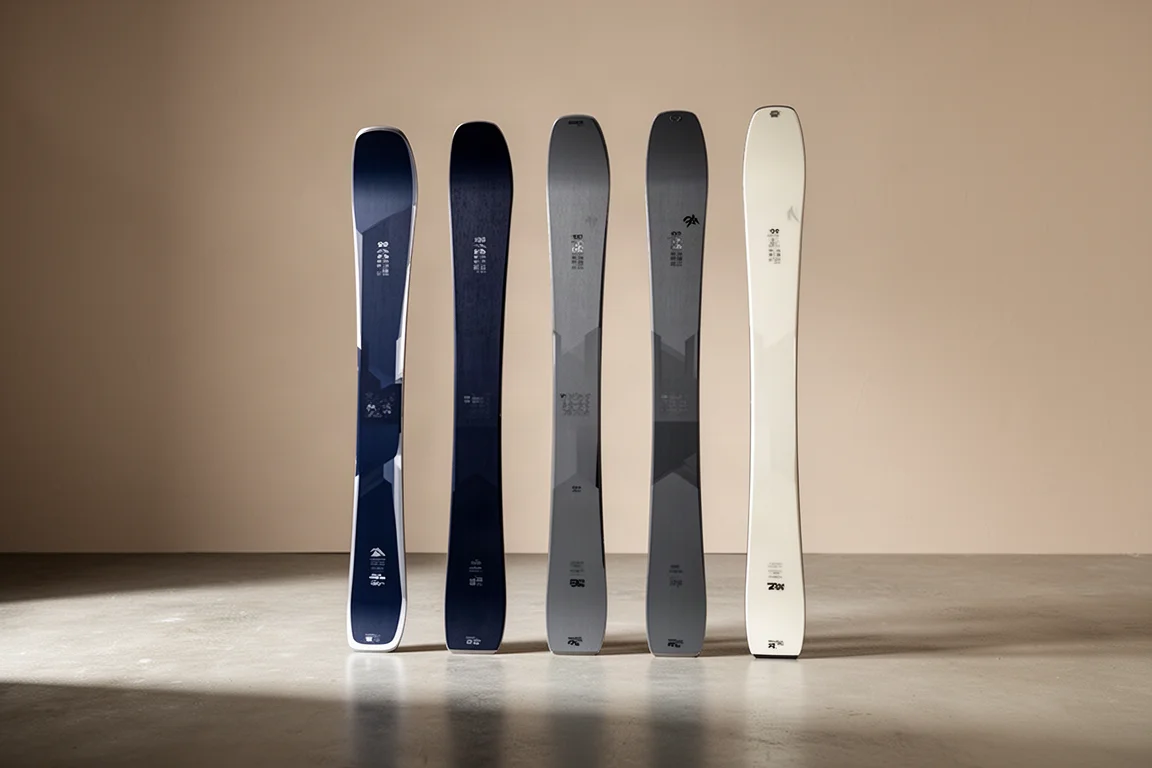
The 88 to 92 mm waist band is the busiest part of the men’s all-mountain ski market. Every ski in it is nominally built for the same job, but the differences in wood core, metal content, rocker and taper mean two skis that look similar on a shop wall can feel like completely different tools on snow.
This guide covers ten models in that width range, ordered from the most maneuverable and playful at one end to the most carving-focused at the other. That progression is one of the more useful ways to shop the category. Moving toward the carving end buys edge grip, dampness and high-speed stability, and it also asks more of the skier in return.
How the 88 to 92 mm Category Splits
Start with shape, because shape tells you more about how a ski behaves than any single material claim. At the playful end, skis carry long tip rocker and a lot of tail rocker, generous early taper, and often a twin tip. They drift, smear and pivot easily, and they are comfortable in bumps, trees and the park.
At the carving end, skis are flatter, with a longer effective edge, less splay, squared or lightly rockered tails, and usually more metal in the build. They grip firm snow, hold a line at speed, and reward a skier who is willing to stay engaged.
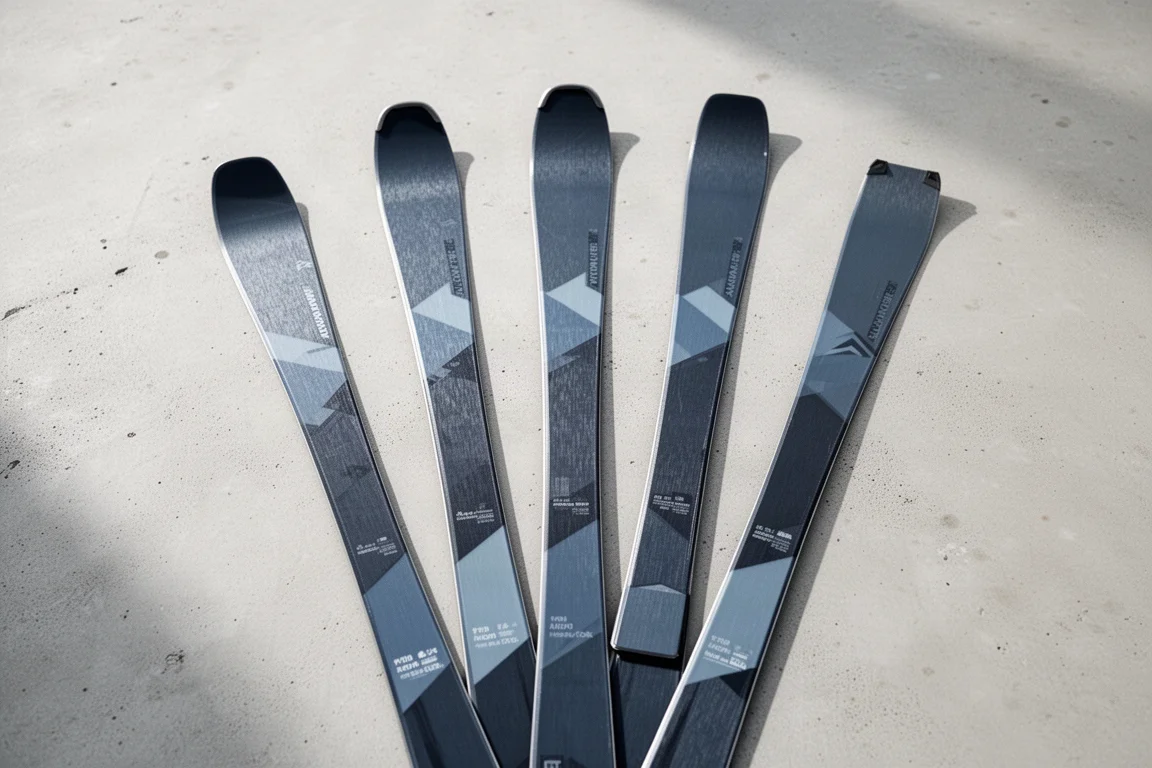
Construction follows the same gradient. The lightest ski here comes in at a claimed 1,580 g in a 180 cm length, while the heaviest is a claimed 2,190 g in a 182 cm length. Mount points move too: park-oriented models are designed to be mounted close to center, while directional skis sit further back. Turn radius is another quick filter, ranging from a 15 m sidecut at the carving end to longer, more classic arcs on the versatile models in the middle.
Elan Playmaker 91: Playful and Lightweight
The Playmaker 91 returns with a tweaked top sheet and no change to the way it skis. It uses a tube light wood core with two short Elan carbon rods positioned right underfoot, which is a much more focused application of carbon than the longer rods used elsewhere in the range.
That build makes it very light, at a claimed 1,580 g in the 180 cm length, and quite soft. Elan calls its rocker profile surf rocker, and the name is accurate: there is a lot of tip rocker and probably the most tail rocker in this group. Early taper is moderate rather than abrupt, which keeps the ski from feeling too loose and preserves a useful amount of feedback from underfoot.
The result is a ski that is agile in bumps, easy in trees, and genuinely creative in the park. It suits a technical, jib-oriented park skier more than someone sending big airs, because landing stability does run out. It is also one of the more technology-heavy options here, and that shows in the price.
Armada ARV 88: Park Energy With All-Mountain Manners
The ARV 88 is the park-focused model in Armada’s ARV line, and it is the ski that pushed the rest of the series toward a poplar wood core. Underfoot there is an ash section for stability, and the w3dgewall construction wraps the sidewall into the core, which adds durability and a more cohesive feel.
At a claimed 1,677 g it stays light, and the flex is even from tip to tail. The defining trait is the amount of camber underfoot. That camber stores energy and releases it on takeoffs, which is exactly what you want off a lip and easy to take for granted until you ski something without it.
The rocker is more traditional than freeride-inspired, with a modern early taper in the tip and tail. Tip and tail dimensions of 120 mm and 114 mm on an 88 mm waist keep it usable outside the park. It can handle soft snow and steeper terrain, though that is not where it shines.
Armada Bent 90: The All-Mountain Twin Tip
The Bent 90 is the clearest example of an all-mountain twin tip in this group. The construction is simple: a poplar wood core with Horizon Tech in the tip and tail. The 90 is unchanged for this season.
Its most unusual feature is the mount range. The recommended window runs from plus 6, which is close to true center, back to minus 4, which turns it into a much more directional ski. Most skiers will be happy on the factory line.
At a claimed 1,630 g in the 175 cm length it is light, and the flex is more supportive than you might expect, especially in the tail. Tip and tail dimensions of 119 mm and 109 mm show how directional the shape is. There is plenty of tip rocker and very little tail rocker, which helps it finish a turn. It carves well for lighter skiers, though heavier skiers can overpower its torsional stiffness on firm snow. In bumps and trees it is exceptionally easy, and it can be skied in the park.
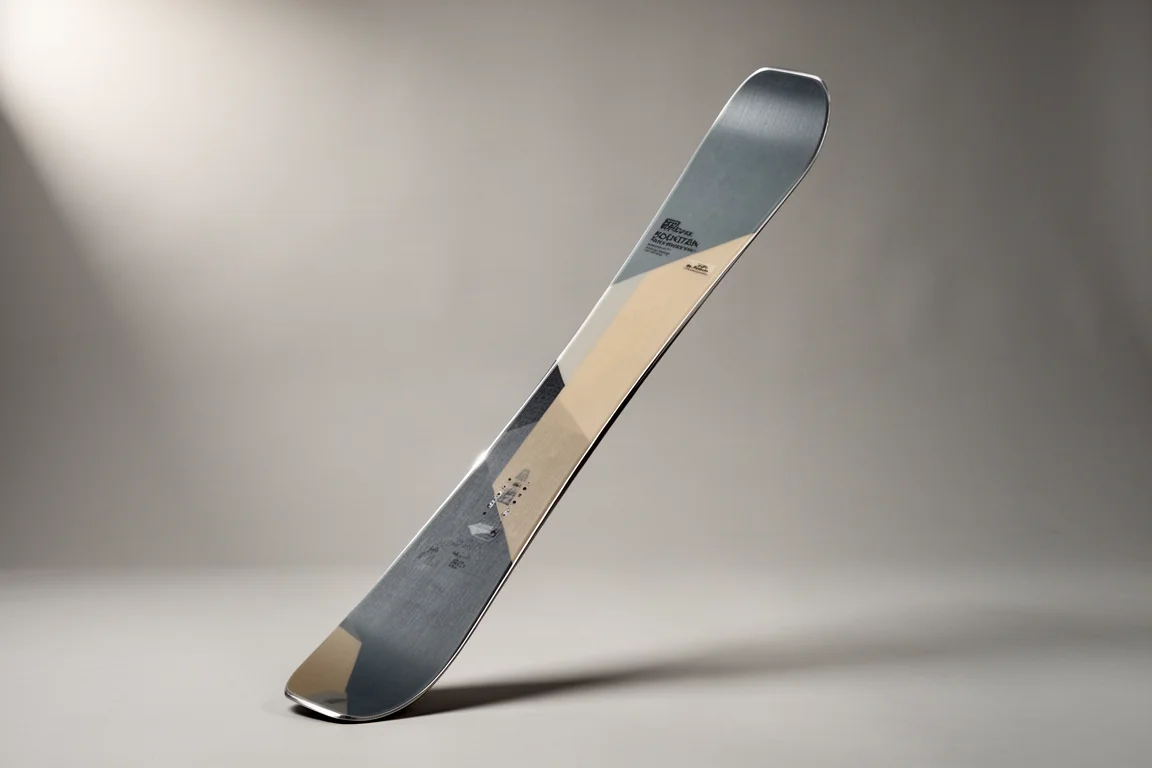
K2 Mindbender 90c: The Most Useful Ski in the Category
The Mindbender 90c has built a reputation as one of the most broadly useful skis on the market, and the formula is straightforward. An aspen wood core is paired with K2’s Carbon Spectral Braid, which uses a tighter cross-hatch of carbon in the tip to raise torsional stiffness, then runs more directionally through the tail so the ski is stiffer longitudinally but freer to twist.
At a claimed 1,820 g it is lighter and more gentle in the shovel than the metal version of the same ski. The rocker profile is long, the taper is moderate, and the tail is directional. A 15.3 m turn radius at 178 cm keeps turns easy to start and easy to finish.
That combination makes it a strong choice for intermediate and advanced skiers who want one ski for groomers, bumps and trees without working hard for it. It also carves better than its reputation suggests, and the performance ceiling is high enough that most skiers will not outgrow it.
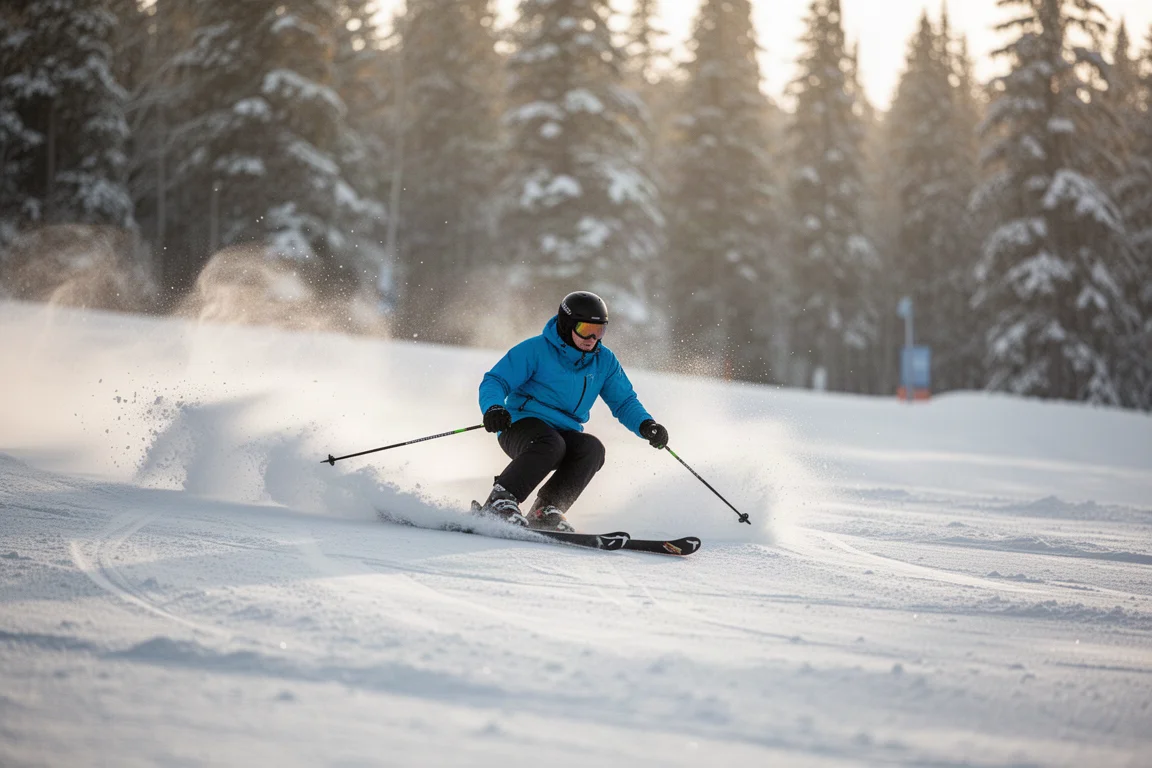
The carbon construction is what makes that balance possible. By tuning stiffness rather than simply adding metal, K2 gets a ski that stays calm on firm snow while remaining light enough to move around in tighter terrain.
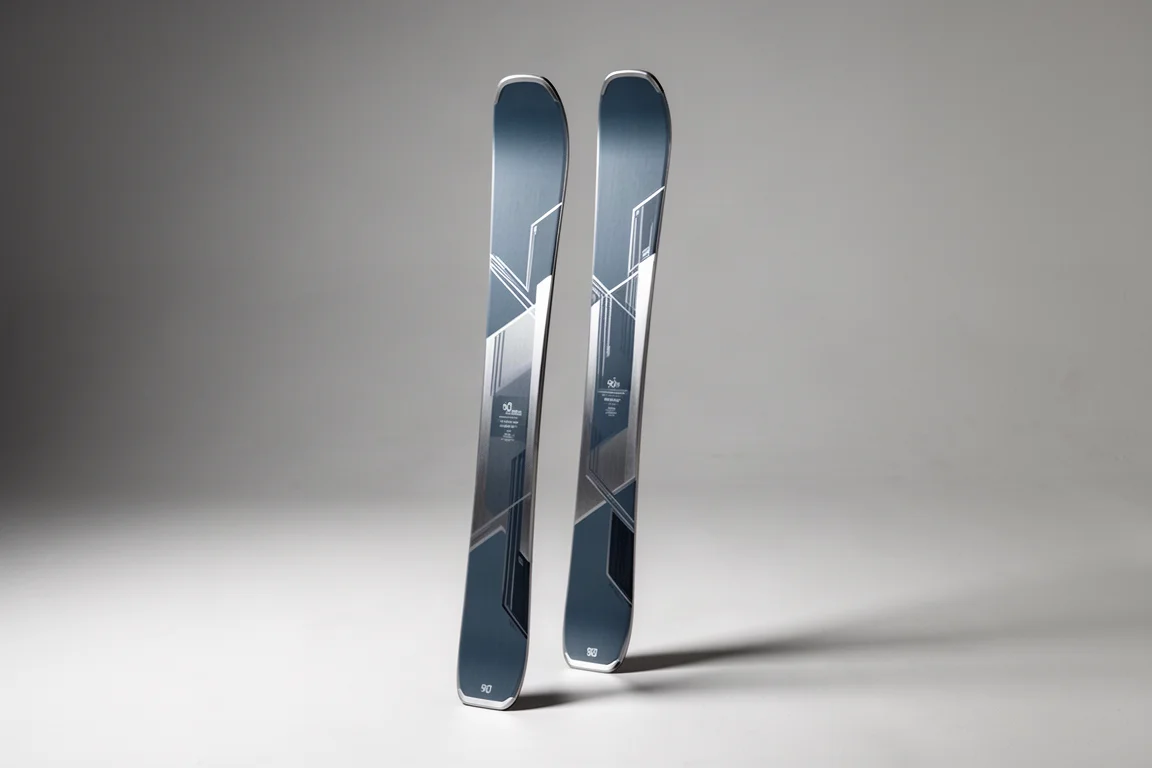
Salomon QST 92: Agile Yet Strong Underfoot
The QST 92 is unusual because it sits well toward the carving end of this range while remaining about as agile as anything at the playful end. A poplar wood core is combined with Salomon’s CFX material, a blend of carbon and flax, and a double sidewall underfoot.
That double sidewall is the interesting part. A design with two personalities can easily feel conflicted, stiff in one place and loose in another, but here the two halves work together. At a claimed 1,850 g in the 167 cm length, the ski feels robust underfoot and stiffer than its shape suggests.
The shape itself is the most aggressive in this group. There is a lot of rocker and the most abrupt early taper on the list, in the tip and in the tail, with a 15 m turn radius. At low edge angles the effective edge feels short, which is what makes it so quick. Push it harder and there is real support underneath. It is a genuinely versatile ski rather than a specialist, and it is excellent in bumps and trees.
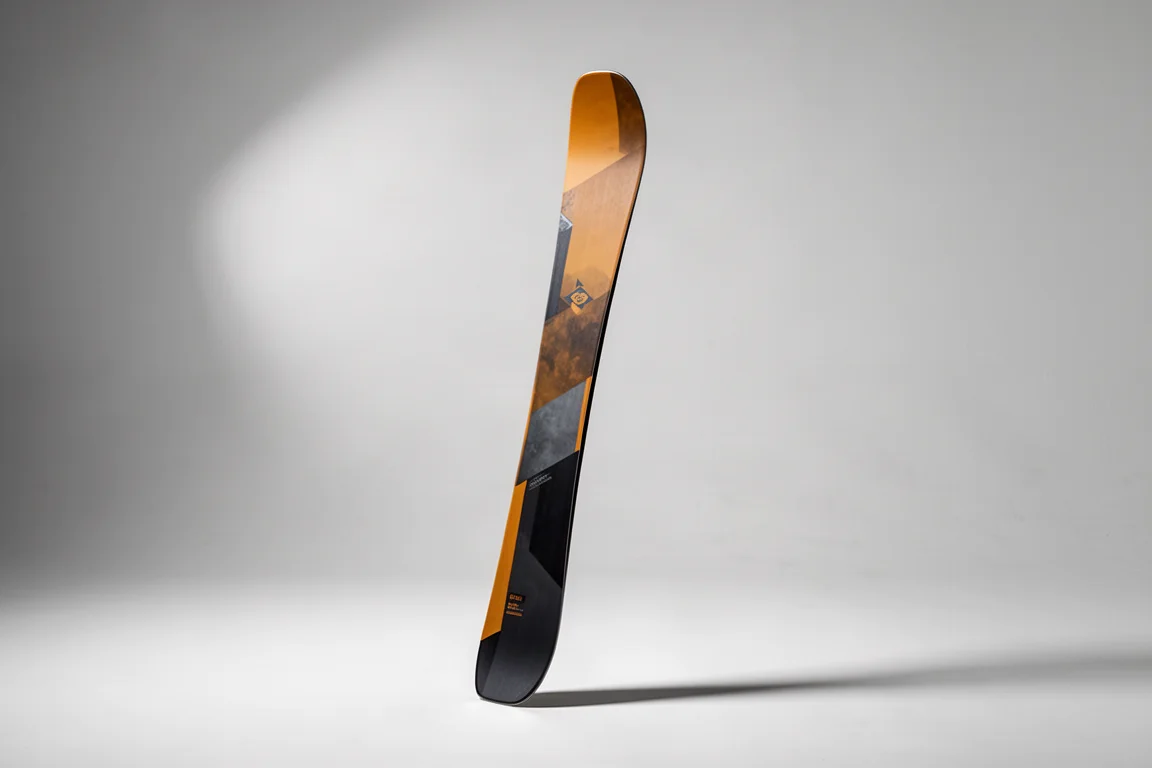
Blizzard Anomaly 88: Versatile Power
The Anomaly 88 is new, and it is best understood as a more versatile take on the ski it follows. The wood core still uses TrueBlend construction, with denser beech through the center and poplar stringers toward the edges, and there are still two sheets of metal, but the metal is split: a full sheet along the base and a top layer arranged as a central strip with the remainder running along the sides.
At a claimed 2,190 g in the 182 cm length it is heavy and stiff, and it feels that way. The change is in the rocker profile. There is more tail rocker and more tip rocker than before, which lets the ski rise and stay on top of softer snow while still staying engaged in a carve. On firm snow it behaves like the powerful carver it is; in soft snow it feels much more like a freeride ski.
The 18 m turn radius is accessible across the whole sidecut. It is easier in bumps than its predecessor, and it remains a lot of ski, which is the point.
Volkl Mantra 88: Precision and Power
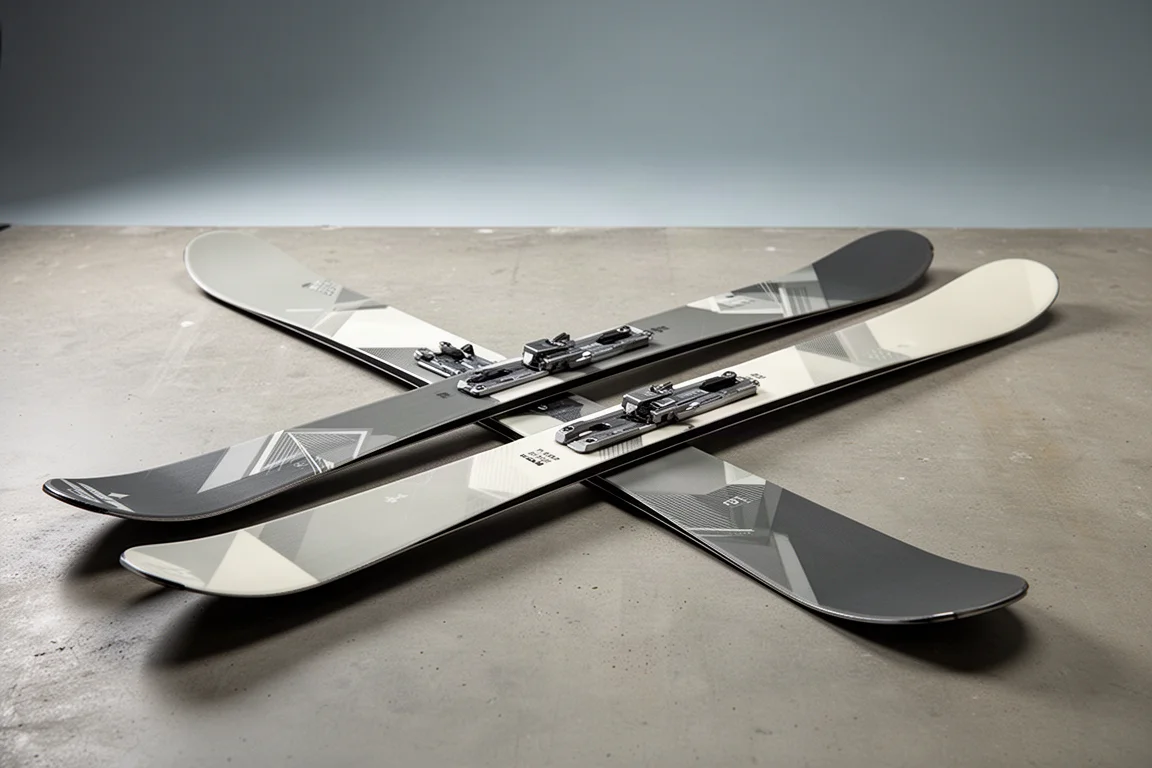
The Mantra 88 is a new name for the same ski that has been sold as the Kendo 88 for the past two seasons. The build is a multi-layer wood core with a tailored titanal frame, a tailored carbon tip, and an additional layer of metal underfoot that is deliberately split rather than connected.
It weighs a claimed 1,930 g, roughly 250 g less than the Anomaly 88, and it is stiff. Light and stiff together make it very responsive: it reacts immediately to input and rewards deliberate skiing. The shaping is deliberately flat, with a long tip rocker but very little splay, moderate camber height, and a similar approach in the tail.
The three-radius sidecut is what makes it adaptable, with a 29 m radius in the tip, 16 m underfoot and 25 m in the tail. You can change the radius mid-turn by shifting pressure along the ski, and the flat tail releases better than most skis with this much power. It is an excellent choice for a technical skier who skis with intent, and it is not the easiest ski in the group off trail.
That flatness is worth repeating, because it is what separates the Mantra 88 from the more demanding carvers further down this list. There is enough camber to grip and enough rocker to manage softer snow, but the profile never gets in the way of a clean arc.
Stöckli Stormrider 88: Refinement at a Premium
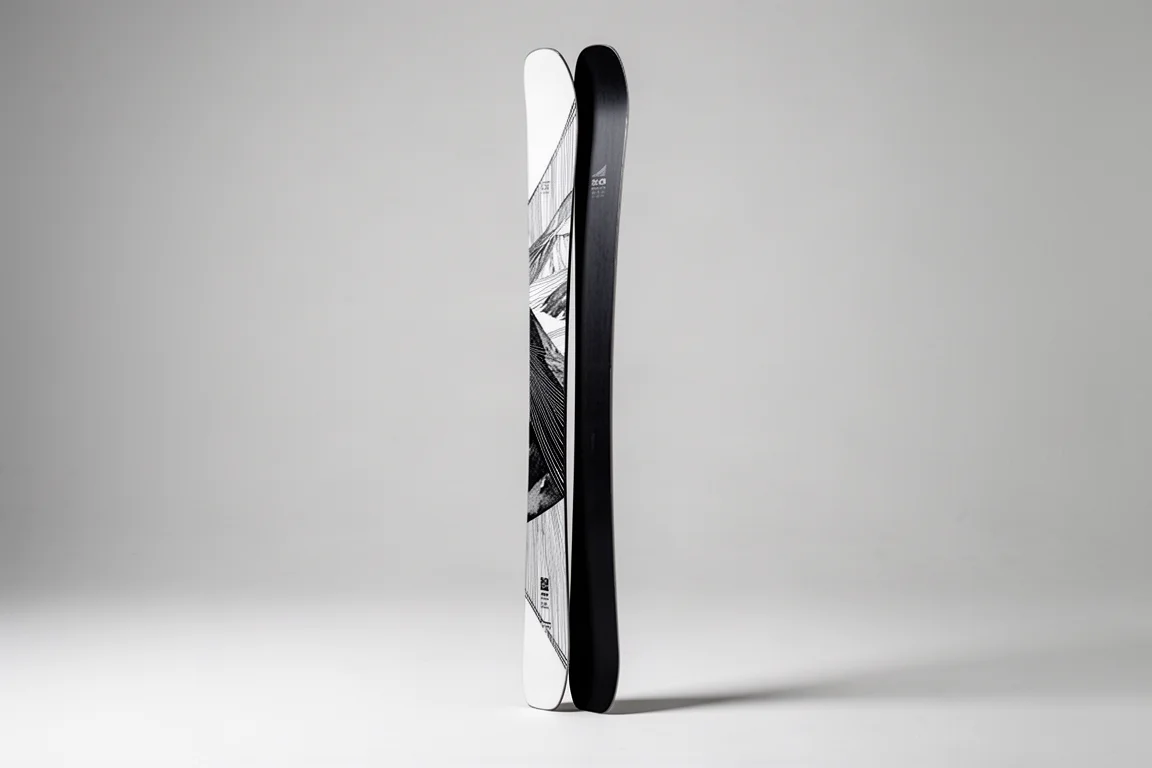
The Stormrider 88 is a premium ski with a lightweight wood core and a Titanal application that places one sheet of metal as the top sheet. It looks like the most metal-heavy ski on a wall, but it weighs a claimed 1,735 g in the 175 cm length, which is very light for the amount of metal involved, and it is not extremely stiff.
The shape does most of the work. There is almost no tip rocker and effectively no tail rocker: this is essentially a cambered ski with a squared, flat tail and an 18.4 m turn radius. That makes it carve beautifully, and it does so with a level of refinement that is hard to describe without skiing it.
It cruises well on moderately pitched rolling groomers and can still handle steep groomed terrain, though it is not as speed-driven as the more powerful skis here. Its light weight and moderate flex give it more versatility than the flat tail suggests, but that stiff tail is a real consideration, and this is not an intermediate ski. Price is the other consideration, at roughly $1,300 at sticker, which is around $400 to $500 above most skis in this category.
Nordica Enforcer 89: A Demanding On-Trail Ski
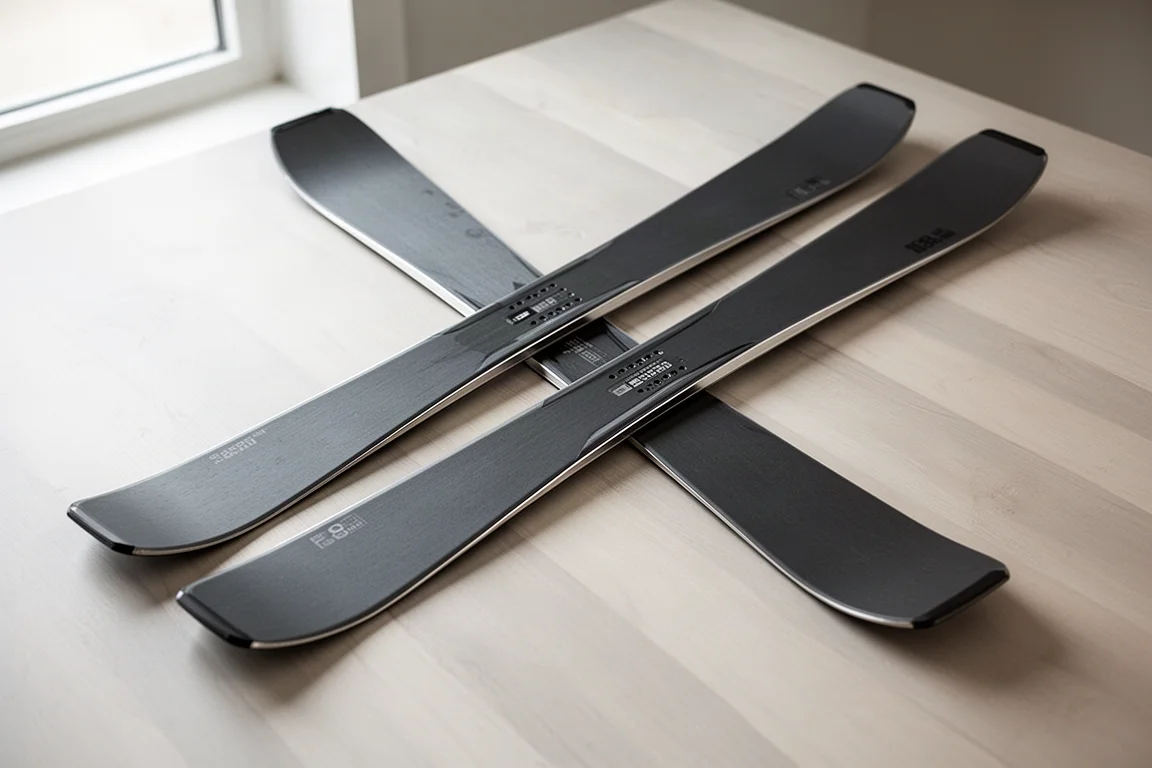
The Enforcer 89 is new, with a thicker poplar and beech wood core than the model it follows and two sheets of metal that have been narrowed and moved in along the sides. Underfoot there is a Pulse Core damping laminate, the same approach Nordica uses elsewhere in its range.
At a claimed 2,140 g in the 185 cm length it is very stiff, with a particularly stout midsection. The rocker profile is less pronounced than on the wider Enforcer models, and the tip is spoony without being dramatically so.
On groomed terrain it is a very capable carver and extremely rewarding to turn, with strong edge hold on firm snow. Off trail it is work. The stiff tail and the weight mean you have to stay active and deliberate in bumps, trees and chopped snow, and it is happiest on smoother surfaces. It is a lot of ski, in the best and most demanding sense.
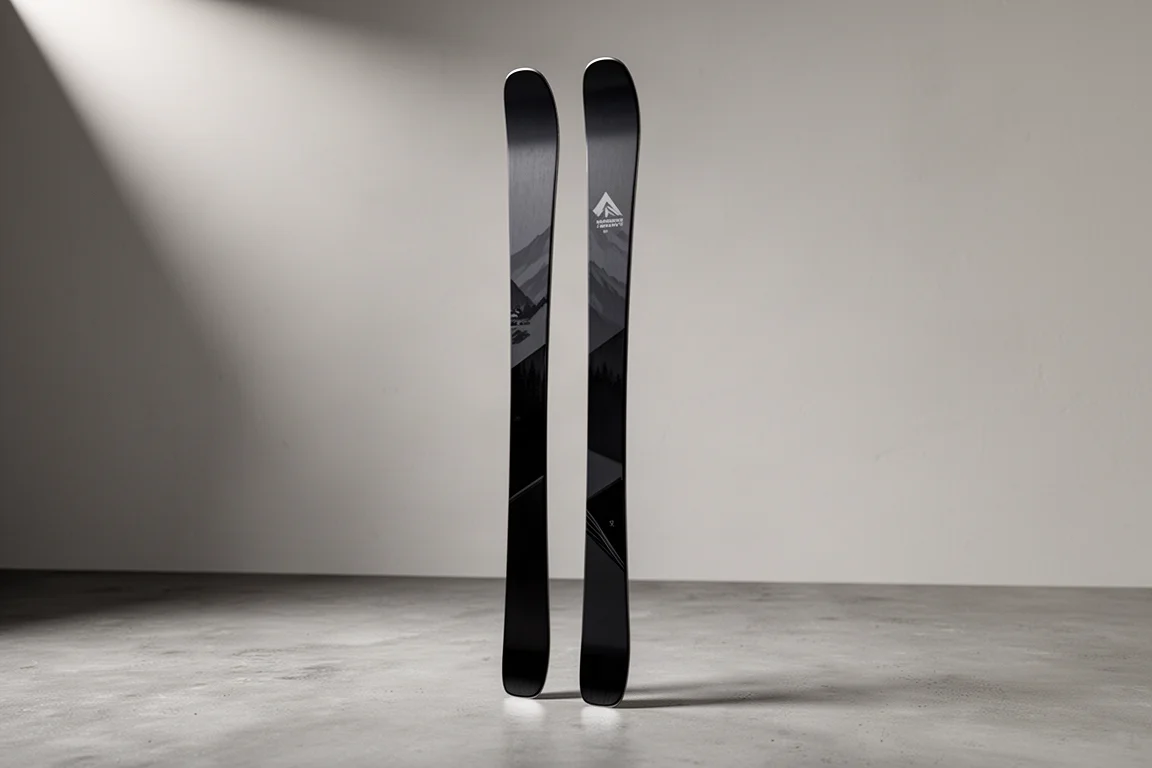
Rossignol Arcade 88: A Dedicated Carver
The Arcade 88 is new and takes the place of an outgoing 88 mm ski in the catalog, but the two are very different. A full poplar wood core is paired with two sheets of metal and Line Control Technology through the middle, and the core is thick, which is where most of the stiffness comes from.
That stiffness defines the ski. It makes a 15 m turn on any surface, and it is happiest when you let it do exactly that. The tail has an extended sidecut that widens toward the end, and combined with the flex pattern it rockets you out of the finish of a turn and into the next one. Mid-radius carves on moderately pitched groomers are genuinely fun, and it makes a mellow blue run feel exciting.
Versatility is the trade-off. Shorter skidded turns take effort, and the ski is far more focused on groomed carving than most 88 mm all-mountain skis. It also does not feel as heavy on your feet as its stiffness suggests. The 178 cm length is plenty, and the 84 mm version is softer and slightly more versatile.
View more details for Rossignol Arcade 88
Buying Advice
The single most useful question to ask is where you actually spend your days. If your skiing is mostly bumps, trees, park laps and soft snow, the playful end of this list will make you a better and happier skier. The Playmaker 91, the ARV 88 and the Bent 90 all prioritize maneuverability over edge grip, and they ask very little of you.
If you split your time between groomers and off-piste, the middle of the list is where the value sits. The Mindbender 90c, the QST 92 and the Anomaly 88 all blend on-trail performance with enough range to stay fun when conditions get cut up, and they are the easiest skis here to recommend without knowing a skier’s exact style.
At the carving end, be honest about your technique and your willingness to work. The Mantra 88, the Stormrider 88, the Enforcer 89 and the Arcade 88 are all rewarding on firm snow, and all of them demand more input than the skis above them on this list. If you are a strong, deliberate skier, that trade is worth it. If you are still building your skills, the mid-range options will take you further.
Weight is worth checking as well. The skis here span roughly 600 g from lightest to heaviest, and that difference shows up in how much effort it takes to move the ski around in tight terrain.
Conclusion
Ten skis, one width band, and a wide spread of personalities. The right pick depends less on the label than on matching shape and construction to the snow you actually ski and the way you like to ski it.
Choose from the playful end if you want agility, creativity and easy maneuverability. Choose from the middle if you want one ski to do most things well. Choose from the carving end if edge grip, precision and the feeling of a clean arc matter more to you than versatility. Any of these ten will do its job well, as long as the job is the one you actually have.
Further reading
Related Reviews

Ski Gear
2023 Blizzard Hustle vs Rustler: Six Freeride Skis Compared
Blizzard's 2023 Hustle collection rebuilds the Rustler shape with a lighter core and no metal. Here is how all six skis differ, and which one suits your riding.

Ski Gear
2023 Skis of the Year: Atomic Maverick 88 TI, Salomon QST 106, and Look SPX 12 Pro
Three standout ski picks for all-mountain carving, powder days, and reliable binding performance, with practical buying notes for 2023 models.

Ski Gear
2025 Nordica Enforcer 104 Review: A Directional Charger Replaces the 104 Free
The 2025 Nordica Enforcer 104 drops the Free name and the twin-tip personality, gaining weight, stiffness and composure in rough snow. Here is what changed and who it suits.