Grow Lights
Maxsisun MG3000 Review: Bar-Style LED Grow Light Tested Across Three Hanging Heights
Over 800 PPFD spot readings reveal how the Maxsisun MG3000 performs at 12, 18, and 24 inches, plus how accurate the dimmer really is.
Introduction
Bar-style LED grow lights promise something quantum board fixtures often struggle with: better light distribution and a reduced hot spot directly under the center of the fixture. The Maxsisun MG3000 is one such bar light, and this review puts that claim to the test with over 800 PPFD spot readings taken at multiple hanging heights, along with a look at how well the dimmer knob holds up under scrutiny.
The testing here was done with an Apogee SQ-520 sensor, measuring intensity and uniformity across a three by three area at 12, 18, and 24 inch hanging heights. If you are deciding whether the MG3000 deserves a spot in your tent, the numbers below should make that decision easier.
Who the MG3000 Is For
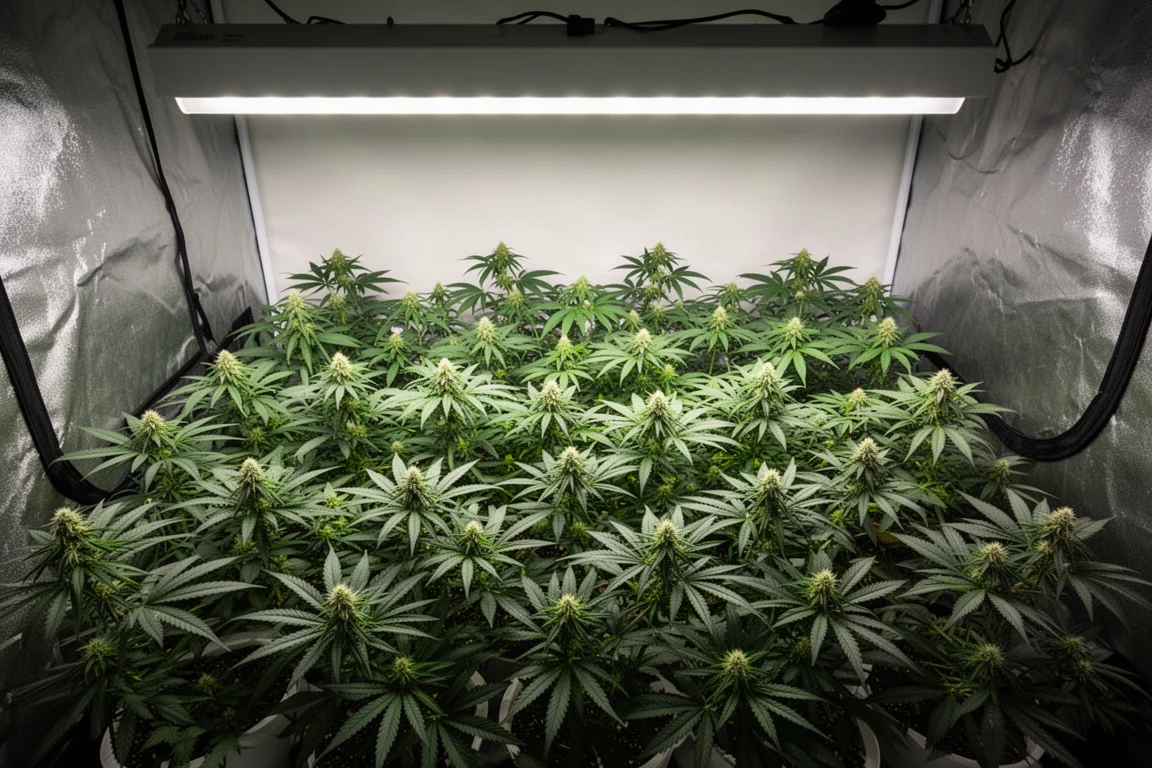
The MG3000 is aimed at growers who want a fixture that can carry a full flower cycle in a three by three tent while also being flexible enough to dim down for veg, seedlings, or supplementary use. It is a simple design: basic hanging hardware, a dimmer knob, and no daisy chaining or power switches. That simplicity keeps the price approachable, but it also means you should know exactly what you are getting before you buy.
Specs and Light Output
The MG3000 uses Samsung LM281B+ diodes rather than the higher-tier 301B or 301H versions. Maxsisun publishes a PPF of 687 micromoles and an efficacy of nearly 2.4 micromoles per joule. These figures come from the manufacturer rather than a third-party lab, though the manufacturer’s reports have proven reliable in past testing. During testing the fixture pulled 289 watts at the wall, which matches the manufacturer’s stated power draw.
In a three by three tent, a PPF of 687 works out to 76.4 PPF per square foot, which is well suited to high-light flowering on a 12 hour light cycle. Spread over a four by four area, that drops to 43 PPF per square foot, a figure more appropriate for veg growth. At a 12 hour cycle, the fixture delivers a DLI of 31, which works well at ambient CO2 levels.
H2 placeholder removed
Hanging Height: What the Numbers Show
Hanging height turned out to be the most interesting part of this test. The manufacturer’s online PPFD maps are all published at 18 inches, the manual shows a 24 inch map, and 12 inches needed checking too.
At 18 inches, independent readings averaged 97% of the manufacturer’s published map, an expected difference since the test sensor is not designed to pick up far-red photons. Interestingly, the measured readings showed less variance from center to corner than the published map suggested. Realigning the grid to capture true edge-to-edge readings across the full three by three area dropped the average slightly, since corner readings sit further from the center. In that format, the weakest corner spot came in at 68% of the average, while the center reading was 35% brighter.
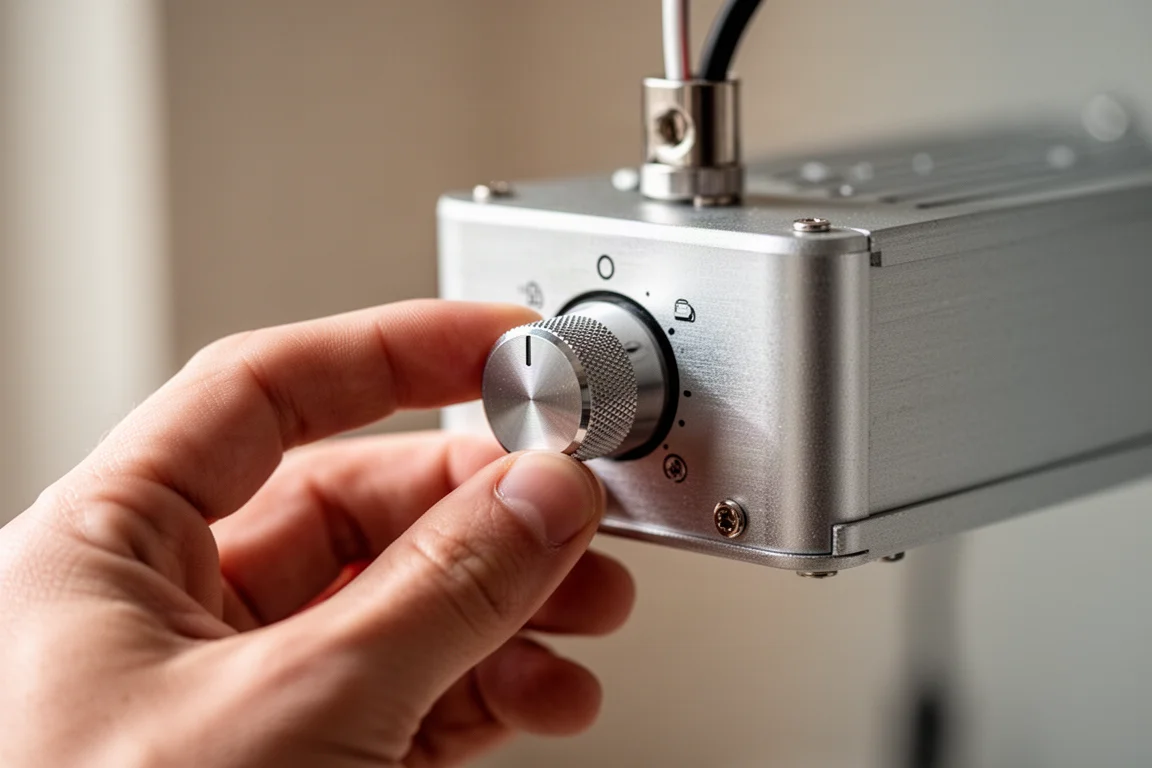
At 12 inches, the average PPFD rose by only 4% compared to 18 inches, but uniformity suffered: the lowest corner reading dropped to 51% of the average while the center showed an 80% boost. The small intensity gain surprised expectations of a much bigger jump. At 24 inches, the average PPFD fell 5% below the 18 inch figure, but uniformity improved dramatically, with readings ranging from 81% to 118% of the average. Depending on your cultivation method, such as a sea of green, that extra height could be very appealing. For autos grown densely under even coverage, running the light at 24 inches on an 18/6 cycle yields a DLI of 44.
Dimming Behavior
The dimmer knob proved surprisingly honest. Test readings at 12 inches, targeting three-quarters, one-half, and one-third intensity, showed a linear reduction: any percentage of power reduction produced a comparable reduction in light, and that relationship held true from the center of the footprint out to the corners.
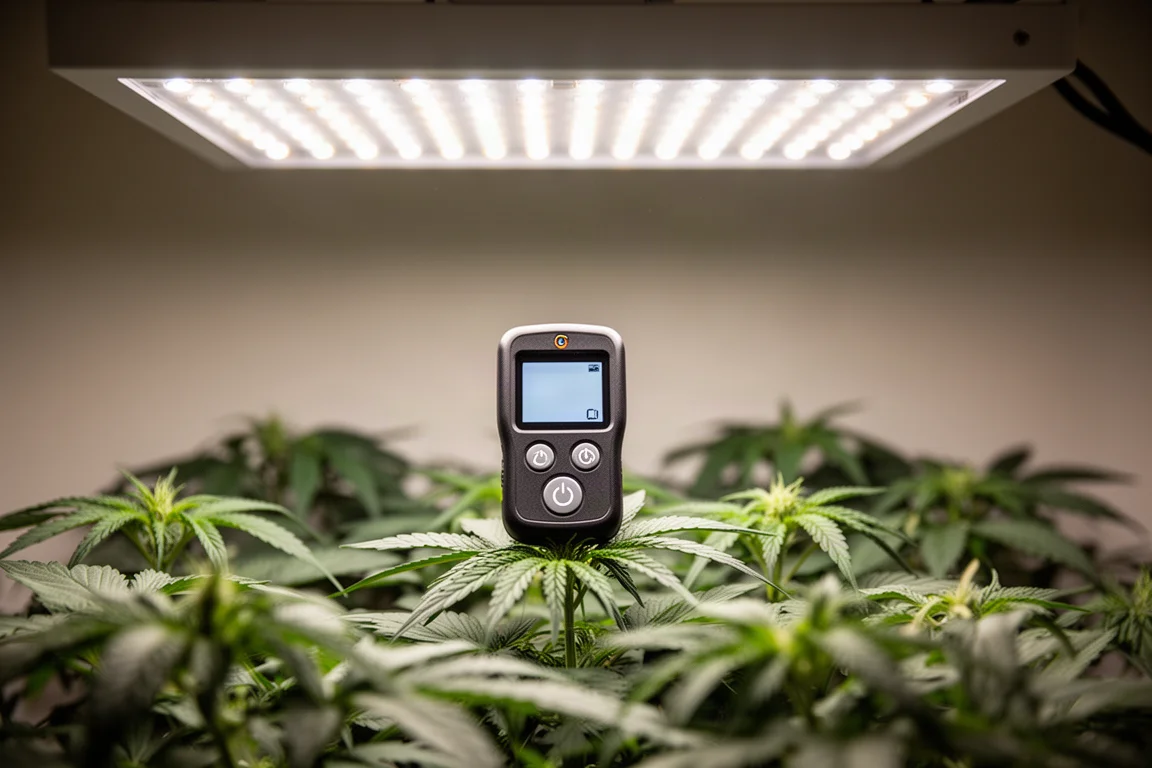
If you need precision, though, the knob alone is not the whole answer. Use a Kill-a-watt meter to verify power at the wall, or a light meter to confirm your target brightness at the canopy.
How It Compares to Older Lighting
As a replacement candidate, the MG3000 would easily take over from a 400W HPS and could plausibly challenge an older single-ended 600W HPS. It will not match a quality double-ended 600W system, so set expectations accordingly. Against fluorescent options, it matches the output of twelve four-foot T5 bulbs while saving roughly 350 watts. Even dimmed down to 100 watts to replace a four-bulb fluorescent setup, the math points to a payback in about two years.
The bar-style design itself earns credit here: spreading the diodes over a larger footprint translates into more even coverage than quantum board fixtures typically deliver.
Buying Advice
The practical takeaway on hanging height: 18 inches is the sensible default and a good starting point when in doubt. If you want to squeeze every bit of production from a few centered plants, 12 inches works, accepting the uniformity trade-off. For the most even coverage across the full nine square feet, 18 inches is the minimum and 24 inches is better, at the cost of a slight drop in intensity.
Conclusion
The Maxsisun MG3000 lands as a good balance between performance and value. It delivers flowering-level intensity in a three by three tent, dims linearly and predictably, and its bar-style footprint distributes light more evenly than typical quantum boards. The trade-offs are simple: modest diode tier, no daisy chaining, and a need to manage hanging height carefully to get the uniformity you want. For growers who fit that profile, it is an easy fixture to recommend.
Product link
View more details for Maxsisun MG3000
This product is mentioned in the review. Check the specifications, options, and compatibility before buying.
View more details for Maxsisun MG3000Further reading
Related Reviews
Grow Lights
AC Infinity Ion Frame A7 Review: The Grow Light That Beats Its Own Spec Sheet
A high-output grow light for 2x4 tents that hits target PPFD at low dimmer levels, with strong efficiency and thoughtful mounting details.
Grow Lights
AC Infinity ION Frame Evo 3 Review: A New Bar-Style LED Grow Light for 2x4 Spaces
Samsung LM301H EVO diodes, app scheduling, and a magnetic frame make the ION Frame Evo 3 a serious option for 2x4 grow spaces.
Grow Lights
AC Infinity ION Grid T24 Review: A Full Spectrum LED Grow Light for 2x4 Spaces
A 260W full spectrum LED grow light with Samsung LM301H diodes, a programmable digital controller, and a complete hanging kit out of the box.