Backpacks
Maxpedition Typhoon Review: A Compact Modular Daypack Built to Ride High
A close look at the Maxpedition Typhoon, a 13 litre modular daypack with 1,000 denier ballistic nylon, YKK zippers and a high-ride carry design.
Introduction
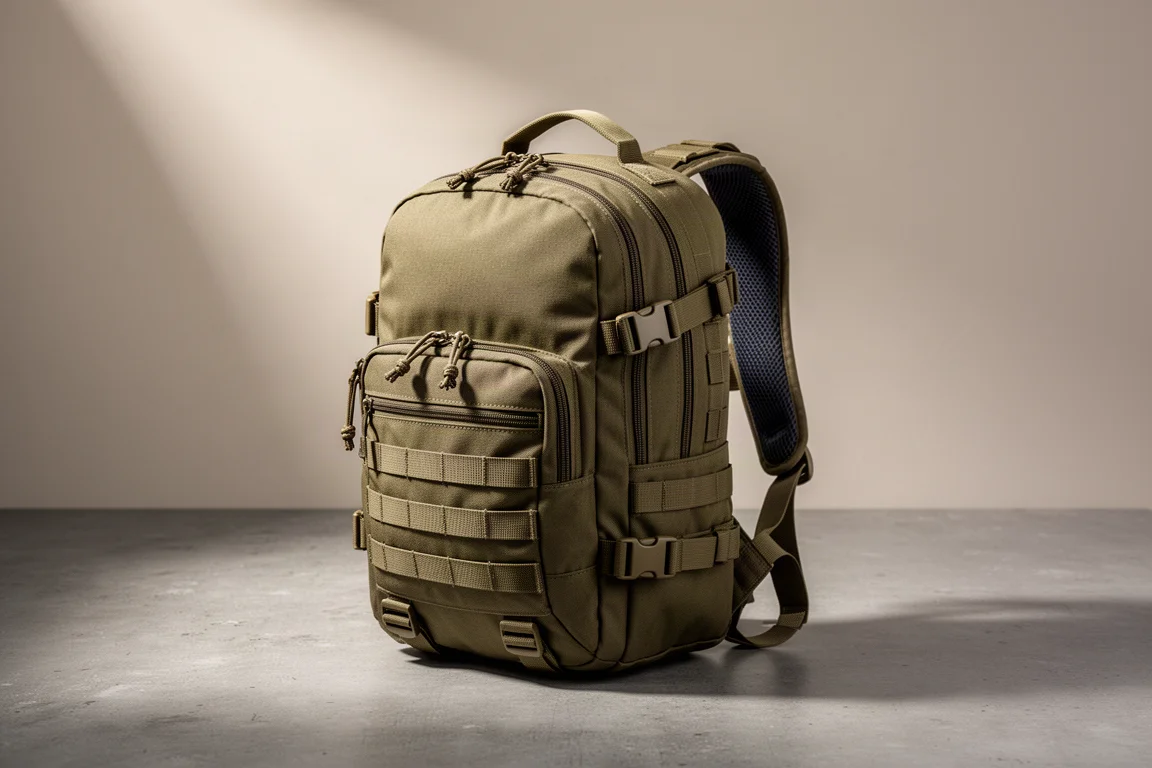
The Maxpedition Typhoon is a compact daypack that leans tactical in layout but reads as civilian gear at a glance. At 14 inches tall, 11 inches wide and 6.5 inches deep, with every pocket combined it comes to roughly 13 litres of usable capacity. The idea behind it is modularity: the pack is cut to ride high on the back, which leaves room for a separate lumbar pack below and a chest rig in front, so one setup can cover a full day hike without forcing everything into a single bag.

That high carry position is deliberate. Keeping the load up on the shoulders rather than low on the hips is meant to reduce the neck strain that small packs often cause, while opening up airflow across the back. The result is a bag that works as a standalone daypack or as the top half of a multi-part system.
Who This Product Is For
This is a pack for people who want a small, well-organized carry that does not look like military issue. The styling is tactical in structure, with webbing runs, compression straps and attachment points throughout, but the overall appearance stays subdued enough to wear into town without drawing a second look.
It also suits hikers who like to split their load. Because the Typhoon rides high, it pairs naturally with a lumbar pack for heavier items and a chest rig for essentials, giving a two or three component system that keeps weight distributed and mobility intact when stepping over obstacles or moving off trail.
Main Strengths
A pass over the exterior shows where the design effort went.
Carry Design and Modular Use
The pack is built to sit high on the back, and that geometry is the core of its appeal. A high carry position puts the load on the shoulders instead of the neck, and it leaves the lower back clear for a lumbar pack. Add a chest rig and you have a system that moves with you rather than against you.
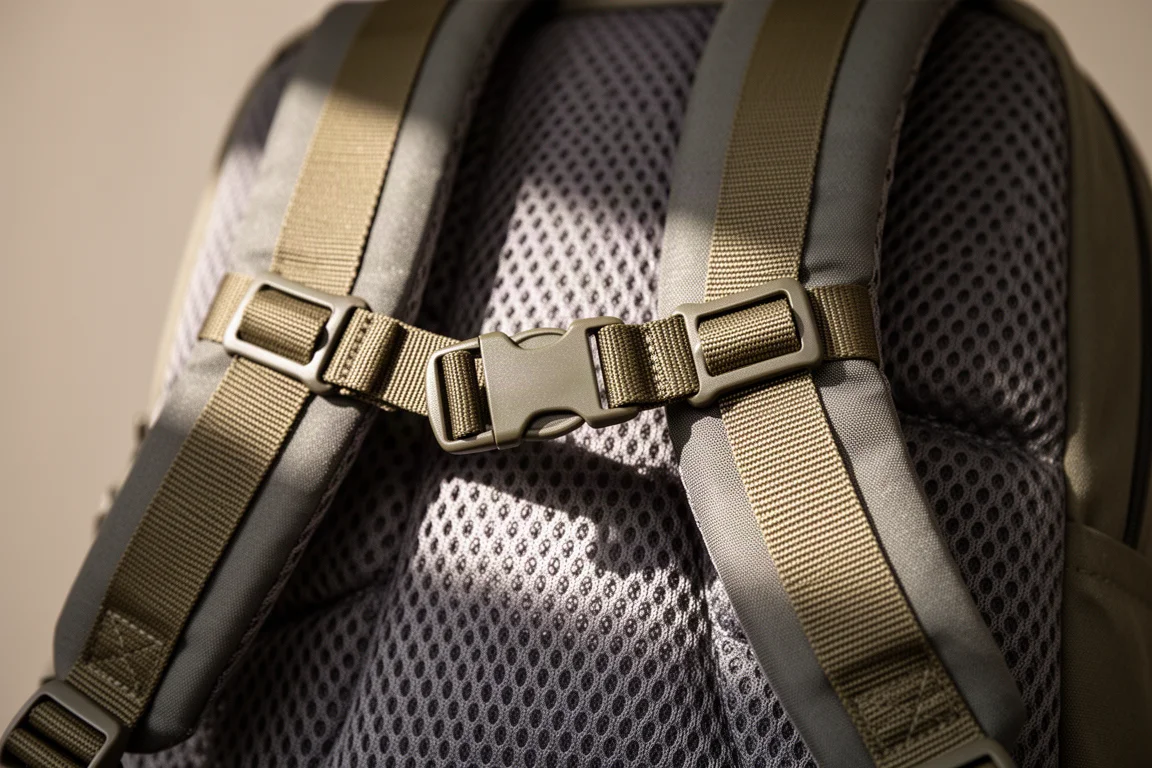
The back panel supports that approach with two harness pads, an adjustable sternum strap and attachment loops on both sides. The harness and the back of the pack are lined with 3D mesh, which is there to move moisture away and improve ventilation. Early use points to a comfortable carry, though a full verdict will come after longer trips with the pack loaded out.
Materials and Build Quality
The Typhoon is built from 1,000 denier ballistic nylon with a triple polyurethane coating for water resistance. The webbing and the stitching thread are both high-tensile nylon, and the hardware is the good stuff: YKK zippers and Duraflex buckles throughout. The fabric also carries a Teflon treatment that resists grime and dirt, which matters for a pack that will spend time on the ground.
On the scale it comes in at 2.1 pounds. Stitching is consistent across the bag, and the materials list is about as strong as it gets at this size. There is also a reinforced grab handle at the top that is large enough for bigger hands to get a full grip.
Storage and Organization
Organization is where the Typhoon earns its keep. The grab handle at the top is flanked by two loops for carabiners. A front compression strap can pin down a jacket or poncho, and a snap with a strap loop adds another attachment point on the front face.
The first front pocket is simple: a single zipper pull and a plain interior with no sleeves. The second pocket steps up with two-way zippers, two rows of webbing, a hook and loop panel, and an interior set of one mesh sleeve plus three fabric sleeves. Two compression straps sit at the bottom of the pack.
The sides are not symmetrical. On the left there is shock cord and several runs of webbing. On the right there is a flashlight pocket that will also take a tourniquet, with a small pocket underneath that is sized for a pair of gloves.
The main compartment uses two-way zippers that open far down for easy packing. Inside there is a loop for a hydration bladder, a large mesh pocket and a zippered pocket. The Typhoon is available in black and khaki foliage.
Things to Consider Before Buying
A few design choices are worth weighing before you commit.
The side layout is asymmetrical by design, but the flashlight pocket and the small glove pocket only exist on the right. Mirroring them on the left would have made the pack more balanced.
There are no strap keepers anywhere on the pack, which leaves a fair amount of loose webbing to manage. The harness straps are sewn directly to the bag, so they cannot be removed or stowed away, and there are no quick-release buckles, which means the pack has to come off the usual way rather than being dropped in a hurry.
Hydration is handled inside the main compartment, with a loop sized to hold roughly a 1.5 litre bladder. There are no external water bottle pockets, and no dedicated hose ports, so the drink tube has to exit through the zipper.
Buying Advice
At a full retail price of $180, the Typhoon sits in a bracket where buyers rightly expect everything to be finished. The materials, hardware and construction justify the cost, but the missing strap keepers and the one-sided pocket layout are the kind of small omissions that are easy to notice in daily use. Discounted pricing, which has brought the pack down to around $136, makes the value proposition considerably stronger.
If you want a compact, modular pack that carries high and pairs with a lumbar pack or chest rig, the Typhoon is a sound choice. If you need removable harness straps, external bottle pockets or a symmetrical pocket layout, check those points first and decide how much they matter to the way you carry.
Conclusion
The Maxpedition Typhoon is a well-made small pack with a smart carry concept. The 1,000 denier ballistic nylon, YKK zippers, Duraflex buckles and triple polyurethane coating point to a bag that should hold up over a long service life, and the high-ride design makes it unusually flexible as part of a multi-component system. The design is good rather than flawless: strap keepers, side symmetry and removable harness straps would all be welcome refinements. For buyers who value build quality and modularity in a compact daypack, it is a convincing package.
Product link
View more details for Maxpedition Typhoon Backpack
This product is mentioned in the review. Check the specifications, options, and compatibility before buying.
View more details for Maxpedition Typhoon BackpackFurther reading
Related Reviews

Backpacks
Best Backpacks 2026: Laptop Protection, Durability, and Comfort Compared
We tested 12 backpacks from $18 to $350 for laptop protection, durability, back padding, comfort, zipper smoothness, and water resistance.
Backpacks
Best Backpacks Under ₹500 in India: Five Practical Options Compared
Five backpacks tested side by side, from budget-friendly to premium Indian brands. Real strengths, trade-offs, and honest buying advice for daily use.
Backpacks
Decathlon Trek 100 70L Backpack Review: Serious Value for Backpacking
A 70-litre backpacking pack with a torso system you can adjust while wearing it, a rigid frame, and a 10-year warranty for $120.