Trail Running Shoes
Max Stack Trail Shoes Compared: Norda 005, Nike ACG Zegama, and Salomon S Lab Ultra Glide 2
Three high-stack trail shoes built for rugged terrain: where they match, where they differ, and how to pick the right one for your trails and budget.
Introduction
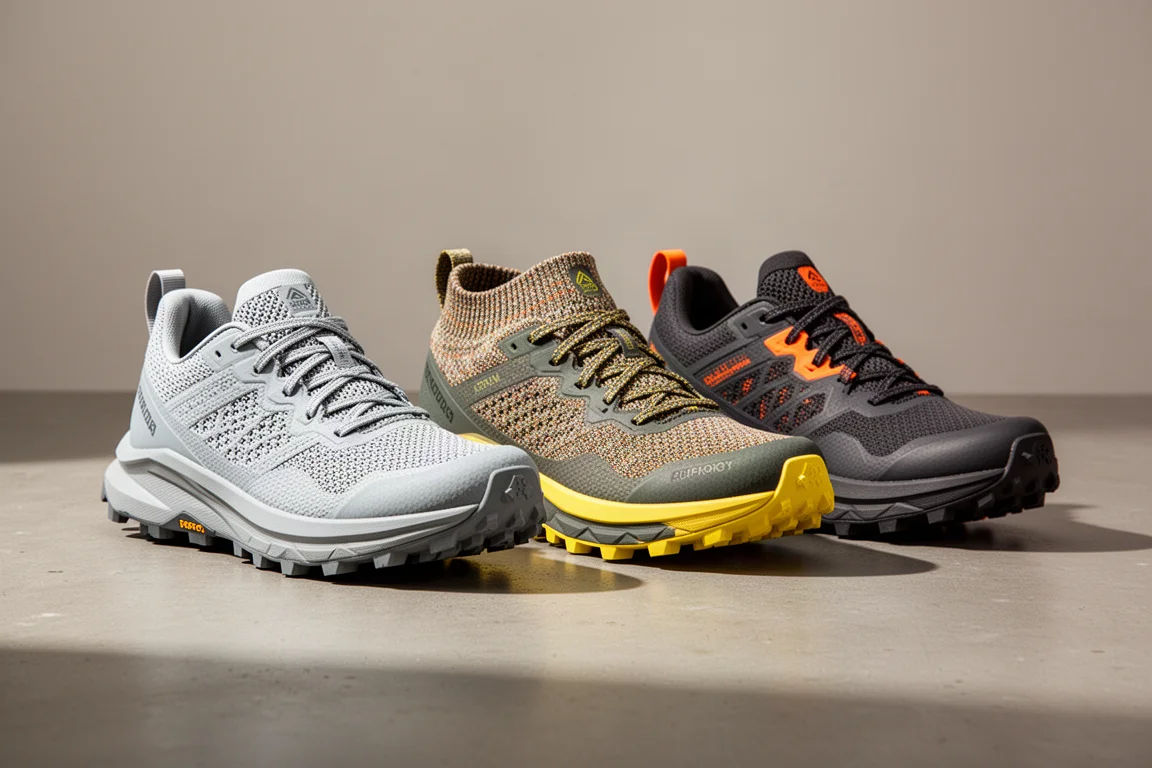
Max-stack trail shoes used to be a niche, but the current generation has made huge foam platforms genuinely usable on rugged terrain. Three shoes stand out in this category: the Norda 005, the Nike ACG Zegama, and the Salomon S Lab Ultra Glide 2.
The Norda 005 and Nike ACG Zegama share an unusual amount of common ground on paper. Both sit in the max-stack, high-cushion category, both are built for more rugged terrain, both use premium super foams, both pair Vibram outsoles with technical uppers and integrated bootie-style collars. They are also among the most criticized options in the category, mostly because of their weight. Yet both deliver some of the most enjoyable miles you can have on mixed trails. The Salomon S Lab Ultra Glide 2 enters as a lighter alternative with a similar build philosophy.
Why These Three Shoes
These three shoes were chosen because they cover the same use case from slightly different angles: a max-stack platform that can genuinely handle technical trail, not just smooth fire roads. All three stack high in the heel, all three prioritize protection over minimalism, and all three manage to feel more secure on rough ground than their spec sheets suggest.
For anyone who lives near gravel roads that lead into moderate or quite technical trails, this category makes a lot of sense. The trade-off is weight, and that is where these three diverge in approach and price.

Upper and Fit
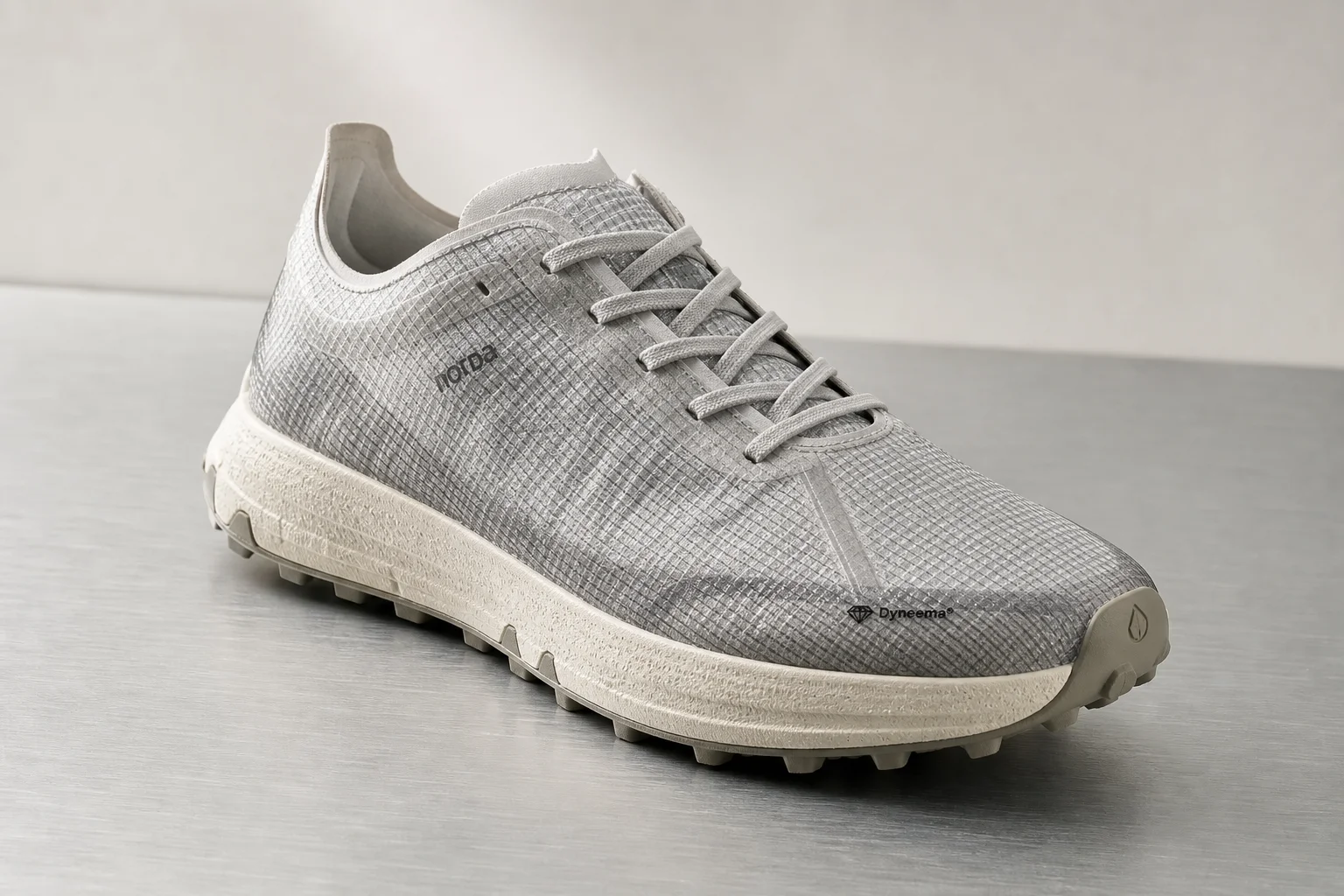
The uppers are where the Norda 005 and Nike ACG Zegama differ the most. Both feature a comfortable knit, sock-like integrated collar, but the Zegama’s is a little softer while the Norda’s is more durable and more fitted.
Both shoes offer secure heel lockdown through a bathtub-style construction. Older Zegama models struggled with heel lockdown, but this version solves it convincingly. The Norda 005 has more padding in the heel than previous Norda shoes, which largely mitigates the brand’s past comfort complaints, though there were traces of collar irritation early on that faded with break-in. The Zegama showed no comfort issues at all.
The tongues differ too: the Norda 005 is fully integrated like a sock with strategic padding, while the Zegama uses a plush, puffed-up tongue with gusseted wings on each side rather than a full sock construction. Midfoot lockdown is comfortable and secure in both, which matters given how high these shoes sit off the ground.
At the toe box, the Zegama is more generous with a new last and slightly stretchy layered material that gives the forefoot some play. The Norda 005 uses an extremely tenacious Dyneema upper, known as one of the most durable woven materials available. It barely stretches, so going up a half size is recommended. A US men’s 10.5 in the Zegama matched a US men’s 11 in the Norda for length. In short: more comfort-oriented in the Zegama, more durable and performance-oriented in the Norda.
Outsoles: Vibram Rubber Across the Board
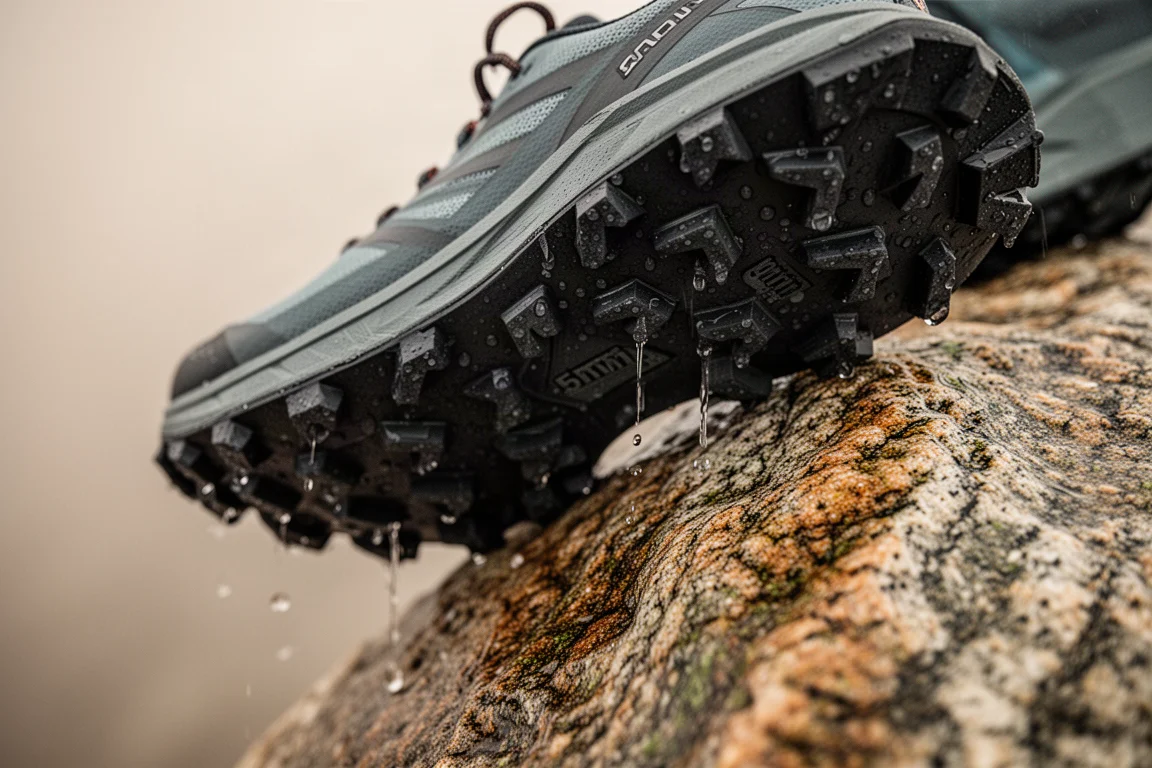
Both the Norda 005 and the Zegama wear Vibram rubber with 5mm lugs, but the compounds differ. The Zegama uses Vibram Megagrip with traction lugs, though it shows some exposed foam on the outsole. That may raise eyebrows, but it made the shoe slightly more flexible, and it never caused grip, durability, or comfort concerns in testing.
The Norda 005 uses Vibram Megagrip Elite, a lighter application of the same tacky rubber also found on other premium trail shoes. Both grip reliably.
On durability, the standard Megagrip on the Zegama gets a slight edge. The softer, tackier Elite compound showed some shaving on the forward-most lugs at similar mileage, while the Zegama’s outsole looked marginally better. The reassuring part is that in both cases the outsole is the first thing to wear, meaning the rest of each shoe is built to last.
Midsole and Ride Feel
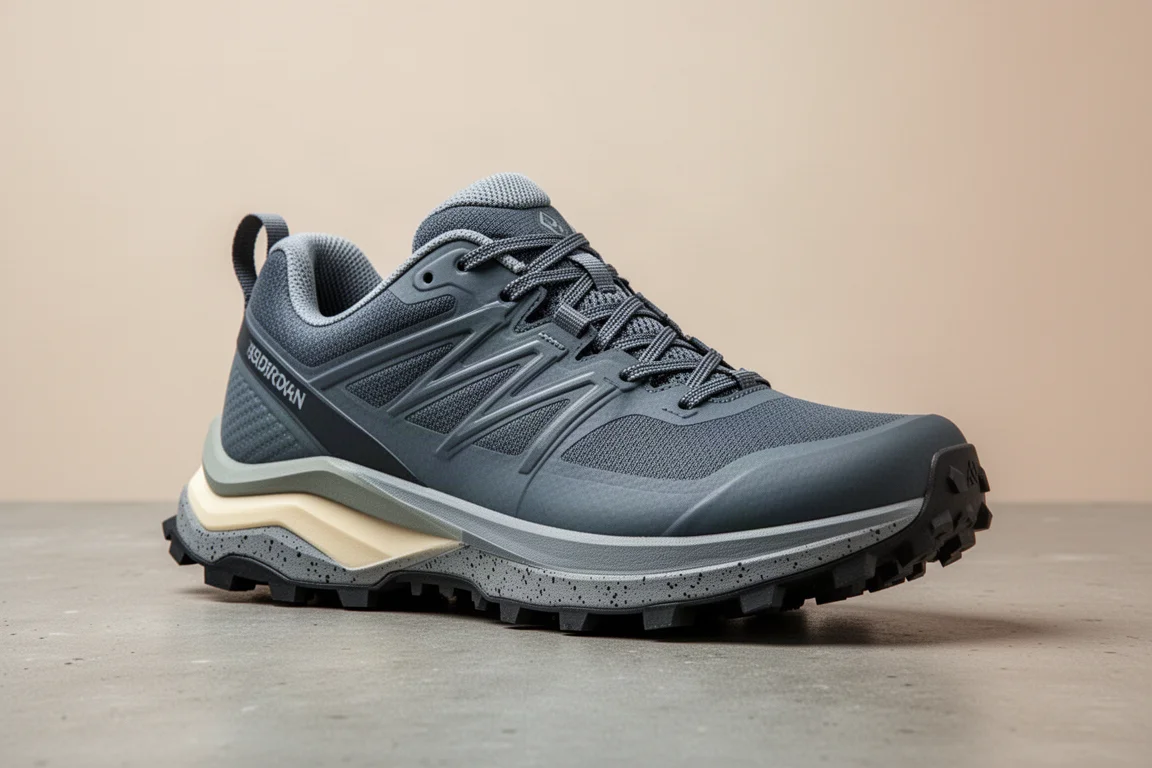
Both the Norda 005 and the Zegama measure 38mm in the heel. The difference is under the forefoot: the Norda runs a 7mm drop with 31mm up front, while the Zegama sits at a 4mm drop with 34mm, giving slightly more cushion under the forefoot.
The Zegama’s midsole is a two-layer design: a generous layer of ZoomX right underfoot for a luscious, cushioned feel, with a gradual energy release rather than a bouncy pop, over a Cushlon 3.0 base that adds stability and durability. Notably, the ZoomX here is a TPU blend rather than PEBA, trading nothing in cushion or energy return while gaining durability. That value holds up well over time.
The Norda 005 uses a denser TPEE foam that should outlast nearly everything else in the category, potentially lasting one and a half times or more than comparable max-stack shoes. It is medium-soft in density, noticeably denser than the foam in the original Norda 005, and that density adds stability. It can feel slightly squirrely in the back half of a run, but with a midfoot-forward landing it delivers a beautiful roll, strong energy return, and plenty of protection.
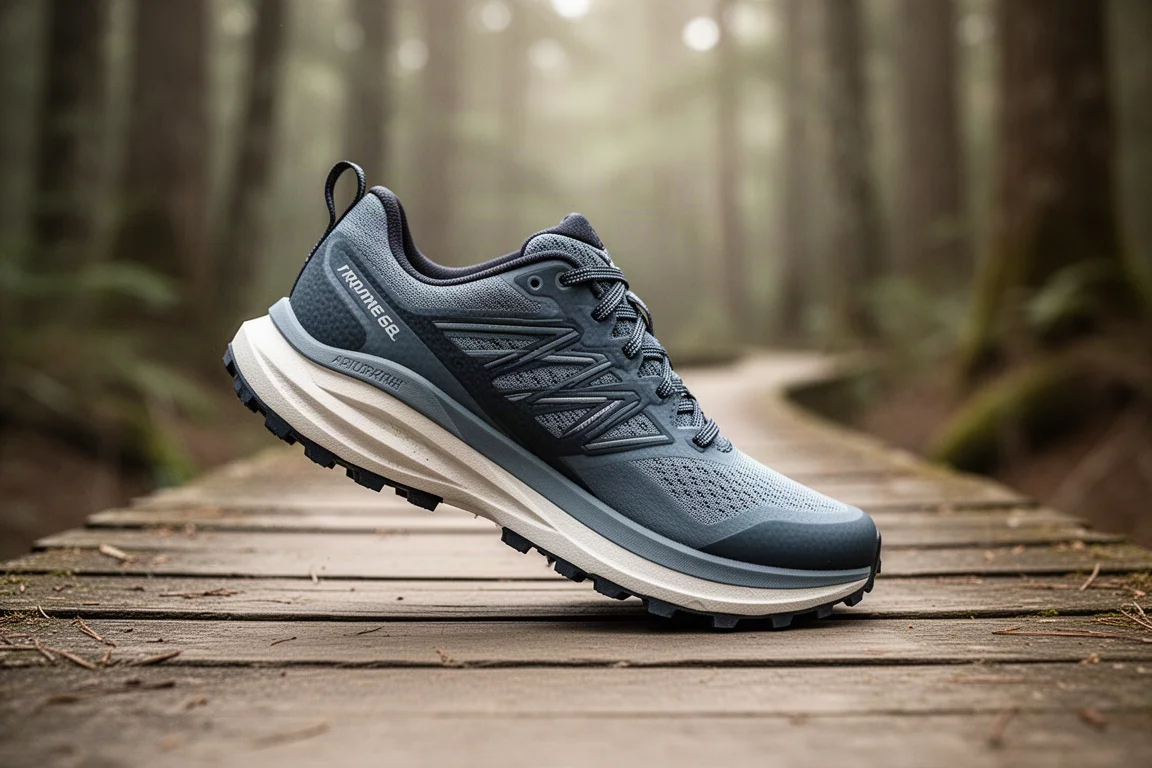
The Norda’s more extreme forefoot rocker makes it the more exciting ride of the two, and its technical-fitting upper plus just-right foam density let it handle varied terrain with confidence. The Zegama is not quite as smooth, but it is still a very smooth shoe: softer, more cushioned, and comfort-oriented, yet fully capable of going the long haul on technical ground. Cinch either shoe down at the top and you get everything a high-stack platform should be, without losing security on rugged trail. In terms of pure performance, it is a genuine toss-up.
Weight and Value
Here is the elephant in the room. The Norda 005 weighs 11.7 oz in a US men’s 11, and the Zegama weighs 11.9 oz in a men’s 10.5. That is heavier than most of the category, where race-day options sit around 10 to 11 oz. In practice, though, the ride quality and secure fit make the weight largely disappear on the run, even if the scale does not lie over long days.
On price, the Norda 005 sits at $325, while the Zegama lands at $180. Both earn an A for value, but for different reasons. The Norda’s premium ingredients mean it could last one and a half to two times, and depending on the user up to three times, longer than other max-stack shoes not known for durability. The Zegama retains its character well through its life, though it is not expected to reach the 600 to 800 mile range the Norda can achieve.
The Lighter Alternative: Salomon S Lab Ultra Glide 2
If weight is the sticking point, the Salomon S Lab Ultra Glide 2 is worth a serious look. It shares a lot of construction with the other two, with a similar stack, but comes in at 11.2 oz, a full half ounce lighter.
Its underfoot sensation is similar to the Zegama’s, and its durability is closer to that side of the comparison as well. At $250, the price sits right between the two, making it a very reasonable middle path for riders who want most of the same performance with slightly less shoe on the foot.

Buying Advice
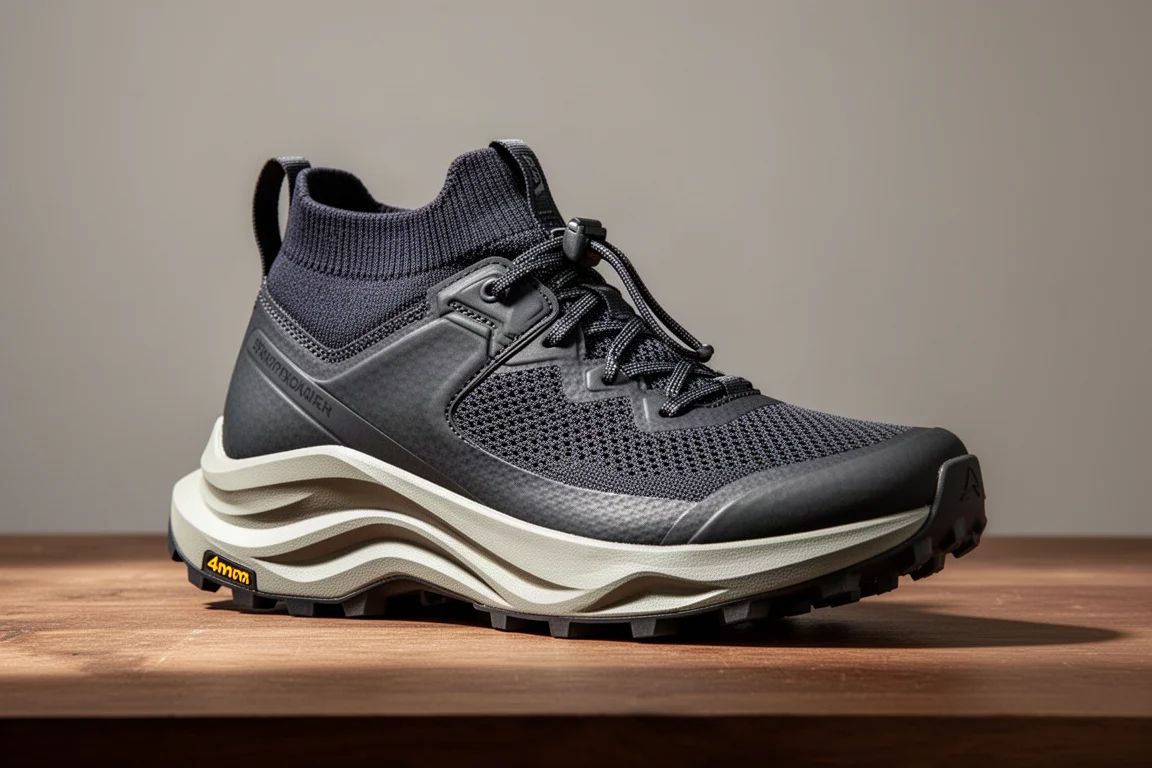
If price is taken out of the equation, the Norda 005 is the pick. It is a genuinely special shoe that gets better as it breaks in, and every mile in it feels rewarding. If the $325 price is a real factor, and for most of us it is, the Nike ACG Zegama delivers a large share of the same performance at $180, with a slightly different, more comfort-forward feel.
Both the Norda 005 and the Zegama sit at the very top of the performance and design charts in this category. And if you are still hung up on the weight, the Salomon S Lab Ultra Glide 2 splits the difference neatly at 11.2 oz and $250.
Conclusion
Any of these three can make a high-stack trail shoe work on rugged terrain. Choose the Norda 005 for the most exciting ride and outstanding durability, the Nike ACG Zegama for the best balance of comfort and value, or the Salomon S Lab Ultra Glide 2 for a lighter middle ground. Match the shoe to your trails and your budget, and you will be happy with any of them.
Further reading
Related Reviews
Trail Running Shoes
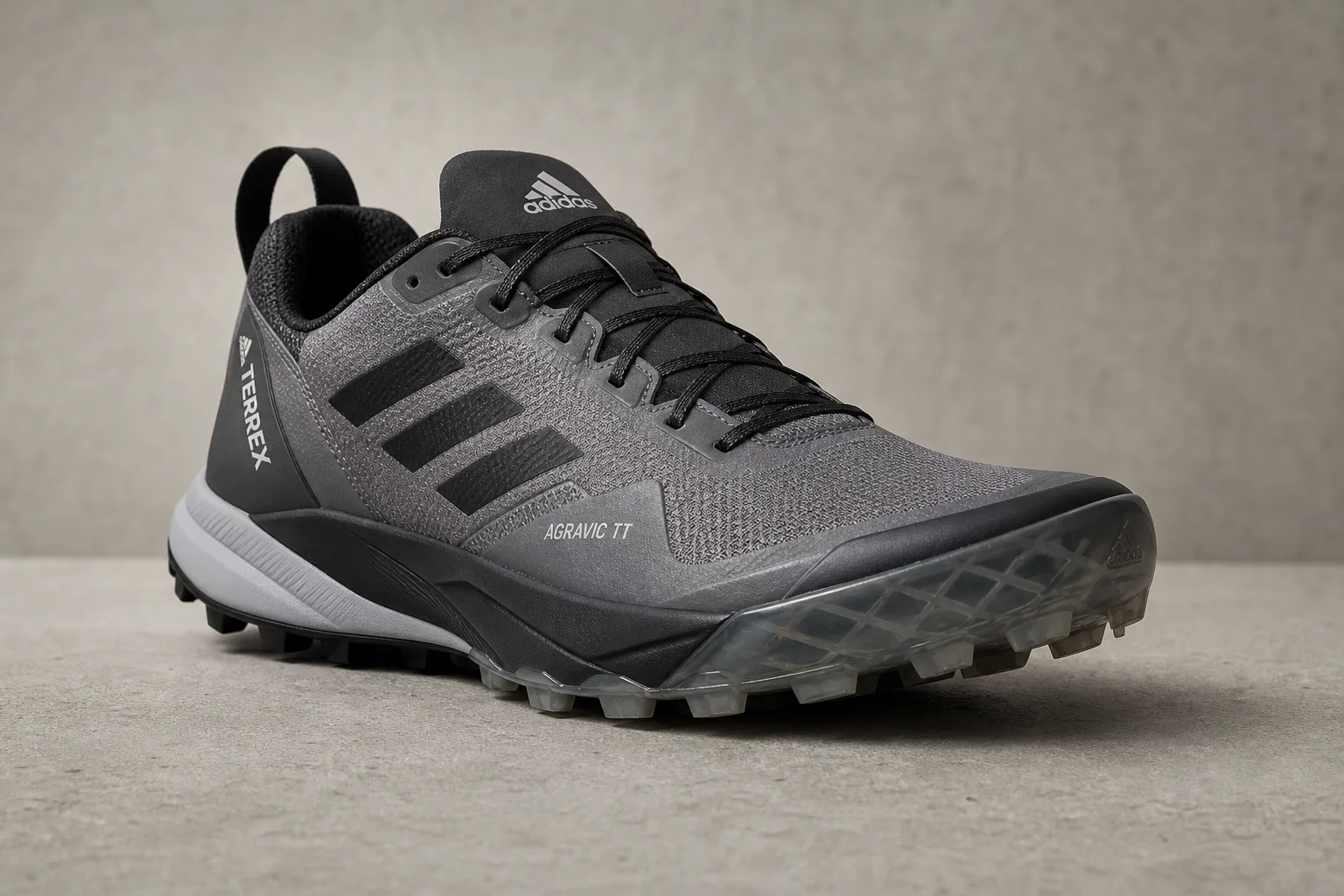
Adidas Terrex Agravic TT Review: A Technical Trail Shoe Built for Rocky Terrain
The Adidas Terrex Agravic TT combines a full-coverage rock plate with a firmer midsole to deliver protection and stability on technical, rocky trails. A capable choice for runners who prioritize underfoot defense over lightweight cushioning.
Trail Running Shoes
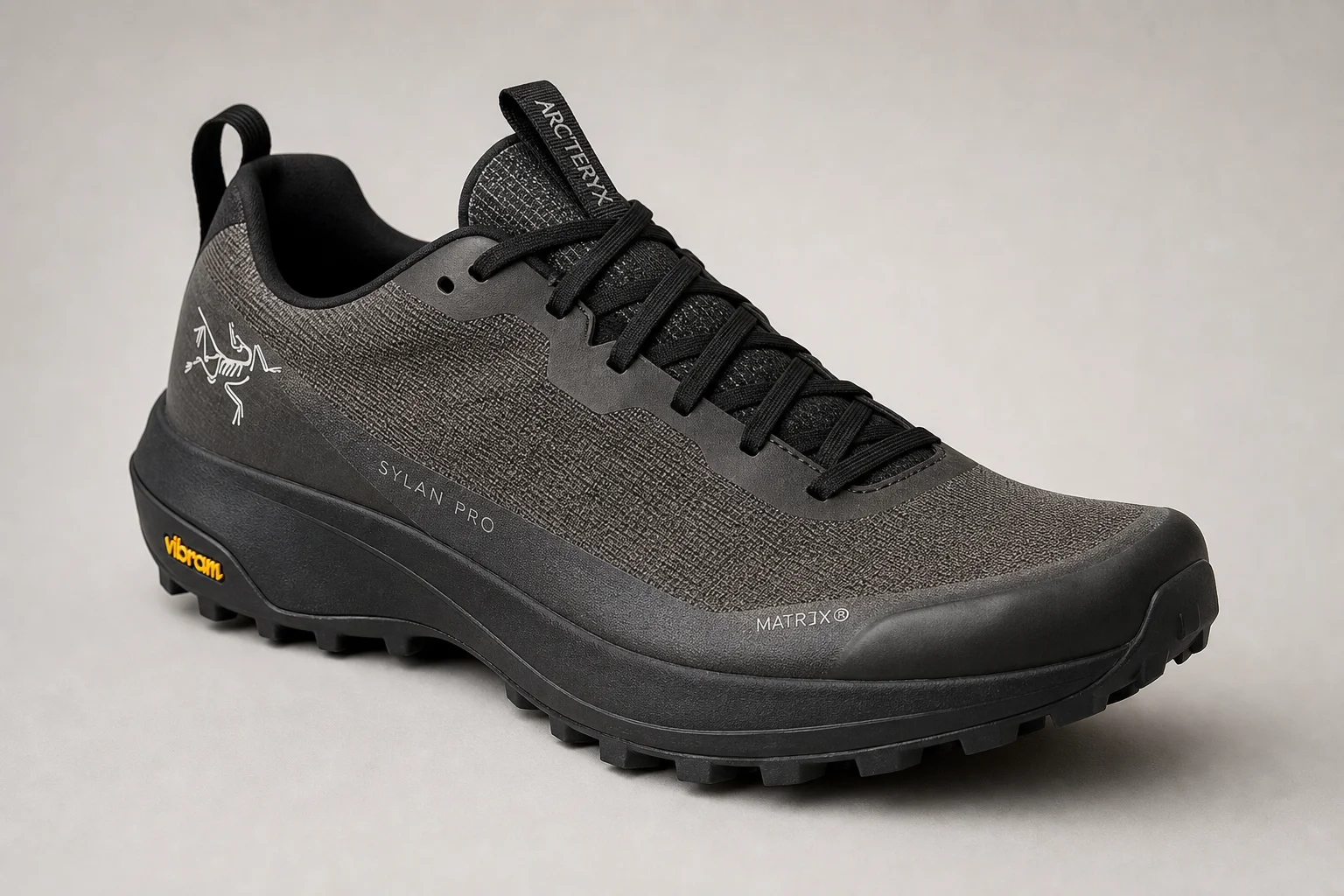
Arc'teryx Sylan Pro Review: A Rocker-Focused Mountain Running Shoe Tested on 20 Miles
The Arc'teryx Sylan Pro brings a pronounced rocker geometry and secure fit to mountain terrain. We tested it on a 20-mile Sawtooth loop to evaluate its climbing efficiency, protection, and handling of technical descents.
Trail Running Shoes
Best All-Mountain Trail Running Shoes: Three Versatile Options for Any Trail
A focused roundup of three all-mountain trail running shoes that handle technical terrain, long distances, and variable conditions with real strengths and practical trade-offs.