Coffee Equipment
Manual Espresso Makers Compared: Fellow Prismo vs Cafflano Kompresso
Two hand-powered espresso alternatives tested side by side. Neither achieves true espresso pressure, but each offers distinct trade-offs for travel and home brewing.
Introduction
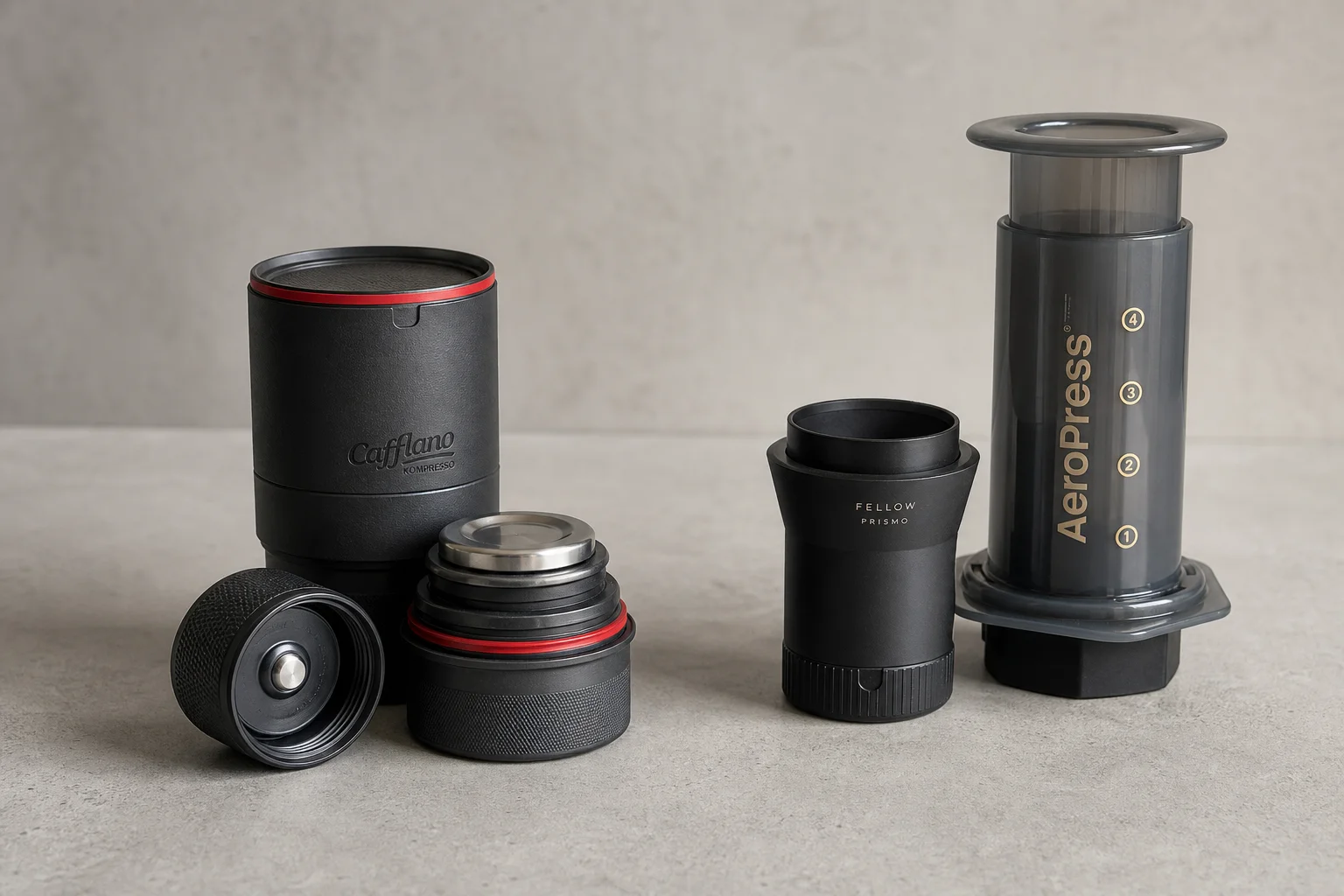
Manual espresso makers promise espresso-like coffee without electricity or complex machinery. Two popular options take very different approaches: the Fellow Prismo, which attaches to an AeroPress, and the Cafflano Kompresso, a standalone handheld brewer. Both claim to deliver espresso-like results through hand pressure alone, but neither achieves the nine bars of pressure that true espresso requires. Understanding their actual capabilities and trade-offs helps clarify which suits your brewing style.
Understanding Pressure and Crema
True espresso machines and lever-based manual brewers generate nine bars of pressure, equivalent to 130 pounds of force per square inch. Hand pressure alone cannot reach these levels, which immediately limits what either device can deliver. This fundamental constraint shapes the entire experience of using manual pressure brewers.
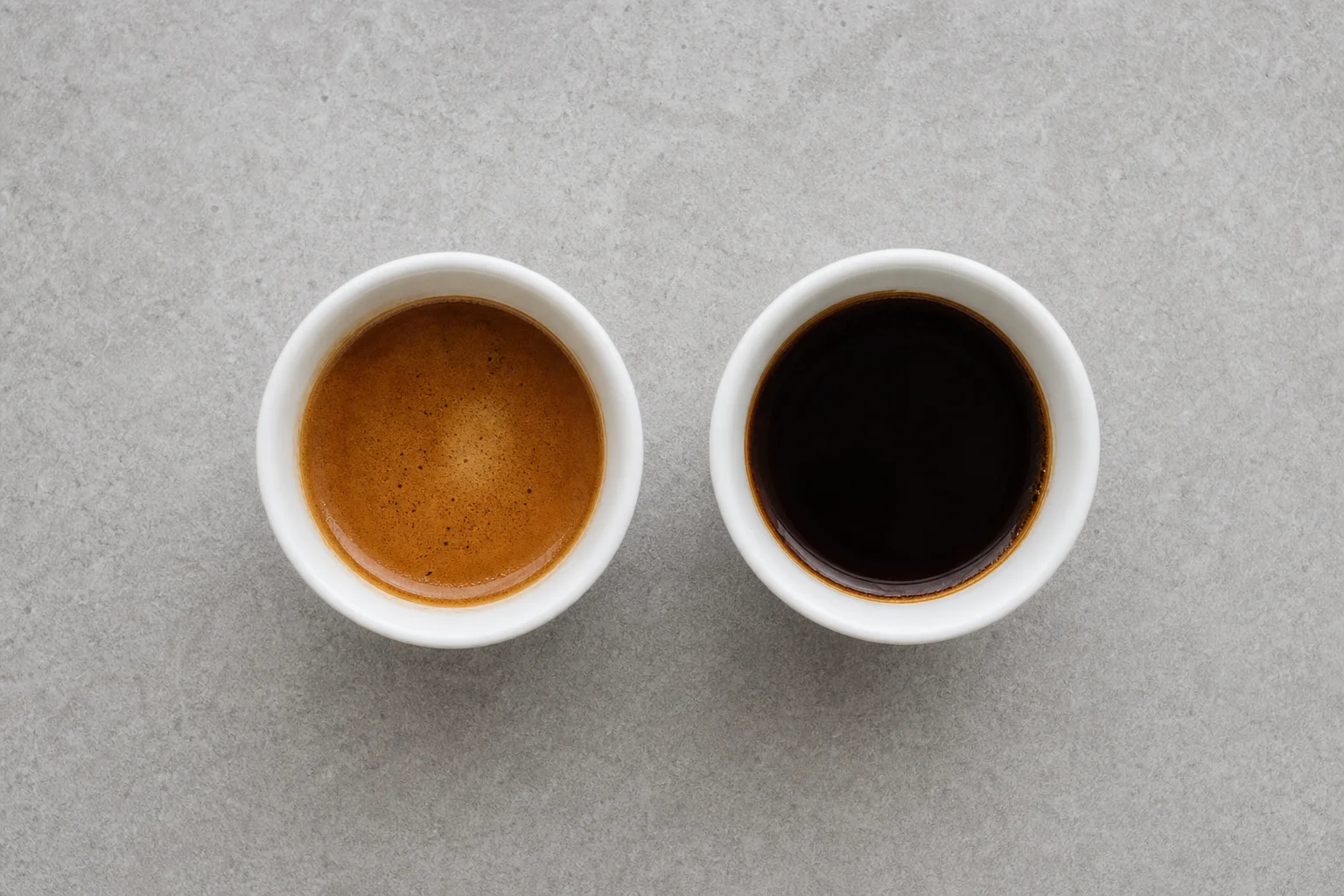
Crema, the foam layer on espresso, is often misunderstood. It forms when water under pressure absorbs dissolved CO2 from roasted coffee grounds. When pressure drops back to atmospheric levels, the CO2 escapes as foam, stabilized by natural surfactants in coffee. Crema is not a sign of quality; it is simply a byproduct of pressure. Neither the Prismo nor the Kompresso generates enough pressure to produce significant crema, and that is not necessarily a drawback.
Fellow Prismo: Pressurized Valve for AeroPress
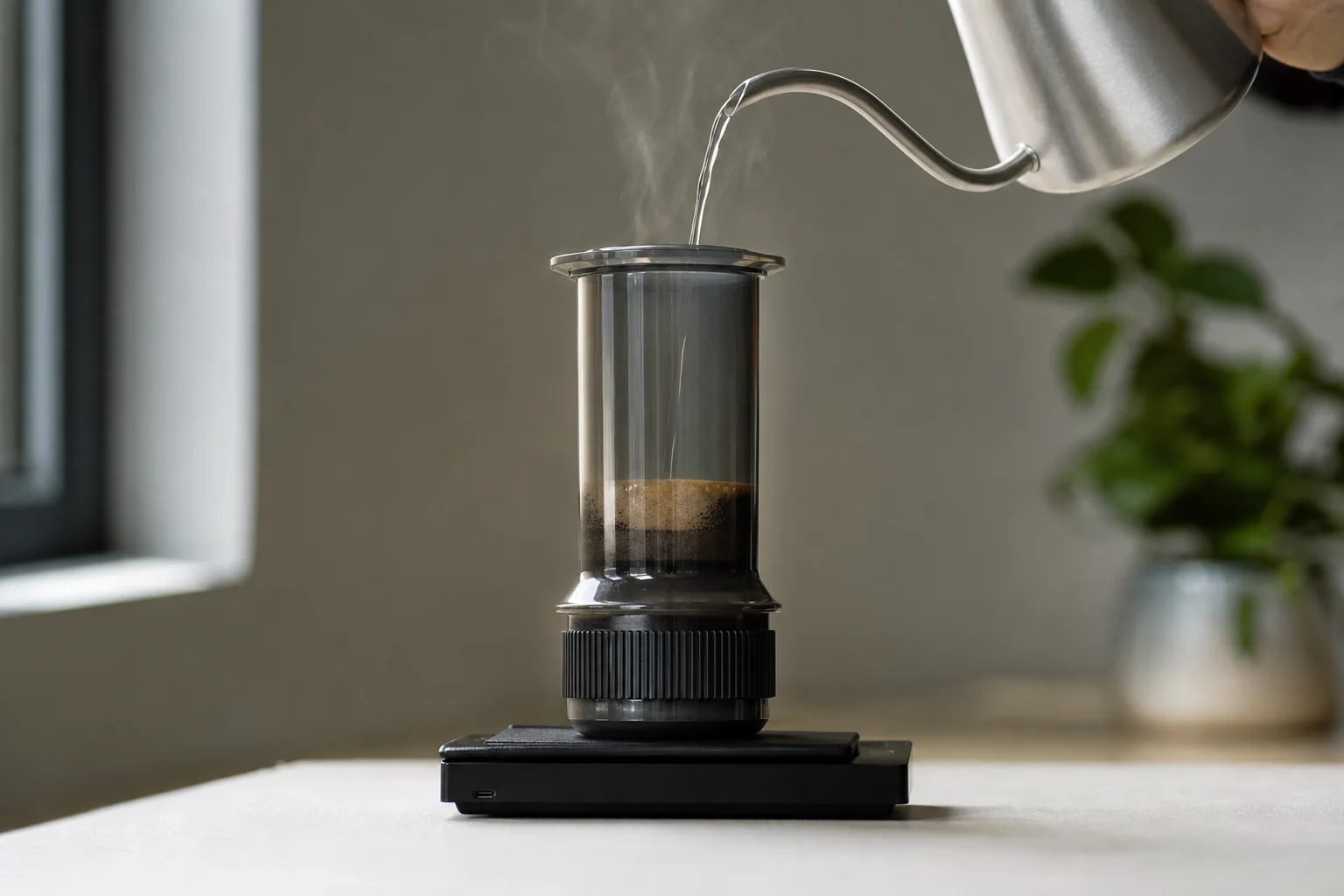
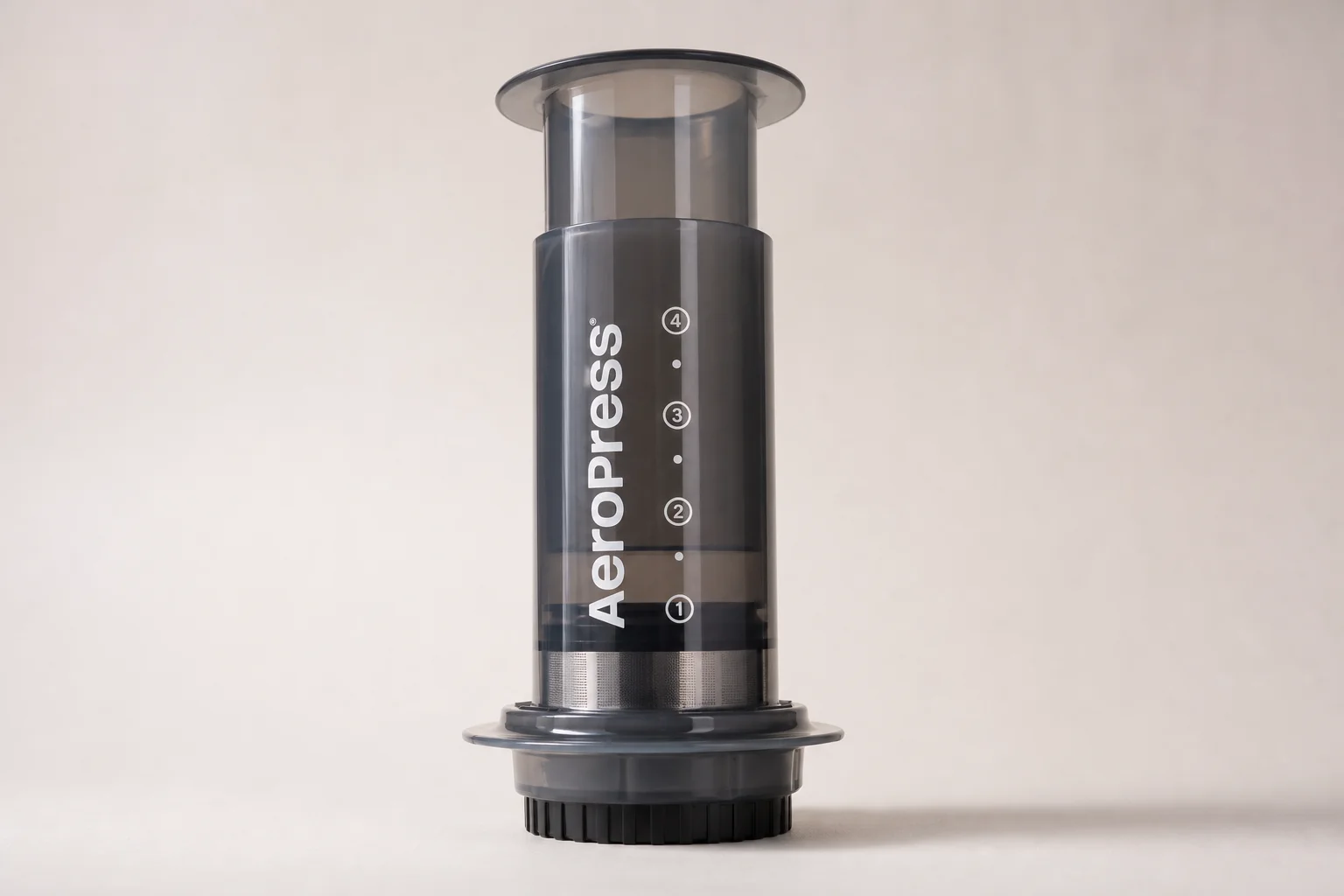
The Prismo is a small attachment designed to fit onto the bottom of an AeroPress. It includes a pressurized valve that opens only when sufficient pressure builds inside the chamber, and a metal filter plate to replace the paper filter. The concept mirrors pressurized portafilters used in entry-level espresso machines since the early 2000s, which allowed coarser coffee to build pressure despite poor extraction.
Brewing with the Prismo requires 20 grams of ultra-fine coffee and 50 milliliters of water, with 10 seconds of agitation followed by a one-minute steep before pressing. The valve prevents dripping until you apply pressure, which is useful for preventing premature flow. However, the small water volume produces a concentrated but short shot. Increasing water to 60 or 70 milliliters yields a more balanced result, though the Prismo instructions do not suggest this adjustment.
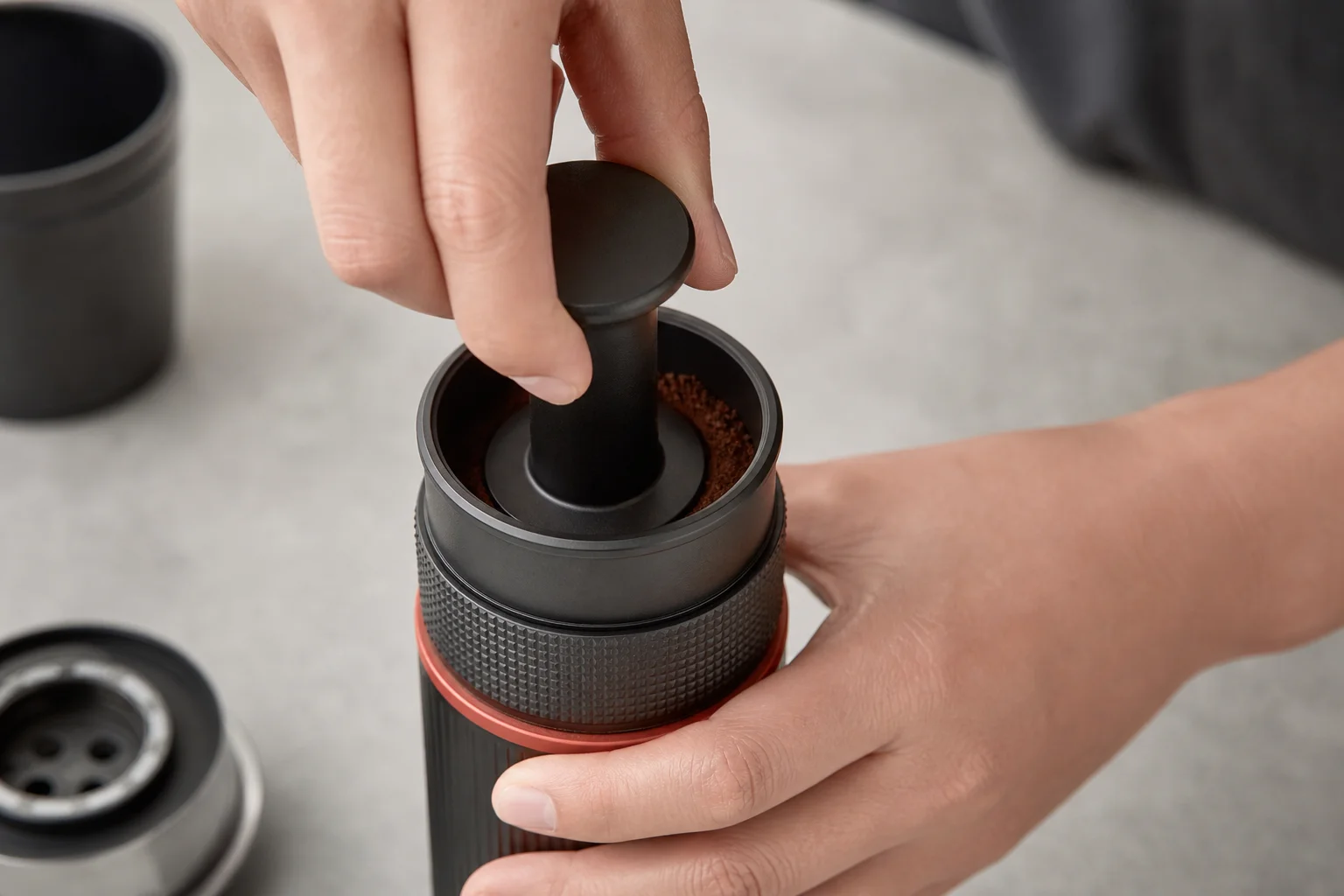
The Prismo’s main advantage is flexibility. It transforms an AeroPress into a multi-use brewer: you can brew regular AeroPress coffee with a metal filter without inverting the device, and the valve prevents flow until you press. This makes it useful for cold brew and iced tea as well. The attachment is simple to clean and adds minimal bulk to an AeroPress.
The trade-off is that the Prismo does not produce true espresso. The pressure is insufficient, and the result tastes more like strong, concentrated coffee than espresso. If you already own an AeroPress and want to experiment with metal filters and a pressurized valve, it is a reasonable addition. If you expect espresso-like flavor and body, the results may disappoint.
Cafflano Kompresso: Standalone Handheld Brewer
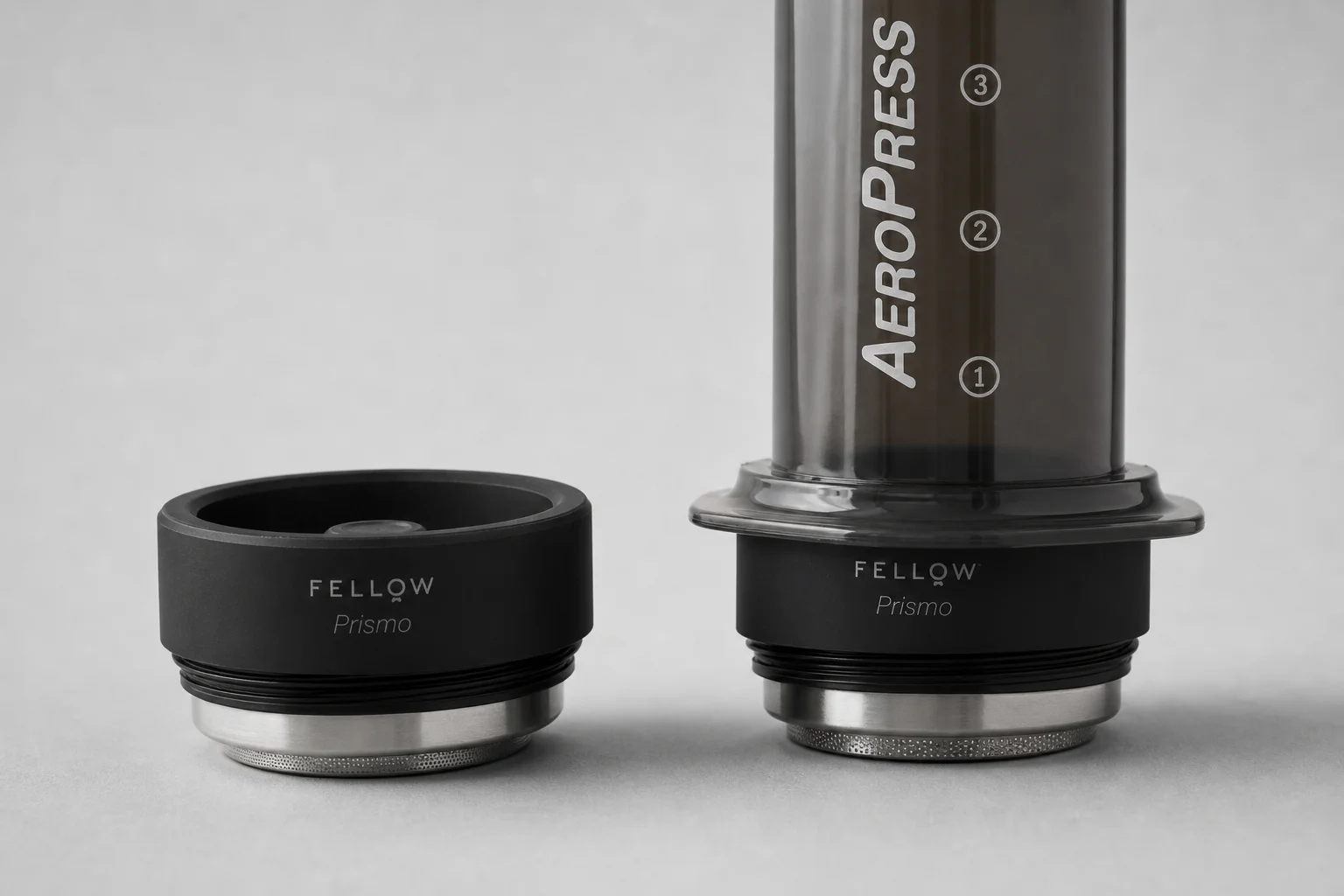
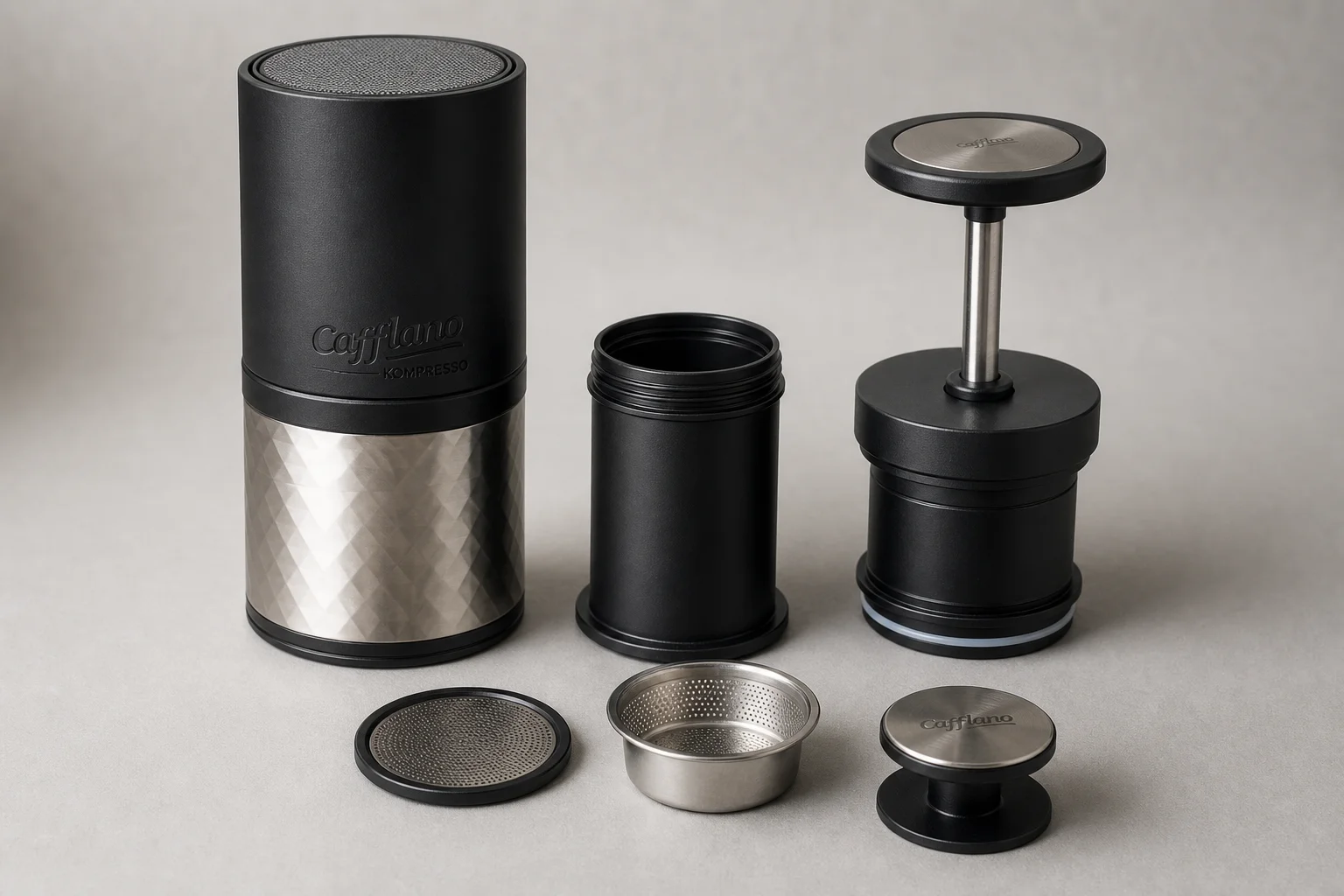
The Kompresso is a complete standalone brewer with several components: a top plunger, a brewing chamber with a shower screen, a metal filter, and a small tamper. It is designed specifically to mimic espresso brewing through hand pressure, with a narrower chamber than the Prismo to concentrate force into higher pressure per square inch.
The recommended recipe is 10 to 15 grams of coffee and 30 to 60 milliliters of water. The brewing process includes a pre-infusion phase, where water sits on the grounds for five to six seconds, followed by a percolation phase where you press the plunger down. This two-stage approach more closely resembles espresso machine operation than the Prismo’s single steep-and-press method.
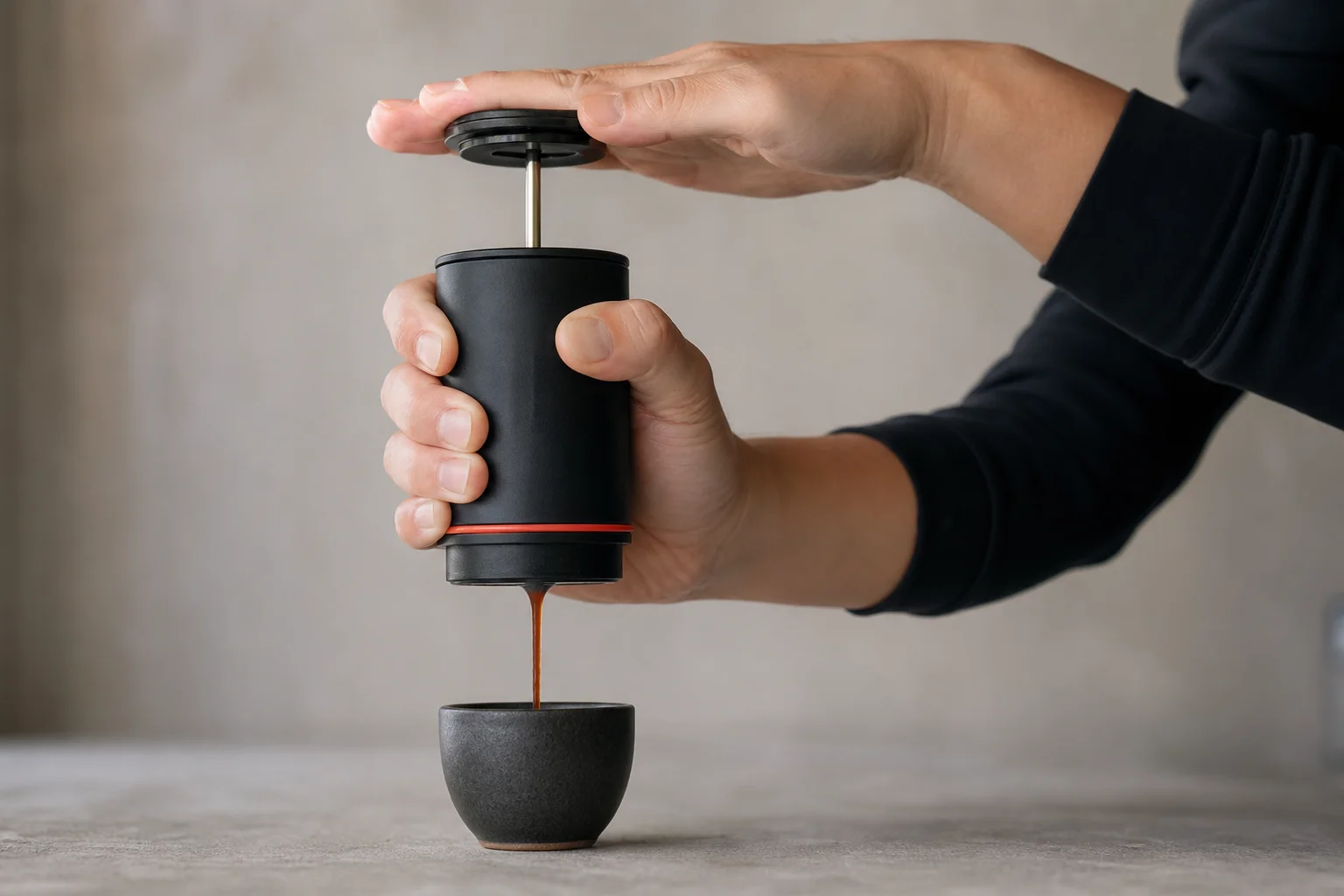
In practice, the Kompresso requires careful grind adjustment. The first attempt with the recommended recipe produced severely under-extracted coffee, with water passing through too quickly. A finer grind and a second attempt yielded better results, though dialing in the grind takes trial and error. The narrow chamber makes it a less forgiving brewer than the AeroPress, and the small drinking vessel is awkward to use.
The Kompresso does generate higher pressure than the Prismo due to its narrow chamber, and the result tastes closer to espresso than the Prismo’s output. It is more specialized: if your goal is to approximate espresso with hand pressure, it comes closer. However, it is less versatile, more finicky to dial in, and produces a smaller volume of coffee.
Brewing and Extraction Comparison
The Prismo produces a more forgiving brew. Its larger chamber and longer steep time allow for easier extraction, and increasing the water volume improves the result. The metal filter adds body compared to paper, and the pressurized valve is a useful feature for preventing drips.
The Kompresso requires more precision. The narrow chamber concentrates pressure, but it also means that grind size has a larger impact on flow rate. Under-extracted shots taste thin and sour; over-extracted shots become bitter. Once dialed in, the Kompresso produces a more espresso-like cup, but reaching that point takes patience.
Neither device produces crema or the thick, syrupy body of true espresso. Both are better understood as concentrated coffee brewers that use hand pressure to improve extraction, rather than true espresso makers.
Final Verdict and Recommendations
If you already own an AeroPress and want to experiment with metal filters and a pressurized valve without buying a new device, the Prismo is a practical addition. It adds versatility and costs less than a standalone brewer. It is not espresso, but it is a useful hack for an AeroPress.
If your primary goal is to brew something as close to espresso as possible using only hand pressure, the Kompresso gets closer. It is more specialized, lighter, and more portable than an AeroPress, making it better suited for travel. The trade-off is a steeper learning curve and less versatility.
For travel espresso-like coffee on the go, choose the Kompresso. For a flexible addition to an existing AeroPress setup, choose the Prismo. Neither will replace a lever machine or true espresso machine, but each serves a distinct purpose for manual coffee brewing.
Conclusion
Manual pressure brewers occupy a niche between full-sized espresso machines and standard pour-over methods. The Prismo and Kompresso approach this niche differently: one adds features to an existing brewer, the other builds a specialized standalone device. Neither achieves true espresso pressure, but both can produce satisfying, concentrated coffee when used within their actual capabilities. Your choice depends on whether you value versatility and ease of use, or specialization and portability.
Further reading
Related Reviews
Coffee Equipment
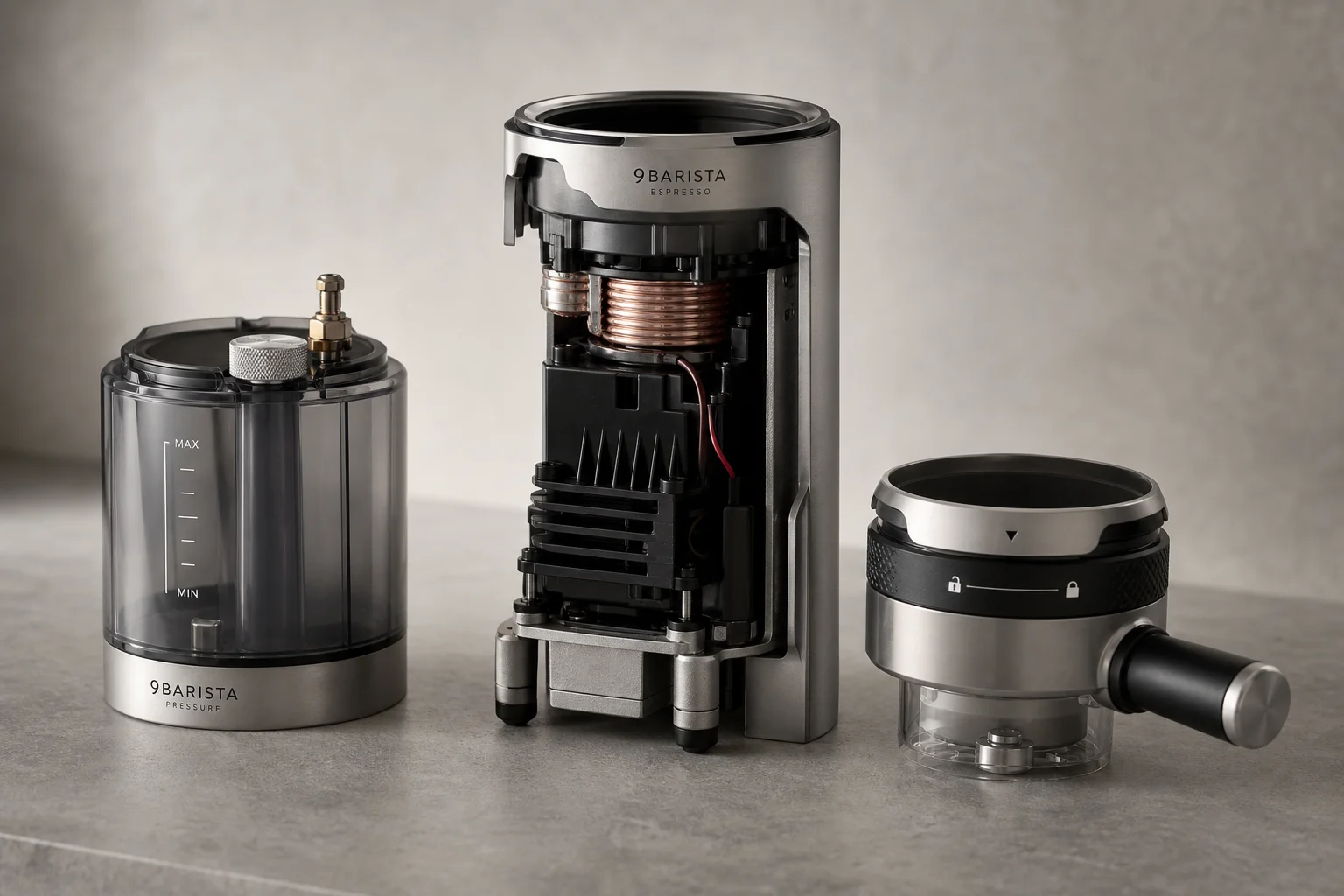
9Barista Espresso Machine Review: Stovetop Espresso for Single-Cup Enthusiasts
A cleverly engineered stovetop espresso maker that generates nine bars of pressure without electricity. Excellent coffee quality, but requires patience and suits solo drinkers only.
Coffee Equipment
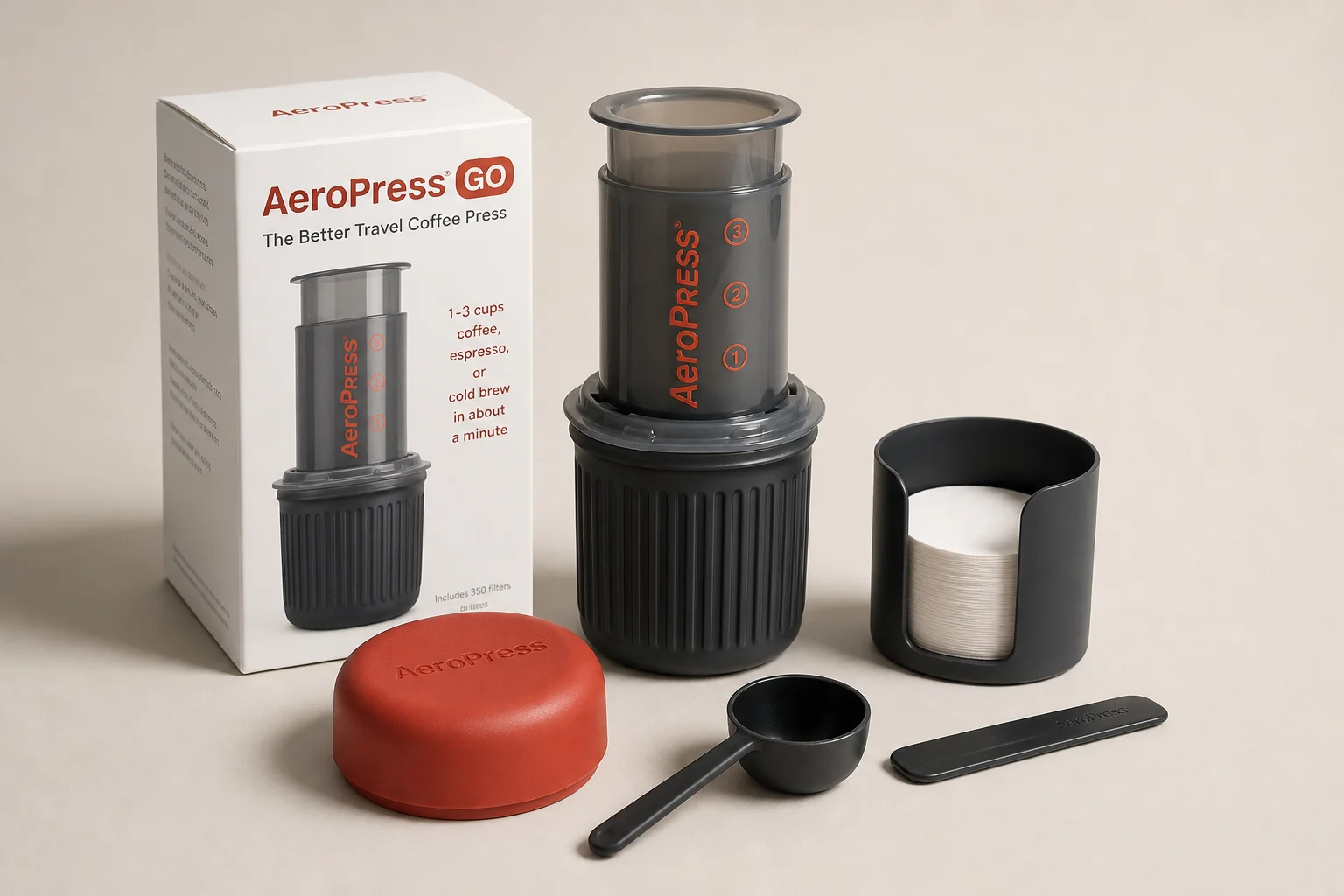
Aeropress Go Review: A Compact Travel Brewer That Solves One Specific Problem
The Aeropress Go shrinks the original design and adds an integrated cup, but it may not address the travel challenges most coffee enthusiasts actually face.
Coffee Equipment
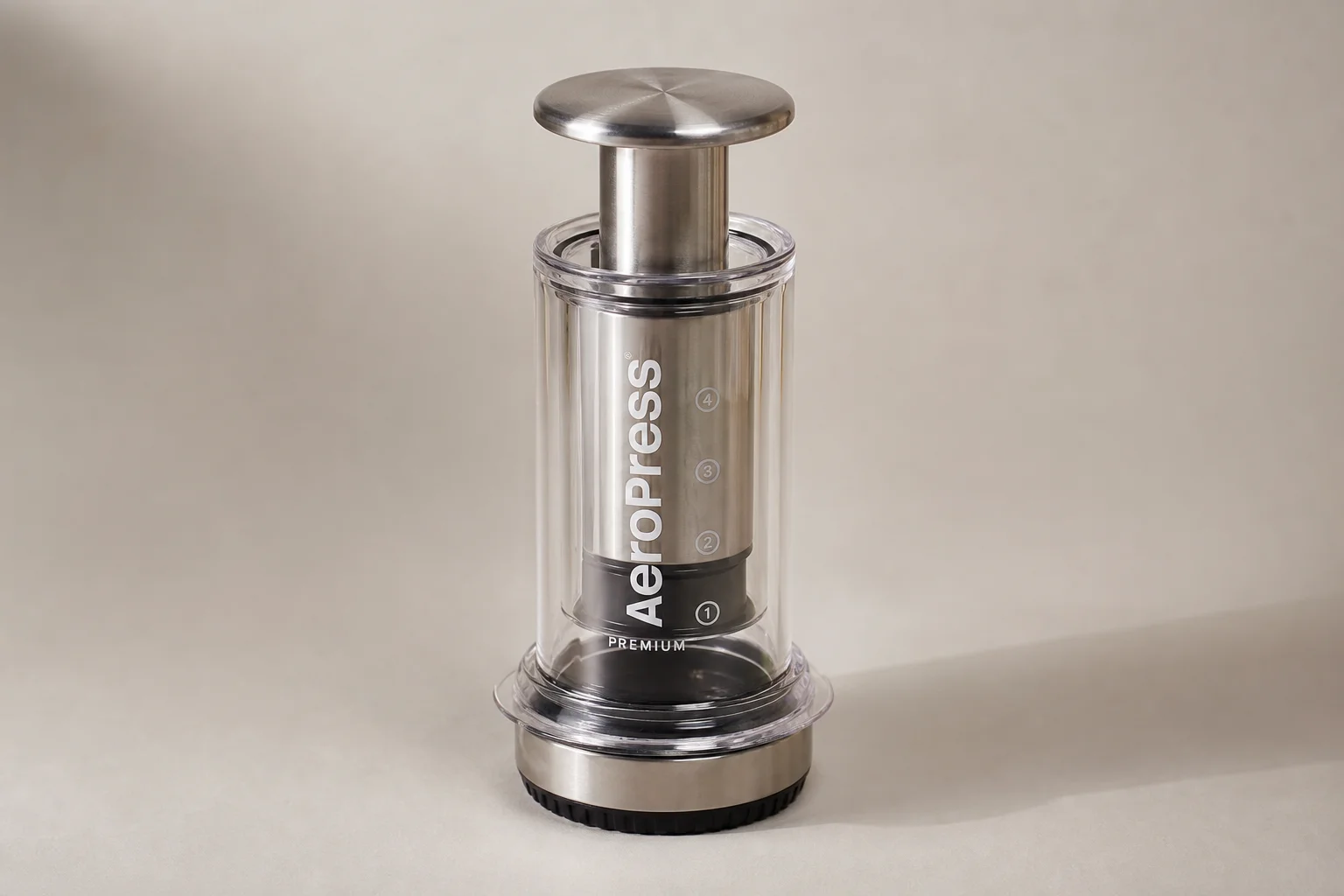
AeroPress Premium Review: Premium Materials, Practical Trade-offs
The AeroPress Premium brings glass and metal construction to a beloved brewer, but trades portability and durability for a more refined feel. Here's what changes in the cup and what matters before you buy.