Outdoor Power Equipment
Makita Power Head Comparison: DUX18 vs DUX60 vs UX01G
Three Makita split shaft power heads, three ways of powering them. We compare build quality, control panels, runtime, and real blowing performance with the blower attachment.
Introduction
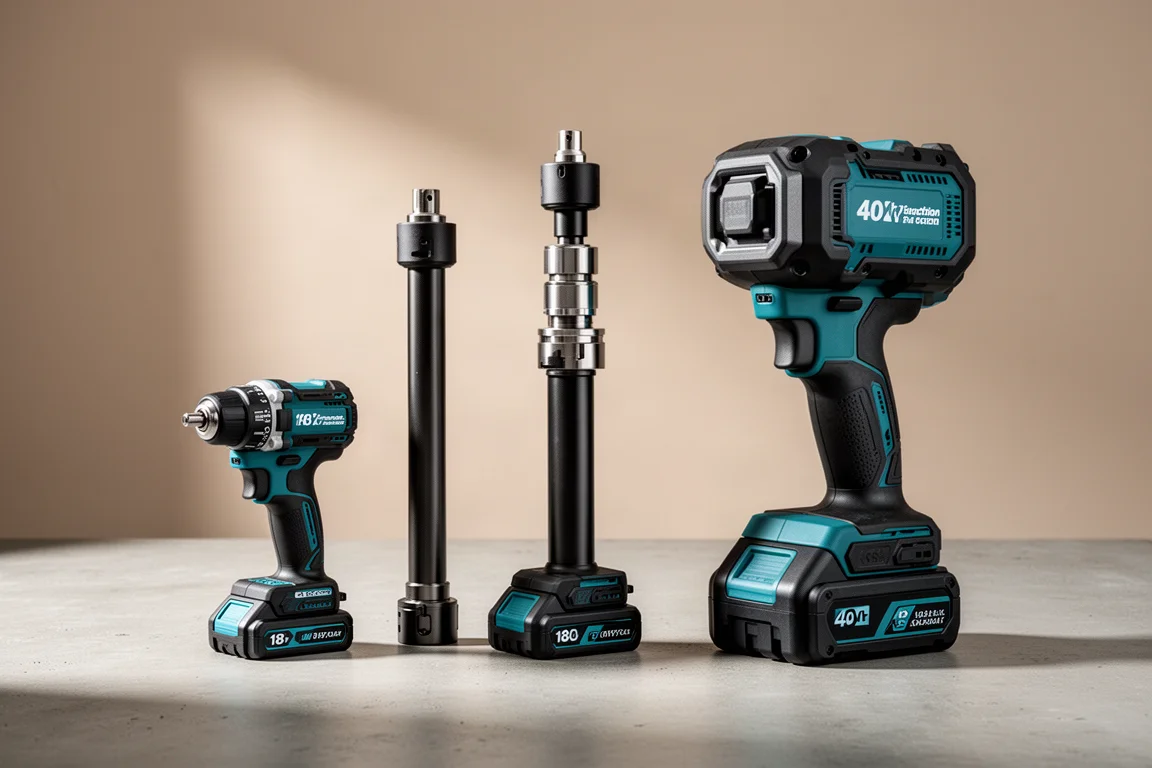
Three power heads, three different ways of powering them: 18 volt, 18 volt times two (36 volt), and 40 volt. That is the Makita DUX18, the DUX60, and the UX01G. All three are split shaft multi-function power heads, meaning the shaft splits and the head powers a growing family of attachments, including pole saws, line trimmers, blowers, scrubbers, cultivators, and more.
The standout practical point up front: all three power heads (plus Makita’s petrol version) accept the same attachments. Buy one blower or trimmer and it works on whichever head you own. Start with the 18 volt, decide you need more grunt later, and you can swap power heads and keep every attachment you already bought. Makita makes something like 13 attachments for this system.
Here, the focus is on the power heads themselves plus the blower attachment, to see how much real difference the extra voltage makes.
Build Quality: Two Winners and One Laggard
Two of these tools look and feel really nice, and one doesn’t. The 18 volt DUX18 and the 40 volt UX01G feel like proper Makita quality: smooth moldings, solid clamp fit, and a substantial trigger that sits inside the tool. The DUX60, by contrast, feels like quality control was a bit lax. It has sharp edges, a visible gap in the clamshell, a chunk sticking out of the shaft, and a thin trigger that looks like it could snap off. It is a little disappointing for a tool at this level.
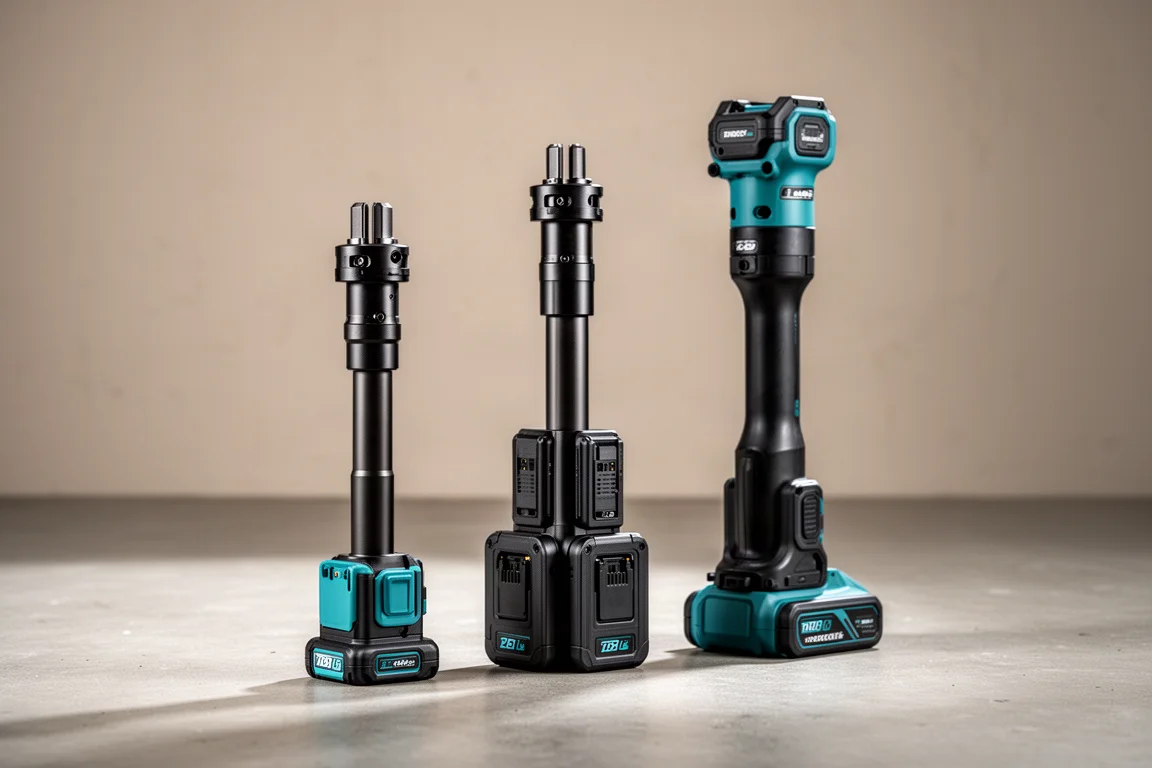
The harness mounting point tells a similar story. On the 18 volt and 40 volt, the shoulder strap hook is connected solidly to the tool. On the DUX60 it floats on the shaft. The 18 volt and 40 volt also have a hook for hanging the tool on a wall in the garage, which the DUX60 lacks. That said, the harness mounts are metal inside on all three, so none of them will break easily.
Everyone gets a loose rubbery grip you can slide for comfort, an adjustable D-handle, and a shoulder strap in the box. Harnesses are sold separately.
The Shared Attachment System
The split shaft coupler is identical across all three, and that is the clever part of the system. One attachment fits the 18 volt, the twin-battery, the 40 volt, and the petrol version. If you start on 18 volt and find it underpowered, you can sell the head, keep your attachments, and only pay for a more powerful power head. For a homeowner, the 18 volt may be all you need; for commercial use, the 40 volt or petrol makes more sense.
Control Panels and Electronics
There is one genuinely meaningful difference in everyday use, and it is in the electronics. Turn on the DUX18 or the UX01G, pull the trigger, let go, and the tool cuts out almost immediately. Pull the trigger again and nothing happens: you have to press the power button again. The DUX60 stays on for a good minute or more after you power it up, so you can walk to the next patch, pull the trigger, and keep going. It is a small thing on paper, but it makes the DUX60 noticeably nicer to use, and the others are genuinely annoying by comparison. All three will stay running if you hold the safety button on top of the handle down, chainsaw style.
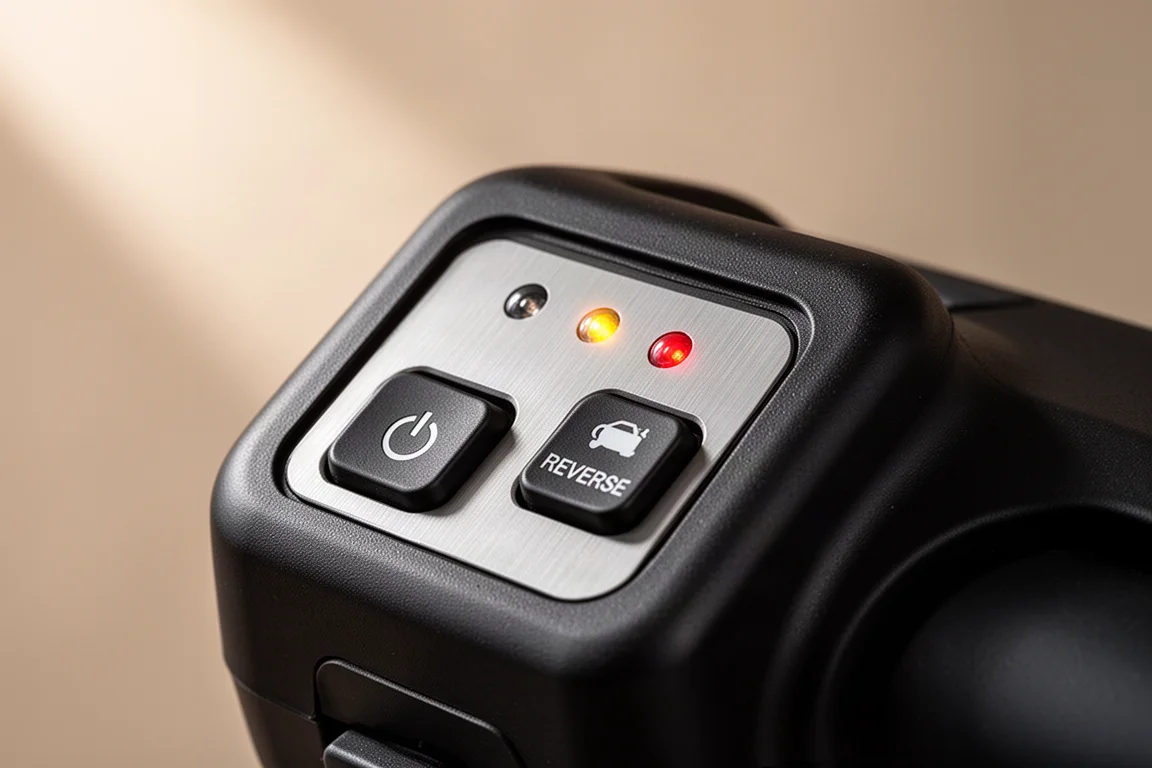
On the panels: the two 36 volt class tools (DUX60 and UX01G, both effectively 36 volt platforms) have a power button that cycles through three speeds and a reverse button, handy for clearing jams like a strap wrapped around the shaft. The UX01G adds a warning light and a green power indicator, while the DUX60 shows reverse mode by flashing its three speed lights. The DUX18 has just two speeds, no reverse, and no warning light. All three have TPE over-molding on the handles.
Naming note: the UX01G is called “40 volt” simply to differentiate it from the older 36 volt line and the 18 volt times two system. Under the hood it is effectively a 36 volt class tool.
Blower Test: Speed and Distance
All three power heads are brushless, and each was fitted with the same UB blower attachment, run at the highest setting with freshly charged 5 amp batteries (5Ah on 18 volt; 5Ah on the 40 volt platform, giving 180 watt-hours from two packs).
Distance test results, from target to first marker: the DUX18 pushed debris about 3.5 meters, the DUX60 reached 4.1 meters, and both the UX01G and a standalone 40 volt blower control reached 4.8 meters. Air speed told the same story: roughly 58 km/h for the 18 volt, 74 km/h for the DUX60, and 85 km/h for the UX01G, with the standalone 40 volt blower at 90 km/h.
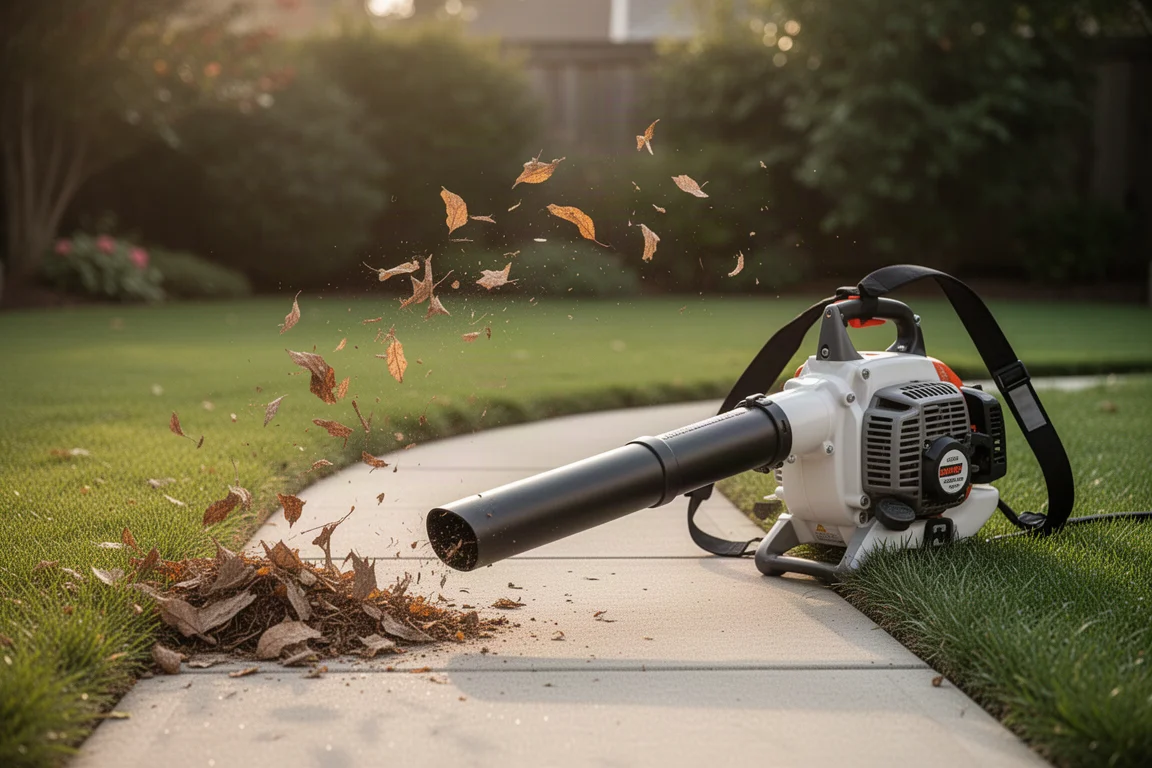
The DUX60 has a quirk: after holding the trigger for a while, it kicks up into another gear and runs a bit faster, at apparently random intervals, including during the runtime test. The UX01G instead slows down gradually as the battery drains.
Runtime, Heat, and What the Numbers Mean
The spec sheet numbers: the DUX18 outputs 470 watts, spins at up to 9,700 rpm (6,800 rpm low), and weighs 2.2 kg. The DUX60 outputs 600 watts, matches that 9,700 rpm top speed, and weighs 4.1 kg. The UX01G outputs a claimed 1,000 watts at the same 9,700 rpm maximum, in 5,700 / 8,200 / 9,700 rpm steps, and weighs 4.2 kg.
Notice something odd: top speed is nearly identical across all three, so the extra voltage buys power and runtime capability, not more rpm. And the weight jump from DUX18 to either larger head is dramatic, nearly double.
Runtime results, running until cutout with the blower: the DUX18 lasted about 9 minutes 10 seconds, the DUX60 about 12 minutes 10 seconds, and the UX01G the shortest of the three. That sounds counterintuitive, but the 40 volt is chewing through roughly 1,000 watts to deliver far more blowing force, so it drains its watt-hours faster. In practice, the DUX60 running on two 5Ah batteries offers the best combination of decent power and long runtime.
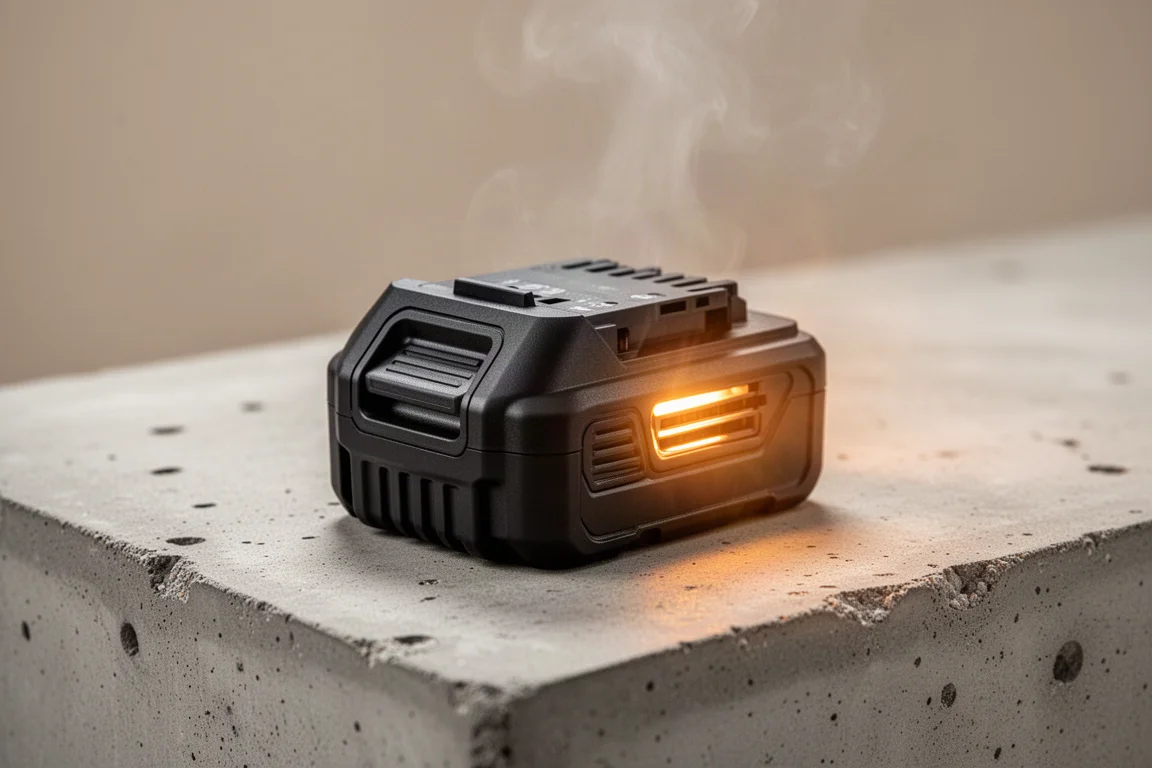
Heat was a different story for each. The DUX18’s single battery got seriously hot, up to about 57 degrees Celsius on the top of the pack and around 46 degrees at the bottom, while the tool itself stayed at ambient temperature, which is impressive. The DUX60’s batteries peaked around 48 degrees with the tool around 40 degrees at the motor housing. The UX01G felt warmest around its vents at about 54 degrees while the housing plastic stayed cooler. After cooling overnight, all batteries came back to life, confirming none had simply overheated and cut out. It makes for a fair test.
Overall Buying Advice
The right choice depends on what you actually value:
- Fastest and most powerful: the UX01G wins on pure blowing force, and its build quality is excellent.
- Best runtime and nicest electronics: the DUX60. Its longer standby timeout and twin-battery setup mean double the usable runtime of a single battery at moderate power, though its build quality is the weakest of the three.
- Lightest and easiest to carry: the DUX18. At 2.2 kg it is a genuinely handy garden tool, and it never let its heat affect the tool body. It will feel strong enough until you try the 40 volt.
Also worth remembering: a power head with the blower attachment can reach spots a standalone blower cannot. With an extension shaft and the blower fitted, you can get up high under house eaves or into factory rafters, and with the shoulder strap you can blow close to the ground while staying upright.
Conclusion
Makita’s split shaft system is well thought out: one set of attachments, three (or four, counting petrol) power levels. The DUX18 is the light, simple home option; the DUX60 is the runtime and convenience pick despite its rougher finish; the UX01G is the power pick with the best build quality. Match the head to how much power you genuinely need, and you can always upgrade later without rebuying attachments.
Product link
View more details for Makita DUX18
This product is mentioned in the review. Check the specifications, options, and compatibility before buying.
View more details for Makita DUX18Further reading
Related Reviews

Outdoor Power Equipment
Best Cordless Chainsaws 2026: EGO, Milwaukee, and Stihl Compared
Three flagship battery-powered chainsaws from EGO, Milwaukee, and Stihl go head to head in cutting speed, power, weight, and price.

Outdoor Power Equipment
Best Cordless Leaf Blowers 2026: Nine Models Put to the Test
We tested nine leading cordless leaf blowers from Ryobi, STIHL, Toro, EGO, Husqvarna, DeWalt, Makita, Milwaukee, and Echo to find the best blowing force, run time, and value.
Outdoor Power Equipment
Amazon Big Spring Sale 2026: Best Outdoor Power Equipment and Backyard Deals
Cordless mowers, blowers, grills, and portable power on sale this spring, with practical advice on which packages are actually worth buying.