Fountain Pens
Magna Carta Elements Earth Review: An Indian Fountain Pen With a Pneumatic Filler
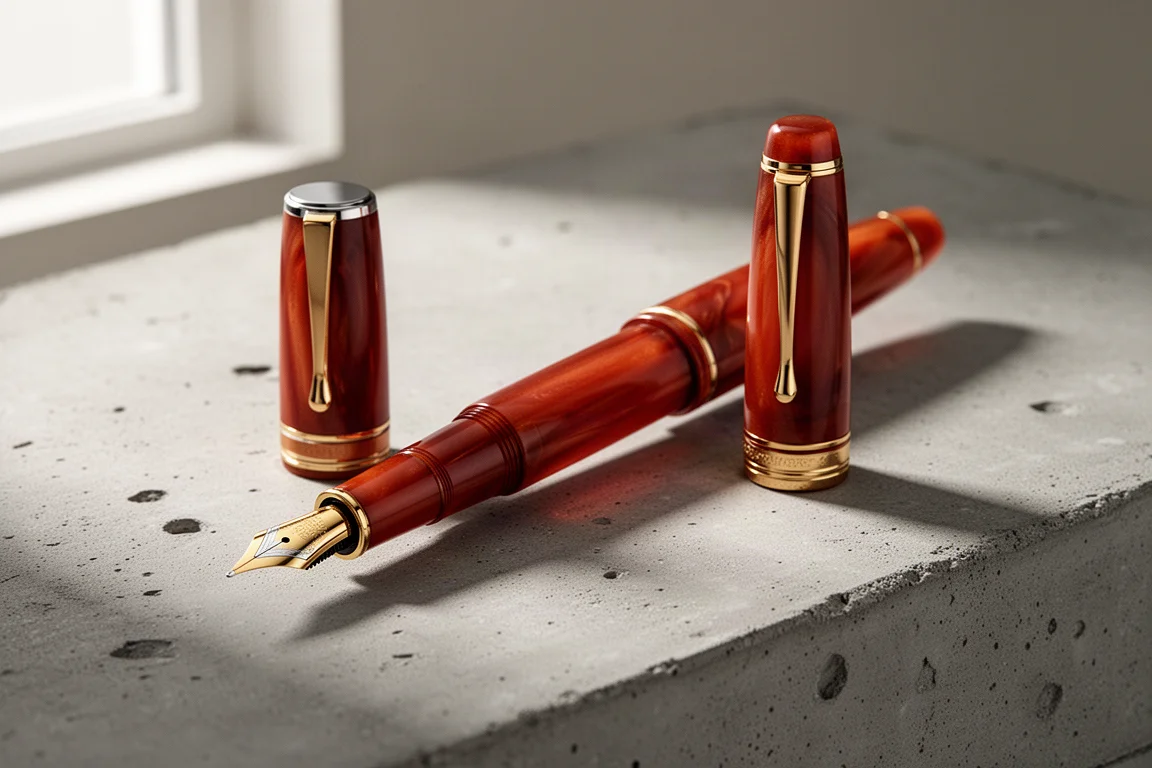
A warmly toned resin fountain pen from Indian maker Magna Carta, featuring gold-plated trim, a steel broad nib, and an uncommon pneumatic filling system.
Introduction
The Magna Carta Elements Earth is a fountain pen from Magna Carta, an Indian pen maker that has been on many enthusiasts’ radar for a while. At first glance it reads as a brown pen, though on camera and even on the company’s own website it can appear noticeably redder than it does in person. In hand, it is best described as a warm reddish brown rather than a true red, so keep that in mind if color is a deciding factor for you.
This is a fairly large pen made of precious resin with 24 karat gold PVD plating, a stainless steel nib, and an interesting pneumatic filler. It is priced at $160, which positions it as a considered purchase rather than an impulse buy, but it offers a filling system you rarely see at this level.
First Impressions and Packaging
The pen arrives in a plexiglass box with a small lid, along with a plastic sheath for the pen and a Magna Carta warranty card. Presentation boxes with lift-off lids are common, but this plexiglass version feels like a genuinely cool touch and sets a good tone before you even pick up the pen.
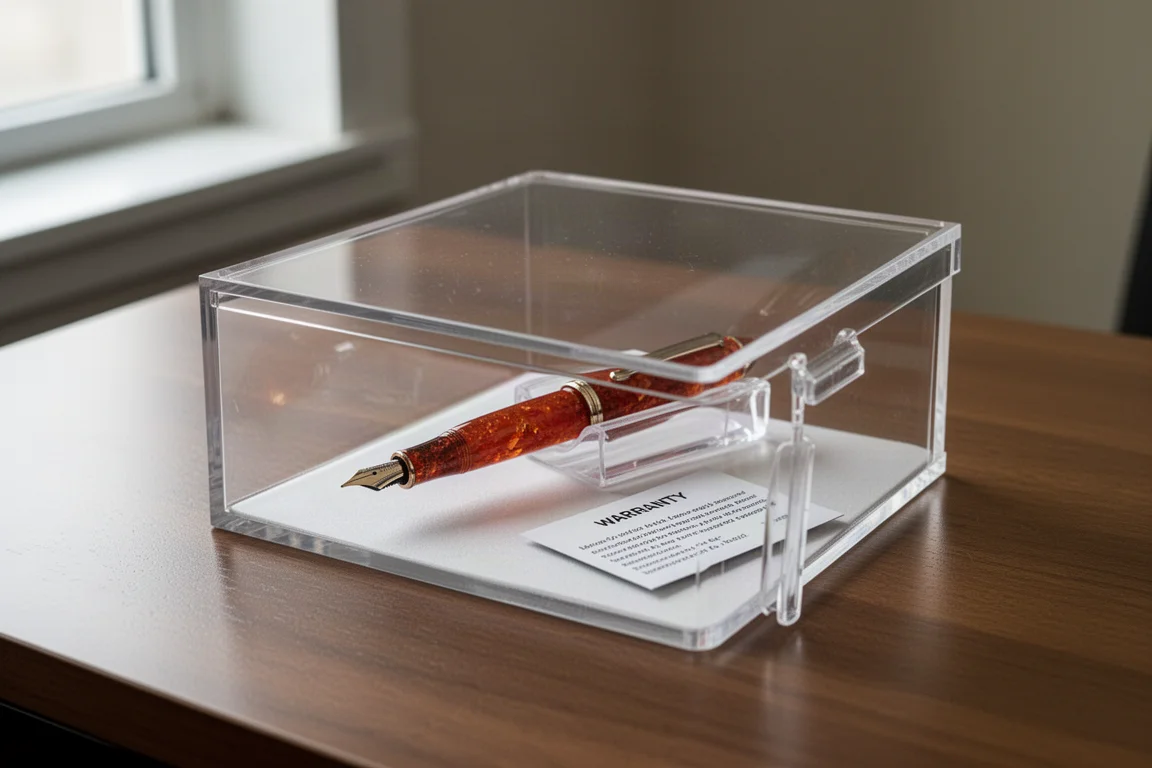
Next to something like a Pilot Metropolitan, the Elements Earth is clearly not a small pen. It is not obscenely oversized either; it is simply a little bigger than average, which many writers will find comfortable.
The Pneumatic Filling System
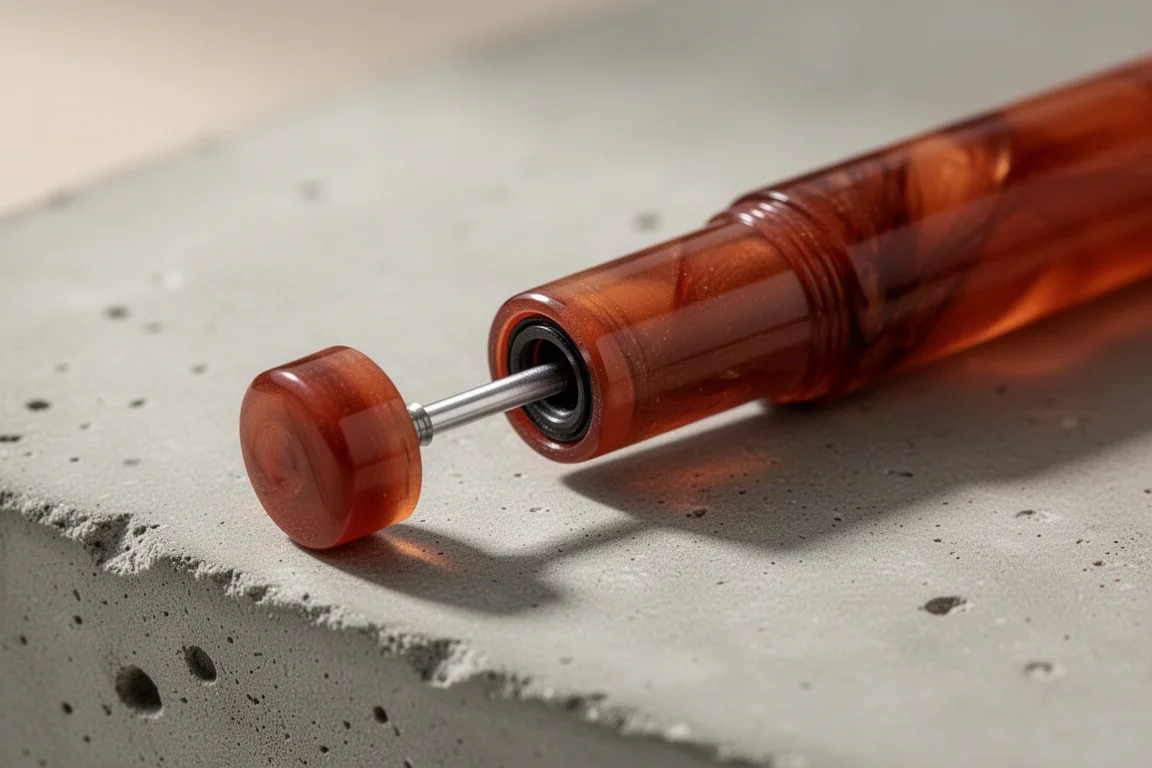
The standout feature here is the pneumatic filler. The barrel ends in a blind cap that pulls out entirely. To fill, you submerge the section in a bottle of ink, place your finger over a hole in the mechanism, push the rod down to compress an internal sac, and release. As the sac decompresses, it draws ink up into the barrel.
It is a neat and genuinely uncommon system. Most pens at this price are cartridge-converters with steel nibs, so the pneumatic filler gives the Elements Earth a point of real distinction. After filling, you simply wipe the section and nib, replace the blind cap, and you are ready to write.
Build Quality and Design
The cap has a flat top that tapers slightly rather than being cut straight, and it uses the same warm resin material as the rest of the pen rather than a dull contrasting color, which looks attractive. The clip is quite stiff but not so stiff that it becomes unusable.
Two cap rings sit perfectly flush with the cap and do not rotate, which is a sign of proper pen making. On cheaper pens, one of these rings often sticks out slightly or spins loosely. The barrel bulges a little and then tapers down, giving it a slightly barrel-shaped profile, followed by another ring and the blind cap.
The section starts wide and tapers down, and the steel nib carries the Magna Carta logo with the same gold plating as the trim. The broad nib on this example appears to be paired with a feed that may well be ebonite, though that is hard to confirm with certainty; many Indian pens do use ebonite feeds.
Writing Performance
Ink flow is on the dry side out of the box. With no pressure at all, the broad nib runs noticeably dry, and a little writing pressure is needed to bring the line to a fuller, wetter state. This is likely a slightly tight nib slit. Fortunately, making a nib wetter is not difficult, whether as a small tuning project yourself or with a nibmeister.
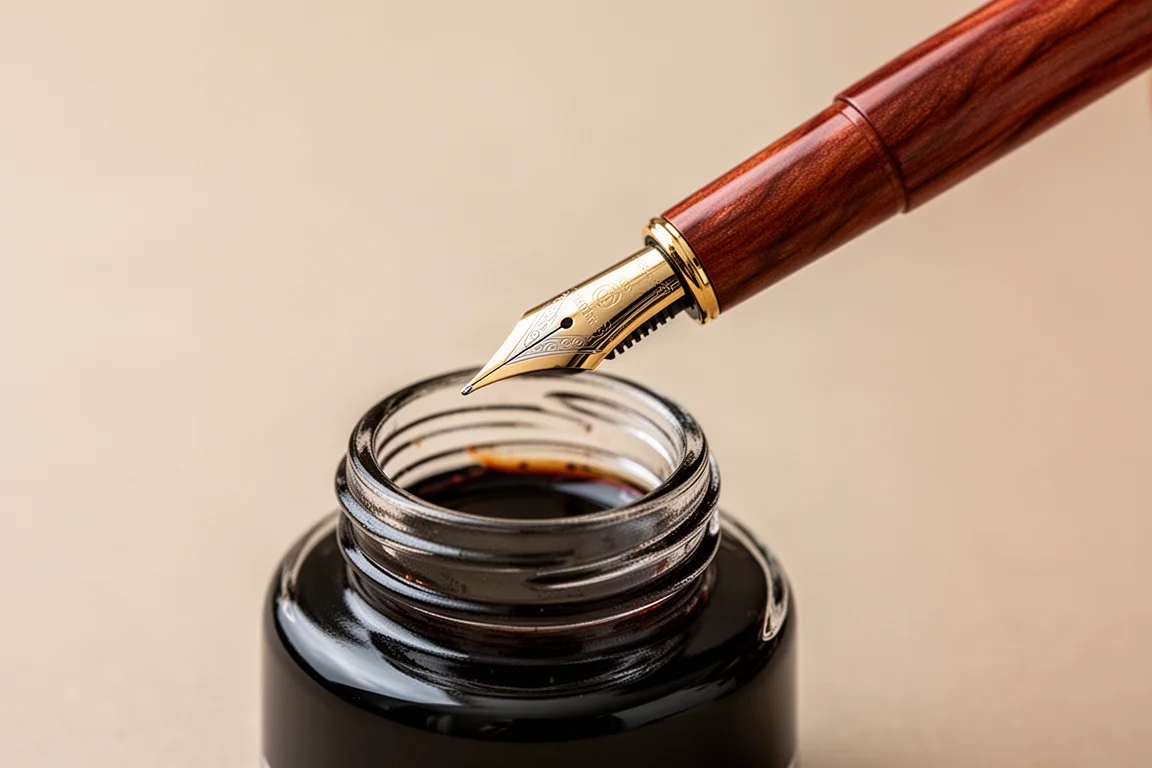
As a broad nib, it writes with an ever-so-slightly stubby character, which many broad nibs share and which gives the line a pleasant touch of character. It is not a flex nib, but with very careful pressure you can coax a modest amount of line variation. Reverse writing is possible, the pen keeps writing, and it produces a finer line in that mode. Posting is possible, but the pen is already large and the posted cap flops around a bit, so there is little reason to write with it posted.
Things to Consider Before Buying
The Elements Earth has a lot going for it: it is attractive, nicely made, pleasantly sized, and features a filling system that stands out from the crowd. The nib is smooth, the craftsmanship is genuine, and the writing experience is quite pleasant overall.
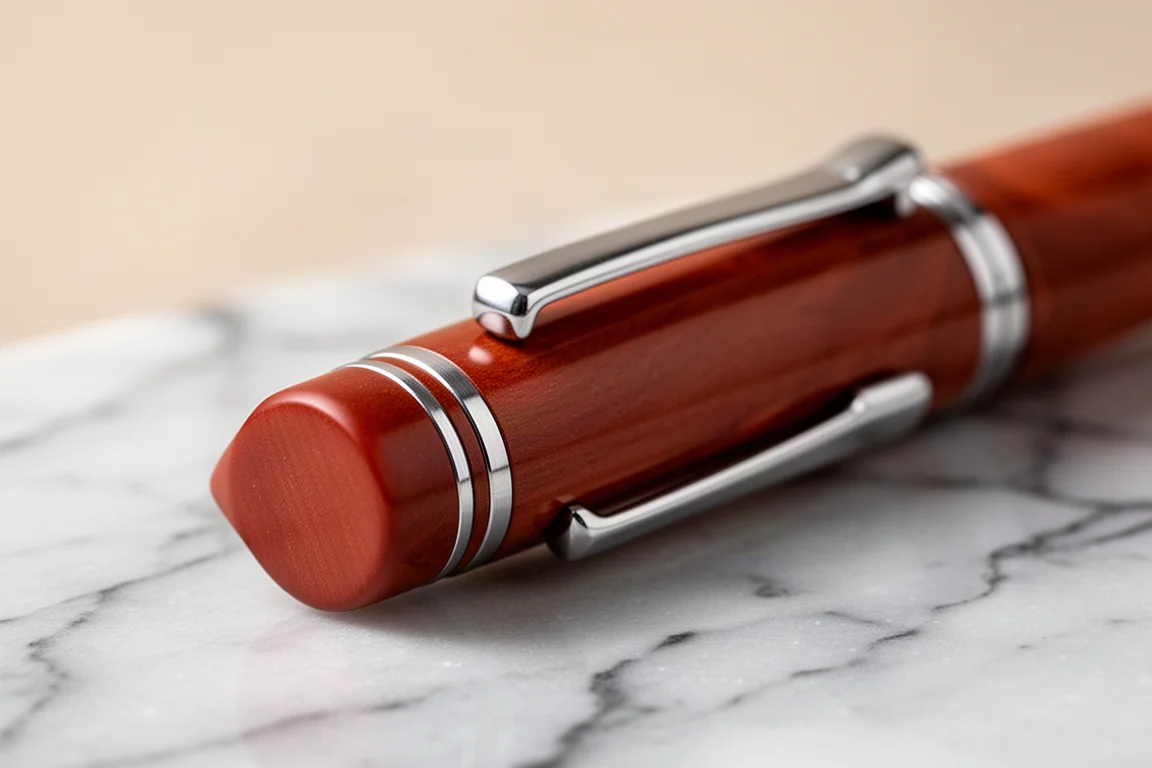
The main caveat is the cap threads. They can cross-thread, and when that happens the cap can feel stuck for a moment. The practical fix is simple: start closing counterclockwise so the threads catch correctly, then close clockwise. Once you develop that habit, it stops being an issue. It is not something that happens every time, but if you hand the pen to someone else to try, expect them to fiddle with it a little. If that sounds like something you cannot live with, this may not be the pen for you.
Buying Advice
At $160, this pen makes sense for writers who want something beyond a standard acrylic cartridge-converter. The pneumatic filler, the warm resin, the flush trim rings, and the attention to detail justify the price for anyone drawn to its style. If you prefer a wet writer out of the box, plan on a small nib adjustment, or choose a different flow preference and accept some dryness.
Conclusion
The Magna Carta Elements Earth is a well-made, attractively finished Indian fountain pen with an uncommon pneumatic filler and a smooth, if dry, broad steel nib. The cross-threading quirk is worth knowing about, but with a small habit adjustment and possibly a wetness tweak, it is a rewarding pen that delivers a genuinely pleasant writing experience.
Product link
View more details for Magna Carta Elements Earth
This product is mentioned in the review. Check the specifications, options, and compatibility before buying.
View more details for Magna Carta Elements EarthFurther reading
Related Reviews
Fountain Pens
Best Budget Fountain Pens Tested: 9 Pens, One Clear Winner
A hands-on comparison of nine affordable fountain pens for everyday writing, calligraphy, and sketching, with a clear standout for flexible nib fans.
Fountain Pens
Aurora Optima Review: An Italian Piston Filler That Punches Above Its Price
A 14k gold nib, ebonite feed, and a beautifully deep oraloid body make the Aurora Optima one of the most rewarding piston fillers around.
Fountain Pens
Cross Bailey Light Review: The Entry-Level Fountain Pen Worth Keeping at the Office
A plastic-bodied Cross with a metal clip, snap cap, and famously smooth extra fine steel nib. Around $15, available almost everywhere, and easy to recommend.