Lawn & Garden
Luba L2500 Review: A Wire-Free Robotic Mower That Reclaims Your Weekends
The Luba L2500 promises wire-free setup, AI obstacle avoidance, and up to an acre of hands-off mowing. We put it through its paces.
Introduction
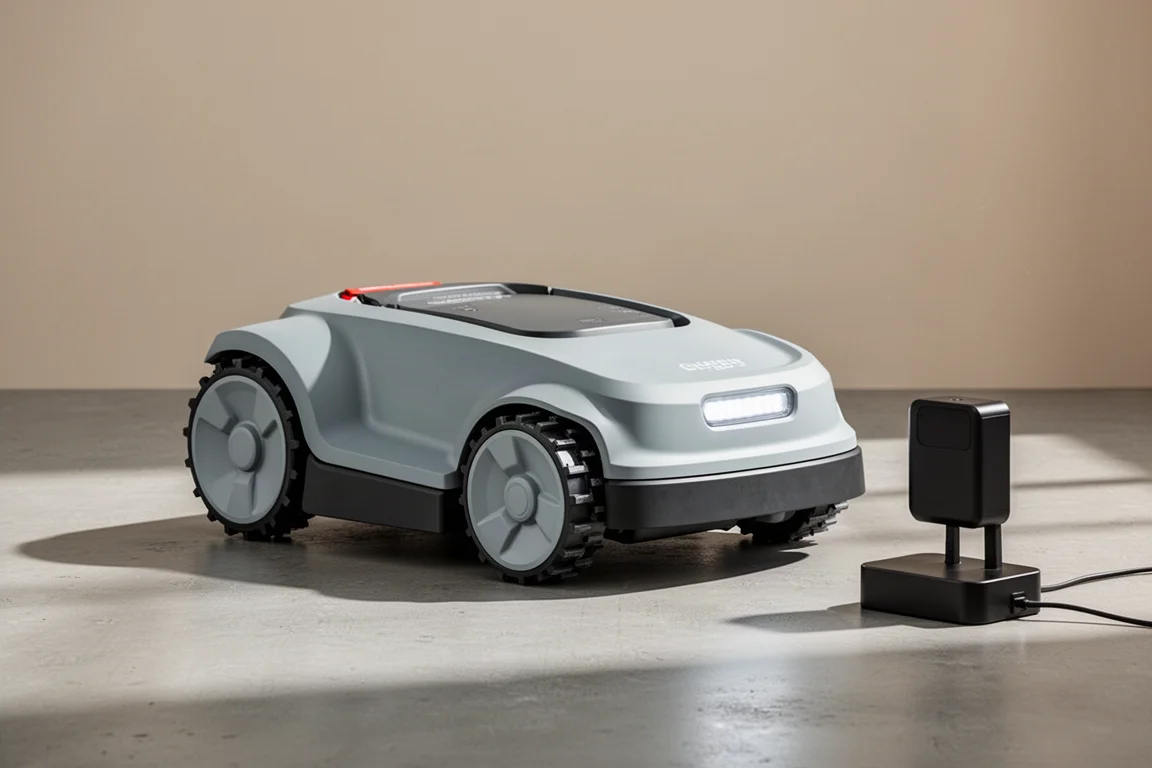
Imagine never spending another Saturday pushing a heavy mower through 90-degree heat. That is the promise behind the Luba L2500, a fully wire-free robotic lawn mower built around RTK satellite navigation, 3D vision, and a generous battery. Luba claims it can manage up to a full acre and map a lawn in as little as 10 minutes, which sounds almost too good. After spending time with it, the short version is this: setup really is that fast, the cut is clean, and the AI obstacle handling is genuinely impressive. It is priced at $1,599, which is a serious investment, but one that can make sense compared to a couple of seasons of lawn care services.
Setup in Under 10 Minutes
Setup is usually where people give up on robotic mowers, but the L2500 sidesteps the worst of it. There are no perimeter wires to bury, no trenches to dig. Once the charging station is placed and the built-in net RTK system is connected, the mower was out cutting in less than 10 minutes.
If you want a faster, more controlled boundary than driving the mower around manually, there is a drag-and-map feature. A pole connects to the front of the mower so you can physically walk the boundary line, and it maps as fast as you care to walk. The only caution is precision: walk carefully near landscaping beds so you do not miss edges and end up doing extra string trimming.
The net RTK approach means most people will not need external positioning hardware at all. If you do want it, RTK positioning components are available as an option, but it is worth checking your location on the manufacturer’s website first to confirm the built-in system works for you.
Design and Build Quality
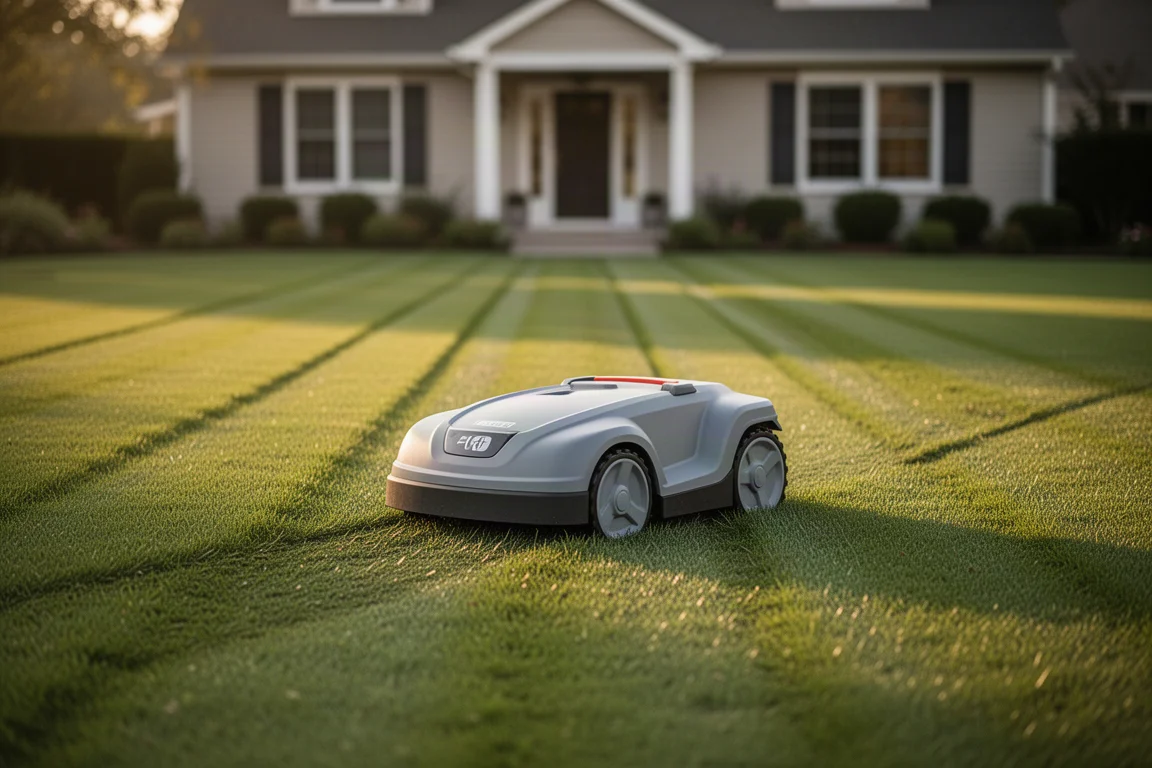
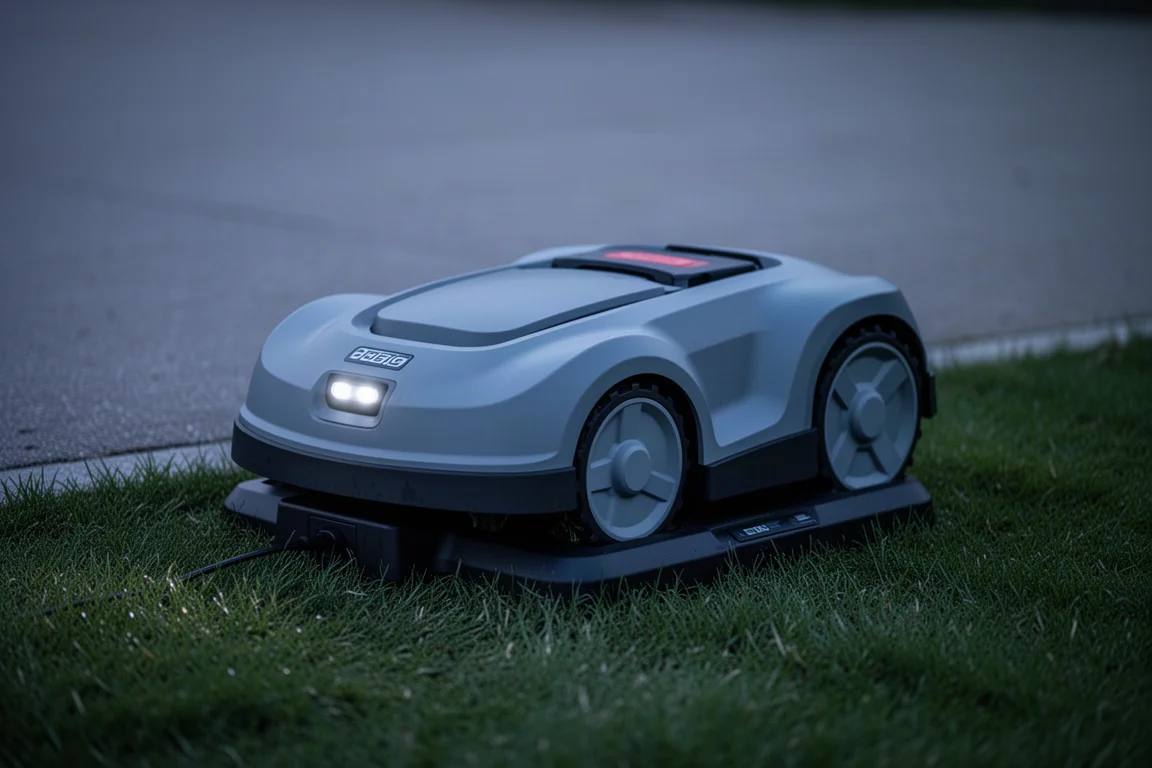
Pulling the L2500 out of the box, the first thing you notice is how sturdy it feels. It weighs about 57 lb, and the light gray, streamlined body carries an IP66 waterproof rating, so it can be sprayed down with a hose. Just be a little more careful around the underside when cleaning.
The box includes the charging dock and a home link box that uses long-range Wi-Fi Halo connectivity to extend the outdoor signal. The 57 lb weight cuts both ways: it contributes to the rugged build, but you will not want to carry it around the yard constantly, even with the decent handles.
Cutting Performance
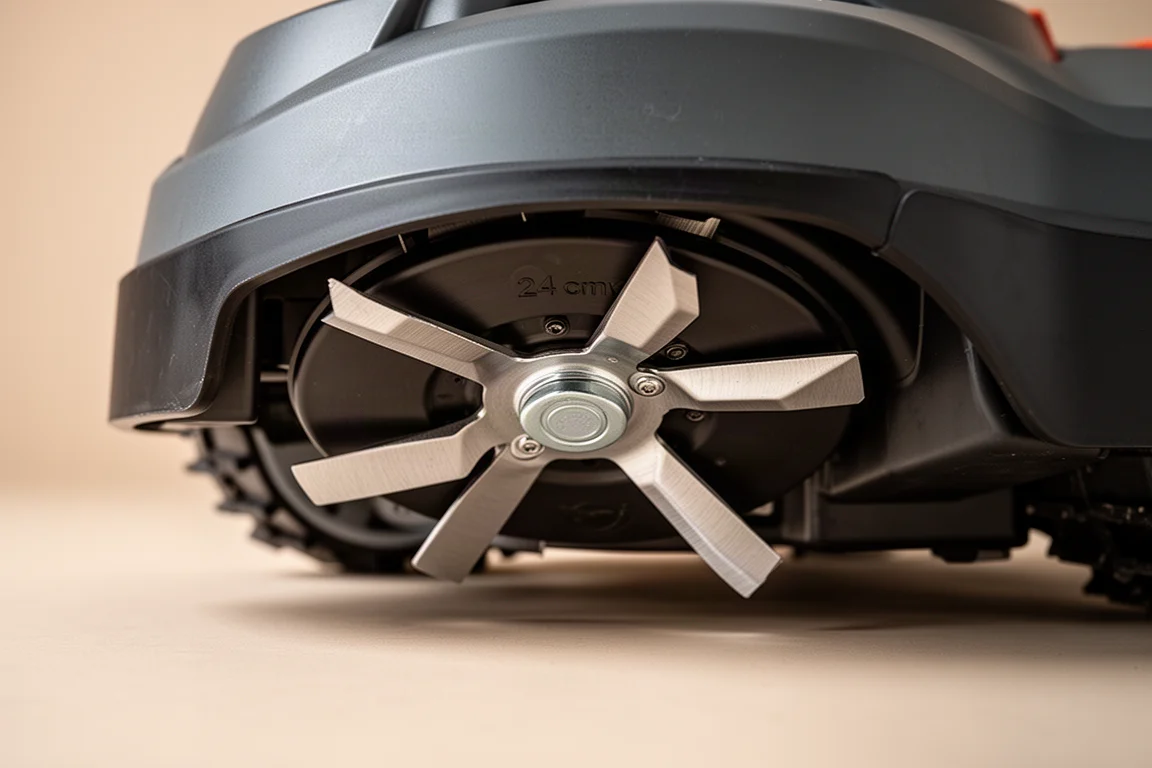
Underneath, the L2500 features a 9.4-inch (24 cm) cutting width powered by a 300 W cutting motor. Unlike many small residential mowers that use three blades, it uses five blades for a cleaner, faster cut.
It is rated to mow up to 2,669 sq ft per hour, or up to 4,000 sq m per day. Cutting height adjusts from 1.2 to 2.8 inches via a physical dial, and it handled uneven parts of the test yard without getting stuck, helped by chunky rear wheels and a two-wheel-drive system. It can also tackle slopes up to 57 percent, which is about 30 degrees.
Safety and Obstacle Avoidance
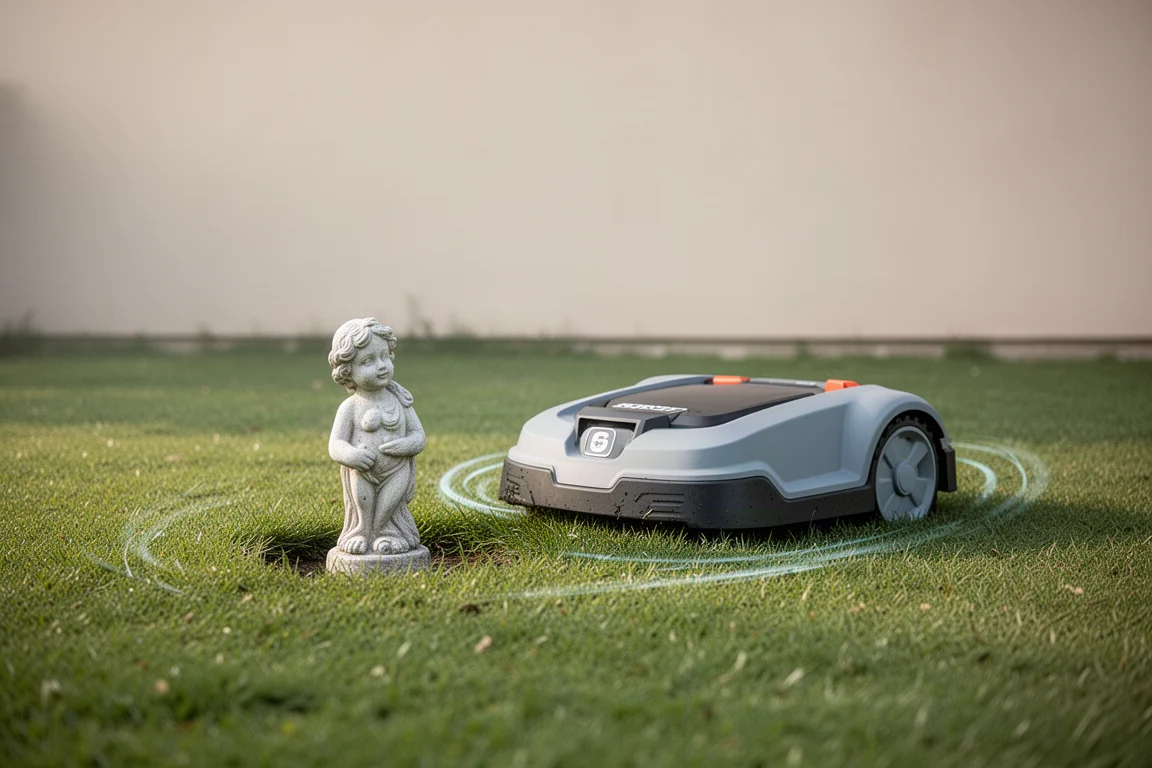
One of the biggest worries with robotic mowers is what happens when a dog toy or garden hose ends up in the grass. The L2500 answers with a 10 TOPS AI chip and dual 3D vision cameras, allowing it to identify around 300 types of obstacles and navigate around them.
In testing, when it spotted an object in the yard, it slowed down, evaluated it, drove around it, and resumed its mowing lines. Built-in rain, lift, and tilt sensors add another layer of protection. Note that rain detection is off by default, so enable it in the app’s advanced settings if you want the mower to stop and return to the dock when it rains.
The anti-theft behavior is equally solid. If the mower is lifted or tilted, an alarm sounds and it alerts you via your phone. Restarting it afterward is simply a matter of pressing two buttons.
Battery Life and Charging
The 10 A battery delivers about 240 minutes, roughly four hours of continuous run time per charge. When the battery runs low, the mower returns to its dock, charges at 5 amps in about 150 minutes, and then picks up exactly where it left off.
If you prefer it not to mow at night, that is the default. Enabling the overnight mowing setting turns on a front LED light, which helps you see the mower and helps the dual vision cameras keep detecting objects in low light.
Pros and Cons
The strengths are easy to list: zero perimeter wires, a fast setup with RTK and AI vision mapping, four hours of cut time per charge, a clean cut from the 300 W motor and five-blade disc, and an IP66 rating that makes hose-downs simple. The Wi-Fi Halo integration with your existing system is a genuine convenience, and it performs better than many other net RTK systems that require outdoor hardware.
The drawbacks are minor but real. The cutting height is a physical dial rather than an app control. At 57 lb, the unit is heavy, though good handles help. And like all satellite-guided mowers, heavy tree canopy can occasionally challenge the GPS signal, though the vision system compensates well. Fully canopied yards could still see occasional issues.
Buying Advice
At $1,599, the L2500 is a serious investment. But weighed against the cost of commercial lawn care over a couple of seasons, plus the convenience of wire-free setup, it delivers strong value. Before buying, check the net RTK coverage for your location, and be realistic about tree cover in your yard. If you have up to an acre and want to reclaim your weekends without paying a lawn crew, it is definitely worth a look.
Conclusion
The Luba L2500 does what robotic mowers always promised but rarely delivered: a genuinely quick setup, precise striped lines, intelligent obstacle avoidance, and autonomous charging, all controlled from a phone app. For acre-scale lawns, it is hard to argue with the results.
Product link
View more details for Luba L2500
This product is mentioned in the review. Check the specifications, options, and compatibility before buying.
View more details for Luba L2500Further reading
Related Reviews
Lawn & Garden
Best Cordless Lawn Mowers 2026: Ten Flagship Models Compared
We compare ten flagship cordless mowers from top brands to help you find the best value, mid-range, and premium option for your lawn.
Lawn & Garden
Hart Goes Big: New 40V Riding Mower, Self-Propelled Mower, and a Carbon Fiber Trimmer
A fresh wave of battery-powered lawn gear led by a new Hart electric riding mower, plus the walk-behind mower and carbon fiber string trimmer that round out the 40V line.
Lawn & Garden
Best Battery-Powered Lawn Mowers 2026: Three Flagships Compared
Flagship self-propelled battery mowers from Ego, Echo, and Greenworks tested for power, runtime, and value to help you find the right fit for your lawn.