Camping Gear
Light Fighter Cold Weather Kit Review: Turning a Three Season Tent Into a Four Season Shelter
A lightweight conversion panel that gives the Light Fighter one person tent real winter capability, with a 14.2 ounce weight penalty and a fair price.
Introduction
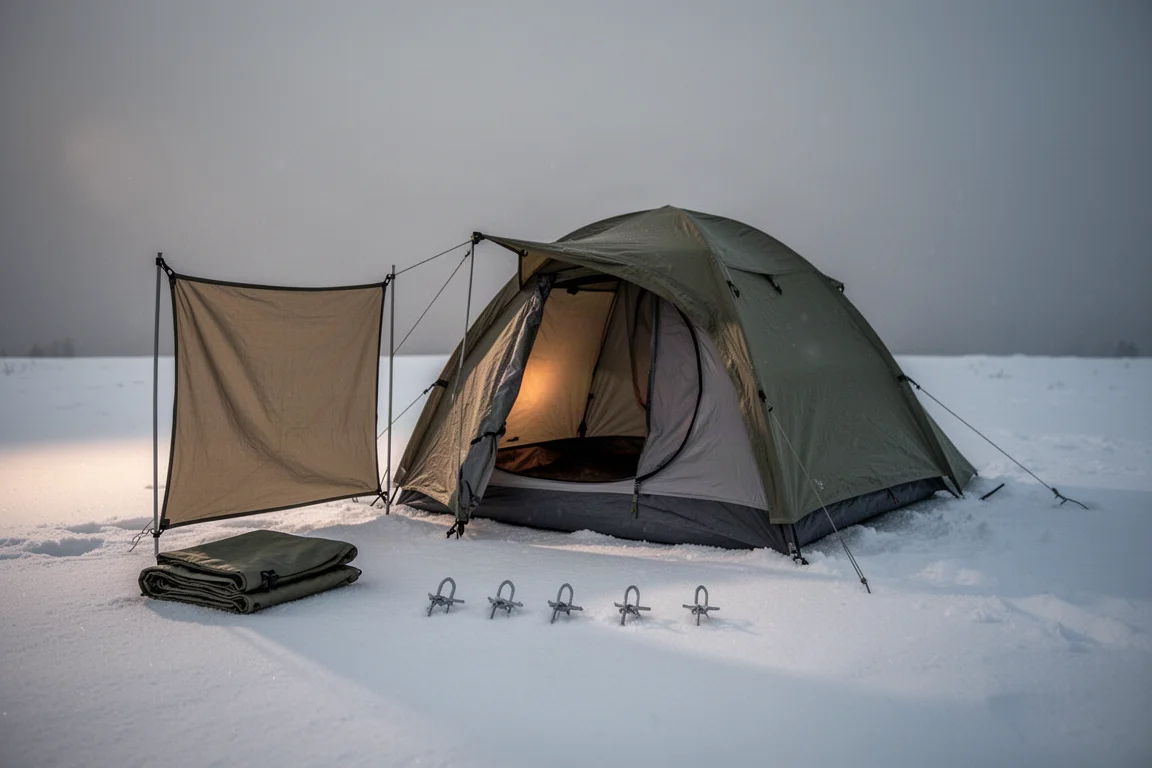
Winter camping usually comes down to a choice between two expensive options. Either you commit to a dedicated four season tent, or you accept that a lighter three season shelter is not going to handle snow loading and driving wind. The Light Fighter Cold Weather Kit, also sold as the Light Fighter wind break, offers a third path. It is a conversion panel built for the Light Fighter one person tent, and it changes that three season shelter into something that can be used through winter.
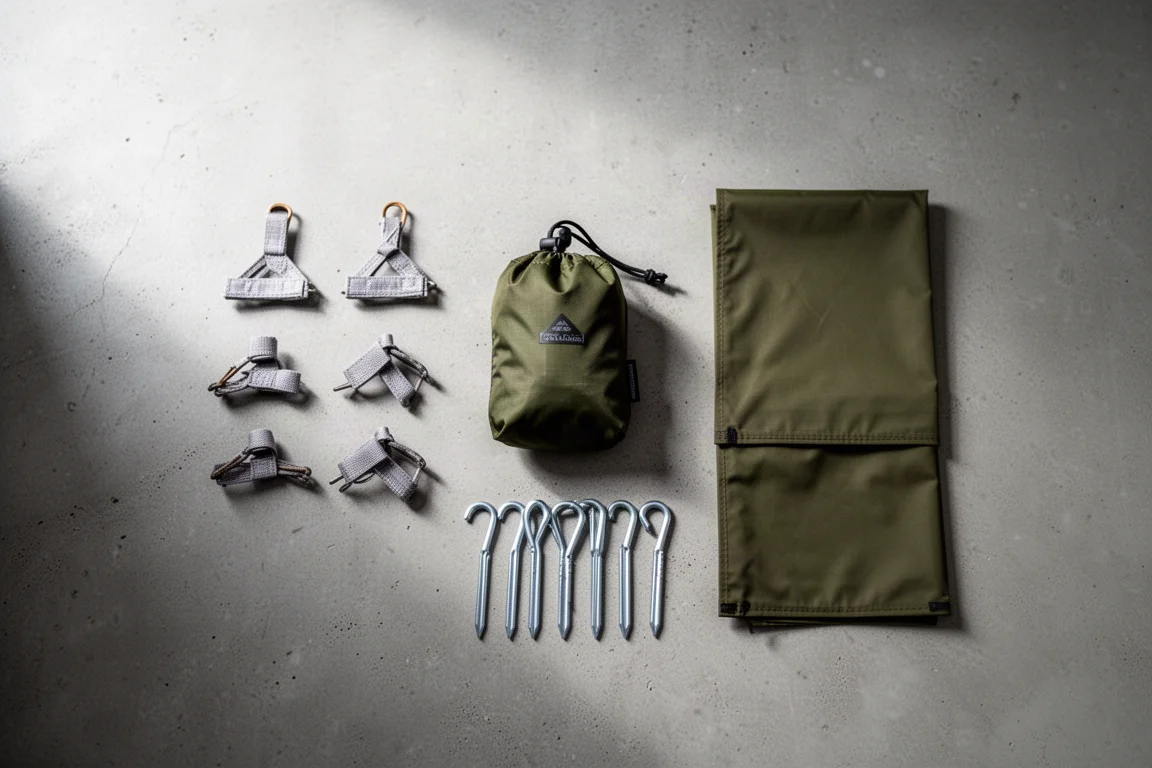
The kit itself is simple: a fabric windbreak that layers over the tent body, plus four snow anchors and a storage bag. What makes it worth writing about is how well the idea works in practice. After a full winter of use in deep snow and strong wind, this is one of the more genuinely useful pieces of camping gear to come through this category.
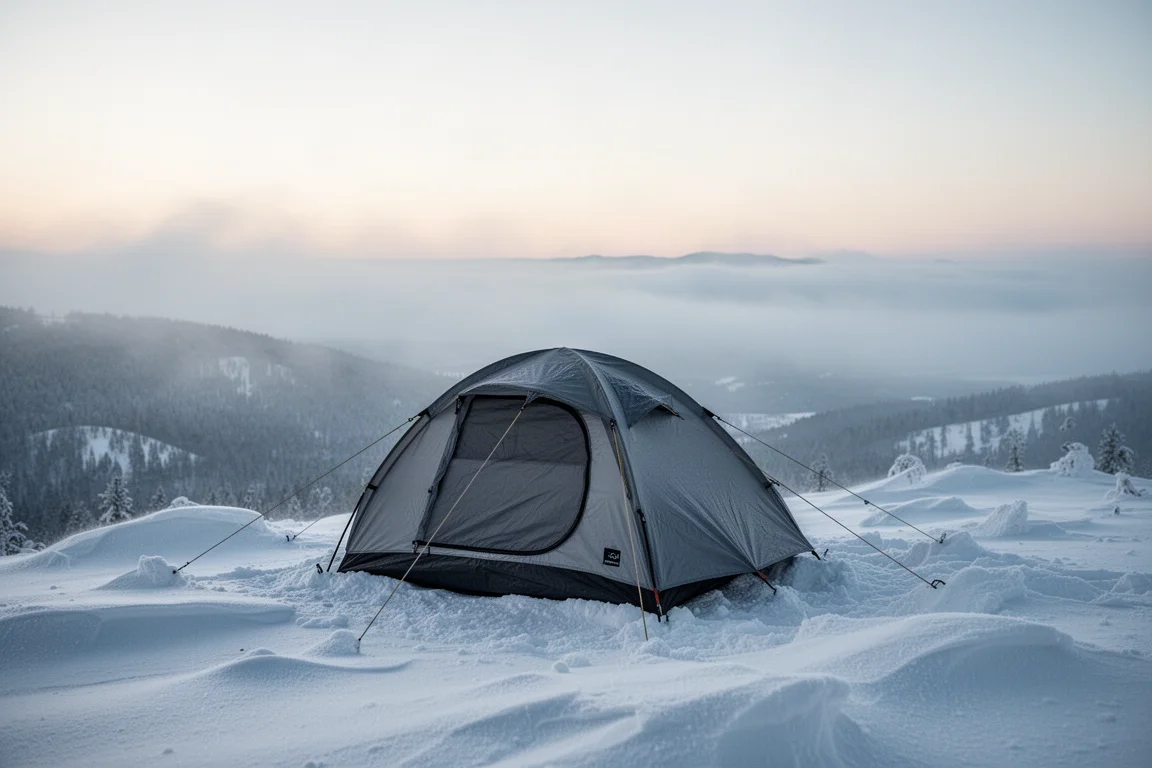
Nothing about the kit is complicated, and that is part of its appeal. It does not require a second tent, a new pole set, or a different sleeping system. It simply closes off the parts of a three season tent that let cold air in, and it does so with a minimal weight penalty.
Who This Kit Is For
This kit makes the most sense for anyone who already owns, or plans to buy, the Light Fighter one person tent and wants to extend its usable season. Three season tents are built around mesh panels that move a lot of air, which is exactly what you want in summer and exactly what you do not want in winter. The Cold Weather Kit closes that gap without asking you to buy a second shelter.
It also suits campers who want year round capability from one setup rather than a garage full of tents. For average winter conditions, meaning ordinary snow events and steady wind, the combination covers a lot of ground.
It is not aimed at expedition use. For a full blizzard or serious alpine conditions, a dedicated four season or expedition tent remains the right tool.
How the Cold Weather Kit Works
The kit arrives with a storage bag, four snow anchors, and the windbreak panel. The snow anchors attach to the tent and can be filled with snow and buried, which gives you a solid hold in soft ground where pegs struggle.
Installation is straightforward. With the tent body separated from the poles, you lay the panel over the body. Slits cut across the panel line up with the clips that connect the body to the poles. You pull each clip through its matching slit and attach it to the pole, working your way around the tent. Each corner has a hook that fastens to the body, and once the panel is secured you can put the fly back on.
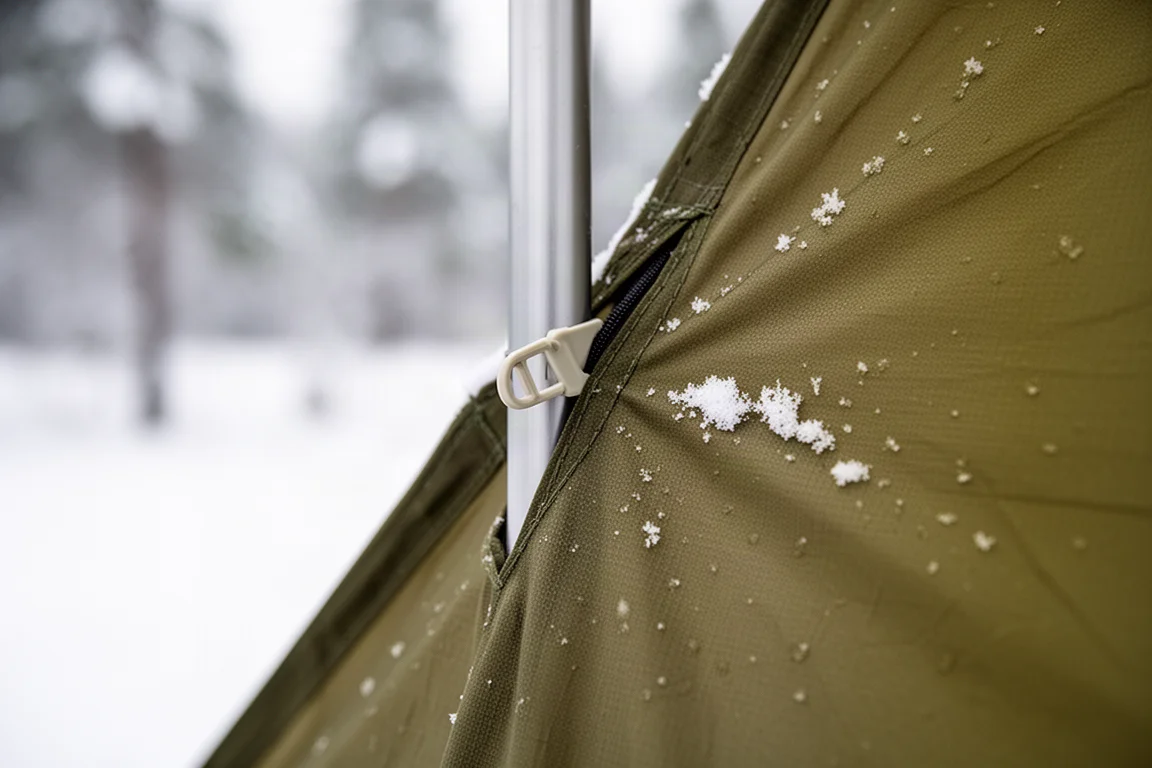
Once installed, the panel covers every bit of mesh on the tent body. The doors and sides are fully covered, with the exception of a single vent at the top on each side. That is the whole point of the design: it blocks wind, snow, and cold air from passing through the mesh while holding warmth inside. Each side has a single zipper for the door, and the door can be rolled back and tied off when you want it open.
Main Strengths
The headline strength is versatility. The kit adds a genuine four season capability to a three season tent, and it does it in a way that is easy to understand and easy to reverse when warm weather returns.
Weight is impressive. The complete kit, including the snow anchors and storage bag, comes in at 14.2 ounces. The storage bag measures roughly 5 by 5 inches, so it packs down small enough to live in a pack without a second thought.
Materials are solid. The panel uses YKK zippers and a 30 denier nylon that is water resistant. Just as importantly, the fabric is designed to let moisture escape, which helps keep condensation under control in cold conditions. That combination of blocking wind and snow while still breathing is what separates a workable winter conversion from a plastic sheet.
At $120, the kit is also priced fairly for what it does. It is a specialist accessory, but it delivers a capability that would otherwise require an entirely different tent.
Cold Weather Performance and Field Testing
The kit was used through an entire winter, including outings in roughly six to seven inches of snow with wind speeds around 40 miles per hour. It handled those conditions extremely well. The panel stayed in place, the interior stayed noticeably warmer than the exposed mesh body would have allowed, and there were no condensation problems to speak of.
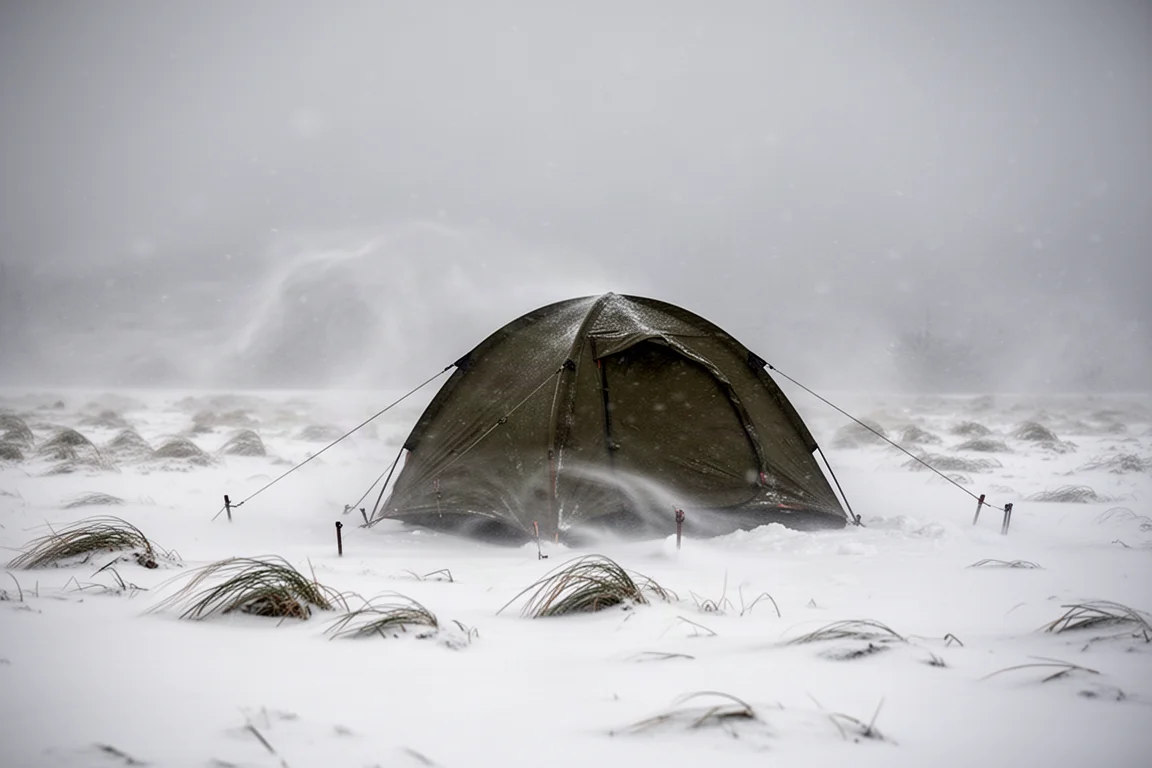
The practical takeaway is that this setup covers the conditions most winter campers actually meet. For average snow events and average wind, the tent and kit together are more than adequate. If your plans involve a blizzard or exposed alpine terrain, a dedicated four season or expedition tent is still the safer choice, and the kit is not marketed as a substitute for one.
Things to Consider Before Buying
Setup time is the most obvious trade-off. The Light Fighter one takes about five minutes to pitch once you are accustomed to it, and installing the kit adds roughly another five minutes, so around ten minutes in total. That is not a burden, and there is a welcome detail: once the clips are threaded through the slits, you do not have to redo that step on the next pitch.
The kit is currently available only for the one person tent. Anyone using a larger Light Fighter shelter will have to wait and see whether the range expands.
One design point is worth flagging honestly. Wind could, in a specific combination of wind direction and site setup, work its way behind the panel and into the tent. That did not happen during a full winter of testing, and the company has said it was working on a solution. The panel is held to the body with hook and loop fastening at several points, but there is no fastening in the centre, so that section can move slightly in gusty conditions. It is a minor issue rather than a deal breaker, but it is the kind of detail worth knowing before you buy.
Buying Advice
The value story here is straightforward. The Light Fighter one person tent can be found for around $100, and the Cold Weather Kit runs $120, so roughly $200 buys a setup that covers year round camping. Compare that with four season tents that can be converted to three season use, which start around $800 and climb from there, with their own conversion kits typically running $200 to $300. As far as three season tents that convert into four season shelters, this combination stands largely alone.
Availability across the outdoor industry has been uneven in recent years, and tent supply in particular has been unpredictable. If this kit fits your plans, it is worth buying when you find it rather than waiting for a better moment. Buyers who already own the tent will find the kit is the cheaper half of the equation, and it is the half that unlocks winter use.
Conclusion
The Light Fighter Cold Weather Kit is one of the most interesting camping products to come along in a while. It takes a lightweight three season tent and gives it real winter capability, with a 14.2 ounce weight penalty, sensible materials, and a price that undercuts the alternative by a wide margin. It is not an expedition solution, and the setup adds a few minutes, but for ordinary winter camping it works, and it works well.
Product link
View more details for Light Fighter Cold Weather Kit
This product is mentioned in the review. Check the specifications, options, and compatibility before buying.
View more details for Light Fighter Cold Weather KitFurther reading
Related Reviews
Camping Gear
3FUL Ultralight Ground Sheet Review: A Two-Person Footprint Worth Packing
A 6.7 oz two-person ground sheet in ripstop silnylon, priced around $30. Here is what it protects, what it does not do, and who should pack it.
Camping Gear
Backcountry Light Dual-Function Tarp and Floor Review: A Footprint First
A dual-purpose tent floor and tarp that keeps falling rain off you, but cannot block wind. Here is where it works and where it does not.
Camping Gear
Best 2-Person Camping Mattresses for Couples: 10 Options Compared
A practical comparison of ten two-person camping mattresses, covering self-inflating pads, air pads and air mattresses for couples.