Multi-Tools
Leatherman Mr. Crunch vs Free P4: A First Look at a Very Unusual Multi-Tool
The Mr. Crunch brings a strange fold-out plier head, magnetic tool retention, and a few clever new implements. Here's how it stacks up against the Free P4.
Introduction
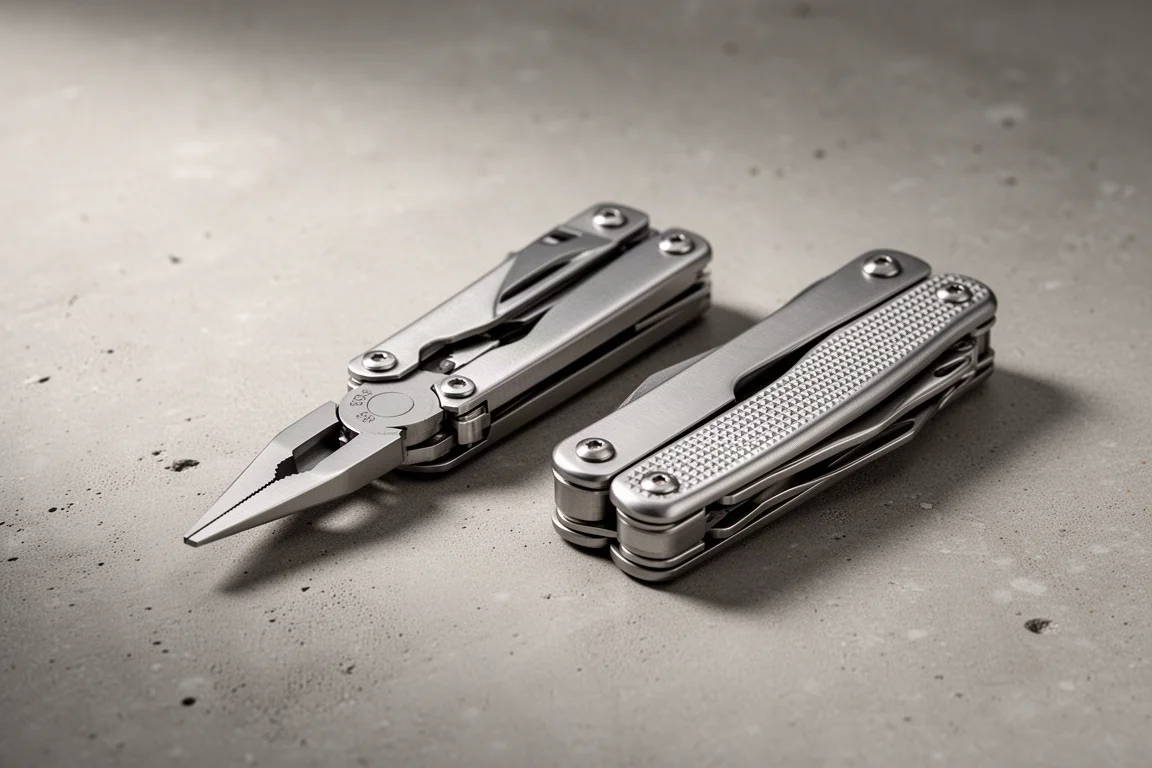
The Mr. Crunch arrives by way of Leatherman Garage, the brand’s experimental arm in Portland, Oregon, and it does not look like a normal Leatherman from the moment you see the packaging. It ships in a simple cardboard box with a leather sheath, no extra accessories, and a design brief that is clearly about trying new things rather than refining a proven formula.
The headline feature is a completely different frame from the Free series. The scale components are similar in some ways, with a different texture, and “Mr. Crunch” is marked on the tool itself. But the most striking change is the plier head, and it changes the whole character of the tool.
The Plier Head: The Most Interesting Part
The pliers are blunt-nose and unlike anything we have seen on a production multi-tool. The head opens up with a clever two-stage motion, then folds down into a cutout, and suddenly you have a plier head that can get essentially flush against a nut and rotate it. That is the real advantage: there are simply some nuts you cannot access with a bulky traditional head, and this design reaches places the original plier head cannot.
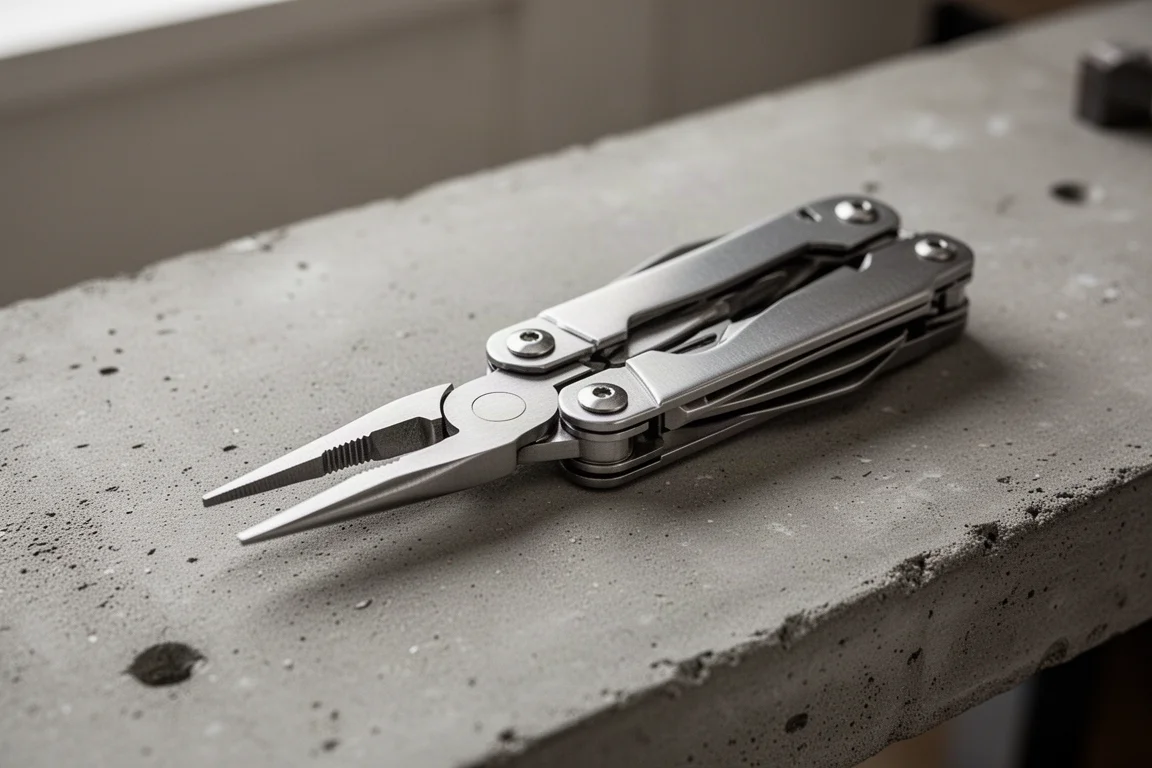
The action is impressive, and it is easy to see why this would have been extremely difficult to mass produce decades ago when Leatherman first developed it. It likely would have had to be made essentially by hand.
There are trade-offs, though. The large cutters eat up a lot of the gripping real estate, and the design would arguably benefit from dedicated cutters with less overlap into the gripping area, or from dropping the hard-wire cutters in favor of straight cutters only. The needle-nose sections are clearly cast steel, you can even see the machining marks, and the open question is whether they are strong enough for real abuse. For most owners, that question will probably never get answered in practice.
Magnetic Retention: The Big Design Question
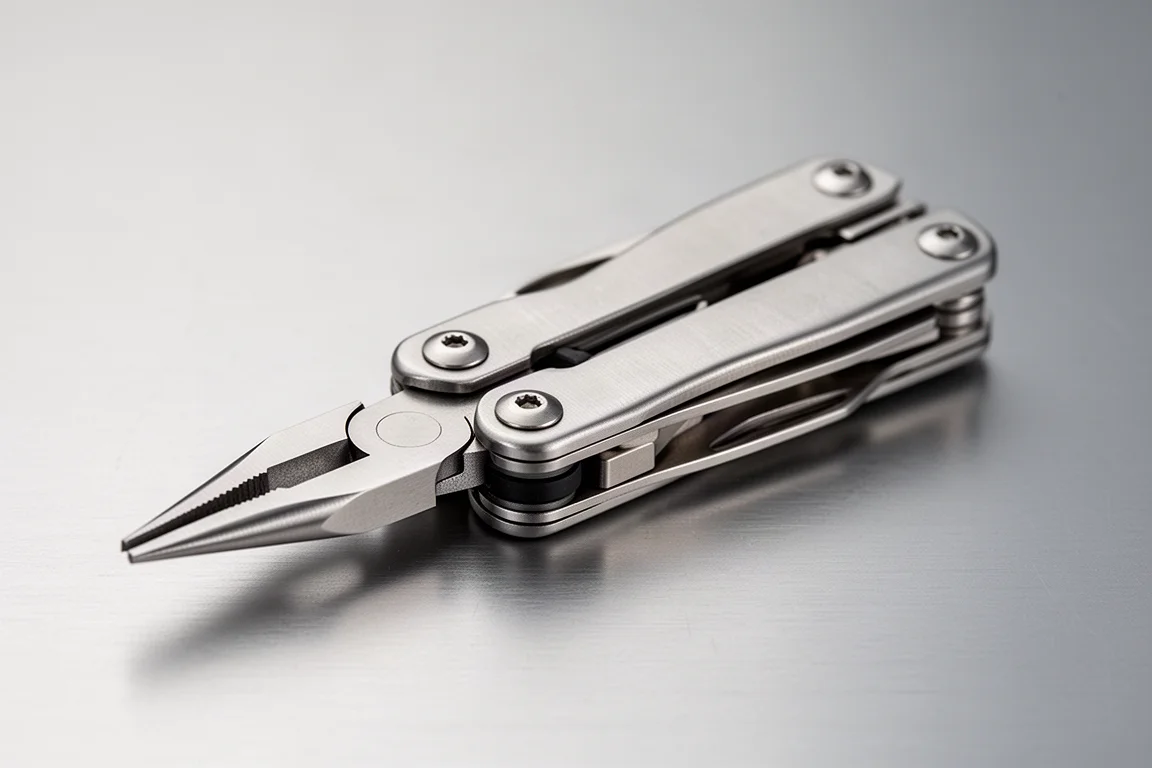
The Free series relies on magnetic retention for the inner tools, and on a heavy-duty tool that has always been a weak point. Without contact with the spring at the start of the opening motion, locking tools in place leaves nothing holding them except the magnet, and they can pop out when you squeeze the handles.
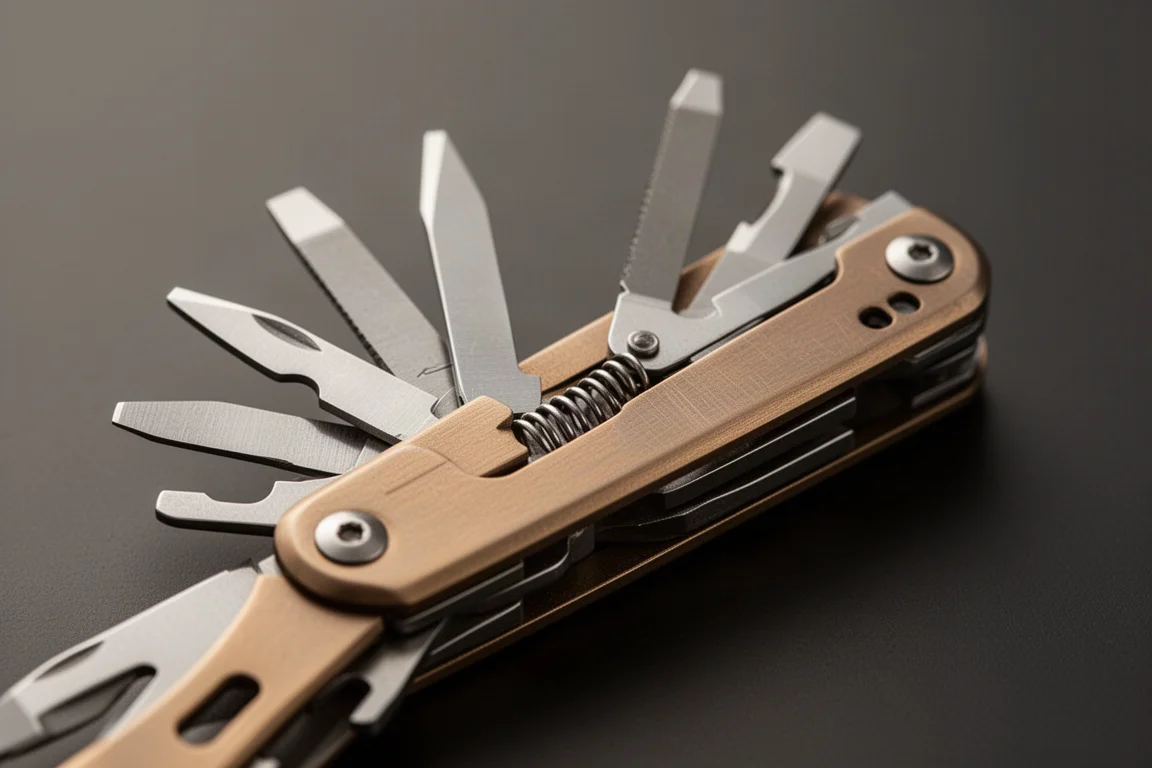
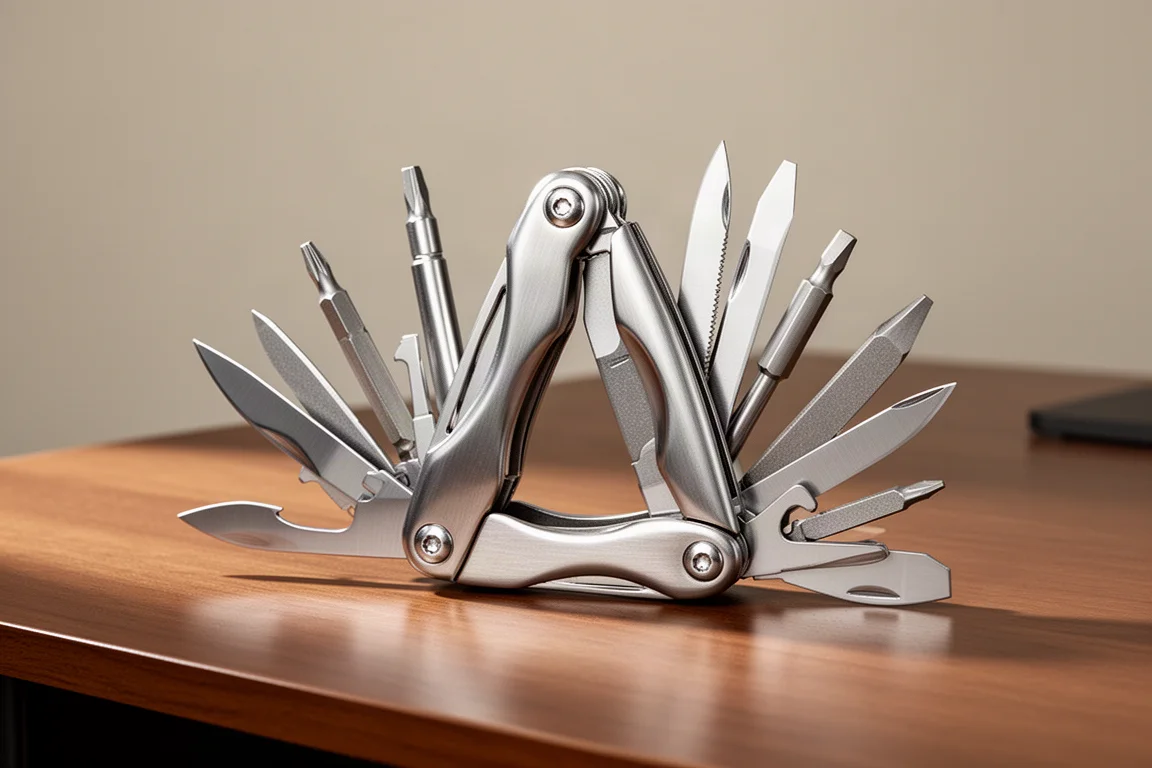
The long tools on this architecture actually do have spring retention: at the very start of the opening stroke they touch the spring, which pulls them back in. With that arrangement, the magnet is arguably unnecessary; the only issue would be finding a different latch to keep the tools closed.
The Mr. Crunch’s short tools, unfortunately, do not get that treatment. The precision bit driver in particular is the worst offender: there is essentially no retention at all, it feels free-floating, and it does pop out when the handles are squeezed. It uses a standard precision bit found on tools like the Wave and Charge, which is convenient, but the implementation is lazy design. Since the scissors and the chisel both use a tang shape that interacts with the spring, copying that same tang onto the remaining inner tools would have solved the problem with no magnets at all.
New Implements: Chisel, Bit Driver, and Reamer
A few implements here are not present on the standard lineup. The chisel is reasonably sharp and sensibly placed, working best when scraping something below you rather than cutting a section out like a traditional chisel. That said, the flat edge of another implement can do the scraping job just fine, so its real-world value is limited. It is also noticeably harder to get out than the other tools because of its spring-interacting tang, though that same tang is why it does not pop loose.
The straight-blade side feels loose, with almost no retention, which is a genuine design flaw. The one implement that genuinely impresses is the reamer with the integrated small flat head: it needs no modification and, surprisingly, does a decent job drilling holes even with that small flat head attached.
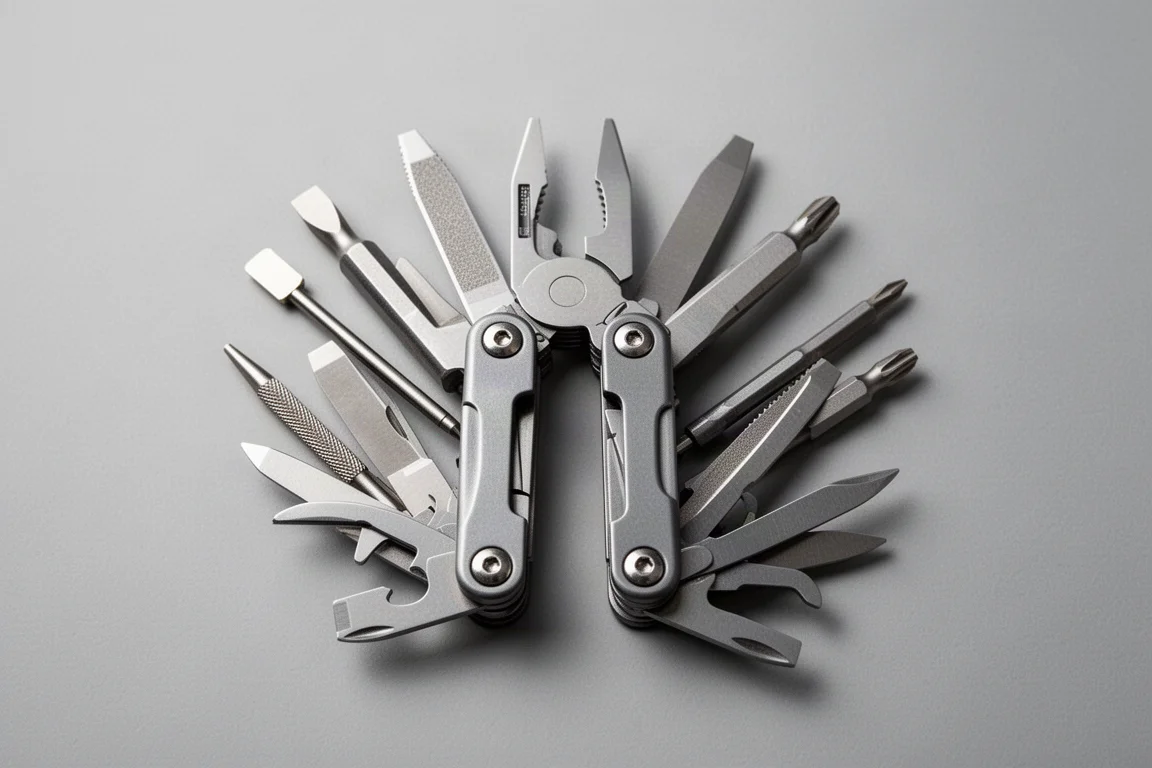
Mr. Crunch vs Free P4
Thickness is essentially the same as the Free series. Weight is not: the Mr. Crunch comes in at 260 grams, about nine and an eighth ounces, compared to the Free P4’s eight and a half ounces. That half-ounce difference is noticeable in hand.
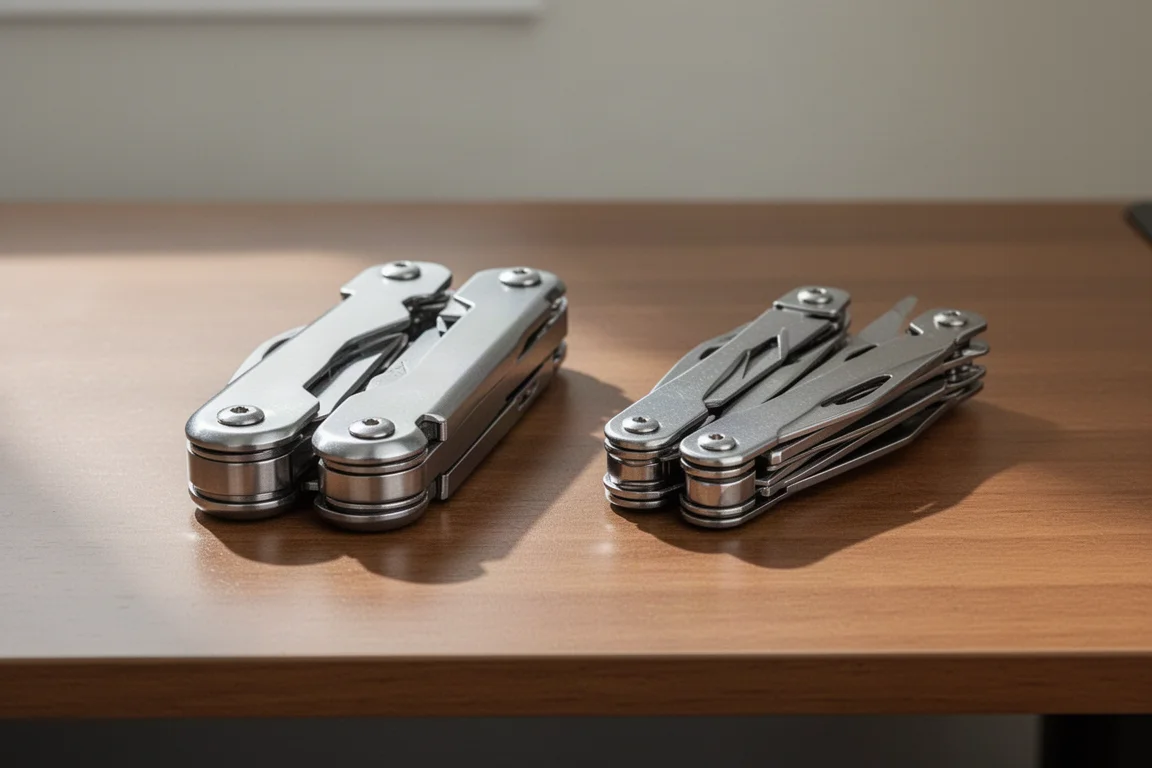
The flexibility of the tool arrangement is also worth noting. The long tools can be separated by springs and set up in a whole range of orientations, so there is a lot of design freedom in this architecture. The Free P4 unit used for comparison had been modified, so exact implement-level differences should be taken with a grain of salt, but the fundamentals are clear: same thickness, more weight, a radically different plier head, and weaker retention on the inner tools.
Buying Advice
If the fold-flush plier head genuinely matters for the nuts and bolts you encounter, the Mr. Crunch is a fascinating, surprisingly functional concept worth serious consideration. If you want a refined everyday heavy-duty tool with proven retention, the Free P4 remains the safer bet, especially given the weak magnetic-only retention on the Mr. Crunch’s short tools.
Conclusion
The Mr. Crunch is a cool first look at an architecture that could fix its flaws with relatively simple changes to tang design. The plier head is genuinely something new and appears to work, and the reamer is a standout. But loose inner implements and a precision bit driver with almost no retention are hard to ignore on a tool of this type. It is an intriguing experiment rather than an obvious daily carry, and worth watching as the concept matures.
Further reading
Related Reviews
Multi-Tools
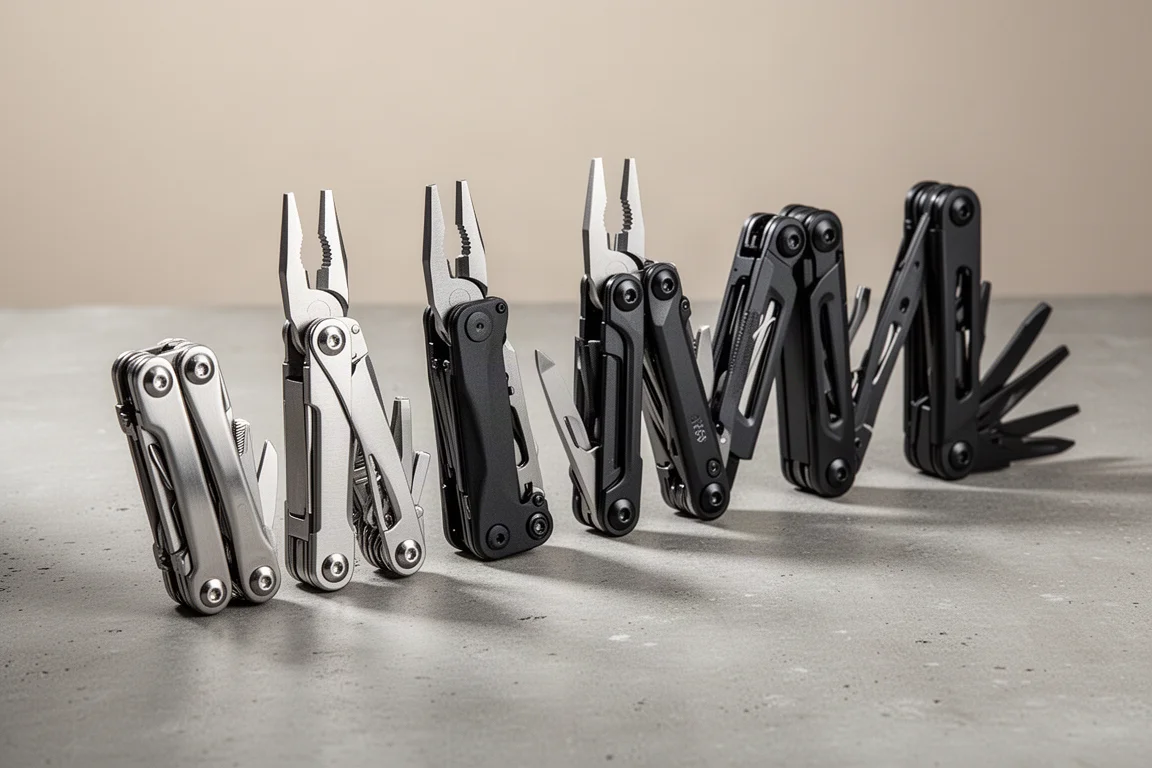
Leatherman Wave Plus Review: A Pliers-First Multitool for Bike Trips
Why a pliers-first multitool earns permanent space in a touring kit, and what to weigh before paying for the Leatherman Wave Plus.
Multi-Tools
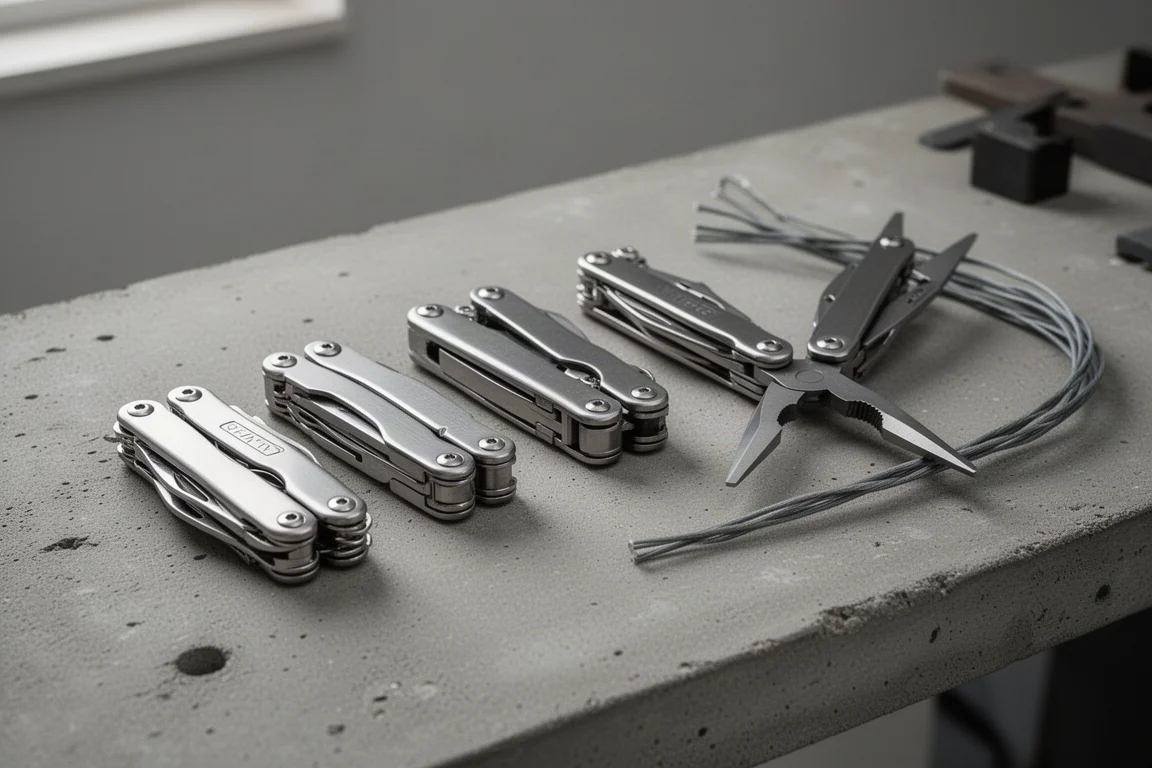
Best Budget Multi-Tools Under $50: Four Picks Worth Considering
A compact SOG original and three value-focused clones, with honest notes on which ones deliver real value and where to draw the price line.
Multi-Tools
Best Multitools for Hard Wire Cutting: Which Pliers Actually Survive the Test
We put a lineup of classic and modern multitools up against a simple challenge: cutting coat hanger wire cleanly without damaging the cutters.