Cookware
Le Creuset vs. Staub Dutch Ovens: A Side-by-Side Comparison
We compare Le Creuset and Staub Dutch ovens on knobs, handles, lids, moisture retention, interiors, colors, weight, and price to help you pick the right one.
Introduction
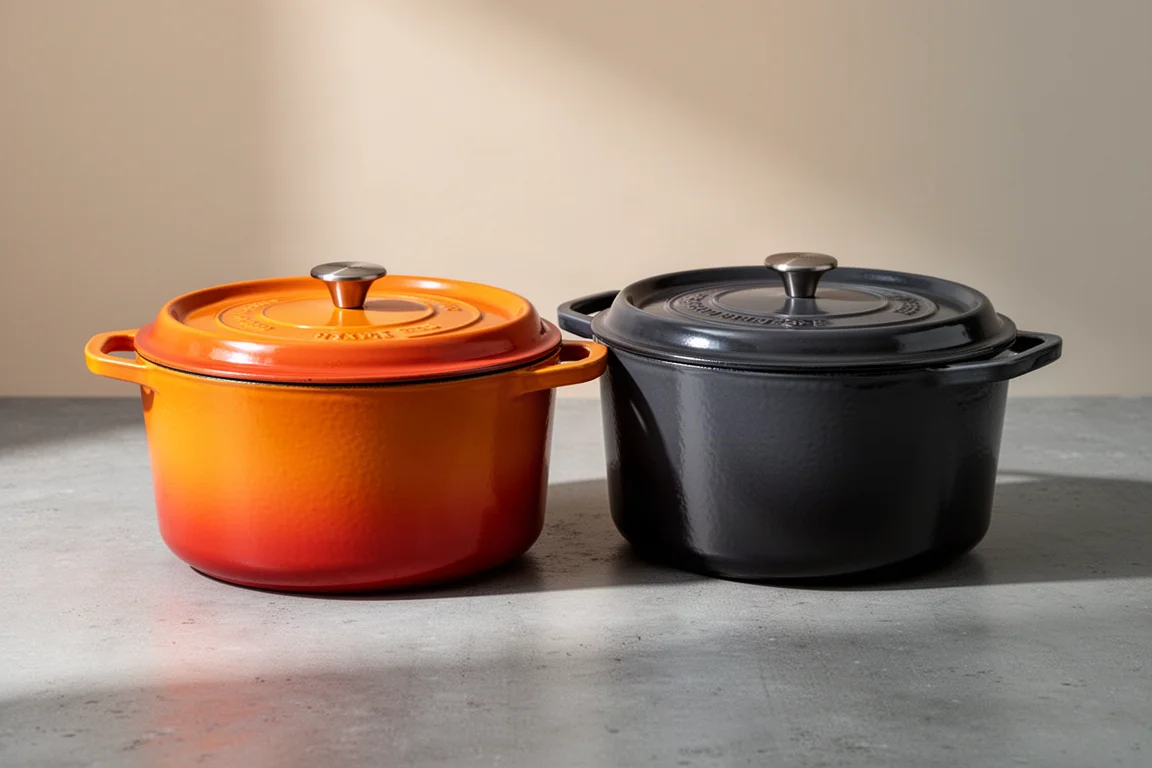
Le Creuset and Staub are two of the most respected names in enameled cast iron, and both are made in France by expert craftsmen operating their own production facilities, which helps maintain strict quality standards. But side by side, the differences become clear: lid knobs, handle size, interior finish, weight, moisture retention, and price all set them apart. This comparison breaks down each difference so you can decide which Dutch oven fits your cooking style.
Lid Knobs: Steel Versus Phenolic
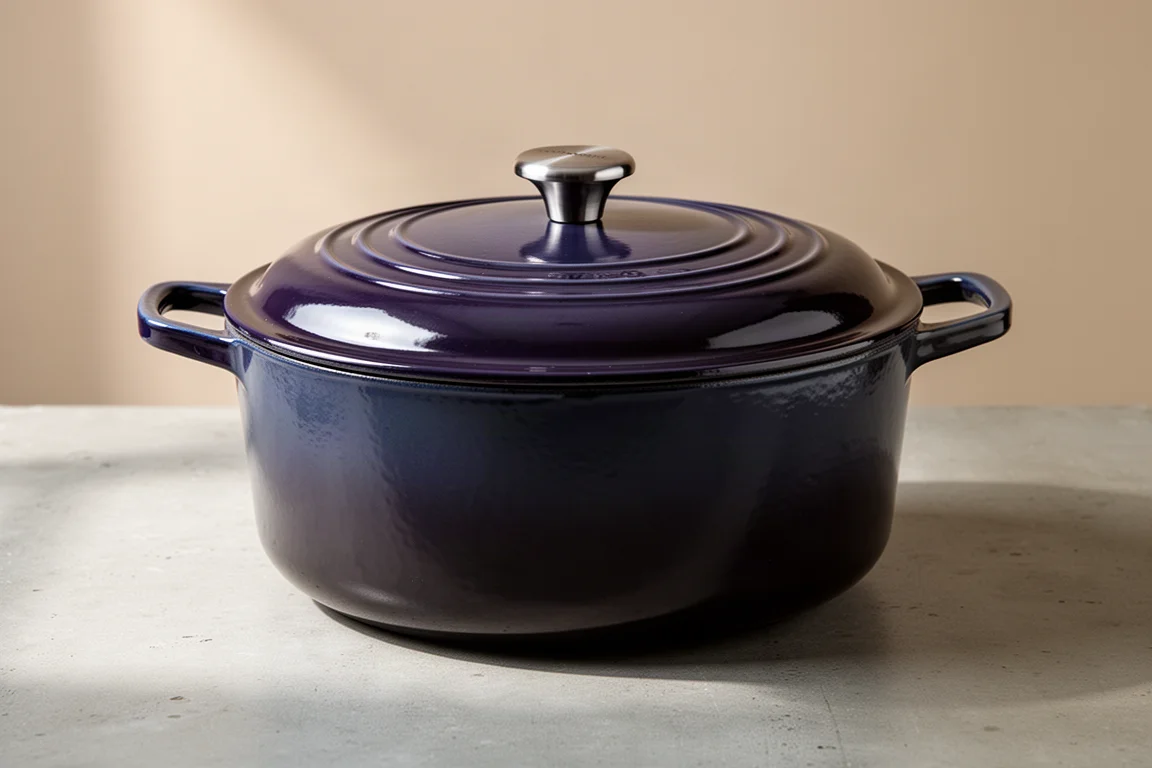
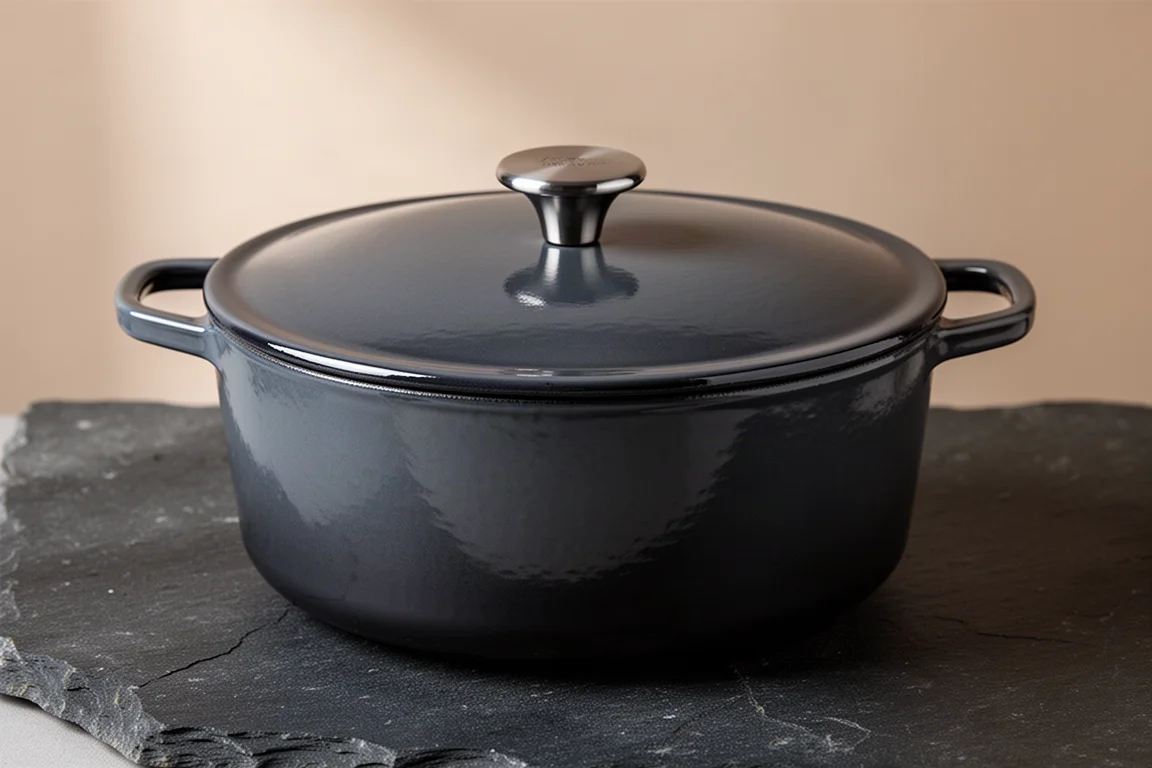
The first difference you’ll notice is the knob at the center of the lid. Staub uses steel knobs with a nickel or brass exterior, oven safe up to 500 degrees Fahrenheit. They get extremely hot whether you’re cooking on the stove or in the oven, and replacement handles are available in fun animal shapes like a cow, a rooster, and a pig, which is a handy way to label what’s inside if multiple Dutch ovens are going at once.
Le Creuset comes with either a black phenolic knob with a rubbery texture or a smooth stainless steel knob, with the steel version also available in decorative gold or copper finishes. The key distinction is temperature tolerance: the Classic black knob is oven safe up to 380°F, the Signature black knob up to 480°F, and all steel knobs up to 500°F.
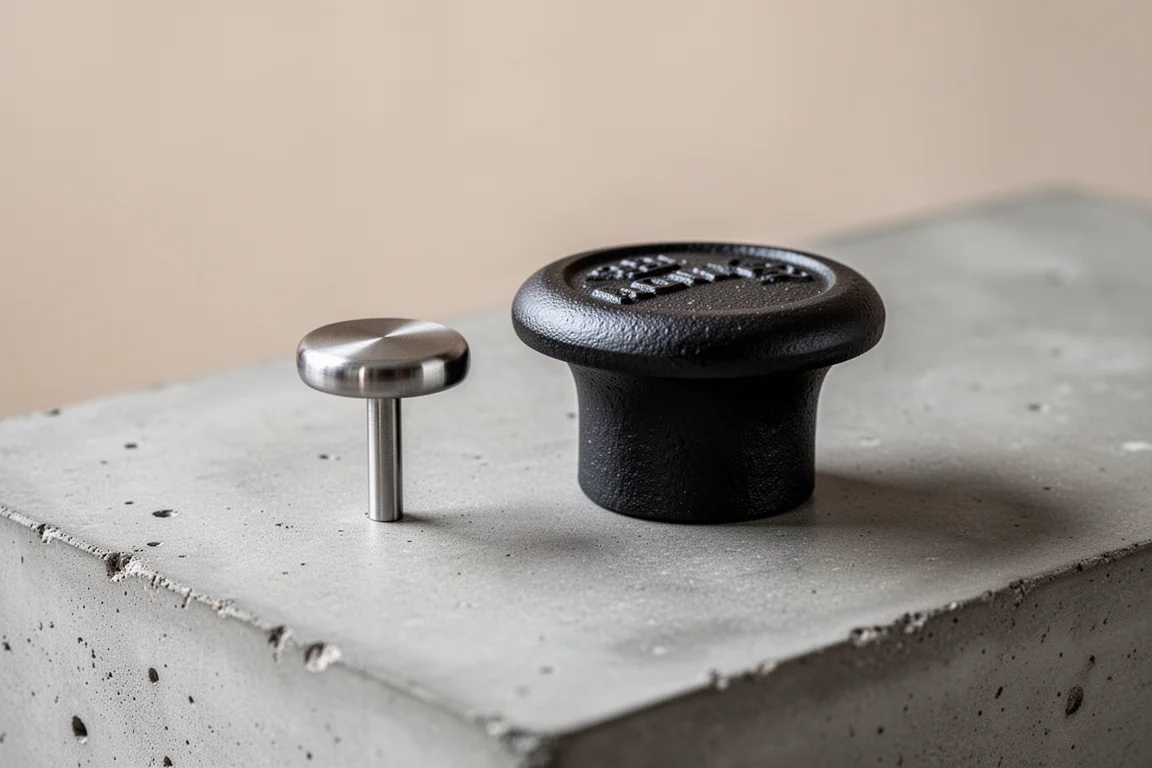
Staub’s knob is smaller with a thinner stem, while Le Creuset’s is thicker and gives you more to grab onto. Because Dutch oven lids are heavy, the larger Le Creuset knob makes handling easier and safer, especially with a bulky oven mitt on, and it gives more control when tilting the lid to check on food.
Side Handles and Enamel Coverage
Le Creuset’s side handles are wider and roomier, with a 1.25-inch opening for a sturdy grip, compared to less than an inch on Staub. It sounds minor until you need to move a piping hot Dutch oven full of food from stove to oven. An oven mitt fits easily around the Le Creuset handles, while Staub’s are a much snugger squeeze.
Enamel coverage differs too. On Le Creuset, every exterior inch except the pot rim is coated in enamel, including the handles. Staub looks fully coated at a glance, but the inside of the side handles is bare cast iron, apparently because the enamel spray never reached that angle. You can’t see it from most views, but you can feel the rough texture when lifting the pot without gloves.
The Self-Basting Lid Test
Staub lids feature small bumps designed to capture evaporated liquid and drip it evenly back across the center of the pot. Le Creuset lids are smooth. To see whether those bumps actually work, both Dutch ovens were filled with 32 ounces of water, brought to a boil, and left boiling for 10 minutes. Each lid was then lifted without tilting and rested on a paper towel for 20 seconds.
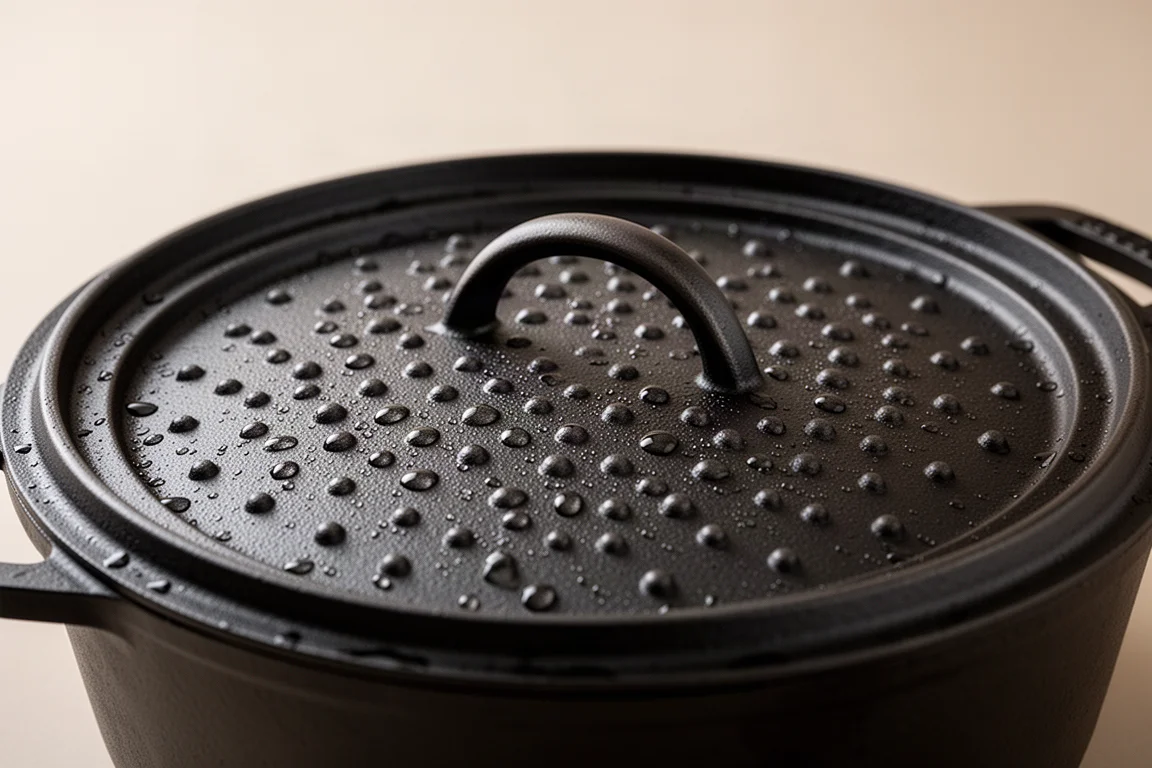
The Staub lid not only distributed the water droplets more evenly but also captured significantly more water: the towel beneath it was almost completely saturated, while the Le Creuset towel had water mostly around the edges. The bumps genuinely do trap and distribute moisture better.
Whether that matters depends on what you cook. For meals that benefit from continuous self-basting, like a roasted chicken, yes. For soup or sauce, more even condensation won’t make a noticeable difference.
Moisture Retention Test
Heavy, tight-fitting lids lock in moisture, and that’s a big part of why people love Dutch ovens. To compare retention, 64 ounces of cold water went into each pot with the lids secured. After bringing the water to a boil, the heat was turned to low for a 30-minute simmer, followed by a 30-minute rest on the counter with the lids still on, before the remaining water was measured.
Of the original 64 ounces, Staub retained 56 ounces while Le Creuset retained 52 ounces. Both performed well, but Staub is clearly superior in this category.
Interior Finish
Le Creuset’s interior is smooth and sand-colored, which makes it easy to see and monitor browning and doneness. Staub’s matte black interior is stain resistant and won’t show discoloration over time, but it makes browning and fond development harder to monitor.
Both interiors can scratch and stain, though the damage is more noticeable on Le Creuset’s lighter surface. If you cook visually and check fond carefully, the light interior wins; if you prefer a pot that hides wear, Staub’s dark finish has the edge.
Color Options
Both brands offer a variety of exterior colors, but Le Creuset is the clear winner here. Staub offers around a dozen colors, while Le Creuset has more than 20 and keeps adding new ones, including the iconic orange “Flame” and the blue “Caribbean.” During the enameling process, two separate colors are applied to create the beautiful two-tone gradient seen on most pieces.
Weight and Wall Thickness
Staub Dutch ovens have noticeably thicker walls: 4.6 mm at the top compared to 3.8 mm on Le Creuset. That extra material makes Staub heavier. A Staub round 5.5-quart Dutch oven weighs 12.8 pounds, while the Le Creuset 5.5-quart weighs 11.5 pounds.
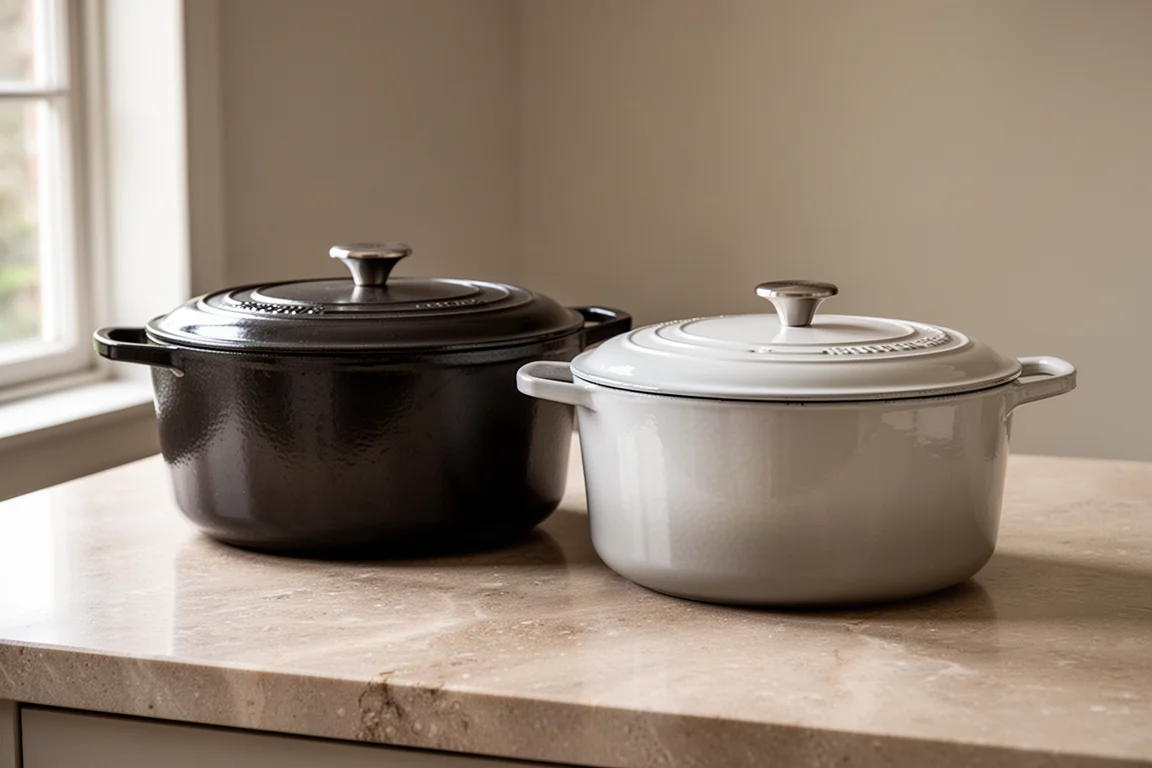
Dutch ovens are heavy in general, but the lighter Le Creuset is easier to maneuver, which matters most for stove-to-oven meals that require lifting the pot when it’s full and piping hot.
Price
Both brands are expensive, reflecting their reputation for some of the best enameled cast iron cookware in the world, but Staub is slightly more affordable. Prices vary by size and color, and you can generally expect to save between $20 and $50 by choosing Staub.
Which Should You Buy?
Le Creuset’s key advantages are lighter weight, easier maneuverability, larger handles, a sand-colored interior that makes monitoring browning easy, and a nearly limitless color range. Staub counters with thicker, heavier walls that retain heat and moisture better, a self-basting lid that distributes liquids more evenly, and a dark interior where stains and scratches are less noticeable.
Ultimately, you can’t go wrong with either. Both are high-performing, durable, elegantly designed, and made in France with strict in-house quality control. If you’re choosing between them, pick Le Creuset if ease of handling and color choice top your list, and Staub if heat retention and moisture performance matter most.
Conclusion
Le Creuset and Staub each hold a clear lead in different areas: Le Creuset for handling, visibility, and color; Staub for heat retention, moisture performance, and price. Identify which trade-offs matter for your kitchen, and either pot will serve you well for years.
Further reading
Related Reviews
Cookware
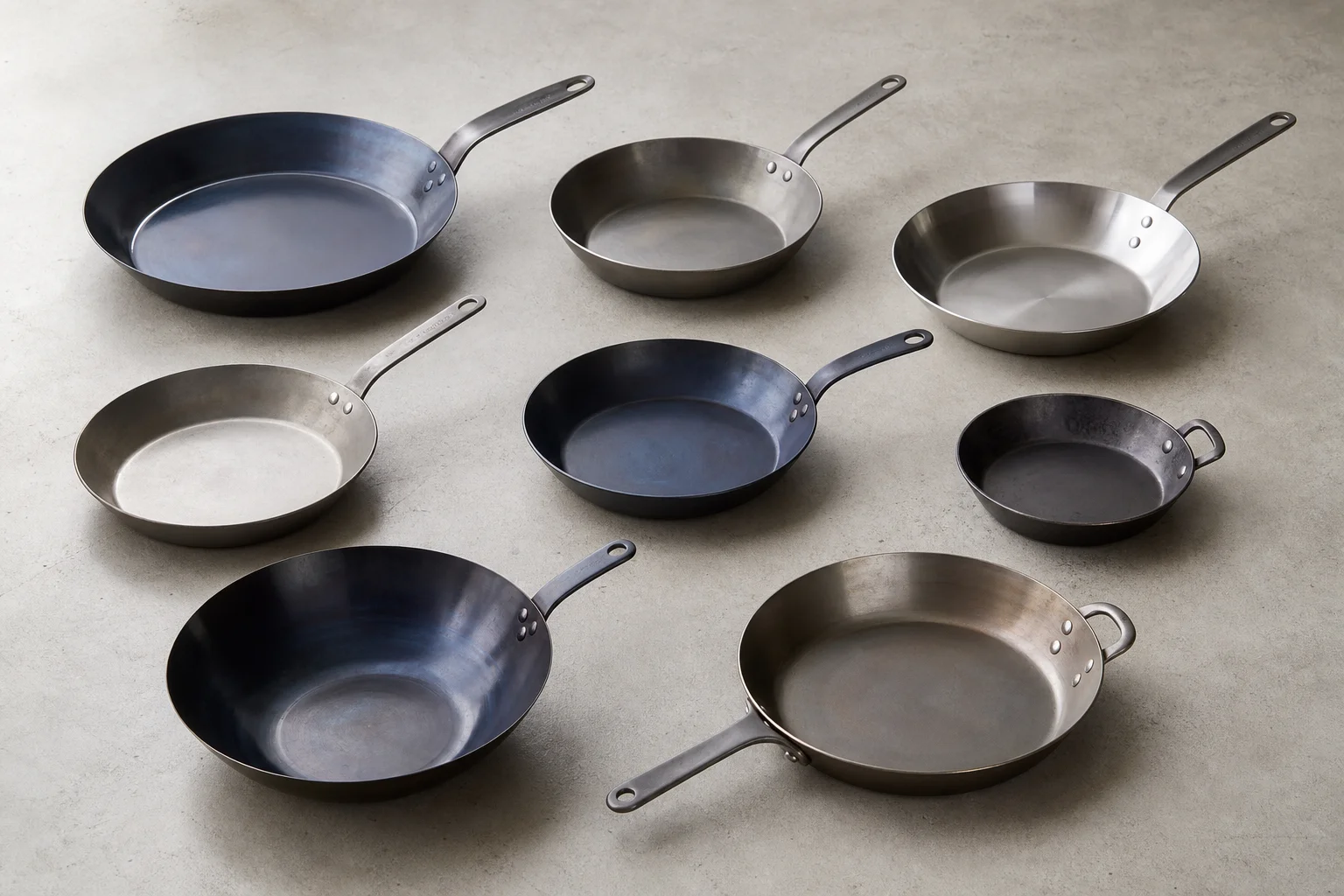
Best Carbon Steel Pans Tested: Which Brands Deliver Real Value
We tested eight popular carbon steel pans with controlled durability, heat, and cooking tests. Here's which ones perform best and which to avoid.
Cookware
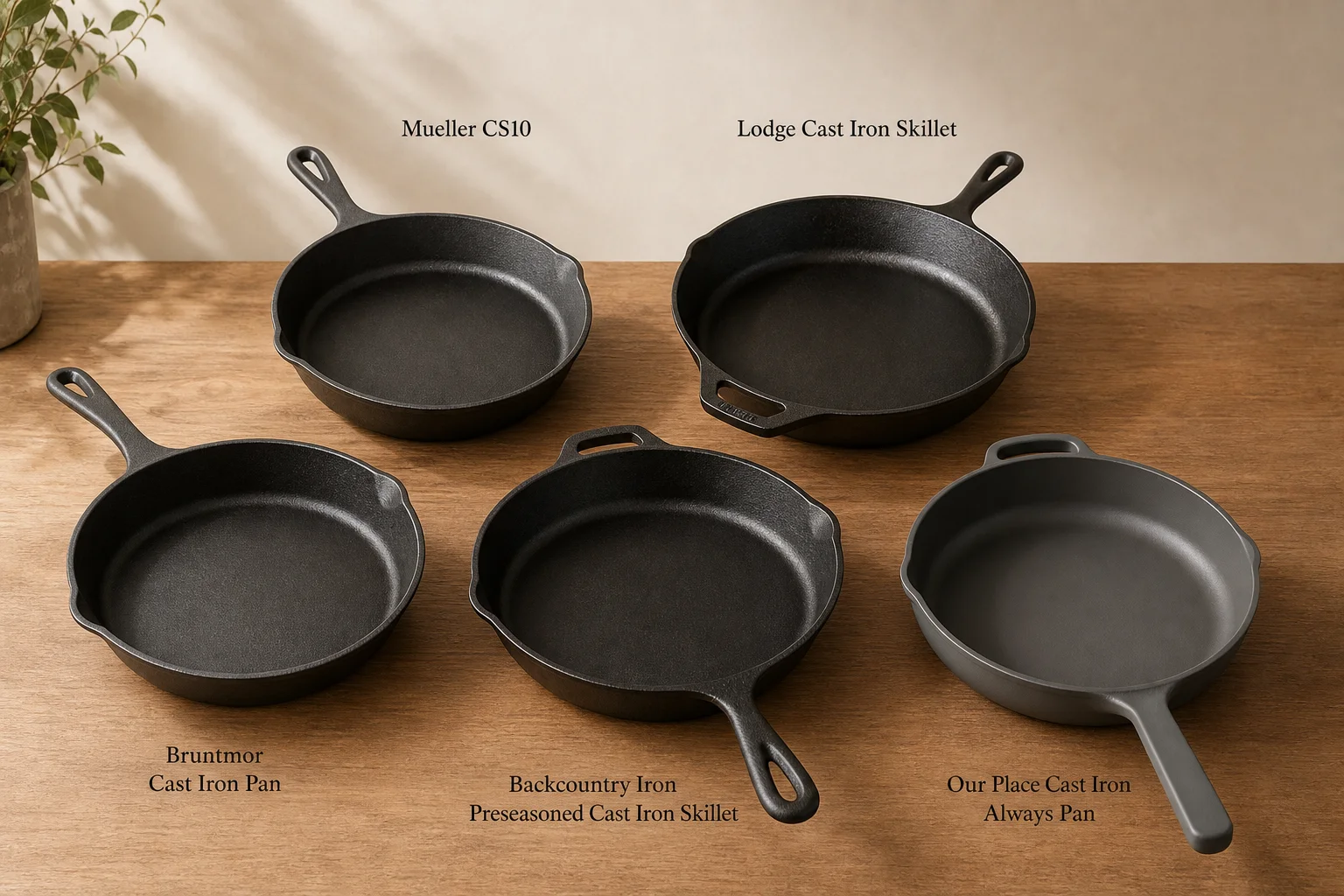
Best Cast Iron Pans 2026: Five Options from Budget to Premium
A practical breakdown of five cast iron skillets, from affordable Mueller to premium Our Place, with clear strengths and trade-offs for different cooking needs.
Cookware
Best 12-Inch Cast Iron Skillets: Premium Craftsmanship vs. Reliable Budget Option
Two standout 12-inch cast iron skillets tested for heat retention, surface finish, and durability. One premium choice and one budget-friendly alternative that both deliver.