Kitchen
Larchwood Canada Cutting Boards: Large Random Pattern vs Medium Classic
Two end-grain larch cutting boards from Larchwood Canada compared: the large random pattern board and the medium classic, with real differences in size, weight, and value.
Introduction
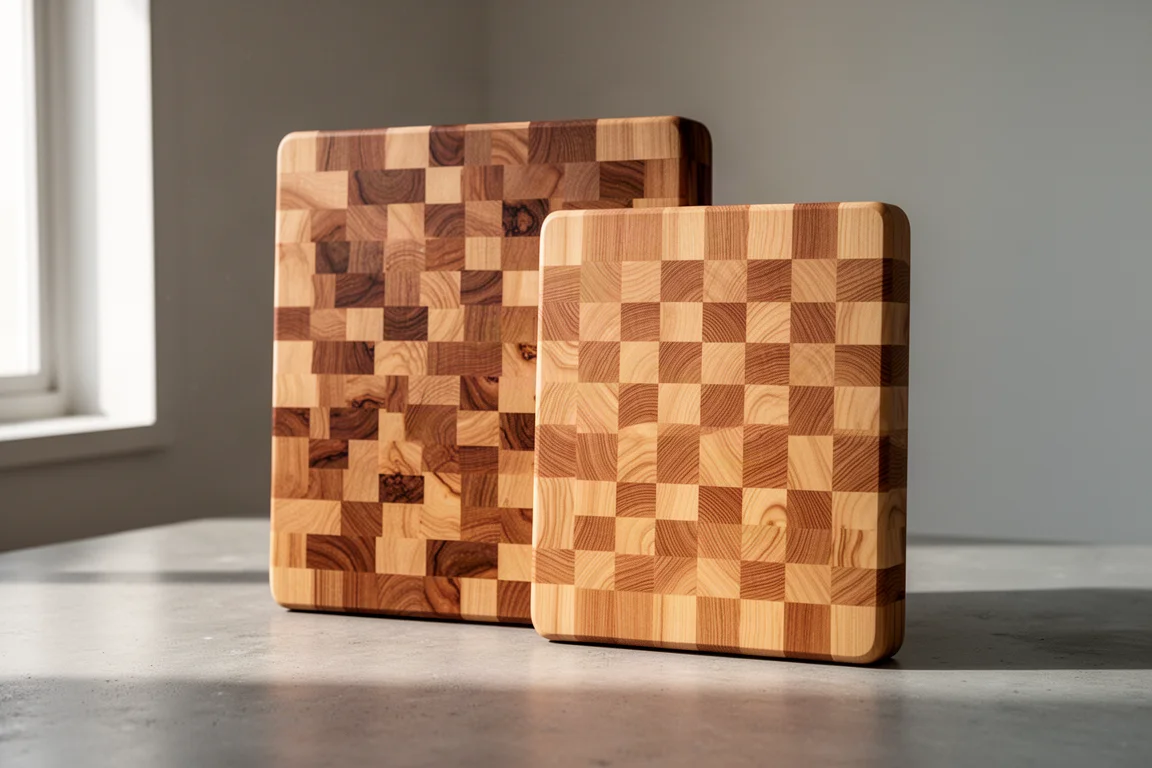
Larchwood Canada cutting boards have quietly built a reputation among people who care about sharp knives, and it is easy to see why once you spend time with one. The brand makes end-grain boards from larch, a softwood that behaves differently from the hard maple or walnut boards most kitchens default to. This comparison looks at two boards side by side: the large random pattern board and the medium classic, covering how they differ, what the wood itself does for your knife edges, and which one makes more sense for your counter.
What Makes Larchwood Different
The core appeal is the material. Larch is a softwood that is naturally antimicrobial and anti-fungal, and because the end-grain surface lets a knife blade wedge between the wood fibres rather than cutting through them, the board is gentle on edges. That difference is noticeable over months of use in edge retention, and the cutting feedback itself is pleasant, with a soft, forgiving feel under the blade.
With regular conditioning using a combination of mineral oil and beeswax, the wood stays moisturized and sealed. Over time the surface seasons and develops a richer, darker character, much like a well-used board does after years of service.
The Large Random Pattern Cutting Board
This is the board that solves the most common complaint about the smaller classic: size. It offers roughly four extra inches of working surface, which makes a real difference both for food prep, where you can push ingredients to the side instead of working around them, and for anyone who handles longer knives. A 270 millimeter yanagiba, for example, sits comfortably on this board where it starts to feel tight on the medium.
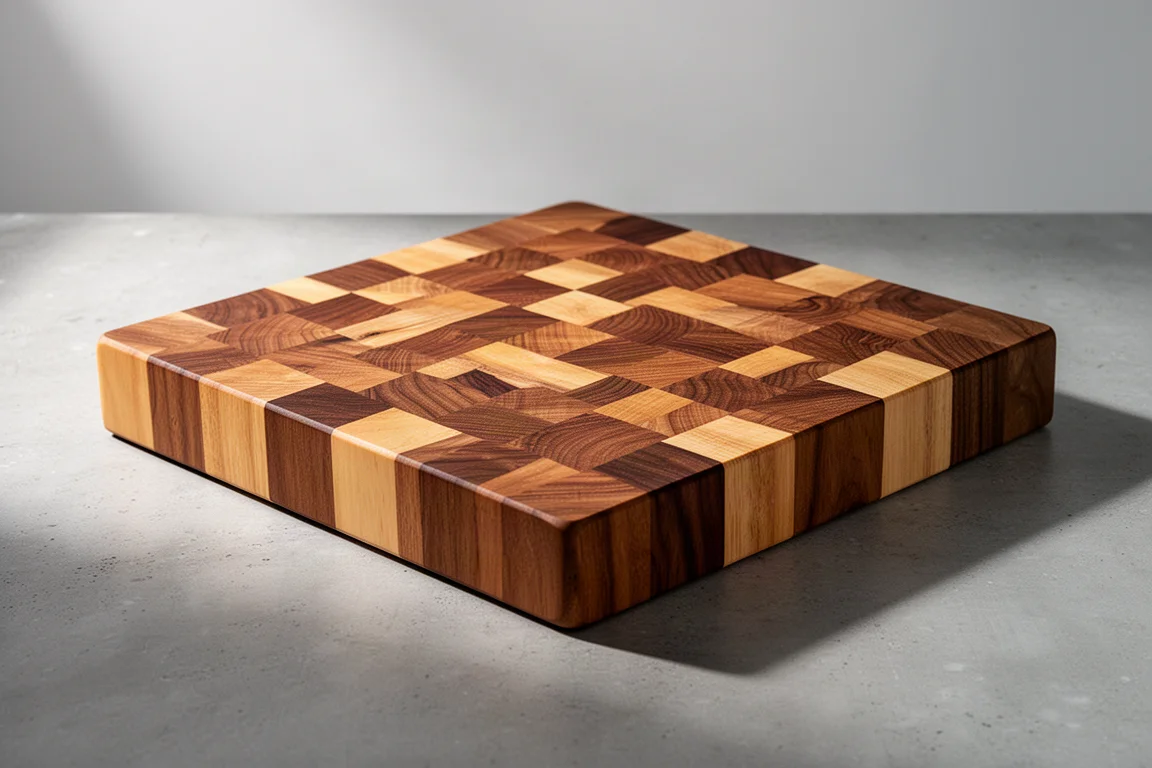
The “random pattern” name refers to how the end-grain blocks are arranged. Instead of matching the grain direction block by block for a uniform look, the blocks are placed without that alignment, giving the board a lively, mixed visual texture. Despite the different look, the build quality is the same as the classic, and because the random pattern requires less grain matching in production, it typically costs only slightly more than the medium.
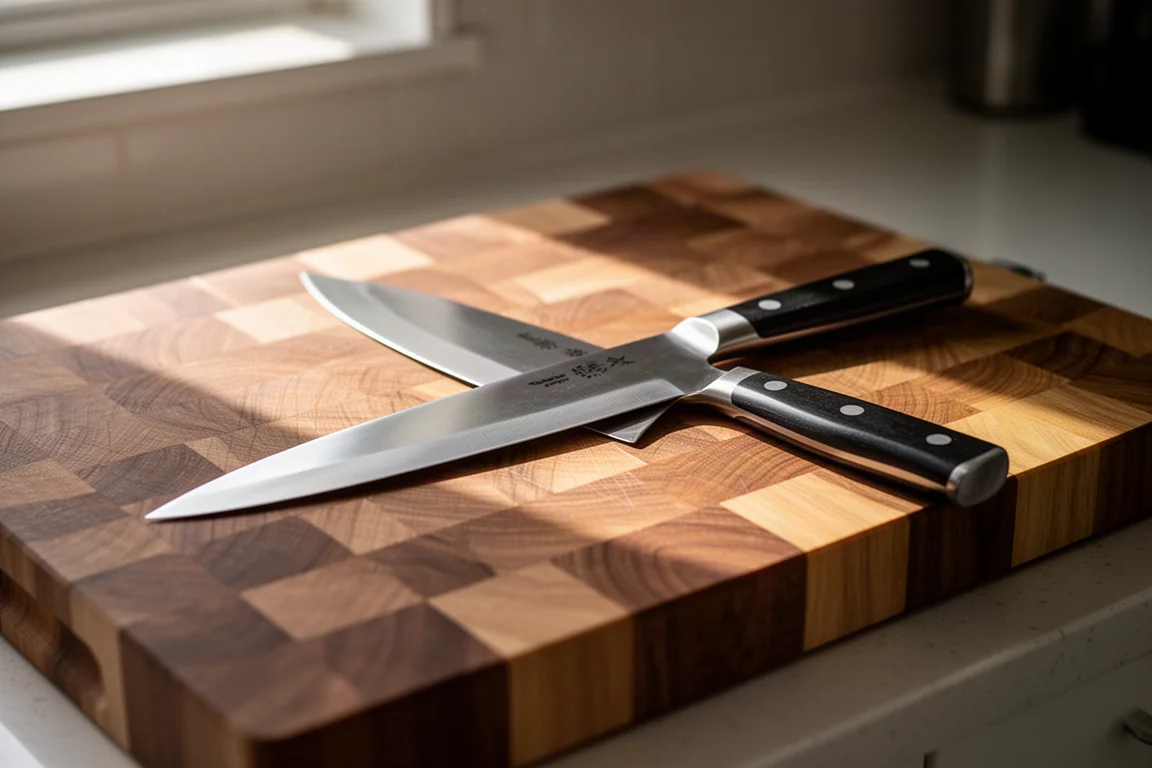
For the money, this is arguably the better value in the lineup: you pay a small premium, get a noticeably larger surface, and keep the same construction.
The Medium Classic Cutting Board
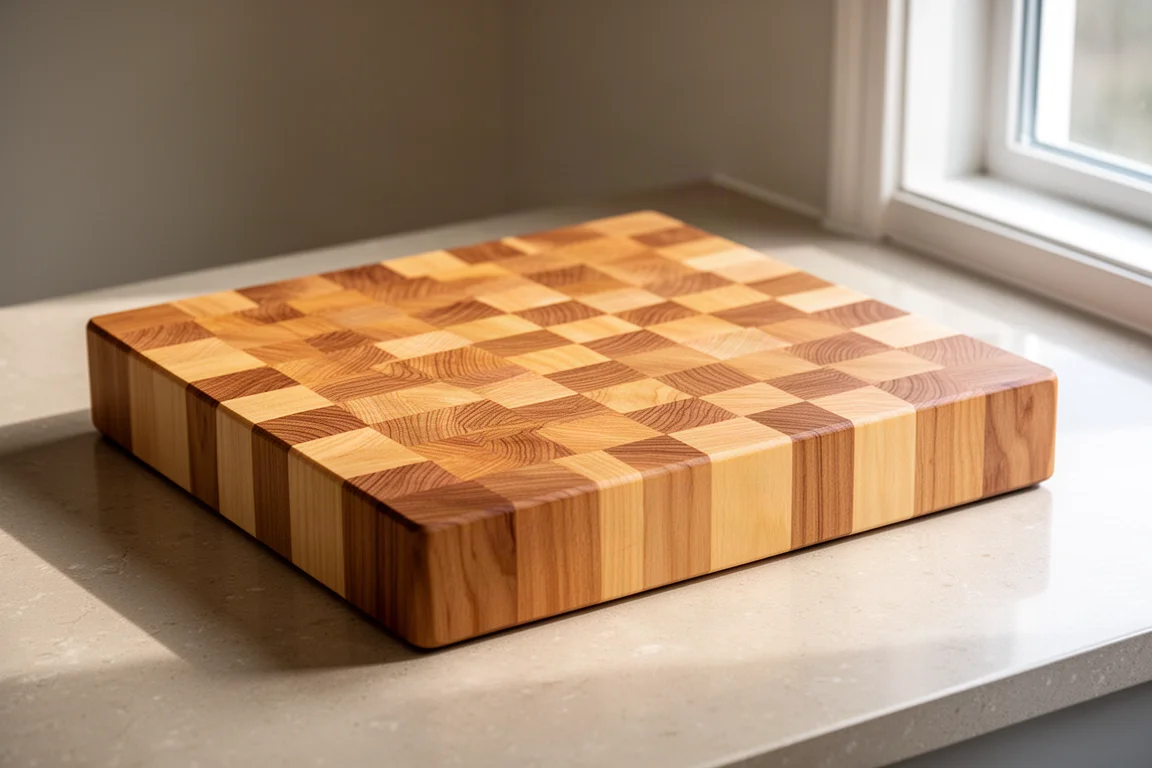
The medium classic is the traditional look most people picture when they think of an end-grain board: small squares carefully arranged so the grain direction runs consistently across the surface. That attention to grain matching is what gives the classic its tidy, uniform checker pattern, and it is also part of why it carries a higher price per inch of surface.
In terms of construction, the two boards are close. Thickness is similar between the two, and the footprint difference comes down to those few extra inches on the large. If your counter space is limited or you mostly prep smaller ingredients, the medium classic is a very capable board that handles daily work comfortably.
Caring for the Wood
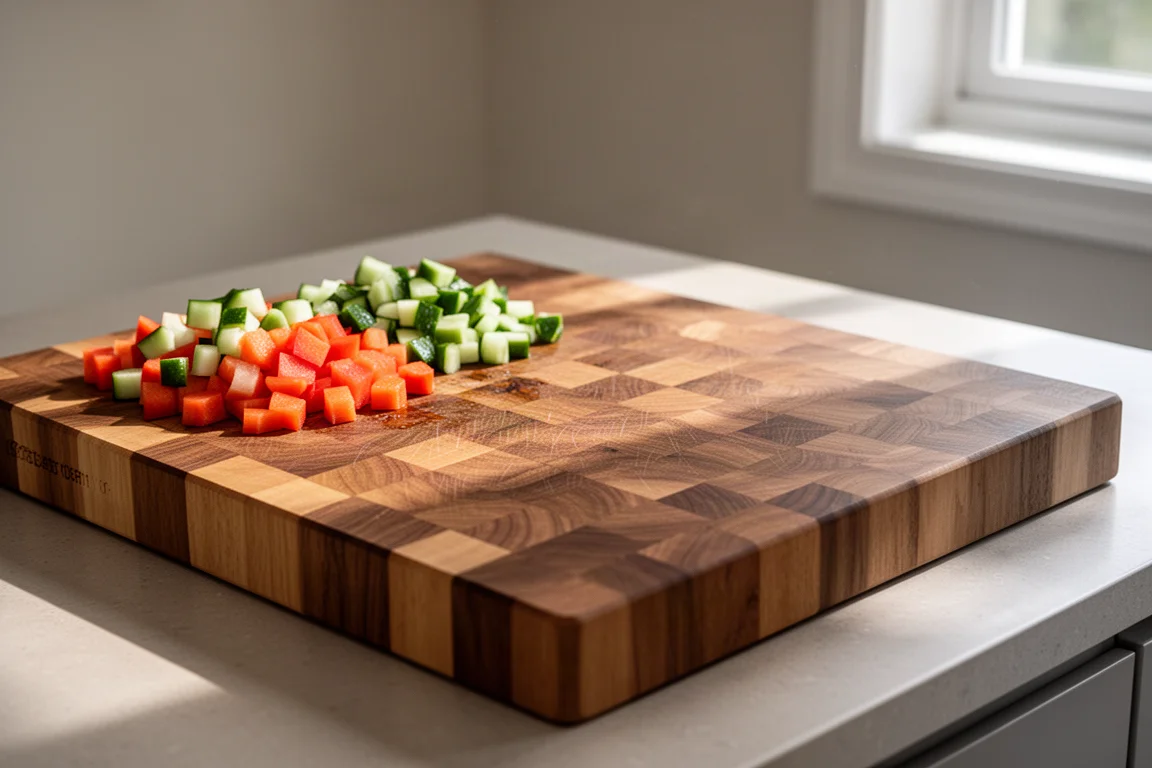
One point worth clearing up: the darker, richer tone a board develops over time is sometimes called patina, but that term really belongs to metals. On a wooden board, what you are seeing is seasoning. A monthly treatment with mineral oil and beeswax moisturizes the wood and seals the surface, and over months and years the board gradually deepens in colour the way a six-year-old board does compared with one that is only a few months old.
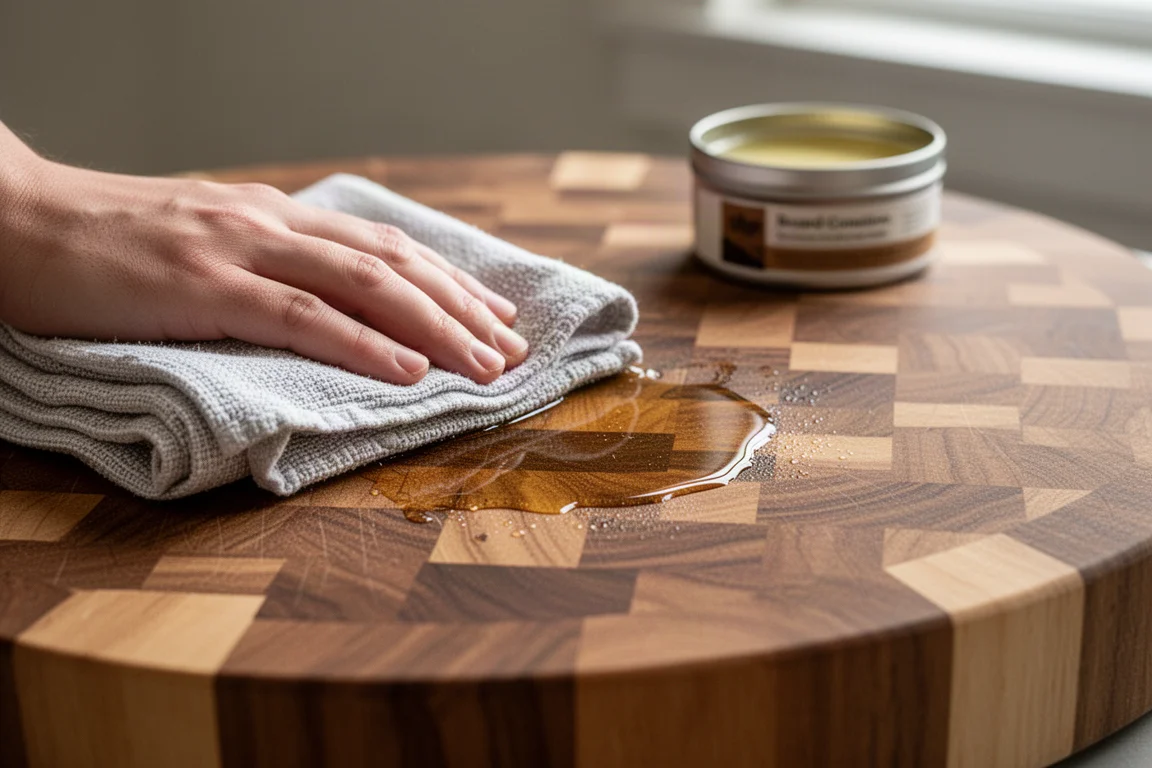
This simple routine is the main maintenance these boards ask for, and it is what keeps the softwood surface resilient and kind to knife edges over the long term.
Room for Food Prep and Knife Photography
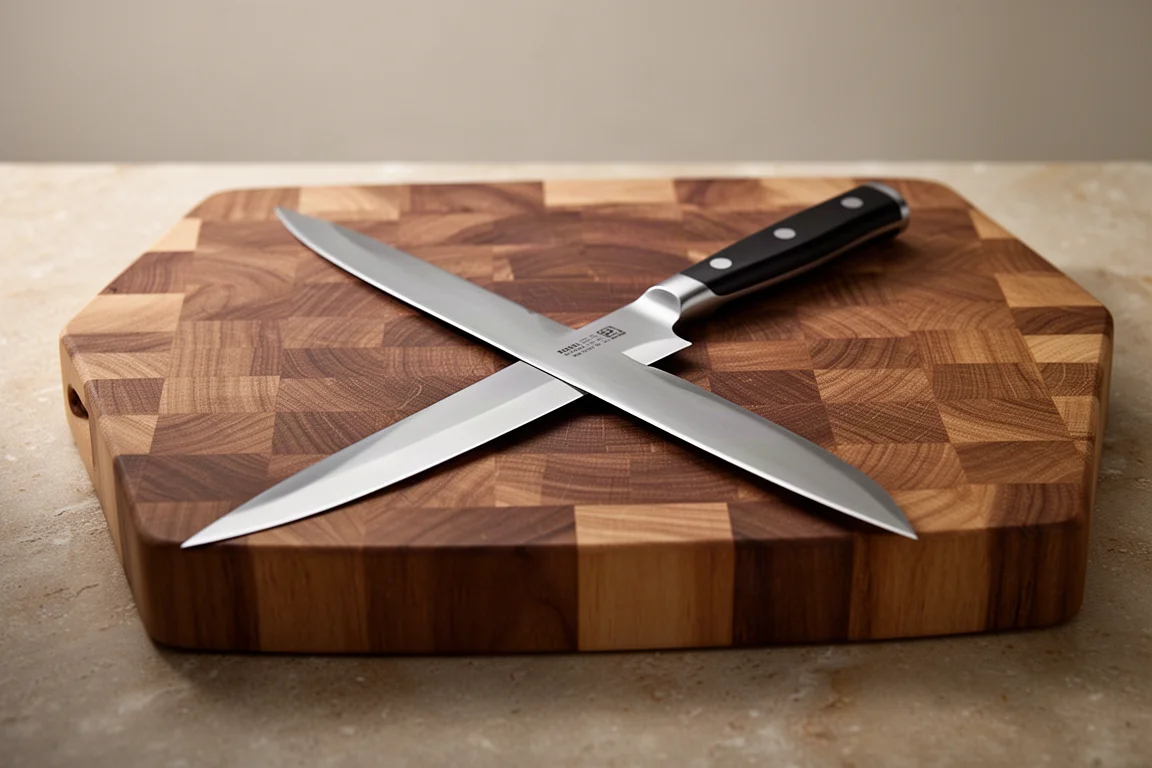
The larger surface is not just a luxury. Anyone who preps a lot of ingredients at once will immediately appreciate the extra working room, and collectors of longer Japanese knives will find that extended blades finally have space to lie flat with room to spare. If you photograph your knives or simply like a generous work surface, the large random pattern is the board that removes the compromise.
Which One Should You Buy?
If you want the maximum board for your money, the large random pattern is the standouts choice. It costs only modestly more than the medium classic while adding around four inches of surface, and the random grain arrangement has no effect on quality or knife friendliness. If you prefer the traditional uniform checker look, have a smaller counter, or simply do not need the extra space, the medium classic remains a beautifully made board with the same larch end-grain construction and the same benefits for your knife edges.
One practical tip before buying: the brand offers a discount code that saves 10 percent on regular priced items, excluding already discounted items and bundles, so it is worth checking before checkout.
Conclusion
Both boards share the same foundation: end-grain larch from a factory on Cape Breton Island in Nova Scotia, a surface that is naturally antimicrobial and self-healing, and a softness that protects knife edges over months of use. The choice comes down to surface area and pattern preference. Choose the large random pattern if you want the most board for a small premium, and choose the medium classic if you value the traditional look and a more compact footprint.
Further reading
Related Reviews
Kitchen
Best Nonstick Frying Pans Compared: 11 Skillets From $16 to $185, Tested
Eleven nonstick frying pans go head to head in pancakes, eggs, heat distribution, thermal efficiency, and scratch resistance to find out whether a cheap pan can really compete with a premium one.
Kitchen
Vivor Stainless Steel Kitchen Sink Review: A Solid Drop-In Upgrade With One Weak Spot
An all-stainless single-basin drop-in sink with easy-clean rounded corners and a drain-sloped base, at a roughly $200 price point.
Kitchen
Best Bamboo Steamers: Two Tested Picks for Dumplings, Bao, and More
After hands-on steaming tests with dumplings and bao, two bamboo steamers stood out for build quality and staying in alignment.