Trailers
Lamar Dump Trailer Review: A Strong Balance of Cost and Quality
A close look at why this Lamar dump trailer stands out against Diamond C and Load Trail, from its seven gauge floor to its scissor lift and 43-degree dump angle.
Introduction
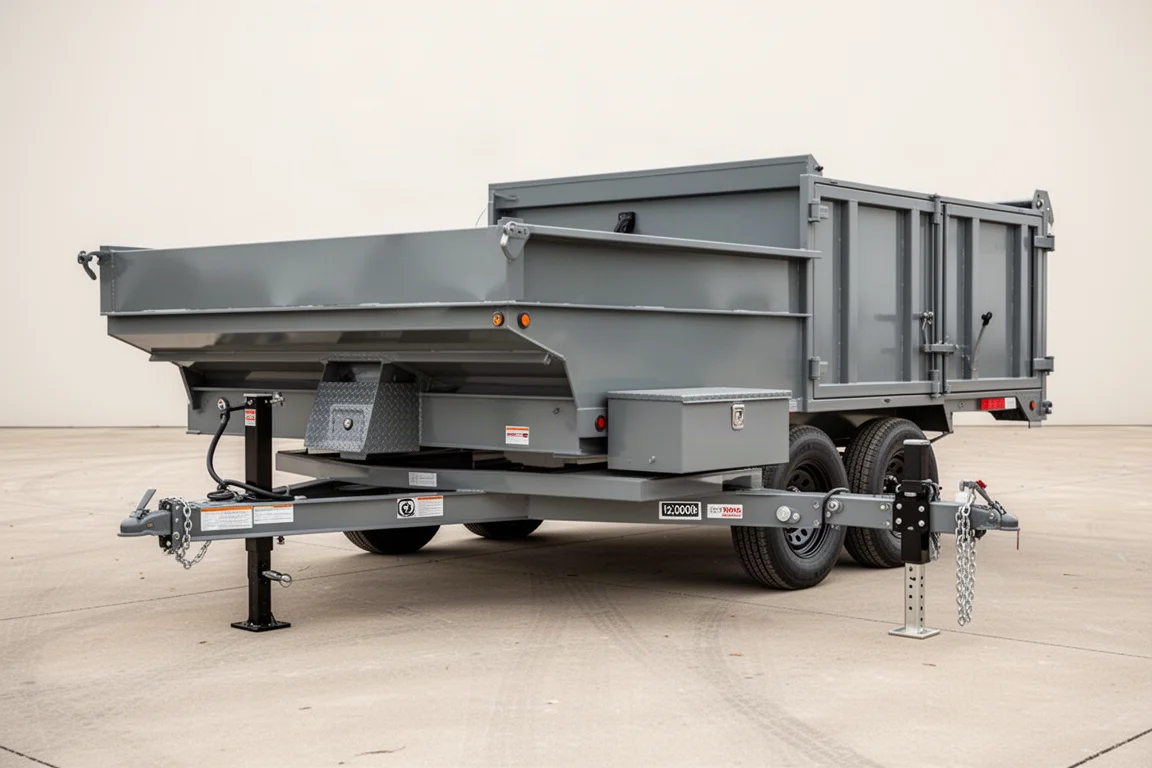
Shopping for a dump trailer means weighing a million variables between cost and quality. After comparing the major names, one conclusion came quickly: Diamond C is currently making some of the best dump trailers on the market, with Load Trail just a little behind. But the Lamar sits in a sweet spot, and this trailer was chosen on a combination of cost and quality. Here is a full walkthrough of what makes it work, and where the compromises are.
Why the Seven Gauge Floor Matters
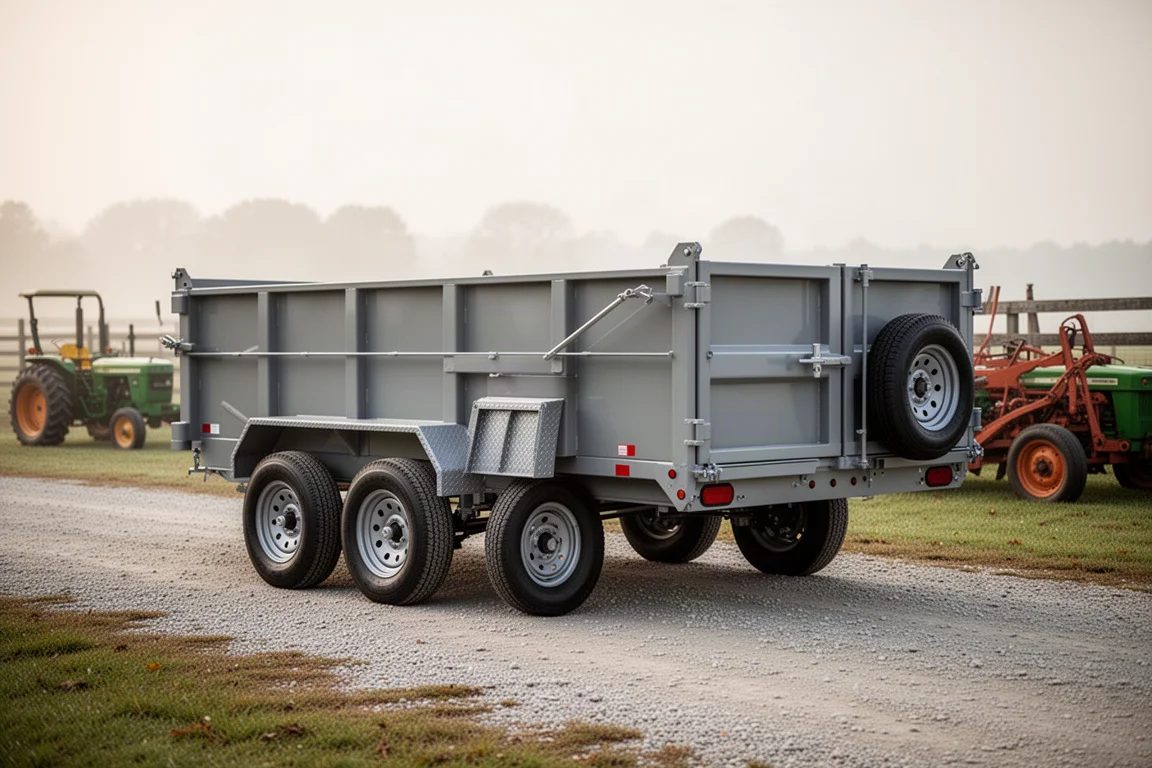
Ask any Lamar salesperson and they will start with the floor: seven gauge steel instead of the ten gauge most other trailers use. On this unit there is no weld up the center of the floor. The one-piece metal starts up the front wall, is bent, and rolls over to be welded, which means the floor itself is a single piece while the sides are separate panels with visible welds as you go up the trailer. The upside is that material slides out easily and there is nothing catching in the middle.
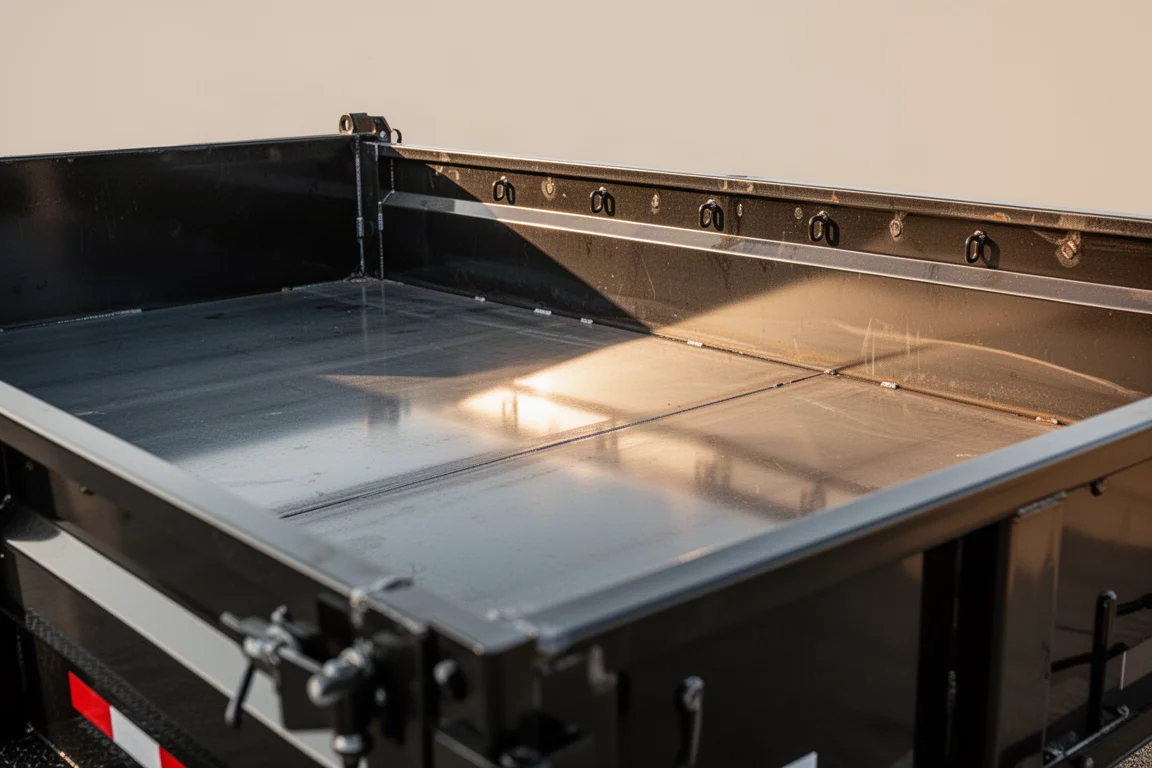
The rails are another strong point. They are welded on top, then bent over and down and welded along the bottom, boxing in the steel. Many other trailers use C-channel bent up and over and connected to the side panel instead. The boxed steel here is the stronger approach. Tie-downs along the rail give you attachment points for a tarp or straps, and the stake pockets sit on the outside rather than the internal part of the rail, so you can slide in 2x4s for extended side walls and still have a solid place to tie down.
Fenders, Tires, and Axle Placement
Two details stand out in this area. First, Lamar makes their own fenders: bent around, fabricated, and welded up properly rather than just being a purchased diamond-plate add-on. Not that those are bad, but these are very sturdy. Second, the tires are balanced. That matters more than people expect, because an unbalanced trailer can shake down the whole road. These travel very smoothly.
Axle placement is quietly important too. If the axles sit too close to the middle you get a teeter-totter effect while driving, especially loaded, where the rear of the tow vehicle lifts and drops. This trailer carries enough weight forward on the truck to avoid that, even when empty.
Front End: Jack, Hitch, and Storage
The jack is a 12,000lb unit, which is fairly standard, and the hitch is a Demco coupler that is adjustable and easy to lock. The gusset section around the front makes the trailer look very beefy, but the real benefit is that nothing sits too far forward, so the tailgate can still drop and you can climb in and out even when slightly turned, something not every trailer allows.
There is a spot for an extension cord to run the battery charger inside, and the front box is held up by a hydraulic ram. It does not lift as high as one might wish, but the storage is genuinely generous: the battery and hydraulics are separated into their own compartments, leaving a separate front box for straps, chains, or whatever else needs to ride along.
The tarp is not fully enclosed in a box up front like some trailers, but it sits low behind the rail, so the only real exposure is if you drop gravel directly on that rail. In exchange, it is much easier to work on and move things around.
Hydraulics: Scissor Lift vs Telescopic Cylinder
This trailer offers power up, power down, and gravity down, where many competitors only offer power up and power down. That flexibility is genuinely useful: you can power up on battery, then gravity down to save the battery, or power down when speed matters. The scissor lift is rated to lift more than the capacity of the trailer, so you do not get stuck, even with heavy gravel loaded far forward.
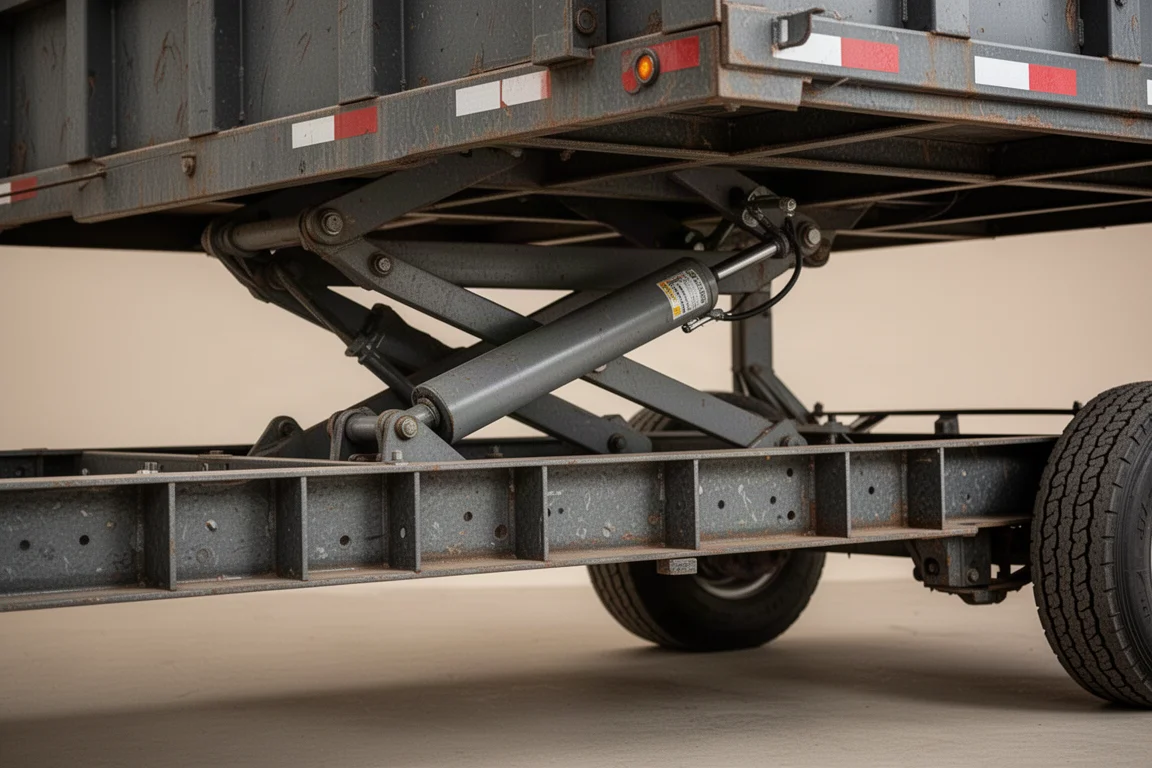
The honest trade-off: a telescoping hydraulic cylinder up front would be preferred in theory, but those are typically gravity-down only, and on a cold day that can take a very long time. The heavy-duty scissor lift was a deliberate compromise. Underneath, there are 12 inches between the center supports, and combined with the thicker seven gauge floor, the bed sits on a mostly C-channel understructure with the forward section boxed because of the scissor lift.
Frame and Deck Height
Looking underneath, there is a very large, heavy-duty i-beam frame, and the box sits right on top of it, producing a 28-inch deck height at the rear. That number is a deliberate choice. Drop axles could bring it down to around 24 inches, which is great for loading a big skid steer but terrible for dumping, because the trailer ends up pushing itself toward the ground and the material has a much harder time leaving the bed.
Rear Doors, Ramps, and Drop Legs
At the back, the D-rings that hold the door closed double as tie-down points and work quite nicely. The door is a three-way design: barn doors, a spreader gate with chains for spreading gravel, or remove the top hinge and it becomes a standard tailgate.
Drop legs at the front of the bed let you unload heavy equipment without the trailer lifting the front of your truck too much. Just be careful not to extend them too far, or the pin becomes impossible to pull once the bed comes down. The rear ramps slide in on angle iron and are held by a pin rather than a gate, and they move in and out easily. They are not perfect for very light equipment: the spacing between the traction cleats is wide, so a small lawn tractor struggles, but something larger like a skid steer works absolutely perfectly.
Dump Angle and Deck Height
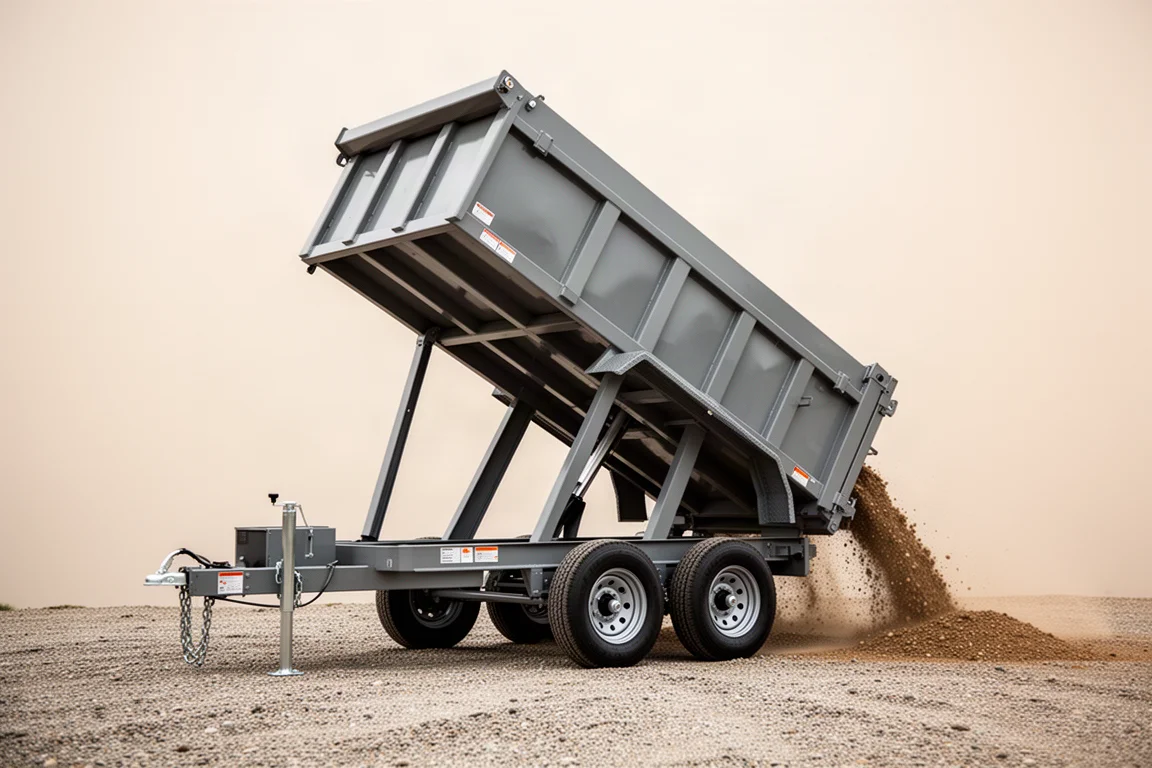
Lamar lists a 43-degree dump angle, and there has been zero issue getting material out. With the lower profile, you do end up dumping and then driving forward slightly, so it pays to be on level ground or to be careful when there is a lot of weight forward in the bed. Even so, the trailer has suited every job thrown at it.
Paint and Finish
The paint is a mixed verdict. In some ways it is far superior to any other dump trailer previously owned, and the gray finish draws compliments constantly because it simply looks sharp. On the other hand, gray is harder to match with a rattle can for touch-ups, where black would be as simple as Rustoleum. That is a small maintenance consideration, not a dealbreaker.
Final Verdict
The shortlist came down to Diamond C, Lamar, and Load Trail, with PJ eliminated based on past experience with features and powder coating that seemed unlikely to hold up long term. The goal was a trailer built for Michigan rust, heavy-duty use, and equipment hauling that would still look good after five years. This Lamar landed exactly in the right position between cost and quality.
Conclusion
No dump trailer is perfect, and this one has real pros and cons: an excellent seven gauge one-piece floor, boxed rails, balanced tires, flexible hydraulics, and a low 28-inch deck height with a steep dump angle, offset by a modest front box lift height, wide ramp cleats for light equipment, and a gray finish that is harder to touch up. Choose based on what your work actually demands, and this Lamar makes a very convincing case for itself.
Product link
View more details for Lamar Dump Trailer
This product is mentioned in the review. Check the specifications, options, and compatibility before buying.
View more details for Lamar Dump TrailerFurther reading
Related Reviews
Trailers
Best Low-Profile and Drop Deck Trailers: Three Designs That Solve the Ramp Problem
A hydraulic drop deck from Primo, a dedicated single motorcycle hauler from Z-Pro, and a heavy-duty ground loading trailer from Triple L, each built for different kinds of loads.
Trailers
Black Rhino Aluminum Car Hauler Trailer: A Closer Look at a Standout Build
High-quality aluminum construction, clever removable fenders, nitrogen-filled tires, and thoughtful deck details make this car hauler hard to ignore.
Trailers
Diamond C LPT vs GDT Dump Trailers: Two Options for Hauling and Dumping Work
A close look at two Diamond C dump trailers, the heavier-duty LPT and the entry-level GDT, covering build quality, hydraulics, tarping, and everyday usability.