Snowboards
Korua Bullet Train Review: A Hard-Charging Carving Machine With a Clear Mission
The Korua Bullet Train is back with traditional camber, a very stiff flex, and a single purpose: wide-open, high-speed carving. Here is how it rides and who it actually fits.
Introduction
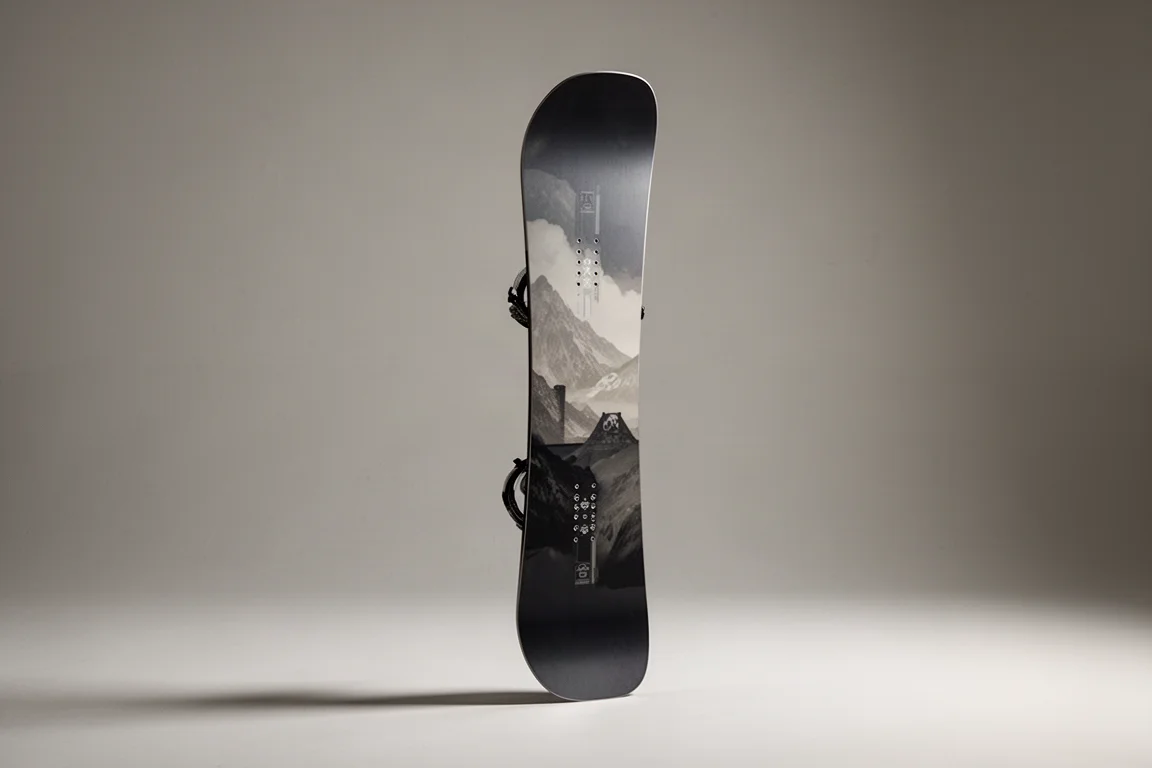
The Korua Bullet Train is back, and it has not softened its stance. This is a traditionally cambered, very stiff carving board that only comes in one length: 160. It is not a do-everything deck and it does not pretend to be. It is built for riders who already know how to carve and want a board that rewards good technique with relentless drive and edge hold. This review breaks down how it actually performs on the hill, where it falls short, and whether it deserves a spot in your quiver.
What the Korua Bullet Train Is
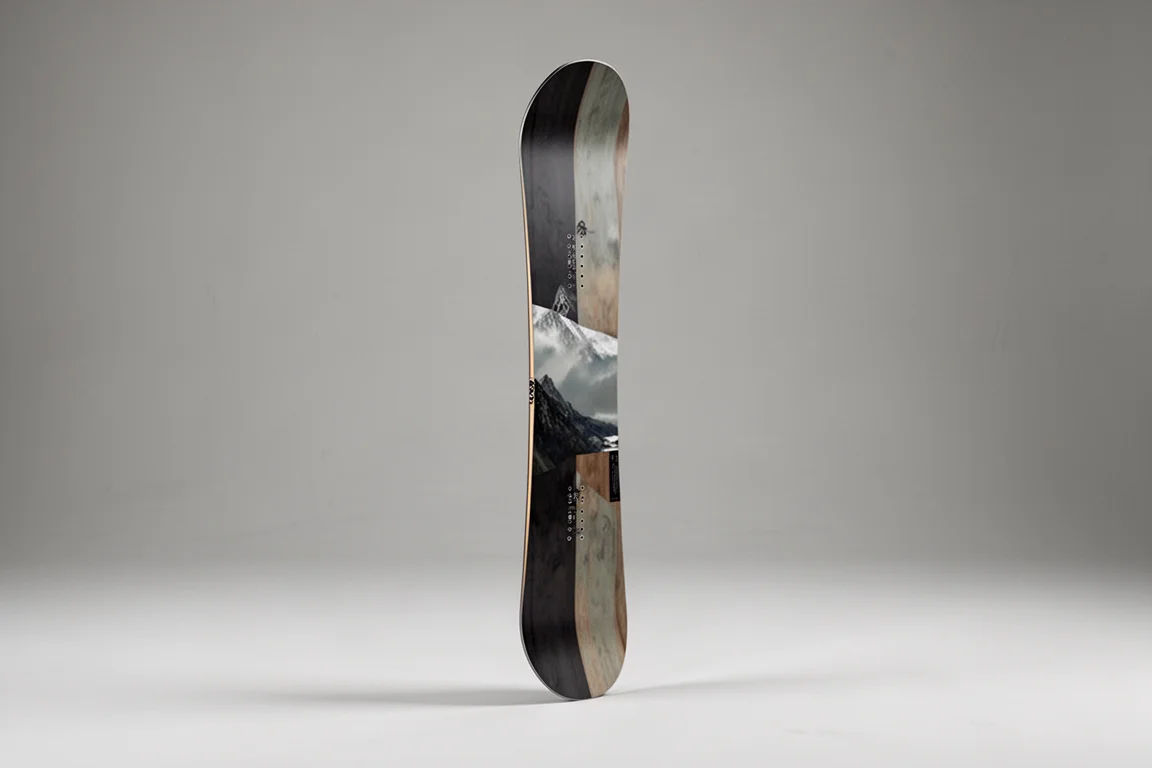
The Bullet Train uses good old-fashioned traditional camber, so from contact point to contact point you get that continuous arc that delivers load, pop, snap, and drive. The flex is firmly planted in the freeride carving category. It is not a death plank, but make no mistake: this board is stiff. There is a little more give in the nose, then the flex stays consistent all the way back to the tail, and the torsional flex is very rigid with almost no give.
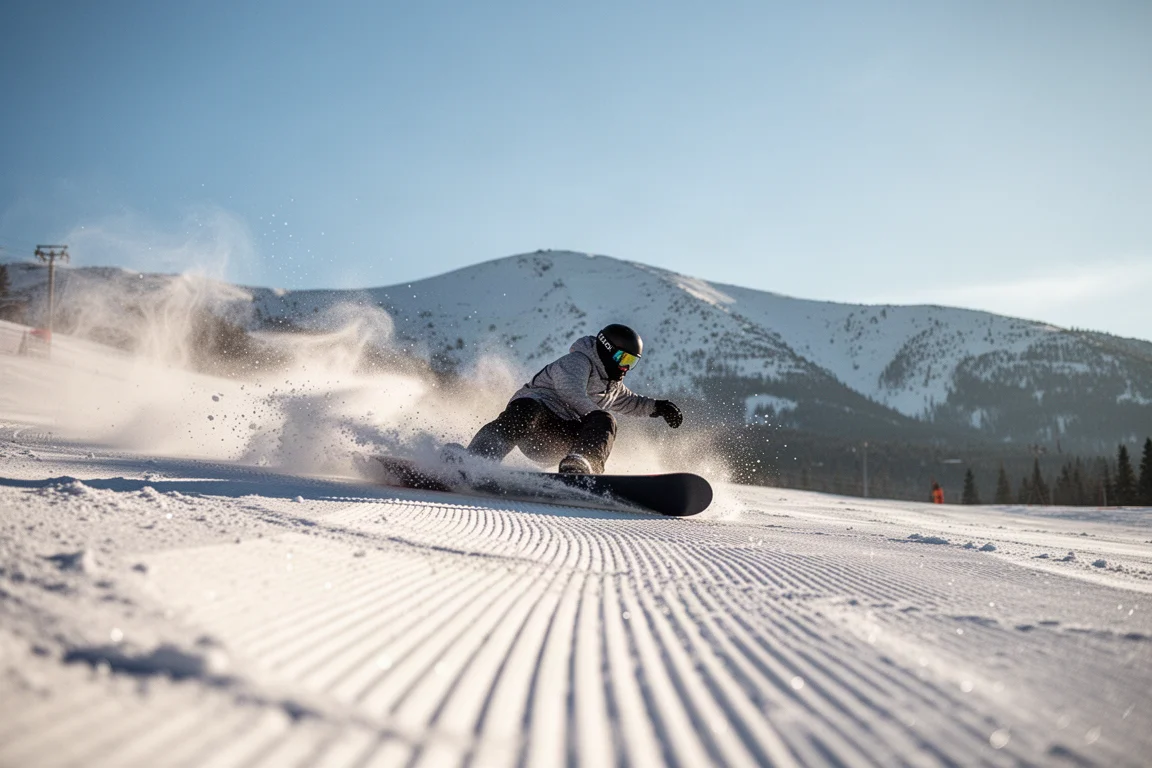
Tested on a sunny bluebird day with everything from soft perfect groomers to firm frozen runs and chopped snow, the board stayed predictable as conditions changed. Paired with Rome Black Label bindings and K2 Thraxis boots, it cut through rutted-out terrain without asking for much attention.
What the Korua Bullet Train Is
Stability is a real strength here. The ride is smooth, not damp. You will feel a little chatter from the nose at speed, but most of it gets killed off before it reaches the front insert pack. In rough terrain it simply cuts through everything, and you do not have to worry about it.
The trade-off is snap. There is not a lot of it. The board engages in a border-cross kind of way: when you load up the camber and roll back onto the tail, it launches you forward rather than bouncing you upward. What you put in is what you get out. If you are going fast and trying to pop over something small in your path, remember to suck those knees up. And if you were hoping to press and butter, forget it. You are not buttering on this thing. No one is.
Carving Performance: Precision and Drive
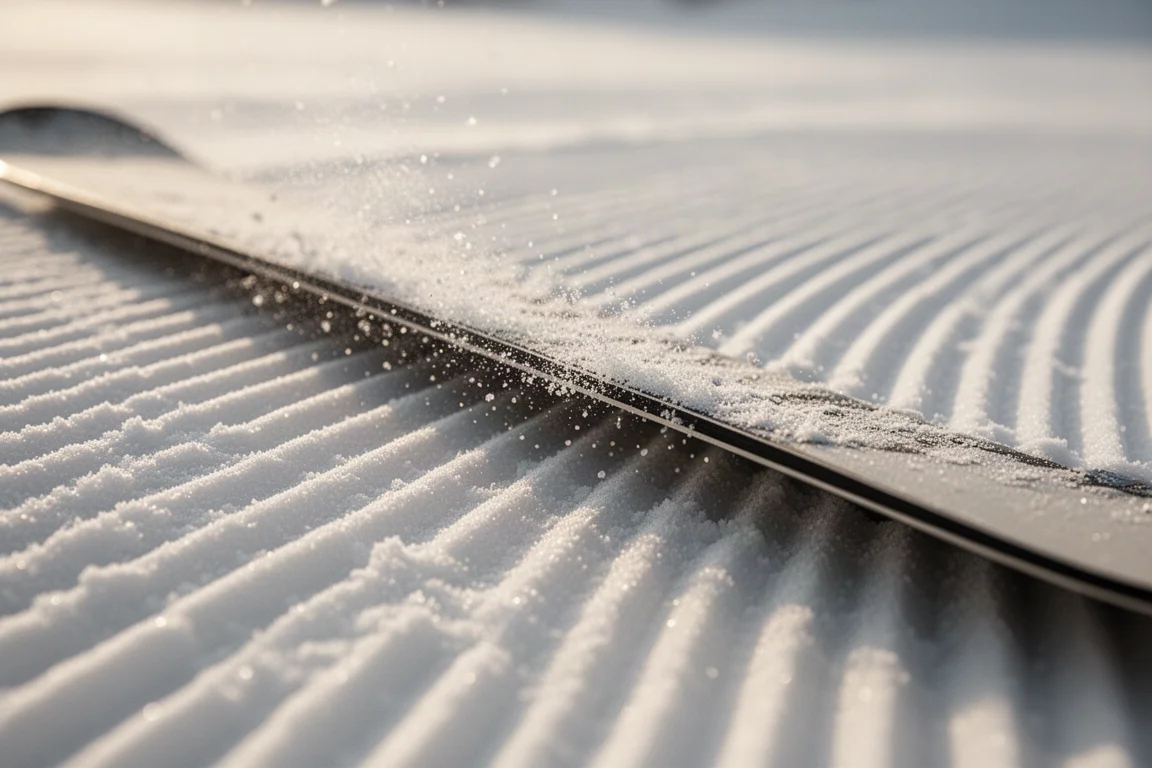
This board is designed for carving, and once you know how to ride it, it almost goes on autopilot. The technique is straightforward: it drives off the front foot. You force your weight over that front foot to get the board to engage, and as the turn transitions under foot, all the power and drive from the middle of the board back takes over. That is what lets you carve it aggressively.
On edge, it locks in and holds. It swoops from one side of the trail to the other, and through the apex you can drive your knee toward the center and push down on the tail while still feeling that front-foot engagement. The dynamic takes some learning: you have to slightly disengage the front foot as you drive from the center to really get the board to lay over.
Where It Struggles
The Bullet Train demands space. When it locks into a carve, it holds from one side of the trail to the other, so short, tight, quick edge-to-edge carves are a genuine pain on this board. That is not what it is for. You need wide-open runs and you need speed to lay it over. Do not plan on weaving through crowds, because it simply will not happen.
Butter ability is effectively zero, and the low snap means playful freestyle riding is off the menu. This is a highly specialized board for a specific subset of snowboarders, and riders who want a more approachable carving deck have better options in this category.
Best Use Cases for the Bullet Train
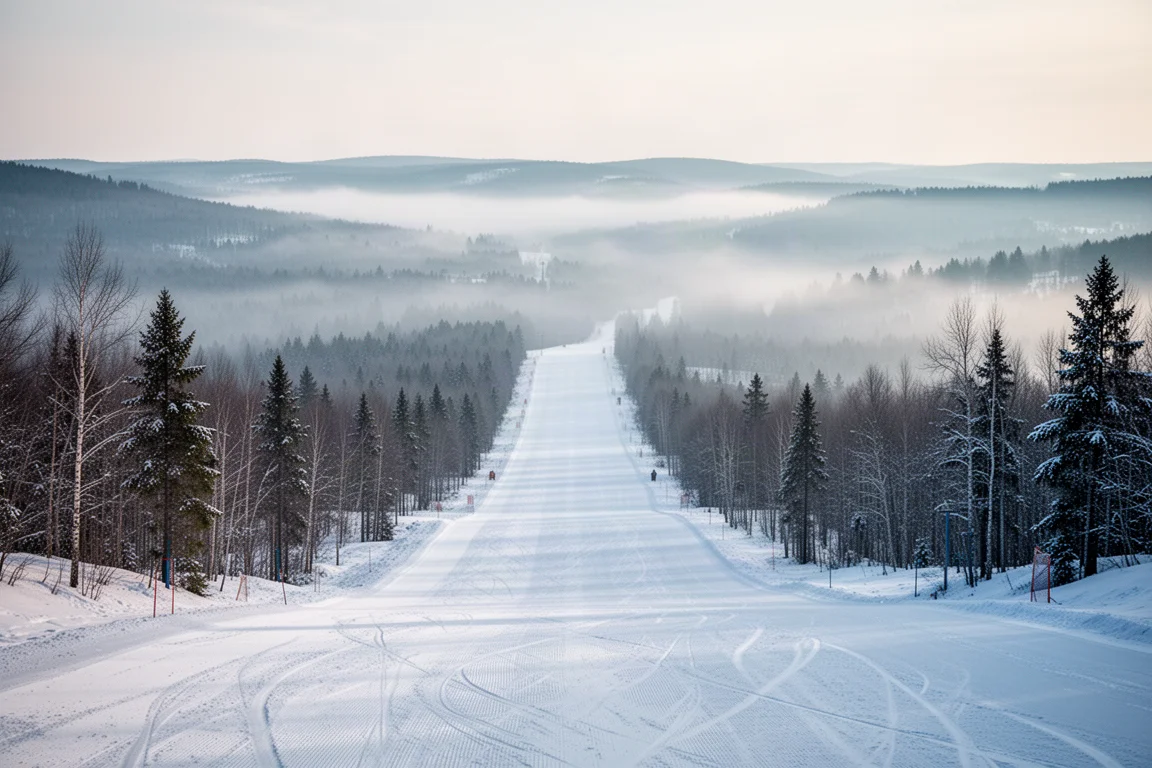
This deck is for the corduroy-killing carver who rides wide runs at speed. If you know how to carve, you are going to like this a lot. If you do not know how to carve, you are going to hate it, and if you are thinking of buying it to learn how to carve, that is the wrong move entirely.
One standout scenario is the banked slalom course. The board would stay on edge, take the top of the turn, drop low, and send you into the next turn, holding speed the whole way through. That kind of sustained, high-speed edge work is exactly what this board lives for.
How It Compares: Korua Cafe Racer Plus
Within Korua’s own lineup, the Cafe Racer Plus is arguably the better pure carver. It is more nimble, and you can change carves more aggressively, which matters if you end up in a group of people or on a tighter run. The Bullet Train needs a lot more space to do its thing. That does not make it a bad board. It is fun and it has its place, and there are riders who will absolutely love it. But for all the reverence the Bullet Train carries, the Cafe Racer Plus was the sharper tool for carving in the comparisons that matter.
One note on setup: this board is generally ridden with a positive-positive stance, which may not suit everyone’s body mechanics.
Overall Buying Advice
If you have the technique, the terrain, and the temperament for a stiff, single-minded carving board, the Bullet Train is a rewarding ride. If you want something more versatile or more approachable, look at the Cafe Racer Plus or comparable boards like the Jones Free Carver 900, the Nidecker Blade, or the Stranda Cheater. For bindings and boots to match, options such as the Union Atlas Pro, the Ride A-10, and the Jones Apollo come up as recommendations in this category.
Conclusion
The Korua Bullet Train is a highly specialized carving machine: traditional camber, very stiff flex, smooth stability, and enormous drive when ridden correctly on wide-open groomers. It demands skill, speed, and space, and it gives nothing to riders outside that narrow band. For the corduroy carver it is built for, few boards deliver this much precision and power. For everyone else, the Cafe Racer Plus or a more forgiving comparable board is the smarter pick.
Further reading
Related Reviews

Snowboards
32 Middle Earth Scott Stevens Pro Model Snowboard Review: A Park Board With a Reversed Flex
A medium traditional camber park board with carbon V reinforcement that is stiffer in the tips and more playful between the feet. Here is how it rides and who it suits.

Snowboards
32 Snafu Review: A Directional All-Mountain Freestyle Board with Serious Pop
The 32 Snafu pairs a directional camber-rocker profile with a stiffening tail for powerful carves, big ollies, and a surprisingly damp ride.

Snowboards
32 XXX Pat Fava Pro Snowboard Review: A Stiff Camber Beast for Hard-Charging Riders
A full-width traditional camber deck that rewards aggression with stability and edge power, but demands effort everywhere else.